Why non-Newtonian fluid simulations fail in scale-up




Why do non-Newtonian fluid simulations succeed in pilot lines yet fail after scale-up? The gap usually begins with assumptions, not software errors.
In polymer processing, non-Newtonian fluid simulations are used to predict pressure, temperature, shear history, residence time, and mixing performance.
These predictions influence equipment sizing, screw design, mold filling, die balance, devolatilization, and recycled melt quality.
Yet industrial scale-up changes geometry, heat flux, throughput, relaxation behavior, and material variability in ways many models simplify too aggressively.
Understanding where non-Newtonian fluid simulations break down helps reduce commissioning delays, scrap, unstable output, and misleading investment decisions.
What non-Newtonian fluid simulations are expected to capture
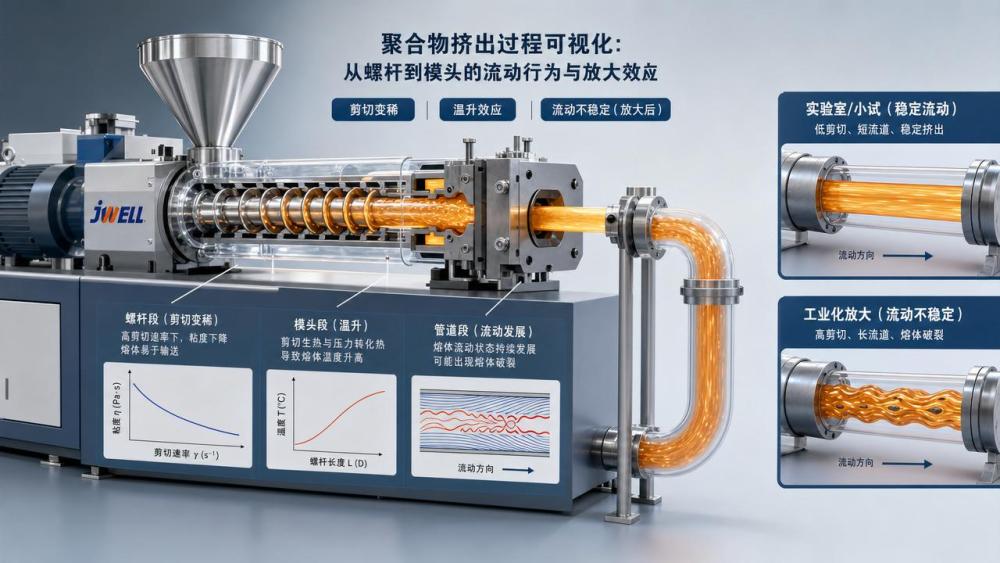
Most non-Newtonian fluid simulations rely on constitutive models that describe viscosity changes under shear, temperature, pressure, and sometimes elongation.
For polymer melts, common inputs include shear-thinning curves, density, specific heat, thermal conductivity, and viscoelastic relaxation parameters.
In pilot conditions, these datasets may match reality closely because materials, residence times, and equipment surfaces remain relatively controlled.
At industrial scale, the same non-Newtonian fluid simulations must represent stronger thermal gradients and broader processing disturbances.
That is where apparently minor parameter errors become large prediction failures.
Typical outputs expected from the model
- Pressure drop along screws, runners, dies, and filters
- Melt temperature rise from viscous dissipation
- Flow front stability in cavities and channels
- Residence time distribution and mixing intensity
- Wall shear stress and potential degradation risk
Why scale-up exposes hidden weaknesses
Non-Newtonian fluid simulations often assume clean material definitions, stable boundaries, and ideal machine response.
Industrial systems rarely behave that neatly.
When throughput multiplies, the ratio between heat generation and heat removal changes significantly.
This distorts viscosity fields and shifts the flow regime away from pilot observations.
A model validated on a short run may fail during extended production because polymer history evolves over time.
Key failure mechanisms in scale-up
Rheology data is usually less transferable than expected
Many non-Newtonian fluid simulations depend on lab rheometry measured at limited temperatures and shear rates.
However, industrial extrusion, molding, and recycling can exceed those tested windows by a wide margin.
Extrapolation may look mathematically smooth but still be physically wrong.
This problem becomes severe for filled compounds, degraded recyclate, moisture-sensitive resins, and blends with unstable morphology.
Viscosity alone is also not enough for many cases.
If extensional viscosity, yield behavior, wall slip, or viscoelastic memory matters, simplified non-Newtonian fluid simulations may underpredict defects.
Common rheology gaps
- Testing virgin resin while production uses regrind or recycled content
- Ignoring batch-to-batch molecular weight variation
- Using isothermal data for strongly non-isothermal processes
- Neglecting pressure dependence in high-pressure sections
- Assuming no degradation during residence time increase
Boundary conditions often become the real error source
In practice, non-Newtonian fluid simulations do not fail only because of material models.
They often fail because actual inlet, outlet, and wall conditions drift during operation.
Feed rate can pulse.
Cooling circuits can foul.
Vent pressure can vary.
Barrel heaters can overshoot.
These effects are small individually, but together they move the process away from the modeled operating envelope.
Scale-up also introduces longer startup transients and more pronounced thermal inertia.
Steady-state assumptions become less valid when the machine spends more time approaching equilibrium than expected.
Equipment-specific flow behavior is hard to generalize
A major weakness in non-Newtonian fluid simulations appears when machine geometry is represented too ideally.
Real polymer equipment contains wear, leakage paths, roughness, asymmetry, and assembly tolerances.
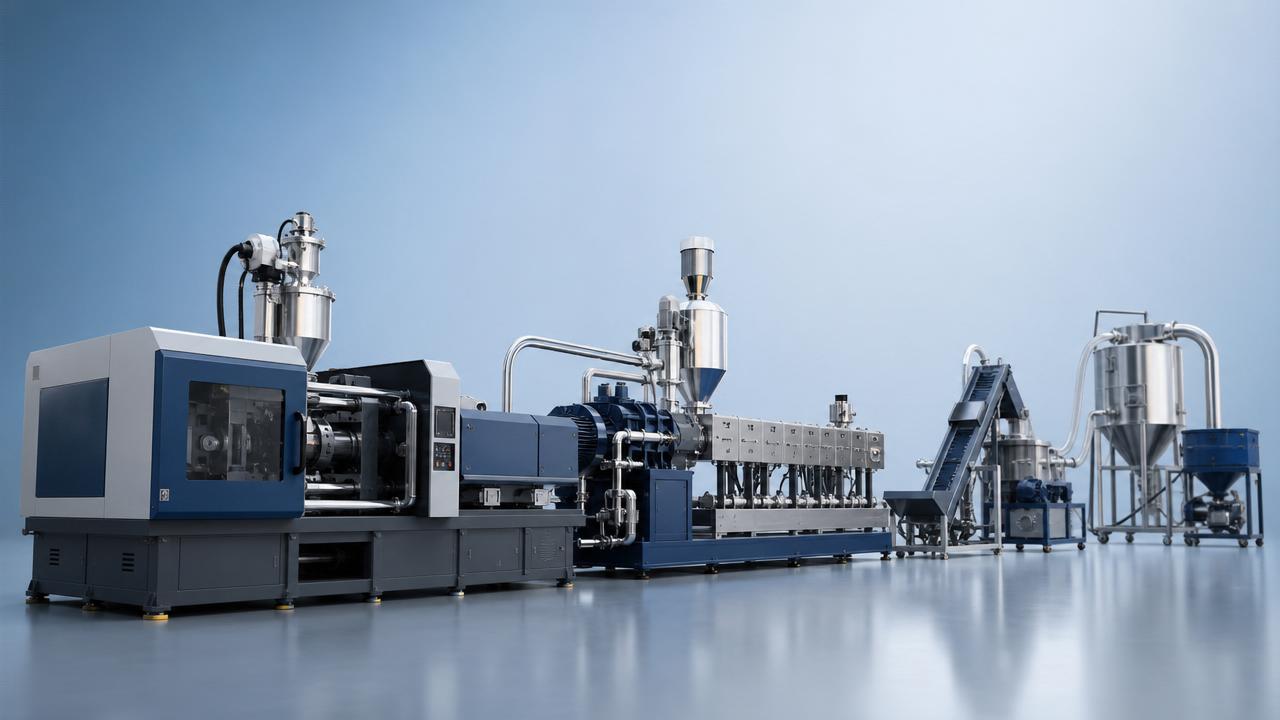
Twin-screw extruders, injection units, dies, hot runners, and pelletizing heads all develop machine-specific flow signatures.
Those signatures strongly affect scale-up.
For example, a screw profile that mixes well in a pilot extruder may create excessive melt temperature in a larger barrel.
A mold filling model may match one gate design but miss hesitation or jetting after cavity scaling.
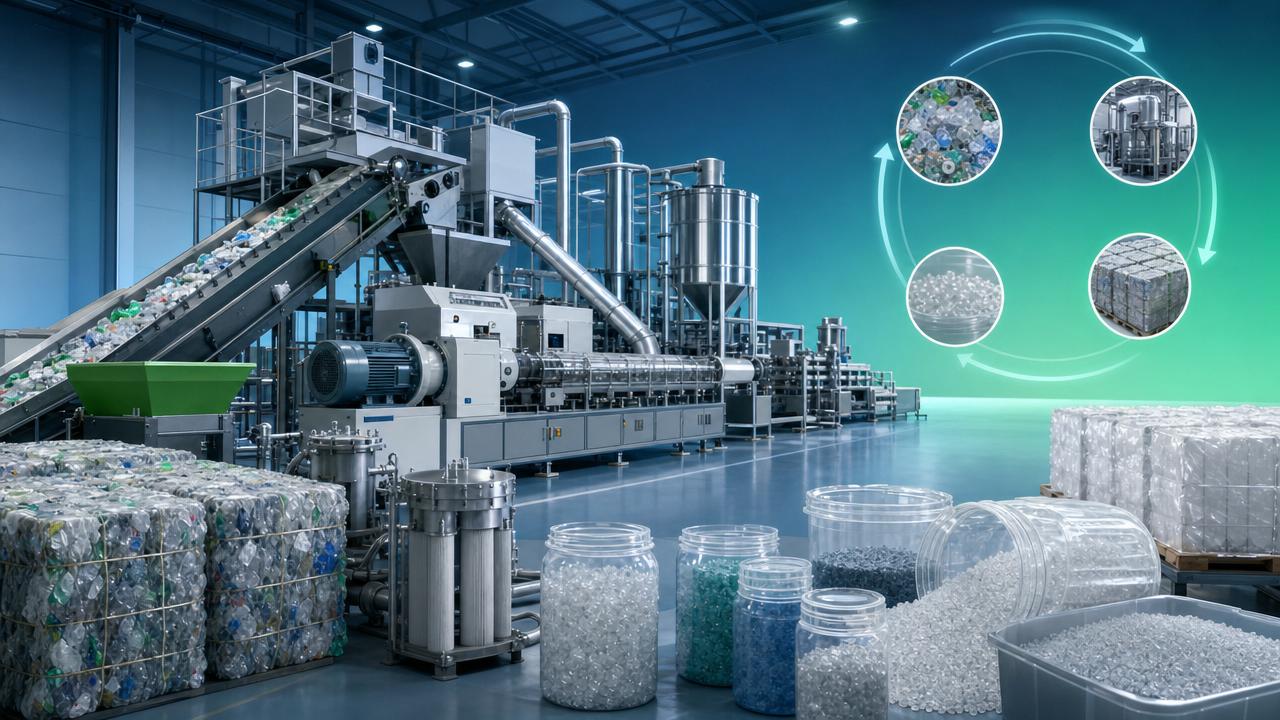
Recycling lines are especially sensitive because contamination, moisture, and filtration loading change flow behavior continuously.
Representative industrial scenarios
Why this matters for business and technical decisions
Reliable non-Newtonian fluid simulations can shorten development cycles and reduce trial material consumption.
Unreliable simulations can do the opposite.
They may support the wrong extruder size, an unstable die design, unrealistic cycle time assumptions, or poor recycled content strategy.
For polymer equipment intelligence platforms such as PFRS, the value lies in connecting simulation outputs with machine behavior and compliance realities.
That includes energy efficiency, scrap reduction, throughput stability, and packaging sustainability targets.
In other words, better non-Newtonian fluid simulations support better capital decisions across molding, extrusion, vulcanization, and recycling operations.
Practical methods to improve scale-up reliability
The solution is not abandoning non-Newtonian fluid simulations.
The solution is narrowing the distance between model assumptions and operating reality.
Recommended actions
- Expand rheology testing across real shear, temperature, and pressure ranges.
- Use production-grade material, including recycled fractions when relevant.
- Validate with transient plant data, not only steady-state snapshots.
- Include heat-transfer calibration from actual machine measurements.
- Account for wear, leakage, and geometry deviations in critical zones.
- Link simulation review to commissioning and quality feedback loops.
When possible, build a staged validation path.
Start with lab rheology, then pilot trials, then instrumented industrial runs.
This creates a stronger foundation for non-Newtonian fluid simulations and reduces surprise during ramp-up.
A practical next step for better simulation decisions
Before approving any scale-up model, compare its inputs against real plant variability.
Check whether the rheology window, boundary conditions, and machine geometry truly reflect production conditions.
If the answer is uncertain, treat the output as directional, not definitive.
For organizations evaluating extrusion, molding, or recycling systems, the strongest approach combines non-Newtonian fluid simulations with measured thermal, pressure, and quality data.
That combination produces scale-up decisions that are more robust, more efficient, and far more useful in industrial reality.
Related News
- 00
0000-00
How High-Speed Precision Injection Molding Controls Part Tolerances at Scale - 00
0000-00
How to Select Packaging Molding Equipment for High-Volume Production Lines - 00
0000-00
How to Evaluate Plastic Pelletizing Machine Suppliers for Output, Support, and Risk - 00
0000-00
How to Select a Plastic Pipe Manufacturing System for Output, Resin, and Pipe Range - 00
0000-00
How to Specify Injection Molding Equipment for High-Volume Closure Production
Weekly Insights
Stay ahead with our curated technology reports delivered every Monday.
Related News
 Prof. Marcus ChenEnergy-Efficient Polymer Processing: Where Plants Can Cut kWh per KilogramEnergy-efficient polymer processing solutions help plants reduce kWh per kilogram, protect quality, cut scrap, and prioritize upgrades with data-driven insights.Sep 23, 2026
 Prof. Marcus ChenPlastic Pelletizing Trends: How Recycling Demand Is Reshaping Processing TechnologyPlastic pelletizing trends are redefining recycling quality. Explore filtration, extrusion, degassing, and automation innovations driving cleaner, more consistent recycled resin.Sep 07, 2026
 Prof. Marcus ChenHow Polymer Supply Chains Are Changing to Support High-Quality Recycling FeedstockPolymer supply chain for recycling is shifting toward traceable sourcing, cleaner sorting, and stable processing. See how high-quality feedstock improves performance, compliance, and cost control.Aug 22, 2026
 Prof. Marcus ChenHow Europe’s Circular Plastics Economy Is Reshaping Recycling InvestmentCircular plastics economy Europe is reshaping recycling investment through quality, traceability, and packaging demand. Explore where capital is moving and why it matters now.Aug 04, 2026
 Prof. Marcus ChenBlow Molding Trends Shaping Packaging, Sustainability, and Production EfficiencyBlow molding trends are redefining packaging with lightweighting, recycled content, automation, and energy efficiency. Discover how smarter production boosts sustainability and cuts costs.Jul 23, 2026
 Prof. Marcus ChenExtrusion Equipment Modular Design: When It Makes Sense for Line ExpansionExtrusion equipment modular design helps manufacturers expand lines in phases, cut disruption, and stay ready for recycled content, utility limits, and changing product demands.Jul 15, 2026
 Prof. Marcus ChenPolymer Lifecycle Solutions Explained: From Material Sourcing to End-of-Life RecoveryPolymer lifecycle solutions explained from sourcing and processing to recycling and recovery. Discover how to cut waste, improve quality, and build smarter material strategies.Jul 13, 2026
 Prof. Marcus ChenEnergy-Efficient Polymer Processing Systems: Which Metrics Matter Most?Energy-efficient polymer processing systems: discover the metrics that truly drive ROI—specific energy use, yield, uptime, stability, and compliance for smarter equipment decisions.Jul 11, 2026
 Prof. Marcus ChenPolymer Recycling Systems for Continuous Operation: What to Check Before SpecifyingPolymer recycling systems continuous operation starts with the right specification. Learn what to check for uptime, melt quality, energy efficiency, and reliable pellet output.Jul 09, 2026
 Prof. Marcus ChenCircular Plastics Economy in Japan: Policy Drivers, Recycling Targets, and Market ImpactCircular plastics economy Japan is accelerating as policy, recycling targets, and packaging reforms reshape material choices, processing strategy, and market advantage.Jul 05, 2026
 Prof. Marcus ChenPlastic Extrusion Technology Trends: What Process Changes Are Improving Energy Efficiency?Plastic extrusion technology trends are reshaping energy efficiency through smarter screws, thermal control, servo drives, and digital optimization. See which process changes deliver lower costs and more stable output.Jul 01, 2026
 Prof. Marcus ChenInjection Molding Technology Trends: Which Process Changes Matter Most for Medical and Packaging Parts?Injection molding technology trends shaping medical and packaging parts: discover the process changes that improve validation, precision, efficiency, and recycled-material readiness.Jun 30, 2026
 Prof. Marcus ChenCircular Plastics Economy Compliance Explained: Key Requirements for ManufacturersCircular plastics economy compliance explained for manufacturers: learn key requirements, audit risks, process controls, and how to turn compliance into a competitive advantage.Jun 25, 2026
 Prof. Marcus ChenAdvanced Materials Processing Trends: 5 Shifts Reshaping Capacity Planning and SourcingAdvanced materials processing trends are reshaping capacity planning, sourcing, recycling, and compliance. Explore 5 shifts helping manufacturers cut risk, improve precision, and build resilient growth.Jun 24, 2026
 Prof. Marcus ChenGlobal Plastic Ban Trends: Which Packaging Materials and Export Markets Face the Biggest Changes?Global plastic ban trends are reshaping packaging choices and export strategy. See which materials and markets face the biggest shifts, and how to reduce compliance risk.Jun 22, 2026
 Prof. Marcus ChenPolymer Rheology Trends That Matter in Extrusion: Melt Strength, Shear, and StabilityPolymer rheology trends are reshaping extrusion performance. Learn how melt strength, shear, and stability affect quality, efficiency, and recycled resin processing.Jun 18, 2026
 Prof. Marcus ChenPlastic Circularity Strategies for Manufacturers: Recycled Content, Design, and TraceabilityPlastic circularity strategies for manufacturers: learn how recycled content, smarter design, and traceability can reduce risk, improve compliance, and strengthen supply resilience.Jun 18, 2026
 Prof. Marcus ChenAdvanced Materials Processing Equipment in High-Performance Manufacturing: Where It Fits BestAdvanced materials processing equipment drives precision, speed, and sustainability in manufacturing. Explore where each system fits best to improve quality, efficiency, and ROI.Jun 16, 2026
 Prof. Marcus ChenWhat Is Driving the Circular Economy Plastics Market? Policy, Pricing, and Demand ShiftsCircular economy plastics market trends are being driven by tighter policy, resin price volatility, and stricter buyer demands. Discover what this means for sourcing, processing, and growth.Jun 13, 2026
 Prof. Marcus ChenDigital Polymer Processing Explained: Methods, Materials, and Best-Fit ApplicationsDigital polymer processing explained clearly: explore key methods, materials, and best-fit applications to improve quality, efficiency, and recycling performance.Jun 10, 2026