When Polymer Forming Systems Become Too Complex to Scale




As demand for precision, throughput, compliance, and circularity rises, polymer forming systems often become harder—not easier—to expand across plants, product lines, and regions.
For industrial operations, complexity can silently reduce uptime, inflate scrap, delay launches, and weaken return on capital.
The key question is not whether polymer forming systems are advanced.
It is whether they remain scalable when materials, tooling, automation, and compliance requirements multiply across the value chain.
This article explains how to judge that turning point across injection molding, extrusion, blow molding, vulcanization, and recycling operations.
When polymer forming systems start failing the scale test
Complexity becomes dangerous when one local optimization creates three new cross-site problems.
That usually happens when polymer forming systems depend on tribal knowledge, unstable material windows, or disconnected digital controls.
A scalable system should transfer recipes, quality limits, maintenance logic, and compliance documentation without major reinvention.
If every expansion requires custom engineering, long revalidation cycles, or emergency process tuning, the architecture is already too complex.
In broad industrial settings, this issue appears in five recurring signals:
- OEE falls as more SKUs or materials are added.
- Changeovers become longer despite equipment upgrades.
- Quality drift rises between shifts, plants, or regions.
- Energy use per kilogram worsens at higher output targets.
- Compliance and traceability records require manual patchwork.
Scenario one: multi-plant injection molding loses repeatability
Precision molding often looks scalable on paper because machines share tonnage classes, servo platforms, and cavity layouts.
In practice, polymer forming systems become fragile when molding windows are too narrow for site-to-site variation.
Medical parts, optical components, connectors, and automotive interiors are common examples.
Small changes in resin moisture, barrel wear, cooling balance, or holding pressure curves can create hidden inconsistency.
Core judgment points
Watch whether recipes are machine-independent or machine-specific.
If one validated process cannot travel across presses without expert intervention, scaling risk is high.
Another signal is overreliance on post-process inspection.
Scalable polymer forming systems should control variation upstream through cavity pressure, melt temperature, and viscosity monitoring.
Scenario two: high-output extrusion becomes a coordination bottleneck
Extrusion lines often expand by adding screw capacity, downstream speed, or new formulations.
Problems begin when output gains outrun mixing stability, cooling capacity, or material feeding precision.
Pipe, sheet, film, compounding, and cable applications all face this risk under tighter tolerances.
In many facilities, polymer forming systems seem expandable until additive dispersion, gauge control, or die pressure stability starts drifting.
Core judgment points
Check whether throughput increases preserve melt homogeneity.
If scrap rises with speed, the line may be beyond its scalable process envelope.
Also review feeder synchronization, screw configuration governance, and digital tracking of formulation changes.
Without these controls, polymer forming systems become difficult to standardize across products and geographies.
Scenario three: packaging blow molding scales volume but not compliance
Bottle and container programs can scale quickly because demand is high and equipment is fast.
Yet global packaging rules, recycled content mandates, and food-contact standards raise a different challenge.
Polymer forming systems may achieve volume growth while failing traceability, lightweighting targets, or resin migration requirements.
This happens especially when virgin and recycled streams are blended without robust material data governance.
Core judgment points
Assess whether each cavity, batch, and resin source can be linked to auditable process records.
If compliance depends on spreadsheets and manual reconciliation, the system is not truly scalable.
Scenario four: rubber vulcanization expands capacity but loses process certainty
Rubber operations often face hidden scaling limits because cross-linking behavior is highly sensitive to thermal uniformity and cure timing.
As molds multiply and cycle targets tighten, polymer forming systems can suffer from uneven cure states, dimensional instability, and tool maintenance drift.
Tires, seals, hoses, and vibration parts are especially exposed because end-use performance depends on consistent material history.
Core judgment points
Measure scaling readiness by cure repeatability, mold thermal mapping, and recipe discipline across compounds.
If operators frequently compensate for press-to-press variation, complexity is already undermining future expansion.
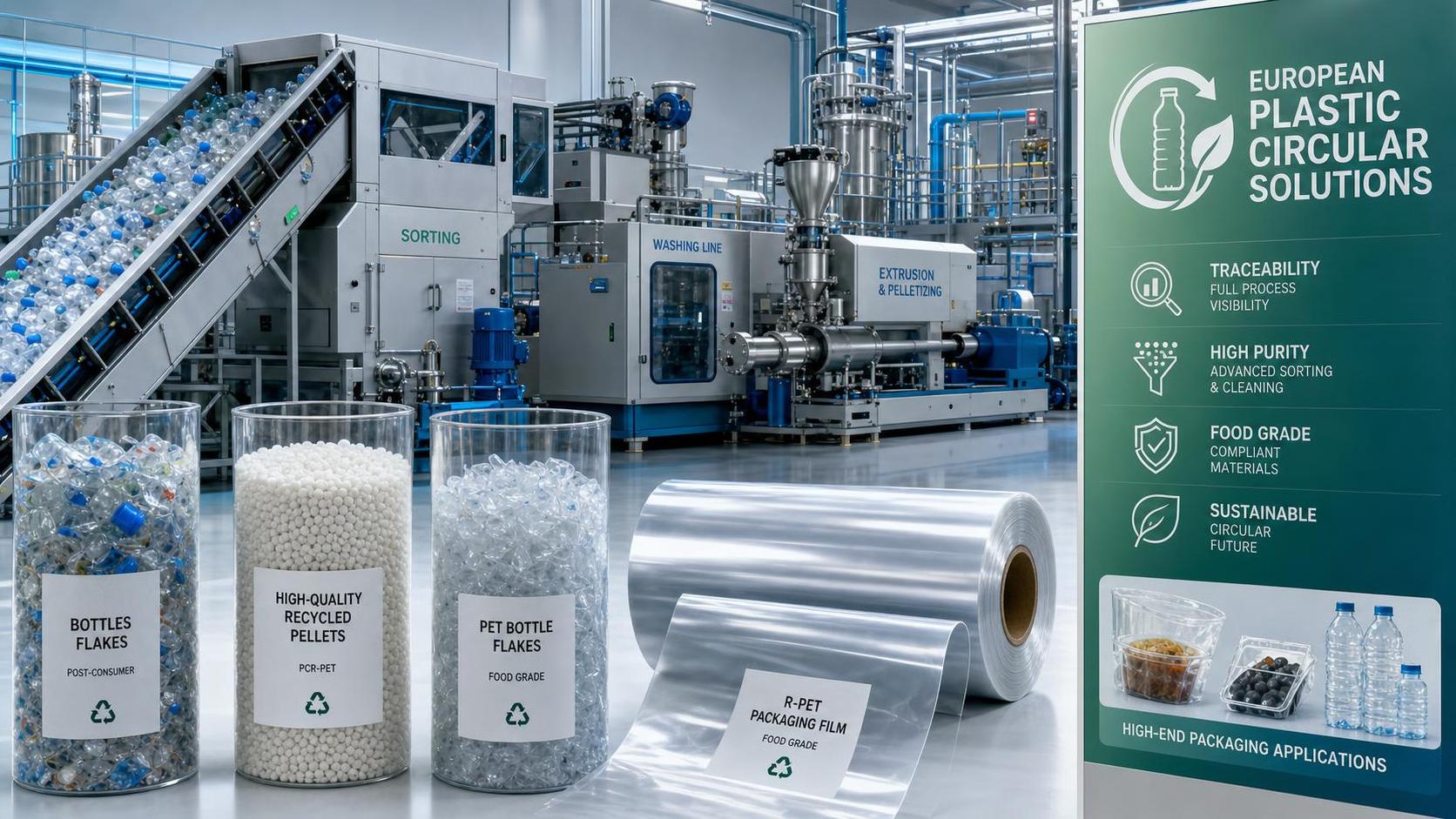
Scenario five: recycling lines grow, but material quality becomes unpredictable
Circular manufacturing is a major growth area, yet it can make polymer forming systems far more complex than virgin-only production.
Feedstock variability, contamination, odor, moisture, filtration load, and melt degradation create scaling barriers very quickly.
A pelletizing line that works with one regional waste stream may fail badly in another market.
That is why in-house recycling programs need stronger process intelligence than many green claims suggest.
Core judgment points
Evaluate contamination tolerance, filtration strategy, devolatilization performance, and pellet consistency under variable inputs.
Scalable polymer forming systems must absorb feedstock swings without collapsing downstream quality performance.
How scenario needs differ across polymer forming systems
Different scenarios fail for different reasons.
A simple comparison helps reveal where scale pressure is most dangerous.
Practical adaptation moves before complexity becomes unmanageable
The best response is not always bigger machines or more automation.
Often, scalable polymer forming systems improve by simplifying governance around process windows, material pathways, and digital standards.
- Create golden process templates with version control across all critical equipment.
- Define allowable material variation before approving new suppliers or recycled inputs.
- Use inline sensing for melt, pressure, moisture, and energy instead of delayed quality checks.
- Standardize maintenance triggers around wear components that affect rheology and heat transfer.
- Link compliance records directly to machine data, lot history, and tooling identity.
- Test scale-up through pilot replication, not only nameplate capacity assumptions.
Common misjudgments that make polymer forming systems harder to scale
One frequent mistake is treating utilization as the same thing as scalability.
A line can run full while becoming less transferable, less compliant, and less resilient.
Another mistake is over-customizing every plant around local preferences.
That creates hidden engineering debt across controls, tooling, spare parts, and validation routines.
A third error is underestimating data architecture.
When machine data, quality data, and material data remain isolated, polymer forming systems cannot scale intelligently.
Finally, many expansion plans ignore circularity complexity.
Adding recycled content or in-house recovery changes rheology, filtration, odor control, and audit obligations at the same time.
The next step: evaluate scale readiness before the next expansion cycle
Polymer forming systems should be judged by repeatability, transferability, compliance resilience, and material adaptability.
That is true across high-precision molding, continuous extrusion, fast packaging lines, rubber curing, and recycled pellet production.
A useful starting point is a structured audit of process windows, digital traceability, feedstock variation tolerance, and cross-site replication barriers.
PFRS supports this evaluation with intelligence on molding science, extrusion architecture, circular plastics, and evolving global compliance conditions.
When polymer forming systems become too complex to scale, simplification is not a step backward.
It is often the fastest path to stronger output, cleaner data, lower waste, and more durable growth.
Related News
- 00
0000-00
How to Evaluate a PET Bottle Recycling System Supplier for Reliable rPET Output - 00
0000-00
How to Select Rubber Processing Equipment for High-Precision Automotive Seals - 00
0000-00
How to Qualify a Servo Injection Molding Exporter for Global Sourcing - 00
0000-00
Polymer Processing for Extrusion: How Melt Rheology Affects Line Stability - 00
0000-00
Energy-Efficient Polymer Processing: Where Plants Can Cut kWh per Kilogram
Weekly Insights
Stay ahead with our curated technology reports delivered every Monday.
Related News
 Prof. Marcus ChenEnergy-Efficient Polymer Processing: Where Plants Can Cut kWh per KilogramEnergy-efficient polymer processing solutions help plants reduce kWh per kilogram, protect quality, cut scrap, and prioritize upgrades with data-driven insights.Sep 23, 2026
 Prof. Marcus ChenPlastic Pelletizing Trends: How Recycling Demand Is Reshaping Processing TechnologyPlastic pelletizing trends are redefining recycling quality. Explore filtration, extrusion, degassing, and automation innovations driving cleaner, more consistent recycled resin.Sep 07, 2026
 Prof. Marcus ChenHow Polymer Supply Chains Are Changing to Support High-Quality Recycling FeedstockPolymer supply chain for recycling is shifting toward traceable sourcing, cleaner sorting, and stable processing. See how high-quality feedstock improves performance, compliance, and cost control.Aug 22, 2026
 Prof. Marcus ChenHow Europe’s Circular Plastics Economy Is Reshaping Recycling InvestmentCircular plastics economy Europe is reshaping recycling investment through quality, traceability, and packaging demand. Explore where capital is moving and why it matters now.Aug 04, 2026
 Prof. Marcus ChenBlow Molding Trends Shaping Packaging, Sustainability, and Production EfficiencyBlow molding trends are redefining packaging with lightweighting, recycled content, automation, and energy efficiency. Discover how smarter production boosts sustainability and cuts costs.Jul 23, 2026
 Prof. Marcus ChenExtrusion Equipment Modular Design: When It Makes Sense for Line ExpansionExtrusion equipment modular design helps manufacturers expand lines in phases, cut disruption, and stay ready for recycled content, utility limits, and changing product demands.Jul 15, 2026
 Prof. Marcus ChenPolymer Lifecycle Solutions Explained: From Material Sourcing to End-of-Life RecoveryPolymer lifecycle solutions explained from sourcing and processing to recycling and recovery. Discover how to cut waste, improve quality, and build smarter material strategies.Jul 13, 2026
 Prof. Marcus ChenEnergy-Efficient Polymer Processing Systems: Which Metrics Matter Most?Energy-efficient polymer processing systems: discover the metrics that truly drive ROI—specific energy use, yield, uptime, stability, and compliance for smarter equipment decisions.Jul 11, 2026
 Prof. Marcus ChenPolymer Recycling Systems for Continuous Operation: What to Check Before SpecifyingPolymer recycling systems continuous operation starts with the right specification. Learn what to check for uptime, melt quality, energy efficiency, and reliable pellet output.Jul 09, 2026
 Prof. Marcus ChenCircular Plastics Economy in Japan: Policy Drivers, Recycling Targets, and Market ImpactCircular plastics economy Japan is accelerating as policy, recycling targets, and packaging reforms reshape material choices, processing strategy, and market advantage.Jul 05, 2026
 Prof. Marcus ChenPlastic Extrusion Technology Trends: What Process Changes Are Improving Energy Efficiency?Plastic extrusion technology trends are reshaping energy efficiency through smarter screws, thermal control, servo drives, and digital optimization. See which process changes deliver lower costs and more stable output.Jul 01, 2026
 Prof. Marcus ChenInjection Molding Technology Trends: Which Process Changes Matter Most for Medical and Packaging Parts?Injection molding technology trends shaping medical and packaging parts: discover the process changes that improve validation, precision, efficiency, and recycled-material readiness.Jun 30, 2026
 Prof. Marcus ChenCircular Plastics Economy Compliance Explained: Key Requirements for ManufacturersCircular plastics economy compliance explained for manufacturers: learn key requirements, audit risks, process controls, and how to turn compliance into a competitive advantage.Jun 25, 2026
 Prof. Marcus ChenAdvanced Materials Processing Trends: 5 Shifts Reshaping Capacity Planning and SourcingAdvanced materials processing trends are reshaping capacity planning, sourcing, recycling, and compliance. Explore 5 shifts helping manufacturers cut risk, improve precision, and build resilient growth.Jun 24, 2026
 Prof. Marcus ChenGlobal Plastic Ban Trends: Which Packaging Materials and Export Markets Face the Biggest Changes?Global plastic ban trends are reshaping packaging choices and export strategy. See which materials and markets face the biggest shifts, and how to reduce compliance risk.Jun 22, 2026
 Prof. Marcus ChenPolymer Rheology Trends That Matter in Extrusion: Melt Strength, Shear, and StabilityPolymer rheology trends are reshaping extrusion performance. Learn how melt strength, shear, and stability affect quality, efficiency, and recycled resin processing.Jun 18, 2026
 Prof. Marcus ChenPlastic Circularity Strategies for Manufacturers: Recycled Content, Design, and TraceabilityPlastic circularity strategies for manufacturers: learn how recycled content, smarter design, and traceability can reduce risk, improve compliance, and strengthen supply resilience.Jun 18, 2026
 Prof. Marcus ChenAdvanced Materials Processing Equipment in High-Performance Manufacturing: Where It Fits BestAdvanced materials processing equipment drives precision, speed, and sustainability in manufacturing. Explore where each system fits best to improve quality, efficiency, and ROI.Jun 16, 2026
 Prof. Marcus ChenWhat Is Driving the Circular Economy Plastics Market? Policy, Pricing, and Demand ShiftsCircular economy plastics market trends are being driven by tighter policy, resin price volatility, and stricter buyer demands. Discover what this means for sourcing, processing, and growth.Jun 13, 2026
 Prof. Marcus ChenDigital Polymer Processing Explained: Methods, Materials, and Best-Fit ApplicationsDigital polymer processing explained clearly: explore key methods, materials, and best-fit applications to improve quality, efficiency, and recycling performance.Jun 10, 2026