What thermodynamic reactions in polymers change during reprocessing?




Understanding what thermodynamic reactions in polymers change during reprocessing is essential for evaluating recycled resin quality, process stability, and compliance exposure. Each reheating cycle alters molecular structure, oxidation level, crystallinity, volatiles, and flow behavior. These shifts directly affect molding windows, extrusion output, color, odor, strength, and long-term durability across modern polymer processing systems.
Why thermodynamic reactions in polymers matter during reprocessing
Reprocessing is never just melting and reshaping. It is a new thermal history. Heat, oxygen, shear, moisture, and residence time drive reactions that can either recover value or accelerate material decline.
For PFRS-relevant operations, these reactions influence injection molding consistency, twin-screw compounding efficiency, blow molding stability, and pelletizing quality. They also affect packaging compliance, especially when recycled content enters sensitive applications.
A checklist approach helps compare materials quickly. It turns abstract polymer science into visible control points: melt temperature, torque, IV loss, gel count, yellowness, volatile emissions, and mechanical property retention.
Core changes in thermodynamic reactions in polymers during reprocessing
The most important question is not whether reactions occur, but which reactions dominate. Different polymers respond differently, yet several pathways appear repeatedly in industrial reprocessing lines.
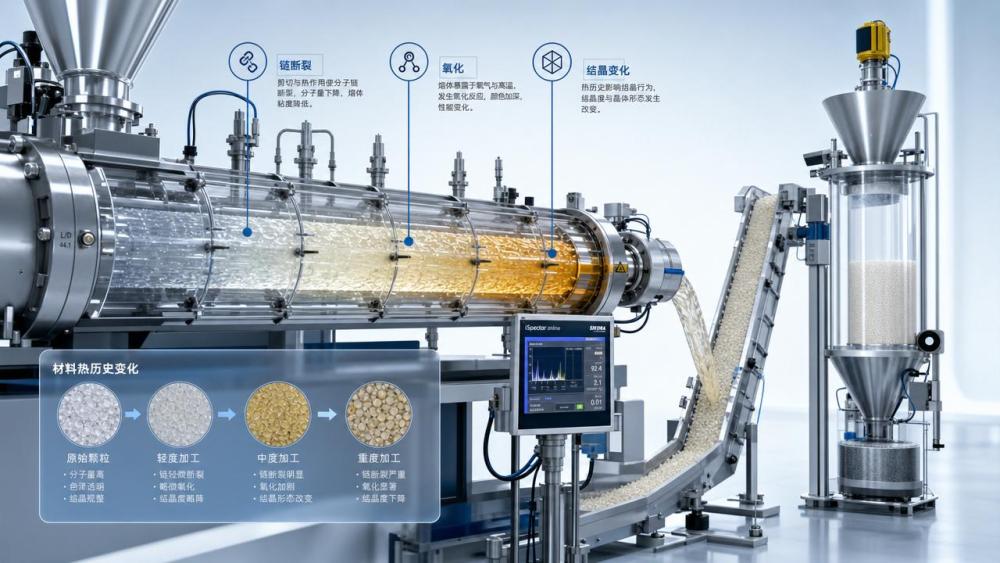
- Check for chain scission first, because repeated heat and shear often shorten molecular chains, lowering viscosity, melt strength, impact performance, and dimensional stability.
- Measure oxidation markers, since oxygen exposure at elevated temperature can form hydroperoxides, carbonyl groups, discoloration, odor compounds, and embrittlement in many recycled polymers.
- Watch for crosslinking growth, especially in polyethylene, elastomers, and contamination-heavy streams, because branching or gel formation can increase viscosity and destabilize flow.
- Track crystallinity changes after each thermal cycle, as altered cooling and molecular mobility can change stiffness, shrinkage, barrier behavior, clarity, and heat resistance.
- Evaluate hydrolysis sensitivity in hygroscopic materials like PET, PA, and PC, because residual moisture can rapidly cut molecular weight during melt processing.
- Review additive depletion, since antioxidants, stabilizers, lubricants, and impact modifiers are consumed or volatilized during reprocessing and leave the polymer less protected.
- Test volatile generation and extractables, because degraded oligomers and low-molecular fragments may create odor, fogging, emissions, and food-contact compliance concerns.
- Compare melt rheology rather than MFI alone, because similar flow index values can hide very different branching, molecular distribution, and processing risk profiles.
1. Chain scission
Chain scission is one of the most common thermodynamic reactions in polymers during reprocessing. Bonds break under thermal and mechanical stress, reducing average molecular weight.
Typical signs include lower melt viscosity, faster filling, reduced melt strength, weaker weld lines, and declining elongation at break. PET, PP, and some engineering plastics show this clearly.
2. Oxidation
Oxidation becomes more severe when hot polymer contacts air in hoppers, vents, die zones, or granulators. It can continue later during storage and secondary use.
Common indicators are yellowing, black specks, odor, carbonyl growth in FTIR, reduced impact toughness, and unstable torque. Oxidation often works together with chain scission.
3. Crosslinking and branching
Not all reprocessing lowers viscosity. Some streams form branches or light crosslinks. This can raise apparent melt strength, but also produce gels and unstable pressure.
In film, pipe, or blow molding, moderate branching may improve bubble stability. Excess crosslinking, however, increases die buildup, filter loading, and poor surface finish.
4. Crystallinity and morphology shifts
Reprocessing changes how molecules pack during cooling. Faster nucleation or altered crystal growth can increase stiffness but reduce transparency or impact resistance.
These morphology shifts are important in rPET, rPP, and rPE applications. They affect shrinkage control, bottle performance, seal behavior, and post-mold warpage.
5. Hydrolysis and additive loss
Moisture-driven hydrolysis is especially damaging in PET and polyamides. Meanwhile, stabilizers are gradually consumed, making each later pass more vulnerable to degradation.
That is why two materials with the same number of cycles can behave differently. Drying history, contamination, and antioxidant package retention matter greatly.
How to verify thermodynamic reactions in polymers on the production floor
A useful evaluation combines lab data with machine-side signals. Fast checks reduce scrap, while deeper analysis confirms whether the reprocessed polymer still matches end-use demands.
- Record melt temperature, pressure, motor load, and residence time on every run, because reaction severity often increases before visible defects appear.
- Measure MFI or intrinsic viscosity after each pass, then compare with tensile and impact data to avoid relying on one simplified degradation signal.
- Use DSC, FTIR, OIT, or gel content testing when quality drift appears, because these methods reveal crystallinity shifts, oxidation, and crosslinking behavior.
- Inspect color, odor, black specks, and filter contamination routinely, since physical appearance often gives the earliest warning of thermochemical instability.
- Review drying efficiency, venting performance, and contamination control, because water, paper, metal fines, and incompatible polymers accelerate unwanted reactions.
Application-specific considerations across polymer forming and recycling systems
Injection molding
In injection molding, thermodynamic reactions in polymers often show up as flash variation, sink changes, brittle gates, and inconsistent holding pressure response.
Watch shot-to-shot viscosity stability, regrind ratio, and residence time in the barrel. Small thermal deviations can create major dimensional differences in precision parts.
Twin-screw extrusion and compounding
Extrusion magnifies shear and oxygen exposure. Screw design, vent placement, and specific energy input determine whether blending remains controlled or degradation accelerates.
Reactive extrusion may intentionally rebuild chains or compatibilize blends. Even then, side reactions must be monitored to avoid gel formation and unstable pellet quality.
Blow molding and bottle applications
Bottle performance depends heavily on molecular weight and crystallinity balance. Excessive chain scission lowers top-load strength and can reduce burst resistance.
For recycled PET streams, acetaldehyde, IV retention, and color are critical. Thermal history must be carefully managed from washing to pelletizing to preform processing.
Rubber vulcanization and elastomer rework
Elastomer systems behave differently because crosslinking is often desired. Rework can disturb cure chemistry, filler dispersion, and final compression set.
Heat history should be assessed with cure curves, hardness, and rebound data. Partial pre-curing can reduce processing safety and final product uniformity.
Waste plastic pelletizing
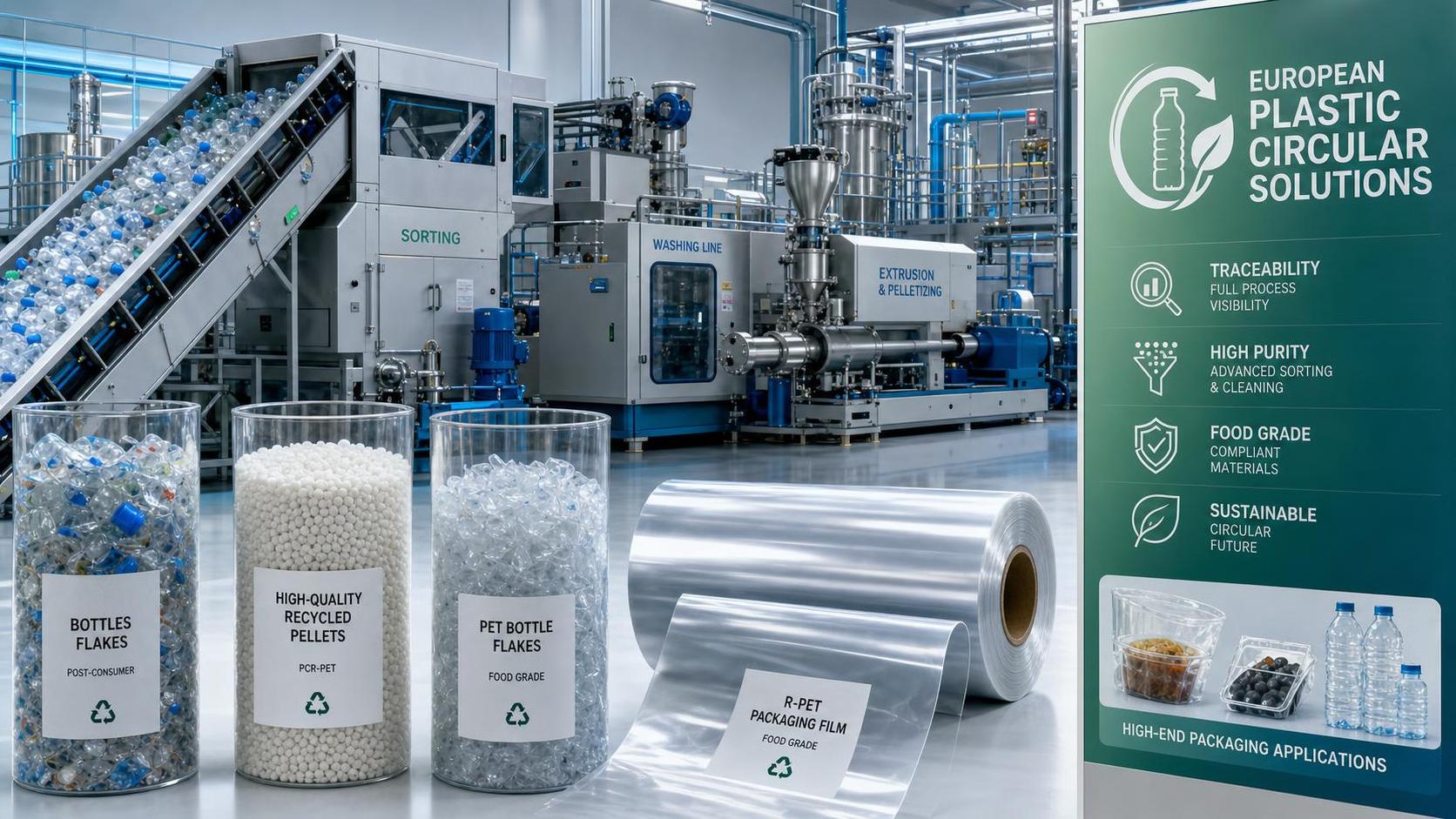
Pelletizing lines sit at the center of circular plastics recovery. Here, thermodynamic reactions in polymers determine whether waste becomes consistent feedstock or downgraded output.
Effective washing, melt filtration, degassing, and underwater cutting all help limit reaction-driven defects. Stable pellets support better downstream molding and extrusion performance.
Often-missed risks during polymer reprocessing
Assuming one test explains everything
A single MFI result cannot fully describe thermodynamic reactions in polymers. Two samples may share flow values yet differ greatly in oxidation state or branching structure.
Ignoring contamination-driven reactions
PVC traces, metal residue, inks, adhesives, or organic contaminants can catalyze degradation. Reaction pathways then shift faster than expected from pure-resin benchmarks.
Overlooking stabilizer exhaustion
A polymer may run well today but fail in storage or later use because antioxidant reserves are already depleted. Oxidative aging continues after processing ends.
Separating process and compliance decisions
Degradation byproducts influence odor, migration, and recycled-content suitability. Quality control and regulatory review should be linked, especially in packaging-related applications.
Practical execution steps for better control
Start with a material passport for each recycled stream. Include source, prior thermal history, contamination profile, drying requirement, and allowable reprocessing cycles.
Set machine limits for melt temperature, screw speed, oxygen exposure, and residence time. These limits should reflect actual degradation behavior, not only nominal datasheet values.
Use staged testing. Begin with rapid floor checks, then escalate to DSC, FTIR, OIT, IV, gel count, and mechanical testing when trend shifts appear.
Where possible, apply vacuum degassing, inert handling, efficient drying, and fresh stabilizer packages. These controls reduce harmful thermodynamic reactions in polymers during reprocessing.
FAQ
Do all polymers degrade the same way when reprocessed?
No. Some mainly undergo chain scission, others oxidize faster, and some show branching or crosslinking. Moisture sensitivity and additive package design also change outcomes.
Can thermodynamic reactions in polymers ever be beneficial?
Yes, in controlled reactive extrusion or chain extension. However, beneficial modification requires tight control, because side reactions can quickly reduce product consistency.
What is the fastest warning sign on a production line?
Unexpected changes in pressure, torque, color, odor, or filter loading usually appear before full lab confirmation. These signals should trigger immediate review.
Summary and next actions
The main thermodynamic reactions in polymers during reprocessing are chain scission, oxidation, crosslinking, hydrolysis, additive depletion, and crystallinity change. Together, they define performance retention and process reliability.
A disciplined evaluation routine turns these reactions into manageable variables. Track thermal history, verify rheology, confirm morphology, and connect quality data with compliance needs.
For polymer forming and recycling systems, the next step is simple: build a reaction-focused control sheet for every material stream, then update it after each reprocessing cycle.
Related News
- 00
0000-00
How to Select Rubber Processing Equipment for High-Precision Automotive Seals - 00
0000-00
How to Qualify a Servo Injection Molding Exporter for Global Sourcing - 00
0000-00
Polymer Processing for Extrusion: How Melt Rheology Affects Line Stability - 00
0000-00
Energy-Efficient Polymer Processing: Where Plants Can Cut kWh per Kilogram - 00
0000-00
German Extrusion Equipment Suppliers: Comparing Service, Lead Times, and Lifecycle Cost
Weekly Insights
Stay ahead with our curated technology reports delivered every Monday.
Related News
 Prof. Marcus ChenEnergy-Efficient Polymer Processing: Where Plants Can Cut kWh per KilogramEnergy-efficient polymer processing solutions help plants reduce kWh per kilogram, protect quality, cut scrap, and prioritize upgrades with data-driven insights.Sep 23, 2026
 Prof. Marcus ChenPlastic Pelletizing Trends: How Recycling Demand Is Reshaping Processing TechnologyPlastic pelletizing trends are redefining recycling quality. Explore filtration, extrusion, degassing, and automation innovations driving cleaner, more consistent recycled resin.Sep 07, 2026
 Prof. Marcus ChenHow Polymer Supply Chains Are Changing to Support High-Quality Recycling FeedstockPolymer supply chain for recycling is shifting toward traceable sourcing, cleaner sorting, and stable processing. See how high-quality feedstock improves performance, compliance, and cost control.Aug 22, 2026
 Prof. Marcus ChenHow Europe’s Circular Plastics Economy Is Reshaping Recycling InvestmentCircular plastics economy Europe is reshaping recycling investment through quality, traceability, and packaging demand. Explore where capital is moving and why it matters now.Aug 04, 2026
 Prof. Marcus ChenBlow Molding Trends Shaping Packaging, Sustainability, and Production EfficiencyBlow molding trends are redefining packaging with lightweighting, recycled content, automation, and energy efficiency. Discover how smarter production boosts sustainability and cuts costs.Jul 23, 2026
 Prof. Marcus ChenExtrusion Equipment Modular Design: When It Makes Sense for Line ExpansionExtrusion equipment modular design helps manufacturers expand lines in phases, cut disruption, and stay ready for recycled content, utility limits, and changing product demands.Jul 15, 2026
 Prof. Marcus ChenPolymer Lifecycle Solutions Explained: From Material Sourcing to End-of-Life RecoveryPolymer lifecycle solutions explained from sourcing and processing to recycling and recovery. Discover how to cut waste, improve quality, and build smarter material strategies.Jul 13, 2026
 Prof. Marcus ChenEnergy-Efficient Polymer Processing Systems: Which Metrics Matter Most?Energy-efficient polymer processing systems: discover the metrics that truly drive ROI—specific energy use, yield, uptime, stability, and compliance for smarter equipment decisions.Jul 11, 2026
 Prof. Marcus ChenPolymer Recycling Systems for Continuous Operation: What to Check Before SpecifyingPolymer recycling systems continuous operation starts with the right specification. Learn what to check for uptime, melt quality, energy efficiency, and reliable pellet output.Jul 09, 2026
 Prof. Marcus ChenCircular Plastics Economy in Japan: Policy Drivers, Recycling Targets, and Market ImpactCircular plastics economy Japan is accelerating as policy, recycling targets, and packaging reforms reshape material choices, processing strategy, and market advantage.Jul 05, 2026
 Prof. Marcus ChenPlastic Extrusion Technology Trends: What Process Changes Are Improving Energy Efficiency?Plastic extrusion technology trends are reshaping energy efficiency through smarter screws, thermal control, servo drives, and digital optimization. See which process changes deliver lower costs and more stable output.Jul 01, 2026
 Prof. Marcus ChenInjection Molding Technology Trends: Which Process Changes Matter Most for Medical and Packaging Parts?Injection molding technology trends shaping medical and packaging parts: discover the process changes that improve validation, precision, efficiency, and recycled-material readiness.Jun 30, 2026
 Prof. Marcus ChenCircular Plastics Economy Compliance Explained: Key Requirements for ManufacturersCircular plastics economy compliance explained for manufacturers: learn key requirements, audit risks, process controls, and how to turn compliance into a competitive advantage.Jun 25, 2026
 Prof. Marcus ChenAdvanced Materials Processing Trends: 5 Shifts Reshaping Capacity Planning and SourcingAdvanced materials processing trends are reshaping capacity planning, sourcing, recycling, and compliance. Explore 5 shifts helping manufacturers cut risk, improve precision, and build resilient growth.Jun 24, 2026
 Prof. Marcus ChenGlobal Plastic Ban Trends: Which Packaging Materials and Export Markets Face the Biggest Changes?Global plastic ban trends are reshaping packaging choices and export strategy. See which materials and markets face the biggest shifts, and how to reduce compliance risk.Jun 22, 2026
 Prof. Marcus ChenPolymer Rheology Trends That Matter in Extrusion: Melt Strength, Shear, and StabilityPolymer rheology trends are reshaping extrusion performance. Learn how melt strength, shear, and stability affect quality, efficiency, and recycled resin processing.Jun 18, 2026
 Prof. Marcus ChenPlastic Circularity Strategies for Manufacturers: Recycled Content, Design, and TraceabilityPlastic circularity strategies for manufacturers: learn how recycled content, smarter design, and traceability can reduce risk, improve compliance, and strengthen supply resilience.Jun 18, 2026
 Prof. Marcus ChenAdvanced Materials Processing Equipment in High-Performance Manufacturing: Where It Fits BestAdvanced materials processing equipment drives precision, speed, and sustainability in manufacturing. Explore where each system fits best to improve quality, efficiency, and ROI.Jun 16, 2026
 Prof. Marcus ChenWhat Is Driving the Circular Economy Plastics Market? Policy, Pricing, and Demand ShiftsCircular economy plastics market trends are being driven by tighter policy, resin price volatility, and stricter buyer demands. Discover what this means for sourcing, processing, and growth.Jun 13, 2026
 Prof. Marcus ChenDigital Polymer Processing Explained: Methods, Materials, and Best-Fit ApplicationsDigital polymer processing explained clearly: explore key methods, materials, and best-fit applications to improve quality, efficiency, and recycling performance.Jun 10, 2026