Why green circular economy plans fail without process changes




Many green circular economy programs look credible in strategy decks, yet underperform in factories, sorting lines, and recovery systems. The usual reason is simple: sustainability targets move faster than process design. If molding conditions, extrusion recipes, wash quality, contamination control, and reuse specifications stay unchanged, circularity remains a reporting exercise rather than an operating model.
That gap matters across the broader industrial landscape. In polymer processing, packaging conversion, and waste plastic recovery, a green circular economy only works when material flow, equipment capability, and compliance demands are connected. Process changes turn recycled content goals into measurable output, stable quality, and lower lifecycle cost.
Why a checklist is essential for green circular economy decisions

Circular plans often fail because teams evaluate intent instead of execution. A checklist forces attention onto machine settings, resin behavior, scrap handling, and packaging recovery economics. It reduces the risk of approving a green circular economy roadmap that cannot survive production variability.
It also helps compare very different operations. Injection molding, extrusion, blow molding, rubber processing, and pelletizing do not share the same bottlenecks. A structured review reveals whether the real constraint is energy intensity, contamination, throughput loss, or inconsistent recycled feedstock.
Core checklist: process changes that determine success
- Map actual material flow from virgin input to scrap recovery, including regrind loops, purge losses, rejected parts, and post-consumer streams before setting any green circular economy target.
- Test processability, not only recyclability, by validating melt flow, moisture sensitivity, thermal history, odor, color drift, and contamination tolerance under real production conditions.
- Redesign machine parameters for recycled content, adjusting barrel temperature, screw speed, back pressure, cooling time, and residence time to avoid quality collapse.
- Define closed-loop quality standards that link incoming bale quality, washing efficiency, filtration level, pellet stability, and final product performance.
- Measure energy per kilogram at each process step, because a green circular economy claim weakens quickly if recycling consumes excessive power or heat.
- Align product design with recovery infrastructure by reducing incompatible layers, problematic labels, dark pigments, and additives that disrupt sorting or remelting.
- Integrate traceability data across forming and recycling operations so recycled content, defect rates, and material origin can be audited with confidence.
- Stress-test commercial assumptions by modeling downtime, yield loss, maintenance, and resin price volatility instead of relying on static sustainability projections.
Why these checkpoints matter
Each item addresses a common failure mode. A plant may announce a recycled-content target, then discover that screw geometry shears the polymer too aggressively. Another operation may collect packaging waste efficiently, yet lose value because sorting purity is too low for stable pelletizing. In both cases, the green circular economy objective fails because process assumptions were never validated.
How process gaps appear in different industrial scenarios
Injection molding and precision parts
Injection molding is sensitive to viscosity shifts, moisture, and thermal degradation. When recycled polymers are introduced without adjusting holding pressure curves or gate design, warpage, sink marks, and dimensional variation increase. A green circular economy strategy in this segment must begin with rheology-aware parameter tuning.
For medical, optical, and tight-tolerance applications, circularity may depend on selective use rather than full substitution. Recycled content can succeed in non-critical components, transport packaging, or secondary parts while primary performance zones remain tightly controlled.
Extrusion and continuous production
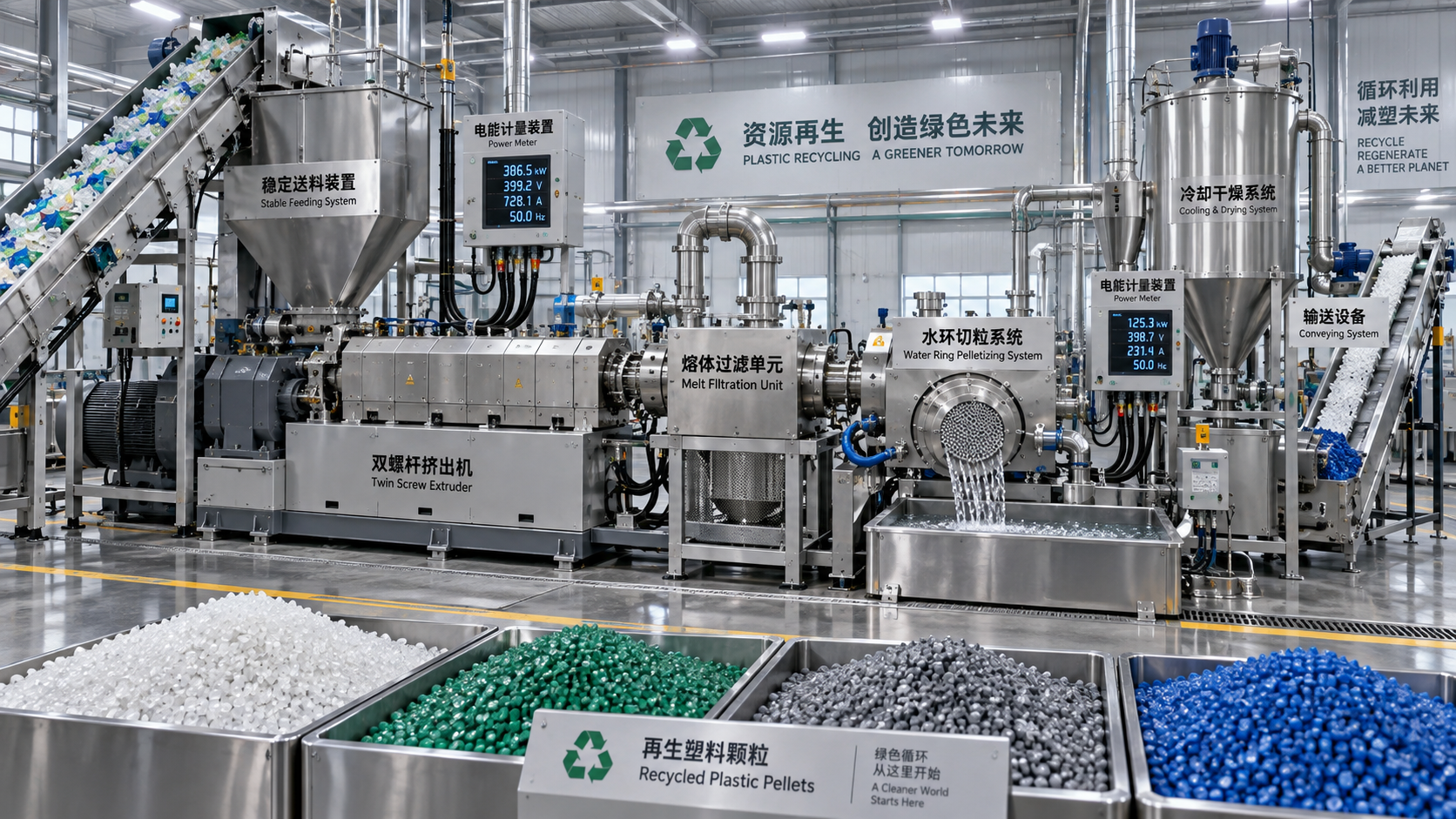
Extrusion lines expose weaknesses in feed consistency very quickly. Variation in bulk density, contamination, or melt flow causes unstable pressure, poor dispersion, and off-spec output. In a green circular economy model, feeder accuracy, venting efficiency, filtration, and screw configuration often matter more than headline recycled percentage.
This is especially true for films, pipes, and compounded materials. If additive packages are not reformulated for recycled resin behavior, the line may meet sustainability claims while quietly losing tensile performance, surface quality, or long-term durability.
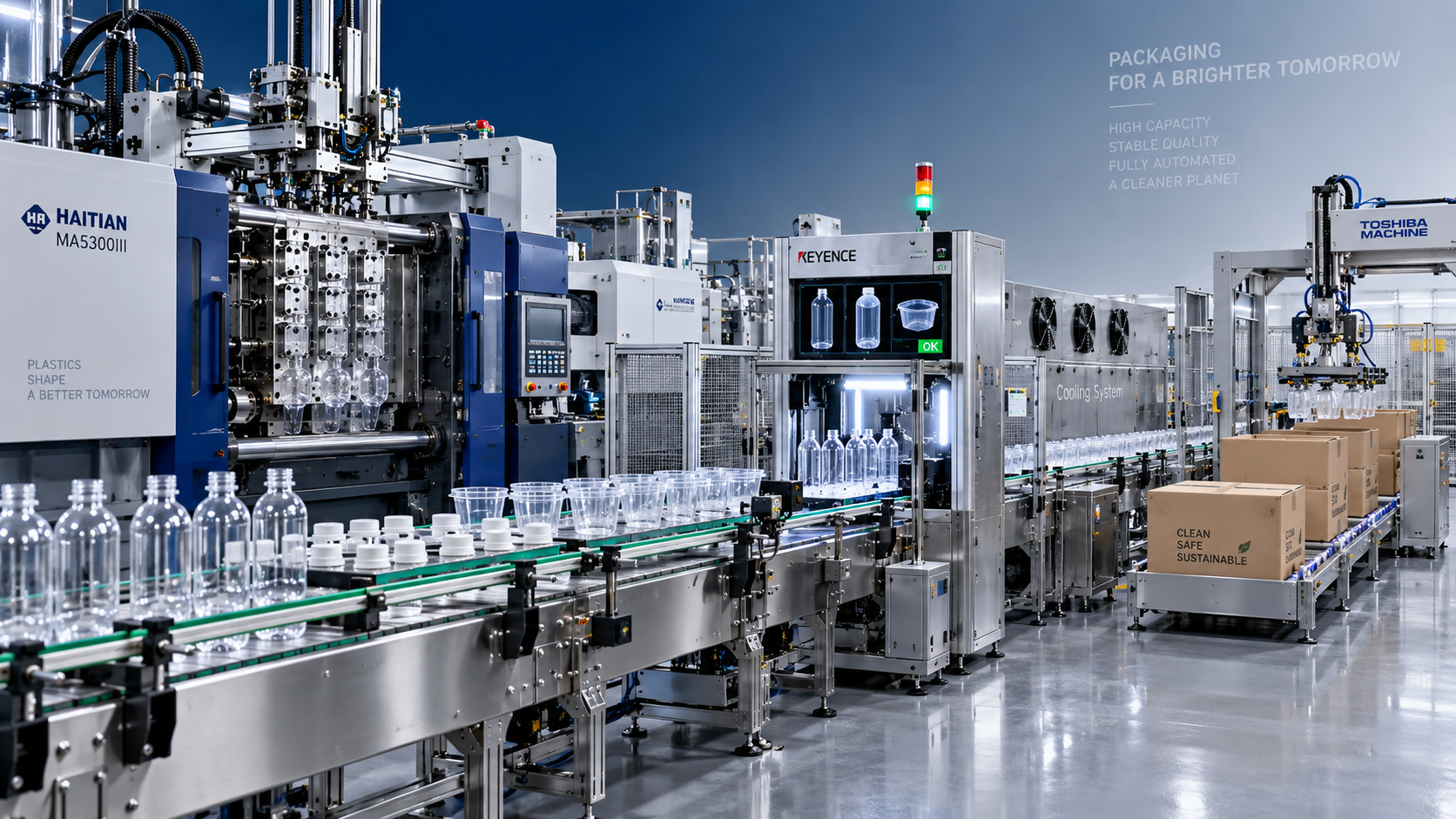
Packaging, blow molding, and bottle-to-bottle systems
Packaging is where green circular economy promises face the highest visibility. Yet bottle recovery systems fail when labels, caps, multilayer barriers, and colorants are not designed for sortability. Recovery economics are shaped upstream, long before any waste reaches the washing line.
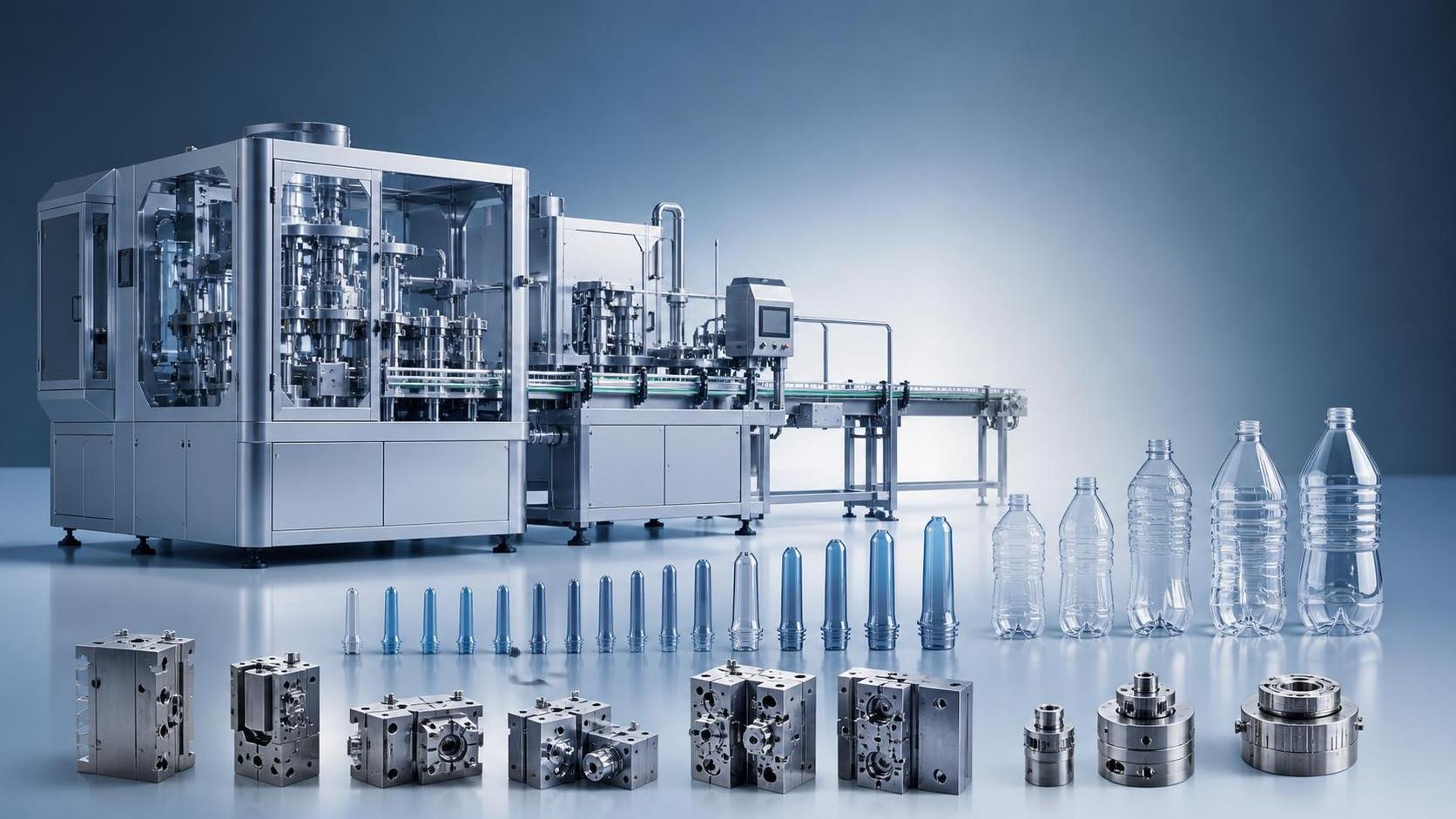
High-speed blow molding also demands stable resin quality. If recycled flakes contain moisture or fine contaminants, haze, brittleness, and acetaldehyde issues can rise. The process answer is not a slogan but better preform conditioning, filtration, and contamination control.
Waste plastic pelletizing and resource recovery
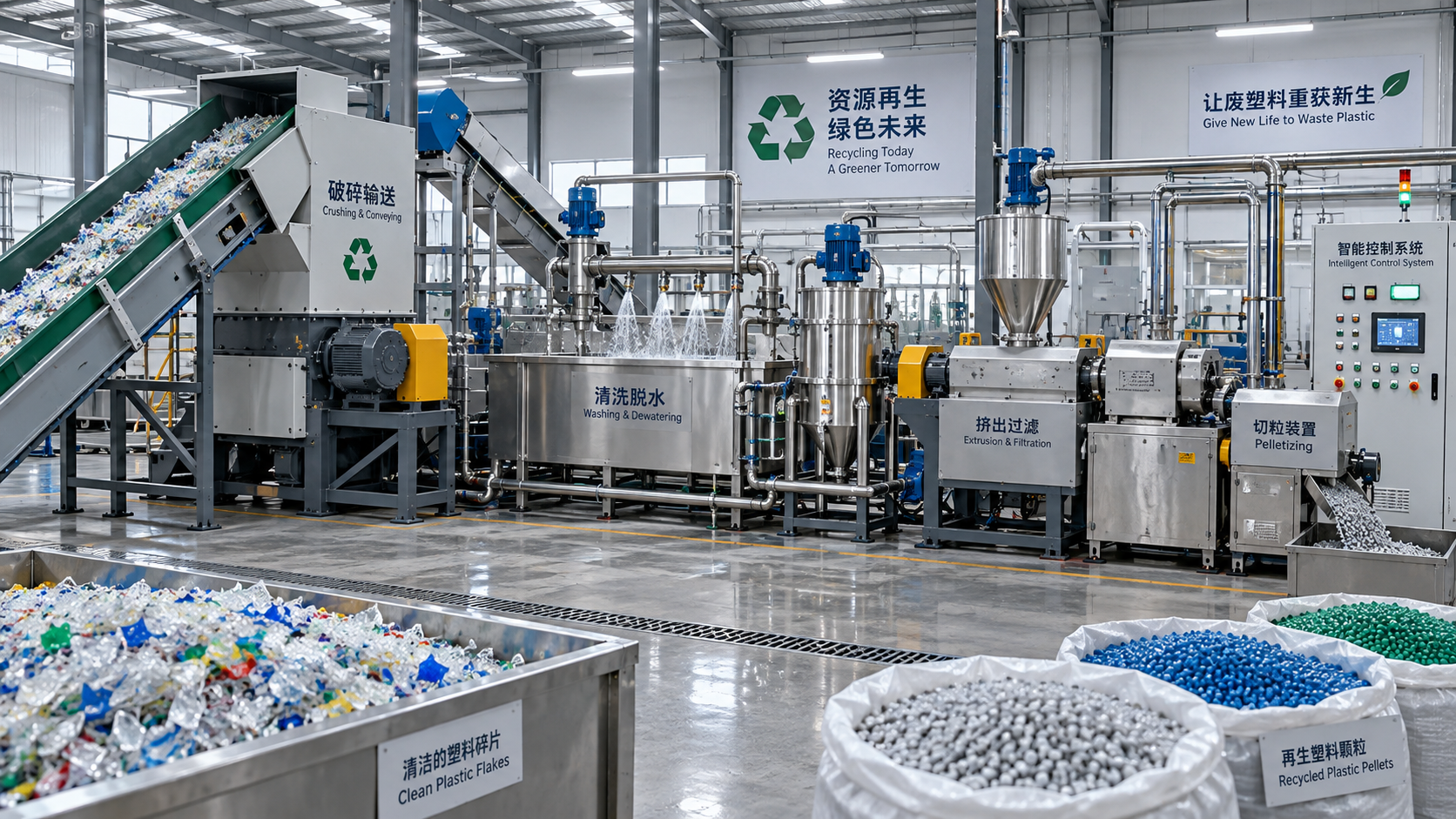
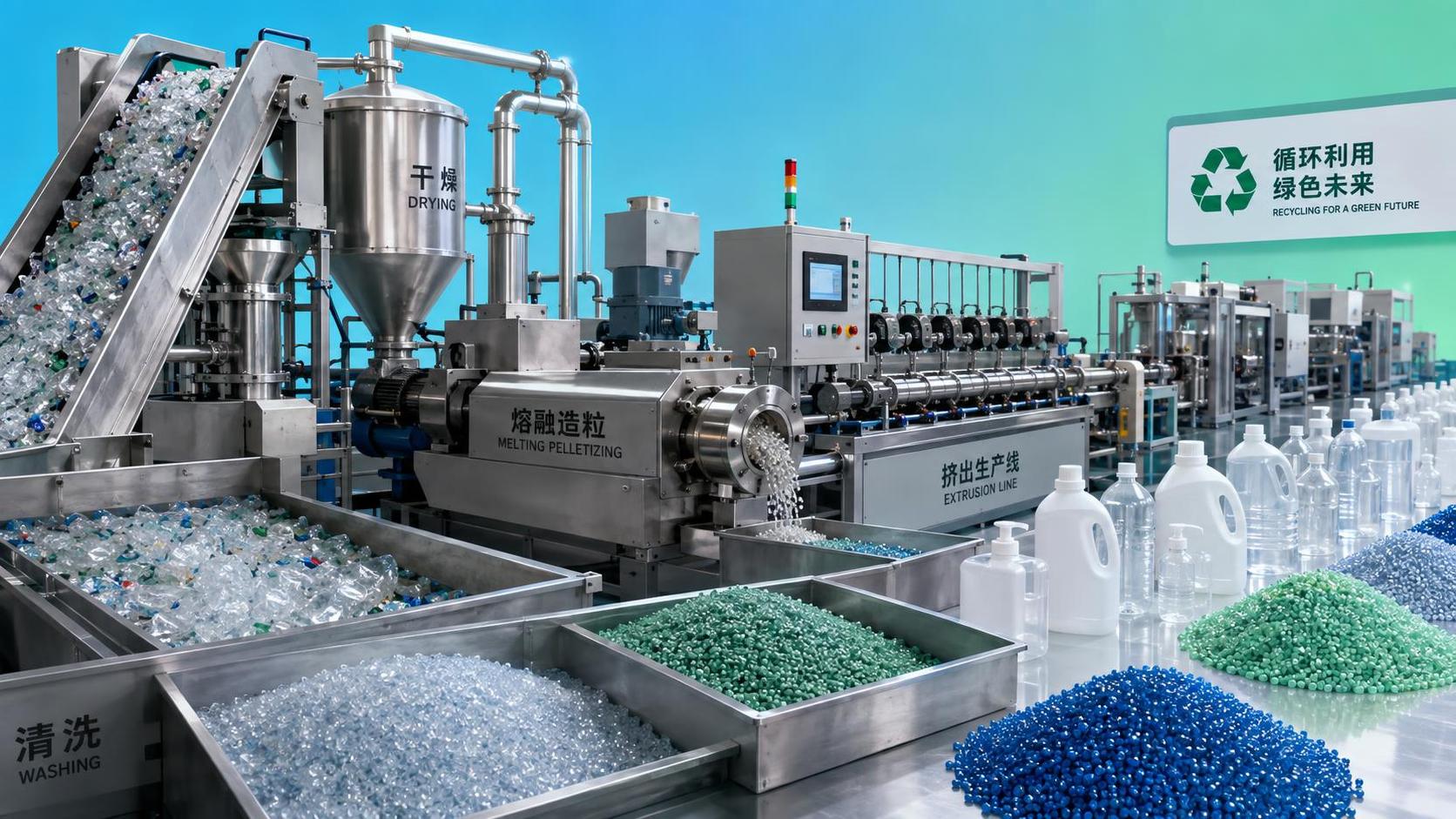
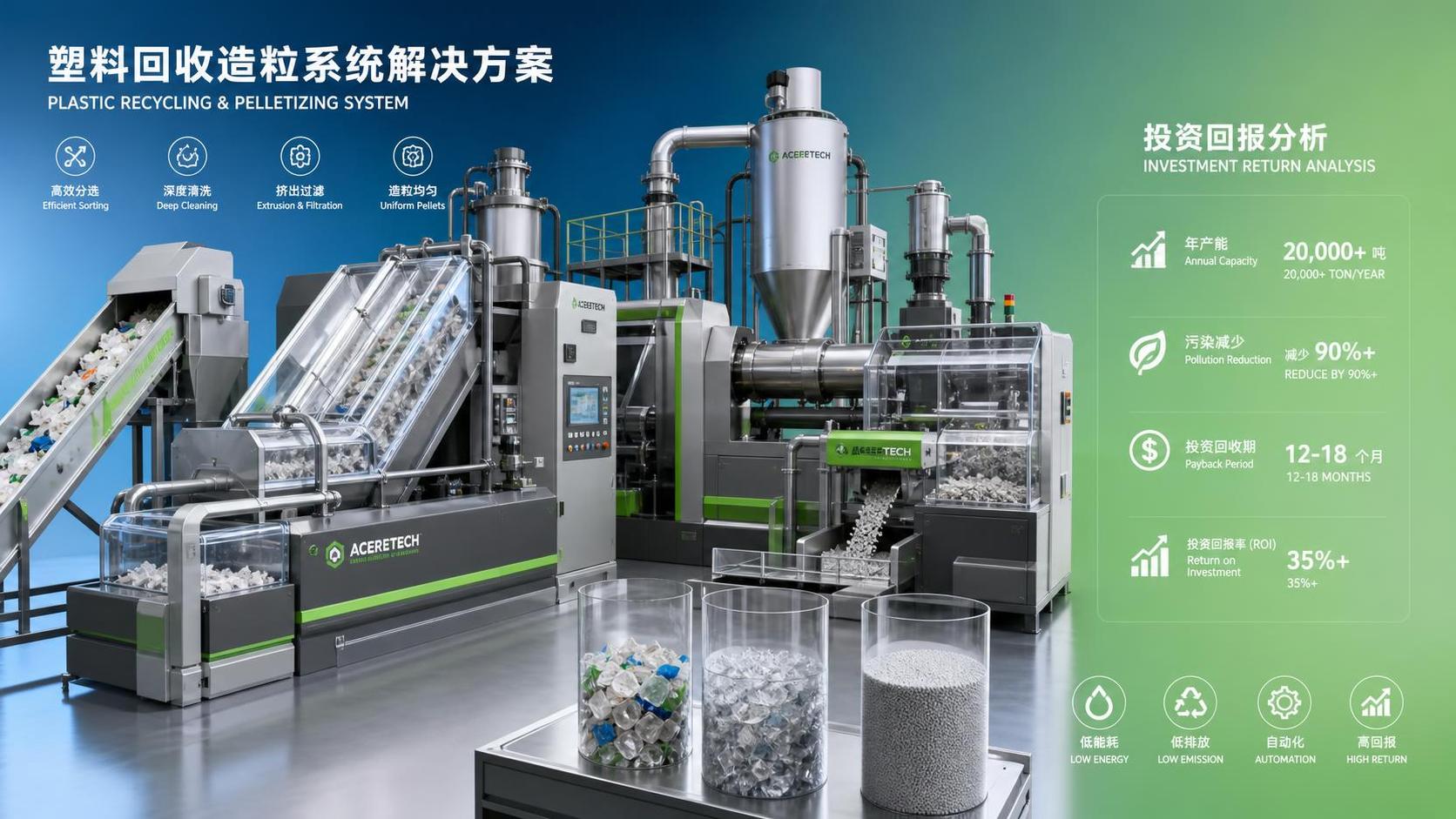
Pelletizing is often treated as the end of the loop, but it is actually the proof point. If washing, separation, drying, and melt filtration are weak, pellets will not re-enter demanding applications. A green circular economy depends on pellet quality being good enough for profitable reuse, not just technically recyclable.
Consistent pellet size, low gel count, controlled odor, and verified contamination thresholds create market confidence. Without those attributes, recovered material gets downgraded, and the business case erodes even when collection volumes look strong.
Commonly overlooked risks that derail circular plans
Ignoring thermomechanical history
Repeated heating and shear can reduce molecular weight and change flow behavior. If this is not measured, product specs may drift gradually until customer complaints appear.
Assuming compliance equals performance
Meeting a recycled-content declaration does not guarantee process stability, shelf life, or sealing integrity. A green circular economy must satisfy both regulatory and operating realities.
Underestimating contamination cost
Tiny amounts of paper, aluminum, silicone, or incompatible polymers can damage output quality and filtration systems. Contamination control is often cheaper than downstream correction.
Separating design teams from process teams
Products are frequently redesigned for circular branding without checking molding windows, extrusion behavior, or recycling compatibility. That disconnect is a major cause of green circular economy underperformance.
Practical execution steps that improve outcomes
- Start with one material family and one product line, then verify yield, energy use, and defect rates before scaling broader circular targets.
- Build a process baseline for virgin resin and compare every recycled-content trial against the same quality, uptime, and cost metrics.
- Install tighter monitoring for moisture, melt pressure, filtration differential, and specific energy consumption to catch instability early.
- Rework specifications with realistic tolerance bands so materials are neither unfairly rejected nor accepted beyond safe processing limits.
- Use design-for-recycling rules in packaging and components to reduce downstream complexity before investing in bigger recovery equipment.
These actions create a more credible green circular economy pathway because they translate ambition into machine-level discipline. The result is not only better ESG reporting, but better throughput, lower scrap, and stronger reuse economics.
Conclusion and next-step guidance
Why do green circular economy plans fail without process changes? Because circularity is not achieved by declarations, but by stable conversion, recoverable design, and reusable output quality. The missing link is usually operational alignment between forming equipment, material science, and recycling infrastructure.
The strongest next step is a process audit built around material flow, machine settings, contamination control, and end-use specifications. When those factors are reviewed together, a green circular economy strategy becomes measurable, scalable, and commercially durable.
Related News
- 00
0000-00
How to Size a Servo Injection Molding Press for High-Precision Parts - 00
0000-00
How High-Speed Precision Injection Molding Controls Part Tolerances at Scale - 00
0000-00
How to Select Packaging Molding Equipment for High-Volume Production Lines - 00
0000-00
How to Evaluate Plastic Pelletizing Machine Suppliers for Output, Support, and Risk - 00
0000-00
How to Select a Plastic Pipe Manufacturing System for Output, Resin, and Pipe Range
Weekly Insights
Stay ahead with our curated technology reports delivered every Monday.
Related News
 Ms. Elena RodriguezHow to Select Packaging Molding Equipment for High-Volume Production LinesPackaging molding equipment selection guide for high-volume lines: compare processes, throughput, materials, automation, and energy to achieve stable, cost-effective output.Oct 04, 2026
 Ms. Elena RodriguezHow to Evaluate Plastic Recycling Machinery for UAE Heat, Feedstock, and Output NeedsPlastic recycling machinery UAE buyers: evaluate heat resilience, feedstock handling, cooling, pellet quality, energy use, and lifecycle cost for reliable output.Sep 28, 2026
 Ms. Elena RodriguezGerman Extrusion Equipment Suppliers: Comparing Service, Lead Times, and Lifecycle CostExtrusion equipment Germany suppliers compared: evaluate service coverage, credible lead times, spare-parts access, and lifecycle cost to select a reliable, future-ready production partner.Sep 22, 2026
 Ms. Elena RodriguezWhat Should You Check Before Buying a Used Plastic Recycling Line?What should I check before buying a used plastic recycling line? Explore feedstock fit, wear, trials, utilities, controls, and restoration costs before you invest.Sep 26, 2026
 Ms. Elena RodriguezHow to Compare Pelletizing Lines by Energy Use per TonHow do I compare pelletizing lines by kWh per ton? Learn to measure total energy, verify saleable output, and select a cost-efficient line.Sep 23, 2026
 Ms. Elena RodriguezTyre Cutter Blade Wear: When Capacity Loss Needs Inspectionшинорез blade wear can quietly reduce tyre-cutting capacity. Learn the warning signs, inspection triggers, and maintenance actions that protect output and uptime.Sep 28, 2026
 Ms. Elena RodriguezIn-House Recycling for Factory Scrap: How to Reduce Material Waste and Disposal CostsIn house recycling for factory scrap helps manufacturers cut material waste, reduce disposal costs, and create controlled, quality-focused reuse loops.Sep 07, 2026
 Ms. Elena RodriguezHow Recyclable Packaging Manufacturing Balances Material Recovery and Production CostRecyclable packaging manufacturing: discover how smarter design, feedstock control, and process optimization reduce recovery costs while improving quality and yield.Sep 04, 2026
 Ms. Elena RodriguezHow to Evaluate a Plastic Recycling Systems Supplier for Your Processing NeedsChoose the right plastic recycling systems supplier with a practical guide to feedstock fit, output quality, total cost, testing, service, and compliance.Sep 01, 2026
 Ms. Elena RodriguezCE Marking for Plastic Processing Equipment: Documentation and Safety ChecksPlastic processing equipment CE compliance: learn the essential documentation, risk assessments, safety checks, and validation steps for reliable EU market access.Aug 30, 2026
 Ms. Elena RodriguezPlastic Packaging Compliance Standards: What Tests and Documents Matter Most?Plastic packaging compliance standards explained: learn which migration tests, mechanical checks, and audit-ready documents matter most to reduce risk and pass reviews with confidence.Aug 25, 2026
 Ms. Elena RodriguezHow to Evaluate a Plastic Waste Recycling System for Capacity, Contamination, and ROIPlastic waste recycling system evaluation made practical: compare true capacity, contamination control, and ROI to choose a line that delivers stable output and stronger returns.Aug 24, 2026
 Ms. Elena RodriguezPackaging Molding Equipment Price: What Drives Cost and How to Compare Quotes?Packaging molding equipment price varies by machine type, automation, tooling, energy use, and service scope. Learn what drives cost and how to compare quotes with confidence.Aug 21, 2026
 Ms. Elena RodriguezWhat Packaging Machinery for Plastic Containers Should You Choose for High-Volume Production?Packaging machinery for plastics containers can make or break high-volume production. Learn how to choose the right line for speed, consistency, compliance, and lower lifecycle costs.Aug 16, 2026
 Ms. Elena RodriguezWhat Circular Plastics Mean for Automotive Parts and Material SelectionCircular plastics for automotive are reshaping part selection with lower weight, better sustainability, and reliable performance. Discover how engineers balance recycled content, durability, and compliance.Aug 15, 2026
 Ms. Elena RodriguezBroiler Farming in Cage System: Selection Factors for Commercial FarmsBroiler farming in cage system selection for commercial farms: compare structure, ventilation, automation, and manure handling to improve efficiency and avoid costly mistakes.Aug 14, 2026
 Ms. Elena RodriguezHow to Implement Smart Polymer Manufacturing Without Disrupting Existing Production?Smart polymer manufacturing implementation made practical: learn how to upgrade existing production with phased digitalization, less downtime, better control, and measurable ROI.Aug 11, 2026
 Ms. Elena RodriguezHow to Evaluate a Rubber Compression Molding Supplier for Complex Part ProductionRubber compression molding supplier selection for complex parts starts with process, material, and tooling control. Learn how to compare vendors beyond price and reduce launch risk.Aug 10, 2026
 Ms. Elena RodriguezPackaging Compliance in Canada: Key Labeling and EPR Rules Importers Must KnowPackaging compliance Canada explained for importers: learn bilingual labeling, environmental claims, and provincial EPR rules to reduce risk, avoid costly errors, and stay market-ready.Aug 03, 2026
 Ms. Elena RodriguezWhy Circular Plastics Economy Traceability Matters for Recycled Content ComplianceCircular plastics economy traceability is essential for proving recycled content compliance across sourcing, processing, and reporting. Learn how strong evidence reduces audit risk.Aug 02, 2026