Why ESG in plastic manufacturing is now a board issue




ESG in plastic manufacturing has shifted from a reporting topic into a board-level operating issue.
The change is driven by regulation, energy volatility, waste accountability, and rising expectations around circular packaging performance.
Boards now review not only emissions and waste, but also equipment efficiency, recycled content readiness, and supply chain traceability.
In polymer processing, ESG in plastic manufacturing directly affects cost control, export access, financing terms, and long-term asset competitiveness.
That is why strategic decisions around injection molding, extrusion, blow molding, vulcanization, and recycling systems are being reframed through ESG value.
Understanding ESG in plastic manufacturing
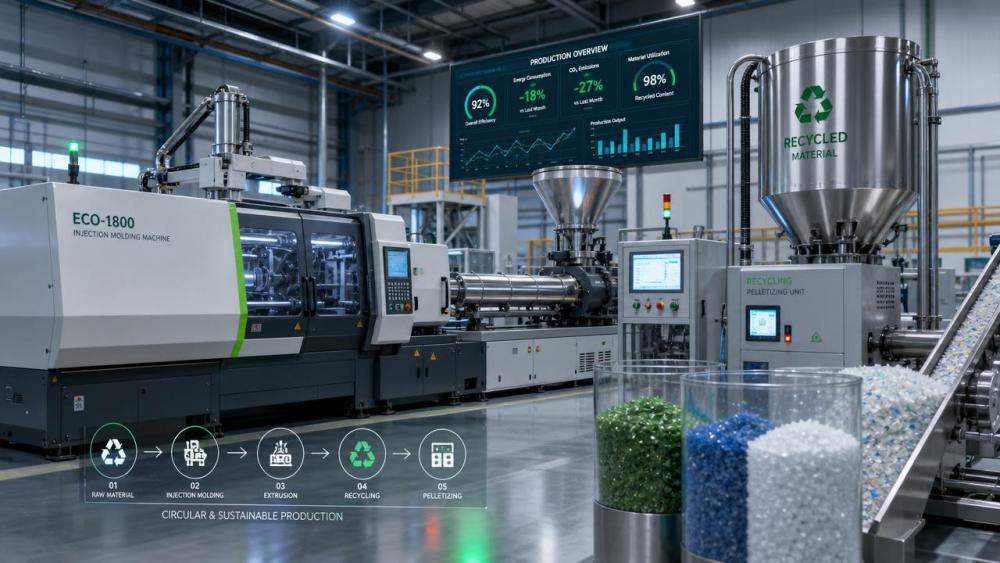
ESG in plastic manufacturing covers environmental impact, social responsibility, and governance quality across the full material and equipment lifecycle.
Environmental factors include energy intensity, carbon emissions, resin efficiency, water use, scrap recovery, and end-of-life recyclability.
Social factors include worker safety, chemical handling, product stewardship, and transparency across suppliers and downstream packaging users.
Governance focuses on data integrity, compliance systems, board oversight, capital allocation, and decision discipline around transition risks.
For plastic processing assets, ESG is not abstract. It is measured through machine uptime, electricity demand, reject rates, resin loss, and audit readiness.
This makes ESG in plastic manufacturing closely tied to engineering choices and process optimization, not only sustainability narratives.
Why board attention is rising now
Several signals explain why ESG in plastic manufacturing now sits on board agendas rather than staying inside compliance departments.
- Plastic taxes, EPR schemes, and packaging rules are expanding across major consumer and industrial markets.
- Electricity and fuel volatility expose inefficient processing lines and weak utility planning.
- Brand owners increasingly request recycled content, carbon data, and proof of material traceability.
- Lenders and insurers assess climate exposure, governance maturity, and stranded asset risk.
- Reputation risks from waste leakage or misleading claims can spread quickly across global markets.
These pressures are especially visible in packaging, automotive, medical, electronics, infrastructure, and consumer goods applications.
Boards therefore treat ESG in plastic manufacturing as part of enterprise resilience, not a side program.
Core risk signals by operating area
Business value beyond compliance
The strongest case for ESG in plastic manufacturing is that better environmental performance often improves operational discipline.
Lower scrap means lower resin spending. Better temperature control reduces defects. Stable process windows improve throughput and delivery performance.
Energy-efficient servo systems and all-electric machines can cut electricity demand while improving repeatability.
Twin-screw compounding optimization can raise additive dispersion and reduce off-spec material loss.
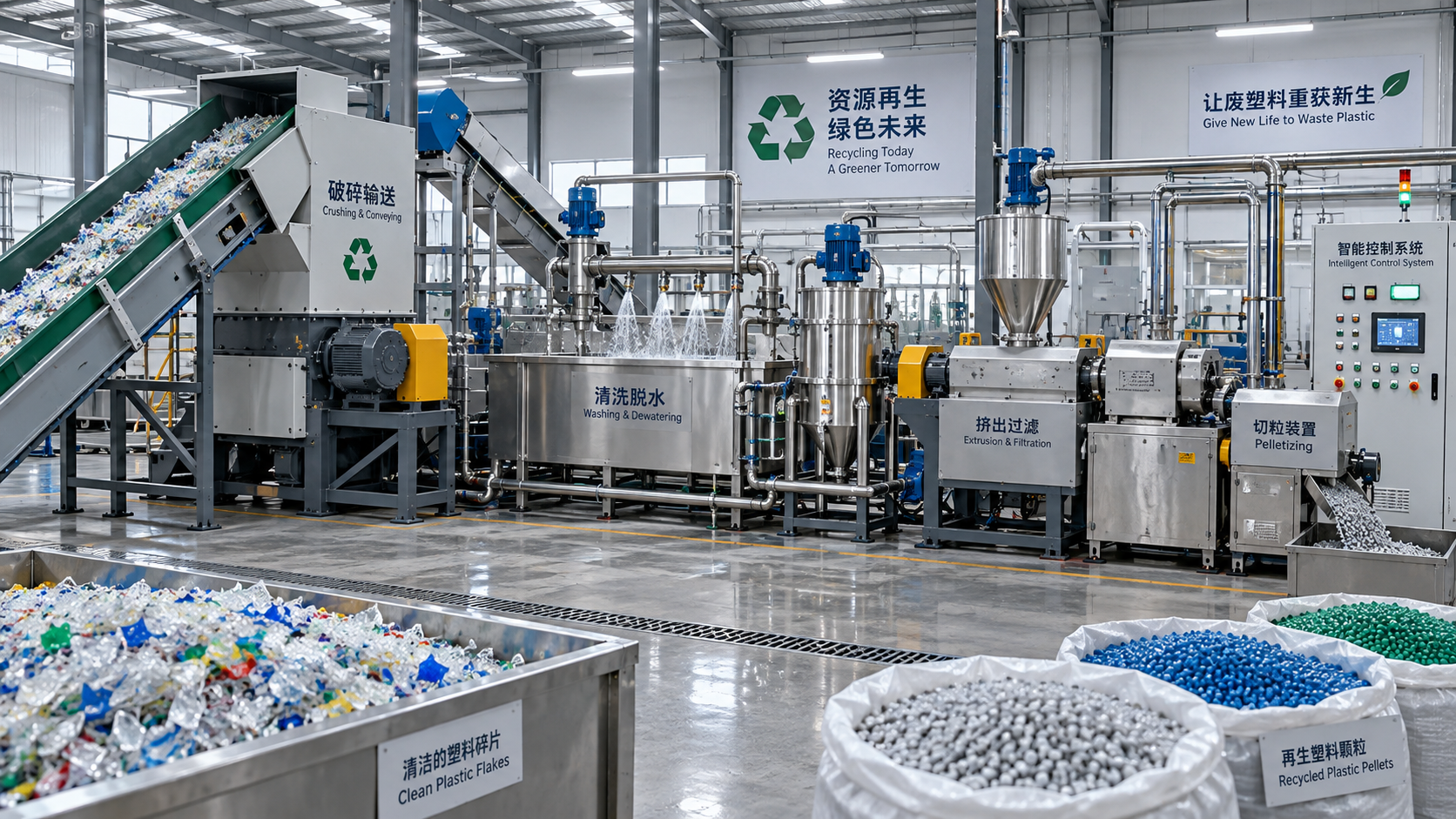
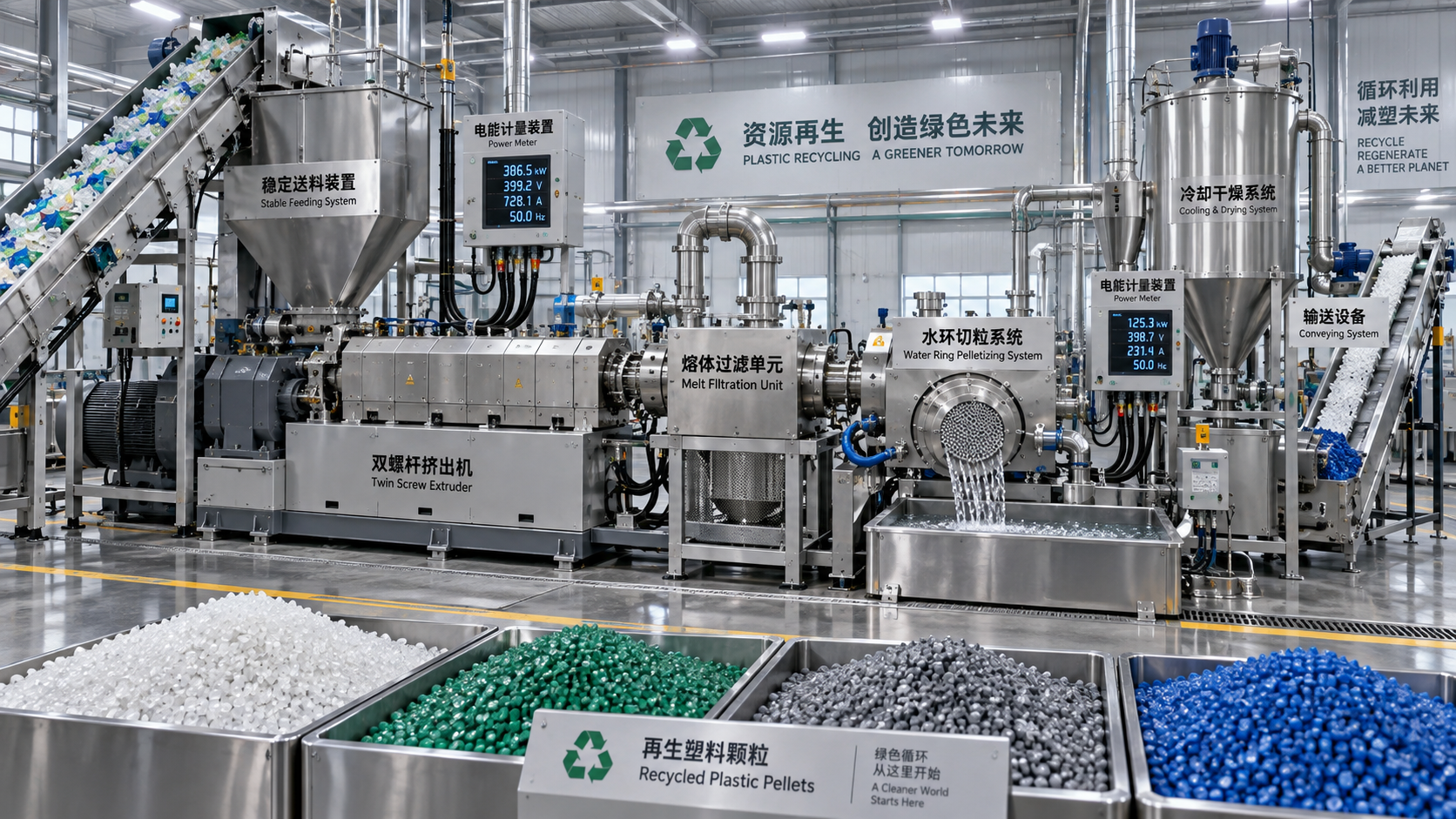
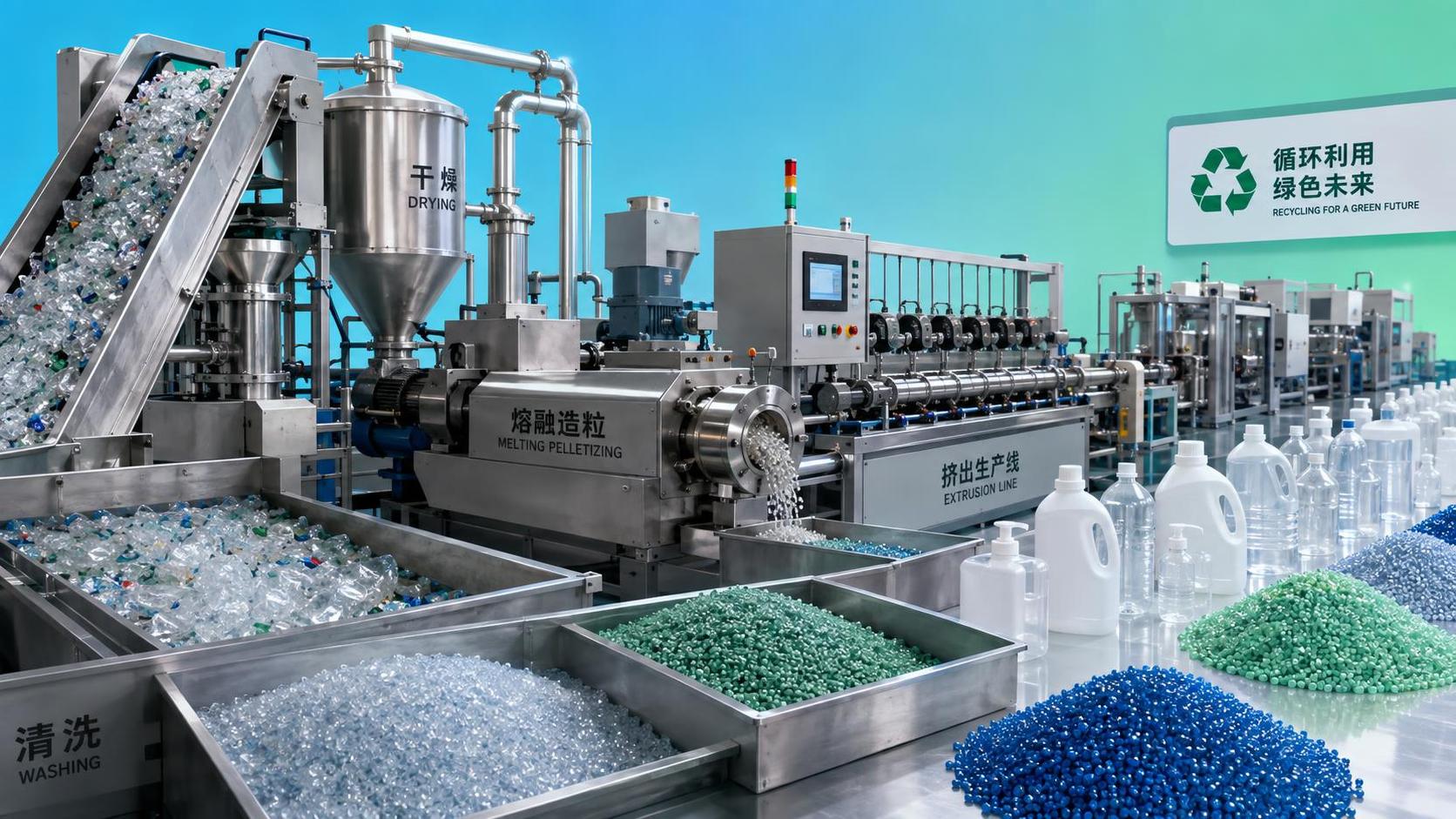
In recycling lines, high-efficiency washing, filtration, and pelletizing improve yield and support premium-grade secondary resin applications.
These gains strengthen the financial logic of ESG in plastic manufacturing because they connect sustainability metrics with margin quality.
How ESG creates measurable business outcomes
- Reduced unit energy cost through efficient drives, thermal management, and real-time monitoring.
- Lower virgin resin dependence through in-house regrind and high-quality recycled material integration.
- Improved customer qualification for packaging, medical, and export-facing supply chains.
- Stronger financing narratives supported by governance, measurable targets, and asset modernization.
- Faster response to future rules on carbon disclosure, waste accountability, and product stewardship.
Where ESG in plastic manufacturing is most visible
Not every plant faces the same ESG priorities. The pressure varies by process, product, and downstream market.
Typical scenarios across the polymer value chain
This is where intelligence-led platforms such as PFRS become useful.
They connect machinery evolution, process data, and circular economy signals into practical insight for asset and strategy decisions.
Practical priorities for implementation
A realistic ESG in plastic manufacturing roadmap starts with measurable process baselines rather than broad promises.
- Map energy, scrap, water, downtime, and rework by line, mold, screw, and product family.
- Prioritize high-load assets with poor efficiency or unstable quality windows.
- Check recycled content capability, contamination control, and traceability limits.
- Align sustainability targets with capex screening, maintenance plans, and customer requirements.
- Establish governance for data ownership, claim validation, and supplier documentation.
Digitalization is especially important. Without reliable process and material data, ESG performance cannot be trusted or improved consistently.
That includes machine-level metering, production analytics, quality traceability, and structured reporting across sites.
Common execution risks
- Treating ESG only as disclosure instead of process redesign.
- Buying equipment without validating energy, yield, and maintenance assumptions.
- Overstating recycled content readiness before quality controls are stable.
- Separating engineering teams from governance and capital planning decisions.
A strategic next step for board-level decision quality
The future of ESG in plastic manufacturing will be shaped by equipment intelligence, circular material flows, and verifiable operational data.
The most effective next step is to review core polymer processing assets against energy performance, material yield, compliance exposure, and circular readiness.
That review should include injection molding systems, extruders, blow molding platforms, vulcanizing equipment, and recycling lines.
It should also compare internal assumptions with external market intelligence on packaging rules, resin shifts, and recycling technology progress.
PFRS supports this perspective by tracking machinery innovation, polymer processing trends, and circular economy developments across the full manufacturing lifecycle.
When ESG in plastic manufacturing is managed as a board issue, compliance pressure can become a driver of stronger margins, better resilience, and durable industrial relevance.
Related News
- 00
0000-00
How to Evaluate Plastic Pelletizing Machine Suppliers for Output, Support, and Risk - 00
0000-00
How to Select a Plastic Pipe Manufacturing System for Output, Resin, and Pipe Range - 00
0000-00
How to Specify Injection Molding Equipment for High-Volume Closure Production - 00
0000-00
How to Specify a Medical Molding Machine for Cleanroom Device Production - 00
0000-00
Plastic Extrusion Technology for Films: Process Controls That Improve Gauge Uniformity
Weekly Insights
Stay ahead with our curated technology reports delivered every Monday.
Related News
 Ms. Elena RodriguezHow to Evaluate Plastic Recycling Machinery for UAE Heat, Feedstock, and Output NeedsPlastic recycling machinery UAE buyers: evaluate heat resilience, feedstock handling, cooling, pellet quality, energy use, and lifecycle cost for reliable output.Sep 28, 2026
 Ms. Elena RodriguezGerman Extrusion Equipment Suppliers: Comparing Service, Lead Times, and Lifecycle CostExtrusion equipment Germany suppliers compared: evaluate service coverage, credible lead times, spare-parts access, and lifecycle cost to select a reliable, future-ready production partner.Sep 22, 2026
 Ms. Elena RodriguezWhat Should You Check Before Buying a Used Plastic Recycling Line?What should I check before buying a used plastic recycling line? Explore feedstock fit, wear, trials, utilities, controls, and restoration costs before you invest.Sep 26, 2026
 Ms. Elena RodriguezHow to Compare Pelletizing Lines by Energy Use per TonHow do I compare pelletizing lines by kWh per ton? Learn to measure total energy, verify saleable output, and select a cost-efficient line.Sep 23, 2026
 Ms. Elena RodriguezTyre Cutter Blade Wear: When Capacity Loss Needs Inspectionшинорез blade wear can quietly reduce tyre-cutting capacity. Learn the warning signs, inspection triggers, and maintenance actions that protect output and uptime.Sep 28, 2026
 Ms. Elena RodriguezIn-House Recycling for Factory Scrap: How to Reduce Material Waste and Disposal CostsIn house recycling for factory scrap helps manufacturers cut material waste, reduce disposal costs, and create controlled, quality-focused reuse loops.Sep 07, 2026
 Ms. Elena RodriguezHow Recyclable Packaging Manufacturing Balances Material Recovery and Production CostRecyclable packaging manufacturing: discover how smarter design, feedstock control, and process optimization reduce recovery costs while improving quality and yield.Sep 04, 2026
 Ms. Elena RodriguezHow to Evaluate a Plastic Recycling Systems Supplier for Your Processing NeedsChoose the right plastic recycling systems supplier with a practical guide to feedstock fit, output quality, total cost, testing, service, and compliance.Sep 01, 2026
 Ms. Elena RodriguezCE Marking for Plastic Processing Equipment: Documentation and Safety ChecksPlastic processing equipment CE compliance: learn the essential documentation, risk assessments, safety checks, and validation steps for reliable EU market access.Aug 30, 2026
 Ms. Elena RodriguezPlastic Packaging Compliance Standards: What Tests and Documents Matter Most?Plastic packaging compliance standards explained: learn which migration tests, mechanical checks, and audit-ready documents matter most to reduce risk and pass reviews with confidence.Aug 25, 2026
 Ms. Elena RodriguezHow to Evaluate a Plastic Waste Recycling System for Capacity, Contamination, and ROIPlastic waste recycling system evaluation made practical: compare true capacity, contamination control, and ROI to choose a line that delivers stable output and stronger returns.Aug 24, 2026
 Ms. Elena RodriguezPackaging Molding Equipment Price: What Drives Cost and How to Compare Quotes?Packaging molding equipment price varies by machine type, automation, tooling, energy use, and service scope. Learn what drives cost and how to compare quotes with confidence.Aug 21, 2026
 Ms. Elena RodriguezWhat Packaging Machinery for Plastic Containers Should You Choose for High-Volume Production?Packaging machinery for plastics containers can make or break high-volume production. Learn how to choose the right line for speed, consistency, compliance, and lower lifecycle costs.Aug 16, 2026
 Ms. Elena RodriguezWhat Circular Plastics Mean for Automotive Parts and Material SelectionCircular plastics for automotive are reshaping part selection with lower weight, better sustainability, and reliable performance. Discover how engineers balance recycled content, durability, and compliance.Aug 15, 2026
 Ms. Elena RodriguezBroiler Farming in Cage System: Selection Factors for Commercial FarmsBroiler farming in cage system selection for commercial farms: compare structure, ventilation, automation, and manure handling to improve efficiency and avoid costly mistakes.Aug 14, 2026
 Ms. Elena RodriguezHow to Implement Smart Polymer Manufacturing Without Disrupting Existing Production?Smart polymer manufacturing implementation made practical: learn how to upgrade existing production with phased digitalization, less downtime, better control, and measurable ROI.Aug 11, 2026
 Ms. Elena RodriguezHow to Evaluate a Rubber Compression Molding Supplier for Complex Part ProductionRubber compression molding supplier selection for complex parts starts with process, material, and tooling control. Learn how to compare vendors beyond price and reduce launch risk.Aug 10, 2026
 Ms. Elena RodriguezPackaging Compliance in Canada: Key Labeling and EPR Rules Importers Must KnowPackaging compliance Canada explained for importers: learn bilingual labeling, environmental claims, and provincial EPR rules to reduce risk, avoid costly errors, and stay market-ready.Aug 03, 2026
 Ms. Elena RodriguezWhy Circular Plastics Economy Traceability Matters for Recycled Content ComplianceCircular plastics economy traceability is essential for proving recycled content compliance across sourcing, processing, and reporting. Learn how strong evidence reduces audit risk.Aug 02, 2026
 Ms. Elena RodriguezRecycled Plastic Compliance: Key Standards, Testing Requirements, and DocumentationRecycled plastic compliance explained: key standards, testing requirements, supplier documents, and food-contact risks to help you avoid approval delays and costly compliance mistakes.Aug 01, 2026