Smart Polymer Recycling: How Reversible Bonds Enable Material Recovery




Reversible bonds can make some high-performance polymers recoverable by giving a durable network a controlled way to rearrange or break apart. Their greatest potential lies in materials that are difficult to recycle by conventional melting, such as cross-linked resins, adhesives, and elastomers. The qualification is that the polymer must be designed for the recovery route: a reversible chemistry cannot automatically make an existing mixed-plastic stream recyclable.
For a technical evaluator, the central question is whether the bond-switching reaction can be activated within an acceptable processing window while the material remains stable in service. A useful assessment therefore connects the chemistry to three outcomes: what is recovered, what equipment and separation steps are required, and whether the recovered material retains enough value for its intended use.
What reversible bonds change in a polymer network
Conventional thermoplastics consist largely of polymer chains that can move past one another when heated sufficiently. They can often be melted and reshaped, although contamination, degradation, and incompatible additives can limit repeated processing. Conventional thermosets and vulcanized rubbers contain cross-links that connect chains into a network. Those links support heat resistance, dimensional stability, and elasticity, but they also restrict flow: heating alone may degrade the material before it can be remolded.
Reversible polymer networks introduce connections that respond to a suitable trigger. Depending on the chemistry, a bond may exchange partners within the network, dissociate and later reform, or be cleaved to release smaller molecules. Heat is a common trigger, but light, a chemical reagent, or a change in another processing condition can also be used in specially designed systems.
These mechanisms support different recovery routes. A network that rearranges under heat and pressure may be reprocessed as a solid or viscous material. A network whose links can be selectively cleaved may be broken into soluble components or smaller building blocks for purification and reuse. The distinction matters because a remolded part and a recovered monomer have different quality requirements, equipment needs, and commercial destinations.

Bond exchange enables reshaping; bond cleavage enables separation
Reprocessing through network rearrangement
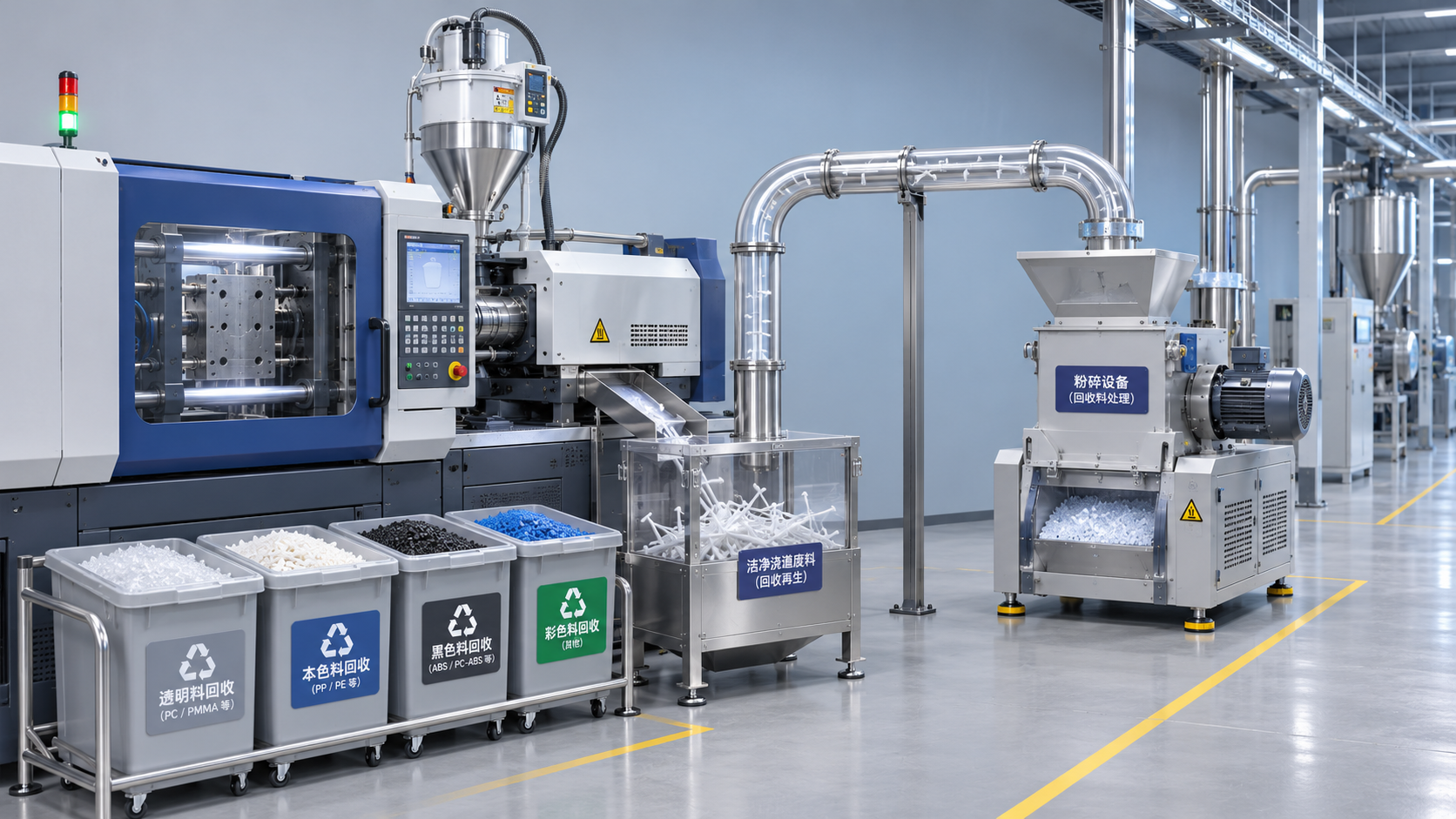
In a dynamic covalent network, some cross-links can exchange partners when the appropriate conditions are applied. A well-known class, vitrimers, uses exchange reactions that can allow the network to relax and flow at elevated temperature while retaining a connected network during exchange. In principle, offcuts or end-of-life parts made from a compatible formulation can be ground, consolidated, and remolded.
For equipment selection, the important properties are the rate of stress relaxation and the material’s resistance to flow at the intended processing temperature. A formulation that rearranges readily in a laboratory press may still require excessive residence time, torque, or pressure in continuous equipment. Conversely, a material that flows too readily near its service temperature may creep or lose dimensional accuracy under load.
Reprocessing also does not guarantee that every component returns to its original state. Pigments, fillers, stabilizers, and fibers remain in the material unless a separate process removes them. Heat and oxygen can damage the polymer backbone or additives even when the dynamic bonds themselves can exchange. Each additional processing cycle should therefore be assessed for changes in both chemistry and part performance.
Breaking networks into recoverable components
Other designs rely on bonds that can be dissociated under a specified trigger or selectively cleaved by a chemical treatment. The intended output may be an oligomer, a monomer, or another reusable fraction. In composites, controlled cleavage can also help release fibers from a resin matrix, provided the treatment preserves the properties needed for their next application.
Selective cleavage is an advantage only if the resulting mixture can be separated at practical cost and purity. Solvents or reagents may need to penetrate thick parts, be recovered after use, and be managed alongside dissolved additives and degradation products. A resin that breaks down cleanly in a small sample may behave differently when it contains coatings, inserts, or tightly packed reinforcement.
Some reversible chemistries can also support repair: a crack or interface is brought back together and treated so that bonds reform or exchange across it. Repair extends the useful life of a component, but it should be evaluated separately from bulk recycling. A bond capable of healing a narrow interface does not necessarily make an entire part easy to dissolve or remold.
Where the approach has a credible fit
The strongest candidates are applications where the material’s formulation and collection route can be controlled. Clean manufacturing scrap from a single resin system, for example, gives an evaluator a clearer view of reprocessing performance than a mixed stream of unknown polymers. Offcuts, runners, and rejected parts can also be characterized against the original formulation before a decision is made about blending them back into production.
Cross-linked components that are expensive to replace or difficult to recover are another area for evaluation. An adhesive designed for controlled debonding could make it easier to separate joined materials; a composite matrix designed for cleavage could support fiber recovery. In each case, the recovery trigger must be compatible with the full product. A treatment that releases an adhesive but damages the substrate, for instance, may defeat the purpose of the separation step.
The case is less straightforward for mixed post-consumer plastics. Reversible bonds embedded in one resin do not solve sorting, food residue, incompatible polymers, or unknown additives. They may even complicate established recycling streams if the new material cannot be identified and separated where separation is required. Before adopting a formulation for high-volume packaging or other dispersed applications, its behavior in the intended collection and recycling system deserves as much attention as its behavior in a controlled experiment.
Test the operating window before choosing the equipment
A useful evaluation begins with two sets of conditions: those the product must withstand in service and those needed to activate recovery. Service conditions can include sustained temperature, mechanical load, humidity, exposure to chemicals, and expected lifetime. Recovery conditions include temperature, pressure, time, trigger intensity, and any required solvent or catalyst. If those windows overlap too closely, the same reaction that enables recycling may undermine the product during use.
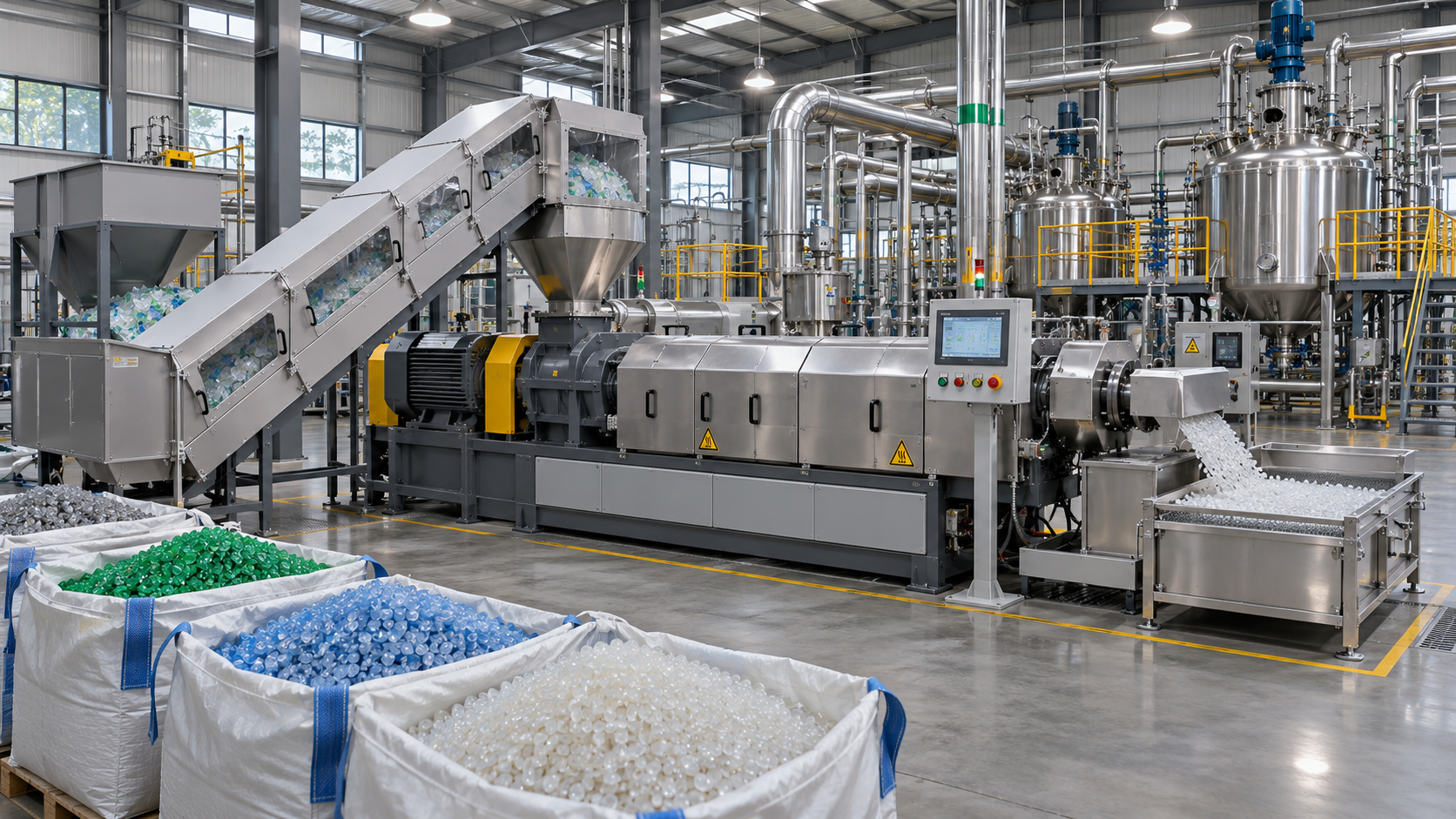
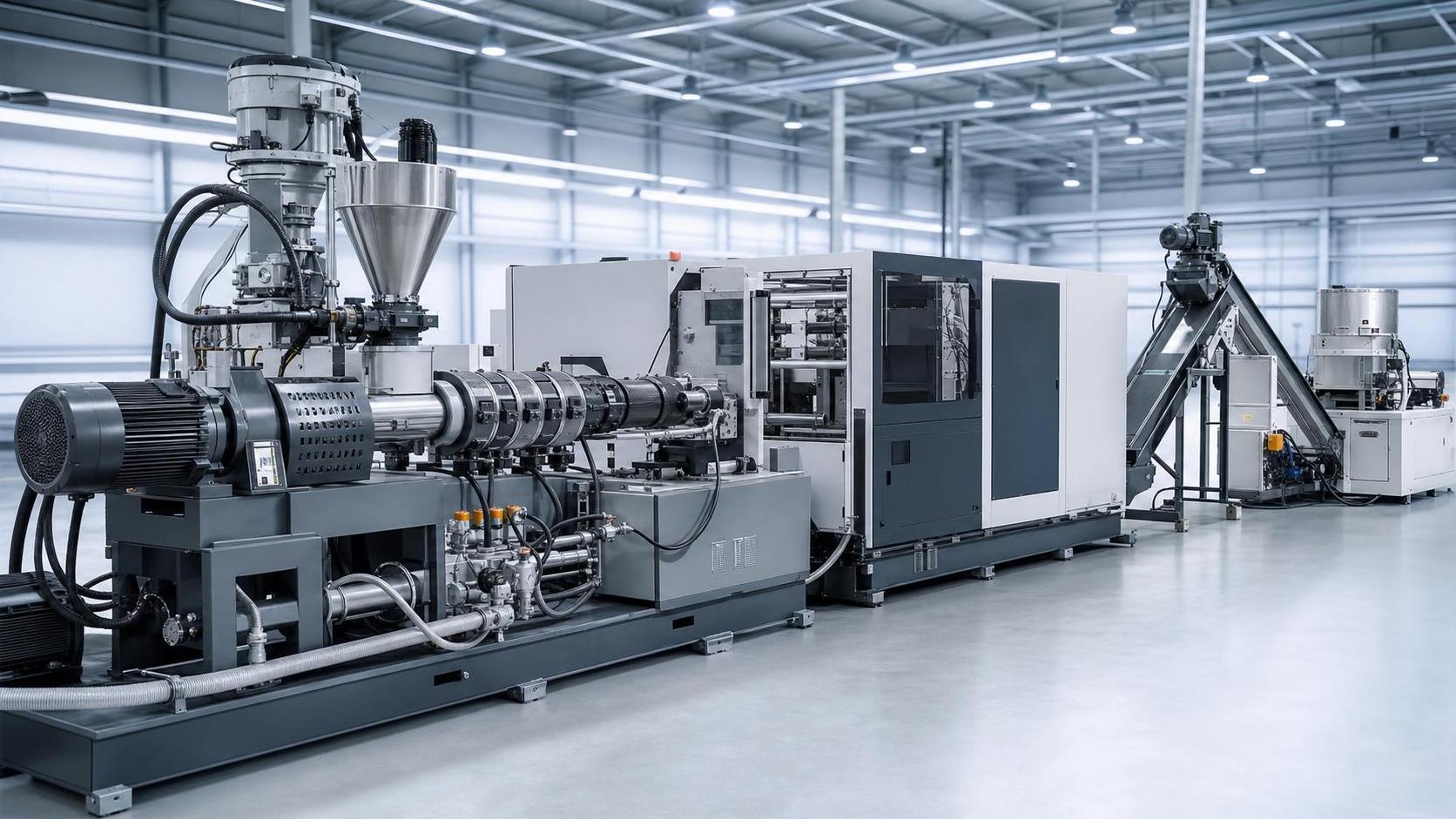
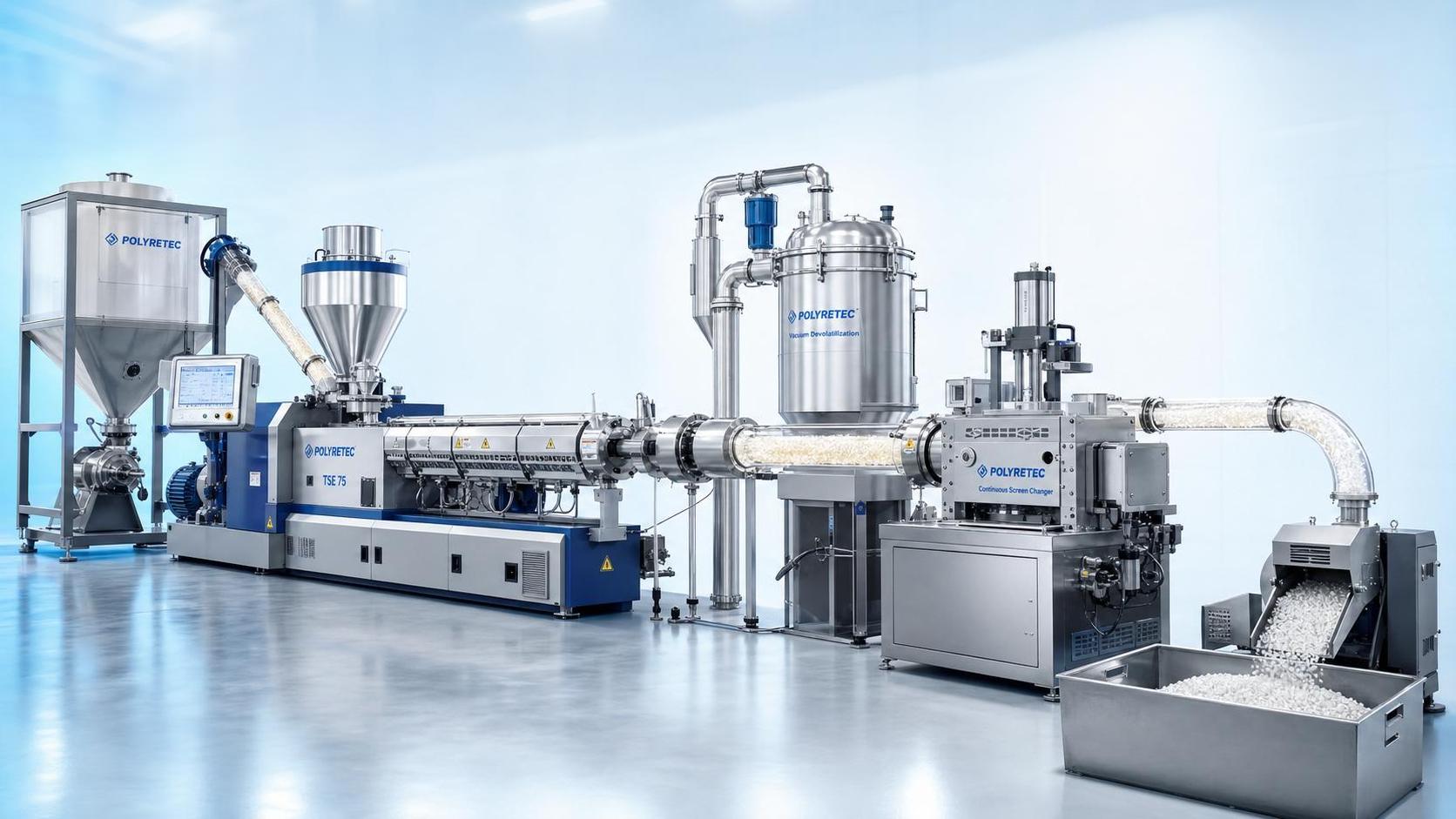
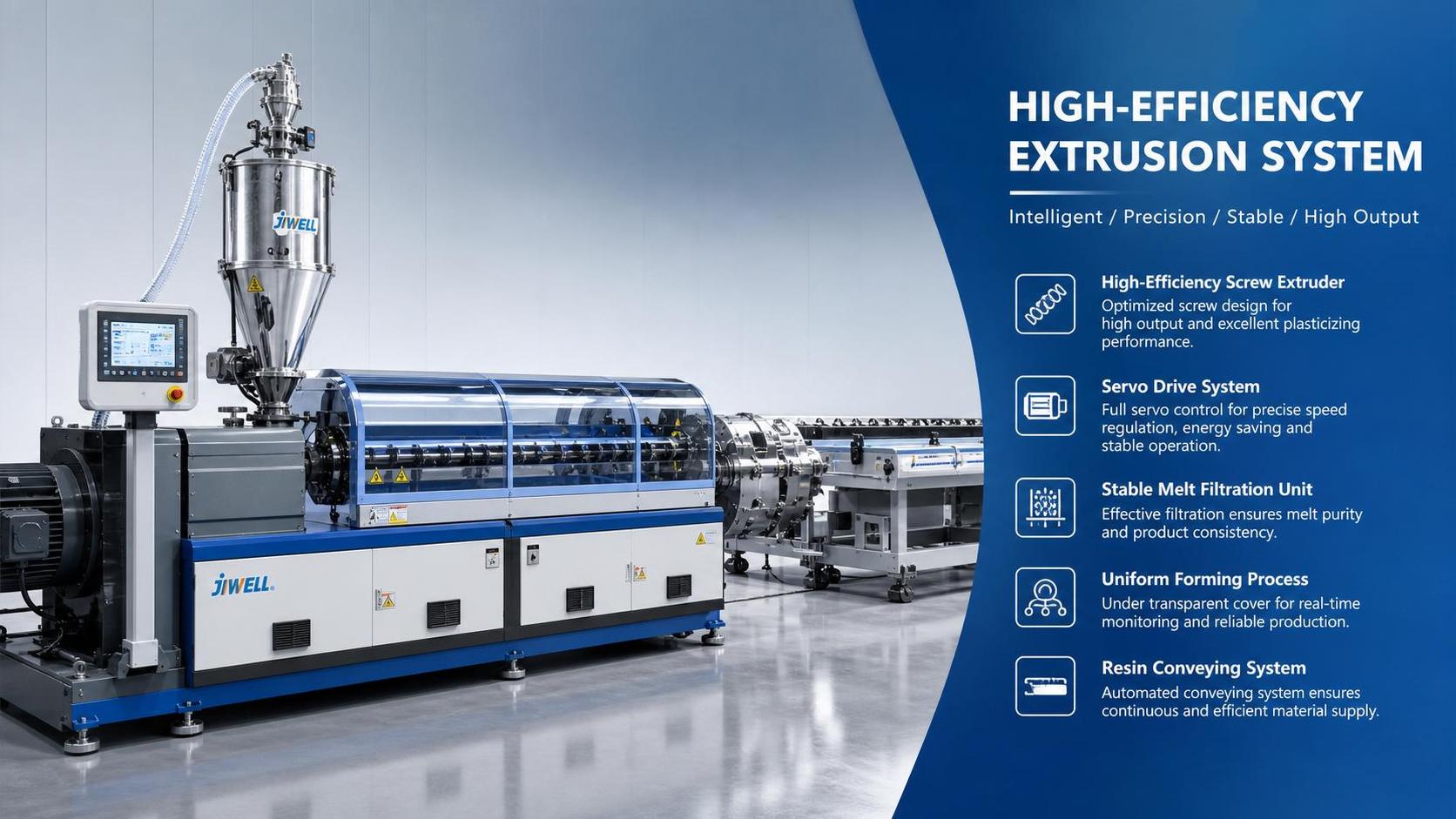
The next step is to compare the proposed route with the equipment already available. A pelletizing line built for a melt-processable thermoplastic cannot be assumed to handle a cross-linked feedstock simply because its bonds are dynamic. The material may need grinding, controlled feeding, a different residence-time profile, or a consolidation step. An extruder must be assessed for achievable flow, torque, temperature control, venting, and the effects of shear on the formulation.
For chemical recovery, the equipment questions shift toward reactor compatibility, mixing, mass transfer, filtration, and solvent or reagent recovery. The condition and size of the incoming parts influence how quickly a treatment reaches the interior. Any released fillers, fibers, or coatings must have a defined route through the process rather than being treated as an afterthought.
Energy demand should be assessed across the whole route. Lower-temperature bond activation may be offset by long cycle times, drying, solvent recovery, or extensive purification. Conversely, a process with a demanding recovery step may still be attractive if it avoids disposal and produces a valuable, usable material. The relevant comparison is with a realistic alternative for the same feedstock and application.
Measure recovery by the next use, not just the reaction
Reports of a material being “recyclable” can describe very different results: successful remolding of a small specimen, partial recovery of a chemical fraction, or production of material suitable for a specified application. An evaluator should ask for a mass balance that identifies the incoming material, recovered fractions, losses, and any added inputs. For a cleavage route, it should distinguish the amount collected from the amount that meets the purity needed for reuse.
For mechanical reprocessing, compare the original and recovered materials using tests relevant to the part. These may include tensile and impact properties, creep, thermal behavior, chemical resistance, and dimensional stability. Measure performance after the number of processing cycles being considered, including any blending with virgin material. A satisfactory result for one property does not establish that the complete performance profile has survived.
For recovered chemical feedstocks, identity and purity matter alongside yield. Residual catalysts, solvents, colorants, or degradation products can affect the next polymerization or final application. Recovered fibers require their own assessment of damage, surface condition, and compatibility with a new matrix. Where the intended product is subject to regulatory requirements, the recovered material and its contaminants must be assessed for that use; the presence of reversible bonds does not establish compliance.
Applicable test methods and acceptance limits should be agreed for the material and end use before trials begin. A method used to characterize a thermoplastic melt, for example, may not fully describe the behavior of a network that relaxes through bond exchange. For smart polymer manufacturing recycling projects, the most persuasive evidence is a repeatable route from a defined feedstock to a defined output, with processing conditions and properties measured at a scale relevant to the proposed operation.
Have questions about this sector analysis, or seeking best practices specific to your niche? Drop us a line below and let the senior consultants at PFRS assist you.
We respect your privacy. Your information is strictly confidential.
Related News
- 00
0000-00
Selecting a Vacuum Flat Press for Rubber Hoses: Key Specifications - 00
0000-00
Innovations in Plastic Recycling: Mechanical vs Chemical Processing - 00
0000-00
Plastic Recycling Innovation: Sorting Advances for Mixed Packaging Waste - 00
0000-00
ESG Compliance for Plastics: Mapping Reporting Obligations by Market - 00
0000-00
Drying Temperature and Coating Defects in PU Synthetic Leather
Weekly Insights
Stay ahead with our curated technology reports delivered every Monday.
Related News
 Prof. Marcus ChenInnovations in Plastic Recycling: Mechanical vs Chemical ProcessingExplore innovations in plastic recycling and compare mechanical and chemical processing to find the right fit for your feedstock, product goals and market.Nov 24, 2026
 Prof. Marcus ChenPlastic Recycling Innovation: Sorting Advances for Mixed Packaging WasteExplore plastic recycling innovation in mixed packaging sorting, from AI and NIR sensors to robotics, and discover what drives recyclate quality.Nov 24, 2026
 Prof. Marcus ChenConnected Plastics Machinery: How Real-Time Data Improves ProductionConnected plastics machinery turns real-time data into actionable insights. Discover how to improve quality, investigate downtime, and plan a successful pilot.Nov 19, 2026
 Prof. Marcus ChenEnergy-Efficient Circular Manufacturing: Cutting Energy Use and Material WasteDiscover how energy efficient circular manufacturing cuts energy use and material waste through smarter equipment choices, process controls, and recycling strategies.Nov 15, 2026
 Prof. Marcus ChenSmart Polymer Recycling: How Reversible Bonds Enable Material RecoveryExplore smart polymer manufacturing recycling: discover how reversible bonds enable material recovery and what it takes to make the process practical.Nov 13, 2026
 Prof. Marcus ChenPlastics Manufacturing Digitalization: Reducing Downtime and ScrapPlastics manufacturing digitalization can reduce downtime and scrap. Discover practical steps to connect process data, improve maintenance, and act on quality issues.Nov 07, 2026
 Prof. Marcus ChenWhat Is a Circular Plastics Platform and How Does It Support Recycling?Discover how a circular plastics platform connects materials, recyclers, and buyers—and learn what to look for when choosing one.Nov 03, 2026
 Prof. Marcus ChenHow Single-Use Plastic Bans Shift Demand for Packaging MaterialsExplore the plastic ban market impact on packaging demand, from fiber and recycled plastics to reuse. Discover viable alternatives and smarter investment opportunities.Oct 15, 2026
 Prof. Marcus ChenWhere Recycled Plastic Innovation Delivers the Biggest Value in PackagingRecycled plastic innovation delivers the greatest packaging value through proven material loops, reliable processing, compliance readiness, and circular design.Oct 08, 2026
 Prof. Marcus ChenEnergy-Efficient Polymer Processing: Where Plants Can Cut kWh per KilogramEnergy-efficient polymer processing solutions help plants reduce kWh per kilogram, protect quality, cut scrap, and prioritize upgrades with data-driven insights.Sep 23, 2026
 Prof. Marcus ChenPlastic Pelletizing Trends: How Recycling Demand Is Reshaping Processing TechnologyPlastic pelletizing trends are redefining recycling quality. Explore filtration, extrusion, degassing, and automation innovations driving cleaner, more consistent recycled resin.Sep 07, 2026
 Prof. Marcus ChenHow Polymer Supply Chains Are Changing to Support High-Quality Recycling FeedstockPolymer supply chain for recycling is shifting toward traceable sourcing, cleaner sorting, and stable processing. See how high-quality feedstock improves performance, compliance, and cost control.Aug 22, 2026
 Prof. Marcus ChenHow Europe’s Circular Plastics Economy Is Reshaping Recycling InvestmentCircular plastics economy Europe is reshaping recycling investment through quality, traceability, and packaging demand. Explore where capital is moving and why it matters now.Aug 04, 2026
 Prof. Marcus ChenBlow Molding Trends Shaping Packaging, Sustainability, and Production EfficiencyBlow molding trends are redefining packaging with lightweighting, recycled content, automation, and energy efficiency. Discover how smarter production boosts sustainability and cuts costs.Jul 23, 2026
 Prof. Marcus ChenExtrusion Equipment Modular Design: When It Makes Sense for Line ExpansionExtrusion equipment modular design helps manufacturers expand lines in phases, cut disruption, and stay ready for recycled content, utility limits, and changing product demands.Jul 15, 2026
 Prof. Marcus ChenPolymer Lifecycle Solutions Explained: From Material Sourcing to End-of-Life RecoveryPolymer lifecycle solutions explained from sourcing and processing to recycling and recovery. Discover how to cut waste, improve quality, and build smarter material strategies.Jul 13, 2026
 Prof. Marcus ChenEnergy-Efficient Polymer Processing Systems: Which Metrics Matter Most?Energy-efficient polymer processing systems: discover the metrics that truly drive ROI—specific energy use, yield, uptime, stability, and compliance for smarter equipment decisions.Jul 11, 2026
 Prof. Marcus ChenPolymer Recycling Systems for Continuous Operation: What to Check Before SpecifyingPolymer recycling systems continuous operation starts with the right specification. Learn what to check for uptime, melt quality, energy efficiency, and reliable pellet output.Jul 09, 2026
 Prof. Marcus ChenCircular Plastics Economy in Japan: Policy Drivers, Recycling Targets, and Market ImpactCircular plastics economy Japan is accelerating as policy, recycling targets, and packaging reforms reshape material choices, processing strategy, and market advantage.Jul 05, 2026
 Prof. Marcus ChenPlastic Extrusion Technology Trends: What Process Changes Are Improving Energy Efficiency?Plastic extrusion technology trends are reshaping energy efficiency through smarter screws, thermal control, servo drives, and digital optimization. See which process changes deliver lower costs and more stable output.Jul 01, 2026