Drying Temperature and Coating Defects in PU Synthetic Leather




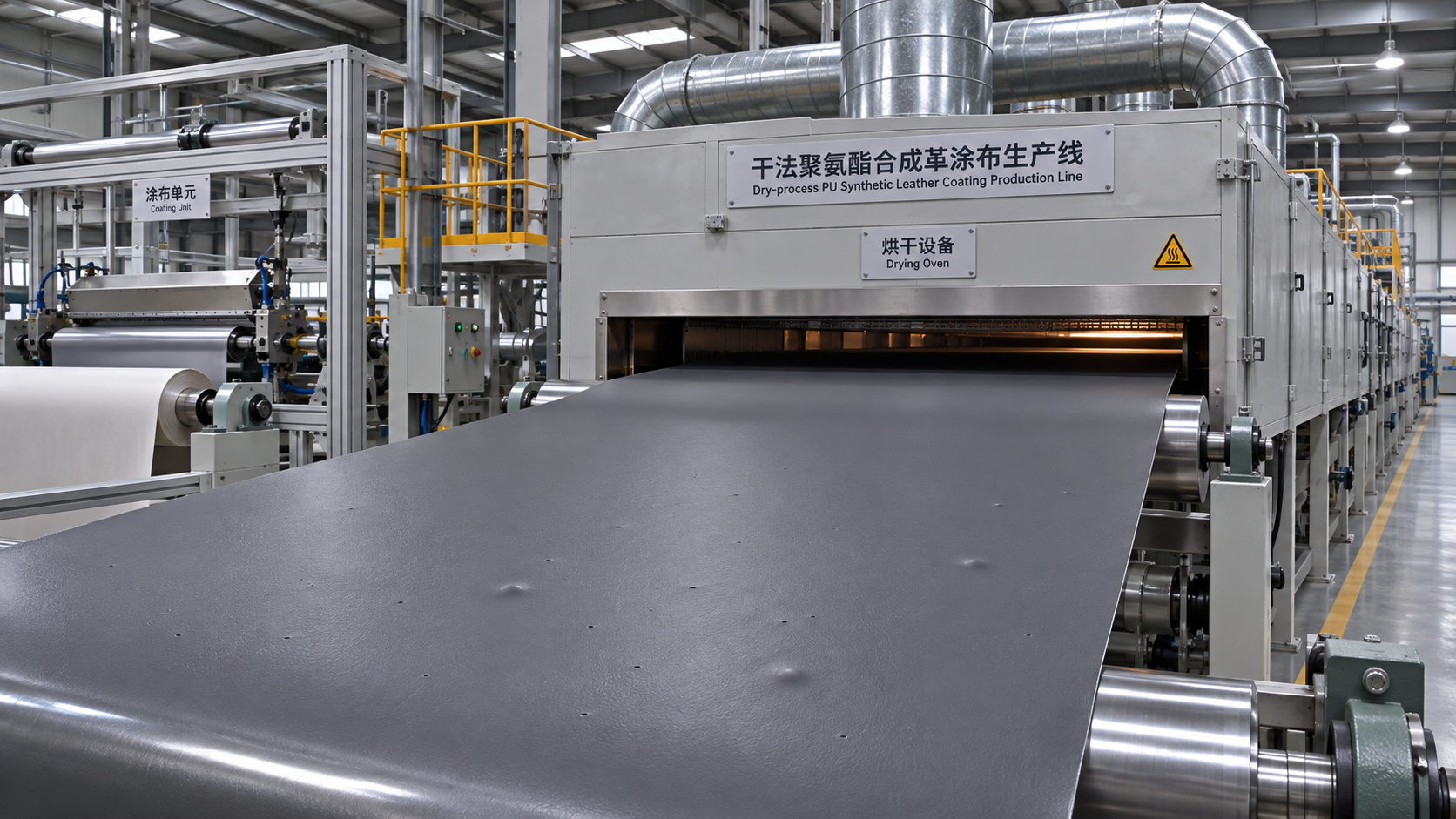
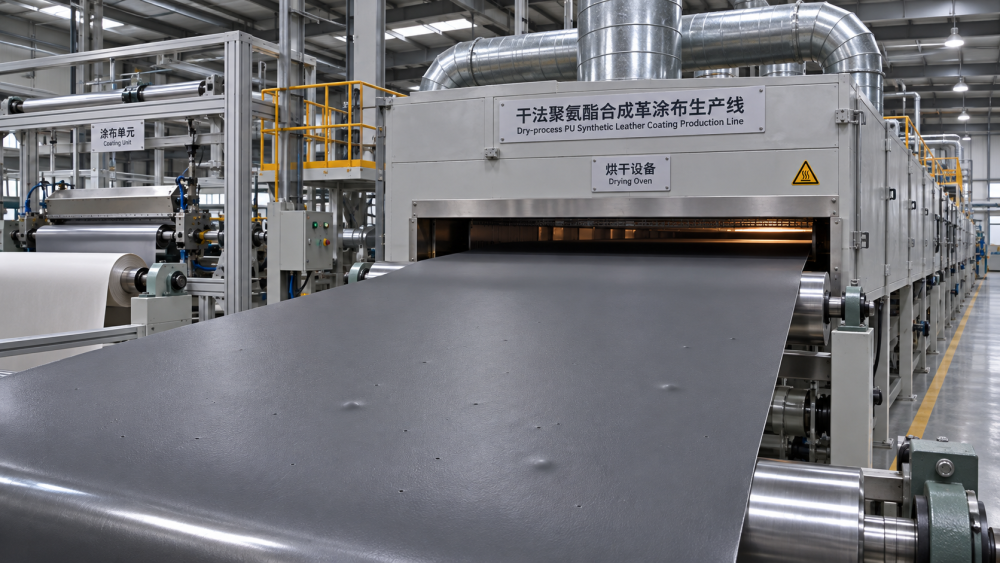
Blisters, pinholes and poor adhesion in dry-process PU synthetic leather can appear to be temperature problems, but the oven setpoint alone rarely explains them. The coating may enter the dryer with an unsuitable solvent balance, pass through uneven airflow, or develop a surface skin before solvent escapes from the layers below. A heat-sensitive backing can also distort even when the coating itself appears dry.
For quality-control and safety teams, the useful question is not simply whether the oven is hot enough. It is whether the complete drying profile removes solvent consistently without damaging the substrate, compromising adhesion or allowing solvent vapor to accumulate. Diagnosis requires coating conditions, web behavior, exhaust performance and finished-material tests to be considered together.
Why the drying profile matters more than one setpoint
In a dry coating process, a liquid polyurethane formulation is applied in one or more layers and dried before or during lamination to a textile or other backing, depending on the line and product construction. Some processes coat onto release paper first; others apply material directly to the substrate. The sequence changes which surface receives heat and airflow, how solvent leaves the film, and when the backing is exposed to the dryer.
Oven air temperature is only one part of that sequence. Actual material temperature also depends on airflow, solvent evaporation, coating thickness, line speed, heat transfer and the distance the web travels through each zone. A displayed setpoint is not proof that the coating or backing reached that temperature, nor that it remained there for the intended time.
Drying too aggressively at the entrance can cause the surface to solidify while solvent remains beneath it. As the trapped solvent heats and expands, bubbles or ruptures may form. Drying too gently, or moving the web too quickly through the available heated length, may leave residual solvent that affects odor, adhesion or later processing. Both outcomes depend on the formulation and process; a defect cannot be assigned to temperature from appearance alone.
Read the defect before changing the oven
A useful investigation starts by recording where the defect occurs: across the full width or near one edge, continuously or intermittently, immediately after drying or only after lamination and storage. Retain the affected roll identification, production time, formulation batch, substrate batch and operating records. These details help separate a stable process mismatch from a temporary equipment or material change.
These are diagnostic leads, not one-to-one defect definitions. A crater caused by contamination will not reliably disappear when the dryer temperature changes. Likewise, a surface that feels dry can still contain solvent below the surface. Release decisions should follow the product specification and a validated test method rather than touch or odor alone.
Match the substrate to the drying route
Woven and knitted textiles, nonwovens and other backing materials respond differently to heat, tension and coating penetration. A relatively open structure may allow liquid to migrate into the backing, changing the effective coating weight at the surface. A more stretch-sensitive material may track well at room temperature but wrinkle when heated or pulled through the line. Finishes on a backing can also affect wetting and adhesion, so a visually acceptable fabric is not automatically compatible with a given PU system.
When coating is applied to release paper and later laminated, the release surface must remain stable through the drying and transfer steps. Changes in paper condition, storage or reuse can alter the transferred surface or contribute to defects that resemble coating problems. In direct coating, by contrast, the backing is exposed to the wet formulation and dryer conditions earlier. Its absorbency, dimensional stability and surface chemistry deserve particular attention during trials.
Selection should be based on the full construction, not the backing name alone. Ask the material supplier for relevant processing limits and test the proposed coating, backing and adhesive together. Where the product will be embossed, flexed, stitched or cleaned, evaluate the dried laminate after those operations as well as immediately after production. A temperature that produces an attractive surface may still leave an interface vulnerable to later handling.
Use a controlled troubleshooting sequence
Confirm the process that actually ran
Compare the production record with the approved recipe: formulation and batch, mixing and holding conditions, wet coating weight, web speed, zone setpoints, exhaust settings, lamination conditions and substrate identification. Check whether the defect began after a roll change, maintenance activity, recipe adjustment or interruption. A missing record is itself a limitation: it makes it harder to identify which variable changed.
Inspect the equipment before interpreting the recipe. A blocked filter, leaking duct, damaged seal, faulty sensor or uneven air distribution can produce a different drying condition from the one shown on the control panel. Follow the site’s isolation procedures before opening guarded or solvent-handling equipment. Sensor checks and maintenance should be performed by authorized personnel using suitable procedures.
Locate the stage where the defect first appears
Examine samples at accessible, safe process points: after coating, after drying and after lamination, as applicable. If the surface is already marked before entering the oven, investigate coating application, filtration, entrained air and substrate condition before changing heat. If the mark appears after a particular drying zone or only after lamination, narrow the trial to the conditions that could affect that transition.
Where safe and technically feasible, compare the center and edges of the web. Repeating defects at the same cross-web position may indicate local airflow, heat distribution, coating thickness or tracking variation. A defect that moves with the substrate may instead point to the backing or its preparation.
Change one operating variable at a time
Use a documented trial plan within the formulation supplier’s and equipment manufacturer’s permitted operating ranges. For suspected early skinning, a trial might reduce the initial drying intensity while preserving sufficient later drying capacity. For suspected incomplete drying, the team might evaluate additional residence time or a revised temperature profile, provided the backing and safety controls permit it. Neither adjustment should be treated as a universal remedy.
Keep coating weight, substrate lot and other relevant conditions as consistent as practical. Record stabilization time and collect identified samples after each change. Compare appearance with the required adhesion, residual-solvent and physical-property tests. If several settings change together, an apparent improvement may be difficult to reproduce or may conceal a new weakness.
Separate product quality checks from solvent safety controls
Solvent-based PU formulations can present fire, explosion and health hazards. The precise risks depend on the solvents, concentrations, equipment design and local rules. Obtain the current safety data sheets for the actual formulation and cleaning agents, and use them alongside a site-specific hazard assessment. In the United States, OSHA’s Hazard Communication Standard, 29 CFR 1910.1200, addresses safety data sheets and hazard communication; applicable obligations vary by jurisdiction.
Exhaust is not merely a tool for improving dryness. Dryer ventilation and any associated monitoring, alarms and interlocks are part of the engineered safety system. Do not reduce exhaust, bypass an interlock or increase heat to solve a quality problem without a formal engineering and safety review. OSHA’s standard for ovens and furnaces, 29 CFR 1910.176, addresses specified ventilation and safety requirements for covered industrial ovens and furnaces; applicability and detailed design requirements must be assessed for the installation.
A quality test showing acceptable residual solvent in finished material does not establish that vapor concentrations inside a dryer are safe. Conversely, a functioning exhaust system does not establish that the laminate meets its product specification. Maintain separate acceptance criteria and records for product quality and process safety, with clear responsibilities for each.
Assess a used coating line against the intended process
When a plant considers replacing or supplementing its dryer capacity, the lowest-risk comparison begins with the material construction and validated process window, not the number of oven zones alone. A used dry-type PU/PVC coating line may be relevant to the evaluation, but its suitability for a particular PU recipe cannot be inferred from its category. The linked reference to view used machinery details provides context for that equipment type; technical condition and fitness for the proposed duty require separate verification.
Request available drawings, operating manuals, maintenance history and records of modifications. Establish which coating heads, web-handling components, heating equipment, exhaust arrangements and controls are included. Missing documentation does not automatically disqualify a machine, but it creates verification work that should be reflected in the assessment.
- Drying capability: Verify usable web width, zone arrangement, available speed range, heating and airflow controls against the intended coating weight, substrate and validated trial conditions.
- Condition and uniformity: Inspect ducts, fans, filters, seals, insulation, rollers and sensors. Ask how temperature indication and cross-web drying uniformity can be checked during commissioning.
- Safety integration: Have qualified personnel assess exhaust capacity, electrical equipment, alarms, interlocks and emergency functions for the solvents and jurisdiction involved. Existing controls should not be assumed compliant merely because the line previously operated.
- Acceptance evidence: Define a trial using representative material and a written sampling plan. Include appearance, adhesion, dimensional behavior and any specified residual-solvent testing, alongside verification of safety functions.
Commissioning should establish a documented baseline before production settings are optimized. If a later defect appears, the team can compare actual temperatures, airflow indications, web speed and test results with that baseline rather than repeatedly adjusting heat in response to surface appearance.
Sources for safety and technical verification
OSHA, Hazard Communication, 29 CFR 1910.1200; OSHA, Ovens and Furnaces, 29 CFR 1910.176. These U.S. regulatory references concern workplace hazard communication and covered oven installations; they are not substitutes for local requirements, equipment documentation or a site-specific assessment. For material-specific processing limits and solvent hazards, use the current formulation and substrate supplier documentation and safety data sheets.
Have questions about this sector analysis, or seeking best practices specific to your niche? Drop us a line below and let the senior consultants at PFRS assist you.
We respect your privacy. Your information is strictly confidential.
Related News
- 00
0000-00
Selecting a Vacuum Flat Press for Rubber Hoses: Key Specifications - 00
0000-00
Innovations in Plastic Recycling: Mechanical vs Chemical Processing - 00
0000-00
Plastic Recycling Innovation: Sorting Advances for Mixed Packaging Waste - 00
0000-00
ESG Compliance for Plastics: Mapping Reporting Obligations by Market - 00
0000-00
Drying Temperature and Coating Defects in PU Synthetic Leather
Tags
Weekly Insights
Stay ahead with our curated technology reports delivered every Monday.
Related News
 Ms. Elena RodriguezESG Compliance for Plastics: Mapping Reporting Obligations by MarketExplore ESG compliance for plastics across the EU, UK, US and Canada. Learn how to map reporting obligations and build reliable records.Nov 24, 2026
 Ms. Elena RodriguezDrying Temperature and Coating Defects in PU Synthetic LeatherView used machinery details and learn how drying profiles affect PU synthetic leather defects, adhesion and solvent safety. Explore practical troubleshooting tips.Nov 23, 2026
 Ms. Elena RodriguezPolymer Supply Chain Analytics: How to Reduce Resin Supply DisruptionsDiscover how polymer supply chain analytics can reduce resin disruptions with better inventory planning, supplier risk insights, and qualified alternatives.Nov 21, 2026
 Ms. Elena RodriguezChoosing Polymer Processing Equipment in India: Capacity and Supplier CriteriaChoosing polymer processing equipment in India? Compare capacity, lifecycle costs, supplier reliability and local support to make a confident investment.Nov 18, 2026
 Ms. Elena RodriguezChoosing a Recycled Plastic Processing Exporter: Quality and Supply ChecksChoose a recycled plastic processing exporter with confidence. Compare equipment quality, proven output, delivery terms and after-sales support.Nov 17, 2026
 Ms. Elena RodriguezSustainable Packaging Manufacturing: Where to Cut Costs Without Adding WasteDiscover cost effective sustainable packaging manufacturing strategies to cut material and production costs, reduce waste, and protect package performance.Nov 16, 2026
 Ms. Elena RodriguezChoosing a Plastic Extrusion Supplier: Quality, Capacity and Lead TimesChoosing a plastic extrusion supplier? Learn how to assess quality, production capacity, lead times and total costs to make a confident sourcing decision.Nov 08, 2026
 Ms. Elena RodriguezAutomated Plastic Recycling Systems: When Do Labor Savings Justify the Cost?Do automated plastic recycling systems pay off? Learn how to calculate real labor savings, operating costs, and payback to make a smarter investment.Oct 29, 2026
 Ms. Elena RodriguezBuying Plastic Recycling Equipment in South Africa: Costs and Local SupportFind plastic recycling equipment South Africa businesses can rely on. Compare total costs, local support and supplier checks to invest with confidence.Oct 26, 2026
 Ms. Elena RodriguezVirgin Resin Suppliers: How to Verify Traceability and Batch ConsistencyEvaluate virgin resin suppliers with practical checks for traceability, CoA accuracy, and batch consistency. Learn how to reduce scrap, avoid sourcing risks, and buy with confidence.Oct 24, 2026
 Ms. Elena RodriguezEnergy-Saving Plastics Machinery: How to Calculate Payback Before BuyingEvaluate energy saving plastics machinery before buying. Learn to calculate payback using verified energy savings, installed costs, and production data to invest with confidence.Oct 23, 2026
 Ms. Elena RodriguezCircular Manufacturing Roadmap: From Waste Audits to Material RecoveryBuild a circular manufacturing roadmap from waste audits to material recovery. Explore practical steps to qualify recycled materials, select equipment, and validate ROI before investing.Oct 20, 2026
 Ms. Elena RodriguezInjection Molding System Costs: Machine, Molds, Automation, and InstallationCompare injection molding systems price proposals with confidence. Uncover machine, mold, automation, and installation costs to avoid hidden expenses and choose a production-ready cell.Oct 17, 2026
 Ms. Elena RodriguezHow Does Feedstock Moisture Affect Plastic Pelletizing Energy Use?How does feedstock moisture affect plastic pelletizing energy use? Discover how smarter drying and dewatering can cut kWh/kg, protect pellet quality, and boost output.Oct 22, 2026
 Ms. Elena RodriguezWaste Tyre Collection and Sorting: On-Site vs Outsourced Shredding CostsCompare waste tyre collection and sorting unit cost for on-site vs outsourced shredding. Uncover hidden expenses, assess break-even volumes and choose the most cost-effective route.Oct 26, 2026
 Ms. Elena RodriguezSmart Factory Costs for Plastics: Estimating ROI for Automation ProjectsSmart factory for plastics cost: learn how to estimate automation ROI, uncover hidden integration expenses, reduce scrap, and build a phased investment plan.Oct 10, 2026
 Ms. Elena RodriguezHow to Evaluate a Packaging Molding Equipment Supplier for High-Volume ProductionChoose a packaging molding equipment supplier with confidence. Learn how to assess throughput stability, tooling, recycled-material capability, lifecycle cost, and service support for high-volume production.Oct 09, 2026
 Ms. Elena RodriguezProcurement Records to Request Before Buying a Used Tyre ShredderUsed tyre shredder for sale? Request maintenance, operating, safety, and parts records to reduce risk, verify condition, and buy with confidence.Oct 16, 2026
 Ms. Elena RodriguezHow to Select Packaging Molding Equipment for High-Volume Production LinesPackaging molding equipment selection guide for high-volume lines: compare processes, throughput, materials, automation, and energy to achieve stable, cost-effective output.Oct 04, 2026
 Ms. Elena RodriguezHow to Evaluate Plastic Recycling Machinery for UAE Heat, Feedstock, and Output NeedsPlastic recycling machinery UAE buyers: evaluate heat resilience, feedstock handling, cooling, pellet quality, energy use, and lifecycle cost for reliable output.Sep 28, 2026