Energy-Efficient Polymer Processing Systems: Which Metrics Matter Most?




Energy-Efficient Polymer Processing Systems: Which Metrics Matter Most?

For many manufacturers, energy efficiency used to mean one thing: lower electricity cost. That view is now too narrow for modern polymer operations.
In practice, energy-efficient polymer processing systems affect cycle stability, part quality, scrap rates, labor pressure, maintenance planning, and environmental reporting.
That matters across injection molding, extrusion, blow molding, rubber vulcanization, and plastic recycling lines.
The harder question is not whether efficiency matters. It is which metrics actually tell the truth.
A machine can look efficient on a brochure while wasting energy through unstable heating zones, poor screw design, oversize motors, or repeated startup losses.
So the right evaluation model has to connect power use with output, consistency, uptime, and compliance.
Start With Specific Energy Consumption, Not Nameplate Power
The first metric to anchor any review is specific energy consumption, often measured as kWh per kilogram of output or finished product.
This is the most useful common language across energy-efficient polymer processing systems because it normalizes different machine sizes and production rates.
A 500-ton injection molding machine naturally draws more power than a smaller press. That alone says very little.
What matters is how much saleable output it delivers for every unit of energy consumed.
For extrusion, the comparison is straightforward: kWh per kilogram of pipe, film, sheet, or pellet produced.
For molding, it may be more useful to track kWh per thousand parts, then connect that figure to reject rates.
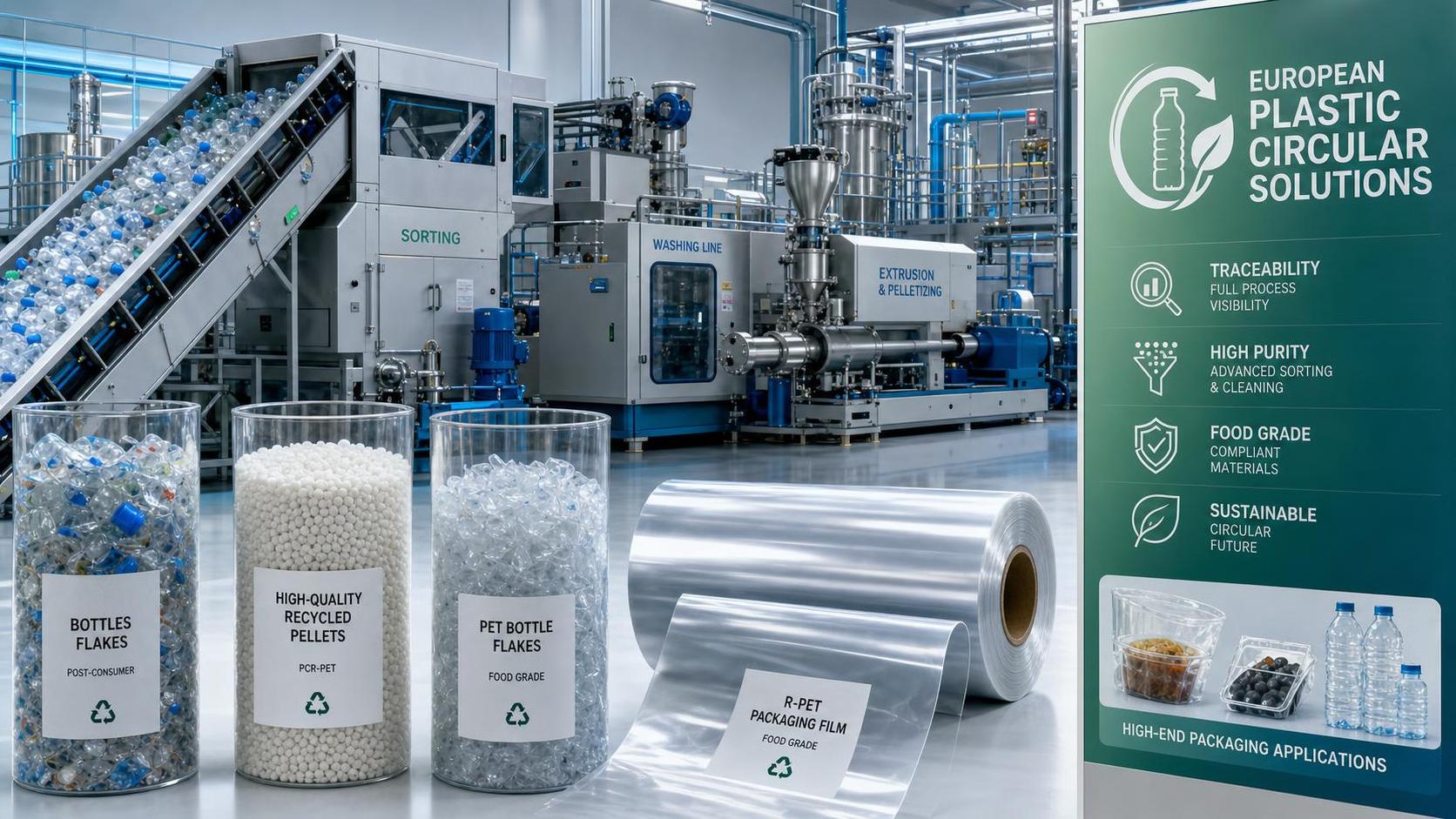
The same logic applies to recycling lines, where washing, drying, melting, filtration, and pelletizing all affect total energy intensity.
If a supplier cannot provide test conditions behind the number, treat the claim carefully.
What to ask for
- Material type, moisture level, and additive load
- Throughput range during the test
- Scrap or purge rate included in the calculation
- Startup and steady-state energy split
- Measured output quality during the test window
Throughput Stability Often Beats Peak Throughput
Many teams still focus on maximum hourly output. That can be misleading when comparing energy-efficient polymer processing systems.
A line that briefly reaches peak output but drifts in temperature or pressure may consume more energy over a full shift.
Stable throughput is usually the stronger operational metric.
On extrusion systems, monitor melt pressure variation, screw speed consistency, barrel zone response, and output deviation over time.
On molding systems, look at cycle repeatability, recovery time, clamp response, and holding pressure consistency.
When these variables are under control, energy use becomes more predictable and quality losses fall.
This also improves production planning, especially in plants running mixed materials or shorter product runs.
Useful stability indicators
- Output variation percentage per hour
- Cycle time deviation by cavity or product format
- Melt temperature spread at key operating points
- Pressure fluctuation before die, mold, or filter pack
Quality Yield Is an Energy Metric Too
This is where many evaluations break down. Energy-efficient polymer processing systems should be judged by good output, not gross output.
Every rejected bottle, warped part, weak weld line, gel defect, or contaminated recycled pellet carries hidden energy cost.
The machine already consumed electricity, heat, cooling, compressed air, and labor before that product failed inspection.
That is why first-pass yield deserves a central place in every comparison.
For recycling, contamination rate and pellet consistency are especially important. A low-energy line that produces unstable pellets shifts cost downstream.
For technical molding, dimensional CpK and part-to-part variation may matter more than raw speed.
In other words, energy efficiency only counts when the material remains usable.
Uptime, Changeover, and Thermal Recovery Shape Real ROI
A line can post good lab numbers and still underperform in production if downtime is frequent or changeovers are slow.
That is why uptime metrics belong in any serious review of energy-efficient polymer processing systems.
Look beyond annual availability. Examine restart losses, warm-up time, purge volume, tooling change labor, and time to stable production.
These factors can erase expected savings, especially in plants handling many SKUs.
A more efficient drive system helps, but thermal recovery and process control often decide whether the savings survive real operations.
This is increasingly relevant as processors work with recycled content, bio-based polymers, and tighter packaging compliance standards.
Watch these operational metrics closely
- Overall equipment effectiveness linked to energy use
- Minutes from startup to in-spec production
- Material loss during color or resin change
- Mean time between process interruptions
- Maintenance hours per thousand operating hours
Do Not Ignore Utility Load Outside the Main Machine
One of the clearest recent shifts is broader system accounting. Buyers now look past the press or extruder itself.
That is the right move because energy-efficient polymer processing systems depend on surrounding utilities.
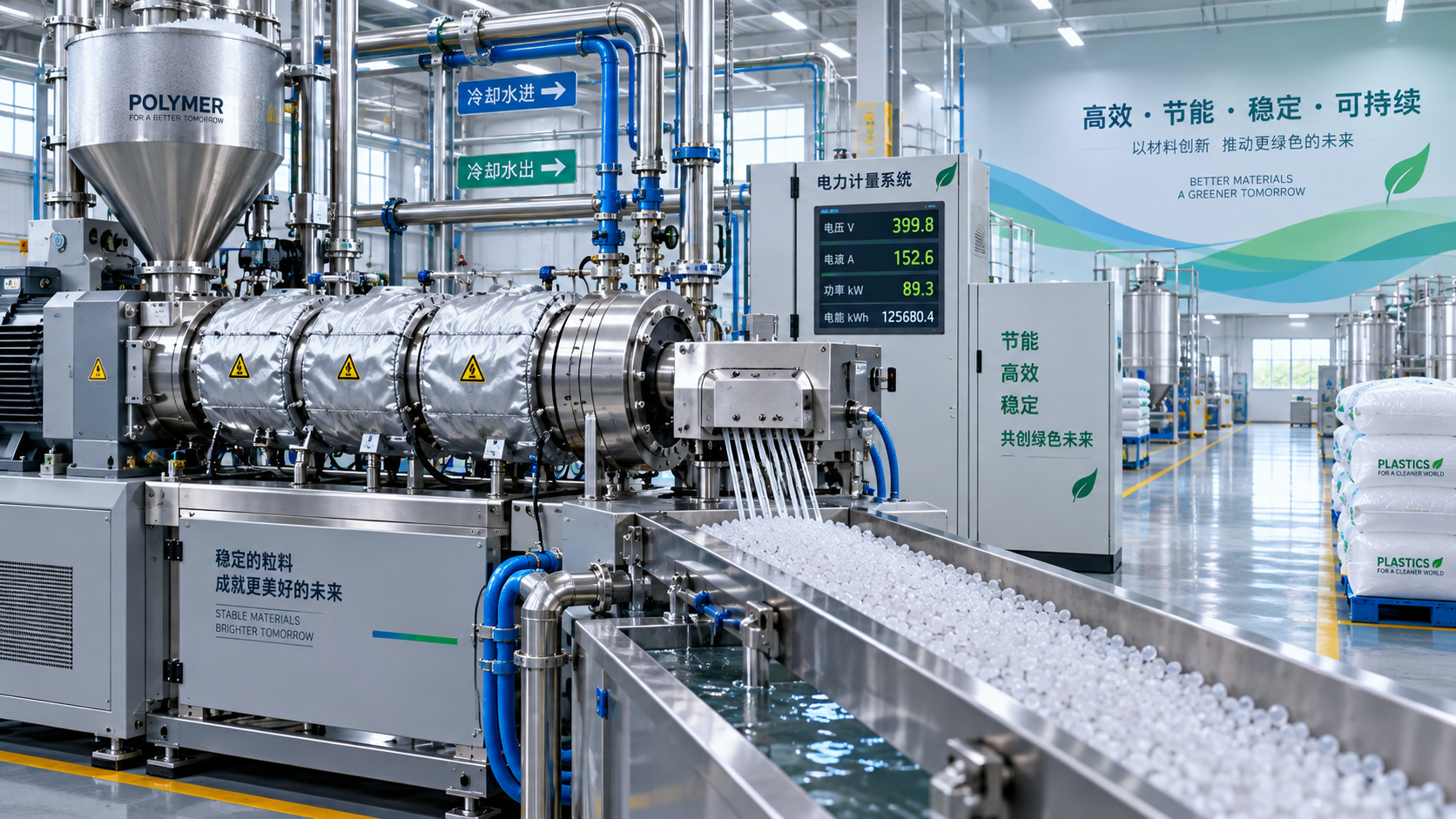
Chillers, dryers, vacuum pumps, compressed air, granulators, conveyors, and water treatment loops may account for a large share of plant energy.
For PET or engineering plastics, drying efficiency alone can change total operating cost significantly.
For recycling, washing and dewatering stages can dominate consumption before the melt even reaches the pelletizer.
So when comparing suppliers, request a full line energy map, not a single machine number.
This is also where digital monitoring pays back quickly. Submetering often exposes losses that standard production reports never show.
Compliance Metrics Are Becoming Commercial Metrics
Energy efficiency is no longer judged only inside the plant. It is also judged by customers, regulators, and investors.
That means energy-efficient polymer processing systems should support traceability, emissions reporting, and material utilization records.
For packaging and consumer goods, this is especially important as recycled content mandates and carbon disclosure expectations increase.
More buyers now ask for energy per unit, scrap ratio, regrind usage, and process data history during supplier qualification.
A machine platform that cannot export clean production and energy data may create commercial friction later.
In that sense, data architecture is part of efficiency, not a separate software issue.
A Practical Scorecard for Better Capital Decisions
When screening energy-efficient polymer processing systems, keep the scorecard simple enough to compare, but broad enough to reflect real operating conditions.
A useful framework usually includes six weighted groups.
- Specific energy consumption under defined conditions
- Stable throughput and cycle repeatability
- First-pass yield and scrap performance
- Uptime, restart behavior, and changeover efficiency
- Utility demand across the full line
- Data readiness for compliance and continuous improvement
This approach avoids a common procurement mistake: buying the lowest stated energy machine instead of the best-performing production system.
In actual operations, the winners are usually the lines that hold process windows tightly, recover quickly, and protect material value.
That is where efficiency becomes measurable ROI.
Before the next equipment decision, define the metrics first, ask for plant-relevant test evidence, and evaluate energy-efficient polymer processing systems as complete operating systems. That is the clearest path to lower cost, stronger output, and more resilient polymer manufacturing.
Related News
- 00
0000-00
Smart Factory Costs for Plastics: Estimating ROI for Automation Projects - 00
0000-00
How to Evaluate a Packaging Molding Equipment Supplier for High-Volume Production - 00
0000-00
Where Recycled Plastic Innovation Delivers the Biggest Value in Packaging - 00
0000-00
How to Evaluate a Tire Curing Equipment Supplier for Capacity, Support, and Uptime - 00
0000-00
How to Size a Servo Injection Molding Press for High-Precision Parts
Weekly Insights
Stay ahead with our curated technology reports delivered every Monday.
Related News
 Prof. Marcus ChenWhere Recycled Plastic Innovation Delivers the Biggest Value in PackagingRecycled plastic innovation delivers the greatest packaging value through proven material loops, reliable processing, compliance readiness, and circular design.Oct 08, 2026
 Prof. Marcus ChenEnergy-Efficient Polymer Processing: Where Plants Can Cut kWh per KilogramEnergy-efficient polymer processing solutions help plants reduce kWh per kilogram, protect quality, cut scrap, and prioritize upgrades with data-driven insights.Sep 23, 2026
 Prof. Marcus ChenPlastic Pelletizing Trends: How Recycling Demand Is Reshaping Processing TechnologyPlastic pelletizing trends are redefining recycling quality. Explore filtration, extrusion, degassing, and automation innovations driving cleaner, more consistent recycled resin.Sep 07, 2026
 Prof. Marcus ChenHow Polymer Supply Chains Are Changing to Support High-Quality Recycling FeedstockPolymer supply chain for recycling is shifting toward traceable sourcing, cleaner sorting, and stable processing. See how high-quality feedstock improves performance, compliance, and cost control.Aug 22, 2026
 Prof. Marcus ChenHow Europe’s Circular Plastics Economy Is Reshaping Recycling InvestmentCircular plastics economy Europe is reshaping recycling investment through quality, traceability, and packaging demand. Explore where capital is moving and why it matters now.Aug 04, 2026
 Prof. Marcus ChenBlow Molding Trends Shaping Packaging, Sustainability, and Production EfficiencyBlow molding trends are redefining packaging with lightweighting, recycled content, automation, and energy efficiency. Discover how smarter production boosts sustainability and cuts costs.Jul 23, 2026
 Prof. Marcus ChenExtrusion Equipment Modular Design: When It Makes Sense for Line ExpansionExtrusion equipment modular design helps manufacturers expand lines in phases, cut disruption, and stay ready for recycled content, utility limits, and changing product demands.Jul 15, 2026
 Prof. Marcus ChenPolymer Lifecycle Solutions Explained: From Material Sourcing to End-of-Life RecoveryPolymer lifecycle solutions explained from sourcing and processing to recycling and recovery. Discover how to cut waste, improve quality, and build smarter material strategies.Jul 13, 2026
 Prof. Marcus ChenEnergy-Efficient Polymer Processing Systems: Which Metrics Matter Most?Energy-efficient polymer processing systems: discover the metrics that truly drive ROI—specific energy use, yield, uptime, stability, and compliance for smarter equipment decisions.Jul 11, 2026
 Prof. Marcus ChenPolymer Recycling Systems for Continuous Operation: What to Check Before SpecifyingPolymer recycling systems continuous operation starts with the right specification. Learn what to check for uptime, melt quality, energy efficiency, and reliable pellet output.Jul 09, 2026
 Prof. Marcus ChenCircular Plastics Economy in Japan: Policy Drivers, Recycling Targets, and Market ImpactCircular plastics economy Japan is accelerating as policy, recycling targets, and packaging reforms reshape material choices, processing strategy, and market advantage.Jul 05, 2026
 Prof. Marcus ChenPlastic Extrusion Technology Trends: What Process Changes Are Improving Energy Efficiency?Plastic extrusion technology trends are reshaping energy efficiency through smarter screws, thermal control, servo drives, and digital optimization. See which process changes deliver lower costs and more stable output.Jul 01, 2026
 Prof. Marcus ChenInjection Molding Technology Trends: Which Process Changes Matter Most for Medical and Packaging Parts?Injection molding technology trends shaping medical and packaging parts: discover the process changes that improve validation, precision, efficiency, and recycled-material readiness.Jun 30, 2026
 Prof. Marcus ChenCircular Plastics Economy Compliance Explained: Key Requirements for ManufacturersCircular plastics economy compliance explained for manufacturers: learn key requirements, audit risks, process controls, and how to turn compliance into a competitive advantage.Jun 25, 2026
 Prof. Marcus ChenAdvanced Materials Processing Trends: 5 Shifts Reshaping Capacity Planning and SourcingAdvanced materials processing trends are reshaping capacity planning, sourcing, recycling, and compliance. Explore 5 shifts helping manufacturers cut risk, improve precision, and build resilient growth.Jun 24, 2026
 Prof. Marcus ChenGlobal Plastic Ban Trends: Which Packaging Materials and Export Markets Face the Biggest Changes?Global plastic ban trends are reshaping packaging choices and export strategy. See which materials and markets face the biggest shifts, and how to reduce compliance risk.Jun 22, 2026
 Prof. Marcus ChenPolymer Rheology Trends That Matter in Extrusion: Melt Strength, Shear, and StabilityPolymer rheology trends are reshaping extrusion performance. Learn how melt strength, shear, and stability affect quality, efficiency, and recycled resin processing.Jun 18, 2026
 Prof. Marcus ChenPlastic Circularity Strategies for Manufacturers: Recycled Content, Design, and TraceabilityPlastic circularity strategies for manufacturers: learn how recycled content, smarter design, and traceability can reduce risk, improve compliance, and strengthen supply resilience.Jun 18, 2026
 Prof. Marcus ChenAdvanced Materials Processing Equipment in High-Performance Manufacturing: Where It Fits BestAdvanced materials processing equipment drives precision, speed, and sustainability in manufacturing. Explore where each system fits best to improve quality, efficiency, and ROI.Jun 16, 2026
 Prof. Marcus ChenWhat Is Driving the Circular Economy Plastics Market? Policy, Pricing, and Demand ShiftsCircular economy plastics market trends are being driven by tighter policy, resin price volatility, and stricter buyer demands. Discover what this means for sourcing, processing, and growth.Jun 13, 2026