Energy-Efficient Circular Manufacturing: Cutting Energy Use and Material Waste




Energy efficient circular manufacturing gives project managers a practical framework for reducing operating costs while keeping valuable materials in use. In polymer processing, decisions about molding machines, extrusion lines, heat management, and recycling equipment can influence both energy demand and production waste. This article explores how engineering teams can identify efficiency opportunities, evaluate equipment upgrades, and integrate material recovery into project planning—helping them balance performance, investment, and circularity goals across the manufacturing lifecycle.
The challenge is that energy and material losses rarely sit in one place. A faster molding machine may reduce cycle time but increase rejects if cooling becomes inconsistent. A recycling line may lower virgin resin purchases while adding drying, filtration, and quality-control costs. The right project scope therefore extends beyond the machine being purchased: it includes utilities, production variability, material quality, and the destination of every significant waste stream.
Start with a material and energy baseline
Before comparing equipment, establish how the existing process performs under normal production conditions. A useful baseline records electricity, fuel, compressed air, cooling, and water consumption alongside production output. It should distinguish saleable product from startup scrap, rejects, purge material, and other losses.
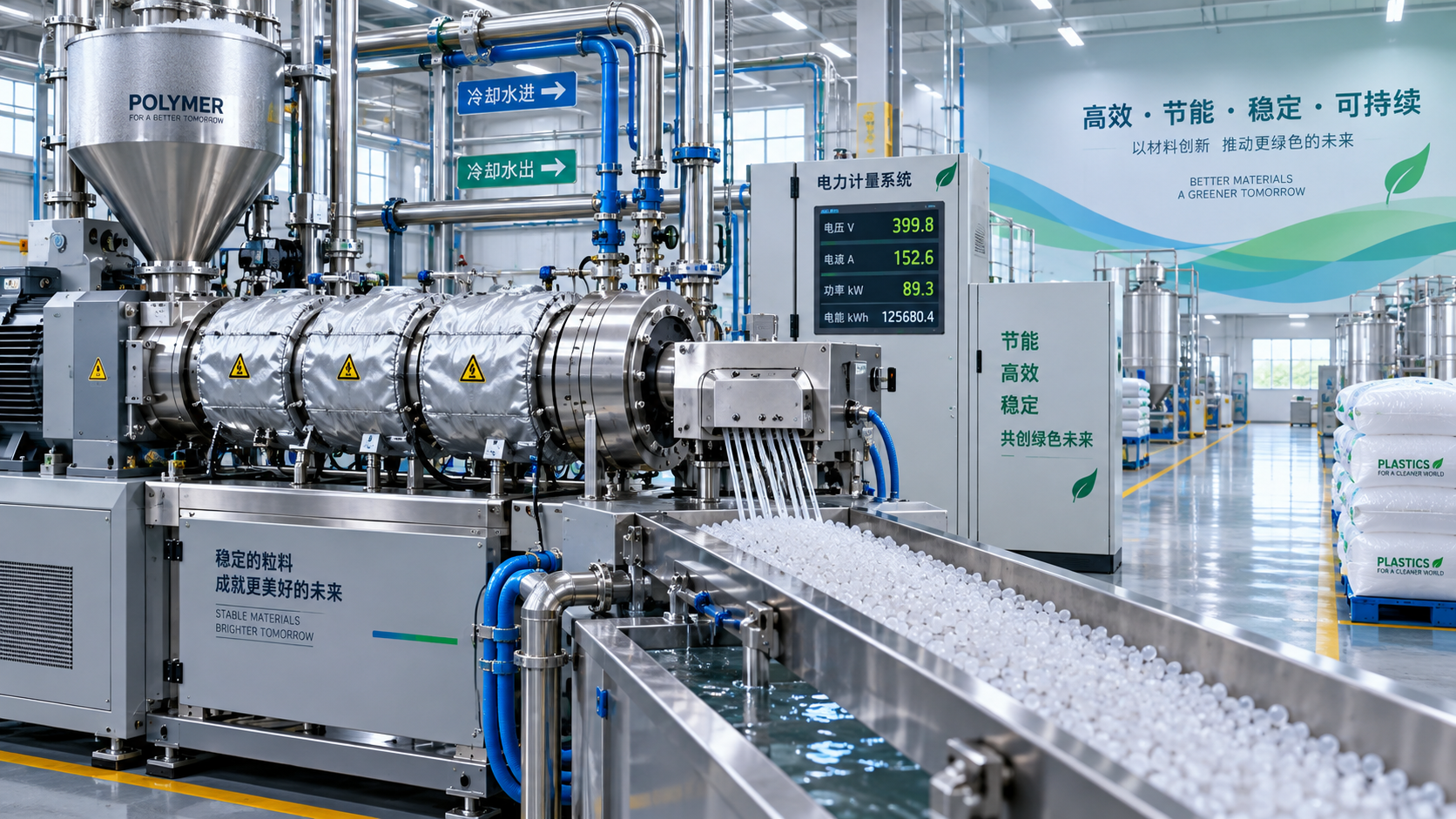
Specific energy consumption—energy used per unit of good output—is often more useful than total electricity alone. A line that consumes less power per hour is not necessarily more efficient if it produces less acceptable product. Define the measurement boundary clearly: does the figure include dryers, chillers, compressors, conveyors, and recycling equipment, or only the main machine?
Record operating hours, product mix, resin grades, changeovers, and downtime over a representative period. Where product specifications or operating schedules vary substantially, compare like with like. Submetering individual machines and major utilities can reveal whether the actual constraint is the process itself or an oversized central utility running under light load.
The material balance deserves the same discipline. Track incoming resin and additives against good output, reusable internal scrap, material sent externally, and unrecoverable losses. Investigate unexplained differences before treating them as savings opportunities; inconsistent weighing and inventory records can distort the result.
Choose upgrades around the process, not the headline rating
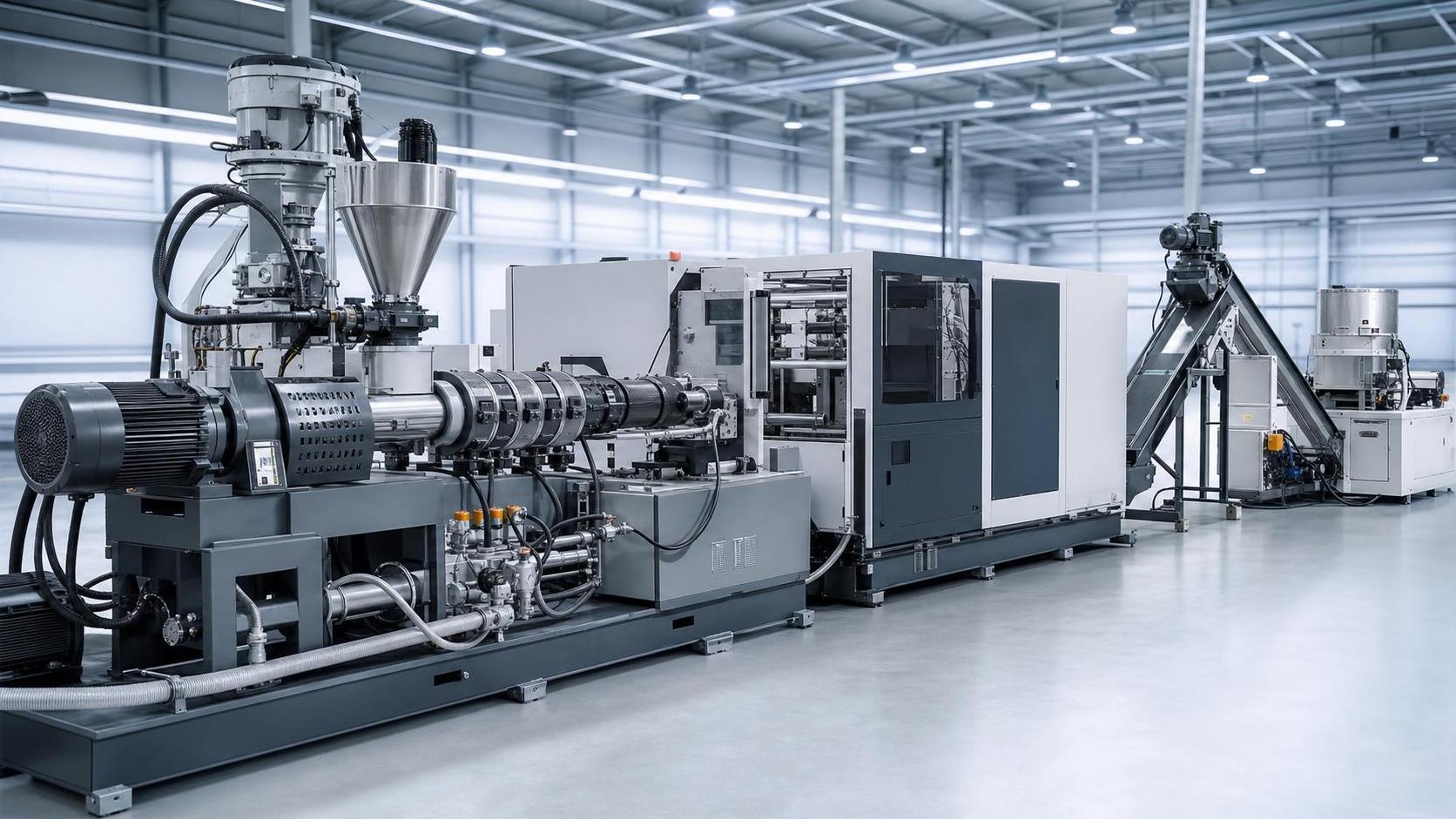
Equipment efficiency depends on the duty cycle. An all-electric injection molding machine may be attractive for repeatable, high-volume applications, while a servo-hydraulic machine may fit another combination of clamping force, mold requirements, and capital constraints. The comparison should use the same part, resin, tooling, cycle time, and quality criteria—not nameplate power alone.
For injection molding, investigate whether variation in melt temperature, mold temperature, or holding pressure is causing dimensional rejects or excess part weight. Better process control can reduce both resin consumption and the energy embedded in rejected parts. However, a shorter cycle is only an improvement if the part remains dimensionally stable after cooling and meets its functional requirements.
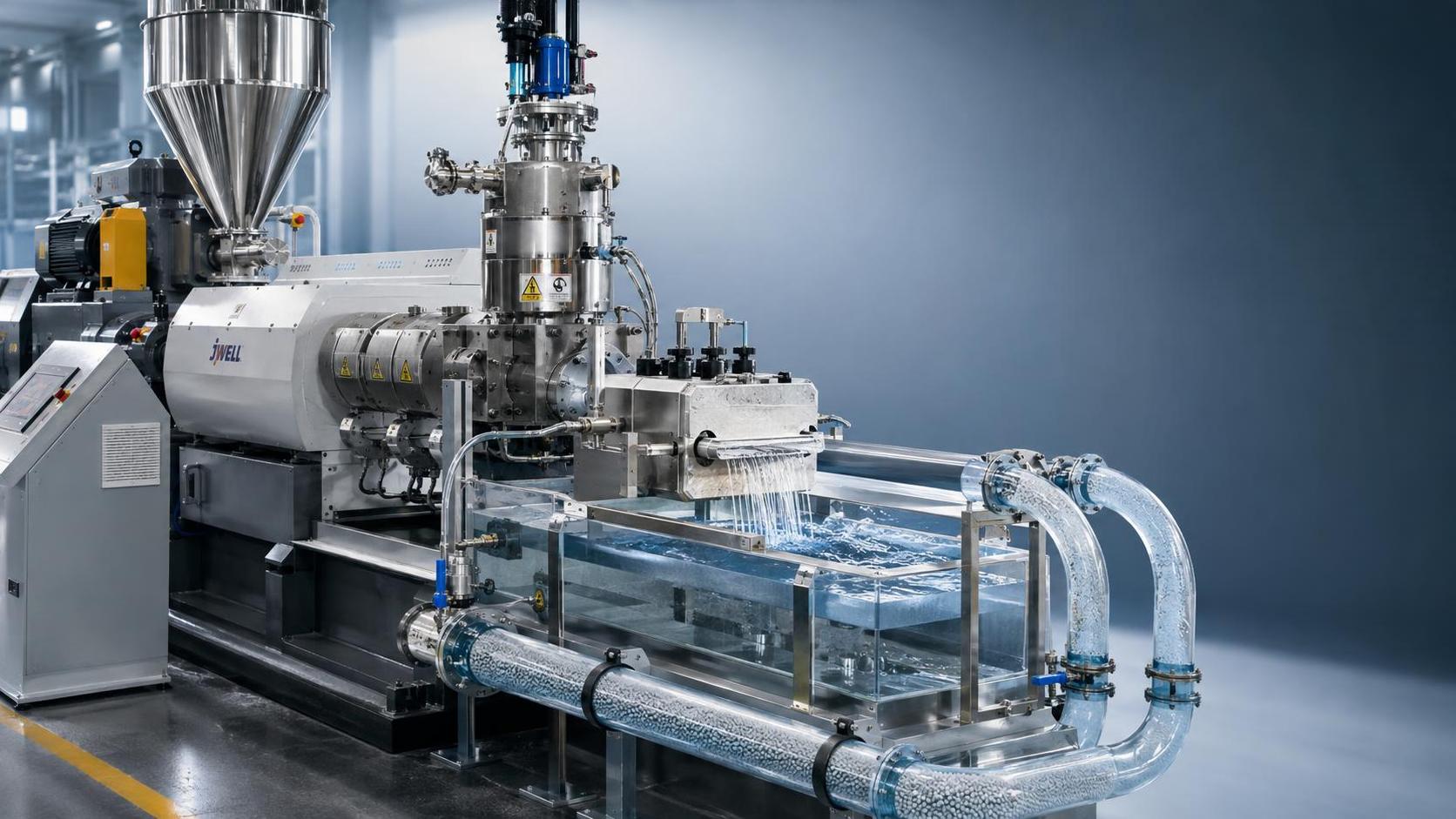
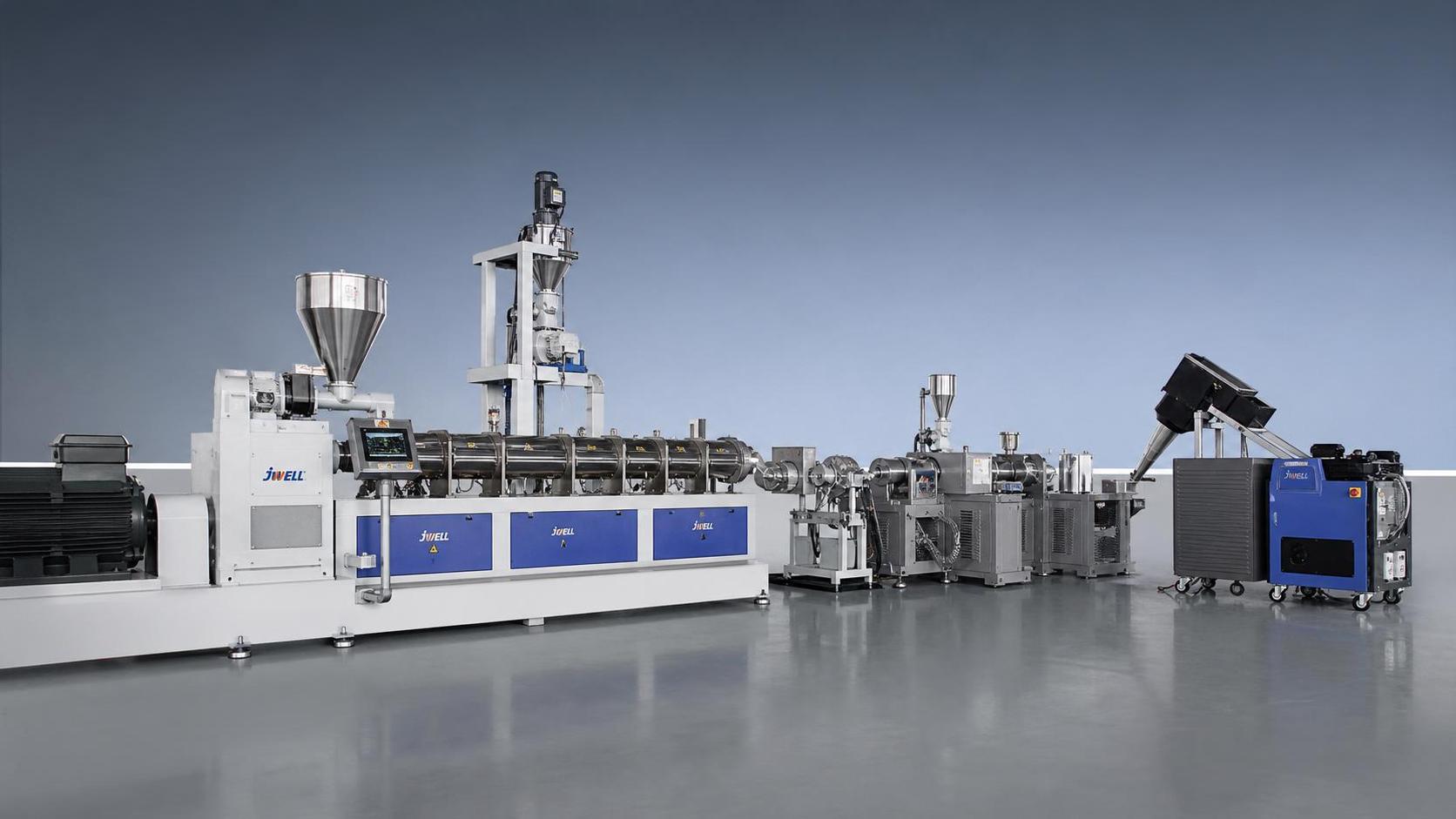
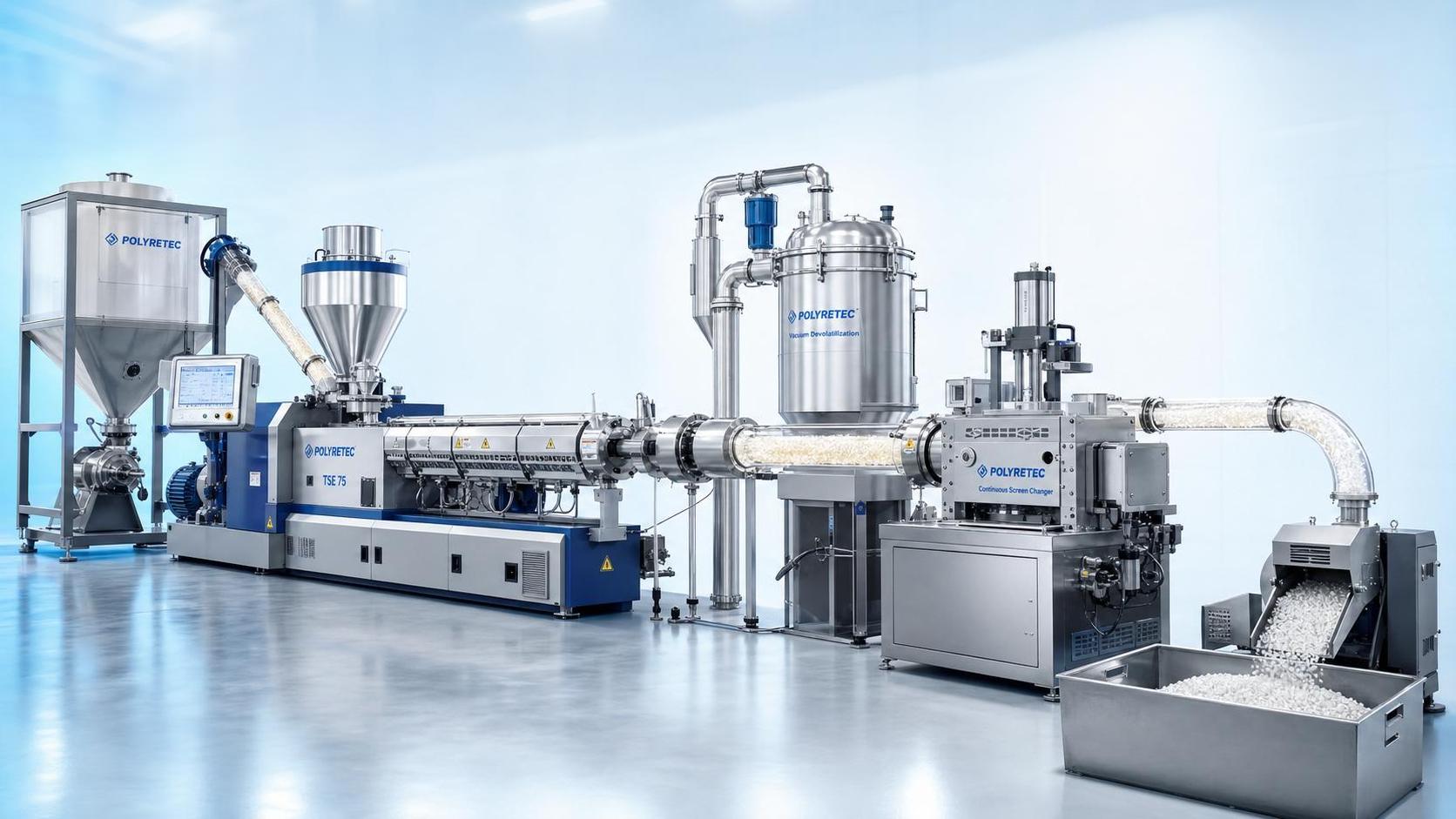
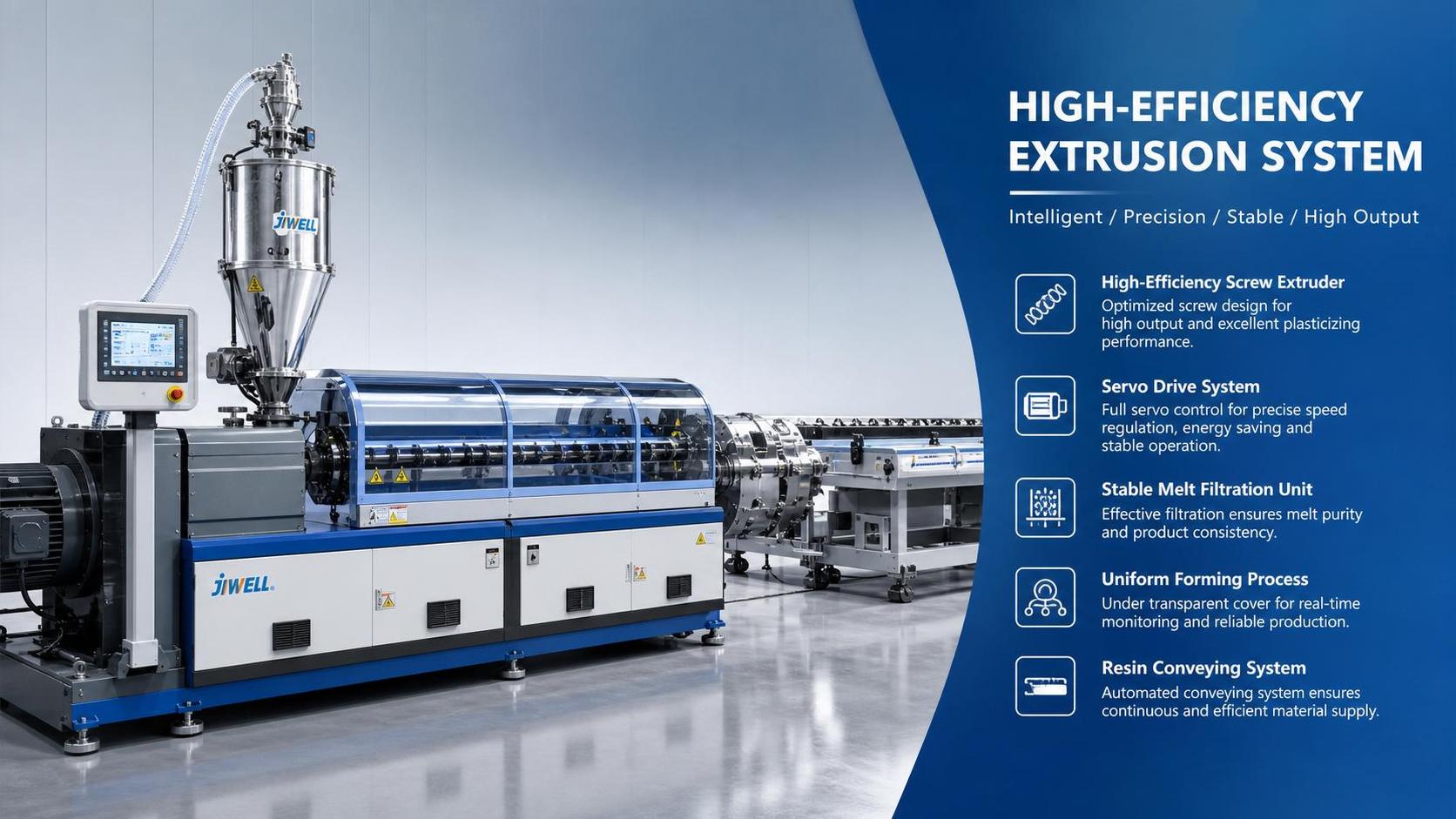
Extrusion presents a different problem: a line may run continuously but still lose energy through unstable output, excessive melt temperature, screen changes, or lengthy grade transitions. Screw design and operating conditions should suit the resin and formulation. Excessive shear can degrade a sensitive polymer, while inadequate mixing can create defects that are discovered only after downstream conversion.
In blow molding, evaluate compressed-air demand and recovery options together with bottle quality, wall-thickness distribution, and line speed. For rubber vulcanization, review press insulation, mold heating, and cure-time consistency. Cross-linked rubber cannot generally be remelted like a thermoplastic, so preventing uncured compound waste and out-of-specification cured parts may be more practical than assuming an internal closed loop.
Treat heat and utilities as part of the production line
Heating and cooling often operate side by side: resin is dried or melted, then the product is cooled, while chillers and compressors reject heat elsewhere in the plant. Mapping these flows can identify avoidable losses and potential heat-recovery opportunities.
Start with measures that do not compromise process control: repair compressed-air leaks, maintain dryer filters, check insulation on heated barrels and molds, and verify that cooling water temperatures match the process requirement. Overdrying can waste energy and, for some polymers, damage material quality. Moisture testing and resin-specific drying conditions are more reliable than simply extending dryer residence time.
Heat recovery requires a destination for the recovered heat at the right temperature and time. Warm compressor exhaust may be useful for space heating in some facilities; it will not automatically replace a high-temperature process heater. Assess seasonal demand, distance, contamination risks, controls, and maintenance access before assigning savings to the business case.
Design the recovery loop around material quality
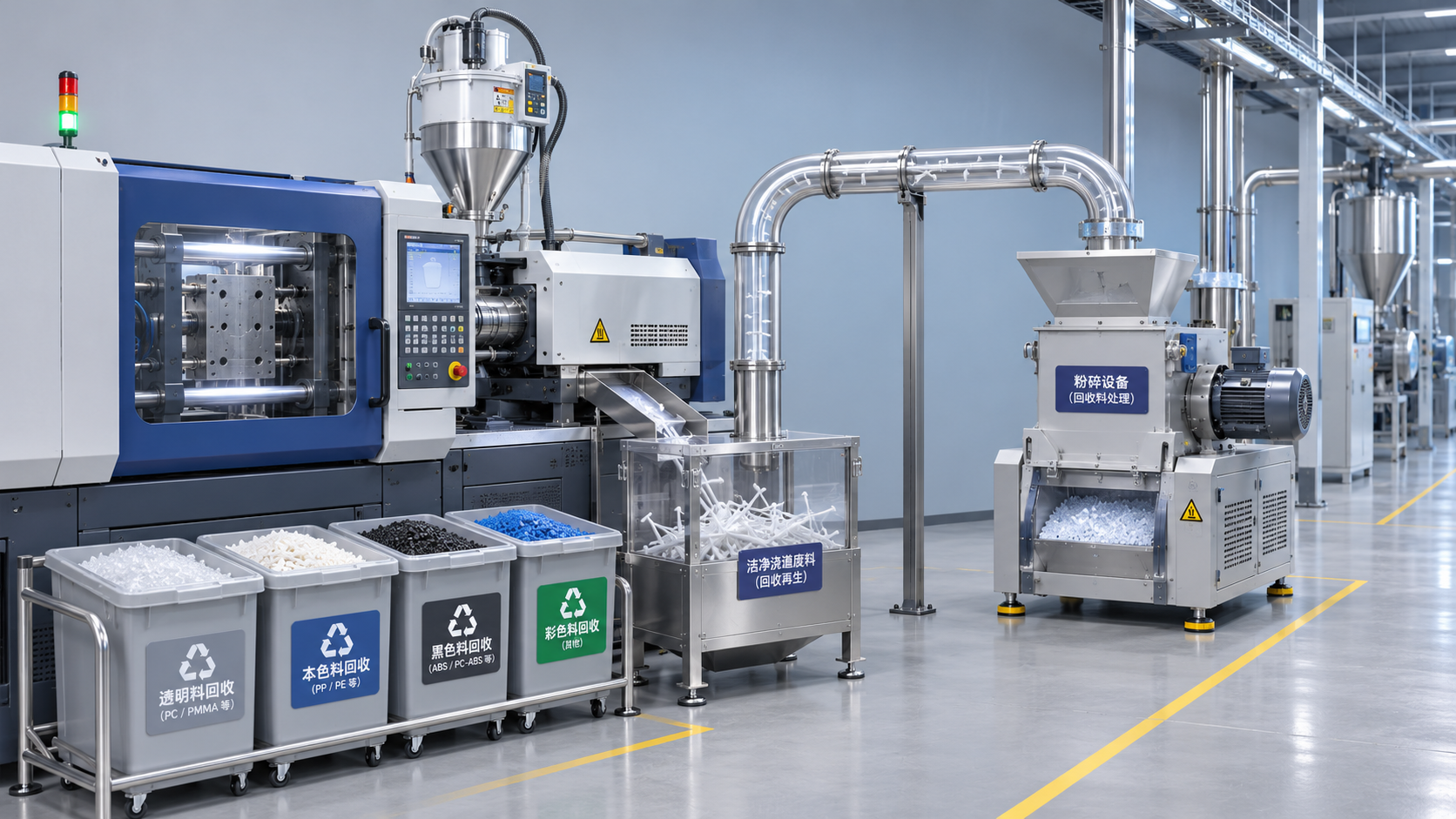
Internal scrap is often the most accessible place to begin circular processing because its resin grade and production history are relatively well known. Even then, labels such as “regrind” do not guarantee suitability. Material can be contaminated by mixed polymers, color changes, moisture, dust, or repeated heat exposure.
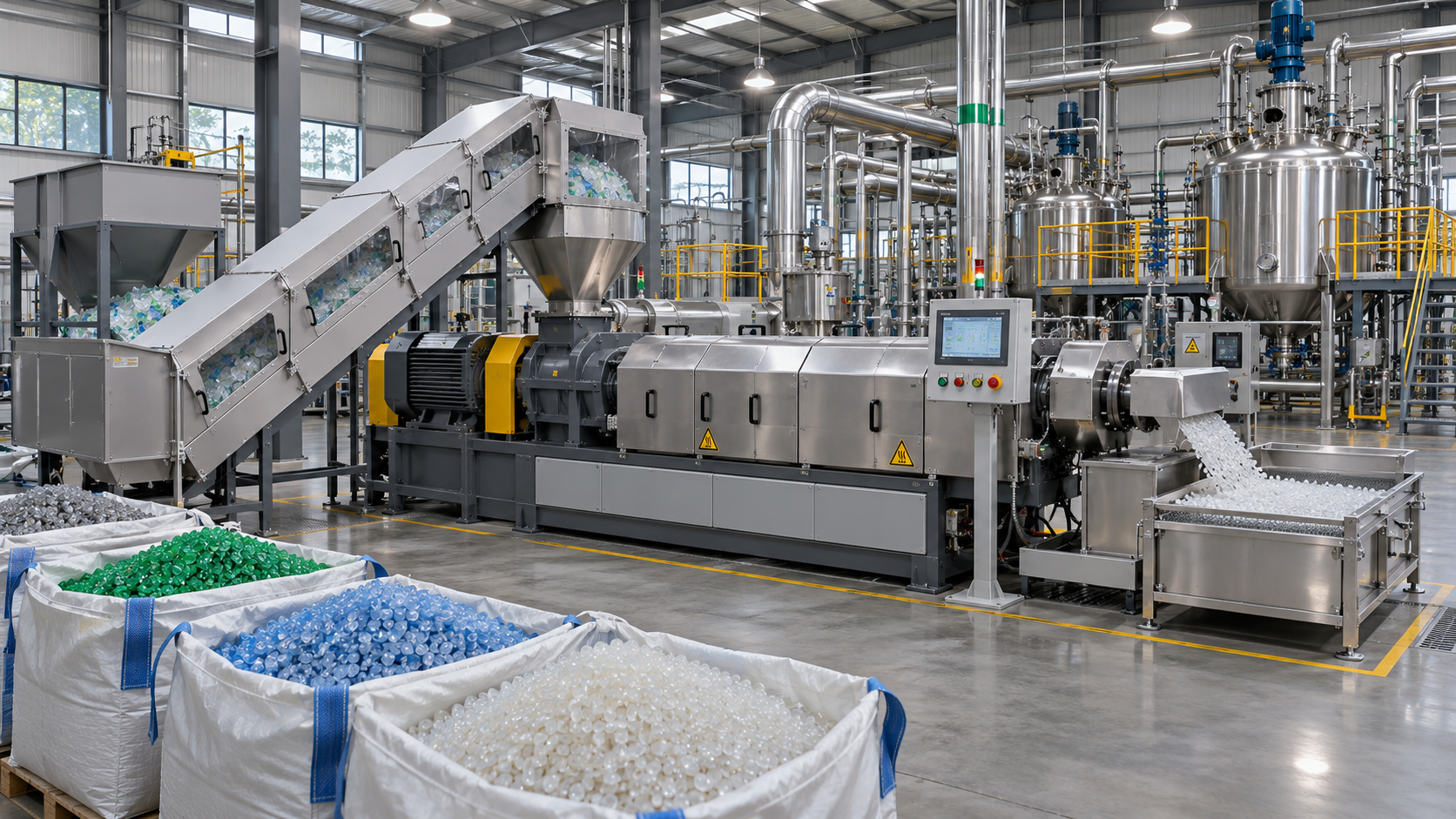
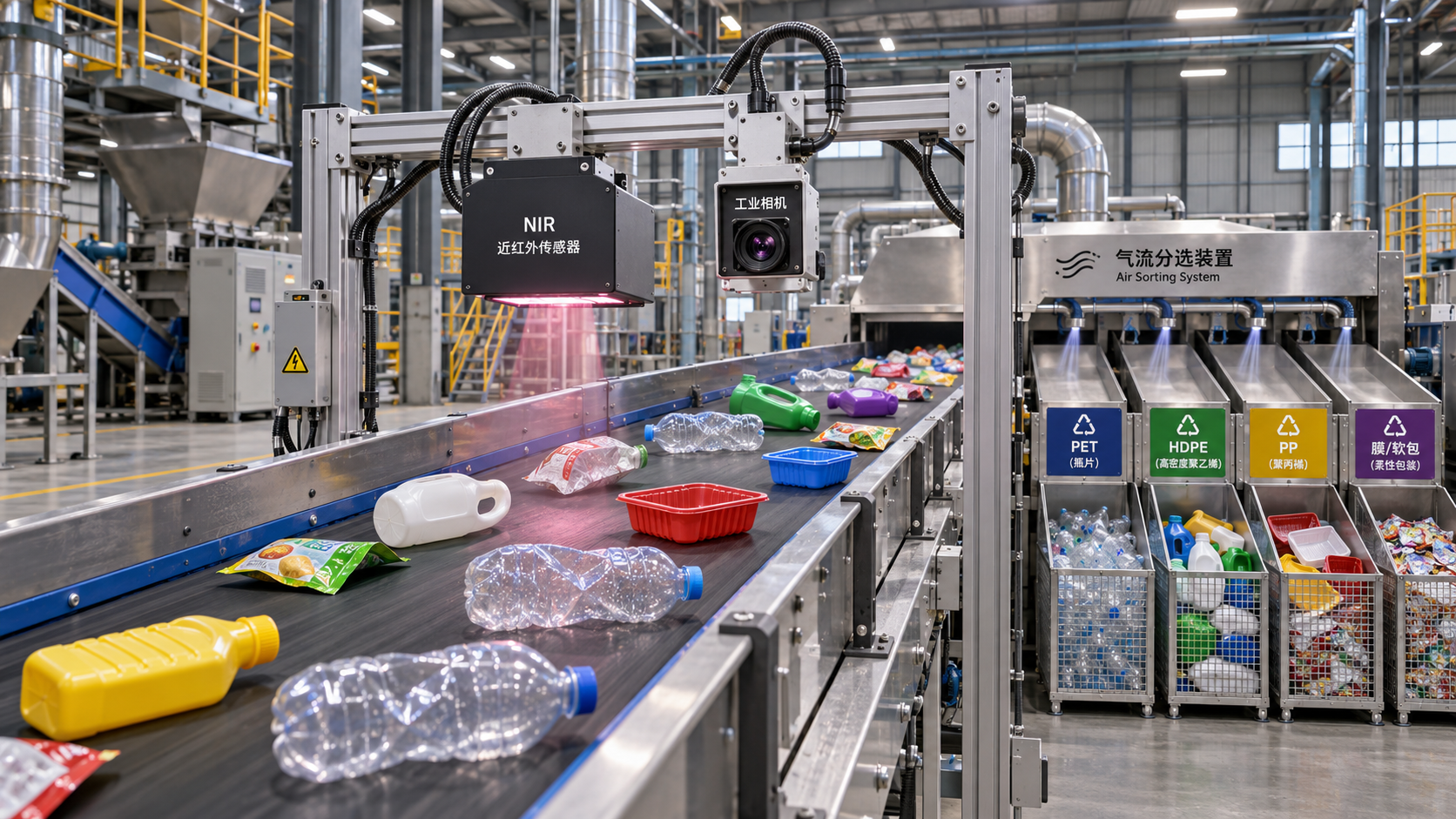
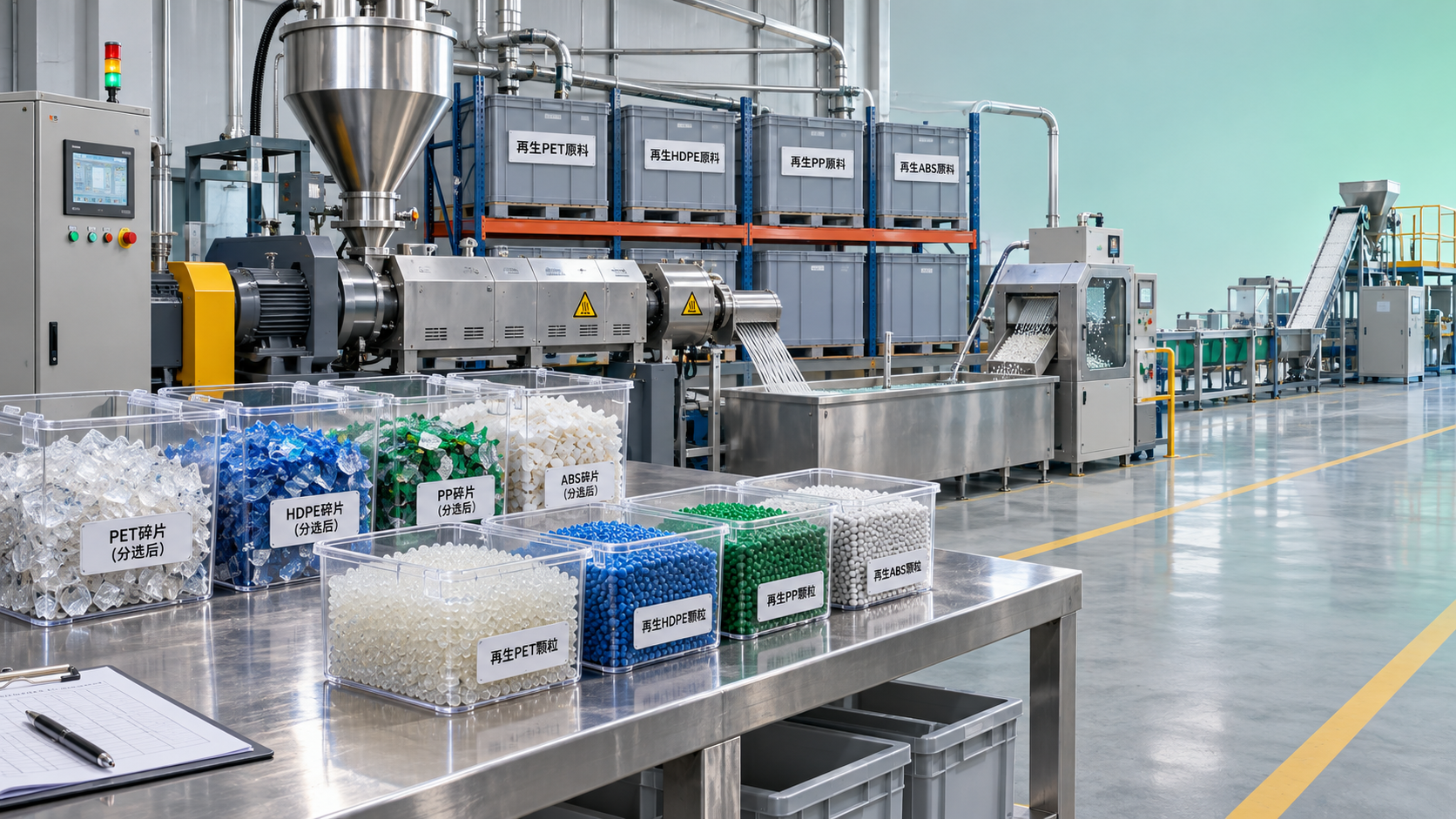
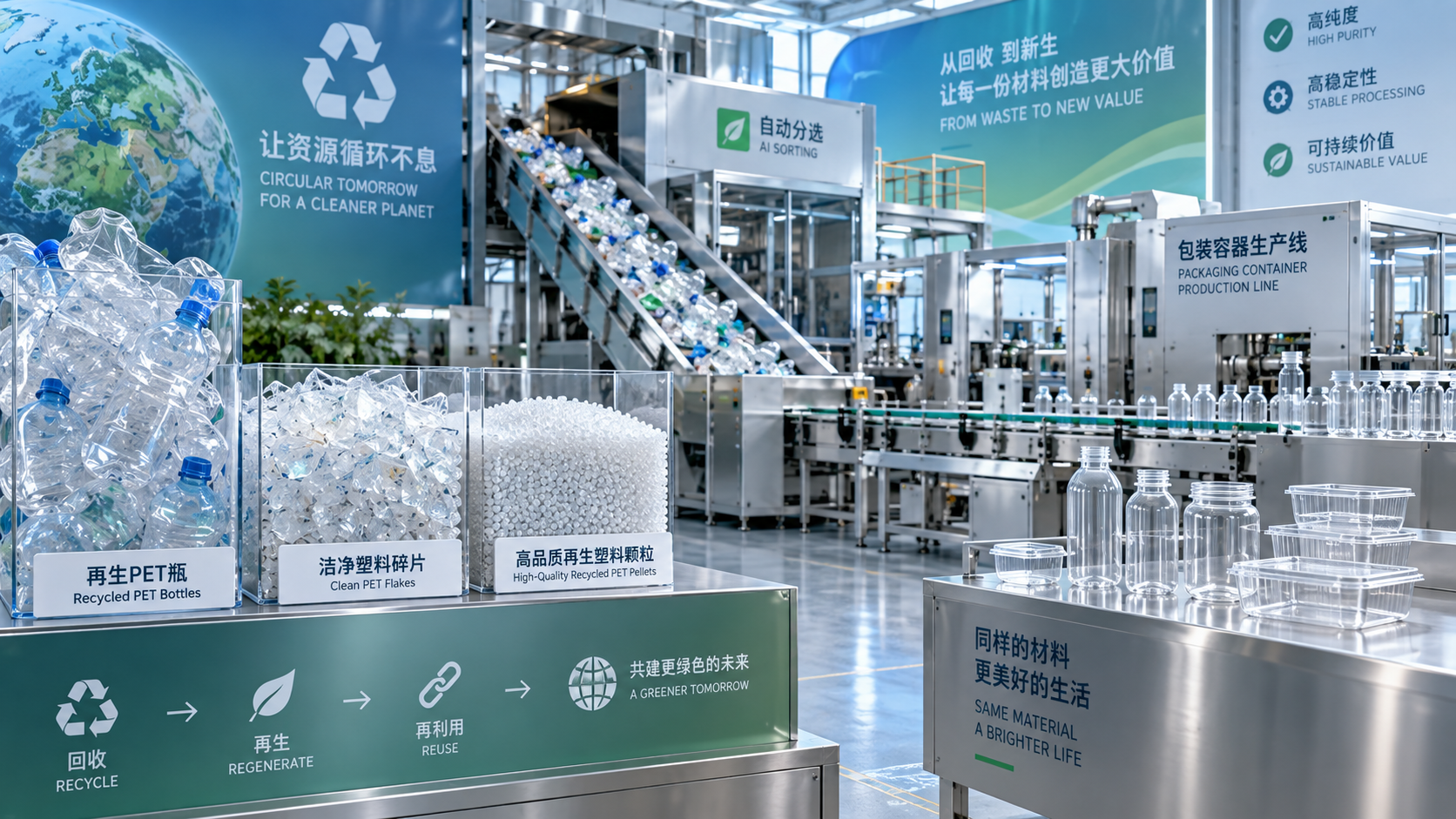
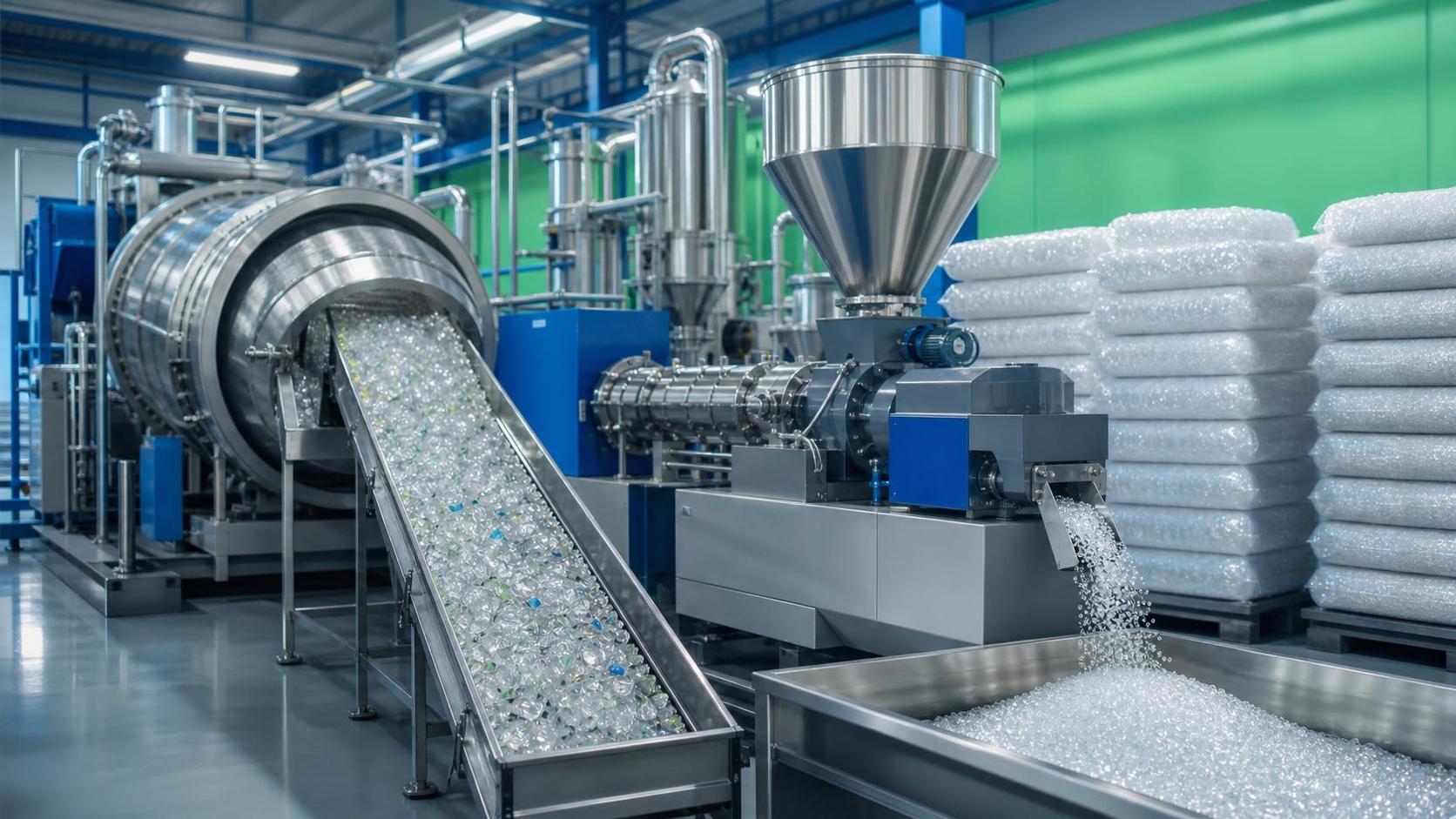
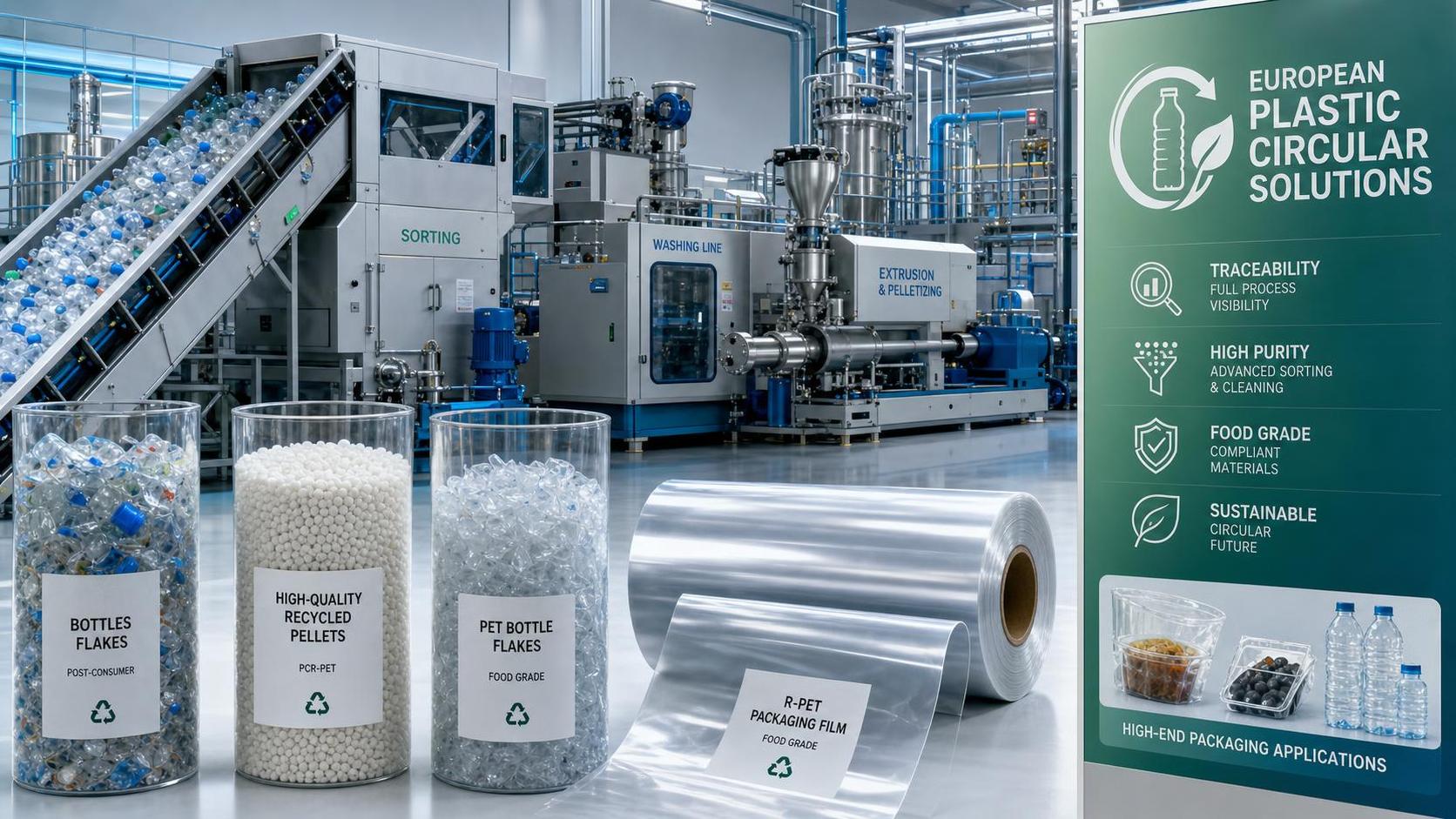
A practical recovery route begins at the point where waste is generated. Separate compatible streams, identify containers, control residence time, and prevent floor sweepings or maintenance debris from entering production scrap. Decide whether material can return directly as controlled regrind or needs further processing, such as sorting, washing, melt filtration, and pelletizing.
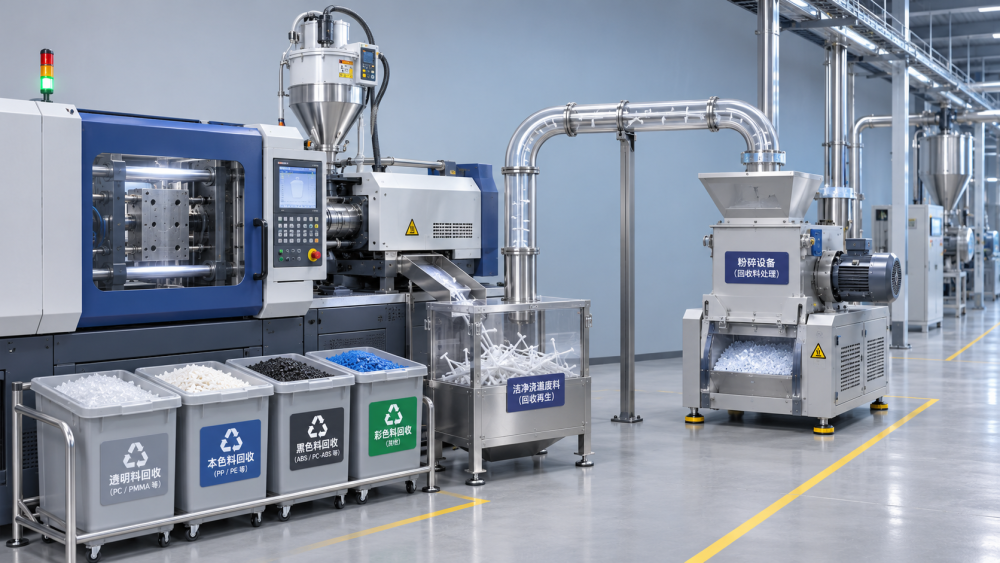
The distinction matters. Clean injection-molding runners may be suitable for carefully controlled regrind use, subject to the part specification. Mixed post-consumer packaging can require substantially more preparation, and the resulting recycled resin may need testing for contamination, melt behavior, color, and mechanical performance. Washing and pelletizing also consume utilities and generate residues; include those flows in the overall assessment.
Set an approved recycled-content window through trials rather than assuming a universal percentage. Define sampling frequency, material traceability, maximum permitted reprocessing history where relevant, and a response when test results fall outside specification. For food-contact, medical, and other regulated uses, confirm the applicable requirements for the material, process, and destination market before approving a recovery route.
Compare project options on total delivered performance
A machine quotation is only one part of the investment. Installation may require electrical upgrades, cooling capacity, extraction, floor modifications, material handling, or additional storage. A recycling system may also need laboratory equipment, wastewater management, operator training, and a reliable outlet for material that cannot be reused internally.
For each option, calculate annual costs and benefits using consistent assumptions for operating hours, energy prices, resin costs, yields, maintenance, and labor. Include avoided disposal costs only where the material would otherwise leave the site, and include the cost of managing recycling residues. Test the result against lower throughput, variable scrap availability, and changes in energy or resin prices. Simple payback can help screen options, but it does not capture equipment life, financing, or residual value.
Consider an illustrative choice between upgrading a molding machine and installing a small in-house recycling line. If scrap is already clean and consistently reused by an external processor, the recycling line must justify its added operating and quality costs against that existing arrangement. If the main loss comes from unstable molding conditions, reducing rejects at source may be the better first investment. If segregated scrap volumes are steady and reuse specifications are clear, internal recovery becomes more plausible. The answer depends on measured flows, not on whether a project carries a circularity label.
Where emissions are part of the decision, keep the accounting boundary explicit. Purchased electricity, fuel use, virgin resin displacement, transport, and recycling operations may fall into different parts of an assessment. Avoid treating every kilogram of recovered scrap as an equivalent kilogram of avoided virgin resin without checking yield, actual substitution, and the chosen accounting method.
Build verification into delivery
The most credible efficiency commitment is one that can be tested. Before placing an order, agree on the material, tooling, operating conditions, throughput, acceptable quality, and utility measurement points for equipment trials. Clarify whether performance will be demonstrated at the supplier’s facility, after installation, or both, and who supplies representative resin and tooling.
Acceptance criteria should cover more than peak output. Ask how the system performs during startup, normal changeovers, steady production, and a planned shutdown. For recycling equipment, specify how contamination, filtration changes, and rejected material will be handled. Confirm spare-parts availability, controls integration, maintenance responsibilities, and training before the project schedule becomes fixed.
After commissioning, compare results with the baseline using the same boundaries and comparable production conditions. Track good output, energy per unit of good output, reject rates, and the amount of recovered material actually accepted back into products. Assign an owner to investigate deviations; otherwise, a promising acceptance test can become disconnected from everyday operation.
For teams assessing several technologies at once, the Global Polymer Forming & Recycling Systems (PFRS) intelligence portal provides a way to follow developments across molding, extrusion, vulcanization, and plastics recovery. The next step is to turn that industry perspective into a project-specific brief: define the material streams, utility boundaries, quality constraints, and trial conditions before comparing suppliers or committing to a recovery route.
Have questions about this sector analysis, or seeking best practices specific to your niche? Drop us a line below and let the senior consultants at PFRS assist you.
We respect your privacy. Your information is strictly confidential.
Related News
- 00
0000-00
Selecting a Vacuum Flat Press for Rubber Hoses: Key Specifications - 00
0000-00
Innovations in Plastic Recycling: Mechanical vs Chemical Processing - 00
0000-00
Plastic Recycling Innovation: Sorting Advances for Mixed Packaging Waste - 00
0000-00
ESG Compliance for Plastics: Mapping Reporting Obligations by Market - 00
0000-00
Drying Temperature and Coating Defects in PU Synthetic Leather
Weekly Insights
Stay ahead with our curated technology reports delivered every Monday.
Related News
 Prof. Marcus ChenInnovations in Plastic Recycling: Mechanical vs Chemical ProcessingExplore innovations in plastic recycling and compare mechanical and chemical processing to find the right fit for your feedstock, product goals and market.Nov 24, 2026
 Prof. Marcus ChenPlastic Recycling Innovation: Sorting Advances for Mixed Packaging WasteExplore plastic recycling innovation in mixed packaging sorting, from AI and NIR sensors to robotics, and discover what drives recyclate quality.Nov 24, 2026
 Prof. Marcus ChenConnected Plastics Machinery: How Real-Time Data Improves ProductionConnected plastics machinery turns real-time data into actionable insights. Discover how to improve quality, investigate downtime, and plan a successful pilot.Nov 19, 2026
 Prof. Marcus ChenEnergy-Efficient Circular Manufacturing: Cutting Energy Use and Material WasteDiscover how energy efficient circular manufacturing cuts energy use and material waste through smarter equipment choices, process controls, and recycling strategies.Nov 15, 2026
 Prof. Marcus ChenSmart Polymer Recycling: How Reversible Bonds Enable Material RecoveryExplore smart polymer manufacturing recycling: discover how reversible bonds enable material recovery and what it takes to make the process practical.Nov 13, 2026
 Prof. Marcus ChenPlastics Manufacturing Digitalization: Reducing Downtime and ScrapPlastics manufacturing digitalization can reduce downtime and scrap. Discover practical steps to connect process data, improve maintenance, and act on quality issues.Nov 07, 2026
 Prof. Marcus ChenWhat Is a Circular Plastics Platform and How Does It Support Recycling?Discover how a circular plastics platform connects materials, recyclers, and buyers—and learn what to look for when choosing one.Nov 03, 2026
 Prof. Marcus ChenHow Single-Use Plastic Bans Shift Demand for Packaging MaterialsExplore the plastic ban market impact on packaging demand, from fiber and recycled plastics to reuse. Discover viable alternatives and smarter investment opportunities.Oct 15, 2026
 Prof. Marcus ChenWhere Recycled Plastic Innovation Delivers the Biggest Value in PackagingRecycled plastic innovation delivers the greatest packaging value through proven material loops, reliable processing, compliance readiness, and circular design.Oct 08, 2026
 Prof. Marcus ChenEnergy-Efficient Polymer Processing: Where Plants Can Cut kWh per KilogramEnergy-efficient polymer processing solutions help plants reduce kWh per kilogram, protect quality, cut scrap, and prioritize upgrades with data-driven insights.Sep 23, 2026
 Prof. Marcus ChenPlastic Pelletizing Trends: How Recycling Demand Is Reshaping Processing TechnologyPlastic pelletizing trends are redefining recycling quality. Explore filtration, extrusion, degassing, and automation innovations driving cleaner, more consistent recycled resin.Sep 07, 2026
 Prof. Marcus ChenHow Polymer Supply Chains Are Changing to Support High-Quality Recycling FeedstockPolymer supply chain for recycling is shifting toward traceable sourcing, cleaner sorting, and stable processing. See how high-quality feedstock improves performance, compliance, and cost control.Aug 22, 2026
 Prof. Marcus ChenHow Europe’s Circular Plastics Economy Is Reshaping Recycling InvestmentCircular plastics economy Europe is reshaping recycling investment through quality, traceability, and packaging demand. Explore where capital is moving and why it matters now.Aug 04, 2026
 Prof. Marcus ChenBlow Molding Trends Shaping Packaging, Sustainability, and Production EfficiencyBlow molding trends are redefining packaging with lightweighting, recycled content, automation, and energy efficiency. Discover how smarter production boosts sustainability and cuts costs.Jul 23, 2026
 Prof. Marcus ChenExtrusion Equipment Modular Design: When It Makes Sense for Line ExpansionExtrusion equipment modular design helps manufacturers expand lines in phases, cut disruption, and stay ready for recycled content, utility limits, and changing product demands.Jul 15, 2026
 Prof. Marcus ChenPolymer Lifecycle Solutions Explained: From Material Sourcing to End-of-Life RecoveryPolymer lifecycle solutions explained from sourcing and processing to recycling and recovery. Discover how to cut waste, improve quality, and build smarter material strategies.Jul 13, 2026
 Prof. Marcus ChenEnergy-Efficient Polymer Processing Systems: Which Metrics Matter Most?Energy-efficient polymer processing systems: discover the metrics that truly drive ROI—specific energy use, yield, uptime, stability, and compliance for smarter equipment decisions.Jul 11, 2026
 Prof. Marcus ChenPolymer Recycling Systems for Continuous Operation: What to Check Before SpecifyingPolymer recycling systems continuous operation starts with the right specification. Learn what to check for uptime, melt quality, energy efficiency, and reliable pellet output.Jul 09, 2026
 Prof. Marcus ChenCircular Plastics Economy in Japan: Policy Drivers, Recycling Targets, and Market ImpactCircular plastics economy Japan is accelerating as policy, recycling targets, and packaging reforms reshape material choices, processing strategy, and market advantage.Jul 05, 2026
 Prof. Marcus ChenPlastic Extrusion Technology Trends: What Process Changes Are Improving Energy Efficiency?Plastic extrusion technology trends are reshaping energy efficiency through smarter screws, thermal control, servo drives, and digital optimization. See which process changes deliver lower costs and more stable output.Jul 01, 2026