How polymer smart manufacturing improves batch consistency




For technical evaluators, polymer smart manufacturing is no longer a future concept. It is a practical way to tighten batch consistency across molding, extrusion, blow molding, vulcanization, and recycling operations.
The core search intent behind this topic is clear: readers want to know whether digital process control, inline sensing, and analytics can measurably reduce variation between runs, shifts, tools, materials, and plants.
They also want help judging where smart manufacturing creates real value, what data matters most, how to verify improvement, and which limits still remain in polymer processing environments.
Why batch consistency is still difficult in polymer processing

Technical evaluators already know that polymers are not easy materials to standardize. Their behavior changes with temperature history, moisture, shear exposure, additive dispersion, and even upstream storage conditions.
That is why two batches can use the same nominal recipe and machine settings, yet still produce different part weight, dimensions, gloss, tensile performance, seal strength, or recycled pellet quality.
In injection molding, small drifts in melt temperature, cushion, fill time, or holding pressure can alter shrinkage and warpage. In extrusion, screw speed, barrel profile, die pressure, and residence time affect output stability.
Blow molding lines face another layer of complexity from preform variation, stretch ratios, and cooling behavior. Vulcanization depends heavily on precise thermal history and pressure control during cross-linking reactions.
Recycling adds even more variability because feedstock contamination, moisture, mixed polymer streams, and degradation history influence melt flow, filtration load, pellet consistency, and final application suitability.
Traditional quality systems often catch these issues too late. Offline inspection can confirm defects, but it cannot always explain the exact process drift that caused them or prevent recurrence in the next batch.
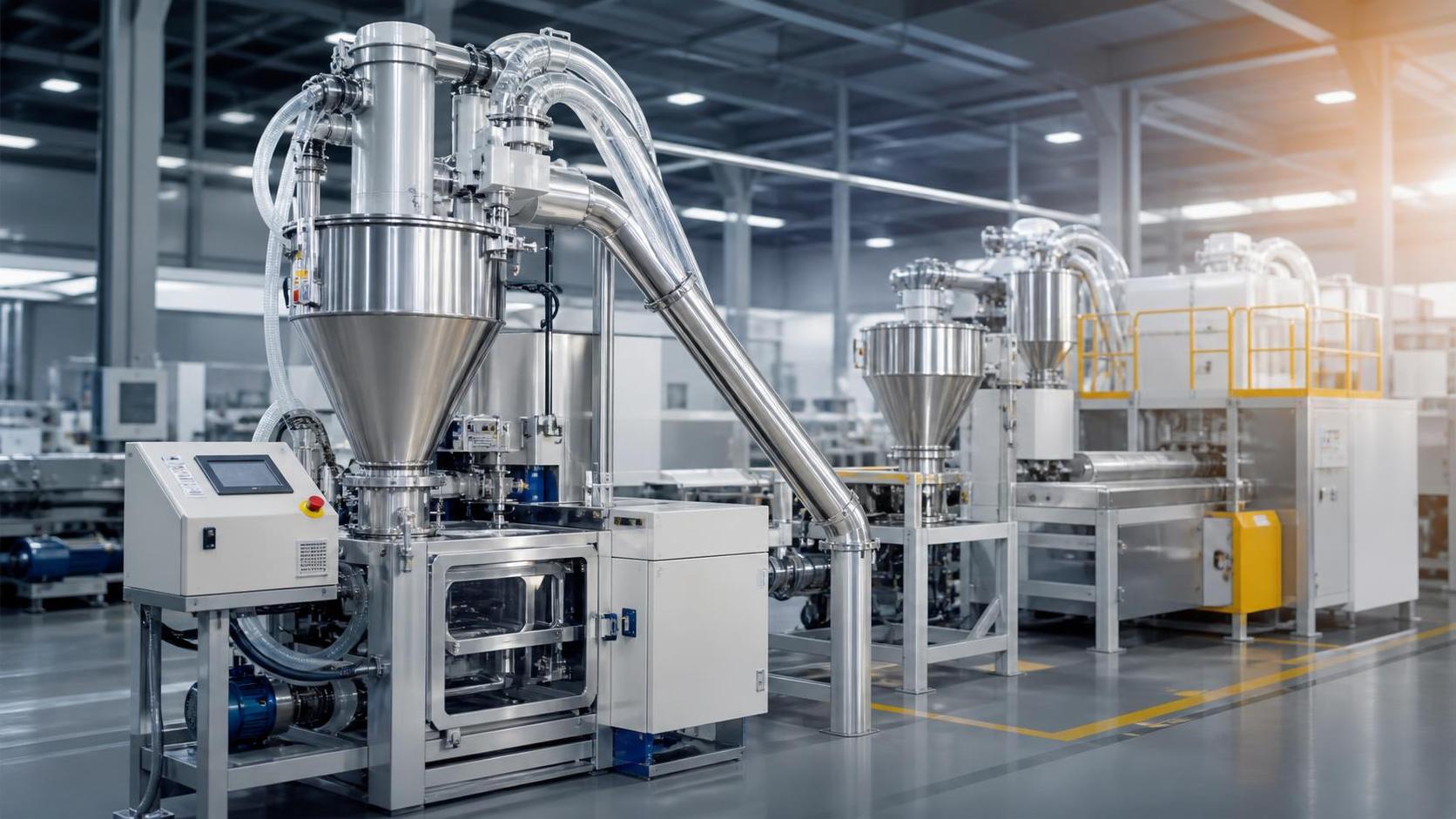
This is where polymer smart manufacturing matters most. Its value is not just automation. Its real contribution is turning process variation into visible, traceable, and controllable signals before quality escapes happen.
What polymer smart manufacturing actually changes on the factory floor
For evaluators, the best way to assess polymer smart manufacturing is to look beyond broad digitalization claims and focus on how it closes the loop between sensing, decision-making, control, and verification.
In a conventional line, operators set parameters and react when quality shifts become visible. In a smart line, the process continuously compares actual behavior against acceptable process windows and quality signatures.
That difference is critical. Instead of relying mainly on static setpoints, the system uses live data such as cavity pressure, melt pressure, motor load, screw torque, infrared temperature, moisture, viscosity proxies, and energy use.
These signals allow the machine or supervisory system to detect subtle instability earlier. It can then adjust holding pressure, screw recovery, die gap, line speed, cooling, vacuum, filtration, or dosing before deviations grow.
The result is not perfect uniformity in every case. Polymer processing still involves material and environmental complexity. But the spread of variation can be narrowed enough to improve repeatability batch after batch.
For technical teams, this means less dependence on operator intuition alone, fewer hidden process drifts, and stronger confidence that each production lot was made within a validated operating envelope.
Which smart manufacturing capabilities matter most for batch consistency
Not every digital feature improves consistency equally. Technical evaluators should prioritize capabilities that influence process stability directly rather than systems that only add reporting convenience after production is complete.
First, high-quality inline sensing is foundational. If temperature, pressure, torque, flow, humidity, and dimensional data are inaccurate or poorly placed, no advanced analytics layer will create reliable control decisions.
Second, closed-loop control matters more than alarms alone. A dashboard that shows variation is useful, but a system that automatically corrects fill profile, barrel load, or cooling balance is much more valuable.
Third, recipe governance and change control are essential. Many batch inconsistencies come from uncontrolled setup edits, undocumented maintenance changes, or material substitutions rather than from machine hardware limitations.
Fourth, traceability across material lots, tooling, environmental conditions, and machine events helps evaluators identify whether inconsistency comes from resin variability, equipment wear, operator behavior, or process logic.
Fifth, model-based or AI-assisted optimization can be powerful when applied carefully. It works best when it refines validated process windows rather than replacing engineering understanding with opaque algorithmic recommendations.
Finally, automated quality verification closes the loop. The strongest polymer smart manufacturing environments connect process data with downstream inspection, allowing teams to prove which process signatures correlate with acceptable output.
How it improves consistency in injection molding and extrusion
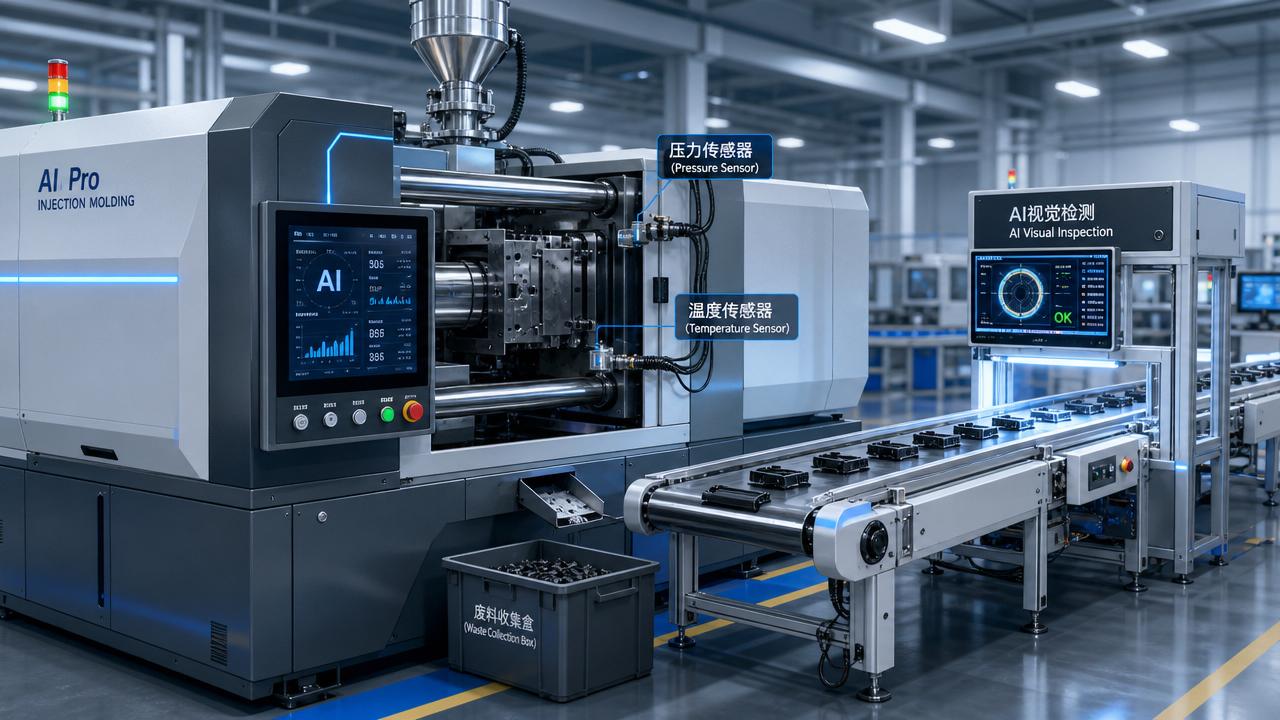
Injection molding often provides the clearest example of smart manufacturing value because part quality is highly sensitive to short-cycle changes. Cavity pressure sensing is especially important for consistent fill and pack control.
When cavity pressure curves are monitored in real time, the system can detect whether the polymer entered the cavity correctly, reached effective pack pressure, and cooled along a repeatable path from shot to shot.
That enables better control over part weight, dimensional repeatability, flash risk, sink marks, and warpage. It is far more informative than relying only on machine-set hydraulic or servo values.
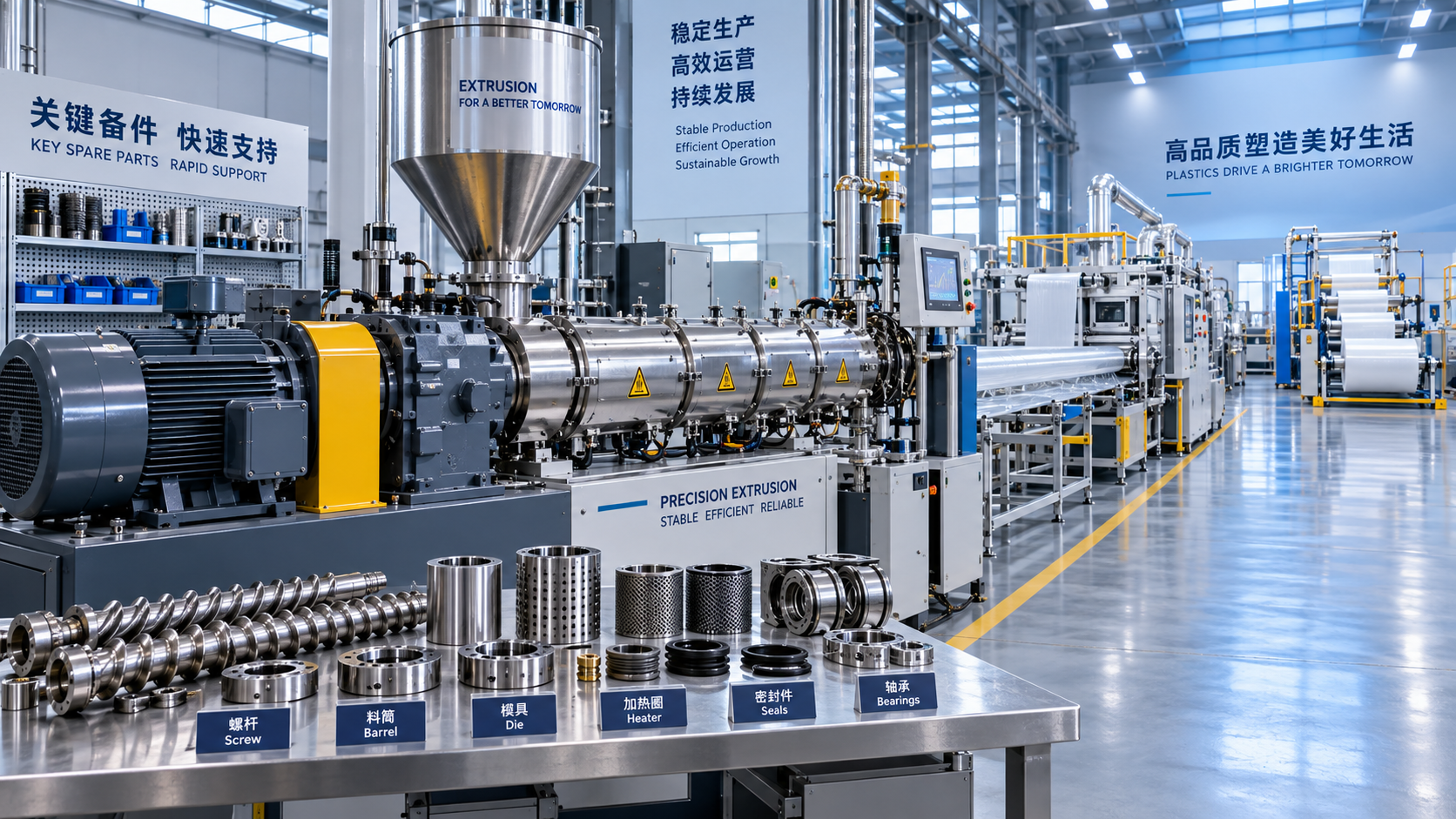
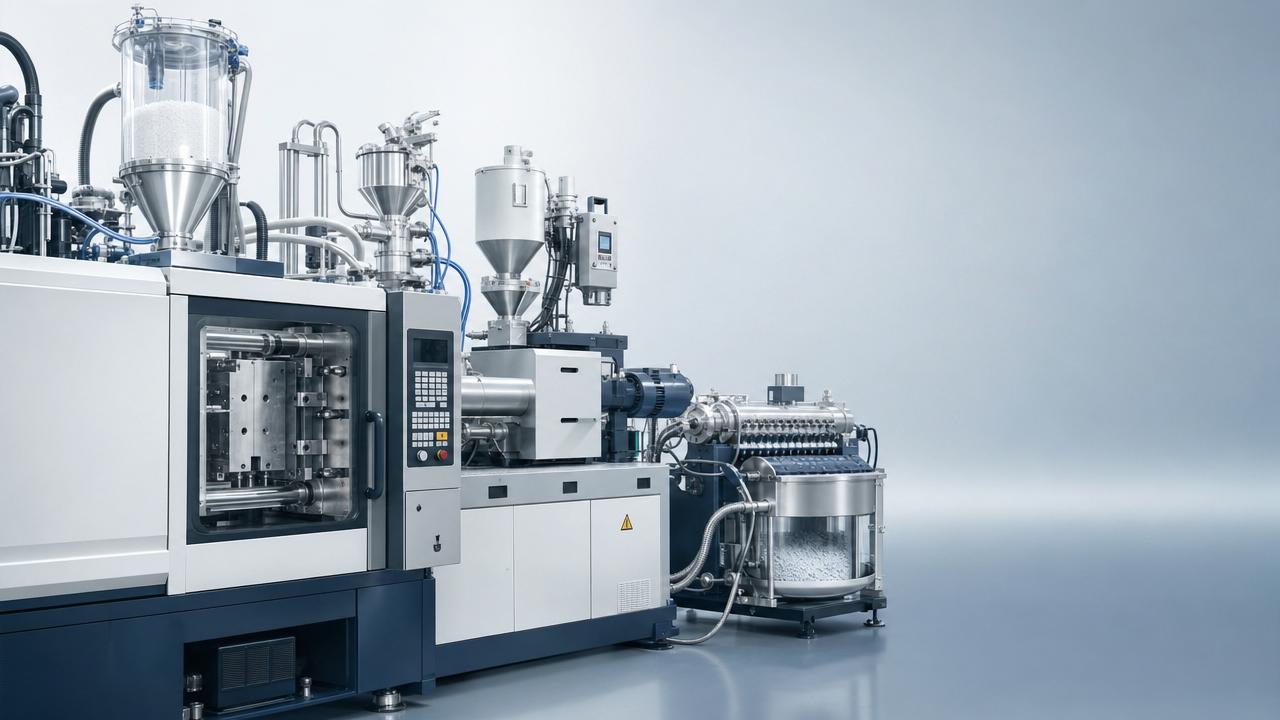
In extrusion, smart manufacturing helps stabilize continuous output by monitoring melt pressure fluctuation, motor loading, screw torque, temperature distribution, and downstream haul-off synchronization.
For twin-screw compounding lines, consistency often depends on maintaining controlled energy input and residence behavior. Smart systems can identify feeder imbalance, venting issues, or additive dispersion instability before product quality drops.
In film and sheet extrusion, this translates into better thickness uniformity, fewer gauge bands, more stable optical properties, and lower scrap rates during startups and transitions between material grades.
For pipe, profile, or cable extrusion, the benefit often appears in dimensional tolerance, ovality control, surface finish, and long-run stability, especially during shift changes or raw material lot transitions.
What changes in blow molding, vulcanization, and recycling lines
Blow molding consistency depends on both upstream and forming stability. Smart manufacturing can link preform quality, oven behavior, stretching conditions, and blow pressure profiles into a single verified process chain.
This improves bottle wall distribution, burst resistance, top-load performance, and visual uniformity. For technical evaluators, the key advantage is not only quality improvement but faster isolation of root causes.
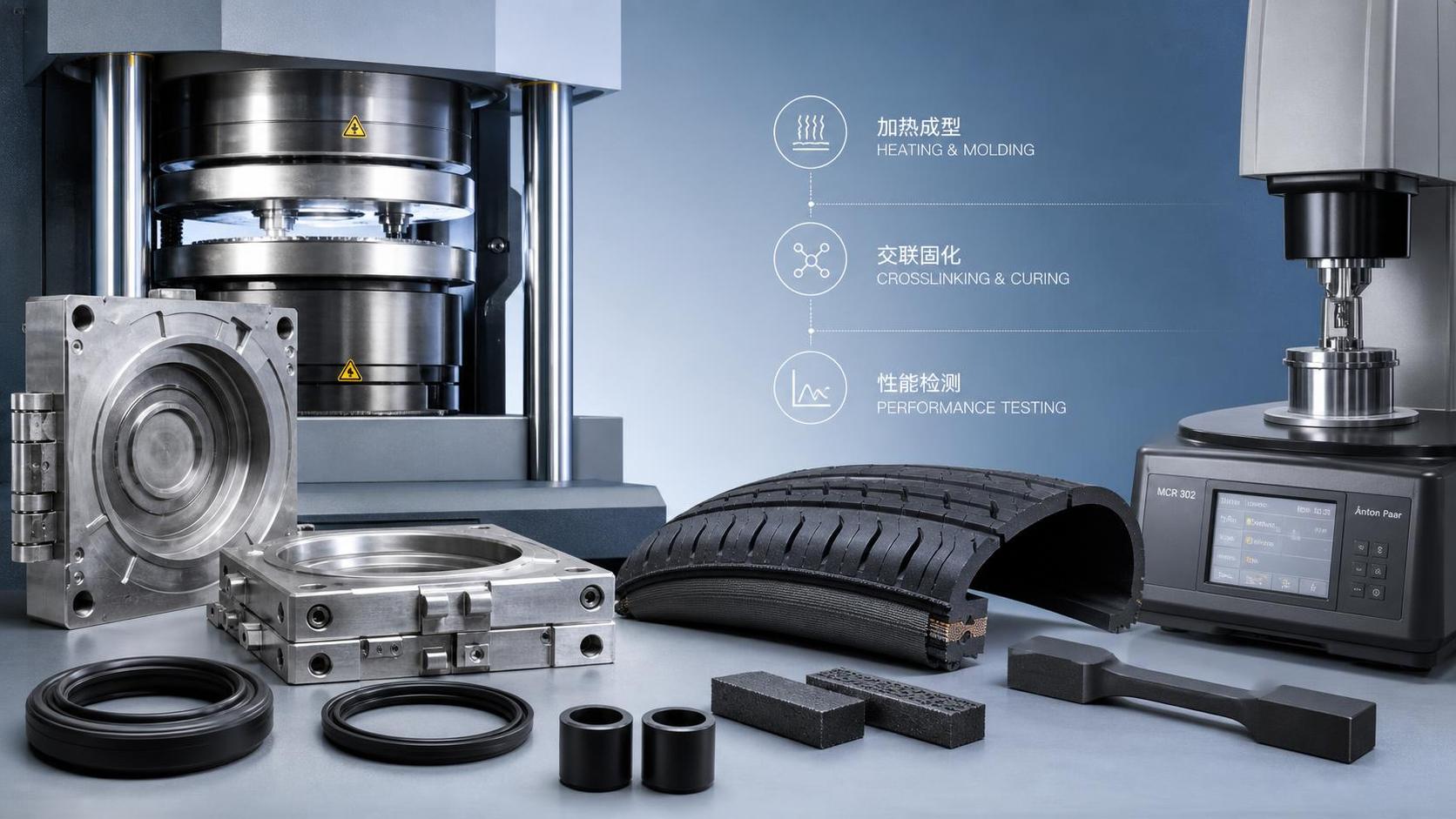
In rubber vulcanization, the smart manufacturing opportunity centers on thermal precision and cure uniformity. Small temperature or pressure deviations can affect cross-link density and lead to inconsistent mechanical performance.
With better sensor coverage and digital cure tracking, manufacturers can reduce under-cure or over-cure risk, improve repeatability in tire components or seals, and document process integrity for demanding customers.
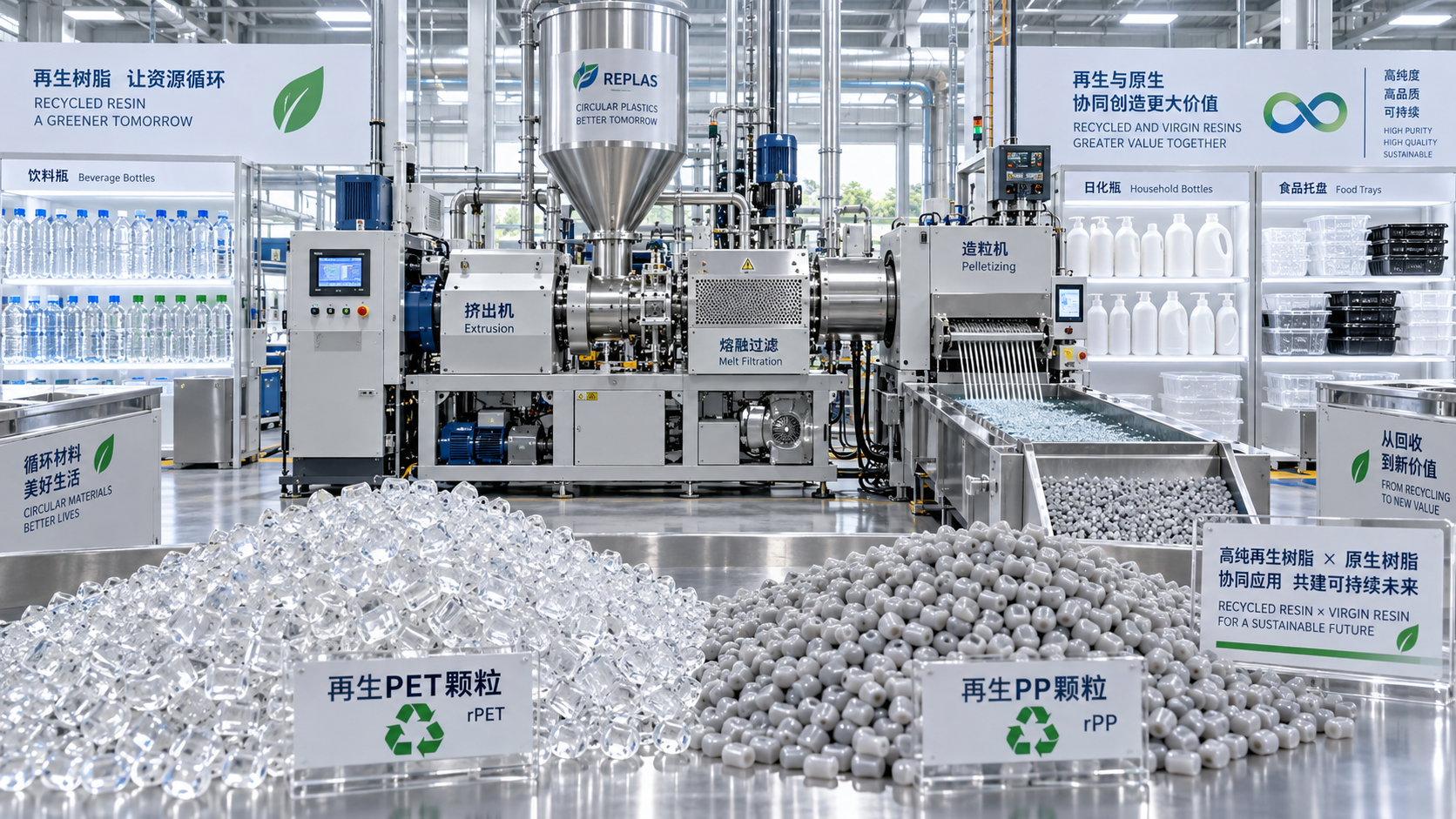
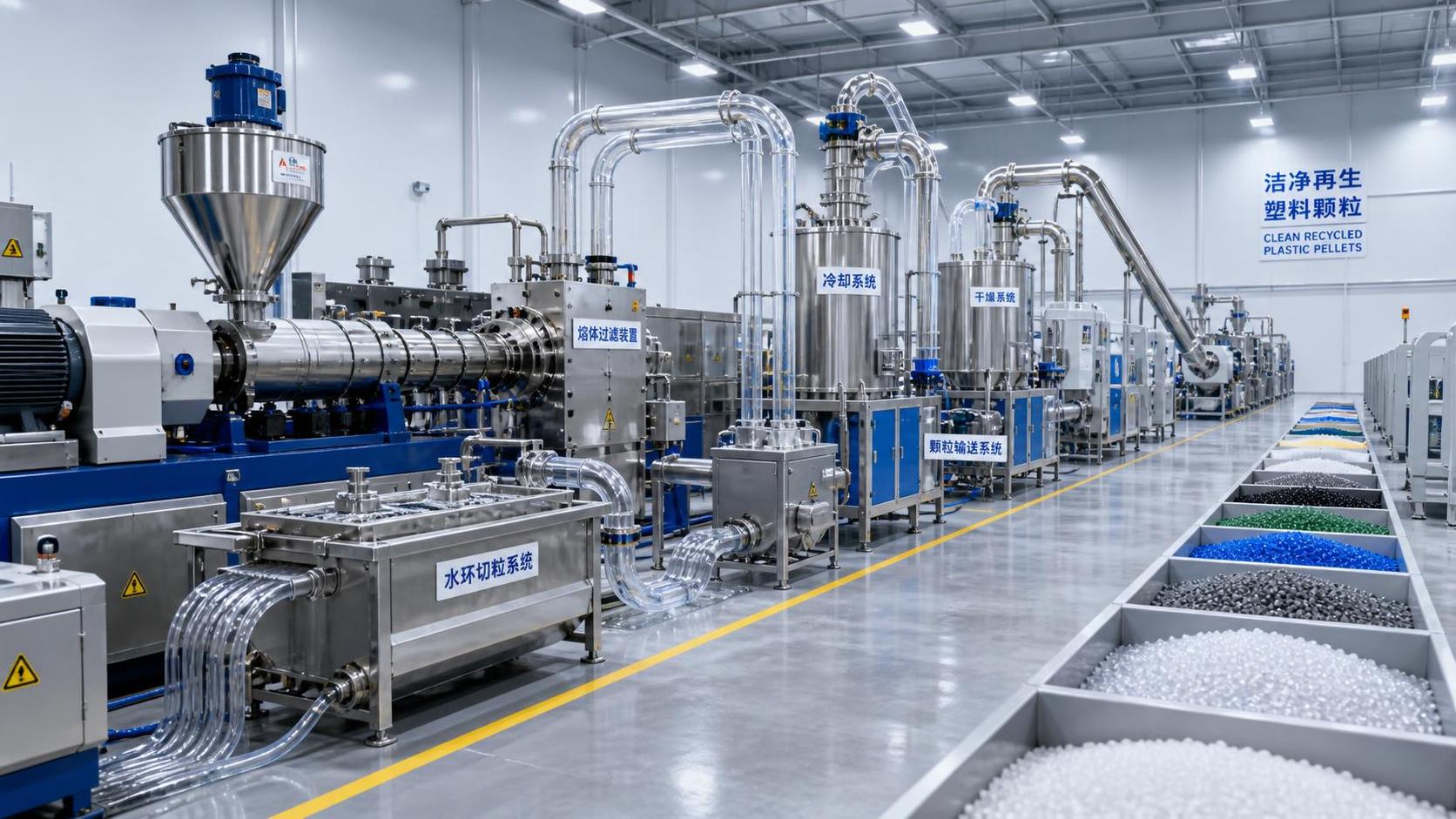
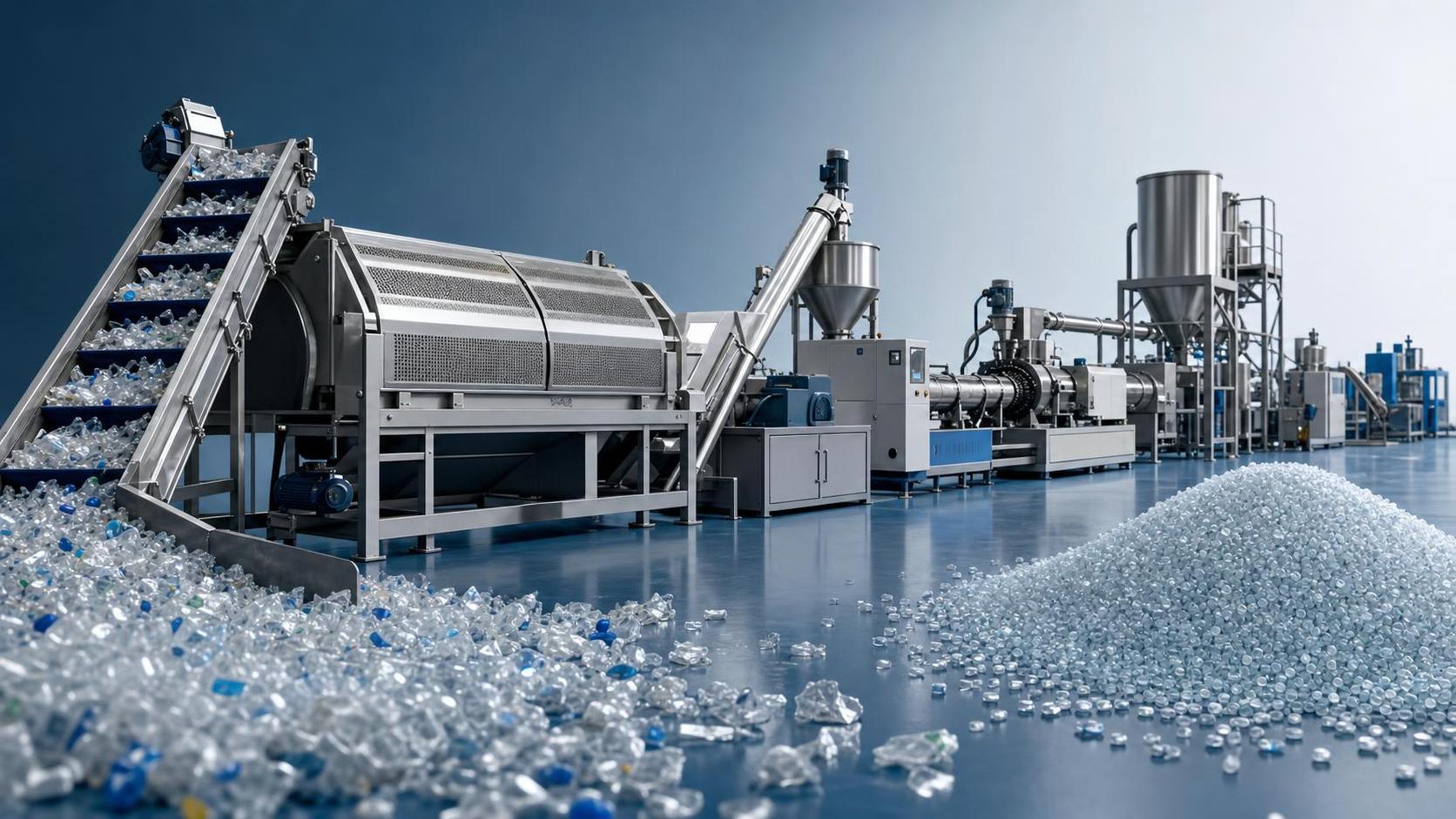
Recycling lines may see the greatest strategic value because feedstock variability is inherently high. Smart manufacturing helps compensate for unstable input by tracking moisture, contamination load, melt filtration pressure, and pellet quality indicators.
That makes it easier to maintain stable throughput, reduce black specks or gels, and classify recycled pellets according to usable quality bands rather than broad assumptions about mixed waste streams.
For companies pursuing food-contact or high-performance recycled content targets, this traceable consistency is not optional. It becomes part of qualification, compliance, and customer trust.
How technical evaluators should assess real value
When suppliers promote polymer smart manufacturing, evaluators should ask one direct question: which variability sources can this system detect, control, and document better than our current process setup?
If the answer remains vague, the value case is weak. A credible proposal should map digital functions to specific quality risks such as shot-to-shot weight drift, die pressure oscillation, cure variability, or melt contamination events.
Evaluators should also request baseline and target metrics. Useful indicators include Cp and Cpk improvement, standard deviation reduction, scrap rate decline, first-pass yield, startup stabilization time, and deviation response speed.
Another important test is robustness under real operating conditions. A smart system may perform well during demonstrations but struggle when materials change, sensors foul, maintenance is delayed, or operators bypass procedures.
Integration quality is equally important. If process data remains isolated from MES, SPC, lab testing, or maintenance records, the plant may gain visibility but still fail to create actionable consistency control.
Cybersecurity, model governance, and data ownership should not be ignored. For high-value processing lines, a poorly managed digital stack can create new operational risks even while promising better process stability.
Common limitations and what smart manufacturing cannot solve alone
Polymer smart manufacturing can significantly improve batch consistency, but it cannot fully overcome poor material discipline, worn tooling, unstable utilities, or weak process engineering fundamentals.
If resin drying is inconsistent, regrind ratios are uncontrolled, screws are damaged, or molds have thermal imbalance, digital tools will expose those weaknesses faster but will not magically remove them.
The same applies to recycled polymers. No amount of analytics can convert severely contaminated or chemically degraded feedstock into premium-grade output without suitable sorting, washing, filtration, and quality assurance steps.
AI is another area where expectations should stay realistic. Predictive models can support optimization, but they require good historical data, stable measurement architecture, and engineering oversight to remain trustworthy.
Technical evaluators should therefore view polymer smart manufacturing as a capability multiplier. It amplifies disciplined operations, good machine design, and sound process science rather than replacing them.
A practical roadmap for adoption
For most manufacturers, the best path is phased implementation rather than a full digital overhaul. Start with the lines where batch inconsistency has the highest quality, compliance, or cost impact.
Next, identify the few process variables most strongly linked to final quality. In many cases, a focused sensor-and-control upgrade delivers more value than a broad software rollout with unclear process relevance.
Then establish a verified baseline. Measure current variation, scrap, downtime, startup losses, and customer complaints before introducing new smart functions. Without that baseline, improvement claims remain subjective.
After deployment, validate not just system operation but business impact. Confirm whether the line now holds tighter tolerances, needs fewer operator interventions, recovers faster after disturbances, and documents quality more convincingly.
Finally, standardize what works. The real payoff comes when successful control strategies, alarm logic, and quality signatures can be transferred across machines, molds, dies, compounds, or plant locations.
Conclusion: the strongest case for polymer smart manufacturing
For technical evaluators, the strongest argument for polymer smart manufacturing is simple: it makes batch consistency more measurable, more controllable, and more defensible across complex polymer processing environments.
Its benefit is greatest where material behavior is sensitive, compliance expectations are rising, and quality deviations are expensive to detect after the fact. That includes injection molding, extrusion, blow molding, vulcanization, and recycling.
The best systems do not just collect more data. They connect process physics, real-time control, and quality verification in ways that reduce variation between batches with practical, auditable results.
If evaluated with the right metrics and realistic expectations, polymer smart manufacturing can move consistency management from reactive inspection toward proactive process assurance. That shift is where its real industrial value begins.
Related News
- 00
0000-00
How to Evaluate Plastic Pelletizing Machine Suppliers for Output, Support, and Risk - 00
0000-00
How to Select a Plastic Pipe Manufacturing System for Output, Resin, and Pipe Range - 00
0000-00
How to Specify Injection Molding Equipment for High-Volume Closure Production - 00
0000-00
How to Specify a Medical Molding Machine for Cleanroom Device Production - 00
0000-00
Plastic Extrusion Technology for Films: Process Controls That Improve Gauge Uniformity
Weekly Insights
Stay ahead with our curated technology reports delivered every Monday.
Related News
 Dr. Alistair VaughnHow Do PPWR Recycled-Content Targets Affect Packaging Resin Demand?How do PPWR recycled-content targets affect packaging resin demand? Explore shifts in recycled grades, virgin blends, food-contact supply, and processing strategy.Sep 26, 2026
 Dr. Alistair VaughnHow to Evaluate a Plastics Processing Equipment Manufacturer for Uptime and SupportPlastics processing equipment manufacturer evaluation guide: compare uptime, spare parts, service response, diagnostics, and lifecycle support before buying.Sep 17, 2026
 Dr. Alistair VaughnBudgeting a Plastic Pelletizing Machine: Cost Drivers for Recycling LinesPlastic pelletizing machines cost depends on feedstock, filtration, utilities, and installation. Explore key budget drivers to build a reliable recycling line investment plan.Sep 03, 2026
 Dr. Alistair VaughnCommon Waste and Downtime Causes in Rubber Processing and Cutting OperationsProcessamento e corte de borracha: discover the real causes of scrap and downtime in rubber lines, from material variation to machine wear, and learn how to cut waste and improve output.Aug 31, 2026
 Dr. Alistair VaughnWhat Is Automated Materials Processing and Where Does It Deliver the Most Value?Automated materials processing improves consistency, cuts waste, and boosts efficiency across molding, extrusion, and recycling. Discover where it delivers the most value.Aug 14, 2026
 Dr. Alistair VaughnHow Does a Polymer Recycling Plant Work? Process Steps and Key Equipment ExplainedPolymer recycling plant guide: explore sorting, washing, drying, extrusion, filtration, and pelletizing steps, plus key equipment that drives cleaner output and reliable recycled plastic quality.Jul 31, 2026
 Dr. Alistair VaughnHow Does Rubber Vulcanization Work and What Determines Final Rubber Performance?Rubber vulcanization explained: discover how curing, formulation, temperature, pressure, and machine control determine final rubber performance, durability, and product reliability.Jul 30, 2026
 Dr. Alistair VaughnHow Circular Plastics Economy EPR Rules Affect Packaging Costs and Compliance PlanningCircular plastics economy EPR is reshaping packaging costs, recyclability, and compliance planning. Learn how to reduce fee exposure, protect margins, and make smarter packaging decisions.Jul 13, 2026
 Dr. Alistair VaughnCircular Plastics Economy Trends: How EPR Policies and Recycled Content Rules Affect ManufacturersCircular plastics economy trends are reshaping manufacturing fast. See how EPR policies and recycled content rules impact costs, compliance, sourcing, and plant performance.Jun 30, 2026
![]() Dr. Alistair VaughnGlobal Plastic Ban Trends: Which Packaging Materials Face the Highest Compliance Risk?Global plastic ban trends are reshaping packaging compliance. Discover which materials face the highest risk and how to reduce cost, disruption, and redesign pressure.Jun 04, 2026
Dr. Alistair VaughnGlobal Plastic Ban Trends: Which Packaging Materials Face the Highest Compliance Risk?Global plastic ban trends are reshaping packaging compliance. Discover which materials face the highest risk and how to reduce cost, disruption, and redesign pressure.Jun 04, 2026 Dr. Alistair VaughnGlobal Plastic Ban Trends: Policy Shifts Affecting Packaging Materials and SupplyGlobal plastic ban trends are reshaping packaging supply. Discover policy shifts, material risks, and processing strategies to stay compliant and competitive.Jun 02, 2026
 Dr. Alistair VaughnHow is AI in injection molding cutting scrap?AI in injection molding cuts scrap by detecting process drift, optimizing pressure and cooling, and improving quality decisions—see how to reduce waste and boost ROI.May 29, 2026
 Dr. Alistair VaughnWhat global plastic ban trends mean for export planningGlobal plastic ban trends are reshaping export planning. Learn how to reduce compliance risk, choose smarter packaging, and align sourcing and equipment upgrades for market access.May 28, 2026
![]() Dr. Alistair VaughnWhy elastomer cross-linking fails and how to prevent defectsElastomer cross-linking failures can cause soft spots, cracks, and hidden reliability risks. Learn the key defect causes and proven prevention steps across molding, extrusion, and recycled blends.May 23, 2026
Dr. Alistair VaughnWhy elastomer cross-linking fails and how to prevent defectsElastomer cross-linking failures can cause soft spots, cracks, and hidden reliability risks. Learn the key defect causes and proven prevention steps across molding, extrusion, and recycled blends.May 23, 2026 Dr. Alistair VaughnHow fragile is the virgin resin supply chain in 2026Virgin resin supply chain risks are rising in 2026. Explore key disruption drivers, pricing impacts, and practical resilience strategies for smarter sourcing and planning.May 22, 2026
 Dr. Alistair VaughnWhy polymer molding scientists matter in process upgradesPolymer molding scientists help turn process upgrades into higher precision, lower waste, better energy efficiency, and faster ROI. See why their expertise reduces risk and improves modernization results.May 22, 2026
 Dr. Alistair VaughnWhat global plastic ban trends mean for new projectsGlobal plastic ban trends are reshaping new projects through design, compliance, recycled content, and equipment strategy. See how to plan smarter, reduce risk, and stay market-ready.May 21, 2026
 Dr. Alistair VaughnHow ESG in plastic manufacturing affects export riskESG in plastic manufacturing directly affects export risk, from customs delays to buyer approval. Learn how traceability, compliance, and smarter equipment protect market access.May 21, 2026
 Dr. Alistair VaughnWhat global plastic ban trends mean for export planningGlobal plastic ban trends are reshaping export planning, packaging choices, and compliance strategy. Learn how to reduce risk, adapt faster, and stay competitive across global markets.May 19, 2026
 Dr. Alistair VaughnHow polymer smart manufacturing improves batch consistencyPolymer smart manufacturing improves batch consistency with inline sensing, closed-loop control, and analytics. See how it reduces variation, scrap, and quality risk across polymer processing.May 18, 2026