Global Plastic Ban Trends Reshaping Packaging Decisions




Global plastic ban trends are moving from headline risk to operating reality
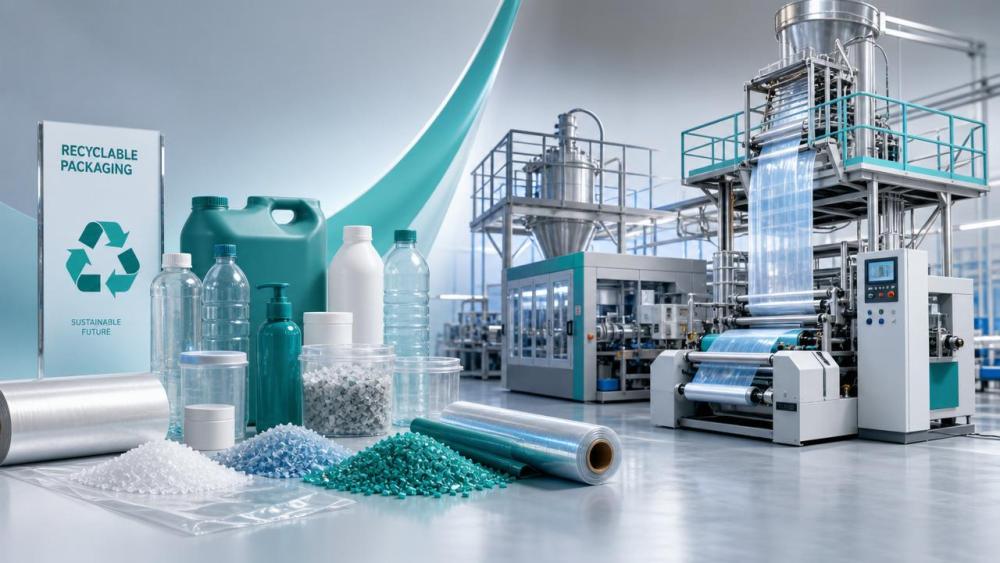
Global plastic ban trends are no longer a policy sidebar—they are a boardroom force reshaping packaging decisions, material selection, and equipment investment worldwide.
Across consumer goods, food, healthcare, logistics, and industrial supply chains, restrictions are changing what can be packed, how it is formed, and which resins remain viable.
This shift matters beyond compliance. It affects cost structures, production uptime, recycled content planning, labeling, and cross-border market access.
For packaging and polymer processing stakeholders, global plastic ban trends now connect regulation with machine capability, design choices, and long-term capital allocation.
That is why intelligence around molding, extrusion, blow molding, vulcanization, and recycling systems is becoming central to competitive strategy.
Policy signals are widening from single-use bans to full lifecycle controls
Early bans targeted obvious single-use items such as bags, straws, cutlery, and foam containers. The next wave is broader and more technical.
Today, global plastic ban trends increasingly include recycled content mandates, design-for-recyclability rules, virgin resin taxes, EPR schemes, and strict waste traceability expectations.
This means packaging is judged by its whole lifecycle, not only by whether a product contains plastic.
Markets are also diverging. One region may prioritize reuse targets, while another emphasizes post-consumer recycled content or difficult-to-recycle format restrictions.
As a result, multinational packaging strategies can no longer rely on one universal format, one resin family, or one compliance assumption.
Why this trend is accelerating now
Global plastic ban trends are changing material decisions first
The first visible impact of global plastic ban trends appears in substrate selection. Resin choice now involves compliance risk, recyclability, and machine compatibility.
Multi-layer structures once optimized for barrier performance may now face pressure if they are difficult to sort or economically recycle.
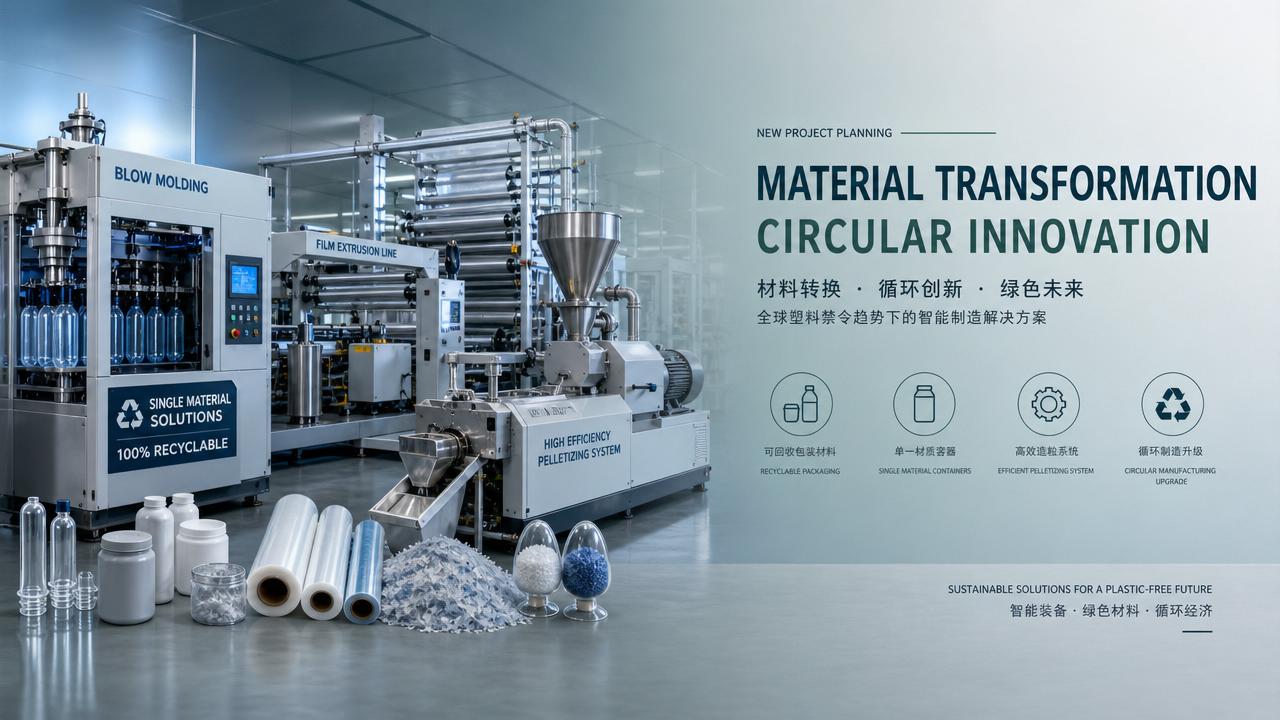
Mono-material structures are gaining attention because they align better with collection and reprocessing systems, even when performance trade-offs remain.
At the same time, higher recycled content introduces variability in viscosity, contamination levels, odor, color stability, and mechanical consistency.
This is where polymer forming intelligence becomes practical. Extrusion, injection, and blow molding settings must adapt to more variable feedstock behavior.
Material shifts now under active consideration
- Replacing problematic single-use formats with recyclable rigid packaging
- Moving from complex laminates toward mono-PE or mono-PP systems
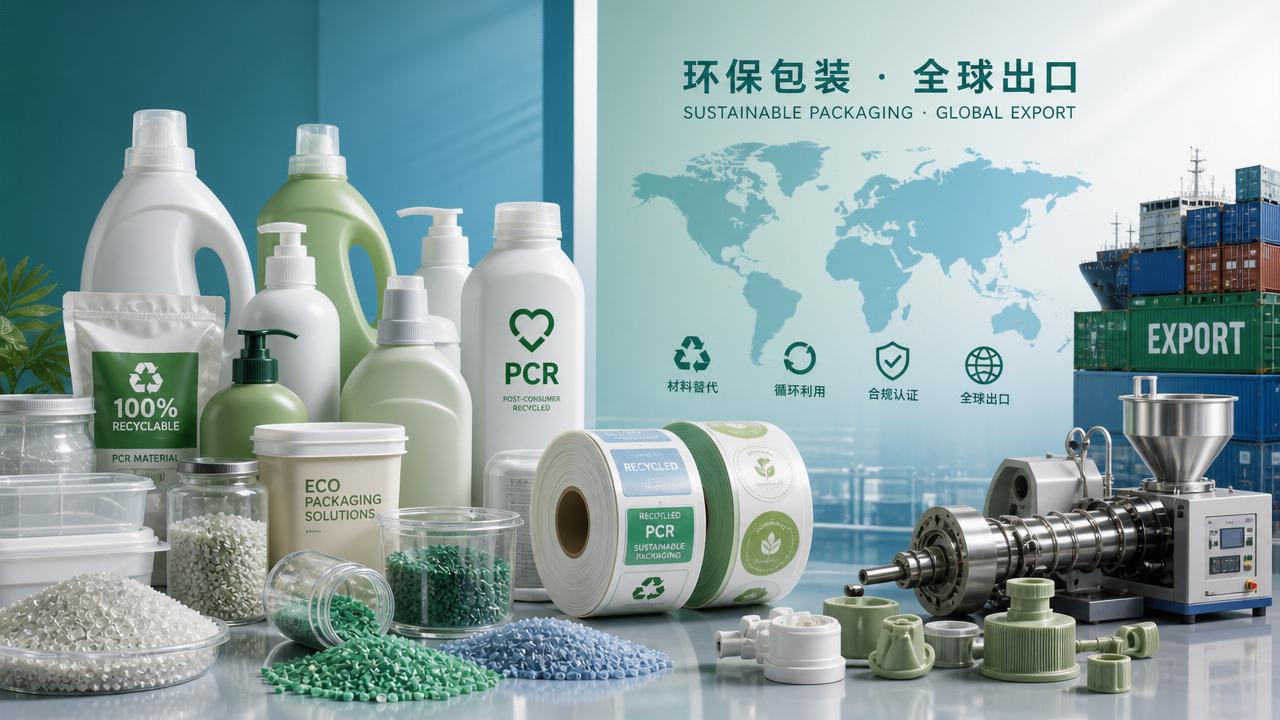
- Increasing rPET and rPE use where food-contact pathways allow
- Reducing pigment, labels, and additives that hinder sorting
- Exploring reuse-compatible designs for selected distribution loops
Equipment capability is becoming a hidden compliance advantage
Global plastic ban trends do not stop at package design. They increasingly influence machinery specifications, process control requirements, and recycling integration choices.
All-electric injection molding machines support tighter repeatability and energy performance, helping processors handle lightweight parts and stricter defect tolerance.
Twin-screw extruders become more important when compounding recycled content, compatibilizers, or barrier-improving additives into more regulation-friendly structures.
High-speed blow molding systems must also manage recycled resin variability without sacrificing bottle strength, clarity, or line efficiency.
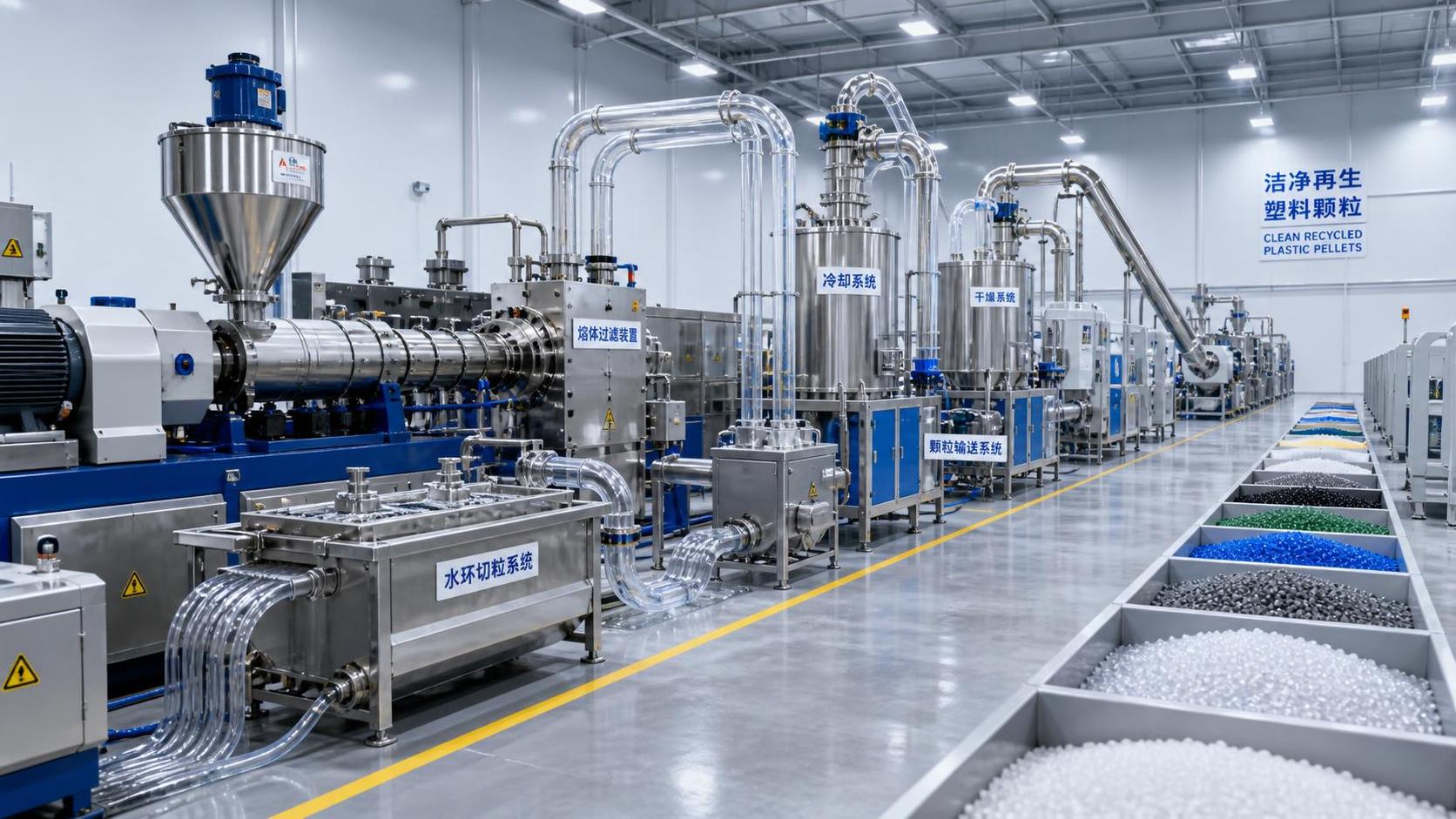
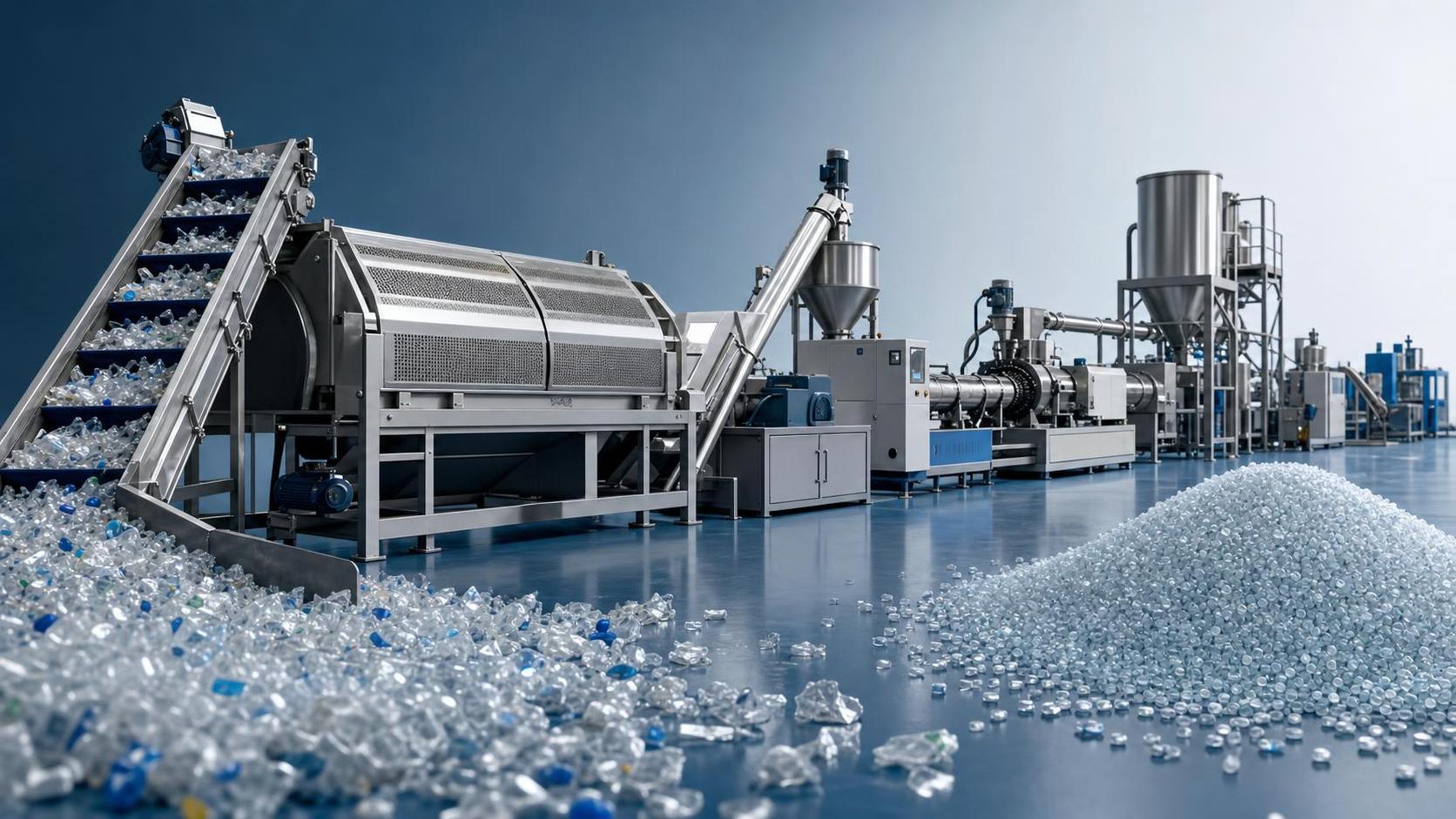
In parallel, waste plastic pelletizing systems are moving from end-of-pipe assets to strategic production tools supporting in-house circularity and feedstock security.
Operational areas seeing the greatest impact
- Melt filtration quality for recycled streams
- Screw design for mixing, devolatilization, and stable output
- Holding pressure and temperature control for precision molding
- Energy consumption tracking under decarbonization goals
- Inline monitoring for compliance-ready production records
The business impact extends across sourcing, production, and market access
The effects of global plastic ban trends are not limited to packaging teams. They influence procurement models, plant engineering, quality assurance, and export readiness.
Sourcing becomes more complex because approved materials must satisfy both cost and policy criteria. Resin substitution without processing validation can create scrap and downtime.
Production planning also changes. Shorter qualification cycles, more regional packaging variants, and recycled content targets increase the need for flexible lines.
Market access risk is rising as well. A compliant package in one jurisdiction may fail labeling, tethered component, or recycled content thresholds in another.
For this reason, the strongest responses combine regulatory monitoring with technical process intelligence rather than treating compliance as a final checkpoint.
Where pressure is showing up most clearly
The most important areas to watch in the next planning cycle
- Whether bans expand from items to packaging formats and components
- How recycled content mandates affect resin qualification timing
- Which labeling and traceability requirements become audit-sensitive
- How virgin resin price swings alter the economics of in-house recycling
- Whether existing molding and extrusion systems can process higher PCR rates
- How digital process records support proof of consistency and compliance
Watching these signals early can prevent expensive redesigns, underused equipment investments, and sudden market restrictions.
A practical response framework is better than reactive redesign
A useful response to global plastic ban trends starts with a packaging portfolio review, but it should not end there.
The stronger approach links policy exposure with machine capability, material science, and recycling economics in one decision framework.
- Map every key package by resin, format, region, and restriction risk.
- Test mono-material and PCR-rich alternatives under real production conditions.
- Audit extrusion, molding, and blow molding lines for processing flexibility.
- Evaluate in-house scrap recovery or pelletizing for feedstock resilience.
- Build a data loop connecting regulation, quality, and equipment performance.
This is where PFRS-style intelligence becomes valuable. It helps translate policy change into technical action across forming, compounding, and recycling systems.
Global plastic ban trends will continue to reshape packaging decisions. The winners will be those that connect compliance foresight with processing precision and circular material capability.
The next step is practical: review the highest-risk packaging formats, verify equipment readiness, and prioritize upgrades that improve both recyclability and operational efficiency.
Related News
- 00
0000-00
Polymer Processing for Extrusion: How Melt Rheology Affects Line Stability - 00
0000-00
Energy-Efficient Polymer Processing: Where Plants Can Cut kWh per Kilogram - 00
0000-00
German Extrusion Equipment Suppliers: Comparing Service, Lead Times, and Lifecycle Cost - 00
0000-00
Is an Underwater Pelletizer Worth the Added Cost for Recycled Plastics? - 00
0000-00
How Often Should Melt Filter Screens Be Changed?
Weekly Insights
Stay ahead with our curated technology reports delivered every Monday.
Related News
 Dr. Alistair VaughnHow to Evaluate a Plastics Processing Equipment Manufacturer for Uptime and SupportPlastics processing equipment manufacturer evaluation guide: compare uptime, spare parts, service response, diagnostics, and lifecycle support before buying.Sep 17, 2026
 Dr. Alistair VaughnBudgeting a Plastic Pelletizing Machine: Cost Drivers for Recycling LinesPlastic pelletizing machines cost depends on feedstock, filtration, utilities, and installation. Explore key budget drivers to build a reliable recycling line investment plan.Sep 03, 2026
 Dr. Alistair VaughnCommon Waste and Downtime Causes in Rubber Processing and Cutting OperationsProcessamento e corte de borracha: discover the real causes of scrap and downtime in rubber lines, from material variation to machine wear, and learn how to cut waste and improve output.Aug 31, 2026
 Dr. Alistair VaughnWhat Is Automated Materials Processing and Where Does It Deliver the Most Value?Automated materials processing improves consistency, cuts waste, and boosts efficiency across molding, extrusion, and recycling. Discover where it delivers the most value.Aug 14, 2026
 Dr. Alistair VaughnHow Does a Polymer Recycling Plant Work? Process Steps and Key Equipment ExplainedPolymer recycling plant guide: explore sorting, washing, drying, extrusion, filtration, and pelletizing steps, plus key equipment that drives cleaner output and reliable recycled plastic quality.Jul 31, 2026
 Dr. Alistair VaughnHow Does Rubber Vulcanization Work and What Determines Final Rubber Performance?Rubber vulcanization explained: discover how curing, formulation, temperature, pressure, and machine control determine final rubber performance, durability, and product reliability.Jul 30, 2026
 Dr. Alistair VaughnHow Circular Plastics Economy EPR Rules Affect Packaging Costs and Compliance PlanningCircular plastics economy EPR is reshaping packaging costs, recyclability, and compliance planning. Learn how to reduce fee exposure, protect margins, and make smarter packaging decisions.Jul 13, 2026
 Dr. Alistair VaughnCircular Plastics Economy Trends: How EPR Policies and Recycled Content Rules Affect ManufacturersCircular plastics economy trends are reshaping manufacturing fast. See how EPR policies and recycled content rules impact costs, compliance, sourcing, and plant performance.Jun 30, 2026
![]() Dr. Alistair VaughnGlobal Plastic Ban Trends: Which Packaging Materials Face the Highest Compliance Risk?Global plastic ban trends are reshaping packaging compliance. Discover which materials face the highest risk and how to reduce cost, disruption, and redesign pressure.Jun 04, 2026
Dr. Alistair VaughnGlobal Plastic Ban Trends: Which Packaging Materials Face the Highest Compliance Risk?Global plastic ban trends are reshaping packaging compliance. Discover which materials face the highest risk and how to reduce cost, disruption, and redesign pressure.Jun 04, 2026 Dr. Alistair VaughnGlobal Plastic Ban Trends: Policy Shifts Affecting Packaging Materials and SupplyGlobal plastic ban trends are reshaping packaging supply. Discover policy shifts, material risks, and processing strategies to stay compliant and competitive.Jun 02, 2026
 Dr. Alistair VaughnHow is AI in injection molding cutting scrap?AI in injection molding cuts scrap by detecting process drift, optimizing pressure and cooling, and improving quality decisions—see how to reduce waste and boost ROI.May 29, 2026
 Dr. Alistair VaughnWhat global plastic ban trends mean for export planningGlobal plastic ban trends are reshaping export planning. Learn how to reduce compliance risk, choose smarter packaging, and align sourcing and equipment upgrades for market access.May 28, 2026
![]() Dr. Alistair VaughnWhy elastomer cross-linking fails and how to prevent defectsElastomer cross-linking failures can cause soft spots, cracks, and hidden reliability risks. Learn the key defect causes and proven prevention steps across molding, extrusion, and recycled blends.May 23, 2026
Dr. Alistair VaughnWhy elastomer cross-linking fails and how to prevent defectsElastomer cross-linking failures can cause soft spots, cracks, and hidden reliability risks. Learn the key defect causes and proven prevention steps across molding, extrusion, and recycled blends.May 23, 2026 Dr. Alistair VaughnHow fragile is the virgin resin supply chain in 2026Virgin resin supply chain risks are rising in 2026. Explore key disruption drivers, pricing impacts, and practical resilience strategies for smarter sourcing and planning.May 22, 2026
 Dr. Alistair VaughnWhy polymer molding scientists matter in process upgradesPolymer molding scientists help turn process upgrades into higher precision, lower waste, better energy efficiency, and faster ROI. See why their expertise reduces risk and improves modernization results.May 22, 2026
 Dr. Alistair VaughnWhat global plastic ban trends mean for new projectsGlobal plastic ban trends are reshaping new projects through design, compliance, recycled content, and equipment strategy. See how to plan smarter, reduce risk, and stay market-ready.May 21, 2026
 Dr. Alistair VaughnHow ESG in plastic manufacturing affects export riskESG in plastic manufacturing directly affects export risk, from customs delays to buyer approval. Learn how traceability, compliance, and smarter equipment protect market access.May 21, 2026
 Dr. Alistair VaughnWhat global plastic ban trends mean for export planningGlobal plastic ban trends are reshaping export planning, packaging choices, and compliance strategy. Learn how to reduce risk, adapt faster, and stay competitive across global markets.May 19, 2026
 Dr. Alistair VaughnHow polymer smart manufacturing improves batch consistencyPolymer smart manufacturing improves batch consistency with inline sensing, closed-loop control, and analytics. See how it reduces variation, scrap, and quality risk across polymer processing.May 18, 2026
 Dr. Alistair VaughnWhy recycled plastic technology is changing line efficiencyRecycled plastic technology is changing line efficiency by reducing scrap, stabilizing melt quality, and improving uptime across molding, extrusion, and packaging operations.May 18, 2026