Polymer Processing Equipment Downtime Risks and Fix Priorities




When polymer processing equipment goes down, the damage extends far beyond hourly output loss. In injection molding, one unstable temperature zone can create scrap cascades within minutes. In extrusion, a failed gearbox or melt pressure sensor can disrupt an entire downstream line. In blow molding, vulcanization, and recycling systems, unplanned stoppages often trigger energy waste, missed delivery windows, quality complaints, and avoidable safety exposure. Across today’s material-forming and circular-economy operations, the real challenge is no longer just fixing failures fast, but identifying which failures deserve the earliest intervention and which assets create the highest downtime risk.
That shift matters because modern polymer processing equipment is increasingly integrated, servo-driven, sensor-heavy, and compliance-sensitive. A stoppage in one subsystem can now affect mold protection, resin residence time, recycled flake consistency, utility loading, and packaging traceability at the same time. For after-sales maintenance work, the most effective response is a priority model based on failure impact, repair urgency, and production continuity rather than on alarm count alone.
Downtime risk is becoming more concentrated in fewer but more critical nodes
A clear trend across polymer processing equipment is that downtime risk is concentrating around several high-consequence nodes: drive systems, thermal control loops, material feeding, hydraulic or pneumatic stability, control hardware, and contamination-sensitive flow paths. As equipment becomes faster and more precise, tolerance for minor drift becomes smaller. A heater band issue that was once manageable may now distort part weight, wall thickness, or pellet quality before operators notice visible defects.
This is especially visible in connected production environments where one machine feeds another. A twin-screw extruder with unstable vacuum degassing can affect downstream pelletizing; a blow molding oven imbalance can disrupt filling line efficiency; a vulcanizing press platen temperature deviation can invalidate an entire batch. The implication is simple: not every failure is equal, and downtime planning for polymer processing equipment must focus on bottleneck assets and quality-critical functions first.
The strongest signals behind rising failure exposure
Several structural changes are increasing stoppage sensitivity across polymer processing equipment. These signals are appearing across virgin resin processing, technical elastomers, and recycled plastics systems alike.
Where polymer processing equipment fails first and why those points deserve priority
The highest downtime risks in polymer processing equipment usually come from systems that combine production dependence with failure propagation. The following areas should be ranked near the top in most maintenance decision models.
1. Drive trains, gearboxes, and main motors
In extruders, pelletizers, calenders, and many molding units, the main drive is a hard stop point. Vibration, rising bearing temperature, lubricant contamination, or motor current instability often signal imminent failure. These issues deserve first-tier attention because repair lead times are long and line restart may require extensive cleaning, reheating, or alignment.
2. Thermal zones and temperature feedback loops
Heaters, thermocouples, SSRs, cooling circuits, and mold temperature controllers are quality-critical in nearly all polymer processing equipment. Temperature control faults rarely stay local. They cause short shots, burns, poor dispersion, unstable bottle walls, under-cure in rubber, or degraded recycled melt. If the process handles sensitive polymers or food-contact packaging, fix priority should be immediate.
3. Material feeding, drying, and conveying
Many recurring stoppages originate upstream of the barrel or screw. Bridging, feeder drift, vacuum loader failure, desiccant dryer underperformance, and contaminated regrind streams create symptoms that look like downstream machine trouble. For hygroscopic materials and recycled flakes, this category often produces the highest hidden scrap cost, making it a top fix priority even when the machine still runs.
4. Hydraulic and pneumatic stability points
On hydraulic injection machines, clamp systems, accumulators, valves, and oil cleanliness directly affect repeatability. In blow molding and ancillary automation, compressed air quality and pressure stability can be equally decisive. Leaks, seal wear, and valve response degradation tend to worsen progressively, so early intervention reduces both stoppage risk and product inconsistency.
5. Sensors, PLC I/O, and interlock chains
Modern polymer processing equipment depends on sensor trust. Faulty position switches, pressure transducers, load cells, and communication modules can trigger nuisance trips or hide real process drift. These items are often inexpensive compared with the losses they cause, which makes them ideal high-priority preventive replacements in repeated-failure zones.
6. Wear parts in high-abrasion or contamination-heavy processes
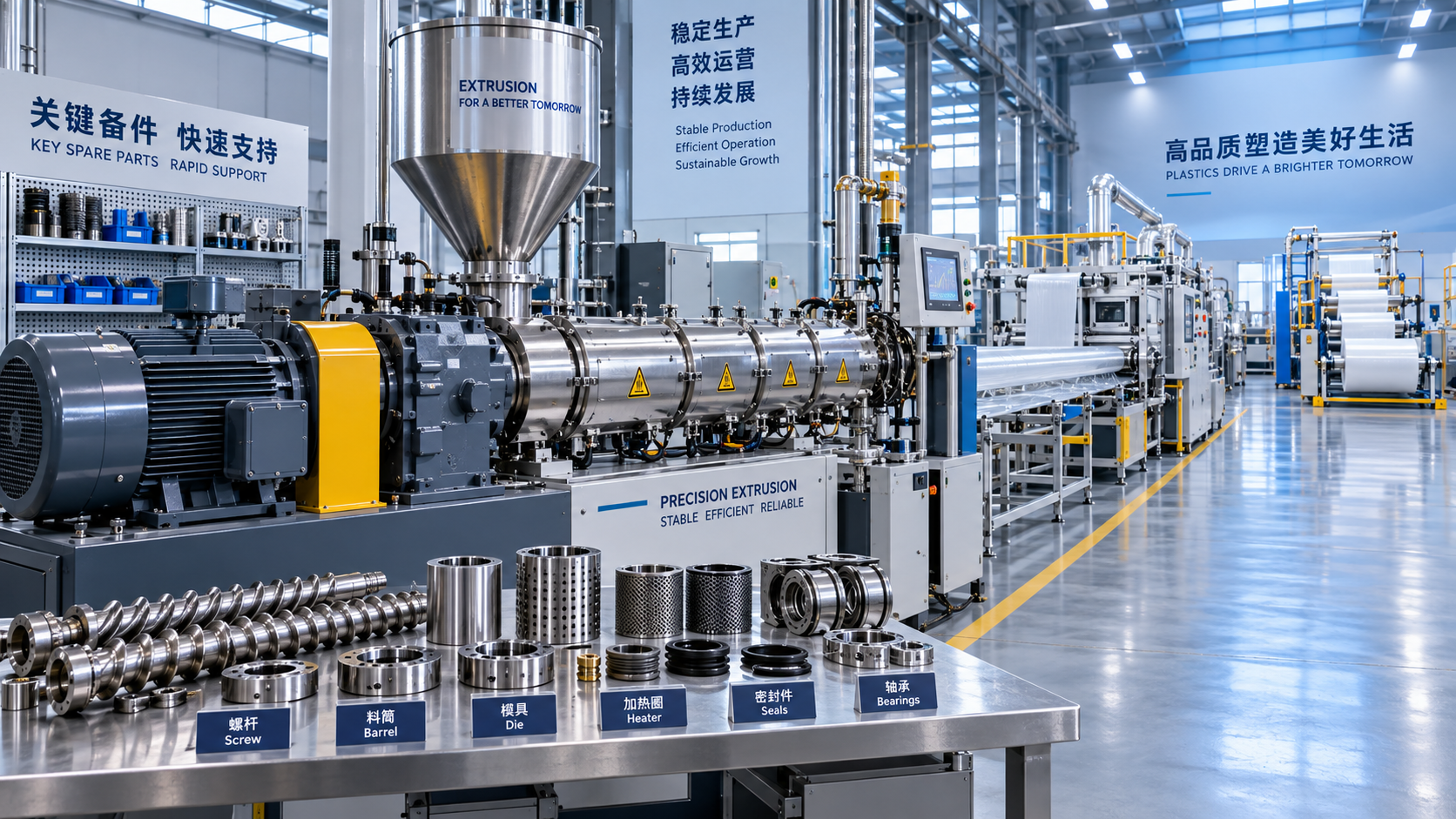
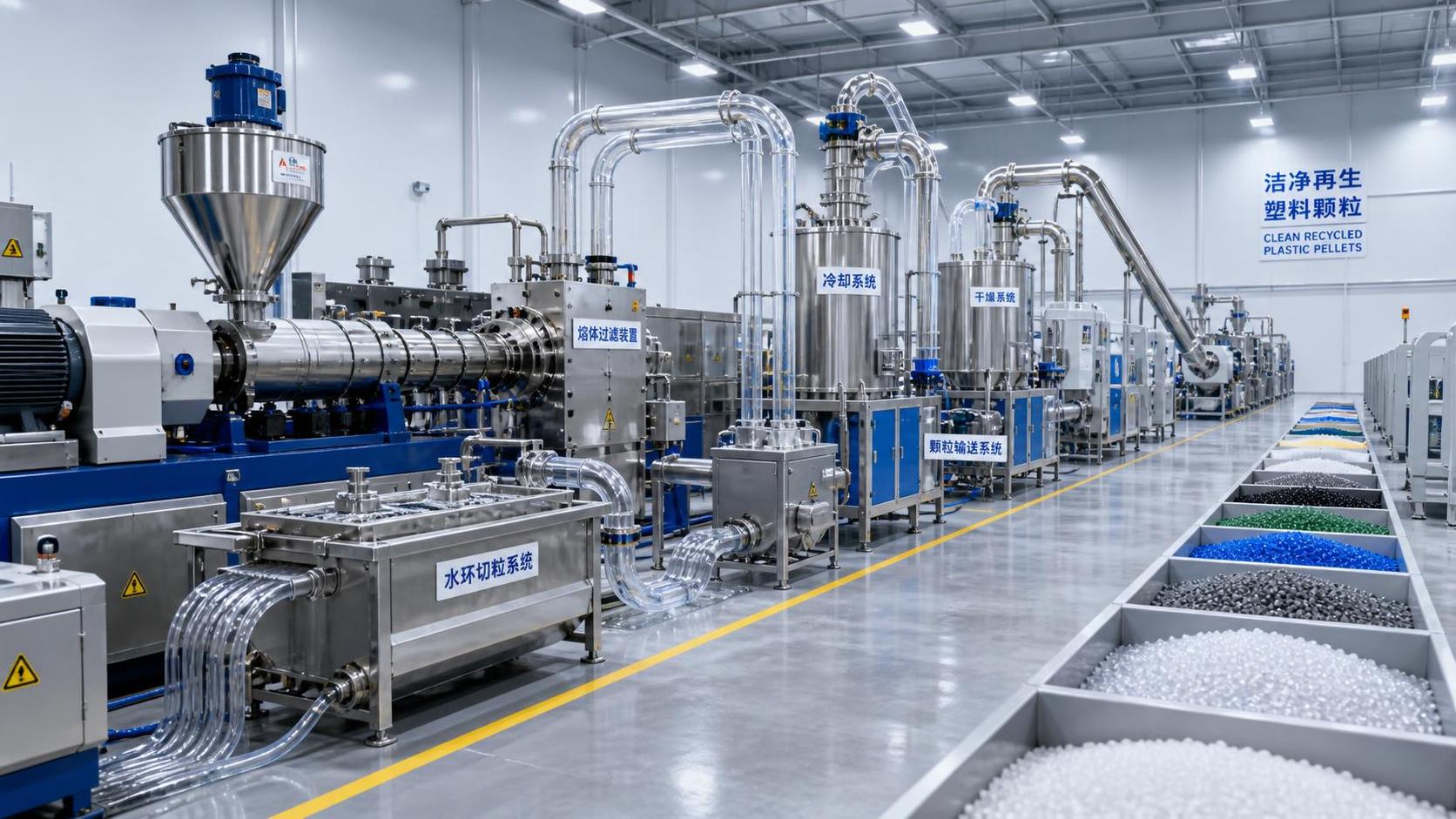
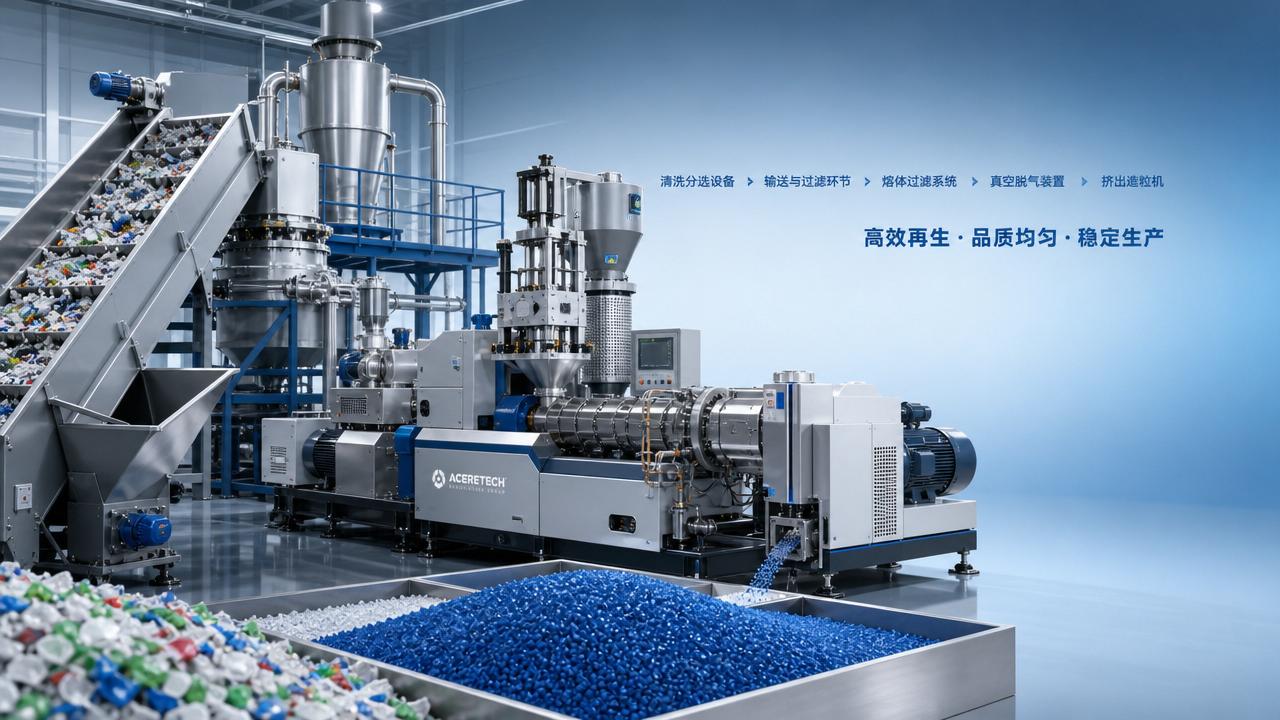
Screws, barrels, check rings, dies, breaker plates, screens, cutter heads, and filtration assemblies see accelerated wear in filled compounds and recycling lines. If wear is allowed to continue, energy consumption rises, output falls, and off-spec material increases. In waste plastic pelletizing systems, neglected filtration and cutting assemblies often become the deciding factor between smooth operation and chronic downtime.
A practical way to rank fix priorities across different process lines
A useful priority method for polymer processing equipment is to score every issue against four dimensions: safety risk, quality impact, throughput loss, and restart difficulty. This prevents teams from overreacting to visible alarms while ignoring lower-visibility failures that create larger business loss.
For example, an extruder screen changer seal leak may be P2 if output remains stable, but it becomes P1 if contamination reaches downstream filtration or pelletizing. A thermocouple drift on an injection barrel may seem minor, yet if the material has a narrow processing window, it should be treated as urgent because prolonged residence and overheating can multiply scrap quickly.
The operational impact spreads beyond maintenance into quality, energy, and compliance
Downtime in polymer processing equipment now affects more than repair cost. In precision molding, unstable restart conditions can compromise dimensional consistency and traceability. In extrusion and blow molding, speed changes ripple into wall profile, sealing performance, and packaging line balance. In vulcanization, press inconsistency can alter cross-link density and field performance. In recycling systems, contamination-related stoppages may jeopardize recycled pellet quality, odor control, or food-grade pathway targets.
There is also an energy and sustainability layer. Every unplanned stop wastes heated mass, purge material, utilities, and labor time. For organizations aligning with ESG, circular packaging, or energy-intensity reduction goals, poor uptime in polymer processing equipment directly weakens both cost performance and environmental credibility. This is one reason intelligence-led maintenance has become strategically important rather than merely operational.
What deserves the closest attention in the next maintenance cycle
- Trend bearing temperature, vibration, and motor load on all bottleneck polymer processing equipment.
- Audit thermocouple accuracy, heater health, and cooling response rather than replacing only failed items.
- Check drying performance, dew point stability, and feeder calibration where moisture or ratio drift affects quality.
- Map repeated nuisance alarms to actual sensor aging, cable faults, and I/O instability.
- Review wear-part life by material family, especially for glass-filled, flame-retardant, or recycled streams.
- Classify spare parts by restart criticality, not by unit price alone.
- Document restart difficulty and scrap generated after each fault to improve future priority decisions.
A stronger response starts with better failure intelligence, not just faster repair
The most resilient operations treat polymer processing equipment downtime as a pattern to decode, not an isolated event to close. Build a simple risk map across injection molding machines, extruders, blow molding units, vulcanizing presses, and recycling lines. Identify which failures stop production instantly, which create hidden quality loss, and which consume the longest restart time. Then assign fix priority accordingly.
For teams seeking sharper visibility into machine reliability, process stability, and circular manufacturing performance, PFRS provides intelligence that connects equipment behavior with polymer rheology, thermal control, and material recovery realities. The next practical step is to review recent stoppages by subsystem, compare them against the priority model above, and update maintenance plans around the true critical points in your polymer processing equipment fleet.
Related News
- 00
0000-00
Polymer Processing for Extrusion: How Melt Rheology Affects Line Stability - 00
0000-00
Energy-Efficient Polymer Processing: Where Plants Can Cut kWh per Kilogram - 00
0000-00
German Extrusion Equipment Suppliers: Comparing Service, Lead Times, and Lifecycle Cost - 00
0000-00
Is an Underwater Pelletizer Worth the Added Cost for Recycled Plastics? - 00
0000-00
How Often Should Melt Filter Screens Be Changed?
Weekly Insights
Stay ahead with our curated technology reports delivered every Monday.
Related News
 Dr. Alistair VaughnHow to Evaluate a Plastics Processing Equipment Manufacturer for Uptime and SupportPlastics processing equipment manufacturer evaluation guide: compare uptime, spare parts, service response, diagnostics, and lifecycle support before buying.Sep 17, 2026
 Dr. Alistair VaughnBudgeting a Plastic Pelletizing Machine: Cost Drivers for Recycling LinesPlastic pelletizing machines cost depends on feedstock, filtration, utilities, and installation. Explore key budget drivers to build a reliable recycling line investment plan.Sep 03, 2026
 Dr. Alistair VaughnCommon Waste and Downtime Causes in Rubber Processing and Cutting OperationsProcessamento e corte de borracha: discover the real causes of scrap and downtime in rubber lines, from material variation to machine wear, and learn how to cut waste and improve output.Aug 31, 2026
 Dr. Alistair VaughnWhat Is Automated Materials Processing and Where Does It Deliver the Most Value?Automated materials processing improves consistency, cuts waste, and boosts efficiency across molding, extrusion, and recycling. Discover where it delivers the most value.Aug 14, 2026
 Dr. Alistair VaughnHow Does a Polymer Recycling Plant Work? Process Steps and Key Equipment ExplainedPolymer recycling plant guide: explore sorting, washing, drying, extrusion, filtration, and pelletizing steps, plus key equipment that drives cleaner output and reliable recycled plastic quality.Jul 31, 2026
 Dr. Alistair VaughnHow Does Rubber Vulcanization Work and What Determines Final Rubber Performance?Rubber vulcanization explained: discover how curing, formulation, temperature, pressure, and machine control determine final rubber performance, durability, and product reliability.Jul 30, 2026
 Dr. Alistair VaughnHow Circular Plastics Economy EPR Rules Affect Packaging Costs and Compliance PlanningCircular plastics economy EPR is reshaping packaging costs, recyclability, and compliance planning. Learn how to reduce fee exposure, protect margins, and make smarter packaging decisions.Jul 13, 2026
 Dr. Alistair VaughnCircular Plastics Economy Trends: How EPR Policies and Recycled Content Rules Affect ManufacturersCircular plastics economy trends are reshaping manufacturing fast. See how EPR policies and recycled content rules impact costs, compliance, sourcing, and plant performance.Jun 30, 2026
![]() Dr. Alistair VaughnGlobal Plastic Ban Trends: Which Packaging Materials Face the Highest Compliance Risk?Global plastic ban trends are reshaping packaging compliance. Discover which materials face the highest risk and how to reduce cost, disruption, and redesign pressure.Jun 04, 2026
Dr. Alistair VaughnGlobal Plastic Ban Trends: Which Packaging Materials Face the Highest Compliance Risk?Global plastic ban trends are reshaping packaging compliance. Discover which materials face the highest risk and how to reduce cost, disruption, and redesign pressure.Jun 04, 2026 Dr. Alistair VaughnGlobal Plastic Ban Trends: Policy Shifts Affecting Packaging Materials and SupplyGlobal plastic ban trends are reshaping packaging supply. Discover policy shifts, material risks, and processing strategies to stay compliant and competitive.Jun 02, 2026
 Dr. Alistair VaughnHow is AI in injection molding cutting scrap?AI in injection molding cuts scrap by detecting process drift, optimizing pressure and cooling, and improving quality decisions—see how to reduce waste and boost ROI.May 29, 2026
 Dr. Alistair VaughnWhat global plastic ban trends mean for export planningGlobal plastic ban trends are reshaping export planning. Learn how to reduce compliance risk, choose smarter packaging, and align sourcing and equipment upgrades for market access.May 28, 2026
![]() Dr. Alistair VaughnWhy elastomer cross-linking fails and how to prevent defectsElastomer cross-linking failures can cause soft spots, cracks, and hidden reliability risks. Learn the key defect causes and proven prevention steps across molding, extrusion, and recycled blends.May 23, 2026
Dr. Alistair VaughnWhy elastomer cross-linking fails and how to prevent defectsElastomer cross-linking failures can cause soft spots, cracks, and hidden reliability risks. Learn the key defect causes and proven prevention steps across molding, extrusion, and recycled blends.May 23, 2026 Dr. Alistair VaughnHow fragile is the virgin resin supply chain in 2026Virgin resin supply chain risks are rising in 2026. Explore key disruption drivers, pricing impacts, and practical resilience strategies for smarter sourcing and planning.May 22, 2026
 Dr. Alistair VaughnWhy polymer molding scientists matter in process upgradesPolymer molding scientists help turn process upgrades into higher precision, lower waste, better energy efficiency, and faster ROI. See why their expertise reduces risk and improves modernization results.May 22, 2026
 Dr. Alistair VaughnWhat global plastic ban trends mean for new projectsGlobal plastic ban trends are reshaping new projects through design, compliance, recycled content, and equipment strategy. See how to plan smarter, reduce risk, and stay market-ready.May 21, 2026
 Dr. Alistair VaughnHow ESG in plastic manufacturing affects export riskESG in plastic manufacturing directly affects export risk, from customs delays to buyer approval. Learn how traceability, compliance, and smarter equipment protect market access.May 21, 2026
 Dr. Alistair VaughnWhat global plastic ban trends mean for export planningGlobal plastic ban trends are reshaping export planning, packaging choices, and compliance strategy. Learn how to reduce risk, adapt faster, and stay competitive across global markets.May 19, 2026
 Dr. Alistair VaughnHow polymer smart manufacturing improves batch consistencyPolymer smart manufacturing improves batch consistency with inline sensing, closed-loop control, and analytics. See how it reduces variation, scrap, and quality risk across polymer processing.May 18, 2026
 Dr. Alistair VaughnWhy recycled plastic technology is changing line efficiencyRecycled plastic technology is changing line efficiency by reducing scrap, stabilizing melt quality, and improving uptime across molding, extrusion, and packaging operations.May 18, 2026