Global Plastic Ban Trends: What Manufacturers Should Track Next




As global plastic ban trends accelerate across packaging, manufacturing, and recycling policy, business leaders can no longer afford to react late. For manufacturers navigating compliance, material shifts, and equipment investment, tracking what comes next is essential to protecting margins, market access, and long-term competitiveness in an increasingly regulated global landscape.
Why global plastic ban trends are now a board-level manufacturing issue
Global plastic ban trends no longer affect only brand owners or retailers. They now shape resin sourcing, packaging conversion, mold redesign, extrusion recipes, recycled content strategy, and capital expenditure planning across the broader manufacturing chain. For enterprise decision-makers, the real challenge is not simply understanding what has been banned. It is identifying which policy signals will materially change operations in the next 12 to 36 months.
In practice, restrictions are expanding from single-use product bans into a wider compliance architecture. Companies increasingly face design-for-recyclability rules, recycled content thresholds, extended producer responsibility, labeling obligations, and tougher scrutiny on additives, multilayer structures, and imported packaging formats. This means a plant that remains technically efficient can still become commercially exposed if its output fails future market-access requirements.
- A ban in one market can force packaging redesign for several regions if global customers want one compliant SKU architecture.
- Recycled content mandates can alter screw design, filtration needs, melt stability, and downstream quality control.
- Material substitution may raise hidden costs through slower cycle times, higher scrap rates, or lower seal performance.
- Delayed equipment adaptation can turn compliance risk into lost contracts, especially in food, beverage, medical, and FMCG supply chains.
This is why global plastic ban trends deserve cross-functional attention from operations, procurement, product development, sustainability, and finance teams at the same time.
What manufacturers should track next beyond headline bans
Many firms monitor headlines about straws, bags, or disposable cutlery, yet miss the technical regulations that affect conversion lines and tooling choices. The next wave of global plastic ban trends is less visible but far more consequential for industrial planning.
1. Design rules are becoming as important as outright bans
Regulators increasingly focus on whether packaging can be sorted, washed, reprocessed, and reintroduced into a circular stream. That puts pressure on dark pigments, full-body sleeves, incompatible barrier layers, metalized structures, and difficult-to-separate closures. A package may remain legal in one narrow sense, yet still become commercially weak if it performs poorly in recyclability assessments.
2. Recycled content mandates are shifting machine requirements
When more rPET, rPE, or rPP enters production, processors must manage contamination, viscosity fluctuation, odor, thermal history, and color variation. This creates new value in degassing systems, melt filtration, gravimetric blending, servo precision, and process monitoring. Global plastic ban trends therefore influence not just material purchasing but also equipment specifications.
3. Extended producer responsibility is changing cost ownership
EPR schemes can make hard-to-recycle formats more expensive over time. The impact is strategic: products that look cheaper at the converter level may become more expensive after eco-modulated fees, compliance administration, or collection obligations are considered.
4. Import compliance is becoming stricter
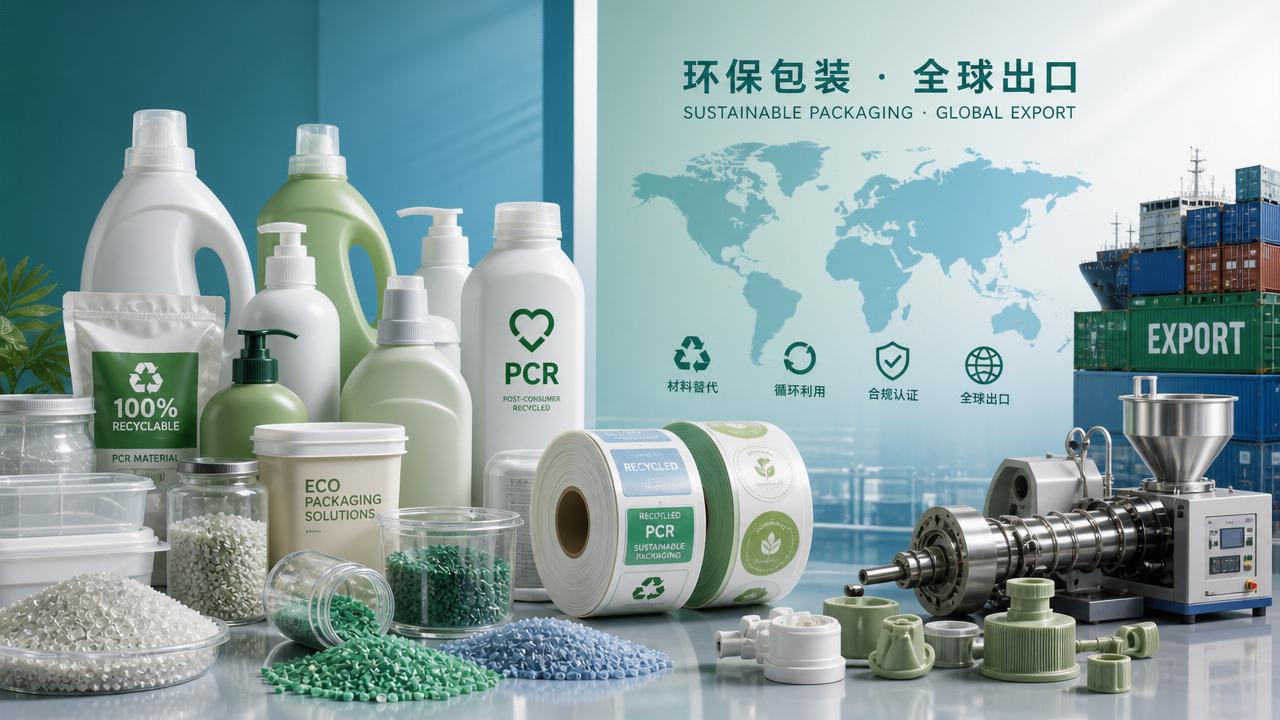
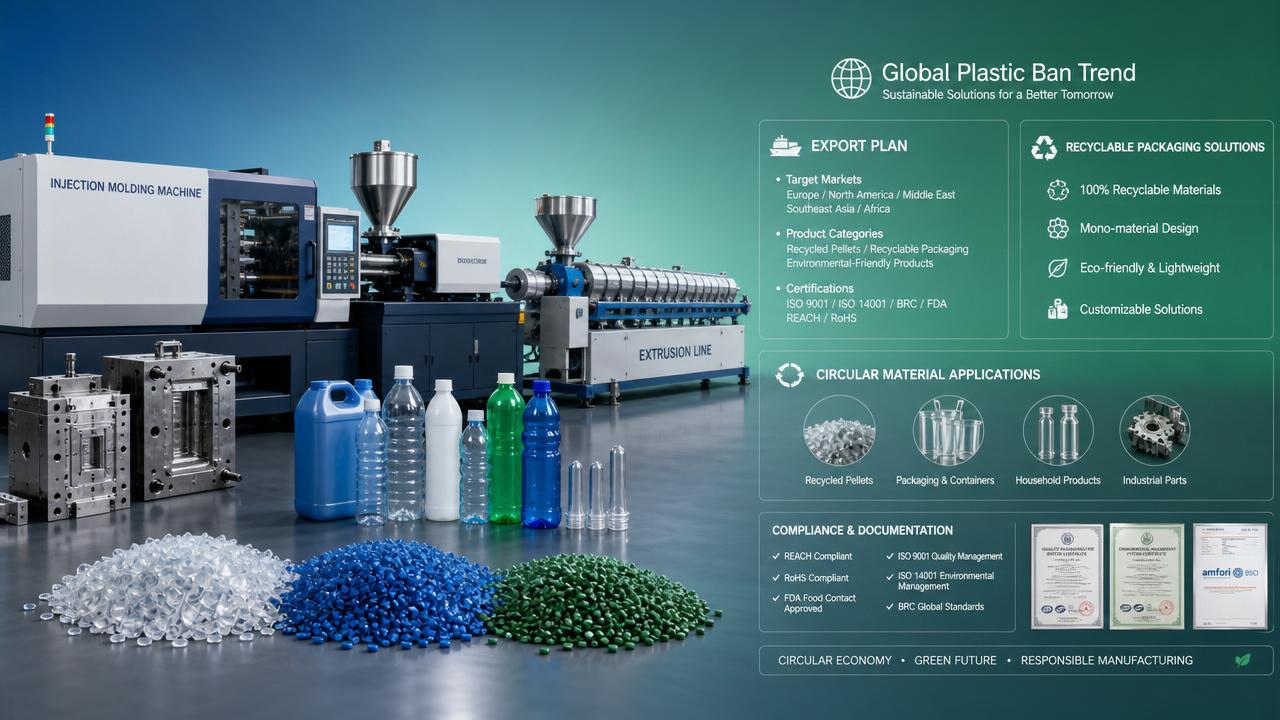
Export-oriented manufacturers must now think beyond domestic regulations. Large customers increasingly request declarations on material composition, recycled content, packaging design compatibility, and chemical restrictions. This affects supplier qualification, traceability systems, and document readiness long before customs issues appear.
Which sectors will feel global plastic ban trends first and hardest?
The pressure is not uniform. Some sectors face immediate redesign demands because they combine high volume, consumer visibility, and tight regulatory oversight. The table below helps decision-makers prioritize where global plastic ban trends may create the fastest operational impact.
The key insight is clear: sectors with high-volume packaging and visible waste footprints should not wait for final legal text before acting. Pilot redesigns and equipment readiness should begin during the policy formation stage.
How global plastic ban trends affect equipment investment decisions
For many manufacturers, the most expensive mistake is treating regulation as a packaging issue only. In reality, global plastic ban trends can quickly make existing production assets less suitable for future resin mixes, downgauging strategies, or recycled content integration.
Injection molding
As closures, caps, thin-wall containers, medical parts, and reusable components evolve, precision becomes more critical. All-electric or high-response servo systems can help maintain repeatability when resin variability rises. Decision-makers should evaluate clamping stability, shot-to-shot consistency, energy consumption, and the machine’s adaptability to reformulated compounds.
Extrusion
Twin-screw and advanced single-screw systems are under renewed pressure because they must process more complex blends, higher recycled fractions, and functional additives without unstable output. Screw geometry, venting, filtration, and compounding control matter more when virgin resin assumptions no longer hold.
Blow molding
Bottle makers facing tethered closure requirements, lightweighting, and rPET expansion need tighter control over heating profiles, stretch ratios, and bottle performance. Capacity alone is not the best buying criterion anymore. Compliance-ready output is.
Pelletizing and in-house recycling
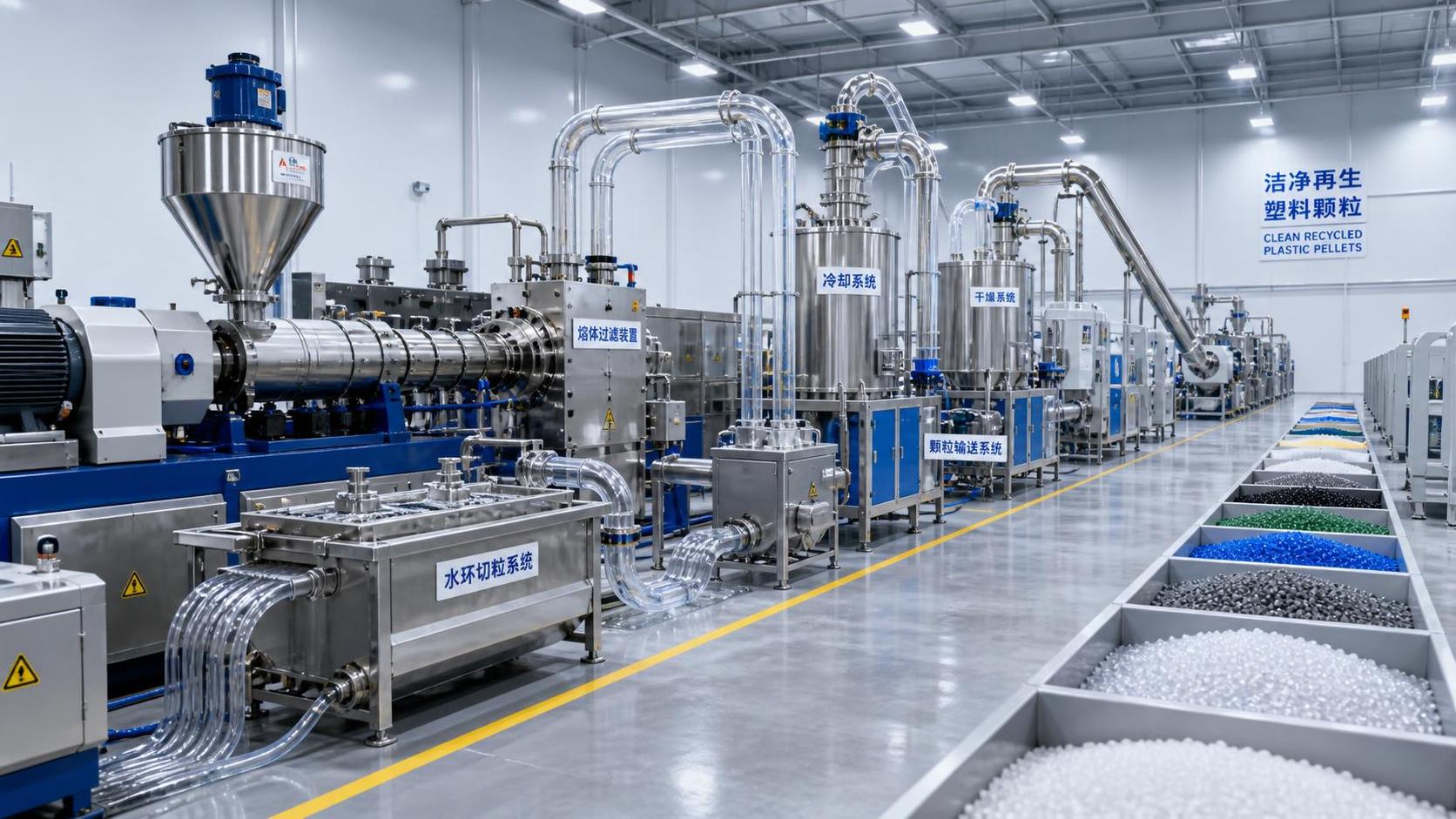
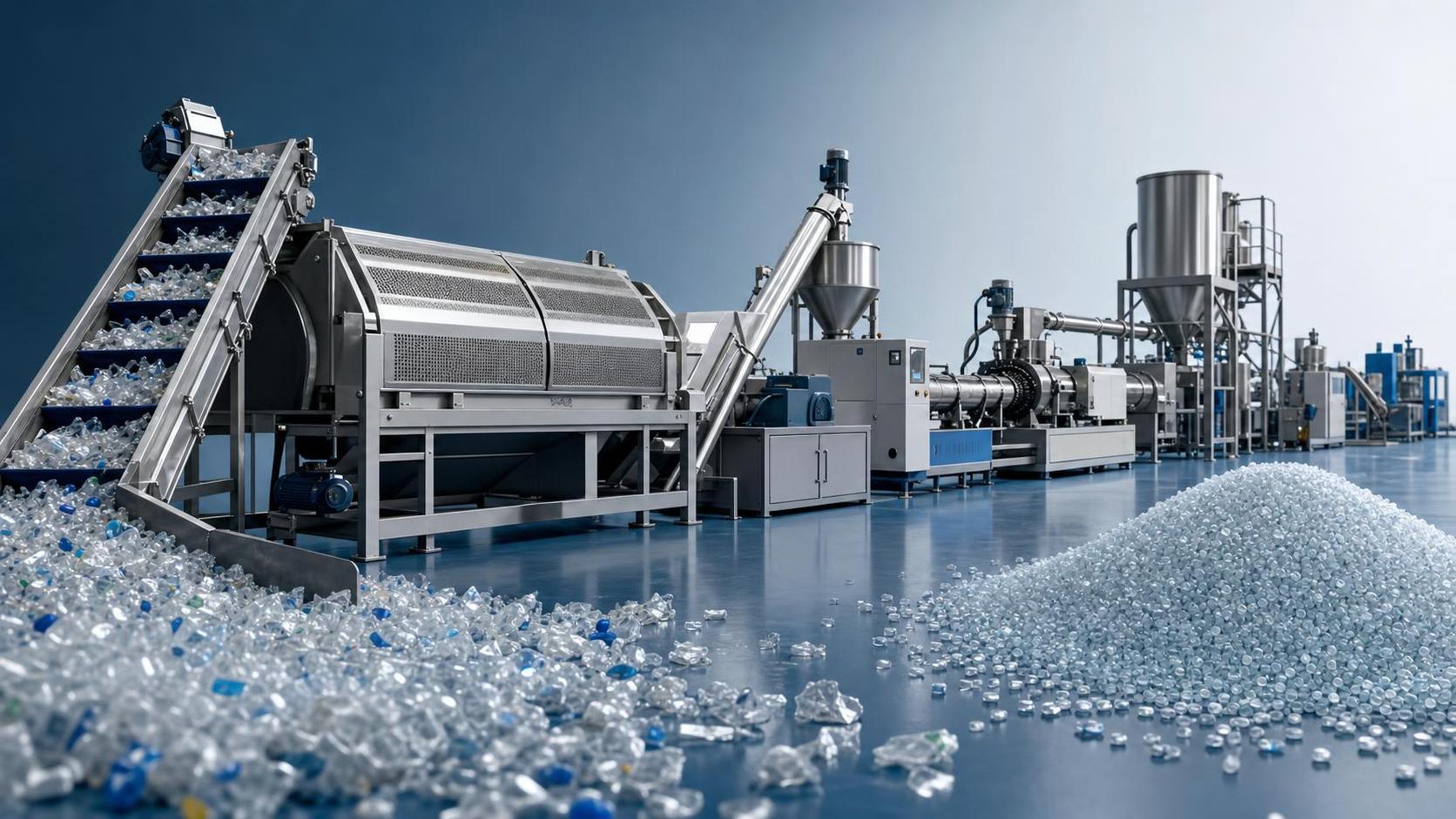
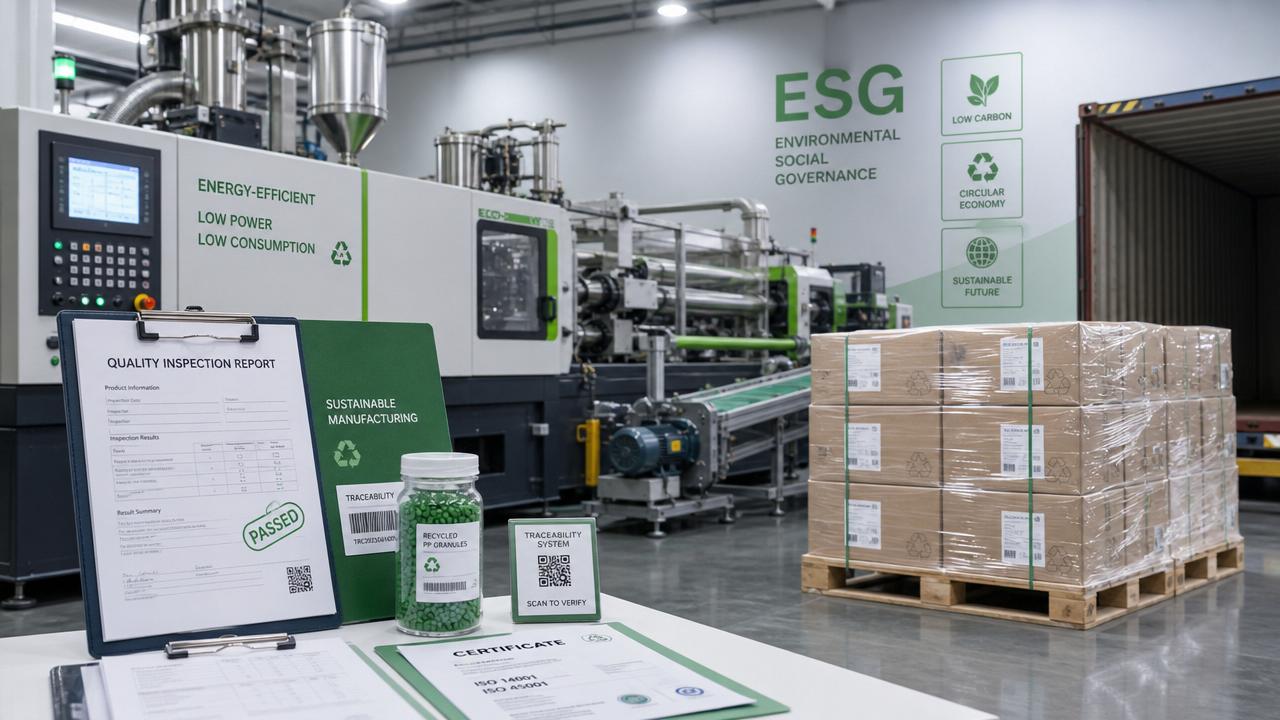
As global plastic ban trends drive circularity goals, in-house scrap recovery and post-consumer recycling preparation become strategic. Efficient washing, melt filtration, and underwater pelletizing can reduce dependence on volatile virgin material markets while supporting internal ESG targets.
What to compare when selecting machinery under tighter packaging compliance
When regulations are moving fast, the right machine is not just the one with the lowest purchase price. It is the one that preserves product acceptance across multiple material and compliance scenarios. The table below offers a practical procurement lens for manufacturers responding to global plastic ban trends.
This comparison framework is especially useful for capital approval teams. It turns abstract regulatory anxiety into measurable procurement criteria that engineering, finance, and compliance leaders can assess together.
Why material substitution alone is not a safe strategy
A common response to global plastic ban trends is to swap one material for another and move on. That approach often underestimates performance, cost, and processing consequences. Alternative substrates may change barrier properties, transparency, forming temperature, sealing windows, storage stability, and transportation durability.
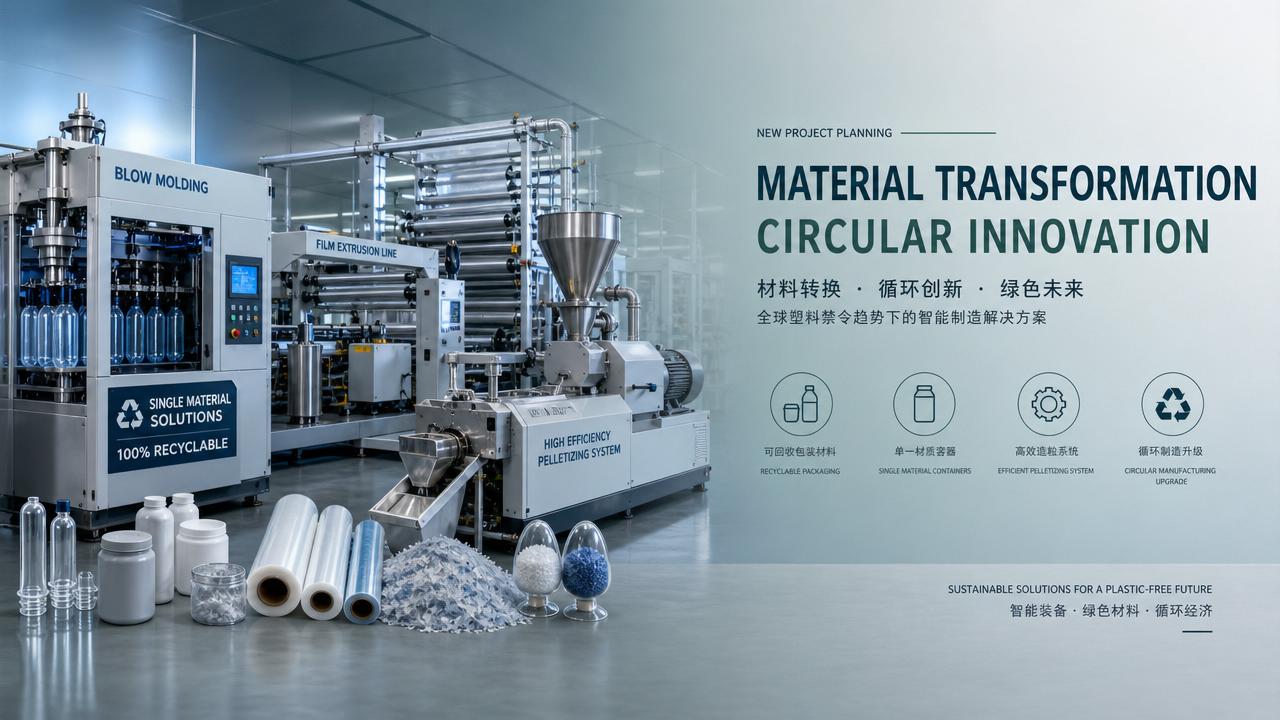
For example, a converter replacing a multilayer structure with a mono-material solution may improve recyclability but lose oxygen barrier or puncture resistance. A resin switch can also require new die tuning, mold venting, cooling adjustments, or downstream packaging tests. The question is not whether substitution is possible. The question is whether it preserves commercial functionality at scale.
- Validate end-use performance before scaling substitution plans.
- Model total cost, including scrap, energy, slower cycle time, and qualification effort.
- Review whether current machinery can process the new material without major stability loss.
- Check whether the new format truly improves recyclability in target markets, not just in theory.
How PFRS helps manufacturers track the right signals, not just the loudest ones
For decision-makers, the value of intelligence lies in connection. PFRS links policy movement with polymer processing reality. That matters because global plastic ban trends do not stop at legal language. They ripple through rheology, tooling, extrusion stability, molding tolerances, recycled-flake preparation, and investment timing.
PFRS focuses on the full lifecycle of polymer conversion: precision injection molding, high-efficiency extrusion, blow molding, rubber vulcanization, and waste plastic pelletizing. This perspective is especially useful for companies that must balance compliance with throughput, energy performance, and product quality across multiple plants or export markets.
- Policy tracking tied to equipment and process implications rather than headline summaries alone.
- Commercial insight into in-house recycling lines, virgin resin turbulence, and circular packaging demand.
- Technical interpretation covering screw compounding, CFD-informed extrusion behavior, filtration needs, and AI-assisted molding optimization.
- A decision-oriented lens for suppliers and manufacturers evaluating future-fit machinery choices.
In other words, PFRS supports more informed action by translating global plastic ban trends into practical manufacturing questions: what to redesign, what to retrofit, what to test, and what to delay.
Common mistakes manufacturers make when responding to global plastic ban trends
Mistake 1: Waiting for full legal certainty
By the time every detail is finalized, tooling lead times, machine retrofits, and customer approvals may already be too slow. Scenario planning is usually more cost-effective than late-stage reaction.
Mistake 2: Treating all regions as one compliance market
A format accepted in one country may face collection challenges, labeling issues, or eco-fee disadvantages elsewhere. Exporters need market-specific compliance maps.
Mistake 3: Focusing only on resin cost
The cheaper resin is not always the cheaper system. Hidden costs often appear in filtration, maintenance, downtime, rejection rates, and customer requalification.
Mistake 4: Overlooking recycling infrastructure reality
A package designed to be recyclable in principle may still perform poorly if collection, sorting, or washing systems in target markets cannot handle it effectively.
FAQ: practical questions enterprise leaders ask
How should manufacturers prioritize action under global plastic ban trends?
Start with revenue exposure. Identify products, packaging formats, and export markets most likely to face redesign, recycled-content pressure, or EPR cost changes in the next two to three years. Then align commercial risk with technical feasibility and capex timing.
Is in-house recycling now worth evaluating for more companies?
Yes, especially where internal scrap volumes are significant or where customers increasingly request circular content strategies. The business case improves when in-house recovery reduces virgin resin dependence, stabilizes supply, or supports contract retention.
What should procurement teams ask machinery suppliers first?
Ask how the equipment performs with fluctuating recycled-content ratios, what process data can be logged for quality traceability, how modular upgrades are handled, and what validation support is available during recipe or format changes.
Do global plastic ban trends always reduce profitability?
Not necessarily. Early movers often improve customer retention, reduce future conversion costs, and create stronger access to regulated markets. Profitability depends on whether compliance is handled reactively or strategically.
Why choosing the right intelligence partner matters now
Global plastic ban trends are no longer isolated environmental headlines. They are operational variables that affect tooling, machine selection, resin planning, recycled-content integration, and export readiness. Enterprises that track only bans will miss the deeper shift. Enterprises that track process implications can move earlier and buy smarter.
PFRS is positioned to support that shift with focused intelligence across injection molding, extrusion, blow molding, vulcanization, and waste plastic resource recovery. If your team is evaluating parameter confirmation, equipment selection, delivery timelines, customized process solutions, recycled material compatibility, compliance requirements, sample testing pathways, or quotation planning, this is the right moment to begin the discussion.
Contact us to review your target markets, current material system, production constraints, and investment priorities. We can help your team clarify what global plastic ban trends mean for machinery selection, process upgrades, and circular manufacturing strategy before compliance pressure turns into avoidable cost.
Related News
- 00
0000-00
Polymer Processing for Extrusion: How Melt Rheology Affects Line Stability - 00
0000-00
Energy-Efficient Polymer Processing: Where Plants Can Cut kWh per Kilogram - 00
0000-00
German Extrusion Equipment Suppliers: Comparing Service, Lead Times, and Lifecycle Cost - 00
0000-00
Is an Underwater Pelletizer Worth the Added Cost for Recycled Plastics? - 00
0000-00
How Often Should Melt Filter Screens Be Changed?
Weekly Insights
Stay ahead with our curated technology reports delivered every Monday.
Related News
 Dr. Alistair VaughnHow to Evaluate a Plastics Processing Equipment Manufacturer for Uptime and SupportPlastics processing equipment manufacturer evaluation guide: compare uptime, spare parts, service response, diagnostics, and lifecycle support before buying.Sep 17, 2026
 Dr. Alistair VaughnBudgeting a Plastic Pelletizing Machine: Cost Drivers for Recycling LinesPlastic pelletizing machines cost depends on feedstock, filtration, utilities, and installation. Explore key budget drivers to build a reliable recycling line investment plan.Sep 03, 2026
 Dr. Alistair VaughnCommon Waste and Downtime Causes in Rubber Processing and Cutting OperationsProcessamento e corte de borracha: discover the real causes of scrap and downtime in rubber lines, from material variation to machine wear, and learn how to cut waste and improve output.Aug 31, 2026
 Dr. Alistair VaughnWhat Is Automated Materials Processing and Where Does It Deliver the Most Value?Automated materials processing improves consistency, cuts waste, and boosts efficiency across molding, extrusion, and recycling. Discover where it delivers the most value.Aug 14, 2026
 Dr. Alistair VaughnHow Does a Polymer Recycling Plant Work? Process Steps and Key Equipment ExplainedPolymer recycling plant guide: explore sorting, washing, drying, extrusion, filtration, and pelletizing steps, plus key equipment that drives cleaner output and reliable recycled plastic quality.Jul 31, 2026
 Dr. Alistair VaughnHow Does Rubber Vulcanization Work and What Determines Final Rubber Performance?Rubber vulcanization explained: discover how curing, formulation, temperature, pressure, and machine control determine final rubber performance, durability, and product reliability.Jul 30, 2026
 Dr. Alistair VaughnHow Circular Plastics Economy EPR Rules Affect Packaging Costs and Compliance PlanningCircular plastics economy EPR is reshaping packaging costs, recyclability, and compliance planning. Learn how to reduce fee exposure, protect margins, and make smarter packaging decisions.Jul 13, 2026
 Dr. Alistair VaughnCircular Plastics Economy Trends: How EPR Policies and Recycled Content Rules Affect ManufacturersCircular plastics economy trends are reshaping manufacturing fast. See how EPR policies and recycled content rules impact costs, compliance, sourcing, and plant performance.Jun 30, 2026
![]() Dr. Alistair VaughnGlobal Plastic Ban Trends: Which Packaging Materials Face the Highest Compliance Risk?Global plastic ban trends are reshaping packaging compliance. Discover which materials face the highest risk and how to reduce cost, disruption, and redesign pressure.Jun 04, 2026
Dr. Alistair VaughnGlobal Plastic Ban Trends: Which Packaging Materials Face the Highest Compliance Risk?Global plastic ban trends are reshaping packaging compliance. Discover which materials face the highest risk and how to reduce cost, disruption, and redesign pressure.Jun 04, 2026 Dr. Alistair VaughnGlobal Plastic Ban Trends: Policy Shifts Affecting Packaging Materials and SupplyGlobal plastic ban trends are reshaping packaging supply. Discover policy shifts, material risks, and processing strategies to stay compliant and competitive.Jun 02, 2026
 Dr. Alistair VaughnHow is AI in injection molding cutting scrap?AI in injection molding cuts scrap by detecting process drift, optimizing pressure and cooling, and improving quality decisions—see how to reduce waste and boost ROI.May 29, 2026
 Dr. Alistair VaughnWhat global plastic ban trends mean for export planningGlobal plastic ban trends are reshaping export planning. Learn how to reduce compliance risk, choose smarter packaging, and align sourcing and equipment upgrades for market access.May 28, 2026
![]() Dr. Alistair VaughnWhy elastomer cross-linking fails and how to prevent defectsElastomer cross-linking failures can cause soft spots, cracks, and hidden reliability risks. Learn the key defect causes and proven prevention steps across molding, extrusion, and recycled blends.May 23, 2026
Dr. Alistair VaughnWhy elastomer cross-linking fails and how to prevent defectsElastomer cross-linking failures can cause soft spots, cracks, and hidden reliability risks. Learn the key defect causes and proven prevention steps across molding, extrusion, and recycled blends.May 23, 2026 Dr. Alistair VaughnHow fragile is the virgin resin supply chain in 2026Virgin resin supply chain risks are rising in 2026. Explore key disruption drivers, pricing impacts, and practical resilience strategies for smarter sourcing and planning.May 22, 2026
 Dr. Alistair VaughnWhy polymer molding scientists matter in process upgradesPolymer molding scientists help turn process upgrades into higher precision, lower waste, better energy efficiency, and faster ROI. See why their expertise reduces risk and improves modernization results.May 22, 2026
 Dr. Alistair VaughnWhat global plastic ban trends mean for new projectsGlobal plastic ban trends are reshaping new projects through design, compliance, recycled content, and equipment strategy. See how to plan smarter, reduce risk, and stay market-ready.May 21, 2026
 Dr. Alistair VaughnHow ESG in plastic manufacturing affects export riskESG in plastic manufacturing directly affects export risk, from customs delays to buyer approval. Learn how traceability, compliance, and smarter equipment protect market access.May 21, 2026
 Dr. Alistair VaughnWhat global plastic ban trends mean for export planningGlobal plastic ban trends are reshaping export planning, packaging choices, and compliance strategy. Learn how to reduce risk, adapt faster, and stay competitive across global markets.May 19, 2026
 Dr. Alistair VaughnHow polymer smart manufacturing improves batch consistencyPolymer smart manufacturing improves batch consistency with inline sensing, closed-loop control, and analytics. See how it reduces variation, scrap, and quality risk across polymer processing.May 18, 2026
 Dr. Alistair VaughnWhy recycled plastic technology is changing line efficiencyRecycled plastic technology is changing line efficiency by reducing scrap, stabilizing melt quality, and improving uptime across molding, extrusion, and packaging operations.May 18, 2026