How global plastic ban trends are reshaping packaging specs




Global plastic ban trends are no longer a policy headline—they are directly rewriting packaging specs, material choices, and machinery investment priorities worldwide. For distributors, agents, and channel partners in the polymer equipment market, understanding these shifts is essential to matching customer demand for compliant, recyclable, and high-efficiency packaging solutions while identifying the next wave of growth across molding, extrusion, blow molding, and recycling systems.
For B2B intermediaries, the challenge is no longer limited to price, delivery, or machine availability. Buyers now ask whether a bottle line can handle higher recycled content, whether an extrusion system supports downgauging, and whether an injection platform can maintain tolerances when switching from virgin resin to PCR blends.
That shift matters across the full polymer lifecycle. It affects FMCG packaging, medical secondary packaging, industrial films, closures, trays, and transport packaging. It also changes how distributors position equipment portfolios, evaluate supplier readiness, and build long-term channel value in regions where compliance timelines can tighten within 12 to 24 months.
For intelligence-led platforms such as PFRS, the opportunity lies in connecting packaging regulation with process reality. When bans, taxes, recycled-content mandates, and design-for-recycling rules move at different speeds across markets, distributors need practical interpretation: what changes in spec, what changes in machinery, and what changes in commercial strategy.
Why global plastic ban trends are changing packaging specifications first

The first visible impact of global plastic ban trends is rarely a complete material exit. In most markets, the change begins with packaging specifications. Brand owners revise thickness, resin combinations, barrier structures, closure systems, labels, and recycled-content targets before they replace entire production lines.
This is why distributors should track regulations at the specification level. A ban on certain single-use formats may trigger a switch from multilayer flexible structures to mono-material PE or PP. A tax on non-recycled plastic may push bottle converters to target 25% to 50% rPET content. Restrictions on problematic additives can also force compounding changes upstream.
In practical procurement terms, packaging teams usually revise 4 core areas first: material composition, wall thickness, recyclability labeling, and line compatibility. Machinery decisions then follow. That sequence creates a short but critical window for channel partners to recommend the right forming, extrusion, blow molding, or pelletizing systems.
The specification variables buyers now prioritize
Many converters and packaging groups now assess equipment against 5 recurring questions. Can the line process recycled content above 30%? Can it maintain output with narrower thickness tolerances such as ±3% to ±5%? Can it reduce scrap below 2% to 4%? Can it support lightweighting without losing top-load performance? Can it document process stability for audits?
These questions directly connect to PFRS focus areas. Twin-screw extrusion becomes more important where additive dispersion and melt homogeneity matter. All-electric injection molding gains relevance when precision and repeatability are needed for thinner parts. High-speed blow molding must adapt to bottle redesigns, neck-finish changes, and variable resin behavior.
The table below shows how common regulatory directions translate into packaging specification changes and equipment implications for distributors serving multiple end-use markets.
The key takeaway is that packaging compliance is becoming a process capability issue, not just a material issue. Distributors who can map regulatory language to output stability, energy use, filtration, tool design, and recycled-feed handling will be in a stronger advisory position than those selling equipment on tonnage alone.
Why this matters for channel strategy
In many regions, customers no longer buy a machine only for today's resin. They buy for a 3- to 5-year compliance horizon. If your portfolio cannot support resin variability, frequent SKU changes, or traceable quality control, the sales cycle becomes longer and more defensive.
That is where PFRS-style intelligence adds value. Interpreting polymer rheology, contamination thresholds, holding-pressure optimization, and recycled melt behavior helps distributors move from reactive quotation to proactive solution design.
How equipment demand is shifting across injection, extrusion, blow molding, and recycling
Global plastic ban trends do not affect all machinery segments equally. Some categories gain demand because they enable compliance, while others require upgrades to remain commercially relevant. For distributors, the winning strategy is to identify where specification pressure turns into machine replacement, retrofit, or line expansion.
Injection molding: precision under material variability
Injection molding is seeing stronger demand for all-electric or servo-driven platforms in thin-wall packaging, closures, medical disposables, and technical parts. When recycled content or reformulated compounds enter the process, shot consistency, cavity balance, and holding-pressure control become more critical. Tolerance drift of even 0.1 mm to 0.3 mm can affect sealing or stacking performance.
Distributor implications
- Promote machines with stable repeatability over long production runs of 16 to 24 hours.
- Highlight digital monitoring for pressure, temperature, and cycle deviations.
- Prepare application guidance for PCR blends, regrind ratios, and mold cooling optimization.
Extrusion: the center of mono-material and lightweighting programs
Extrusion lines are under pressure to produce simpler structures with tighter thickness control and better additive dispersion. Twin-screw systems are especially valuable where converters need to combine base resin, compatibilizers, color masterbatch, barrier modifiers, or recycled feed in controlled percentages such as 5%, 15%, or 40%.
For films, sheets, and rigid profiles, the compliance challenge is often not output speed alone. It is achieving consistent gauge, surface quality, and mechanical performance after material substitution. A line that runs fast but generates 5% scrap may become less attractive than a slightly slower system with 2% scrap and lower changeover losses.
Blow molding: redesigning bottles for recycled content and recyclability
Bottle and container markets are among the most exposed to global plastic ban trends. Beverage, personal care, and household chemical brands are redesigning preforms, neck finishes, labels, and bottle weights to improve recyclability and include more rPET or rHDPE. In high-speed lines producing tens of thousands of bottles per hour, material behavior changes can quickly affect burst strength, haze, or top-load performance.
What buyers increasingly ask
- Whether the blow molding system can tolerate wider IV variation in recycled PET feedstock.
- Whether heating and stretch parameters can be tuned for downgauged bottles.
- Whether quality inspection can detect defects before they create pallet-level losses.
Pelletizing and recycling: from support function to strategic asset
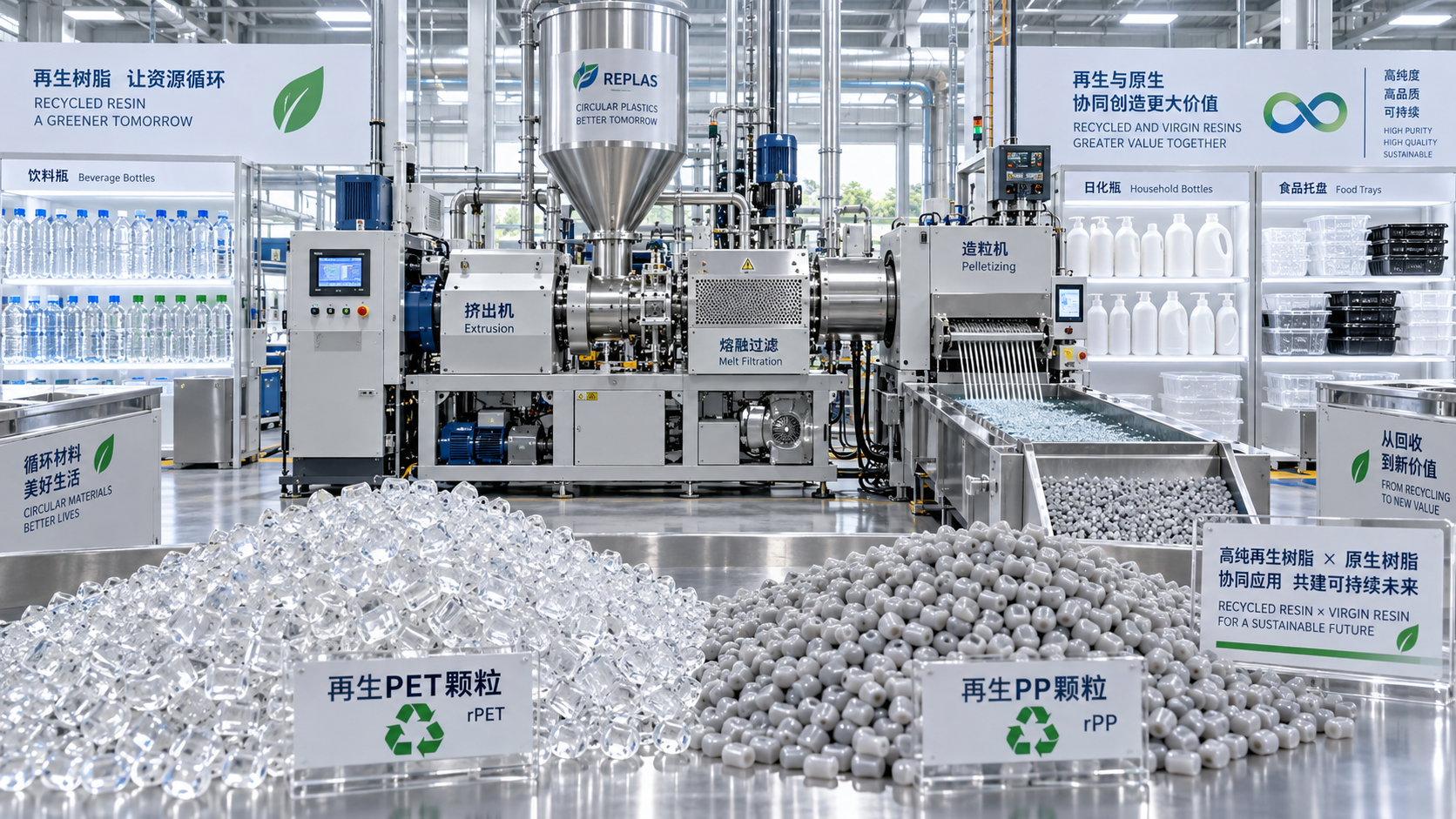
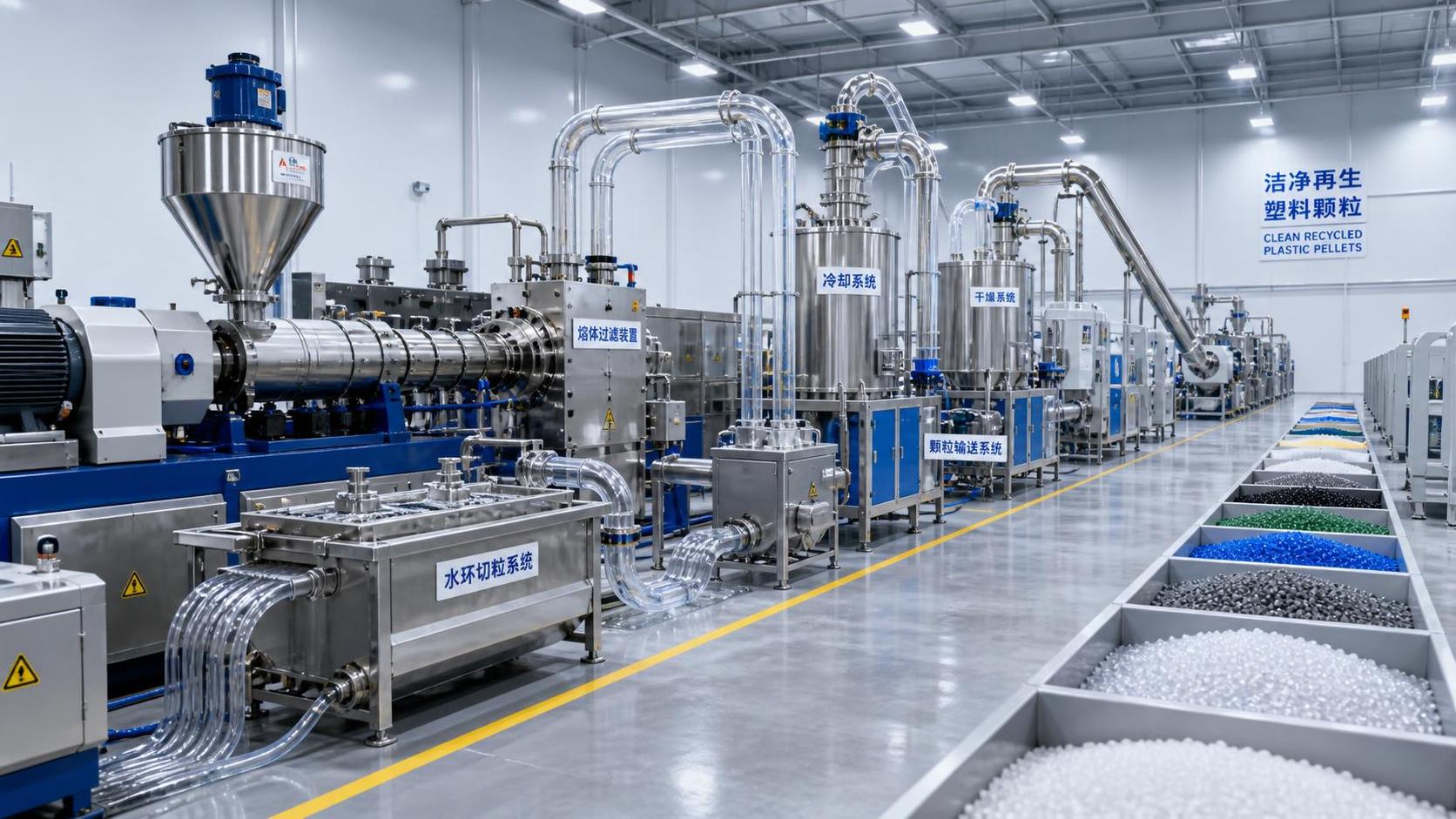
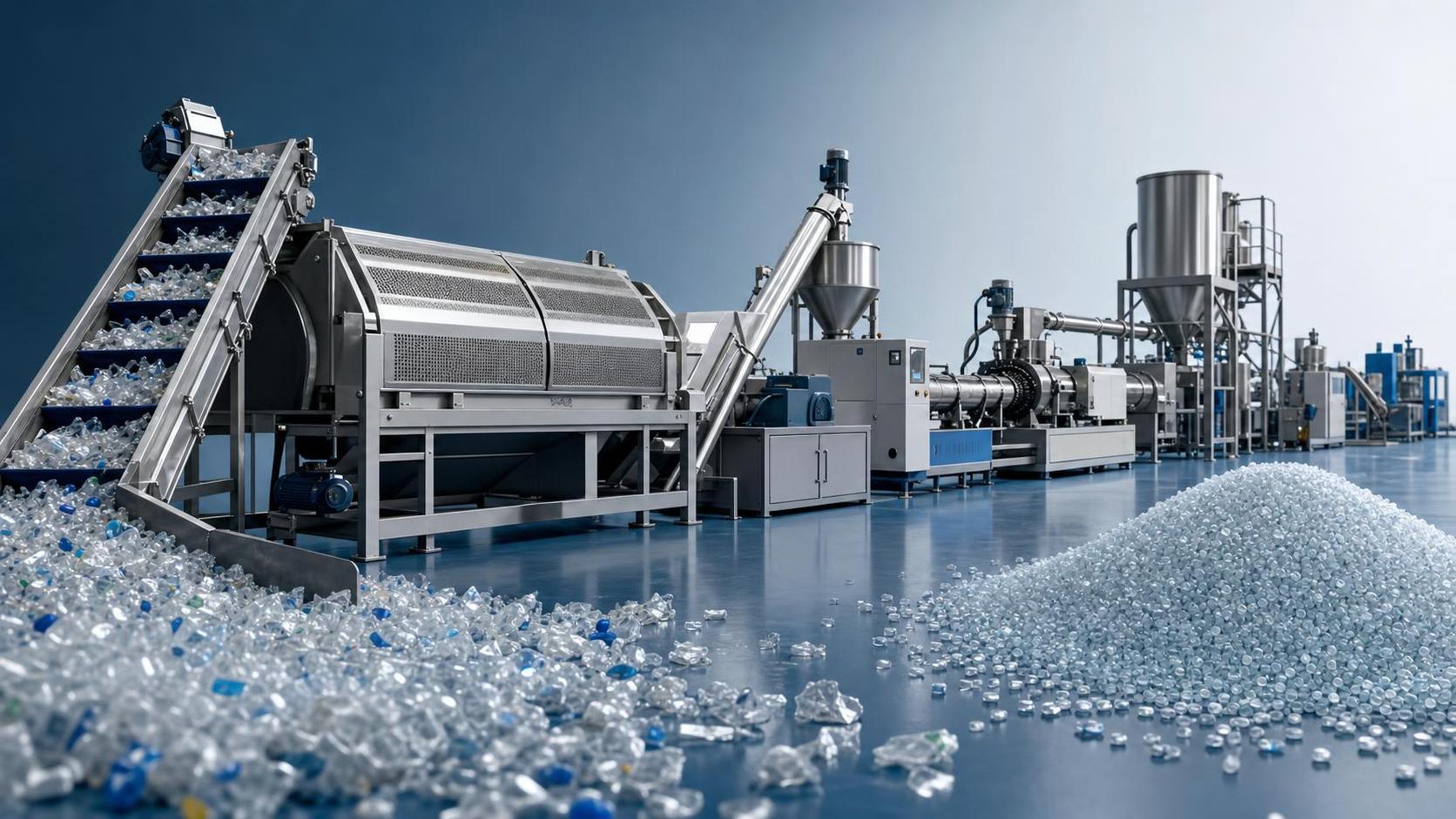
One of the clearest consequences of global plastic ban trends is the rise of in-house recycling and closed-loop material use. Waste plastic pelletizing lines are moving from a peripheral cost-saving tool to a strategic capacity investment. Wash efficiency, melt filtration, degassing, and pellet consistency now influence whether packaging producers can economically reuse post-industrial or post-consumer streams.
For distributors, this creates a strong cross-selling path. A customer buying extrusion or molding equipment may also need shredding, washing, pelletizing, dosing, or filtration modules within the next 6 to 18 months. Channel partners who build integrated proposals can capture more value per account.
The following comparison helps distributors prioritize machinery conversations based on compliance-driven customer demand.
The pattern is clear: compliance is driving convergence. End users no longer evaluate forming, conversion, and recycling as separate silos. They want a material-efficient system view, and that favors distributors able to discuss upstream compounding, downstream process stability, and circular recovery in one conversation.
What distributors and agents should evaluate before recommending packaging equipment
In a market shaped by global plastic ban trends, equipment recommendation cannot rely on catalog specifications alone. Distributors need a screening framework that reduces project risk for converters, packaging groups, and brand-linked manufacturers.
A practical 6-point qualification checklist
- Confirm target packaging format, annual volume, and resin family.
- Define recycled-content range, such as 10%–30% or 30%–50%.
- Check thickness, weight, and tolerance requirements.
- Assess contamination risk and filtration needs for recycled streams.
- Review energy consumption, maintenance intervals, and spare-part availability.
- Verify whether the system supports local compliance documentation and traceability.
This 6-step process helps prevent a common error: selling a machine that meets output targets but fails under the customer's future compliance roadmap. A line may perform well with virgin resin today but struggle when PCR ratios increase or packaging geometry is downgauged next year.
Common buying mistakes in compliance-driven projects
Mistake 1: treating recycled content as a simple raw-material substitution
PCR and regrind can alter viscosity, odor profile, color consistency, and contamination load. Without matching screw design, venting, filtration, or dosing accuracy, throughput and part quality can become unstable within the first 2 to 3 production weeks.
Mistake 2: overlooking changeover cost
As packaging portfolios diversify, converters may handle more SKUs in shorter runs. A machine that saves 8% in capital cost but adds 30 to 45 minutes per changeover can become expensive over a year of frequent product switches.
Mistake 3: separating recycling capability from production planning
In-house pelletizing is often evaluated as a waste project, not a packaging capability project. That misses the strategic link between scrap reuse, PCR blending, material cost control, and faster response to compliance-driven spec changes.
Service and support factors that influence distributor competitiveness
When buyers compare channel partners, technical service often matters as much as machine price. A realistic benchmark is remote response within 24 hours, critical spare-parts confirmation within 48 to 72 hours, and preventive service planning every 3 to 6 months depending on utilization level.
Distributors that can combine machine supply with process tuning, recycled-material trials, mold or die adjustment, and operator training are more likely to win repeat business. In markets reacting quickly to global plastic ban trends, post-sale technical depth becomes a revenue driver rather than a support cost.
How to turn compliance pressure into commercial growth
The strongest channel players are not waiting for customers to ask about global plastic ban trends. They are building solution packages around predictable pain points: lightweighting, mono-material conversion, PCR integration, scrap reduction, and closed-loop recycling.
Build a solution portfolio instead of a single-machine pitch
A better commercial model is to bundle 3 layers of value. First, the core machine platform. Second, process optimization components such as dosing, filtration, drying, inspection, or servo upgrades. Third, intelligence support covering regulatory interpretation, packaging redesign impact, and likely material-transition scenarios over the next 12 to 36 months.
This approach fits the PFRS mission of linking polymer rheology, smart manufacturing, and environmental packaging compliance. It also helps distributors defend margin because the conversation shifts from unit price to measurable production readiness.
Target the accounts most likely to act
The most responsive prospects usually share 4 traits: they supply regulated consumer sectors, they run high-volume SKUs, they face retailer or brand-owner sustainability requirements, and they have limited tolerance for scrap or downtime. These customers are more likely to invest in better extrusion control, precise injection systems, upgraded blow molding, or in-house recycling capacity.
Timing also matters. A packaging redesign project often starts 6 to 12 months before new equipment orders are released. Channel partners who engage early with technical insight can shape specifications before the RFQ stage becomes purely price-led.
Use compliance language that connects to plant economics
Customers care about regulation, but they buy based on operating impact. Translate global plastic ban trends into plant-level metrics: scrap reduction from 4% to 2%, changeover savings of 20 minutes per run, energy improvement from servo systems, reduced virgin resin exposure, and better consistency when PCR content rises.
That language is especially powerful in negotiations with converters balancing compliance risk against capex discipline. It positions the distributor as a process partner rather than a reseller.
Global plastic ban trends are reshaping packaging specs from the inside out, and that makes machinery strategy more important than ever. For distributors, agents, and channel partners, the opportunity is not simply to sell around regulation, but to help customers redesign packaging operations for recyclability, efficiency, and future compliance.
PFRS supports that transition by connecting packaging policy shifts with the technical realities of injection molding, extrusion, blow molding, and waste plastic recovery. If you are refining your equipment portfolio, evaluating recycled-material readiness, or looking for a more defensible channel strategy, now is the right time to move from reactive selling to intelligence-based solution building.
Contact us to discuss your market, get a tailored equipment positioning plan, or explore more solutions for compliant and circular packaging production.
Related News
- 00
0000-00
How to Select Rubber Processing Equipment for High-Precision Automotive Seals - 00
0000-00
How to Qualify a Servo Injection Molding Exporter for Global Sourcing - 00
0000-00
Polymer Processing for Extrusion: How Melt Rheology Affects Line Stability - 00
0000-00
Energy-Efficient Polymer Processing: Where Plants Can Cut kWh per Kilogram - 00
0000-00
German Extrusion Equipment Suppliers: Comparing Service, Lead Times, and Lifecycle Cost
Weekly Insights
Stay ahead with our curated technology reports delivered every Monday.
Related News
 Dr. Alistair VaughnHow Do PPWR Recycled-Content Targets Affect Packaging Resin Demand?How do PPWR recycled-content targets affect packaging resin demand? Explore shifts in recycled grades, virgin blends, food-contact supply, and processing strategy.Sep 26, 2026
 Dr. Alistair VaughnHow to Evaluate a Plastics Processing Equipment Manufacturer for Uptime and SupportPlastics processing equipment manufacturer evaluation guide: compare uptime, spare parts, service response, diagnostics, and lifecycle support before buying.Sep 17, 2026
 Dr. Alistair VaughnBudgeting a Plastic Pelletizing Machine: Cost Drivers for Recycling LinesPlastic pelletizing machines cost depends on feedstock, filtration, utilities, and installation. Explore key budget drivers to build a reliable recycling line investment plan.Sep 03, 2026
 Dr. Alistair VaughnCommon Waste and Downtime Causes in Rubber Processing and Cutting OperationsProcessamento e corte de borracha: discover the real causes of scrap and downtime in rubber lines, from material variation to machine wear, and learn how to cut waste and improve output.Aug 31, 2026
 Dr. Alistair VaughnWhat Is Automated Materials Processing and Where Does It Deliver the Most Value?Automated materials processing improves consistency, cuts waste, and boosts efficiency across molding, extrusion, and recycling. Discover where it delivers the most value.Aug 14, 2026
 Dr. Alistair VaughnHow Does a Polymer Recycling Plant Work? Process Steps and Key Equipment ExplainedPolymer recycling plant guide: explore sorting, washing, drying, extrusion, filtration, and pelletizing steps, plus key equipment that drives cleaner output and reliable recycled plastic quality.Jul 31, 2026
 Dr. Alistair VaughnHow Does Rubber Vulcanization Work and What Determines Final Rubber Performance?Rubber vulcanization explained: discover how curing, formulation, temperature, pressure, and machine control determine final rubber performance, durability, and product reliability.Jul 30, 2026
 Dr. Alistair VaughnHow Circular Plastics Economy EPR Rules Affect Packaging Costs and Compliance PlanningCircular plastics economy EPR is reshaping packaging costs, recyclability, and compliance planning. Learn how to reduce fee exposure, protect margins, and make smarter packaging decisions.Jul 13, 2026
 Dr. Alistair VaughnCircular Plastics Economy Trends: How EPR Policies and Recycled Content Rules Affect ManufacturersCircular plastics economy trends are reshaping manufacturing fast. See how EPR policies and recycled content rules impact costs, compliance, sourcing, and plant performance.Jun 30, 2026
![]() Dr. Alistair VaughnGlobal Plastic Ban Trends: Which Packaging Materials Face the Highest Compliance Risk?Global plastic ban trends are reshaping packaging compliance. Discover which materials face the highest risk and how to reduce cost, disruption, and redesign pressure.Jun 04, 2026
Dr. Alistair VaughnGlobal Plastic Ban Trends: Which Packaging Materials Face the Highest Compliance Risk?Global plastic ban trends are reshaping packaging compliance. Discover which materials face the highest risk and how to reduce cost, disruption, and redesign pressure.Jun 04, 2026 Dr. Alistair VaughnGlobal Plastic Ban Trends: Policy Shifts Affecting Packaging Materials and SupplyGlobal plastic ban trends are reshaping packaging supply. Discover policy shifts, material risks, and processing strategies to stay compliant and competitive.Jun 02, 2026
 Dr. Alistair VaughnHow is AI in injection molding cutting scrap?AI in injection molding cuts scrap by detecting process drift, optimizing pressure and cooling, and improving quality decisions—see how to reduce waste and boost ROI.May 29, 2026
 Dr. Alistair VaughnWhat global plastic ban trends mean for export planningGlobal plastic ban trends are reshaping export planning. Learn how to reduce compliance risk, choose smarter packaging, and align sourcing and equipment upgrades for market access.May 28, 2026
![]() Dr. Alistair VaughnWhy elastomer cross-linking fails and how to prevent defectsElastomer cross-linking failures can cause soft spots, cracks, and hidden reliability risks. Learn the key defect causes and proven prevention steps across molding, extrusion, and recycled blends.May 23, 2026
Dr. Alistair VaughnWhy elastomer cross-linking fails and how to prevent defectsElastomer cross-linking failures can cause soft spots, cracks, and hidden reliability risks. Learn the key defect causes and proven prevention steps across molding, extrusion, and recycled blends.May 23, 2026 Dr. Alistair VaughnHow fragile is the virgin resin supply chain in 2026Virgin resin supply chain risks are rising in 2026. Explore key disruption drivers, pricing impacts, and practical resilience strategies for smarter sourcing and planning.May 22, 2026
 Dr. Alistair VaughnWhy polymer molding scientists matter in process upgradesPolymer molding scientists help turn process upgrades into higher precision, lower waste, better energy efficiency, and faster ROI. See why their expertise reduces risk and improves modernization results.May 22, 2026
 Dr. Alistair VaughnWhat global plastic ban trends mean for new projectsGlobal plastic ban trends are reshaping new projects through design, compliance, recycled content, and equipment strategy. See how to plan smarter, reduce risk, and stay market-ready.May 21, 2026
 Dr. Alistair VaughnHow ESG in plastic manufacturing affects export riskESG in plastic manufacturing directly affects export risk, from customs delays to buyer approval. Learn how traceability, compliance, and smarter equipment protect market access.May 21, 2026
 Dr. Alistair VaughnWhat global plastic ban trends mean for export planningGlobal plastic ban trends are reshaping export planning, packaging choices, and compliance strategy. Learn how to reduce risk, adapt faster, and stay competitive across global markets.May 19, 2026
 Dr. Alistair VaughnHow polymer smart manufacturing improves batch consistencyPolymer smart manufacturing improves batch consistency with inline sensing, closed-loop control, and analytics. See how it reduces variation, scrap, and quality risk across polymer processing.May 18, 2026