Polymer Supply Chain Analytics: How to Reduce Resin Supply Disruptions




Polymer supply chain analytics reduces resin disruption risk by connecting demand forecasts, usable inventory, supplier commitments, and material qualification data at the grade level. The practical objective is not to predict every shortage: it is to identify when a specific approved resin could become unavailable, estimate when production would be affected, and act while alternatives are still feasible.
Resin shortages, volatile prices, and unpredictable lead times can disrupt production and strain budgets. A useful analytical system turns these signals into decisions about order timing, safety stock, supplier qualification, and the controlled use of recycled materials across molding, extrusion, and packaging operations.
Where resin disruptions begin—and how they spread
A resin shortage rarely appears as a single isolated event. An upstream production outage, feedstock constraint, transport interruption, or allocation decision can lengthen lead times; a late shipment then consumes inventory that was intended to protect scheduled production.
The business impact depends on more than the number of suppliers listed in a purchasing system. Two suppliers may depend on the same production site, feedstock source, transport corridor, or regional distribution hub. Likewise, a substitute grade has limited value if it has not been qualified for the application or cannot be purchased in time.
These signals should be assessed together. A delayed shipment is urgent when coverage is short and no substitute is approved; the same delay may be manageable when released stock covers confirmed production until a reliable replacement delivery.
Build polymer supply chain analytics around usable material
A dashboard built only on purchase orders and warehouse balances can give false reassurance. The relevant question is whether the right grade, in a released condition, will be available at the right plant before it is needed.
Connect the following records using consistent material, supplier, location, and date identifiers:
- Demand: production schedules, customer orders, forecasts, bill-of-material quantities, expected scrap, and planned changeovers.
- Inventory: released stock by grade and site, material on quality hold, stock reserved for orders, shelf-life restrictions, and stock in transit.
- Supply: open purchase orders, confirmed quantities and delivery dates, supplier capacity commitments, minimum order quantities, and transport routes.
- Material approvals: approved applications, customer-specific requirements, technical specifications, and alternative grades or sources.
- Commercial terms: contracted volumes, pricing mechanisms, freight, duties where applicable, and costs associated with expedited supply.
Separate an order’s requested date from the supplier’s confirmed date and the date material is expected to be released for use. A shipment that arrives at the gate is not necessarily available to the machine if sampling, testing, documentation, or internal quality release remains outstanding.

Data ownership matters as much as software. Assign responsibility for updating supplier commitments, recording quality holds, and maintaining approved-grade lists; otherwise, an automated alert can simply repeat an outdated assumption.
Translate lead-time uncertainty into coverage decisions
Inventory coverage provides an accessible starting point. Divide usable, unreserved inventory by expected consumption over the relevant period to estimate how long stock will last. Use a time-phased calculation when demand varies by week or when production runs are intermittent.
Compare the projected depletion date with the expected availability date of the next confirmed and releasable supply. A negative gap indicates that planned demand exceeds available material before replenishment; a small positive gap indicates little room for delay.
Illustrative scenario: A plant has 40 tonnes of released resin and expects to consume 10 tonnes per week. Coverage is four weeks if consumption remains steady. If a confirmed shipment is expected to become usable in five weeks, the projected gap is one week, before considering any additional disruption.
That calculation does not prescribe a universal safety-stock level. Set a buffer according to demand variability, replenishment uncertainty, required service level, storage constraints, shelf life, and the availability of approved alternatives. Where historical data is limited, use explicit scenarios and review the assumptions with suppliers rather than treating a precise-looking number as reliable.
Use scenarios that lead to different actions
- Demand increase: Test the effect of a larger production plan on depletion dates and supplier commitments.
- Late delivery: Move the confirmed availability date forward by a chosen delay and identify the first affected order.
- Quality rejection: Remove the affected lot from usable inventory and check whether another released lot can be allocated.
- Source interruption: Remove supply from a production site or route and assess whether the remaining sources have qualified capacity.
For each scenario, record the trigger, owner, action, and decision deadline. Expediting is useful only if transport capacity and supplier inventory exist; switching production schedules helps only if the affected customer orders and machine capacity permit it.
Score suppliers for delivery risk, not price alone
Supplier comparisons should distinguish quoted lead time from observed performance and future commitment. A low unit price does not offset a vulnerable supply arrangement when a missed delivery threatens a high-priority production run.
Ask suppliers to identify manufacturing locations, relevant upstream dependencies, allocation rules, and escalation contacts where they can disclose them. Confirm whether a second distributor offers material from a genuinely different production source or merely another route to the same resin.
Use the scorecard to support a specific response: negotiate clearer confirmation windows, reserve capacity where commercially justified, qualify another source, or hold additional stock. Supplier scores should not conceal missing evidence; an unknown dependency is a reason for investigation, not proof of diversification.
Qualify alternatives before a shortage
A resin with the same polymer family and nominal grade description is not necessarily interchangeable. Processing behavior, additive packages, contamination limits, color, mechanical performance, and regulatory documentation can differ enough to affect the finished product.
For injection molding, assess flow behavior, shrinkage, appearance, and dimensional stability against the part and tooling requirements. For extrusion, examine melt behavior, stability, dispersion, and the properties needed in the finished profile, pipe, or film. Packaging applications may also require customer approval and evidence relevant to the intended contact and market.
Qualification should cover both the material and its source. Agree on the specification and test plan, run an appropriately controlled trial, review finished-product results, secure required approvals, and document the conditions under which the alternative may be used. A successful laboratory comparison alone does not establish production readiness.
Include the time and cost of trials, process adjustments, documentation, minimum order quantities, and possible yield changes in the sourcing comparison. If qualification takes longer than the remaining inventory coverage, it is a longer-term resilience measure—not an immediate recovery plan.
Use recycled resin as a controlled sourcing option
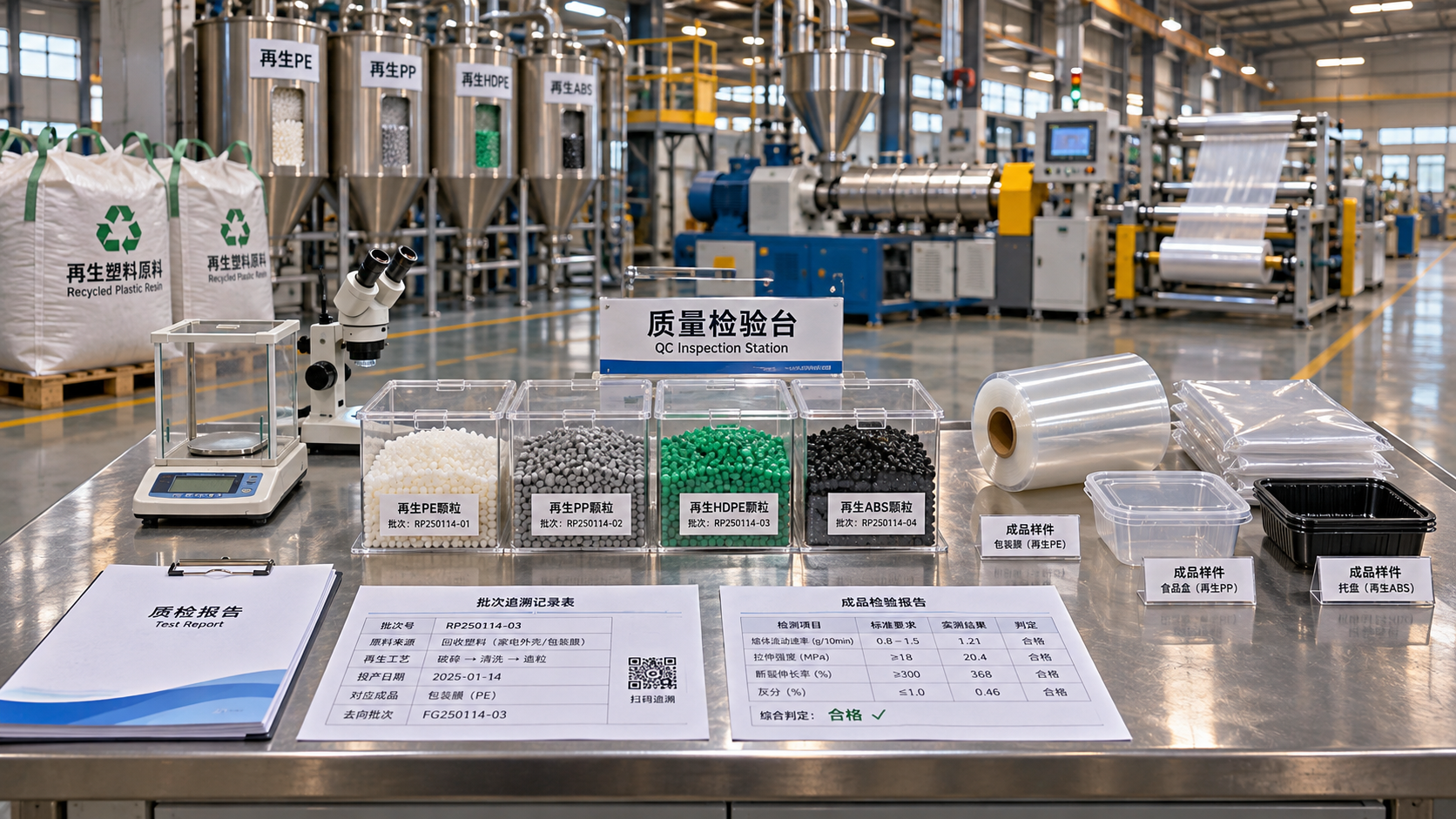
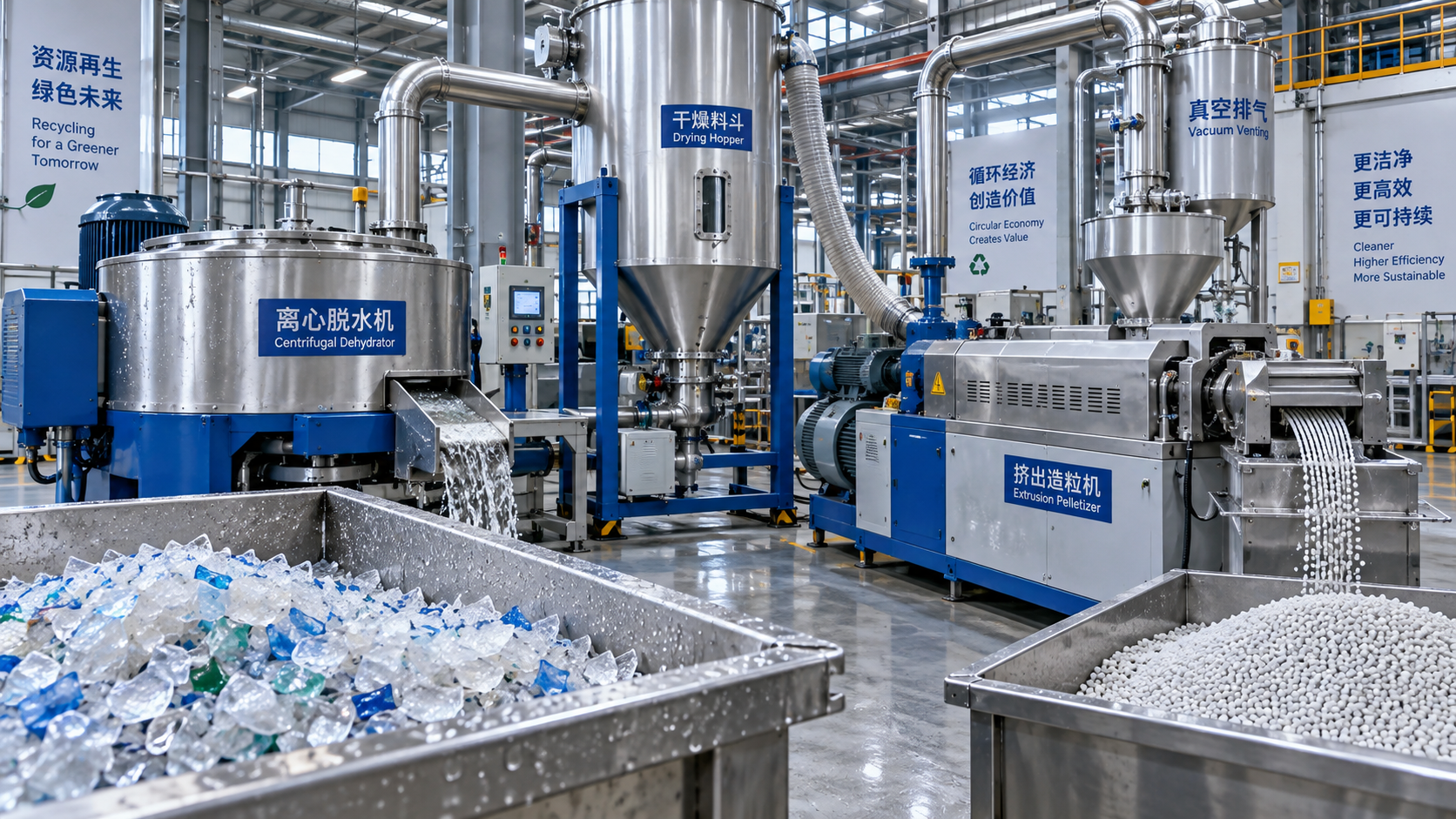
Recycled resin can expand the material options available for suitable applications, but it should not be treated as an automatic replacement for virgin material. Supply depends on collection, sorting, washing, processing, and the availability of feedstock that meets the required specification.
Evaluate recycled content against the intended part, processing window, customer agreement, and applicable market requirements. Relevant checks can include material identity, melt characteristics, contamination, odor, color, moisture, traceability, and lot-to-lot consistency. For sensitive uses, obtain the documentation and approvals required for that specific application and jurisdiction.
Model recycled supply separately from virgin supply: a nominally available tonne is not useful if its quality, origin documentation, or delivery timing is unsuitable. If blends are approved, include the permitted blend range and separate component availability in the material plan; a shortage of either component can still constrain production.
Turn alerts into a repeatable operating process
Begin with grades that combine high production impact, limited approved alternatives, and uncertain replenishment. A focused pilot can expose data gaps and decision bottlenecks before the same approach is extended across a wider portfolio.
- Map exposure: Link critical products and plants to their approved grades, suppliers, production sites, and routes.
- Validate the baseline: Reconcile released inventory, open orders, consumption assumptions, and supplier-confirmed dates.
- Set action thresholds: Define when a projected shortage, declining coverage, or delivery change requires review and escalation.
- Assign responses: Specify who can expedite, reallocate inventory, change schedules, request allocation, or initiate qualification.
- Review outcomes: Compare projected and actual availability, investigate missed signals, and update assumptions and responsibilities.
Track whether alerts arrive early enough to change an outcome, not merely how many alerts the system generates. Useful review measures include shortage incidents, forecast error for critical grades, delivery performance, inventory coverage, and the time required to qualify an alternative.
The strongest sourcing decision balances availability, qualification, total landed cost, and response time. Analytics makes those trade-offs visible; supplier commitments, accurate data, and preapproved actions determine whether the warning can prevent a production interruption.
Have questions about this sector analysis, or seeking best practices specific to your niche? Drop us a line below and let the senior consultants at PFRS assist you.
We respect your privacy. Your information is strictly confidential.
Related News
- 00
0000-00
Selecting a Vacuum Flat Press for Rubber Hoses: Key Specifications - 00
0000-00
Innovations in Plastic Recycling: Mechanical vs Chemical Processing - 00
0000-00
Plastic Recycling Innovation: Sorting Advances for Mixed Packaging Waste - 00
0000-00
ESG Compliance for Plastics: Mapping Reporting Obligations by Market - 00
0000-00
Drying Temperature and Coating Defects in PU Synthetic Leather
Weekly Insights
Stay ahead with our curated technology reports delivered every Monday.
Related News
 Ms. Elena RodriguezESG Compliance for Plastics: Mapping Reporting Obligations by MarketExplore ESG compliance for plastics across the EU, UK, US and Canada. Learn how to map reporting obligations and build reliable records.Nov 24, 2026
 Ms. Elena RodriguezDrying Temperature and Coating Defects in PU Synthetic LeatherView used machinery details and learn how drying profiles affect PU synthetic leather defects, adhesion and solvent safety. Explore practical troubleshooting tips.Nov 23, 2026
 Ms. Elena RodriguezPolymer Supply Chain Analytics: How to Reduce Resin Supply DisruptionsDiscover how polymer supply chain analytics can reduce resin disruptions with better inventory planning, supplier risk insights, and qualified alternatives.Nov 21, 2026
 Ms. Elena RodriguezChoosing Polymer Processing Equipment in India: Capacity and Supplier CriteriaChoosing polymer processing equipment in India? Compare capacity, lifecycle costs, supplier reliability and local support to make a confident investment.Nov 18, 2026
 Ms. Elena RodriguezChoosing a Recycled Plastic Processing Exporter: Quality and Supply ChecksChoose a recycled plastic processing exporter with confidence. Compare equipment quality, proven output, delivery terms and after-sales support.Nov 17, 2026
 Ms. Elena RodriguezSustainable Packaging Manufacturing: Where to Cut Costs Without Adding WasteDiscover cost effective sustainable packaging manufacturing strategies to cut material and production costs, reduce waste, and protect package performance.Nov 16, 2026
 Ms. Elena RodriguezChoosing a Plastic Extrusion Supplier: Quality, Capacity and Lead TimesChoosing a plastic extrusion supplier? Learn how to assess quality, production capacity, lead times and total costs to make a confident sourcing decision.Nov 08, 2026
 Ms. Elena RodriguezAutomated Plastic Recycling Systems: When Do Labor Savings Justify the Cost?Do automated plastic recycling systems pay off? Learn how to calculate real labor savings, operating costs, and payback to make a smarter investment.Oct 29, 2026
 Ms. Elena RodriguezBuying Plastic Recycling Equipment in South Africa: Costs and Local SupportFind plastic recycling equipment South Africa businesses can rely on. Compare total costs, local support and supplier checks to invest with confidence.Oct 26, 2026
 Ms. Elena RodriguezVirgin Resin Suppliers: How to Verify Traceability and Batch ConsistencyEvaluate virgin resin suppliers with practical checks for traceability, CoA accuracy, and batch consistency. Learn how to reduce scrap, avoid sourcing risks, and buy with confidence.Oct 24, 2026
 Ms. Elena RodriguezEnergy-Saving Plastics Machinery: How to Calculate Payback Before BuyingEvaluate energy saving plastics machinery before buying. Learn to calculate payback using verified energy savings, installed costs, and production data to invest with confidence.Oct 23, 2026
 Ms. Elena RodriguezCircular Manufacturing Roadmap: From Waste Audits to Material RecoveryBuild a circular manufacturing roadmap from waste audits to material recovery. Explore practical steps to qualify recycled materials, select equipment, and validate ROI before investing.Oct 20, 2026
 Ms. Elena RodriguezInjection Molding System Costs: Machine, Molds, Automation, and InstallationCompare injection molding systems price proposals with confidence. Uncover machine, mold, automation, and installation costs to avoid hidden expenses and choose a production-ready cell.Oct 17, 2026
 Ms. Elena RodriguezHow Does Feedstock Moisture Affect Plastic Pelletizing Energy Use?How does feedstock moisture affect plastic pelletizing energy use? Discover how smarter drying and dewatering can cut kWh/kg, protect pellet quality, and boost output.Oct 22, 2026
 Ms. Elena RodriguezWaste Tyre Collection and Sorting: On-Site vs Outsourced Shredding CostsCompare waste tyre collection and sorting unit cost for on-site vs outsourced shredding. Uncover hidden expenses, assess break-even volumes and choose the most cost-effective route.Oct 26, 2026
 Ms. Elena RodriguezSmart Factory Costs for Plastics: Estimating ROI for Automation ProjectsSmart factory for plastics cost: learn how to estimate automation ROI, uncover hidden integration expenses, reduce scrap, and build a phased investment plan.Oct 10, 2026
 Ms. Elena RodriguezHow to Evaluate a Packaging Molding Equipment Supplier for High-Volume ProductionChoose a packaging molding equipment supplier with confidence. Learn how to assess throughput stability, tooling, recycled-material capability, lifecycle cost, and service support for high-volume production.Oct 09, 2026
 Ms. Elena RodriguezProcurement Records to Request Before Buying a Used Tyre ShredderUsed tyre shredder for sale? Request maintenance, operating, safety, and parts records to reduce risk, verify condition, and buy with confidence.Oct 16, 2026
 Ms. Elena RodriguezHow to Select Packaging Molding Equipment for High-Volume Production LinesPackaging molding equipment selection guide for high-volume lines: compare processes, throughput, materials, automation, and energy to achieve stable, cost-effective output.Oct 04, 2026
 Ms. Elena RodriguezHow to Evaluate Plastic Recycling Machinery for UAE Heat, Feedstock, and Output NeedsPlastic recycling machinery UAE buyers: evaluate heat resilience, feedstock handling, cooling, pellet quality, energy use, and lifecycle cost for reliable output.Sep 28, 2026