Virgin Resin Suppliers: How to Verify Traceability and Batch Consistency




A low resin price loses its advantage when an uncertain origin delays material release or a batch change increases scrap. Comparing virgin resin suppliers therefore starts with two separate questions: can each delivery be traced to its original manufacturer, and does the material remain within an agreed processing and performance window? A supplier can satisfy one requirement while failing the other.
Before comparing quotations, establish the exact grade, acceptable manufacturing sources, required batch records, and evidence needed for approval. The useful comparison is the cost of producing acceptable parts, including inspection, drying, purging, downtime, and rejected output. A lower purchase price deserves consideration only after those conditions are clear.
Define what “virgin” means in the purchase agreement
The word “virgin” alone leaves room for disagreement. State whether the order excludes post-consumer recycled content, post-industrial recycled content, regrind, and reprocessed off-specification material. Clarify whether the material is a standard commercial grade, an off-grade lot, or a blend. These descriptions address different attributes: unused resin can still be off-specification, and a compound made from virgin base polymer can contain fillers, pigments, and other additives.
For compounded grades, identify the compound manufacturer and the agreed formulation designation. Upstream base-polymer batch details are not always available commercially, but the compounder should retain internal links to its raw-material records. Specify the traceability information supplied routinely and the deeper records available during a quality investigation.
Keep sustainability accounting claims separate from physical composition requirements. A mass-balance allocation statement alone does not establish the physical recycled content of an individual shipment. Where composition matters, the contract needs an explicit declaration addressing that requirement.
Follow one delivered lot back to its source
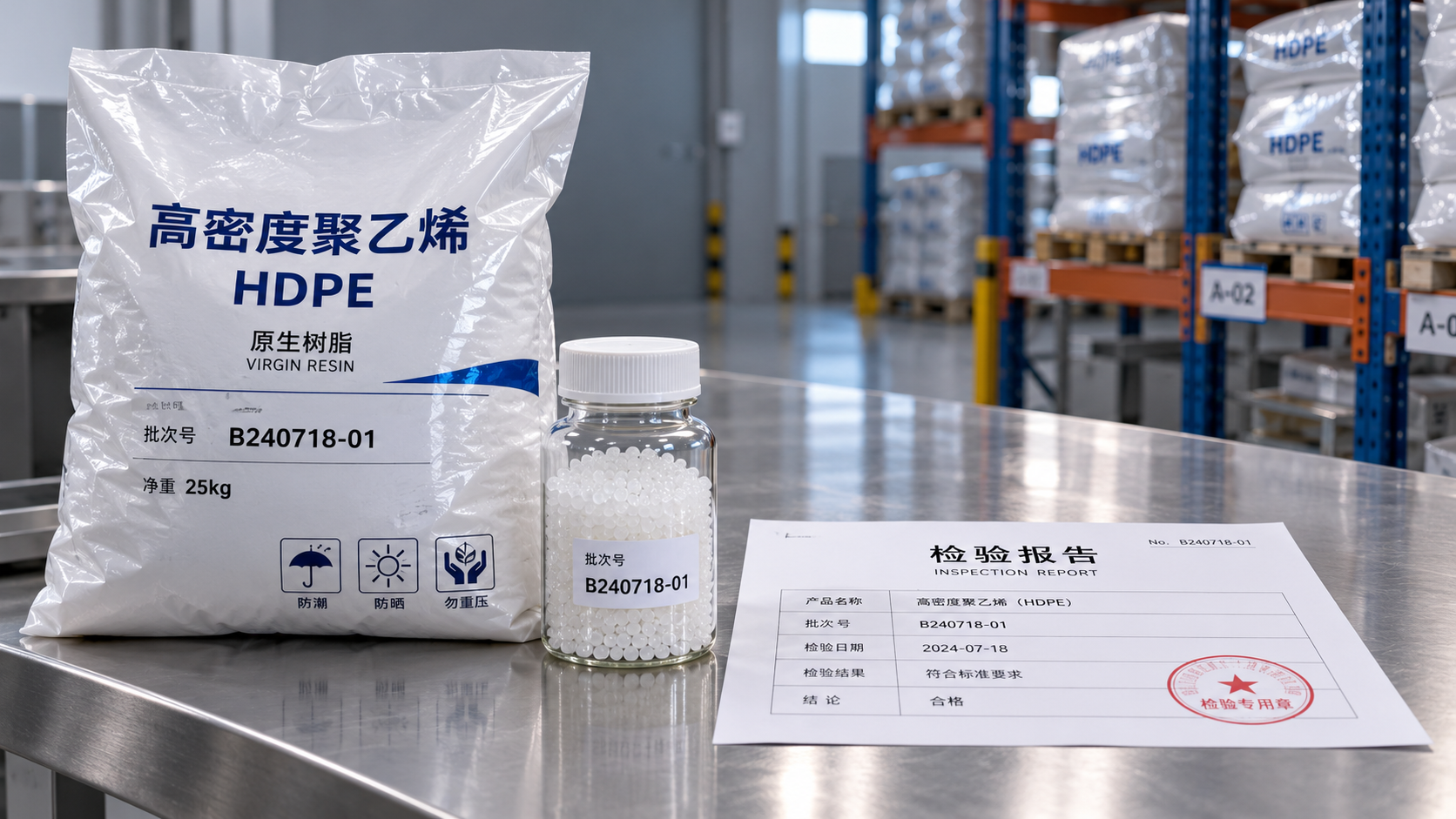
Request a representative traceability file before approving routine supply. It should connect the original manufacturer, manufacturing location, full grade designation, original lot number, certificate of analysis, and shipment records. Commercially sensitive prices can be redacted without obscuring the identities and lot references needed to establish the chain.
The most revealing exercise starts with an actual package or delivery record. Follow its lot identifier backward through the packing list, warehouse receipt, and supplier documentation until it reaches the manufacturer’s certificate. A folder containing unrelated certificates offers little assurance, even when every document looks authentic.
Several details deserve particular attention:
- Grade suffixes: a shortened grade name can hide differences in additive package, color, stabilization, or intended application.
- The seller’s internal stock number needs a documented link to the original manufacturer’s lot. An unexplained replacement identifier breaks the chain.
- Repacking history: when original bags are opened, records should identify the incoming lot, repacking date, packaging line, and resulting package numbers. Cleaning and segregation controls become part of the evidence.
- A delivery containing several original lots requires separate identification and corresponding certificates. A single blended delivery number should not conceal that distinction.
For bulk deliveries, extend the review to loading records, compartment identification, previous cargo controls, and the receiving silo. If residual stock mixes with a new delivery, record the resulting silo inventory relationship. Once lots are commingled, downstream production cannot honestly be attributed to just one original lot.
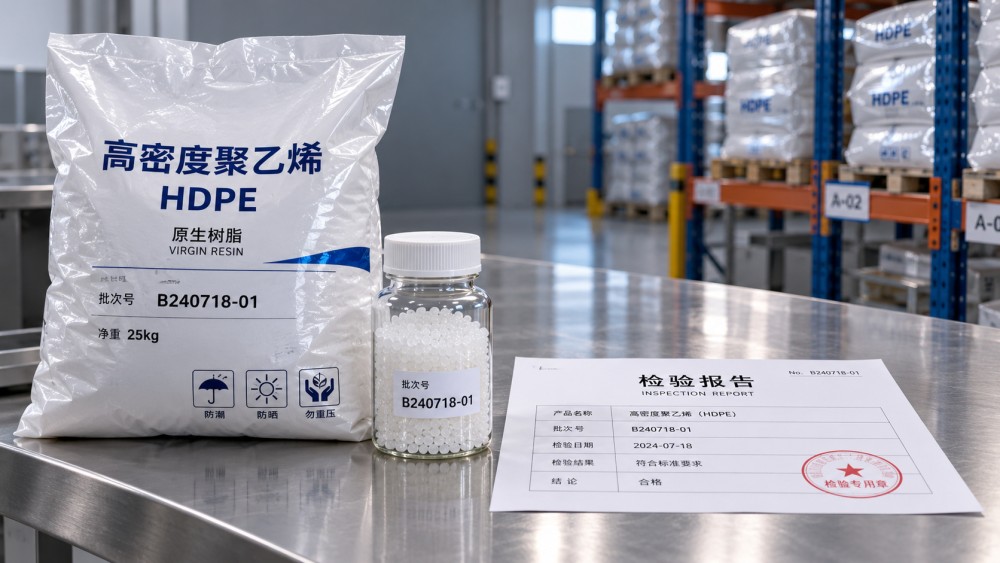
Verify unfamiliar documents through an independently obtained manufacturer contact or an established document portal. Contact details printed only on the document being questioned provide weak independent confirmation. Distributor authorization supports commercial legitimacy, but the delivered material still needs its own traceability records.
Read the certificate beyond the pass statement
A technical data sheet describes a grade’s typical characteristics. A certificate of analysis, or CoA, relates to a specific lot, although some listed properties may be certified through periodic testing or process controls rather than measured on every batch. Ask which values are actual lot measurements and which are declarations of conformity.
A useful CoA identifies the grade, lot, relevant dates, acceptance limits, units, test methods, and results for the agreed release properties. A certificate showing only “pass” supports a conformity decision but gives little information about variation. Numerical results are more useful when assessing whether deliveries cluster tightly or repeatedly approach a limit.
Properties should follow the application. Polyolefin extrusion often places emphasis on flow behavior, density, and contamination. For PET, intrinsic viscosity and moisture are more informative than a generic melt-flow requirement. Hygroscopic engineering polymers require careful moisture control, while filled compounds need evidence that reinforcement or filler content remains within the agreed range.
Separate specification compliance from batch consistency
Every lot can pass a broad specification while production behavior still shifts enough to require adjustment. Request results from consecutive commercial lots of the proposed grade and manufacturing source. A selection of favorable certificates cannot reveal the normal spread or show whether values have drifted over time.
Plot the properties that influence the process against lot sequence, retaining the original results rather than only averages. Look for gradual movement, abrupt steps, and clusters associated with different manufacturing sites. Repeated identical figures warrant clarification: they could reflect rounding, typical values, or a reporting convention rather than independent measurements.
Acceptance limits need a practical basis. Start with the manufacturer’s specification, then establish whether the application requires a narrower purchasing window. Tighter limits carry value only when the measurement method can distinguish the differences and production trials show that those differences matter. Otherwise, extra testing and rejected deliveries add expense without improving output.
Two lots with matching melt flow results can behave differently at production shear rates because their molecular weight distributions or additive packages differ. Where flow instability remains unexplained, additional rheological testing offers more insight than repeatedly measuring the same single-point property. Selective investigation is more useful than requiring an extensive test package for every delivery.
Make the trial expose variation
A sample proves little if its origin and relationship to commercial supply are unclear. Record its original lot number, packaging, quantity, and source. Approval trials should use material representative of the proposed supply route, including any repacking or storage steps that routine deliveries will encounter.
Evaluate more than one production lot before treating consistency as established. Keep drying, machine settings, tooling, and measurement conditions controlled during the initial comparison. Then assess whether acceptable output remains achievable across the normal operating window. Constant retuning can conceal material variation that later appears as labor, scrap, or capacity loss.
For injection molding, useful observations include filling pressure, cushion stability, part weight, dimensional variation, and visible defects. Extrusion trials can track melt pressure, motor load, output stability, screen-pack pressure rise, and application-specific defects such as gels in film. Record saleable output alongside processing behavior so that an apparently easy-running resin is not accepted despite poor finished-product performance.
Separate handling effects from supplier variation. Wet nylon or polyester can show unstable behavior or degradation during processing even when the incoming polymer meets its specification. If a suspect lot performs normally after controlled drying, investigate moisture exposure and dryer performance before attributing the problem to polymer manufacture.
Use incoming tests to answer specific doubts
Receiving inspection should first reconcile physical labels, seals, package counts, condition, and lot numbers with the approved documents. Hold material with unexplained discrepancies before it enters a shared silo or production feed system, where segregation becomes harder.
Sampling determines what laboratory results mean. A sample from one convenient bag offers limited evidence about a shipment with several lots or repacking stages. Define sampling by lot and packaging arrangement, retain identified reference samples, and document who collected them and where. Moisture samples need handling that prevents exposure from changing the result.
Independent testing is most useful when it addresses a defined uncertainty. Spectroscopy can help identify polymer families or gross contamination; thermal analysis can reveal melting behavior; ash measurements can support checks on inorganic content. These methods have limits. No single routine laboratory test proves virgin origin. Well-sorted recycled polymer can resemble virgin material in several measured properties, so provenance still depends on documentary evidence and controlled handling.
When a result conflicts with the CoA, compare methods, conditioning, and sampling before declaring a failure. A retained sample tested under agreed conditions provides a stronger basis for resolution than two laboratories using different procedures.
Turn approval into enforceable supply conditions
The purchase specification should identify the approved manufacturer, grade, permitted manufacturing locations, release properties, documentation, packaging, and rules for mixed-lot deliveries. Require advance notice for changes affecting those conditions, including a new manufacturing source or repacking arrangement. Define which changes trigger a fresh trial.
Claims handling also belongs in the agreement. Establish how disputed material is quarantined, how samples are exchanged, which method governs retesting, and how replacement or credit is resolved. Include access to traceability records and a defined record-retention period aligned with product and customer obligations.
Commercial comparison then becomes more concrete. Use quoted resin cost alongside freight, inspection, financing, storage, and observed conversion losses. Compare cost per unit of acceptable output where trial evidence is available. Keep speculative downtime savings separate from measured results; an attractive spreadsheet should not substitute for production evidence.
A supply offer remains incomplete when the original lot cannot be established, test results cannot be compared, or substitutions can occur without notice. Resolve those gaps before routine release. A documented source and a demonstrated operating window give the quoted price a reliable basis for comparison.
Related News
- 00
0000-00
Virgin Resin Suppliers: How to Verify Traceability and Batch Consistency - 00
0000-00
Energy-Saving Plastics Machinery: How to Calculate Payback Before Buying - 00
0000-00
Automatic Tire Curing: How Temperature and Pressure Controls Affect Cure Uniformity - 00
0000-00
Pallet Injection Molding: How to Size Clamp Force and Shot Capacity - 00
0000-00
Circular Manufacturing Roadmap: From Waste Audits to Material Recovery
Weekly Insights
Stay ahead with our curated technology reports delivered every Monday.
Related News
 Ms. Elena RodriguezVirgin Resin Suppliers: How to Verify Traceability and Batch ConsistencyEvaluate virgin resin suppliers with practical checks for traceability, CoA accuracy, and batch consistency. Learn how to reduce scrap, avoid sourcing risks, and buy with confidence.Oct 24, 2026
 Ms. Elena RodriguezEnergy-Saving Plastics Machinery: How to Calculate Payback Before BuyingEvaluate energy saving plastics machinery before buying. Learn to calculate payback using verified energy savings, installed costs, and production data to invest with confidence.Oct 23, 2026
 Ms. Elena RodriguezCircular Manufacturing Roadmap: From Waste Audits to Material RecoveryBuild a circular manufacturing roadmap from waste audits to material recovery. Explore practical steps to qualify recycled materials, select equipment, and validate ROI before investing.Oct 20, 2026
 Ms. Elena RodriguezInjection Molding System Costs: Machine, Molds, Automation, and InstallationCompare injection molding systems price proposals with confidence. Uncover machine, mold, automation, and installation costs to avoid hidden expenses and choose a production-ready cell.Oct 17, 2026
 Ms. Elena RodriguezHow Does Feedstock Moisture Affect Plastic Pelletizing Energy Use?How does feedstock moisture affect plastic pelletizing energy use? Discover how smarter drying and dewatering can cut kWh/kg, protect pellet quality, and boost output.Oct 22, 2026
 Ms. Elena RodriguezSmart Factory Costs for Plastics: Estimating ROI for Automation ProjectsSmart factory for plastics cost: learn how to estimate automation ROI, uncover hidden integration expenses, reduce scrap, and build a phased investment plan.Oct 10, 2026
 Ms. Elena RodriguezHow to Evaluate a Packaging Molding Equipment Supplier for High-Volume ProductionChoose a packaging molding equipment supplier with confidence. Learn how to assess throughput stability, tooling, recycled-material capability, lifecycle cost, and service support for high-volume production.Oct 09, 2026
 Ms. Elena RodriguezProcurement Records to Request Before Buying a Used Tyre ShredderUsed tyre shredder for sale? Request maintenance, operating, safety, and parts records to reduce risk, verify condition, and buy with confidence.Oct 16, 2026
 Ms. Elena RodriguezHow to Select Packaging Molding Equipment for High-Volume Production LinesPackaging molding equipment selection guide for high-volume lines: compare processes, throughput, materials, automation, and energy to achieve stable, cost-effective output.Oct 04, 2026
 Ms. Elena RodriguezHow to Evaluate Plastic Recycling Machinery for UAE Heat, Feedstock, and Output NeedsPlastic recycling machinery UAE buyers: evaluate heat resilience, feedstock handling, cooling, pellet quality, energy use, and lifecycle cost for reliable output.Sep 28, 2026
 Ms. Elena RodriguezGerman Extrusion Equipment Suppliers: Comparing Service, Lead Times, and Lifecycle CostExtrusion equipment Germany suppliers compared: evaluate service coverage, credible lead times, spare-parts access, and lifecycle cost to select a reliable, future-ready production partner.Sep 22, 2026
 Ms. Elena RodriguezWhat Should You Check Before Buying a Used Plastic Recycling Line?What should I check before buying a used plastic recycling line? Explore feedstock fit, wear, trials, utilities, controls, and restoration costs before you invest.Sep 26, 2026
 Ms. Elena RodriguezHow to Compare Pelletizing Lines by Energy Use per TonHow do I compare pelletizing lines by kWh per ton? Learn to measure total energy, verify saleable output, and select a cost-efficient line.Sep 23, 2026
 Ms. Elena RodriguezTyre Cutter Blade Wear: When Capacity Loss Needs Inspectionшинорез blade wear can quietly reduce tyre-cutting capacity. Learn the warning signs, inspection triggers, and maintenance actions that protect output and uptime.Sep 28, 2026
 Ms. Elena RodriguezIn-House Recycling for Factory Scrap: How to Reduce Material Waste and Disposal CostsIn house recycling for factory scrap helps manufacturers cut material waste, reduce disposal costs, and create controlled, quality-focused reuse loops.Sep 07, 2026
 Ms. Elena RodriguezHow Recyclable Packaging Manufacturing Balances Material Recovery and Production CostRecyclable packaging manufacturing: discover how smarter design, feedstock control, and process optimization reduce recovery costs while improving quality and yield.Sep 04, 2026
 Ms. Elena RodriguezHow to Evaluate a Plastic Recycling Systems Supplier for Your Processing NeedsChoose the right plastic recycling systems supplier with a practical guide to feedstock fit, output quality, total cost, testing, service, and compliance.Sep 01, 2026
 Ms. Elena RodriguezCE Marking for Plastic Processing Equipment: Documentation and Safety ChecksPlastic processing equipment CE compliance: learn the essential documentation, risk assessments, safety checks, and validation steps for reliable EU market access.Aug 30, 2026
 Ms. Elena RodriguezPlastic Packaging Compliance Standards: What Tests and Documents Matter Most?Plastic packaging compliance standards explained: learn which migration tests, mechanical checks, and audit-ready documents matter most to reduce risk and pass reviews with confidence.Aug 25, 2026
 Ms. Elena RodriguezHow to Evaluate a Plastic Waste Recycling System for Capacity, Contamination, and ROIPlastic waste recycling system evaluation made practical: compare true capacity, contamination control, and ROI to choose a line that delivers stable output and stronger returns.Aug 24, 2026