Choosing a Plastic Extrusion Supplier: Quality, Capacity and Lead Times




The best plastic extrusion supplier is one that can repeatedly produce the required part, reserve enough suitable production capacity, and deliver within a lead time that works for the buyer’s inventory plan. A low unit price matters, but it can lose its appeal if dimensional variation causes assembly problems, tooling changes delay launch, or expedited freight becomes routine.
For procurement teams, the first decision is how much evidence the application needs. A standard profile used in a noncritical application may justify a straightforward sample and commercial review. A tight-tolerance component, a regulated packaging product, or a high-volume part with limited storage capacity calls for closer examination of process controls, available line time, and recovery plans. In both cases, quotations are only comparable when suppliers are pricing the same specification and delivery commitments.
Start with the part and the conditions it must meet
Extrusion covers a wide range of products, including profiles, tubing, sheet, film, and pipe. A supplier with strong output in one category may not have the tooling, measurement equipment, or process experience needed for another. Before asking for a price, give candidates enough information to determine whether the work fits their operation.
A useful request includes a drawing or specification, material and grade requirements, dimensions and tolerances, color, surface finish, expected order quantities, annual demand, and delivery locations. Describe how the part will be used: a tube that must fit a connector, for example, may need tighter control of a particular diameter than a decorative profile. Identify any secondary operations, such as cutting, punching, printing, or assembly, and state whether they are included in the requested price.
Also distinguish fixed requirements from areas where alternatives may be considered. A supplier might recommend a different resin grade or profile design to improve processing or reduce waste. That suggestion can be useful, but it should be evaluated against end-use performance and approved through the buyer’s change process before it becomes part of the quotation.
If food contact, medical use, or another regulated application is involved, specify the intended market and the evidence required for the finished product and its materials. A general quality certificate alone does not establish that a particular part is suitable for its intended use.
Quality: ask how consistency is demonstrated
A sample can show that a supplier is capable of making an acceptable part. It does not, by itself, show that the supplier can maintain the same result across shifts, material lots, and production runs. The quality review should connect the dimensions and properties that matter to the checks performed during production.
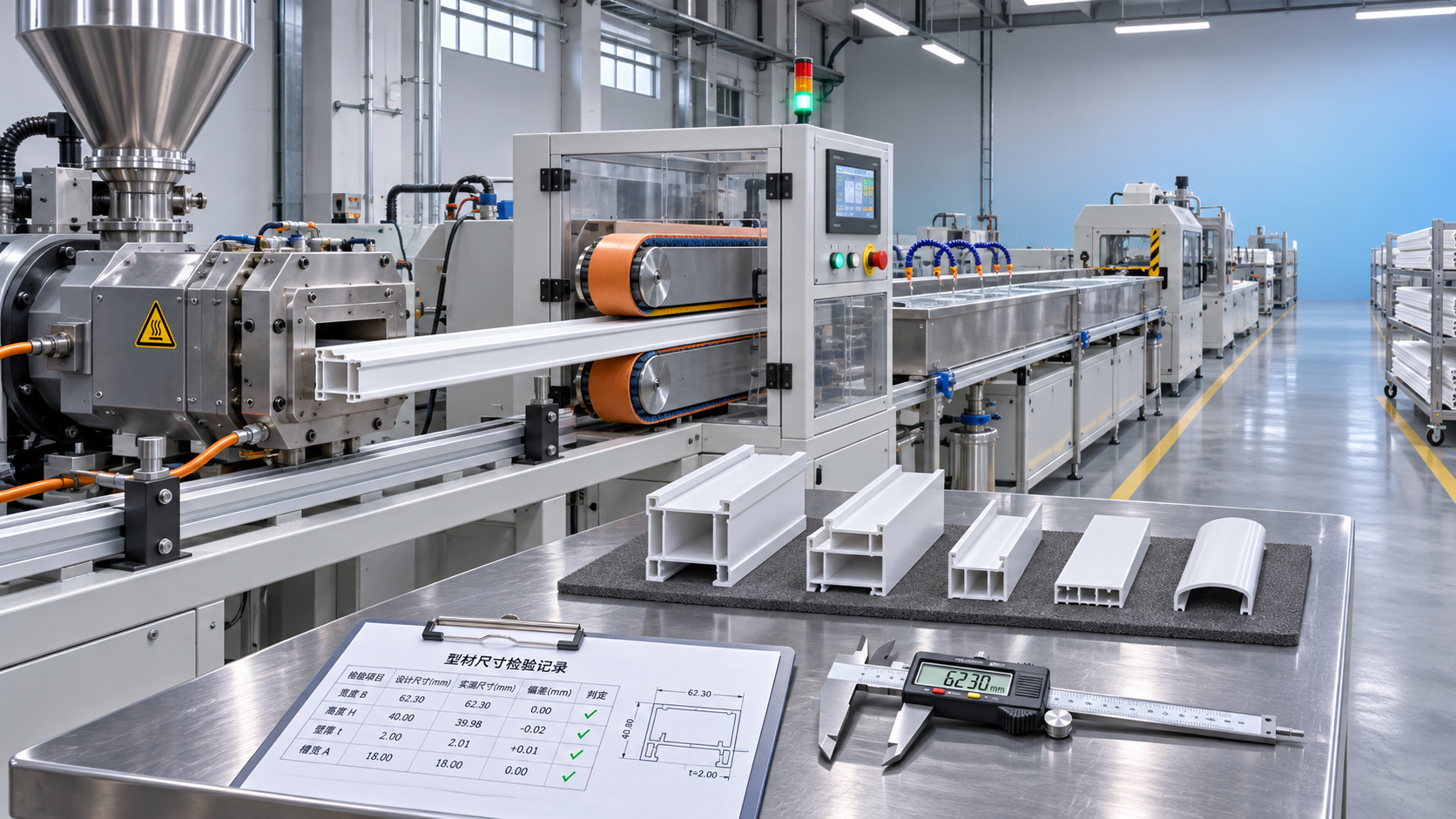
Ask candidates to identify the characteristics they will measure, the measurement methods, the inspection frequency, and the records they can provide. For a profile that clips into another component, the critical feature may be a small section of the cross-section. For film, thickness distribution and appearance may deserve closer attention. For tubing, the relevant checks depend on its use and may include dimensions, visual defects, and specified performance tests.
Then examine what happens when a result falls outside the agreed limit. Who can stop or adjust the line? How is potentially affected material identified and contained? What information will accompany a corrective action? A clear response gives the buyer a better basis for judging operational control than a broad promise of “strict quality inspection.”
Material control deserves the same scrutiny. Ask how the supplier identifies incoming resin, prevents unintended material substitution, and traces finished goods to relevant production and material records. If recycled content is required or permitted, agree on its specification, allowable variation, and the documentation needed to support the claim. If regrind is used, define whether it is allowed, what material it may contain, and how its use will be controlled.
For a new or demanding part, agree on a qualification run before releasing full production. The acceptance plan should define the quantities, inspection characteristics, test methods, and approval authority. Where consistency over a production run matters, take samples at agreed points during that run rather than relying on a single hand-picked specimen. The commercial agreement should also state who pays for tooling adjustments or repeat trials if the first run does not meet the agreed specification.
Capacity: look for available time on the right line
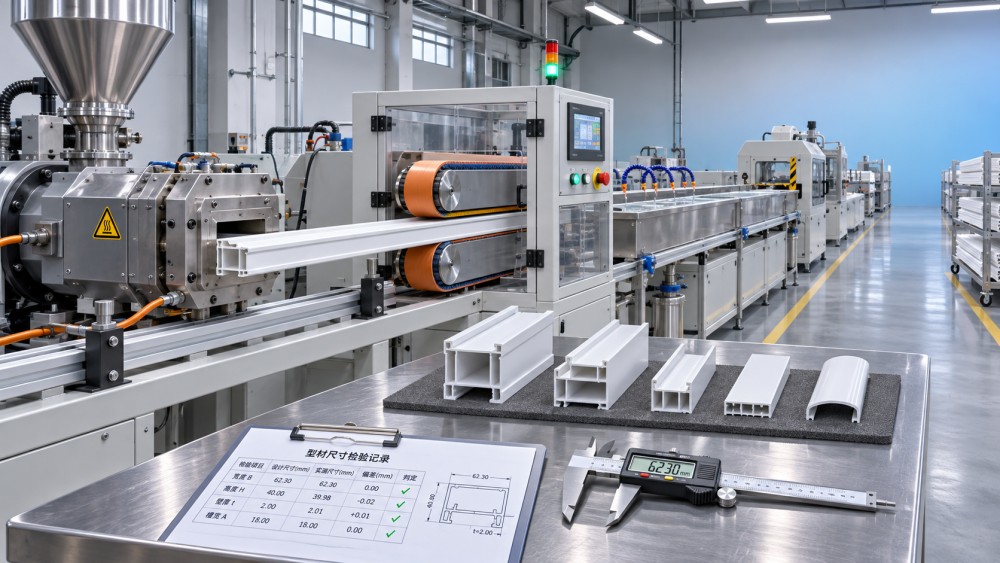
A supplier’s total plant capacity is a weak indicator of its ability to accept a particular order. The relevant question is whether a suitable line, equipped for the material and product, has enough available time when the buyer needs it. Tooling compatibility, downstream equipment, staffing, changeovers, and inspection requirements all affect that answer.
Ask for an assessment based on the proposed part and delivery schedule. A supplier should be able to explain the intended production route, expected output under agreed assumptions, normal scheduling constraints, and whether other equipment could run the part if the primary line were unavailable. A nominal maximum output rate is less useful than a plan that accounts for setup, startup scrap, inspection, and planned downtime.
Demand variation matters as much as annual volume. A supplier may comfortably accommodate a predictable monthly release yet struggle with the same volume concentrated into a short campaign. Share a realistic forecast, including expected peaks, minimum order quantities, and the notice available for changes. In return, ask what volume is covered by the quotation, what capacity is reserved, and how requests above the agreed level will be handled.
Where interruption would stop the buyer’s production, discuss practical recovery options. These may include an agreed safety stock, an alternative qualified line, a second tool, or a qualified second source. Each adds cost or complexity, so the appropriate choice depends on the consequence and duration of a shortage. A second supplier is only a useful contingency if it can access approved tooling, materials, specifications, and qualification data in time to supply acceptable parts.
Lead time: separate launch from repeat orders
Ask suppliers for a timeline with clear starting and ending points. “Six weeks” is difficult to compare unless both parties know whether the clock starts at purchase order, drawing approval, receipt of a deposit, or arrival of customer-supplied material—and whether it ends at dispatch or delivery.
For a new part, the timeline may include design review, die manufacture, material procurement, production scheduling, trial runs, sample testing, approval, production, and transport. Some activities can run in parallel; others depend on a buyer decision. Tooling modifications or a revised material specification can move the production date even when the supplier has open line capacity.
Repeat-order lead time should be quoted separately. It may be shorter once the tool and process are approved, but it still depends on resin availability, order size, scheduling, finishing, and freight. If the supplier proposes holding material or finished stock, define ownership, replenishment triggers, storage conditions, and liability for obsolete inventory. A stocking arrangement can improve responsiveness, but the buyer should see its cost and commitments in the commercial terms.
Delivery performance should be assessed against the date and quantity actually committed, with a shared definition of what counts as on time and in full. Ask how delays are communicated, how far in advance the supplier can flag a constraint, and what recovery options are available. Frequent expediting may protect an individual shipment while concealing an unrealistic standard lead time.
Compare the landed cost and the commitments behind it
Put competing offers on the same basis before ranking them. A low price per meter, kilogram, or part may exclude cutting, packaging, inspection, freight, or the cost of a minimum production run. Yield loss at the buyer’s facility also matters when small variations in dimensions or appearance create scrap.
Raw material pricing can be a significant source of variation. If a quote permits adjustments, define the trigger, calculation method, notice period, and review frequency. The aim is to make future changes understandable to both parties, rather than discovering after award that suppliers interpreted the pricing period differently.
Tooling terms warrant particular attention. Paying for a die does not automatically resolve who owns the design, where it will be kept, who maintains it, or whether it can be transferred. Put those points in writing, along with responsibility for damage and for changes requested after approval. Where the supplier owns the tool, understand the implications for continuity and switching costs.
Make the award conditional on evidence
A practical comparison starts by eliminating suppliers that cannot meet essential material, quality, capacity, or delivery requirements. Among the remaining candidates, weigh price against the strength of their production plan and the cost of managing residual risk. A higher quotation may be justified by demonstrably better fit or a delivery arrangement that reduces inventory exposure; it should still be challenged where the additional service is unnecessary.
Before placing the full order, align the drawing revision, approved material, qualification results, inspection plan, delivery schedule, and escalation contacts. Record which changes require advance approval, including changes to resin grade, tooling, production site, or process where these could affect the part. For a new supplier, an initial production order with agreed acceptance criteria can provide a more meaningful basis for a longer commitment.
The purchasing decision is strongest when the supplier can explain not only how it will meet the first shipment, but also how it will keep the part within specification and the schedule intact when demand, material supply, or production conditions change.
Have questions about this sector analysis, or seeking best practices specific to your niche? Drop us a line below and let the senior consultants at PFRS assist you.
We respect your privacy. Your information is strictly confidential.
Related News
- 00
0000-00
Choosing a Plastic Waste Washing Line: Material, Capacity and Water Use - 00
0000-00
Choosing High-Capacity Recycling Machinery: Throughput and Material Factors - 00
0000-00
What Is Extrusion Blow Molding? Process, Materials, and Applications - 00
0000-00
Choosing a Plastic Extrusion Supplier: Quality, Capacity and Lead Times - 00
0000-00
Plastics Manufacturing Digitalization: Reducing Downtime and Scrap
Weekly Insights
Stay ahead with our curated technology reports delivered every Monday.
Related News
 Ms. Elena RodriguezChoosing a Plastic Extrusion Supplier: Quality, Capacity and Lead TimesChoosing a plastic extrusion supplier? Learn how to assess quality, production capacity, lead times and total costs to make a confident sourcing decision.Nov 08, 2026
 Ms. Elena RodriguezAutomated Plastic Recycling Systems: When Do Labor Savings Justify the Cost?Do automated plastic recycling systems pay off? Learn how to calculate real labor savings, operating costs, and payback to make a smarter investment.Oct 29, 2026
 Ms. Elena RodriguezBuying Plastic Recycling Equipment in South Africa: Costs and Local SupportFind plastic recycling equipment South Africa businesses can rely on. Compare total costs, local support and supplier checks to invest with confidence.Oct 26, 2026
 Ms. Elena RodriguezVirgin Resin Suppliers: How to Verify Traceability and Batch ConsistencyEvaluate virgin resin suppliers with practical checks for traceability, CoA accuracy, and batch consistency. Learn how to reduce scrap, avoid sourcing risks, and buy with confidence.Oct 24, 2026
 Ms. Elena RodriguezEnergy-Saving Plastics Machinery: How to Calculate Payback Before BuyingEvaluate energy saving plastics machinery before buying. Learn to calculate payback using verified energy savings, installed costs, and production data to invest with confidence.Oct 23, 2026
 Ms. Elena RodriguezCircular Manufacturing Roadmap: From Waste Audits to Material RecoveryBuild a circular manufacturing roadmap from waste audits to material recovery. Explore practical steps to qualify recycled materials, select equipment, and validate ROI before investing.Oct 20, 2026
 Ms. Elena RodriguezInjection Molding System Costs: Machine, Molds, Automation, and InstallationCompare injection molding systems price proposals with confidence. Uncover machine, mold, automation, and installation costs to avoid hidden expenses and choose a production-ready cell.Oct 17, 2026
 Ms. Elena RodriguezHow Does Feedstock Moisture Affect Plastic Pelletizing Energy Use?How does feedstock moisture affect plastic pelletizing energy use? Discover how smarter drying and dewatering can cut kWh/kg, protect pellet quality, and boost output.Oct 22, 2026
 Ms. Elena RodriguezWaste Tyre Collection and Sorting: On-Site vs Outsourced Shredding CostsCompare waste tyre collection and sorting unit cost for on-site vs outsourced shredding. Uncover hidden expenses, assess break-even volumes and choose the most cost-effective route.Oct 26, 2026
 Ms. Elena RodriguezSmart Factory Costs for Plastics: Estimating ROI for Automation ProjectsSmart factory for plastics cost: learn how to estimate automation ROI, uncover hidden integration expenses, reduce scrap, and build a phased investment plan.Oct 10, 2026
 Ms. Elena RodriguezHow to Evaluate a Packaging Molding Equipment Supplier for High-Volume ProductionChoose a packaging molding equipment supplier with confidence. Learn how to assess throughput stability, tooling, recycled-material capability, lifecycle cost, and service support for high-volume production.Oct 09, 2026
 Ms. Elena RodriguezProcurement Records to Request Before Buying a Used Tyre ShredderUsed tyre shredder for sale? Request maintenance, operating, safety, and parts records to reduce risk, verify condition, and buy with confidence.Oct 16, 2026
 Ms. Elena RodriguezHow to Select Packaging Molding Equipment for High-Volume Production LinesPackaging molding equipment selection guide for high-volume lines: compare processes, throughput, materials, automation, and energy to achieve stable, cost-effective output.Oct 04, 2026
 Ms. Elena RodriguezHow to Evaluate Plastic Recycling Machinery for UAE Heat, Feedstock, and Output NeedsPlastic recycling machinery UAE buyers: evaluate heat resilience, feedstock handling, cooling, pellet quality, energy use, and lifecycle cost for reliable output.Sep 28, 2026
 Ms. Elena RodriguezGerman Extrusion Equipment Suppliers: Comparing Service, Lead Times, and Lifecycle CostExtrusion equipment Germany suppliers compared: evaluate service coverage, credible lead times, spare-parts access, and lifecycle cost to select a reliable, future-ready production partner.Sep 22, 2026
 Ms. Elena RodriguezWhat Should You Check Before Buying a Used Plastic Recycling Line?What should I check before buying a used plastic recycling line? Explore feedstock fit, wear, trials, utilities, controls, and restoration costs before you invest.Sep 26, 2026
 Ms. Elena RodriguezHow to Compare Pelletizing Lines by Energy Use per TonHow do I compare pelletizing lines by kWh per ton? Learn to measure total energy, verify saleable output, and select a cost-efficient line.Sep 23, 2026
 Ms. Elena RodriguezTyre Cutter Blade Wear: When Capacity Loss Needs Inspectionшинорез blade wear can quietly reduce tyre-cutting capacity. Learn the warning signs, inspection triggers, and maintenance actions that protect output and uptime.Sep 28, 2026
 Ms. Elena RodriguezIn-House Recycling for Factory Scrap: How to Reduce Material Waste and Disposal CostsIn house recycling for factory scrap helps manufacturers cut material waste, reduce disposal costs, and create controlled, quality-focused reuse loops.Sep 07, 2026
 Ms. Elena RodriguezHow Recyclable Packaging Manufacturing Balances Material Recovery and Production CostRecyclable packaging manufacturing: discover how smarter design, feedstock control, and process optimization reduce recovery costs while improving quality and yield.Sep 04, 2026