Choosing Polymer Processing Equipment in India: Capacity and Supplier Criteria




Choosing polymer processing equipment India suppliers offer requires more than comparing machine prices. Procurement teams must match production capacity to material properties, product specifications, and expected demand.
Energy use, maintenance, lifecycle costs, supplier reliability, and local service support can be as important as technical performance. This guide explains how to assess them.
Start with the saleable output required from a defined material and product. Then compare suppliers against the same operating conditions, acceptance tests, and total cost assumptions.
How much production capacity do you actually need?
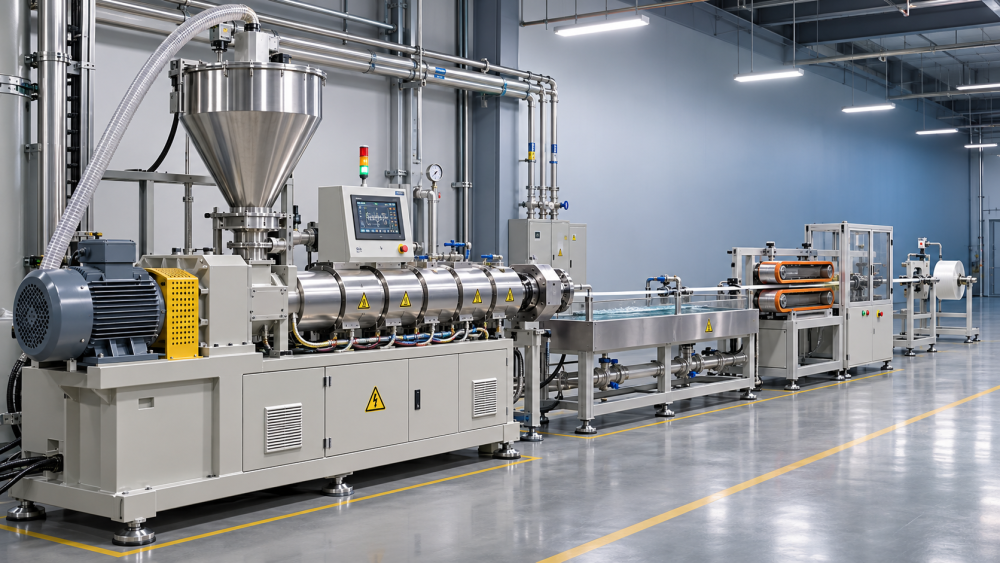
Size equipment around the quantity customers will accept, not the maximum output shown in a brochure. Establish annual demand, product mix, quality requirements, and delivery commitments first.
Next, calculate planned operating hours after scheduled maintenance, holidays, changeovers, and other known stoppages. Use a realistic estimate of additional downtime based on comparable operations.
For a preliminary estimate, divide annual saleable demand by planned operating hours, expected uptime, and expected quality yield. Express uptime and yield as decimals.
For example, 1,000 tonnes per year over 6,000 planned hours, at 85% uptime and 95% yield, requires approximately 206 kilograms of gross output per operating hour.
The calculation is 1,000,000 ÷ (6,000 × 0.85 × 0.95). It assumes gross output during operating time and excludes saleable demand already covered by other machines.
Ask suppliers to demonstrate the required output using your material and product specifications. A machine rated above 206 kilograms per hour may still fall short under actual conditions.
Test a demand range as well as the base case. If growth is uncertain, compare a larger machine with a modular line or a planned second machine.
Oversizing can increase purchase price, energy consumption at low loads, and floor-space requirements. Undersizing can create overtime, missed deliveries, and dependence on expensive subcontracting.
Which machine specifications determine usable capacity?
Different polymer processes need different sizing methods. Provide suppliers with drawings, material grades, tolerances, and annual volumes so that each proposal addresses the same production problem.
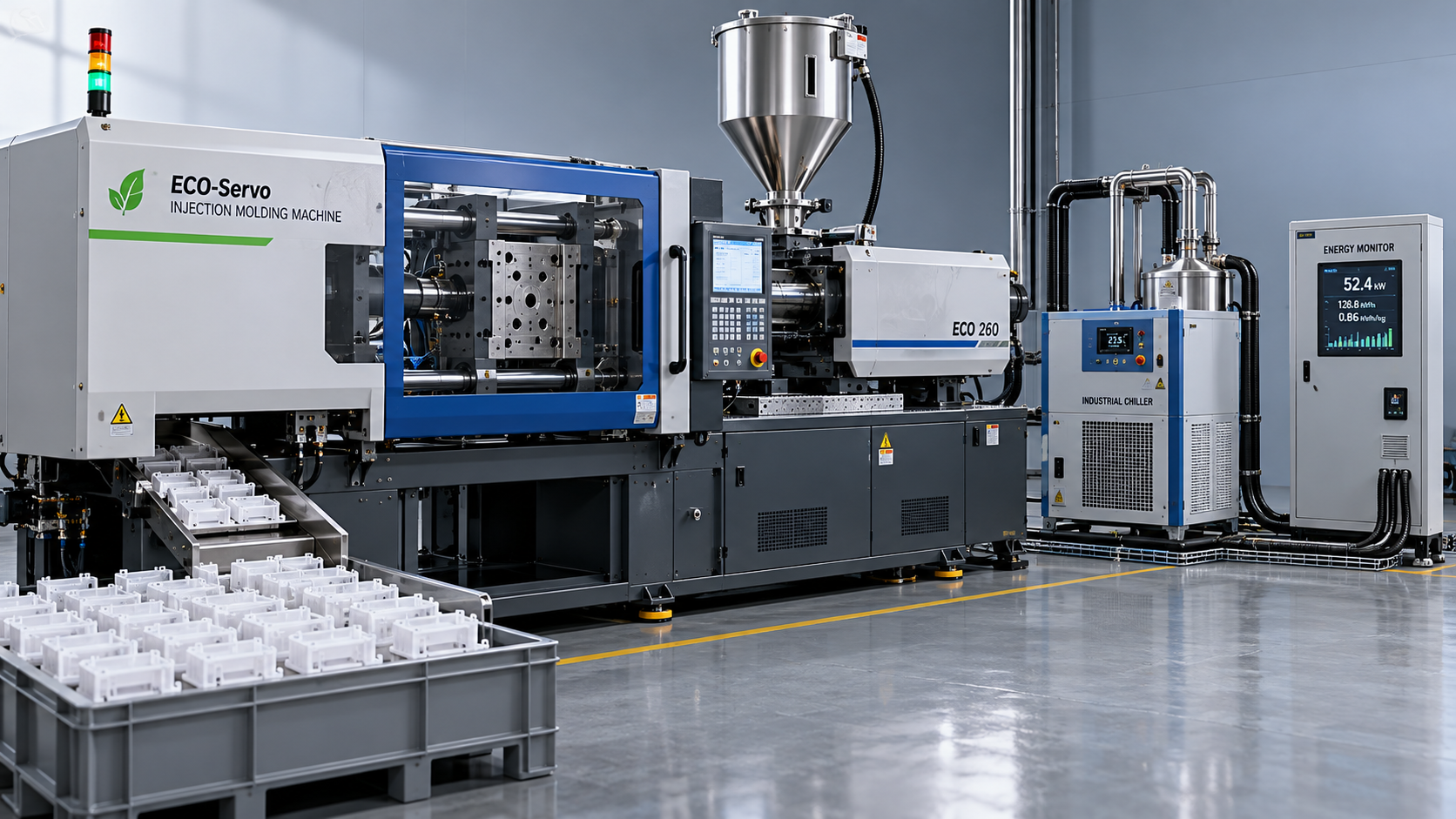
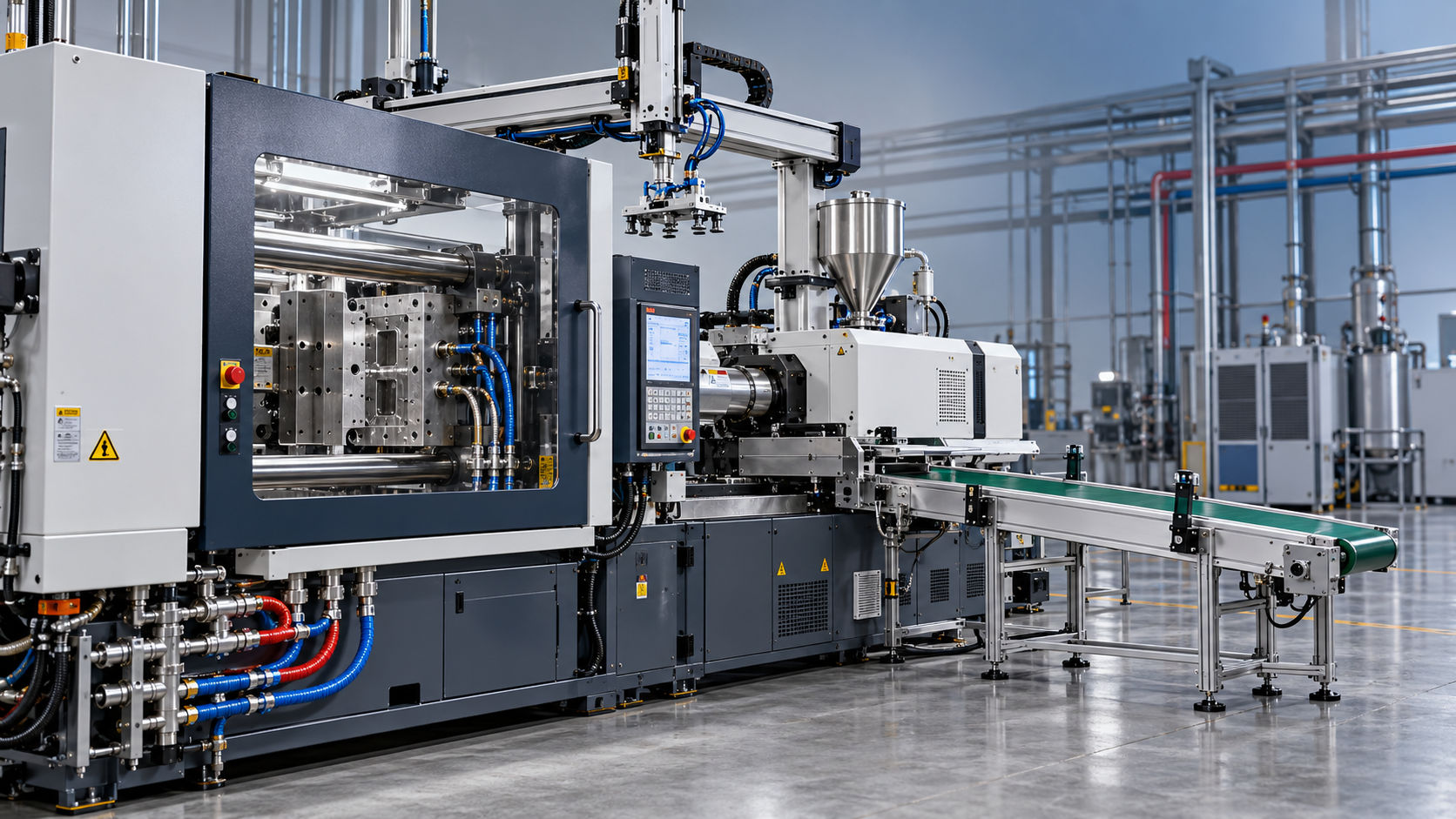
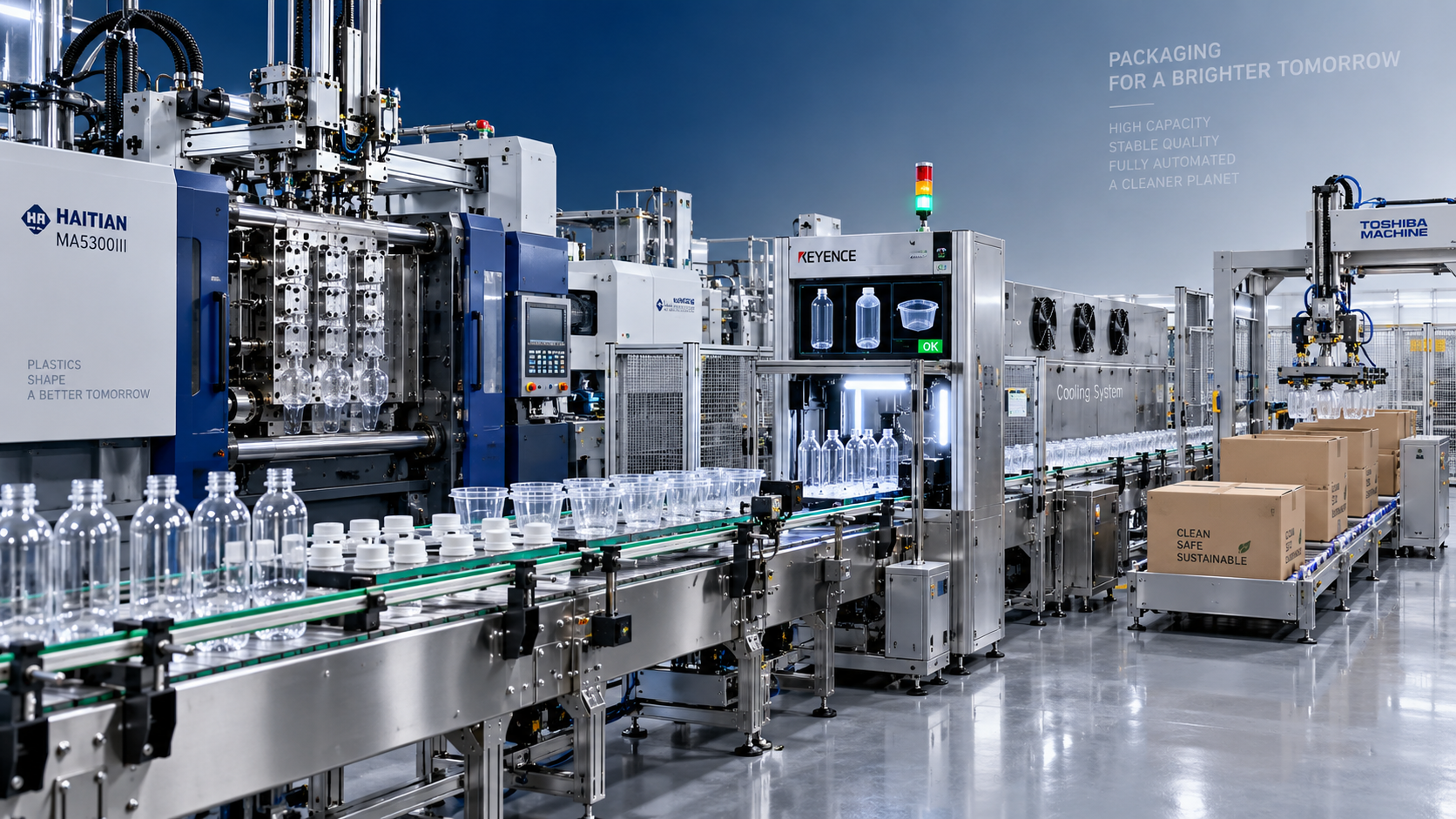
For injection molding, estimate output from acceptable parts per cycle and a realistic cycle time. Include cavities that may be unavailable and the effect of rejects.
For example, four acceptable parts every 30 seconds produce 480 parts per operating hour before rejects. Multiply by expected uptime and quality yield for planning.
Check shot size against total part and runner weight, and assess clamp force against projected area and expected cavity pressure. Supplier simulations should use the actual geometry.
Cycle time depends on material, wall thickness, cooling, mold design, and automation. A faster injection unit cannot compensate for a cooling bottleneck in the mold.
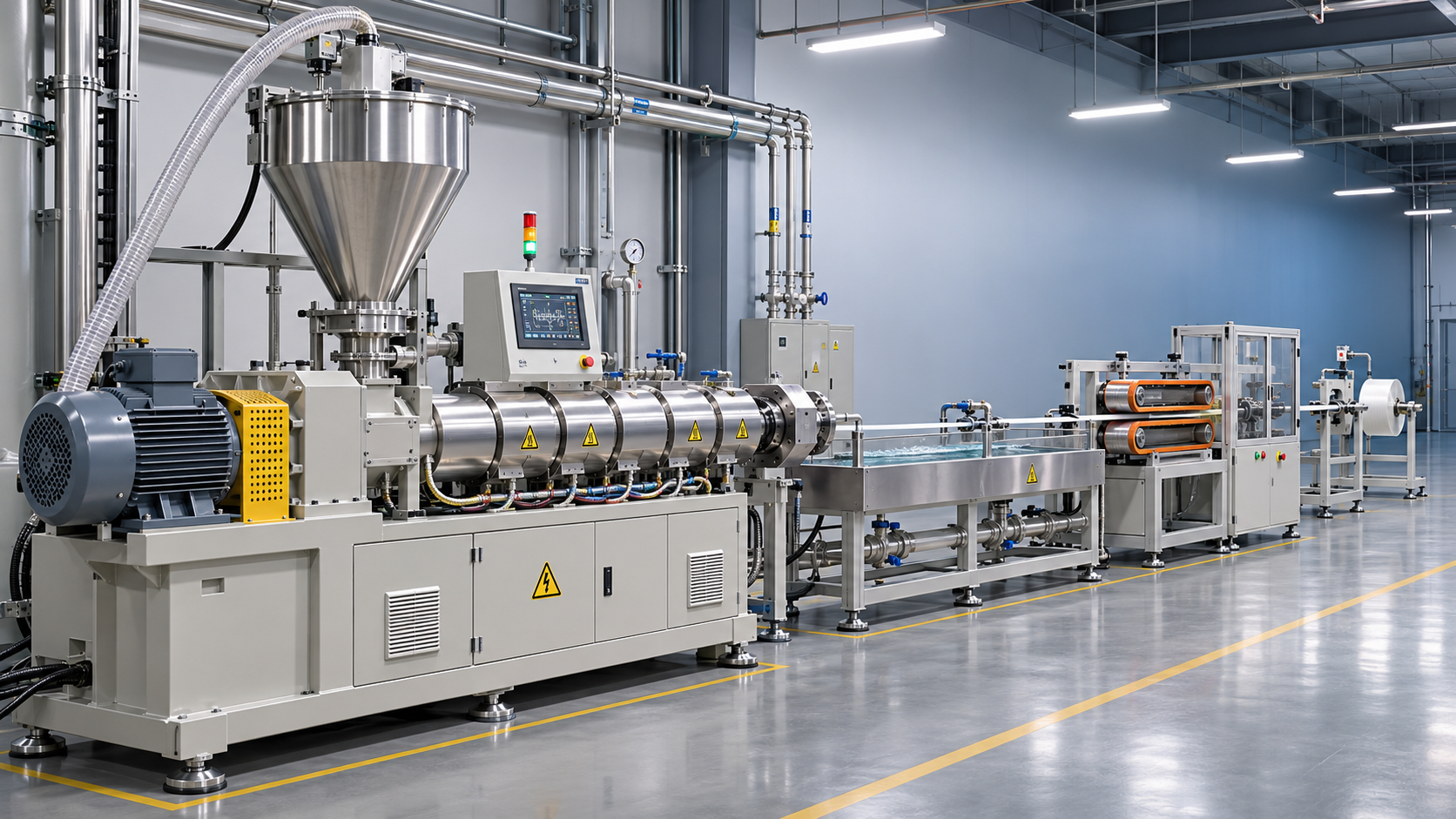
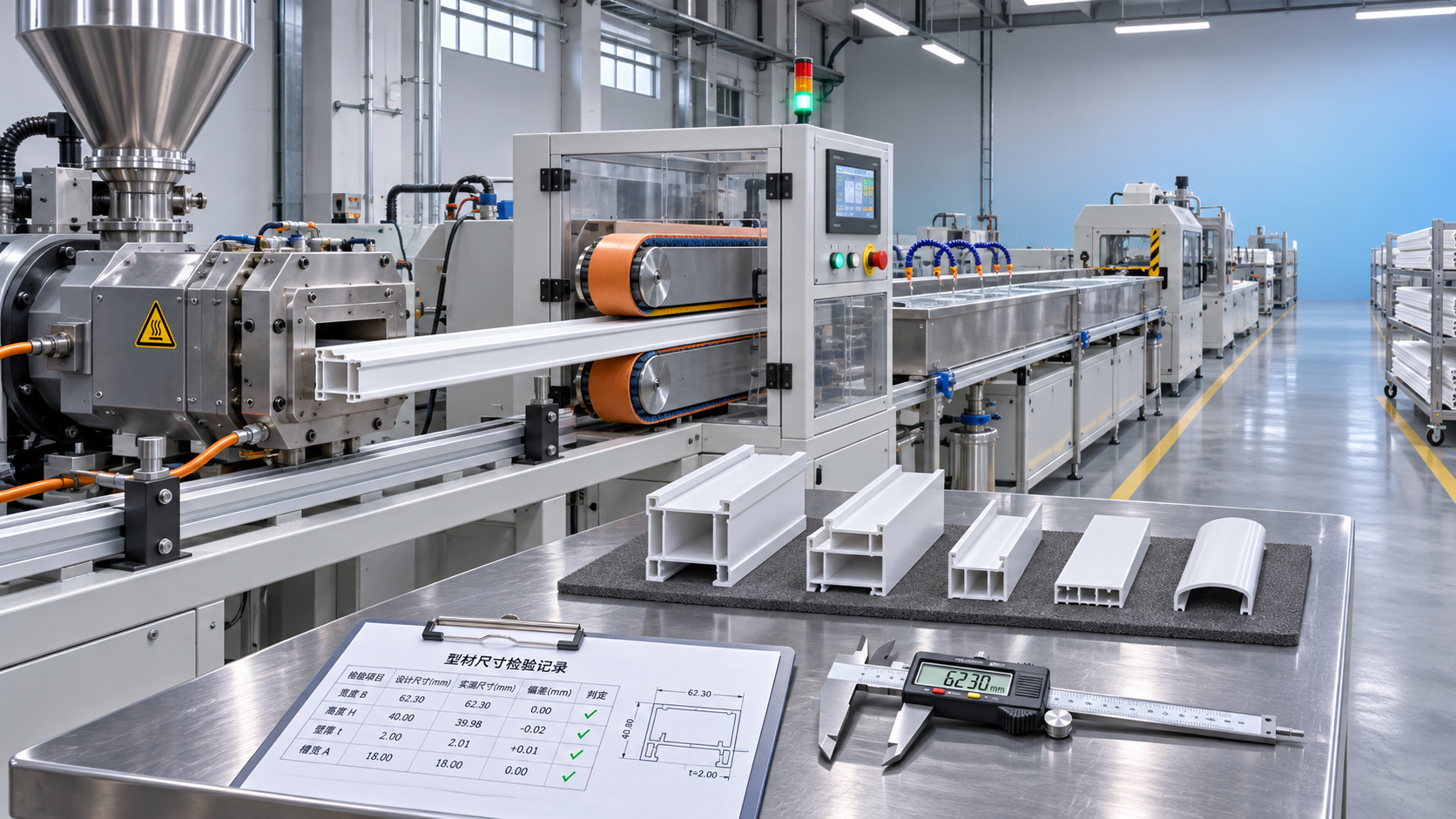
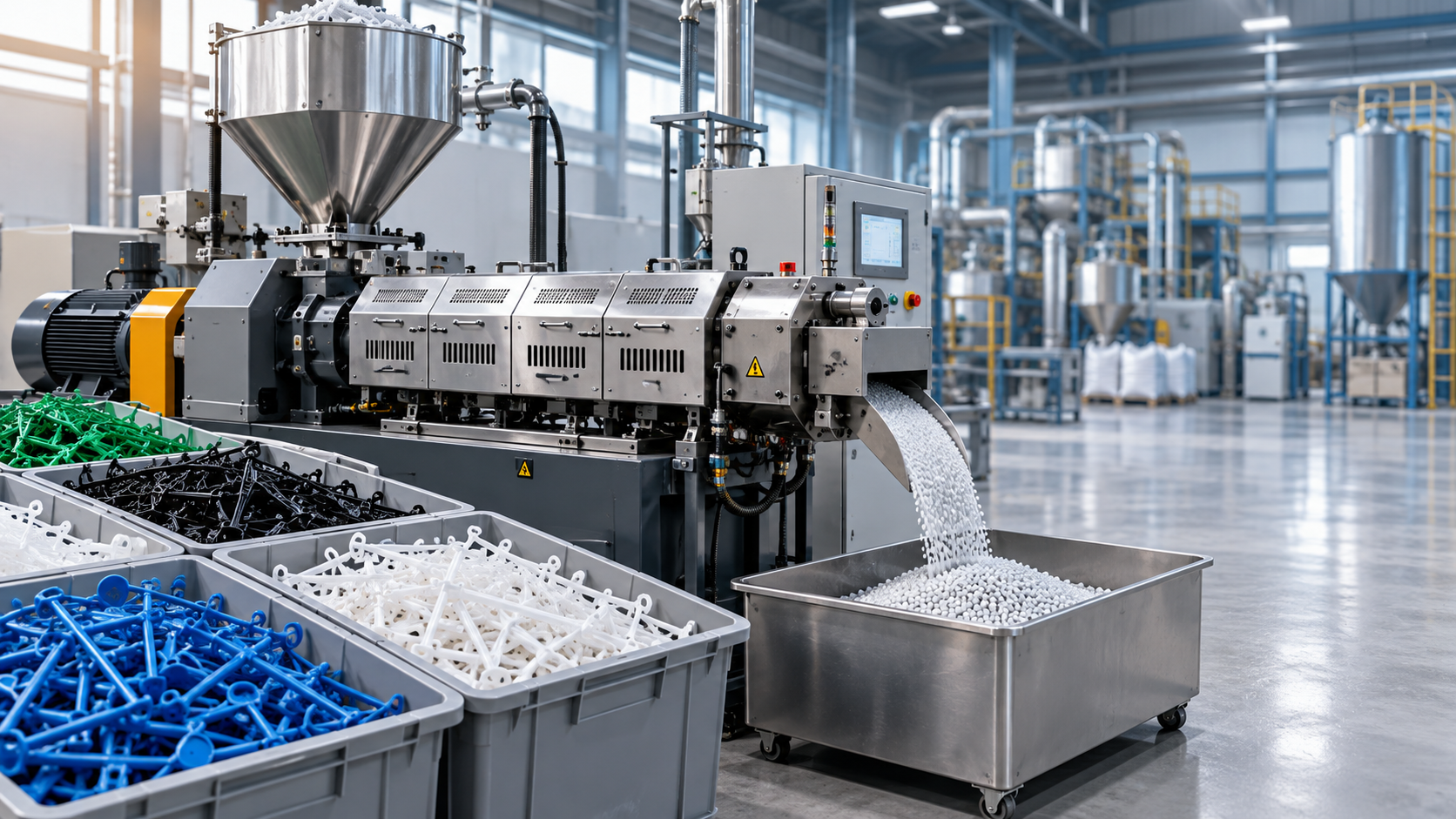
For extrusion, specify material formulation, target throughput, product dimensions, and permissible variation. Check screw design, motor torque, melt pressure, cooling, and downstream take-off capacity together.
A screw designed for one polymer or filler level may deliver a different output with another. Request a throughput and quality range for each important formulation.
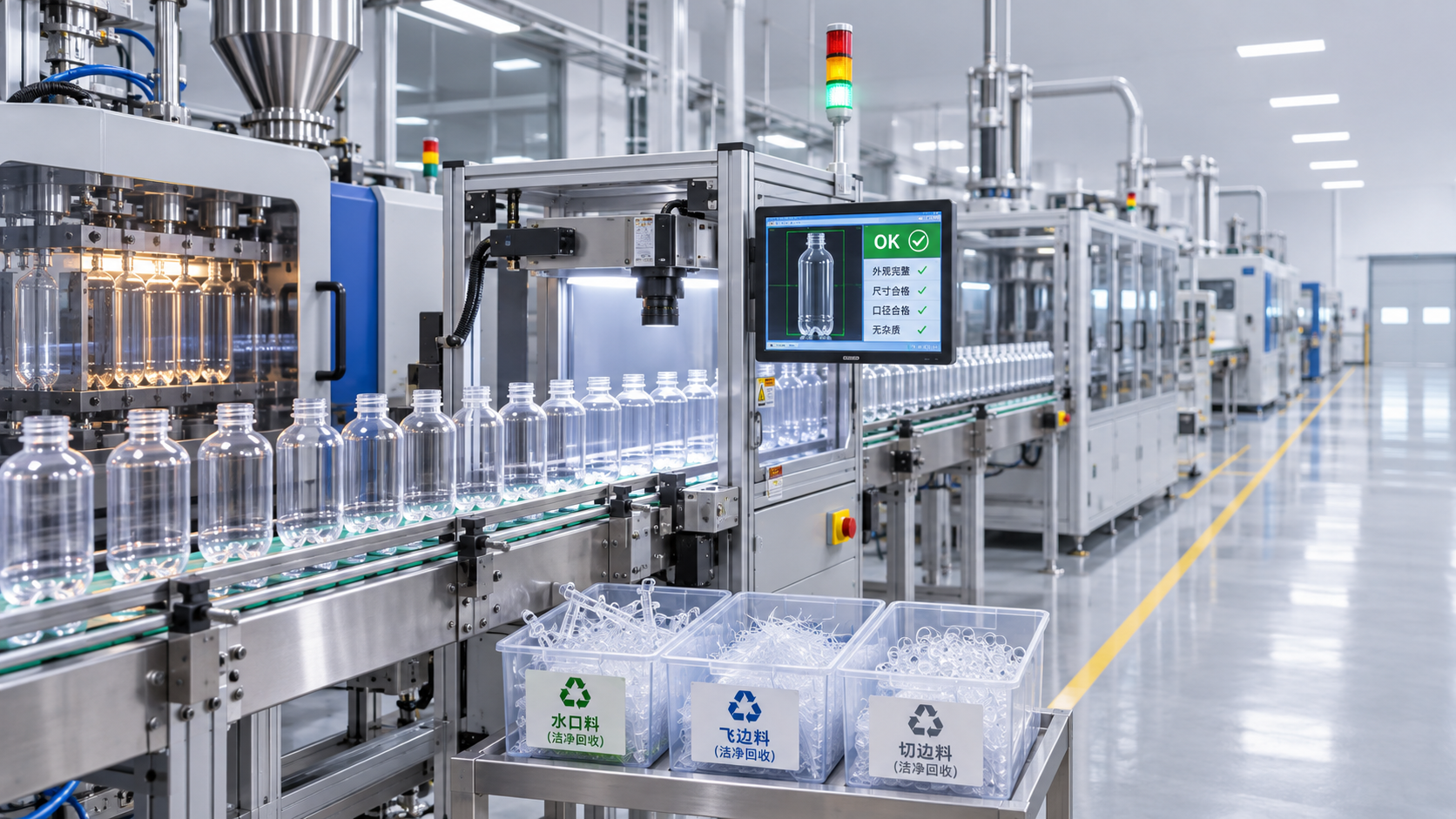
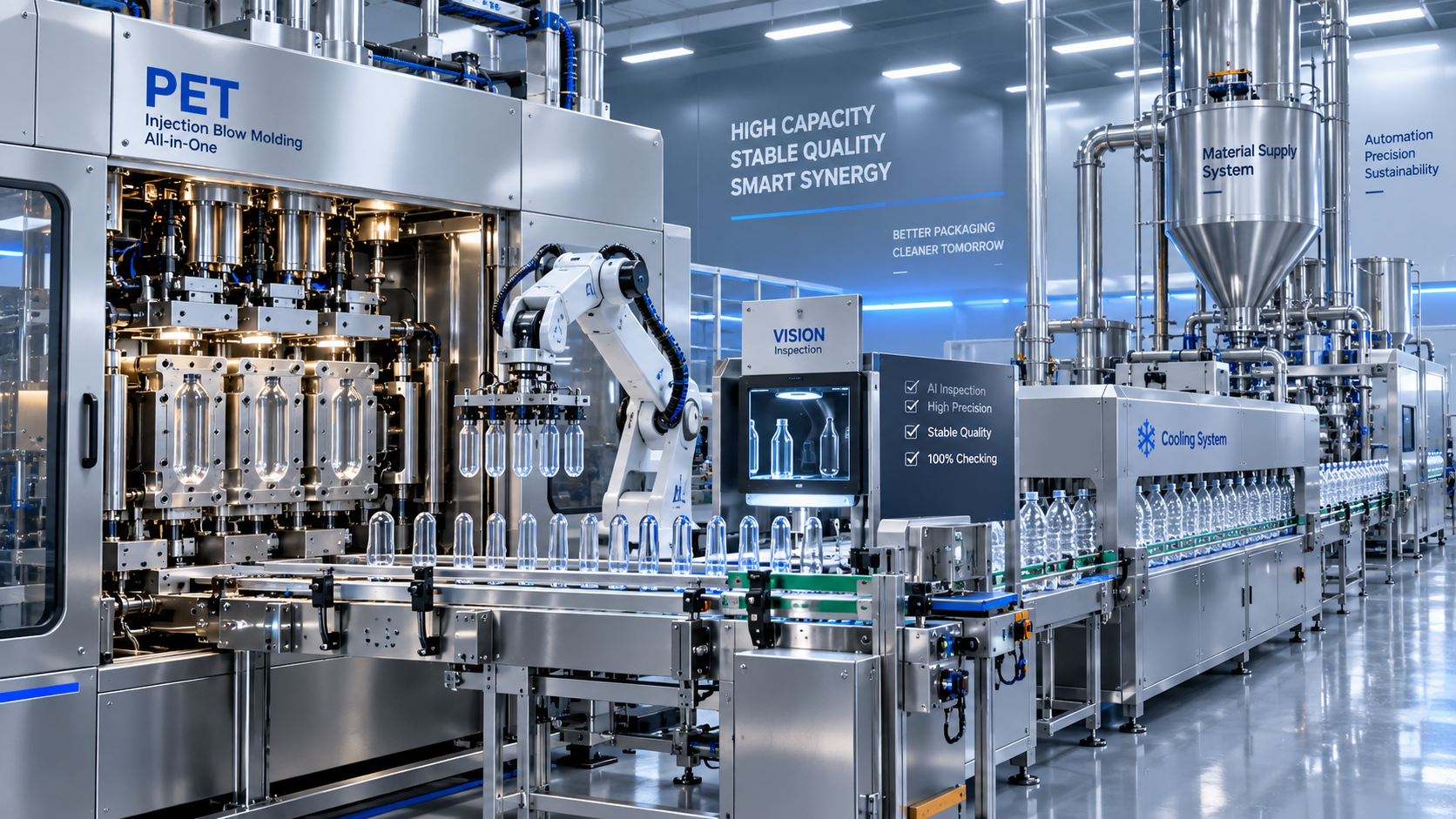
For blow molding, compare saleable containers per hour at the required weight, dimensions, and leak-test standard. Include mold changes, trimming losses, and downstream handling constraints.
For rubber vulcanization, assess press force, platen dimensions, heating uniformity, and cure time. The mold loading method and cooling or post-cure requirements also affect throughput.
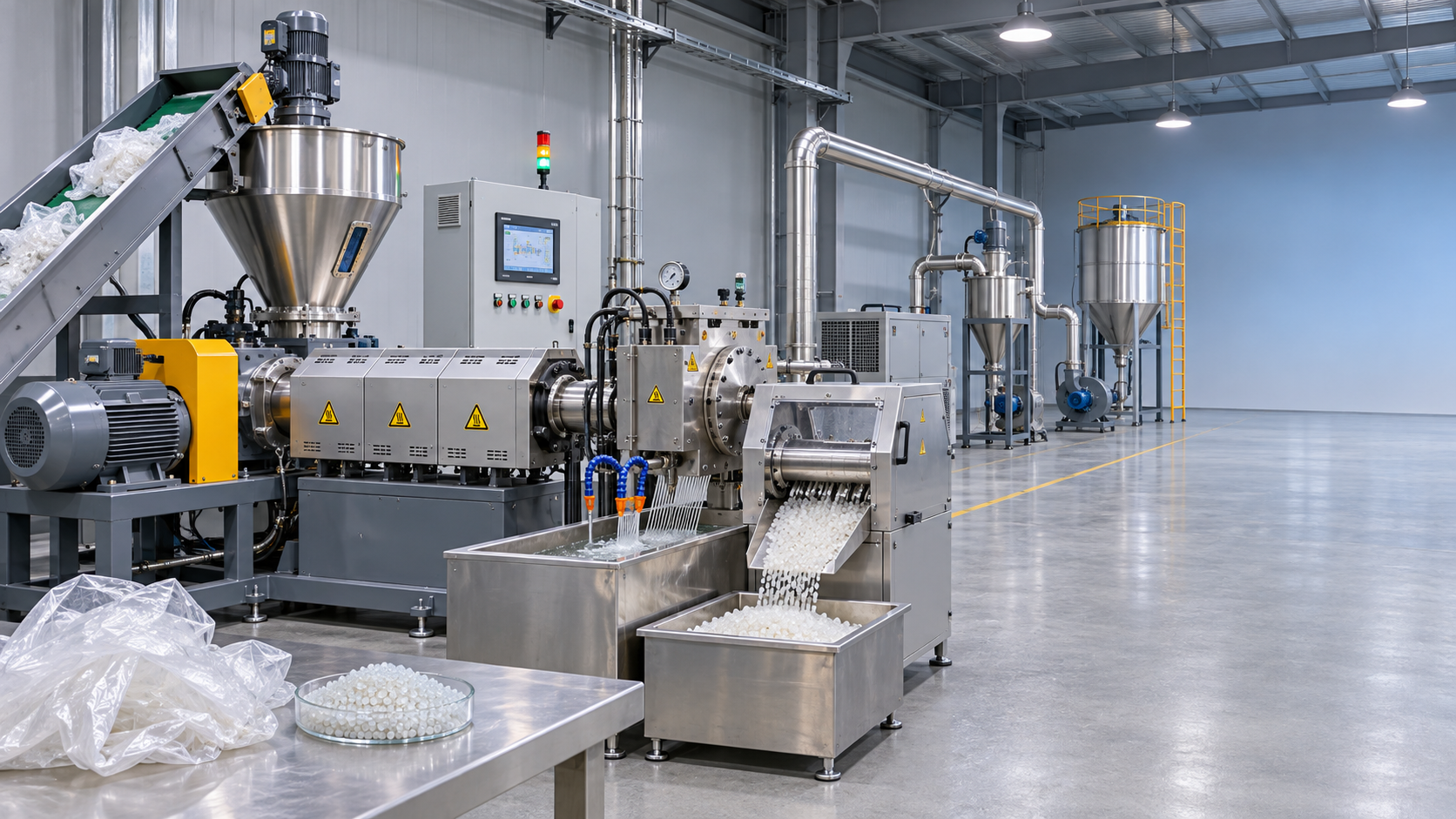
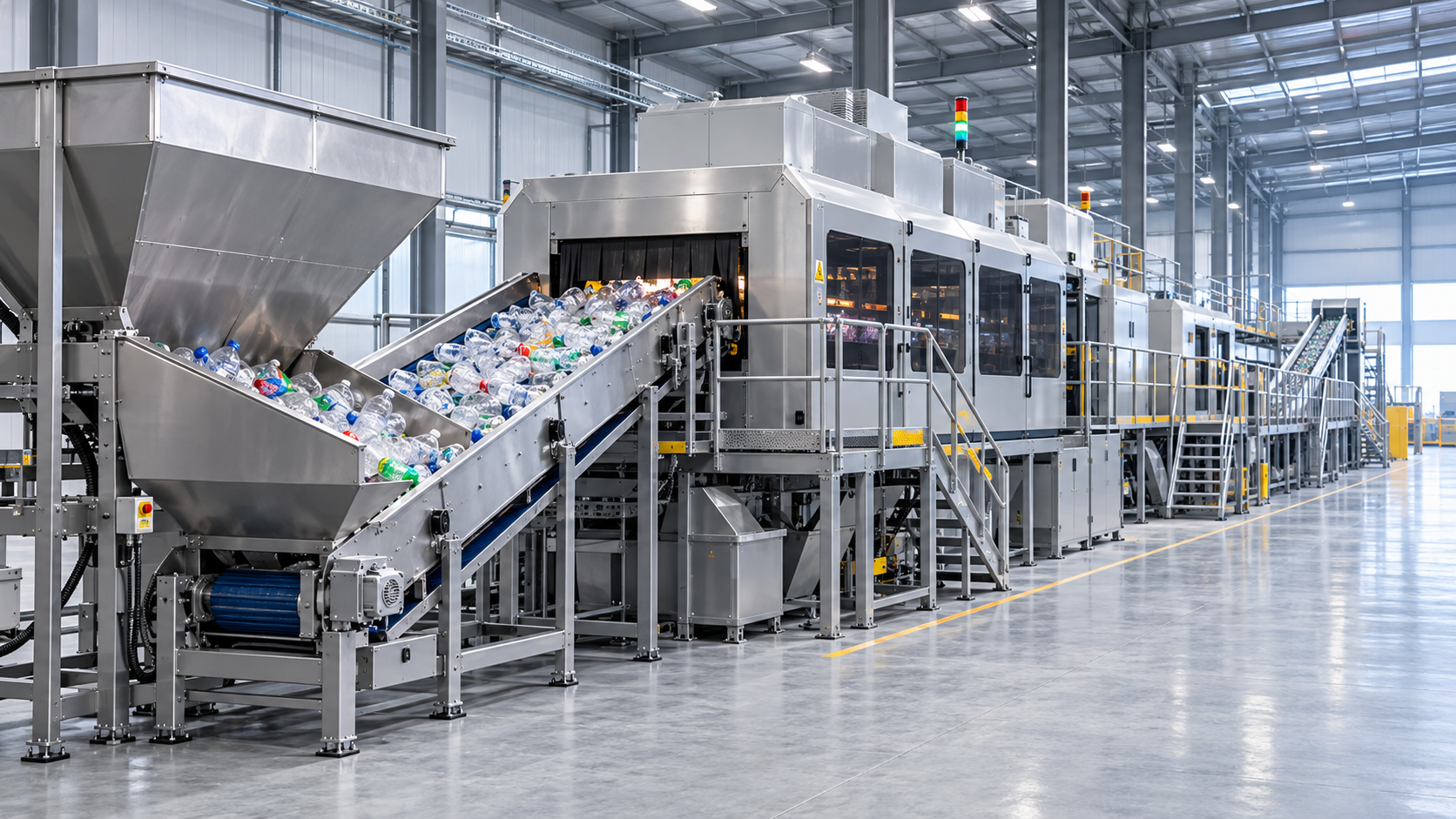
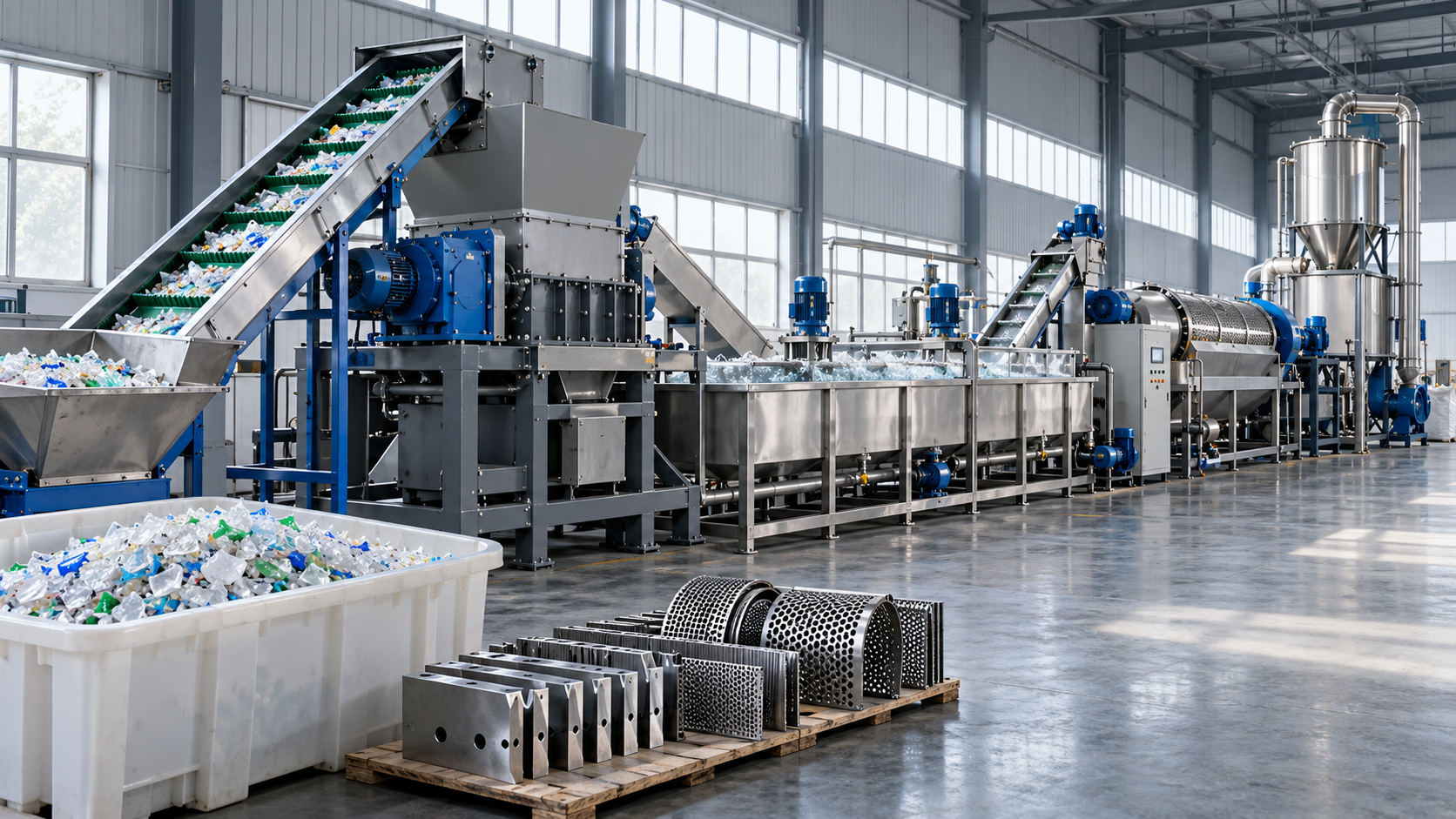
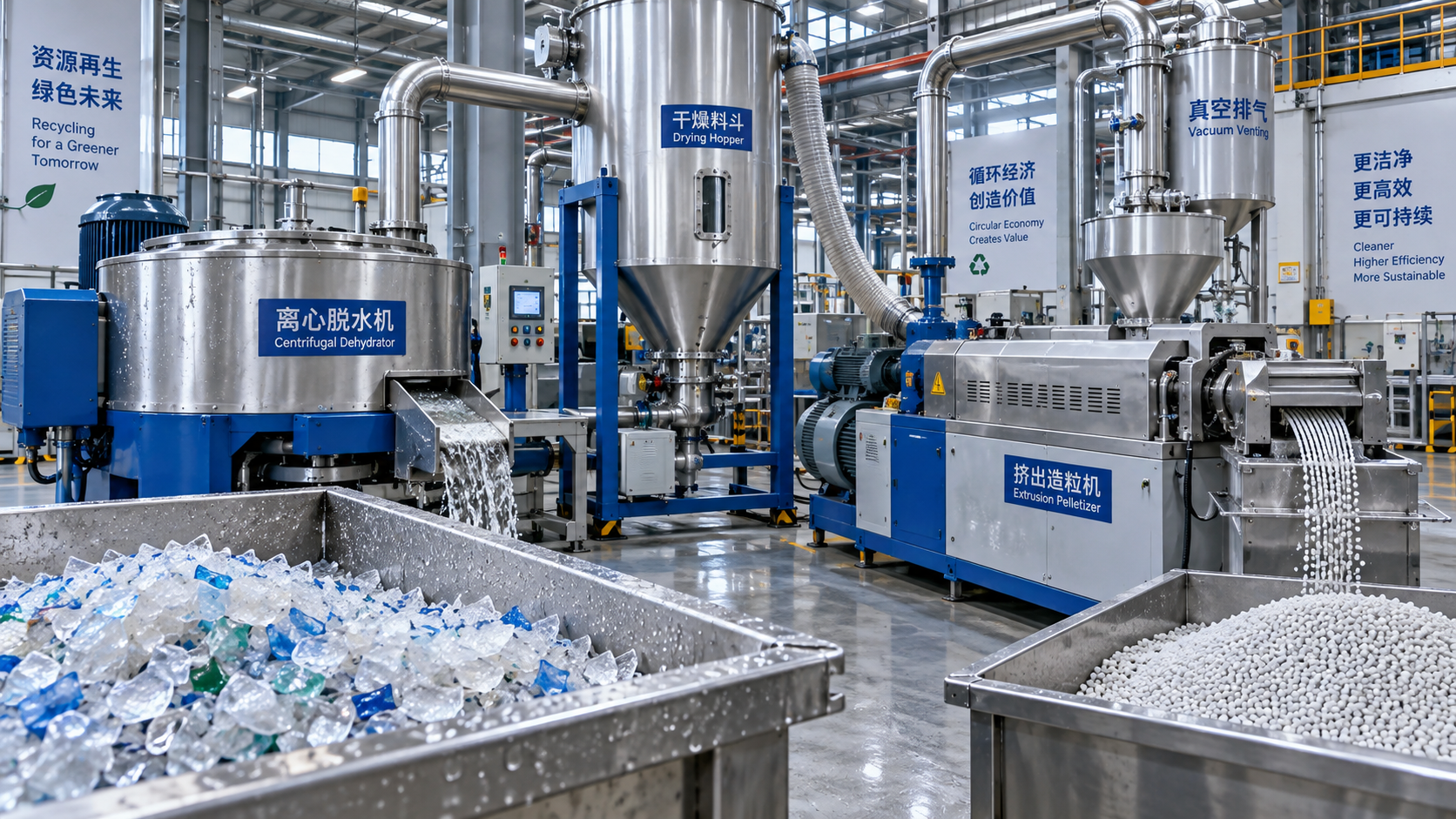
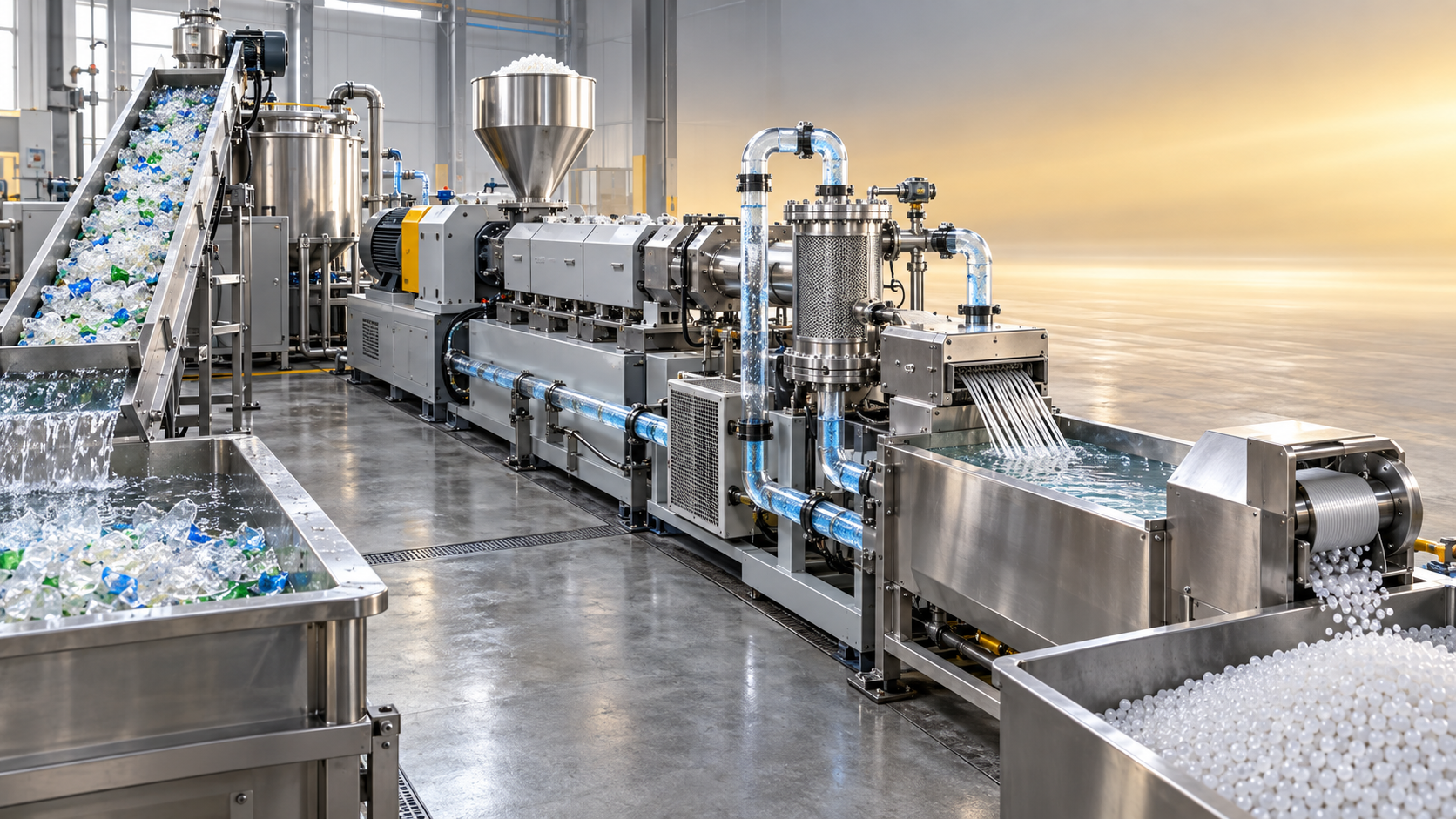
For recycling lines, distinguish incoming feed rate from washed flakes or saleable pellets leaving the system. Moisture, contamination, sorting losses, and filtration changes can substantially reduce yield.
Define the feedstock by polymer, contamination, moisture, and expected variability. Ask suppliers to specify output quality, filtration requirements, and the basis for any recovery claim.
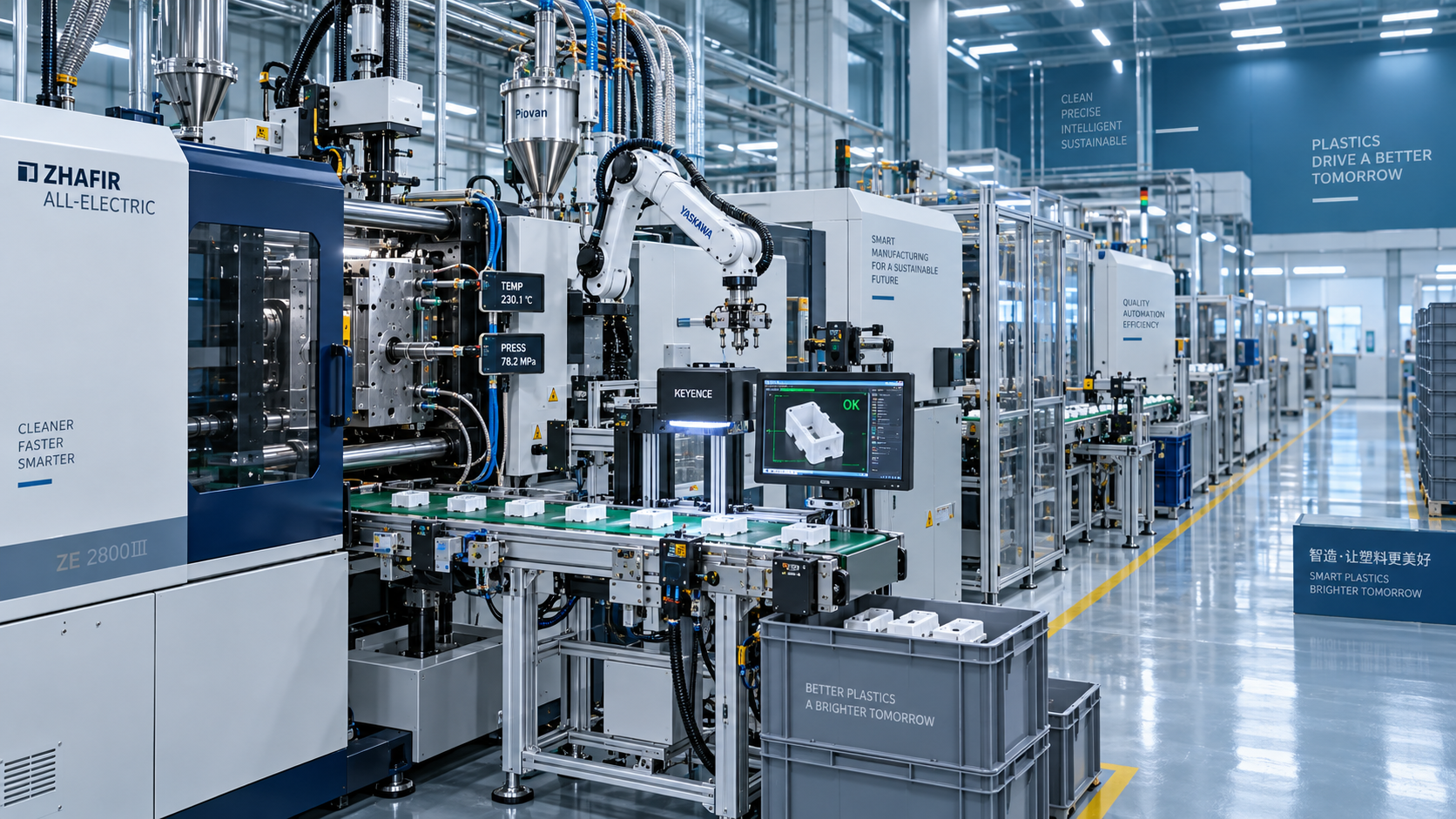
Whether the process is molding, extrusion, or recycling, check upstream feeding and downstream equipment. The slowest practical stage determines the line’s sustainable output.
How should procurement compare machine costs?
Build a common lifecycle cost model before evaluating bids. Use the same annual volume, energy tariff, operating hours, maintenance assumptions, and planning period for every proposal.
Include the machine, molds or dies, auxiliaries, freight, installation, commissioning, training, and initial spare parts. Identify taxes and duties separately according to the proposed transaction.
For imported equipment, request the delivery terms, currency, payment schedule, and responsibility for customs clearance. Confirm applicable duties and taxes with your logistics and tax advisers.
Estimate electricity using measured or substantiated consumption at the intended operating point. Include chillers, compressors, dryers, conveyors, and other auxiliaries when comparing complete lines.
Annual electricity cost can be estimated as average kilowatts multiplied by annual operating hours and the applicable electricity price. Adjust for relevant demand charges where appropriate.
Also calculate material losses, labor, consumables, routine servicing, and planned replacement parts. Recycling systems may require a separate allowance for screens, blades, washing water, and wastewater treatment.
Compare proposals using cost per saleable kilogram or acceptable part. This connects machine spending to output and exposes the financial effect of scrap and lower uptime.
For example, if a line costs ₹12,000 per operating hour and produces 200 saleable kilograms, its operating cost is ₹60 per kilogram before excluded costs.
State what that hourly figure includes, such as labor, electricity, and maintenance. Add depreciation or financing consistently if the comparison requires a fuller ownership cost.
Use sensitivity checks for electricity price, output, reject rate, and downtime. A higher-priced machine earns its premium only if plausible savings or added capacity justify it.
What should you check in an India-based supplier?
Assess the supplier’s experience with your process, polymer, and product requirements. Ask for relevant installations of comparable capacity, including references you can contact with permission.
Discuss actual operating conditions with references: material changes, recurring faults, response times, spare-part availability, and whether promised output was sustained after commissioning.
Confirm who manufactures the machine, control system, screw or injection unit, and critical auxiliaries. Establish which party is accountable for integration and warranty resolution.
For an overseas manufacturer, identify its Indian service organization and escalation path. Verify whether local technicians can diagnose controls, perform repairs, and obtain factory support.
Ask for the location of service personnel and critical spares relative to your plant. Request written response targets, coverage hours, exclusions, and emergency contact arrangements.
A nearby office alone does not guarantee effective service. Check technician training, installed-base workload, remote diagnostic capability, and the availability of replacement components for your configuration.
Request a recommended spare-parts list with prices and lead times. Separate routine consumables from long-lead components whose failure could stop production for extended periods.
Review the supplier’s financial stability and ability to support the equipment over its intended life. For critical purchases, procurement may seek audited information or other suitable evidence.
Compare service contracts on scope as well as price. Clarify preventive visits, travel charges, software support, calibration, and whether replacement parts are included or billed separately.
How can you verify performance before accepting the equipment?
Turn important claims into measurable contract requirements. Define the material, tooling, operating conditions, test duration, output rate, quality criteria, and method for recording results.
A factory acceptance test can reveal integration problems before shipment. Where practical, run representative material and tooling, and observe stable production rather than a brief demonstration.
If your final mold, die, or feedstock is unavailable at the factory, document the substitute and its limitations. Reserve final performance confirmation for the site acceptance test.
At your plant, verify output, product quality, utility consumption, safety functions, and operator controls under agreed conditions. Include auxiliaries and downstream equipment in the test.
For a recycling line, measure both input and acceptable output over the agreed period. Record feedstock condition, rejects, contamination, moisture, and screen changes alongside throughput.
Specify how samples will be taken and which laboratory or test method will resolve disputes. Define remedies and retest procedures if agreed performance is missed.
Link a reasonable portion of payment to documented commissioning and acceptance. Review the terms with legal and finance teams, including delays caused by either party.
Require operating manuals, electrical drawings, maintenance schedules, and a list of installed components. Training should cover operators, maintenance technicians, and safe troubleshooting for relevant shifts.
What India-specific site and compliance issues need attention?
Confirm the plant’s available electrical supply, connected load, earthing, cooling water, compressed air, ventilation, and floor loading before placing an order.
Ask suppliers to identify voltage and power-quality requirements, utility consumption, and any protection needed for local conditions. Budget for upgrades and installation lead times.
For recycling and washing systems, assess water sourcing, effluent handling, emissions, and material storage. Check applicable central, state, and local requirements for the proposed operation.
Packaging applications may face product-specific obligations and customer specifications. Confirm applicable rules and material approvals for the intended product and market before selecting equipment.
Do not assume that a machine certificate alone establishes compliance for a finished product or facility. Assign responsibility for verifying current requirements to qualified advisers.
Discuss access for delivery, rigging, maintenance, and future expansion. A technically suitable machine can become costly if installation requires major civil work or restricted access.
How should you structure the request for quotation?
Give shortlisted suppliers one consistent request for quotation covering material grades, product drawings, annual demand, shift pattern, required output, quality standards, and site utilities.
Ask each bidder to state assumptions, exclusions, guaranteed performance, energy measurement conditions, delivery schedule, service coverage, warranty terms, and the price of recommended spares.
Request separate prices for the base machine, essential auxiliaries, tooling, installation, training, and optional upgrades. This makes gaps and differences between bids easier to identify.
Use a weighted scorecard that reflects production priorities. For example, assess demonstrated process fit, lifecycle cost, service capability, delivery confidence, and contractual performance commitments.
Set minimum requirements before scoring. A supplier with a low price should not progress if it cannot meet essential output, quality, safety, or support conditions.
Compare at least a base-demand scenario and a growth scenario. Record assumptions and unresolved questions so engineering, operations, procurement, and finance can review the same evidence.
Make the final decision around dependable output
The best choice delivers the required quantity of acceptable product at a sustainable cost, with support that keeps the line operating throughout its useful life.
When sourcing polymer processing equipment in India, confirm capacity with representative conditions, compare complete ownership costs, and make service and acceptance obligations clear in the contract.
Use supplier demonstrations, reference checks, and documented site requirements to resolve uncertainty before purchase. That discipline gives procurement a stronger basis for both price negotiations and investment approval.
Have questions about this sector analysis, or seeking best practices specific to your niche? Drop us a line below and let the senior consultants at PFRS assist you.
We respect your privacy. Your information is strictly confidential.
Related News
- 00
0000-00
Selecting a Vacuum Flat Press for Rubber Hoses: Key Specifications - 00
0000-00
Innovations in Plastic Recycling: Mechanical vs Chemical Processing - 00
0000-00
Plastic Recycling Innovation: Sorting Advances for Mixed Packaging Waste - 00
0000-00
ESG Compliance for Plastics: Mapping Reporting Obligations by Market - 00
0000-00
Drying Temperature and Coating Defects in PU Synthetic Leather
Weekly Insights
Stay ahead with our curated technology reports delivered every Monday.
Related News
 Ms. Elena RodriguezESG Compliance for Plastics: Mapping Reporting Obligations by MarketExplore ESG compliance for plastics across the EU, UK, US and Canada. Learn how to map reporting obligations and build reliable records.Nov 24, 2026
 Ms. Elena RodriguezDrying Temperature and Coating Defects in PU Synthetic LeatherView used machinery details and learn how drying profiles affect PU synthetic leather defects, adhesion and solvent safety. Explore practical troubleshooting tips.Nov 23, 2026
 Ms. Elena RodriguezPolymer Supply Chain Analytics: How to Reduce Resin Supply DisruptionsDiscover how polymer supply chain analytics can reduce resin disruptions with better inventory planning, supplier risk insights, and qualified alternatives.Nov 21, 2026
 Ms. Elena RodriguezChoosing Polymer Processing Equipment in India: Capacity and Supplier CriteriaChoosing polymer processing equipment in India? Compare capacity, lifecycle costs, supplier reliability and local support to make a confident investment.Nov 18, 2026
 Ms. Elena RodriguezChoosing a Recycled Plastic Processing Exporter: Quality and Supply ChecksChoose a recycled plastic processing exporter with confidence. Compare equipment quality, proven output, delivery terms and after-sales support.Nov 17, 2026
 Ms. Elena RodriguezSustainable Packaging Manufacturing: Where to Cut Costs Without Adding WasteDiscover cost effective sustainable packaging manufacturing strategies to cut material and production costs, reduce waste, and protect package performance.Nov 16, 2026
 Ms. Elena RodriguezChoosing a Plastic Extrusion Supplier: Quality, Capacity and Lead TimesChoosing a plastic extrusion supplier? Learn how to assess quality, production capacity, lead times and total costs to make a confident sourcing decision.Nov 08, 2026
 Ms. Elena RodriguezAutomated Plastic Recycling Systems: When Do Labor Savings Justify the Cost?Do automated plastic recycling systems pay off? Learn how to calculate real labor savings, operating costs, and payback to make a smarter investment.Oct 29, 2026
 Ms. Elena RodriguezBuying Plastic Recycling Equipment in South Africa: Costs and Local SupportFind plastic recycling equipment South Africa businesses can rely on. Compare total costs, local support and supplier checks to invest with confidence.Oct 26, 2026
 Ms. Elena RodriguezVirgin Resin Suppliers: How to Verify Traceability and Batch ConsistencyEvaluate virgin resin suppliers with practical checks for traceability, CoA accuracy, and batch consistency. Learn how to reduce scrap, avoid sourcing risks, and buy with confidence.Oct 24, 2026
 Ms. Elena RodriguezEnergy-Saving Plastics Machinery: How to Calculate Payback Before BuyingEvaluate energy saving plastics machinery before buying. Learn to calculate payback using verified energy savings, installed costs, and production data to invest with confidence.Oct 23, 2026
 Ms. Elena RodriguezCircular Manufacturing Roadmap: From Waste Audits to Material RecoveryBuild a circular manufacturing roadmap from waste audits to material recovery. Explore practical steps to qualify recycled materials, select equipment, and validate ROI before investing.Oct 20, 2026
 Ms. Elena RodriguezInjection Molding System Costs: Machine, Molds, Automation, and InstallationCompare injection molding systems price proposals with confidence. Uncover machine, mold, automation, and installation costs to avoid hidden expenses and choose a production-ready cell.Oct 17, 2026
 Ms. Elena RodriguezHow Does Feedstock Moisture Affect Plastic Pelletizing Energy Use?How does feedstock moisture affect plastic pelletizing energy use? Discover how smarter drying and dewatering can cut kWh/kg, protect pellet quality, and boost output.Oct 22, 2026
 Ms. Elena RodriguezWaste Tyre Collection and Sorting: On-Site vs Outsourced Shredding CostsCompare waste tyre collection and sorting unit cost for on-site vs outsourced shredding. Uncover hidden expenses, assess break-even volumes and choose the most cost-effective route.Oct 26, 2026
 Ms. Elena RodriguezSmart Factory Costs for Plastics: Estimating ROI for Automation ProjectsSmart factory for plastics cost: learn how to estimate automation ROI, uncover hidden integration expenses, reduce scrap, and build a phased investment plan.Oct 10, 2026
 Ms. Elena RodriguezHow to Evaluate a Packaging Molding Equipment Supplier for High-Volume ProductionChoose a packaging molding equipment supplier with confidence. Learn how to assess throughput stability, tooling, recycled-material capability, lifecycle cost, and service support for high-volume production.Oct 09, 2026
 Ms. Elena RodriguezProcurement Records to Request Before Buying a Used Tyre ShredderUsed tyre shredder for sale? Request maintenance, operating, safety, and parts records to reduce risk, verify condition, and buy with confidence.Oct 16, 2026
 Ms. Elena RodriguezHow to Select Packaging Molding Equipment for High-Volume Production LinesPackaging molding equipment selection guide for high-volume lines: compare processes, throughput, materials, automation, and energy to achieve stable, cost-effective output.Oct 04, 2026
 Ms. Elena RodriguezHow to Evaluate Plastic Recycling Machinery for UAE Heat, Feedstock, and Output NeedsPlastic recycling machinery UAE buyers: evaluate heat resilience, feedstock handling, cooling, pellet quality, energy use, and lifecycle cost for reliable output.Sep 28, 2026