Circular Manufacturing Roadmap: From Waste Audits to Material Recovery




A circular manufacturing roadmap should begin with two decisions: which waste stream can become a dependable raw material, and which production application can accept it. Equipment selection follows from those answers. A clean, segregated thermoplastic stream may support a relatively simple internal recovery loop. Mixed, contaminated, or poorly documented material can require a different processing route, an external recovery partner, or further segregation before investment becomes viable.
For project managers and engineering leads, the practical task is to connect waste characterization, process design, product qualification, and investment approval through clear decision gates. Each stage should establish whether the recovered material is usable, whether its supply is predictable, and whether the economics survive realistic operating conditions. Tonnes diverted from disposal alone cannot answer those questions.
Build the waste audit around recoverable material
A useful waste audit measures material at the point where it arises. Combining all factory scrap into one total conceals the differences that determine recovery cost: polymer family, grade, color, additives, contamination, and previous processing history. Injection molding runners, extrusion startup scrap, printed film, and material swept from the floor should remain separate audit categories even when they originate in the same building.
Record why each stream is generated as well as how much it weighs. Persistent rejects may justify a molding or extrusion correction before a recycling investment. Avoiding scrap removes the original processing loss; recovering it adds handling and another processing step. Size the recovery project against the waste expected after feasible process improvements, otherwise a successful waste reduction program can leave the recycling line underutilized.
For each candidate stream, establish:
- Material identity: polymer, grade, fillers, pigments, additives, and any relevant restrictions on reuse.
- Physical condition: part size, bulk density, moisture, dirt, metal, labels, coatings, and other attached materials.
- Supply pattern: quantity by shift or production campaign, variability, storage requirements, and collection responsibility.
- Potential destination: the original product, another internal application, or an external buyer with a defined acceptance specification.
Use representative sampling across normal production, changeovers, and abnormal operating periods. A single clean sample can give a misleading impression of a stream that changes with customer orders or maintenance activity. Where material identity is uncertain, appropriate identification and laboratory testing should precede assumptions about compatibility.
The audit should close with a material balance that accounts for waste generated, material collected, recoverable fractions, contamination, and residuals. Keep the measurement basis consistent: wet incoming weight cannot be compared directly with dry pellet output without accounting for removed moisture. Unexplained gaps deserve investigation before the figures become the basis for equipment capacity or financial returns.
Choose the destination before designing the recovery line
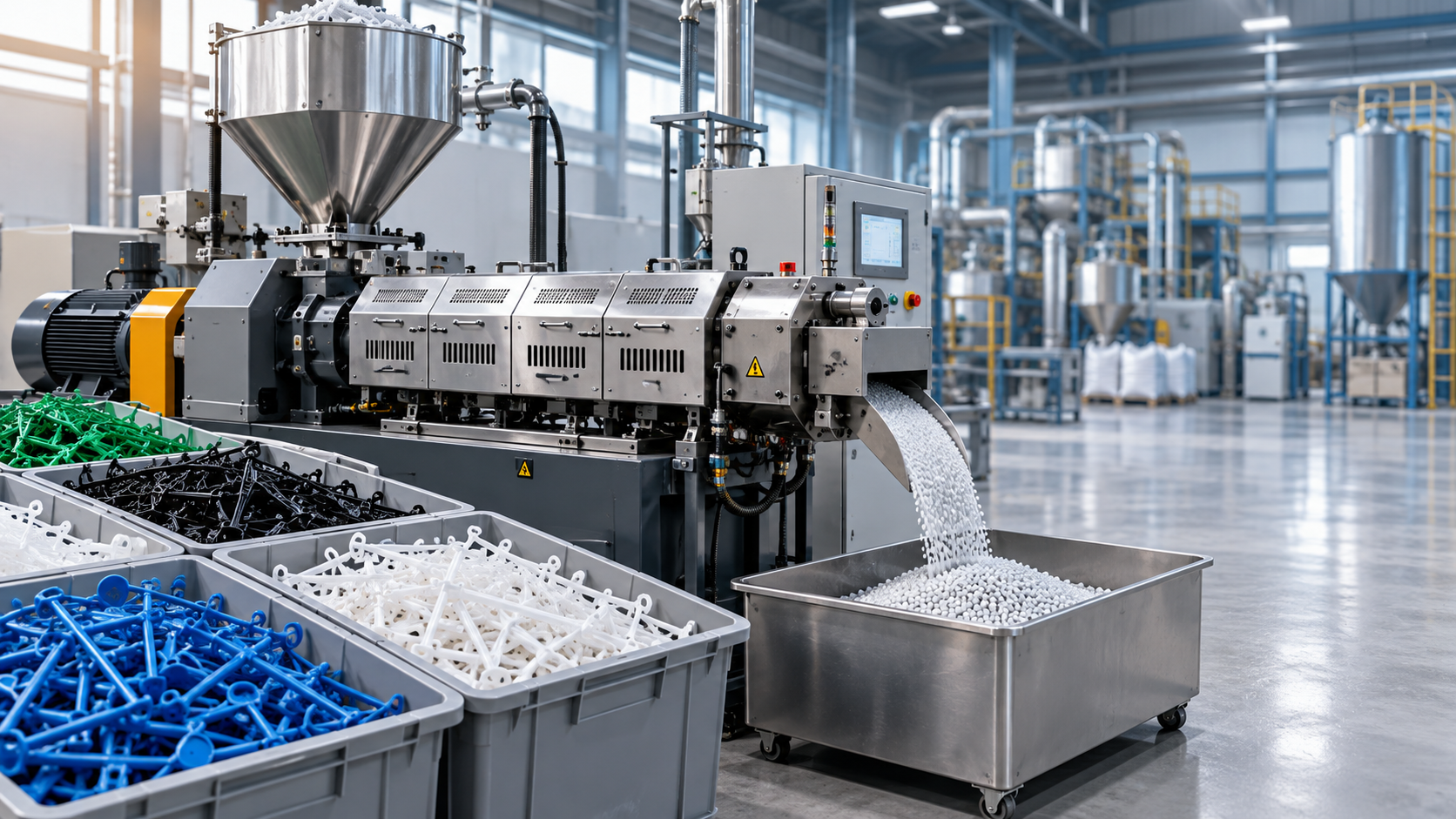
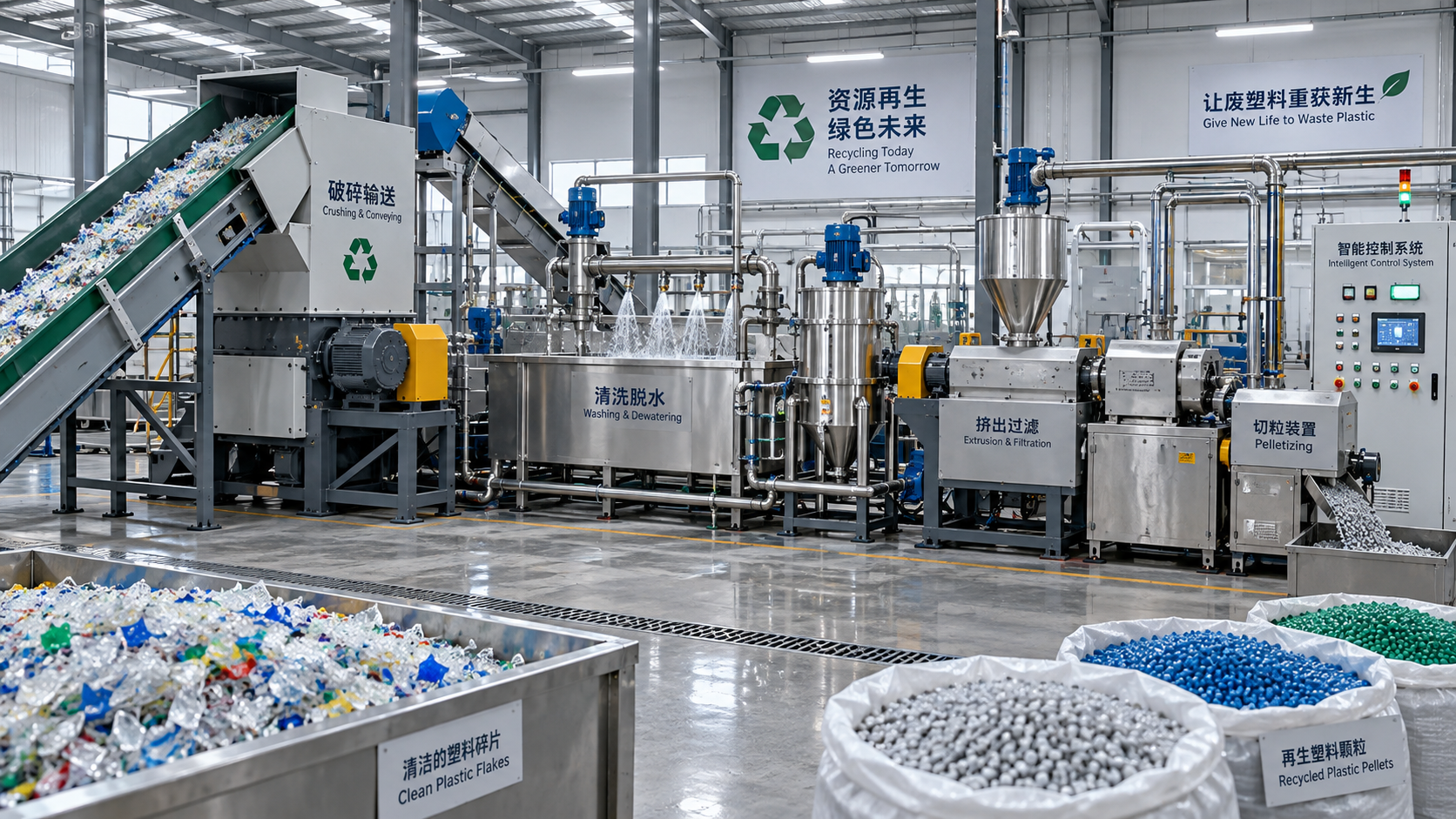
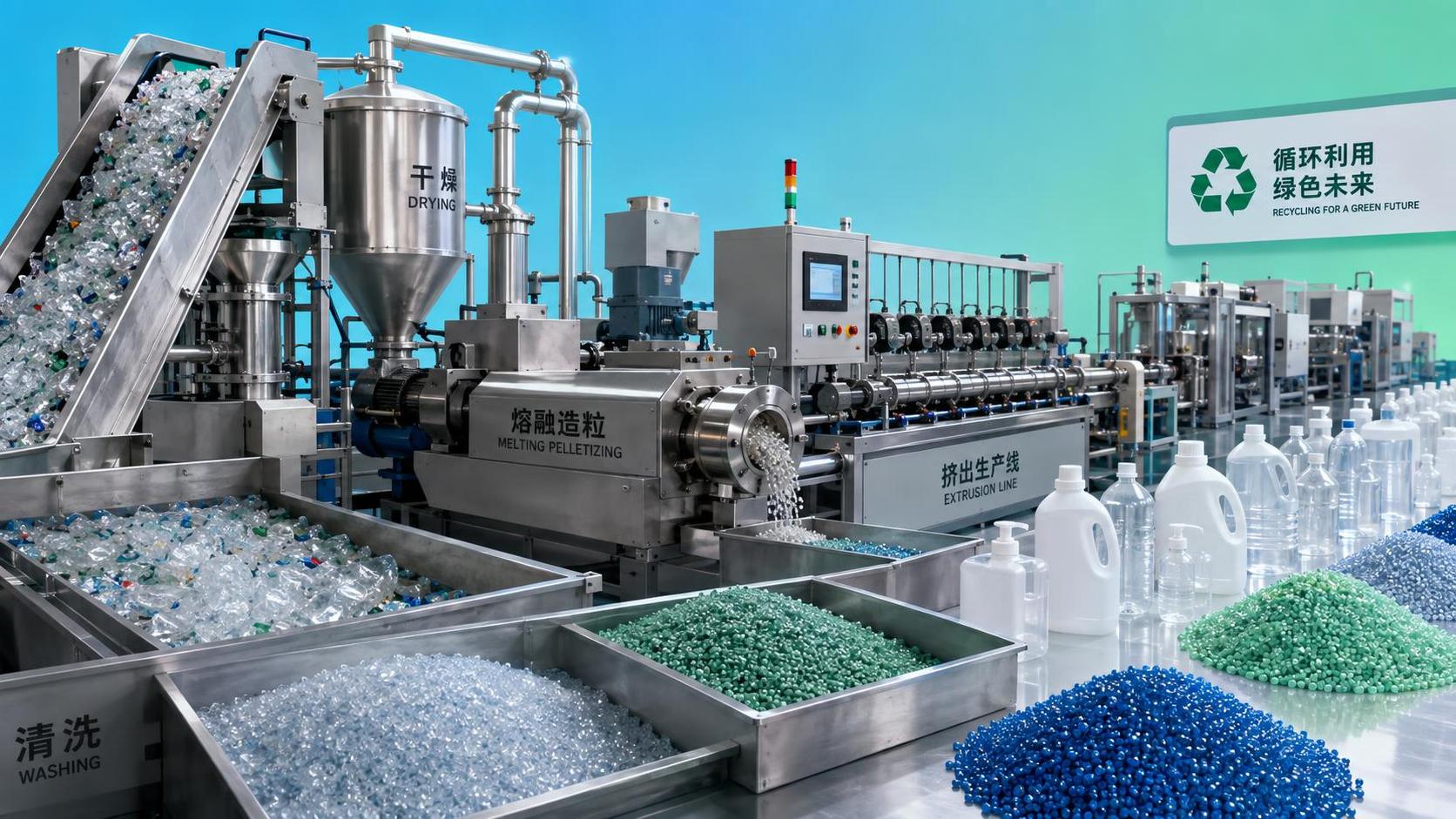
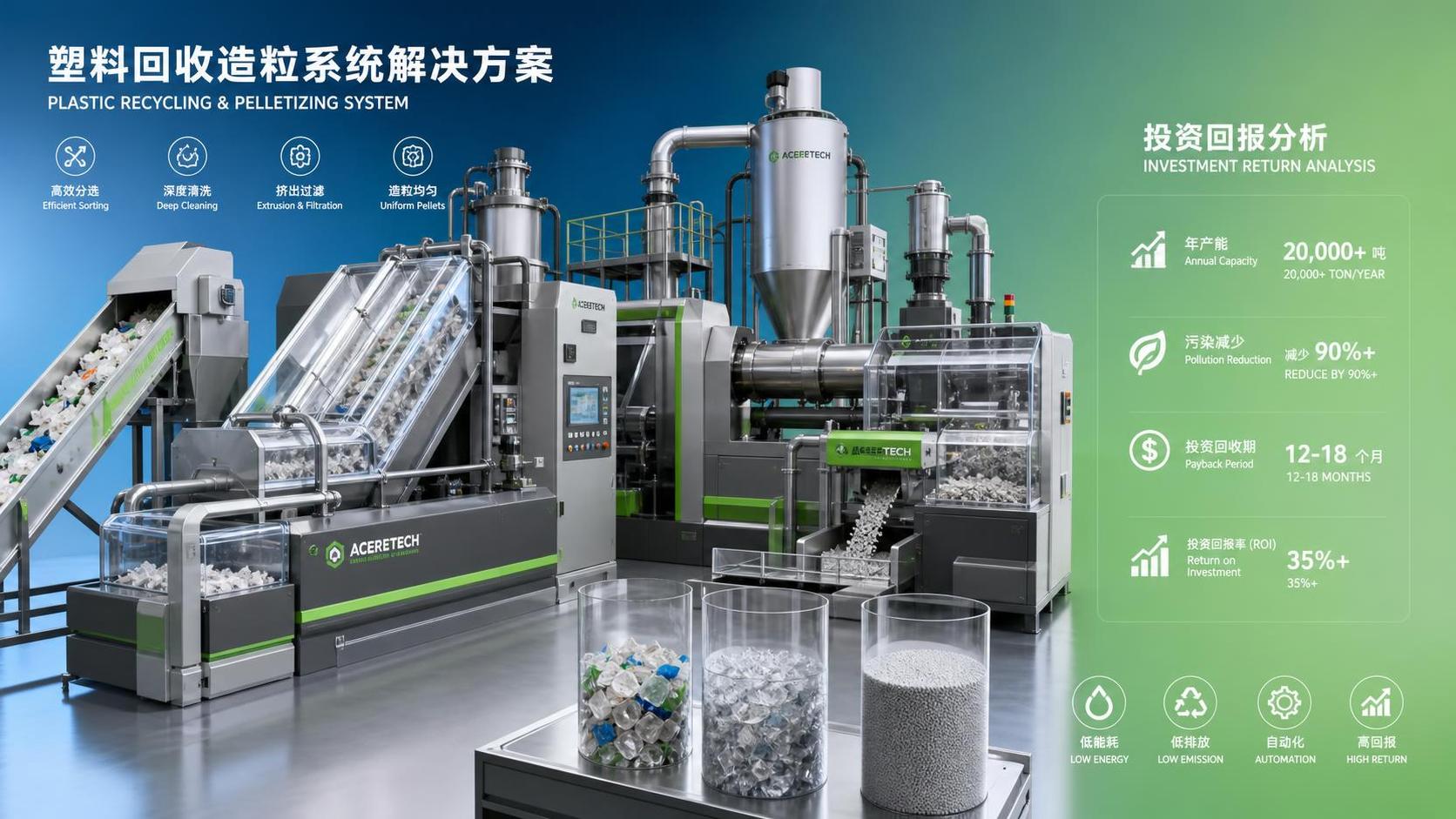
The intended application determines how much processing is necessary. Clean, known production scrap may be suitable for size reduction and controlled reuse without pelletizing, provided feeding behavior and product performance remain acceptable. Other streams need washing, drying, melt filtration, degassing, compounding, or a combination of these steps. Adding every available treatment increases capital cost and creates additional losses without necessarily improving suitability.
Define an output specification with the production and quality teams. Depending on the application, it may include material identity, melt flow behavior, moisture, contamination, color, odor, mechanical properties, and pellet or regrind geometry. Include the allowable variation between batches. A material that meets an average value but varies widely can be difficult to process consistently.
Assess the complete formulation. Polymers with similar appearances may be incompatible, while fillers and reinforcement can change shrinkage, density, stiffness, and wear on processing equipment. Repeated heat and shear exposure can alter material properties. A proposed blending ratio therefore needs qualification in the target product, including any performance requirements that ordinary incoming inspection would miss.
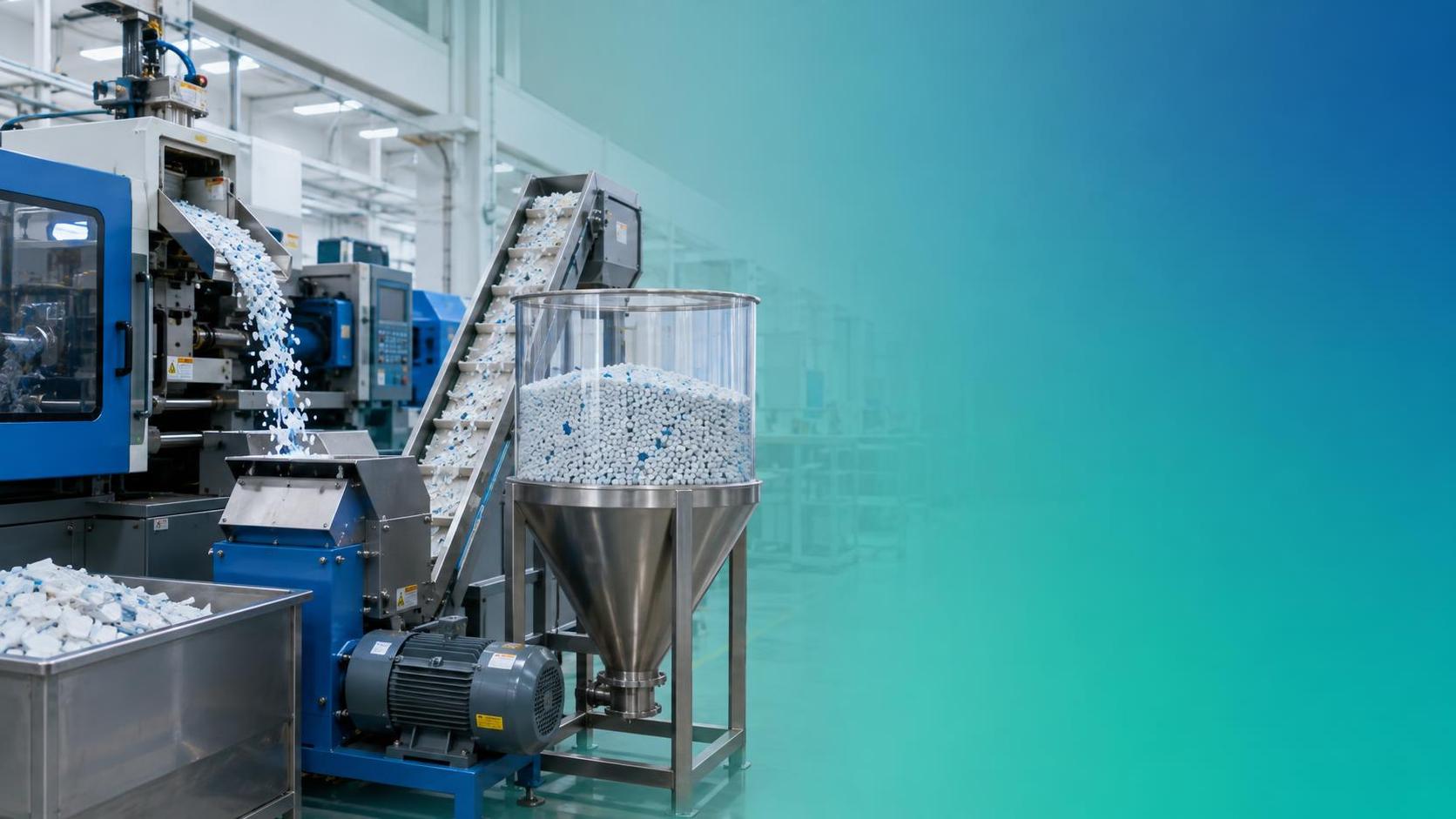
Closed-loop reuse is a strong option when the material remains traceable and the original application can tolerate its processing history. A different destination may be more practical when color, odor, or property requirements prevent return to the original product. That destination still needs a credible specification and demand; producing pellets for an undefined market merely transfers the inventory problem.
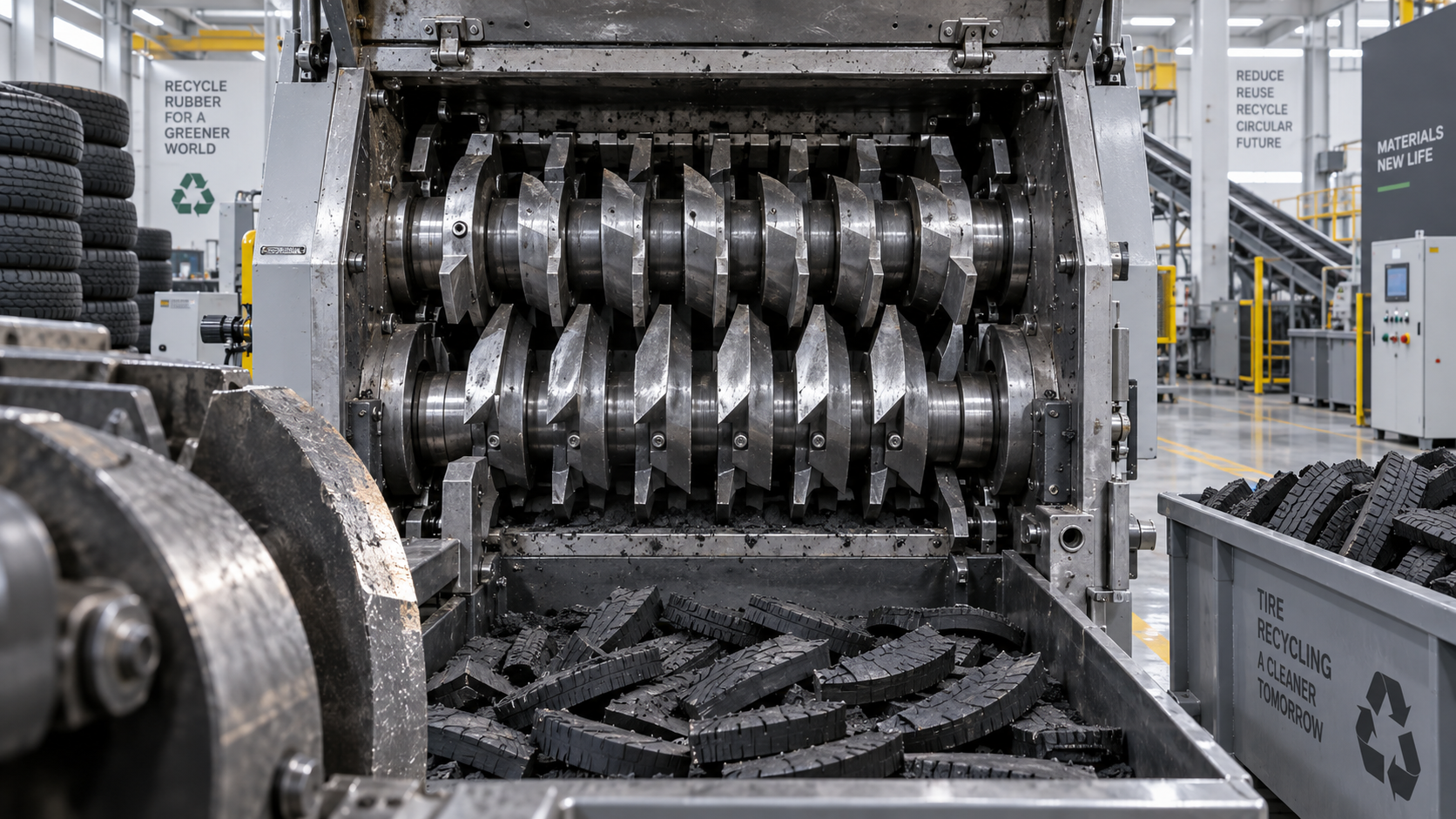
Thermoset and vulcanized rubber streams need a separate assessment. Their crosslinked structure prevents conventional remelting in the way thermoplastics are processed. Grinding, use as a filler, or specialized reclamation may provide recovery routes, but a thermoplastic extrusion and pelletizing line should not be assumed suitable. Multilayer and heavily contaminated plastics likewise require trials that establish what useful material can actually be separated or produced.
At this stage, select one initial stream and one qualified destination. Favor a combination with manageable contamination, dependable collection, and clear product requirements. Broader recovery coverage can follow once the first loop produces stable quality and credible cost data.
Match equipment to the feedstock’s difficult characteristics
The process flow should show how material moves from collection through preparation, conversion, inspection, and release back to production. Mark every point where contamination can enter, incompatible batches can mix, or material can accumulate. This makes interfaces between departments and machines visible before they become commissioning problems.
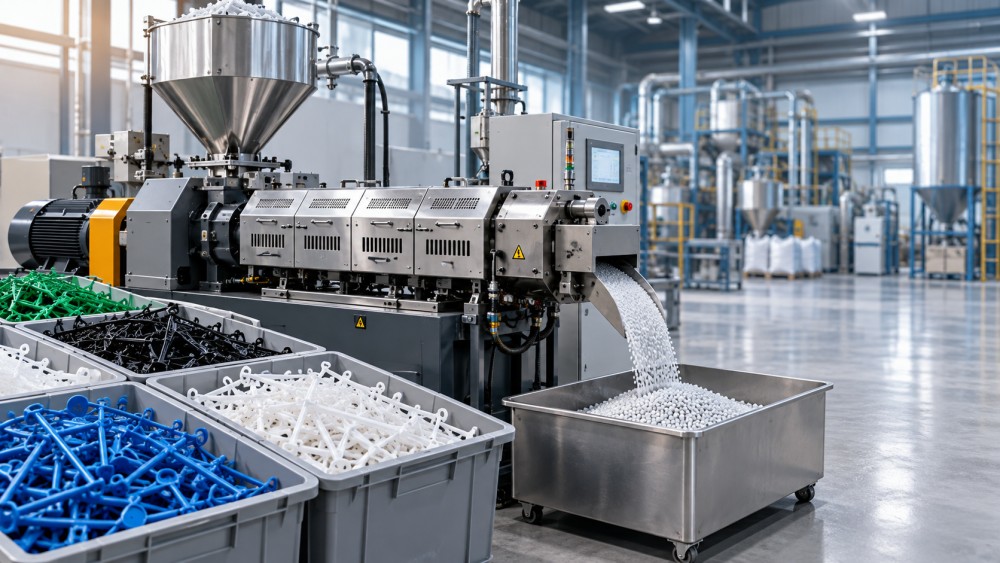
Sorting and storage often determine how difficult the downstream process becomes. Dedicated containers, clear identification, and controls against cross-mixing can preserve material value at relatively low complexity. Once incompatible scrap has been shredded together, subsequent separation may be harder. Collection rules should therefore be part of the engineering scope, with named responsibility for enforcement.
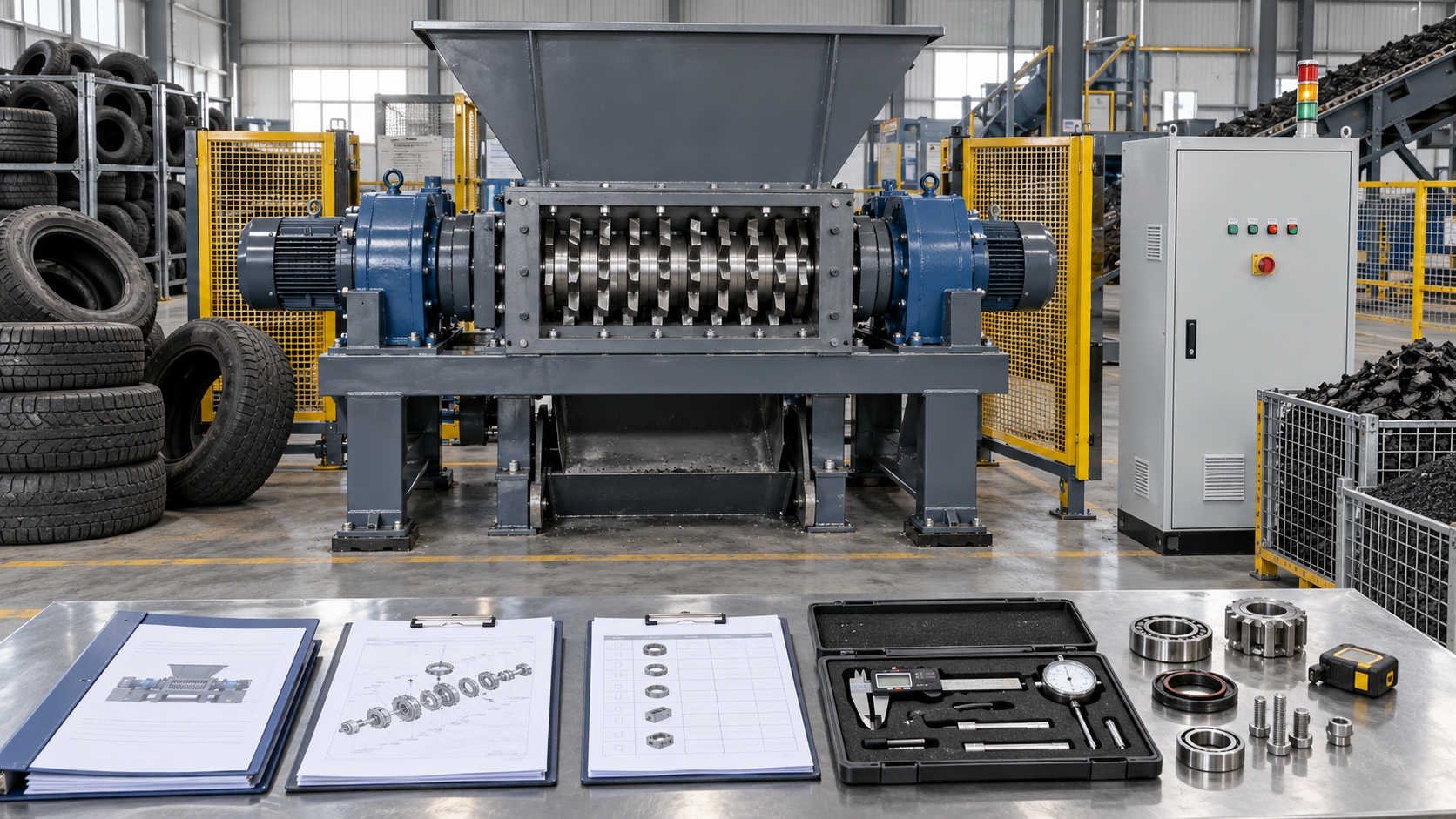
Size-reduction equipment must suit the feed geometry and required output. Thin film, bulky molded parts, and dense extrusion lumps present different feeding and cutting conditions. Evaluate bridging, dust generation, noise, blade access, and the consequences of metal entering the system. The capacity quoted for an easy reference material does not establish capacity on the project’s actual waste stream.
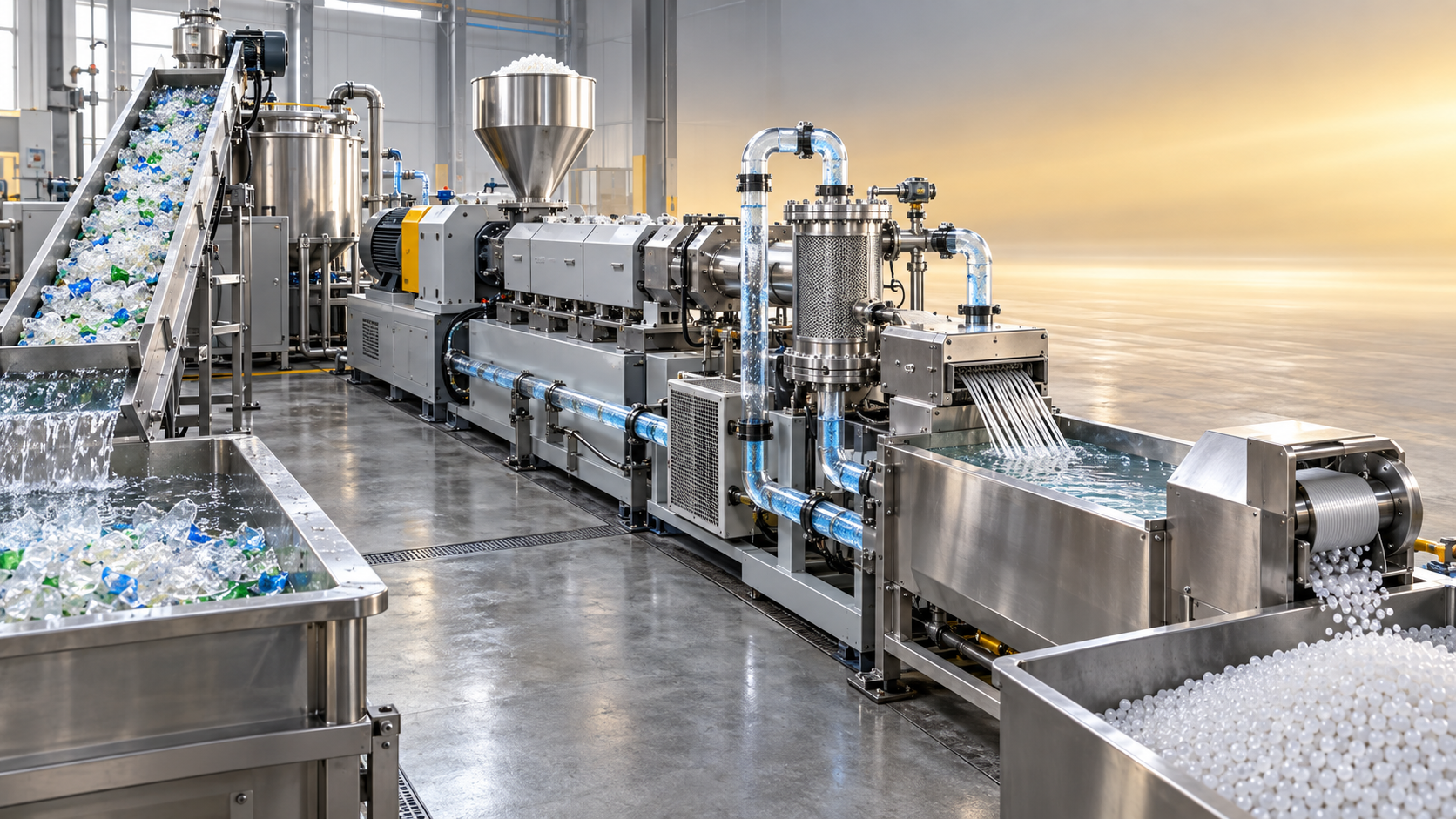
Washing is justified when removable surface contamination would otherwise prevent use. Its scope includes water management, separation of removed solids, drying, and treatment or disposal of the resulting residues. Drying requirements depend on the polymer and process. For moisture-sensitive materials, excess moisture during melt processing can degrade properties even when the finished pellets appear acceptable.
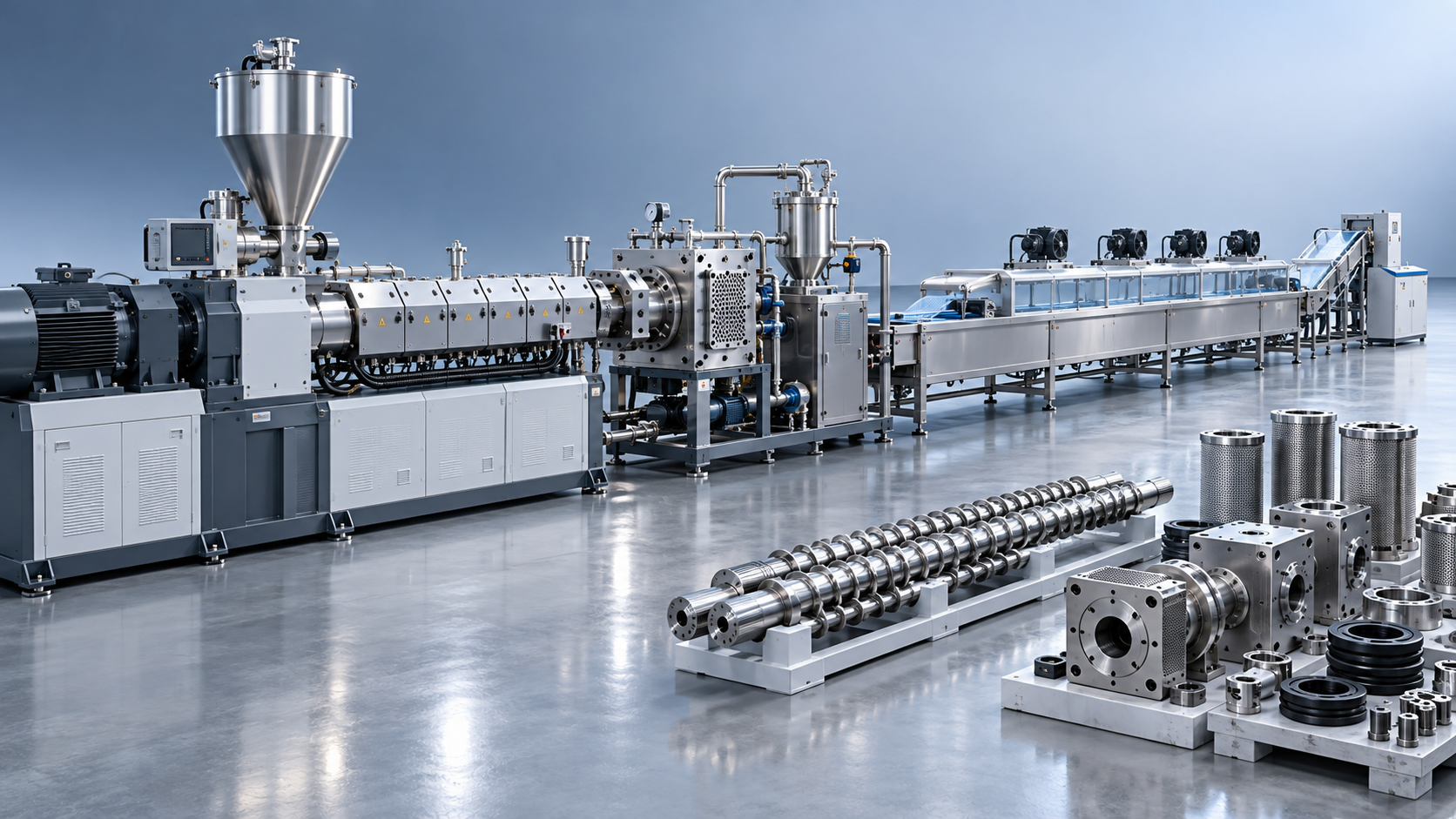
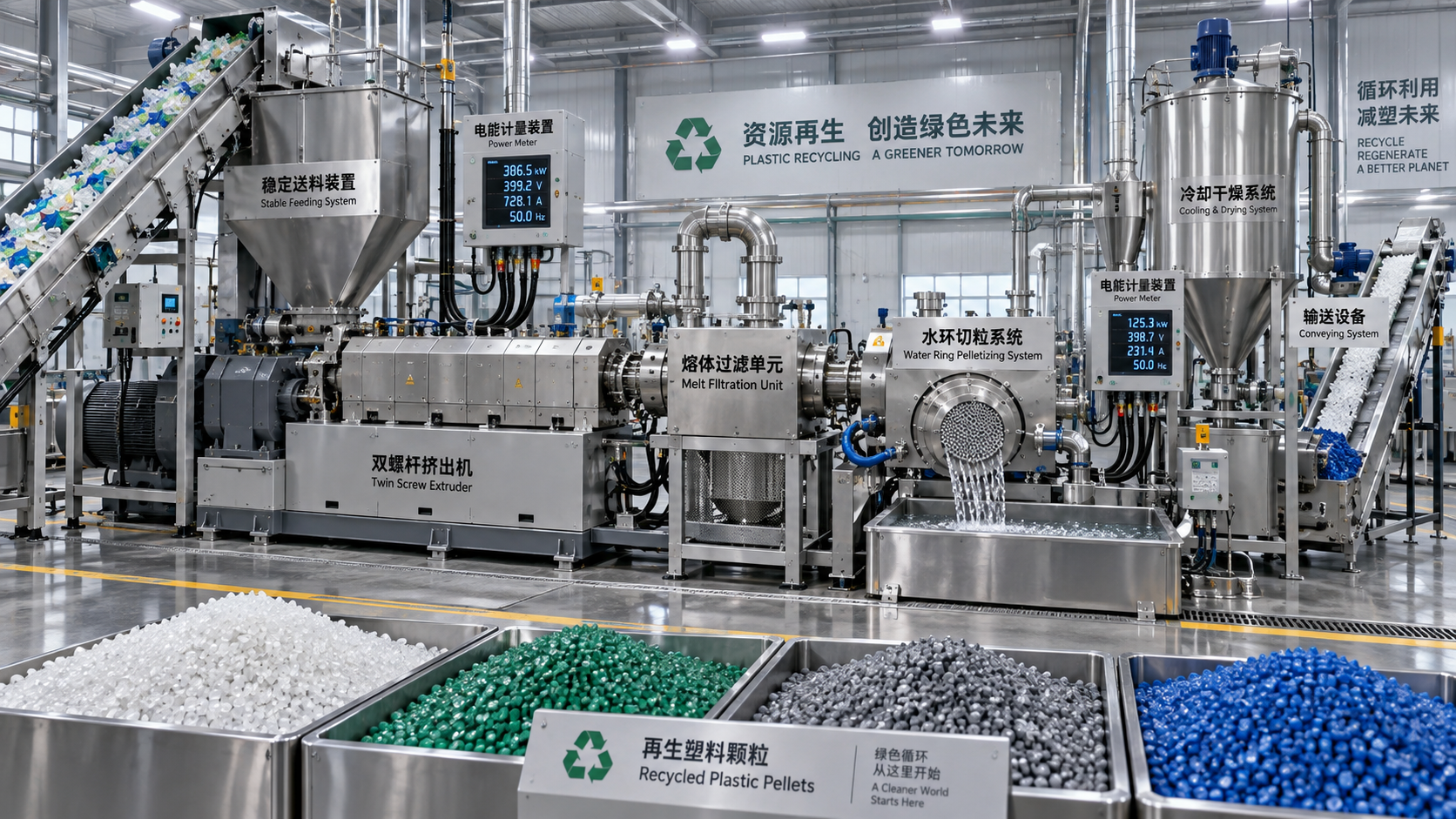
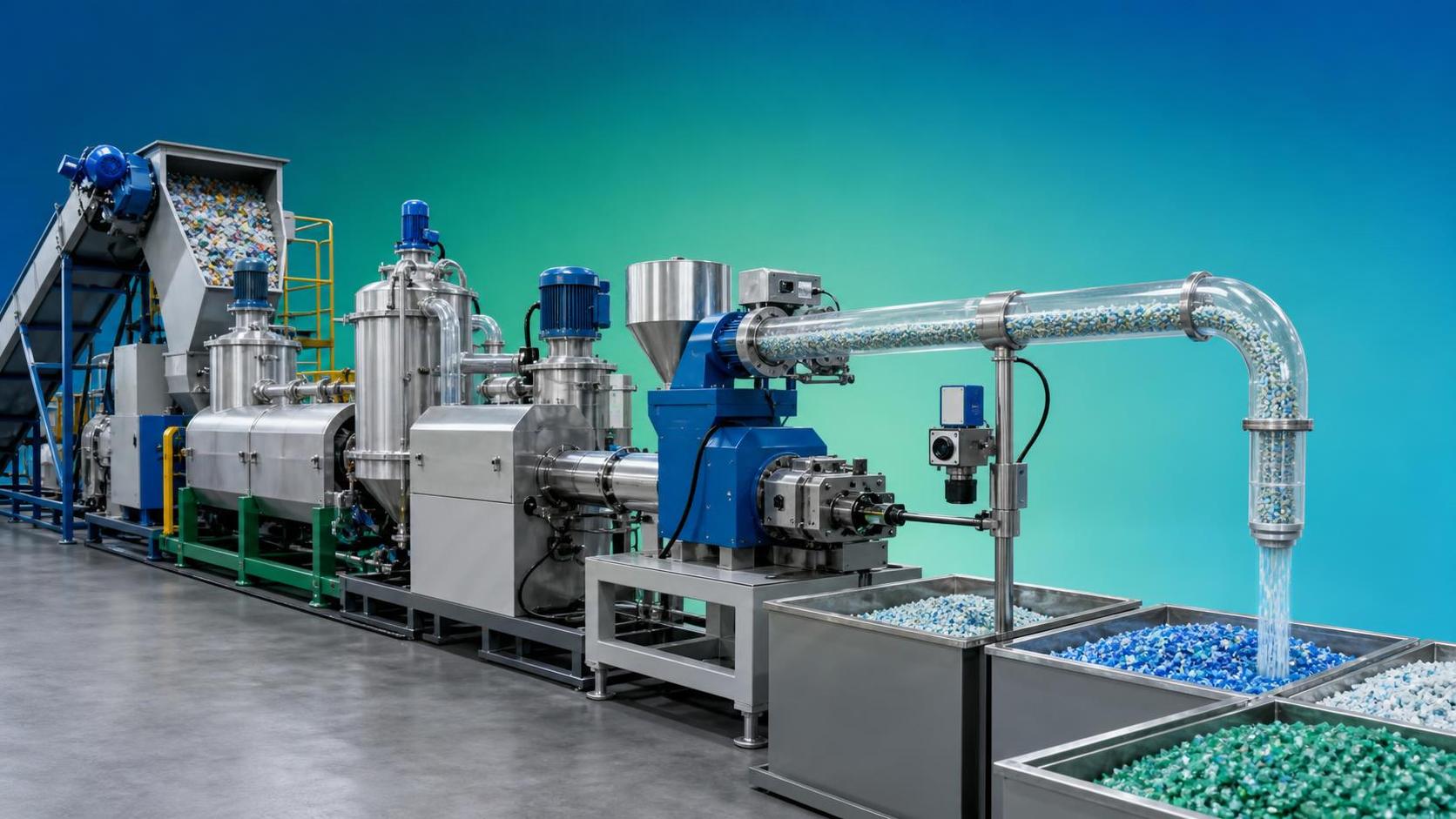
Extruder selection should follow the required operation: remelting a consistent feed, mixing variable material, incorporating additives, removing volatiles, or dispersing fillers. Screw configuration, feeding method, venting, residence time, and temperature control affect the result. A more elaborate machine cannot compensate reliably for uncontrolled feed composition, and unnecessary processing can increase thermal exposure.
Melt filtration removes certain solid contaminants within the capability of the selected system. It does not resolve polymer incompatibility or remove every source of odor and chemical contamination. Finer filtration can also increase pressure, screen consumption, and material loss. Define the cleanliness needed by the downstream application, then test the filtration arrangement against representative contamination.
Pelletizing should be evaluated alongside melt consistency, cooling, drying, and downstream feeding requirements. The choice between strand, water-ring, underwater, or another suitable configuration depends on material behavior and operating needs. Include startup waste, maintenance access, utility demand, and operator requirements in the comparison.
Set acceptance criteria for the integrated line. Useful criteria include usable output rate, output quality, recovery yield, energy per unit of acceptable material, and stable operation across the agreed feedstock range. Trials should cover representative variability, with documented sampling and measurement methods. Record the operating conditions that produced acceptable results so commissioning has a reproducible starting point.
Test economics against usable output
A recovery project creates value when acceptable recovered material displaces a real cost or earns a realizable selling price. Gross pellet production can overstate that value if some output is rejected, downgraded, or held in inventory. Build the financial model around material released for an identified use.
A practical calculation is:
Net annual benefit = avoided disposal cost + avoided material purchases + net external sales revenue − incremental recovery and reuse costs.
Avoid double counting: material used internally cannot also generate external sales revenue. Value internal substitution according to the material it actually replaces. If recovered material requires additional additives, a restricted blend ratio, or a lower-value application, those conditions belong in the model.
Incremental costs extend beyond the recycling machine’s electricity consumption. Include collection labor, internal transport, sorting, consumables, filtration losses, water treatment, maintenance, quality testing, storage, and residual disposal. Account for any change in the receiving production process, such as longer cycles, additional drying, or higher rejection rates.
Capital scope should cover installation and integration: utilities, floor space, foundations where required, ventilation, fire protection, controls, and handling systems. Compare an internal line with contract processing or direct sale of segregated scrap. External processing can be a useful first stage when volume, technical capability, or demand does not yet support dedicated equipment.
Stress-test the variables most likely to change the decision: available feedstock, usable recovery yield, operating availability, material substitution value, and outlet demand. Use a conservative operating case as well as the expected case. If viability depends on full utilization from startup or uninterrupted demand from one buyer, resolve that dependence before approving the investment.
Release investment through evidence-based milestones
The roadmap becomes executable when each phase has an owner, a deliverable, and a release condition. Calendar dates help coordinate work, but evidence should determine whether the project advances.
- Baseline approval: reconcile material flows, identify priority streams, and assign ownership for segregation and data collection.
- Route selection: define the intended output, confirm the application’s acceptance requirements, and compare internal and external recovery options.
- Technical validation: demonstrate processing and product performance using representative material, including relevant feedstock variation.
- Investment release: approve the complete installed scope, operating resources, residual handling, and financial sensitivity assessment.
- Operational release: establish repeatable quality, train operators, implement traceability, and confirm that production can consume the recovered material consistently.
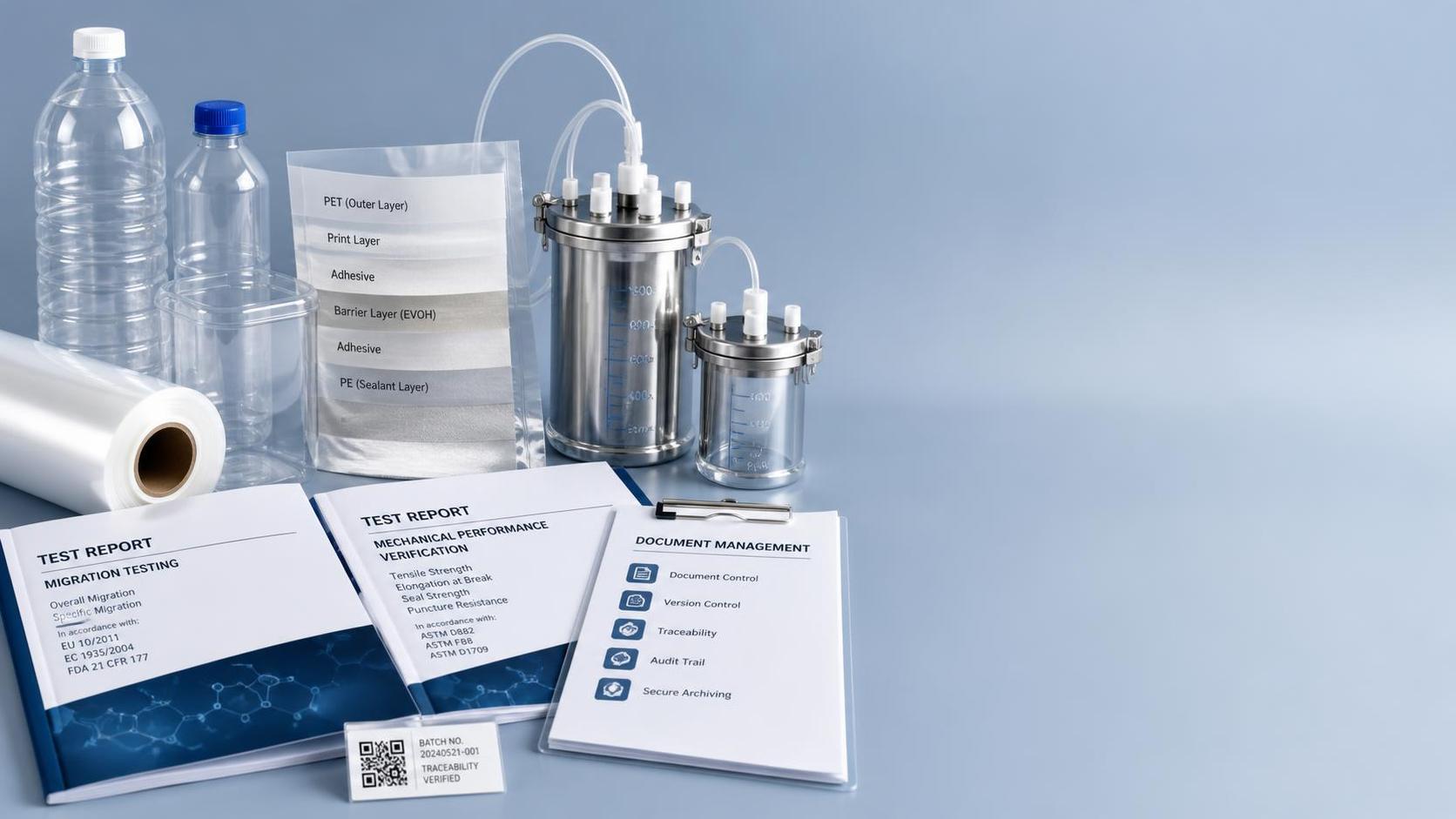
Product qualification should extend beyond successful feeding or an acceptable-looking molded part. Depending on the application, dimensional stability, impact behavior, sealing, appearance, or longer-term performance may matter. Customer approval and regulatory obligations can also restrict substitution. Food-contact, medical, and other sensitive applications require specific suitability assessment; washing and pelletizing alone do not establish compliance.
During ramp-up, track collection rate, usable recovery yield, batch acceptance, energy per unit of acceptable output, and actual substitution in production. Keep disposal diversion separate from closed-loop reuse so the dashboard shows where material goes. Investigate quality changes against feedstock composition, storage conditions, processing settings, and maintenance history.
Expansion should follow demonstrated control. A stable first stream gives the team operating limits, cost records, and a qualification method for the next one. If a new stream introduces different polymers, contamination, or product obligations, reopen the relevant decision gates. The practical endpoint is a recovery operation whose output production can schedule, quality can release, and finance can value with confidence.
Related News
- 00
0000-00
Circular Manufacturing Roadmap: From Waste Audits to Material Recovery - 00
0000-00
How Continuous Melt Filtration Limits Pressure Fluctuations During Screen Changes - 00
0000-00
Choosing High-Speed All-Electric Injection Molding Machines for Thin-Wall Parts - 00
0000-00
Injection Molding System Costs: Machine, Molds, Automation, and Installation - 00
0000-00
Truck Tire Manufacturing Equipment: Sizing Curing Presses for Target Output
Weekly Insights
Stay ahead with our curated technology reports delivered every Monday.
Related News
 Ms. Elena RodriguezCircular Manufacturing Roadmap: From Waste Audits to Material RecoveryBuild a circular manufacturing roadmap from waste audits to material recovery. Explore practical steps to qualify recycled materials, select equipment, and validate ROI before investing.Oct 20, 2026
 Ms. Elena RodriguezInjection Molding System Costs: Machine, Molds, Automation, and InstallationCompare injection molding systems price proposals with confidence. Uncover machine, mold, automation, and installation costs to avoid hidden expenses and choose a production-ready cell.Oct 17, 2026
 Ms. Elena RodriguezSmart Factory Costs for Plastics: Estimating ROI for Automation ProjectsSmart factory for plastics cost: learn how to estimate automation ROI, uncover hidden integration expenses, reduce scrap, and build a phased investment plan.Oct 10, 2026
 Ms. Elena RodriguezHow to Evaluate a Packaging Molding Equipment Supplier for High-Volume ProductionChoose a packaging molding equipment supplier with confidence. Learn how to assess throughput stability, tooling, recycled-material capability, lifecycle cost, and service support for high-volume production.Oct 09, 2026
 Ms. Elena RodriguezProcurement Records to Request Before Buying a Used Tyre ShredderUsed tyre shredder for sale? Request maintenance, operating, safety, and parts records to reduce risk, verify condition, and buy with confidence.Oct 16, 2026
 Ms. Elena RodriguezHow to Select Packaging Molding Equipment for High-Volume Production LinesPackaging molding equipment selection guide for high-volume lines: compare processes, throughput, materials, automation, and energy to achieve stable, cost-effective output.Oct 04, 2026
 Ms. Elena RodriguezHow to Evaluate Plastic Recycling Machinery for UAE Heat, Feedstock, and Output NeedsPlastic recycling machinery UAE buyers: evaluate heat resilience, feedstock handling, cooling, pellet quality, energy use, and lifecycle cost for reliable output.Sep 28, 2026
 Ms. Elena RodriguezGerman Extrusion Equipment Suppliers: Comparing Service, Lead Times, and Lifecycle CostExtrusion equipment Germany suppliers compared: evaluate service coverage, credible lead times, spare-parts access, and lifecycle cost to select a reliable, future-ready production partner.Sep 22, 2026
 Ms. Elena RodriguezWhat Should You Check Before Buying a Used Plastic Recycling Line?What should I check before buying a used plastic recycling line? Explore feedstock fit, wear, trials, utilities, controls, and restoration costs before you invest.Sep 26, 2026
 Ms. Elena RodriguezHow to Compare Pelletizing Lines by Energy Use per TonHow do I compare pelletizing lines by kWh per ton? Learn to measure total energy, verify saleable output, and select a cost-efficient line.Sep 23, 2026
 Ms. Elena RodriguezTyre Cutter Blade Wear: When Capacity Loss Needs Inspectionшинорез blade wear can quietly reduce tyre-cutting capacity. Learn the warning signs, inspection triggers, and maintenance actions that protect output and uptime.Sep 28, 2026
 Ms. Elena RodriguezIn-House Recycling for Factory Scrap: How to Reduce Material Waste and Disposal CostsIn house recycling for factory scrap helps manufacturers cut material waste, reduce disposal costs, and create controlled, quality-focused reuse loops.Sep 07, 2026
 Ms. Elena RodriguezHow Recyclable Packaging Manufacturing Balances Material Recovery and Production CostRecyclable packaging manufacturing: discover how smarter design, feedstock control, and process optimization reduce recovery costs while improving quality and yield.Sep 04, 2026
 Ms. Elena RodriguezHow to Evaluate a Plastic Recycling Systems Supplier for Your Processing NeedsChoose the right plastic recycling systems supplier with a practical guide to feedstock fit, output quality, total cost, testing, service, and compliance.Sep 01, 2026
 Ms. Elena RodriguezCE Marking for Plastic Processing Equipment: Documentation and Safety ChecksPlastic processing equipment CE compliance: learn the essential documentation, risk assessments, safety checks, and validation steps for reliable EU market access.Aug 30, 2026
 Ms. Elena RodriguezPlastic Packaging Compliance Standards: What Tests and Documents Matter Most?Plastic packaging compliance standards explained: learn which migration tests, mechanical checks, and audit-ready documents matter most to reduce risk and pass reviews with confidence.Aug 25, 2026
 Ms. Elena RodriguezHow to Evaluate a Plastic Waste Recycling System for Capacity, Contamination, and ROIPlastic waste recycling system evaluation made practical: compare true capacity, contamination control, and ROI to choose a line that delivers stable output and stronger returns.Aug 24, 2026
 Ms. Elena RodriguezPackaging Molding Equipment Price: What Drives Cost and How to Compare Quotes?Packaging molding equipment price varies by machine type, automation, tooling, energy use, and service scope. Learn what drives cost and how to compare quotes with confidence.Aug 21, 2026
 Ms. Elena RodriguezWhat Packaging Machinery for Plastic Containers Should You Choose for High-Volume Production?Packaging machinery for plastics containers can make or break high-volume production. Learn how to choose the right line for speed, consistency, compliance, and lower lifecycle costs.Aug 16, 2026
 Ms. Elena RodriguezWhat Circular Plastics Mean for Automotive Parts and Material SelectionCircular plastics for automotive are reshaping part selection with lower weight, better sustainability, and reliable performance. Discover how engineers balance recycled content, durability, and compliance.Aug 15, 2026