Choosing a Recycled Plastic Processing Exporter: Quality and Supply Checks




The lowest equipment quote is not necessarily the lowest-cost way to process recycled plastic. A line sized around clean, uniform feedstock can fall short when it encounters wet film, mixed polymers or heavy contamination. The difference may appear later as lost output, frequent screen changes, excessive energy use or pellets that cannot meet the intended application.
When choosing a recycled plastic processing exporter, the decisive checks are whether the proposed line matches the actual waste stream, whether its output can be demonstrated under agreed conditions, and whether the supplier can deliver and support the complete system. Price comparisons become meaningful only after those conditions are defined consistently across quotations.
Start with the material, not the machine capacity
A capacity figure has limited value without a description of the material entering the line. A supplier quoting for clean post-industrial polyethylene regrind is solving a different problem from one handling printed, contaminated post-consumer film. Even when both lines are described as producing the same polymer pellets, their washing, drying, feeding and filtration requirements can differ substantially.
Prepare a feedstock specification before requesting a final offer. Include the polymer or polymer mix, source, physical form, expected contamination, moisture after any existing preparation, and foreseeable variation between deliveries. Samples or photographs are useful, but they should not substitute for a written description of the range the equipment must handle.
The intended output matters just as much. Film-grade pellets for a demanding extrusion application may require tighter control of contamination and properties than material destined for a less sensitive molded product. State whether the line must produce washed flakes, compounded pellets or another output, and identify the processing application and any property limits required by the eventual customer.
Do not assume that a recycling line can turn an inconsistent mixed waste stream into a uniform, high-value resin without sorting or blending controls. Ask the exporter to identify which contaminants and polymer combinations the proposed configuration can tolerate, which require upstream removal, and what happens when incoming material falls outside the agreed range.
Separate rated throughput from usable production
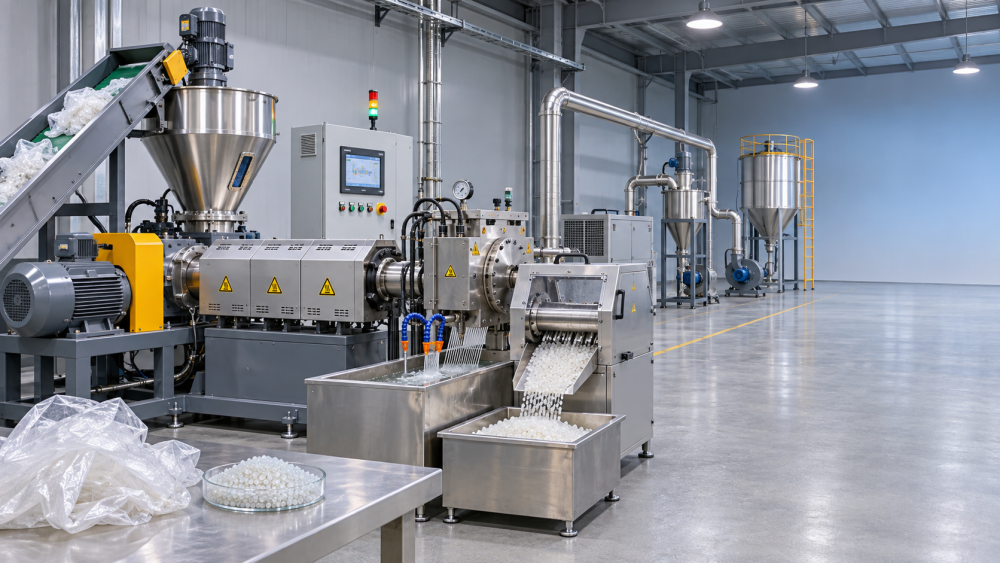
Quotations commonly emphasize kilograms per hour, but the number may refer to input, output or a particular test material. The distinction is important: washing rejects, moisture removal, melt filtration and startup losses can make saleable output materially lower than the mass entering the line.
Request a written capacity basis that covers:
- The material type, form and contamination level used to establish the figure.
- Whether throughput is measured at line input, after washing, or as finished, acceptable output.
- Operating conditions, including feed moisture, screen configuration and the duration over which output is measured.
- Expected stops for screen changes, cleaning and other routine interventions, if included in the production estimate.
- Assumptions about utilities, staffing and upstream feeding or sorting.
A short demonstration at a favorable feed rate does not establish sustained production. For a meaningful comparison, ask each bidder to provide both the specified hourly performance under test conditions and the assumptions needed to estimate output over a normal shift. Keep guaranteed performance separate from planning estimates: the former can be tested against a contract, while the latter depends on operating practices and material supply.
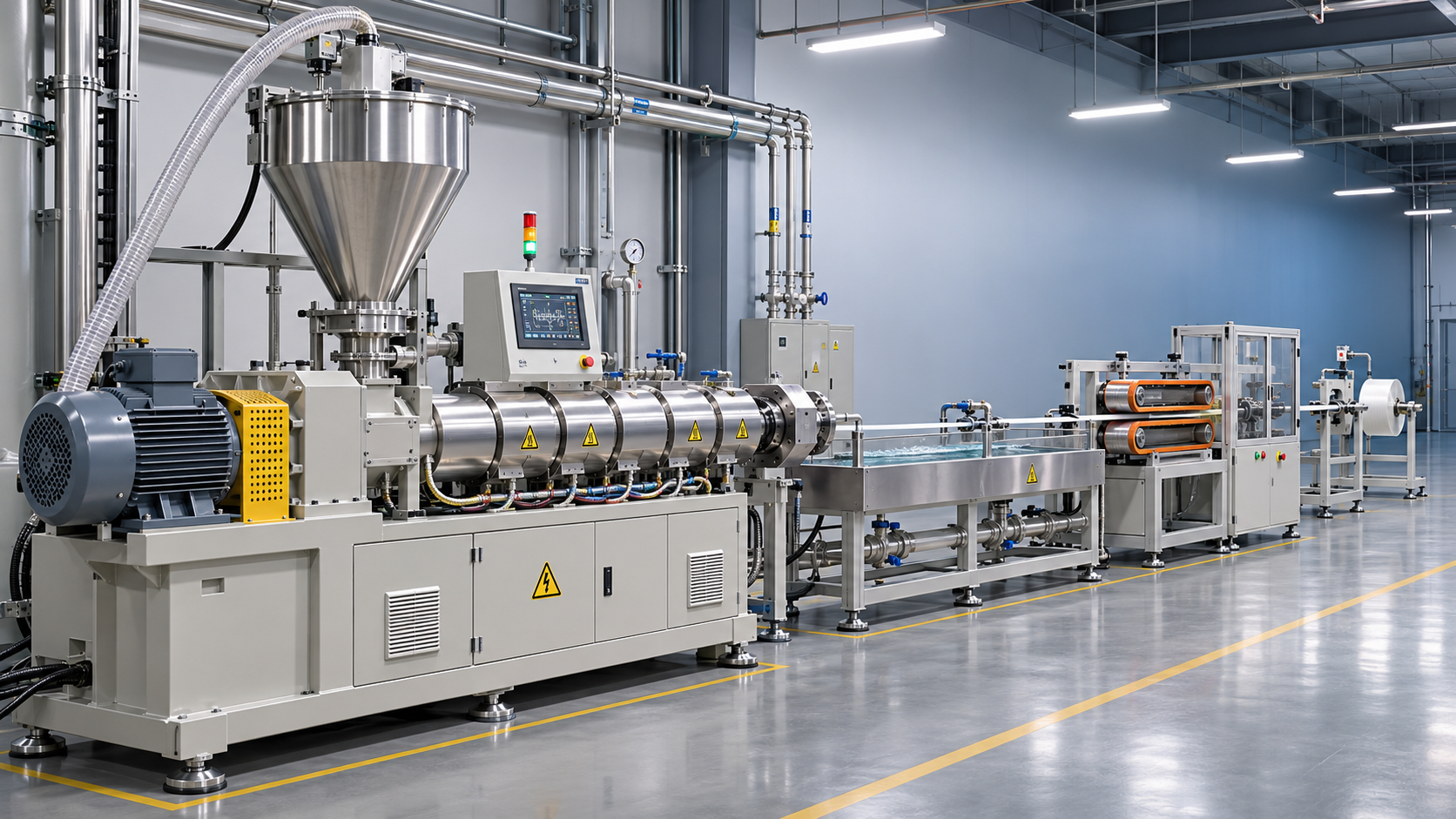
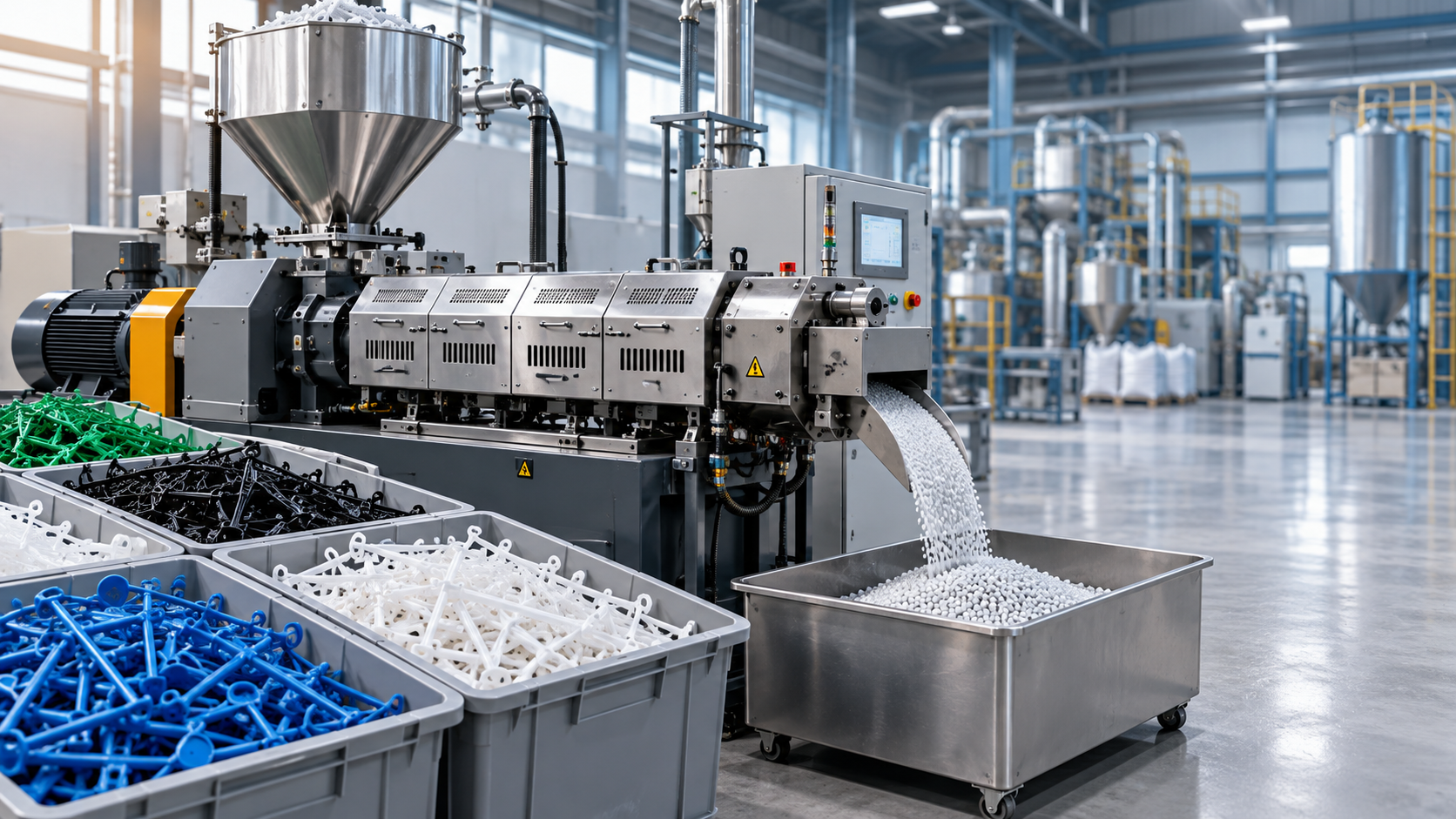
Line balance also deserves attention. A pelletizer with a high nominal capacity cannot compensate for a washing system, dryer or feeder that restricts the flow upstream. Conversely, an oversized extruder may add cost without improving output if the preparation equipment is the limiting stage. A process flow diagram and a capacity statement for each major stage make these mismatches easier to identify.
Check the configuration against the contamination risk
Equipment quality is not simply a question of whether individual components are well built. The configuration must remove or manage the contaminants present in the feedstock without undermining output quality or running cost.
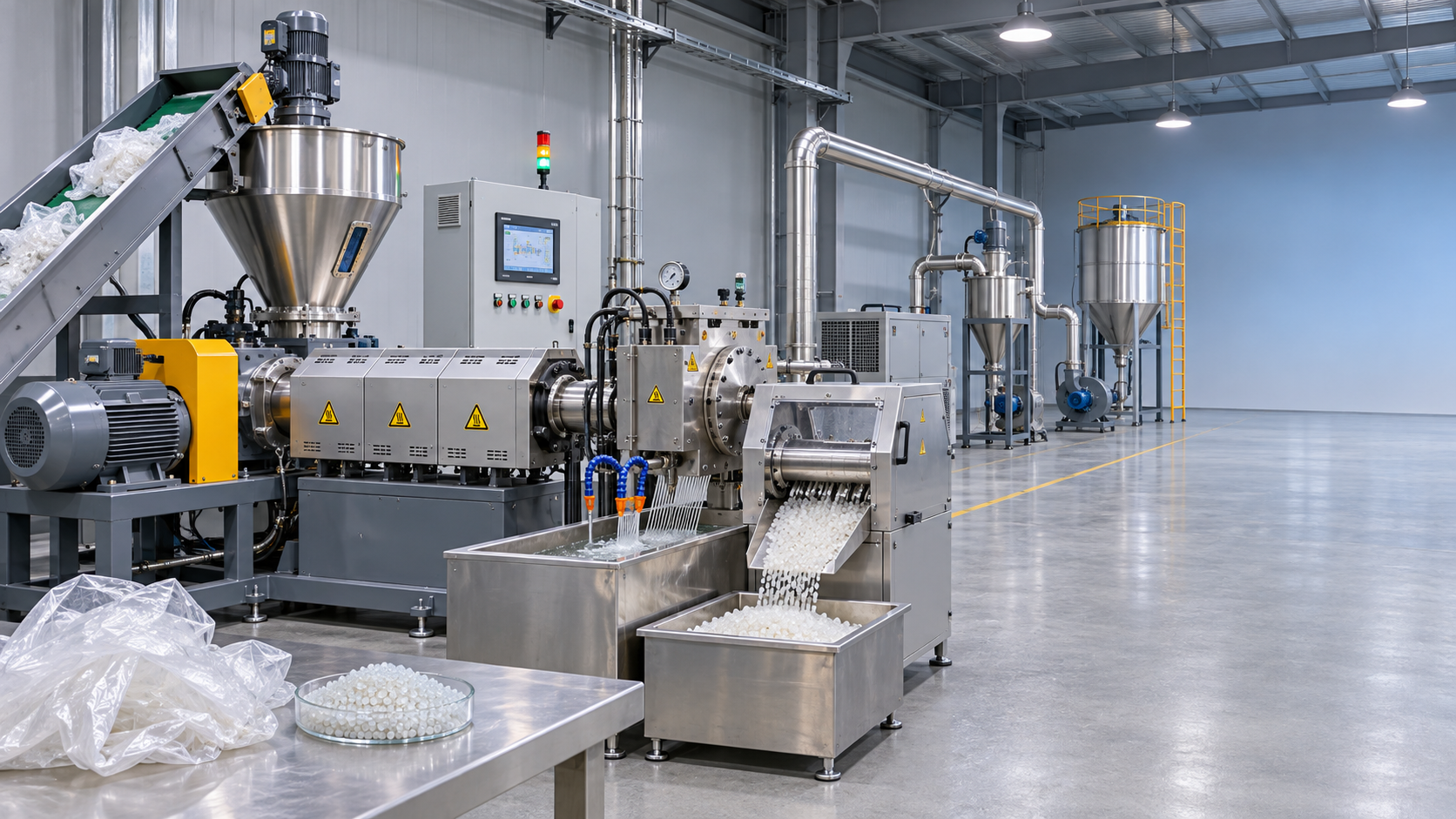
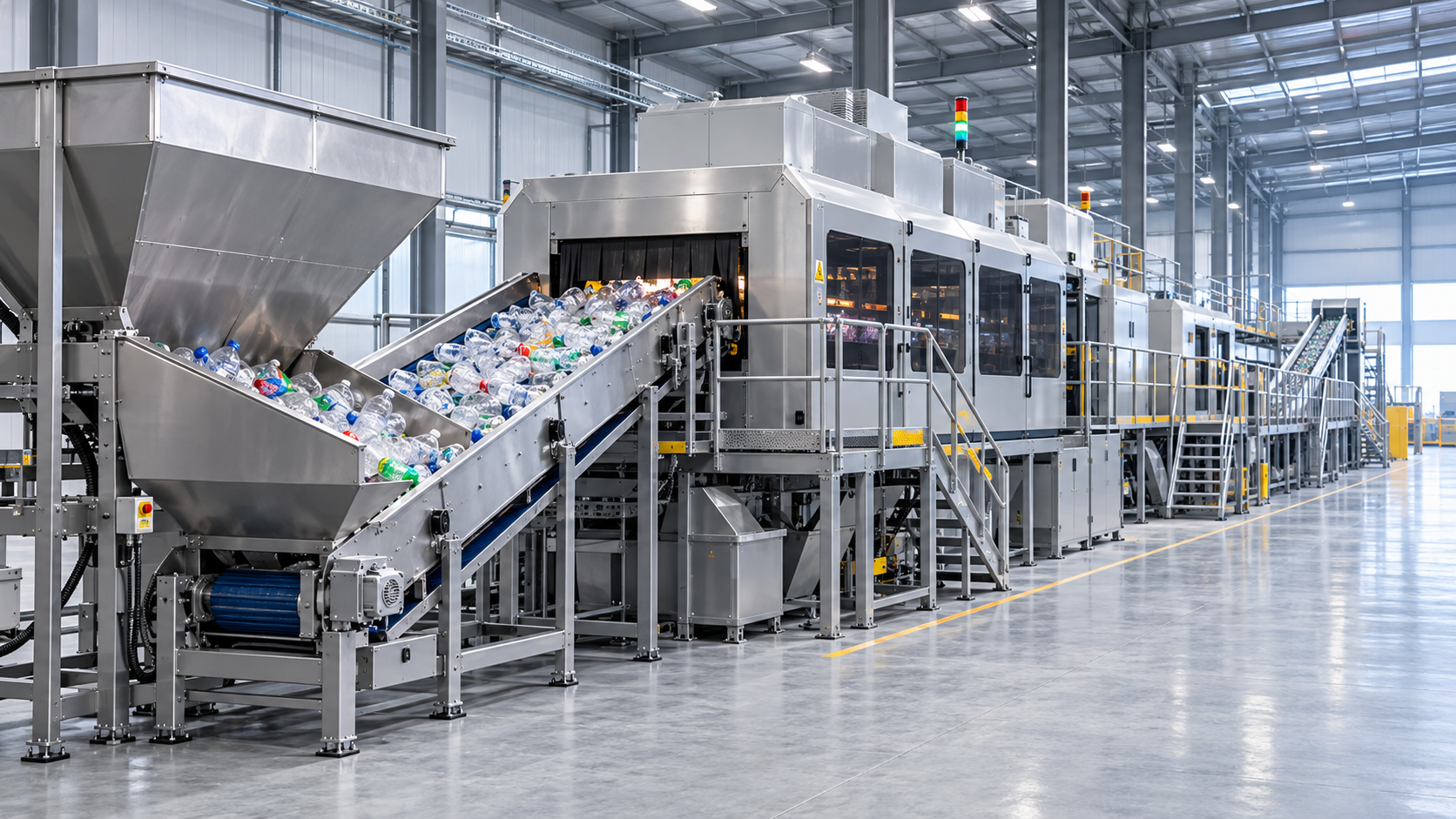
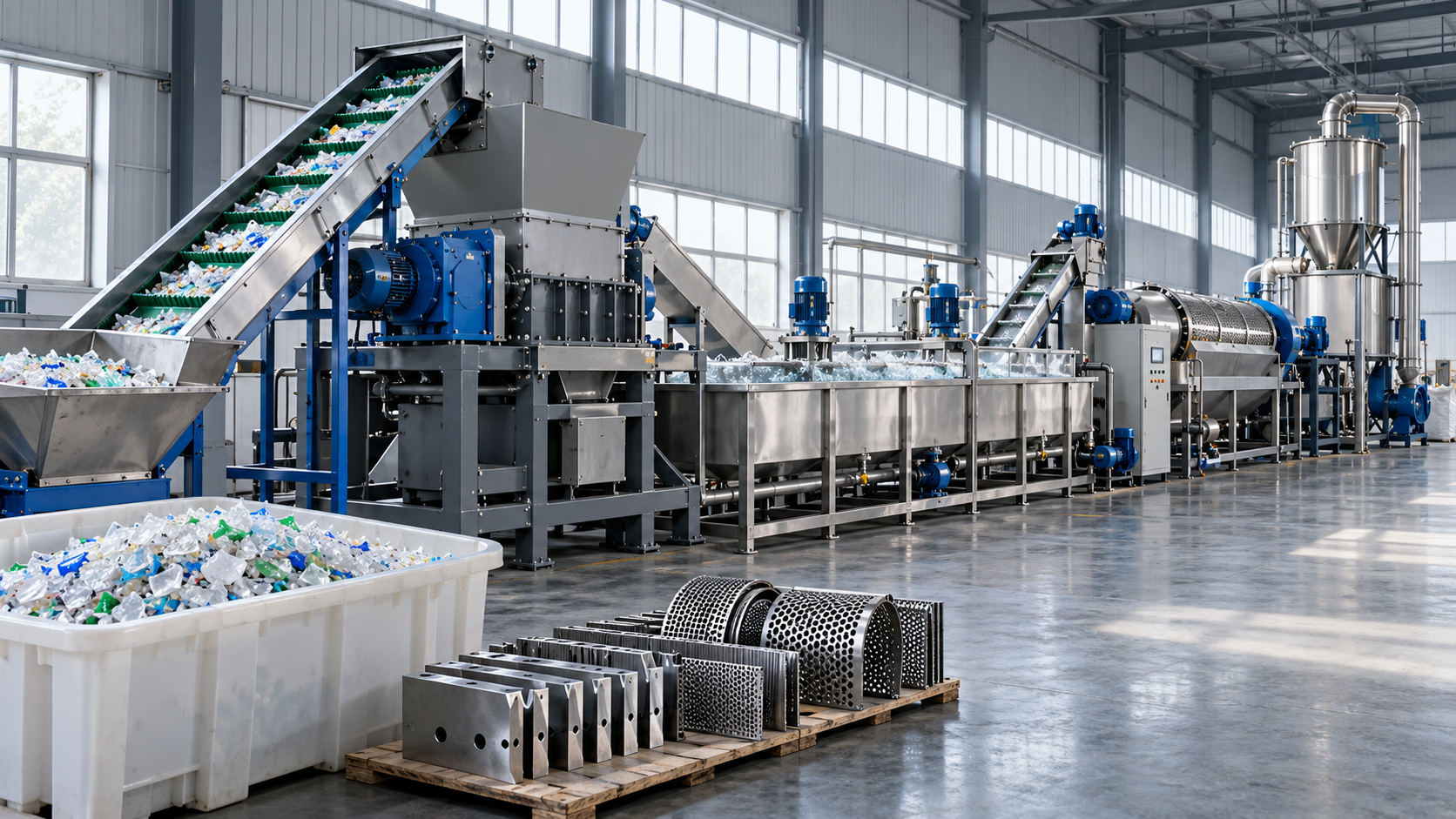
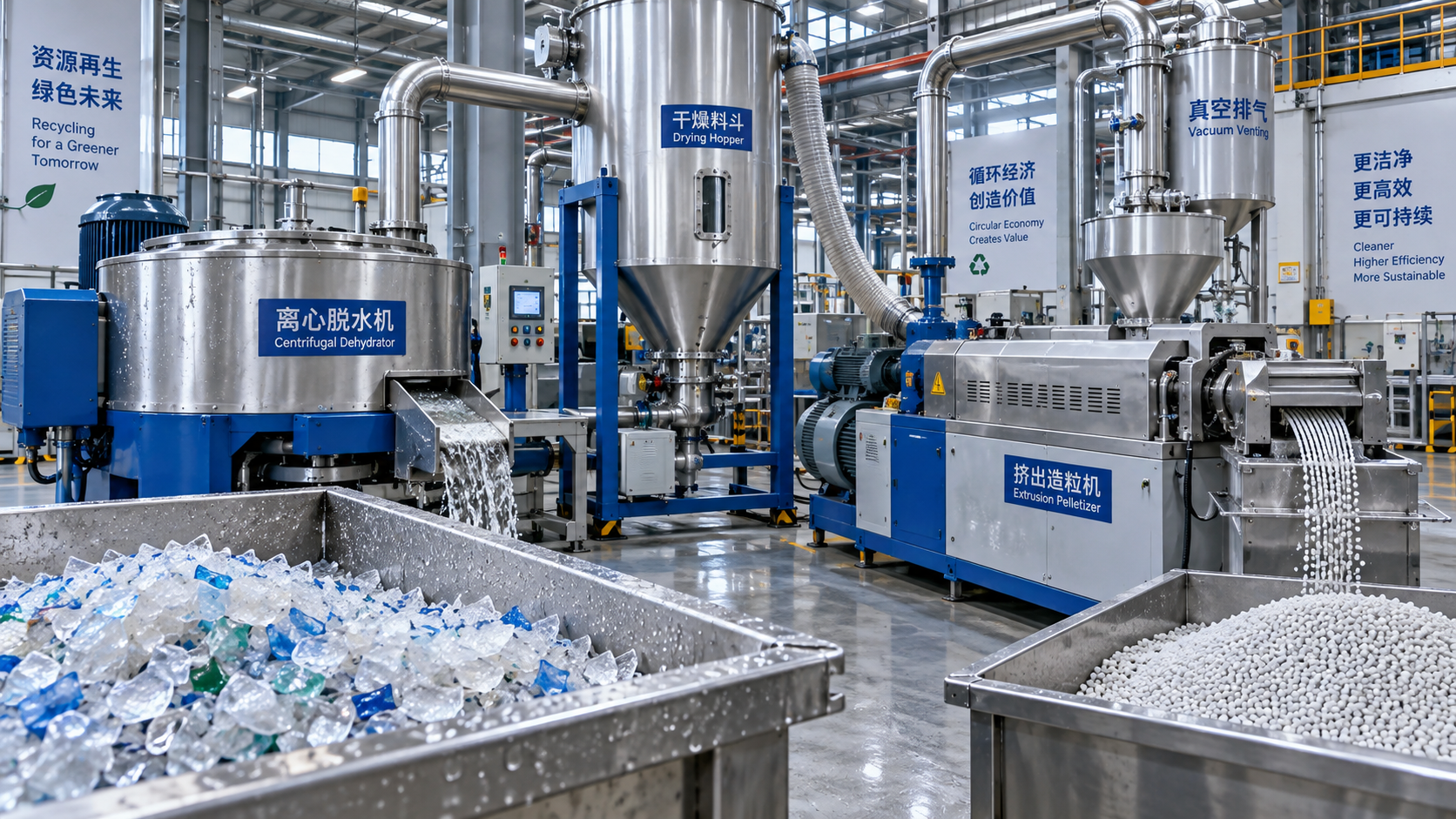
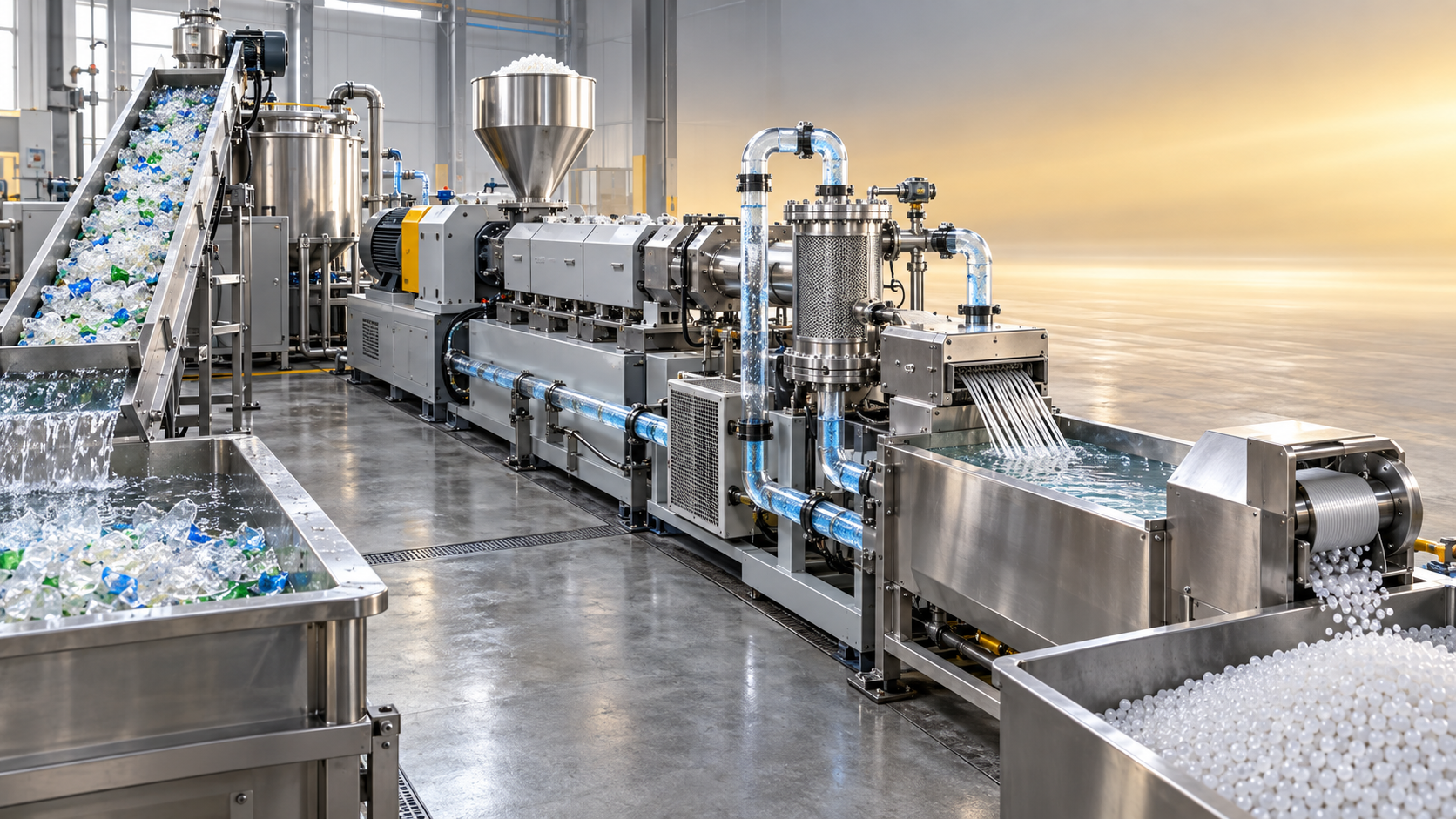
For dirty film, ask how the washing stages address labels, soil and other expected contaminants, and how the line controls moisture before extrusion. Inadequate drying or venting can contribute to bubbles, unstable processing and pellet defects. Water treatment and sludge handling also need defined boundaries: a quote for a washing line may exclude equipment needed to manage the resulting wastewater.
For melt filtration, ask what contamination the proposed screen arrangement is intended to capture, how screens are changed, and how pressure is monitored. Finer filtration may improve removal of solid particles, but it can also increase pressure, screen consumption and polymer loss. The appropriate arrangement depends on the feedstock and the downstream use, not on mesh size alone.
Where the polymer is heat- or moisture-sensitive, confirm how the supplier controls residence time, temperature and drying. For PET, for example, pellet quality can be affected by moisture and thermal history; an extrusion guarantee should therefore identify the input condition and the property measurement used to assess output. A generic promise of “high-quality pellets” does not establish an acceptance criterion.
Review component specifications as well as process design. Obtain the proposed motor ratings, screw and barrel details, control system, safety devices and named major components where relevant. If equivalent parts may be substituted, require approval rights for changes that affect performance, maintenance or compatibility with local support.
Make pellet quality measurable before signing
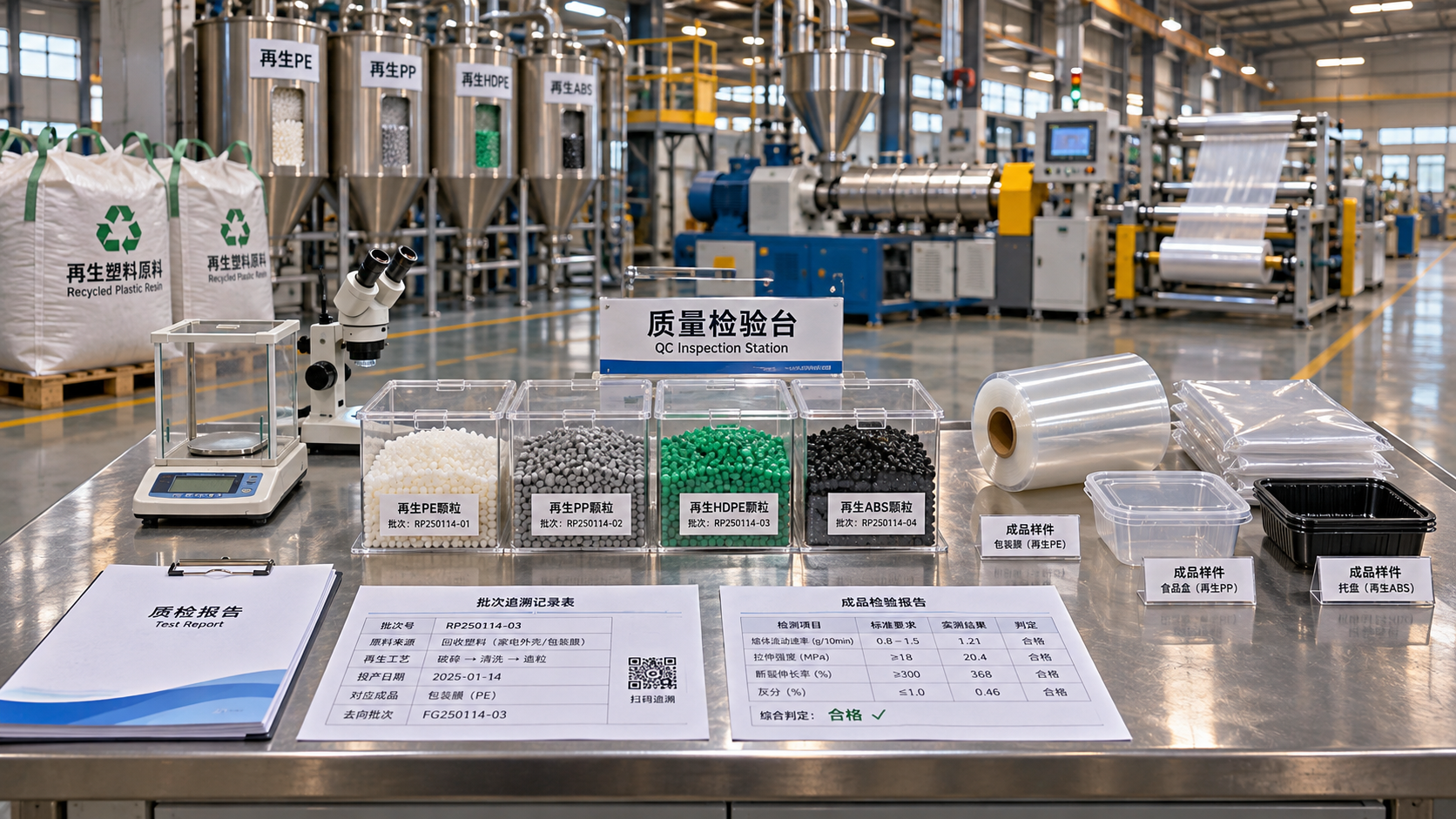
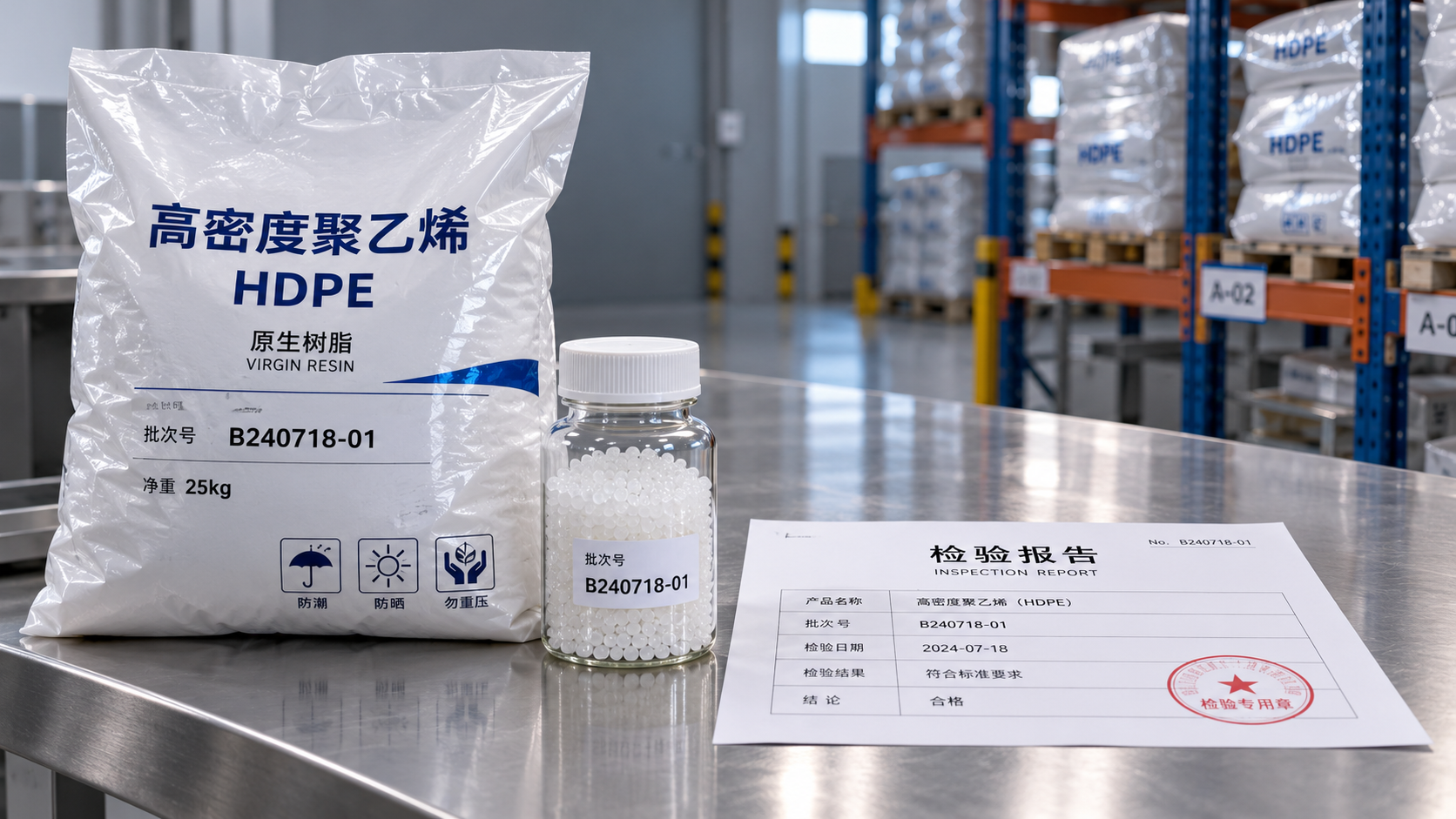
Samples provide evidence only when their origin and production conditions are known. Pellets made from clean demonstration material do not prove that the same line will produce equivalent output from contaminated waste. Where practical, arrange a trial using representative feedstock and record its preparation, moisture and contamination alongside the operating settings.
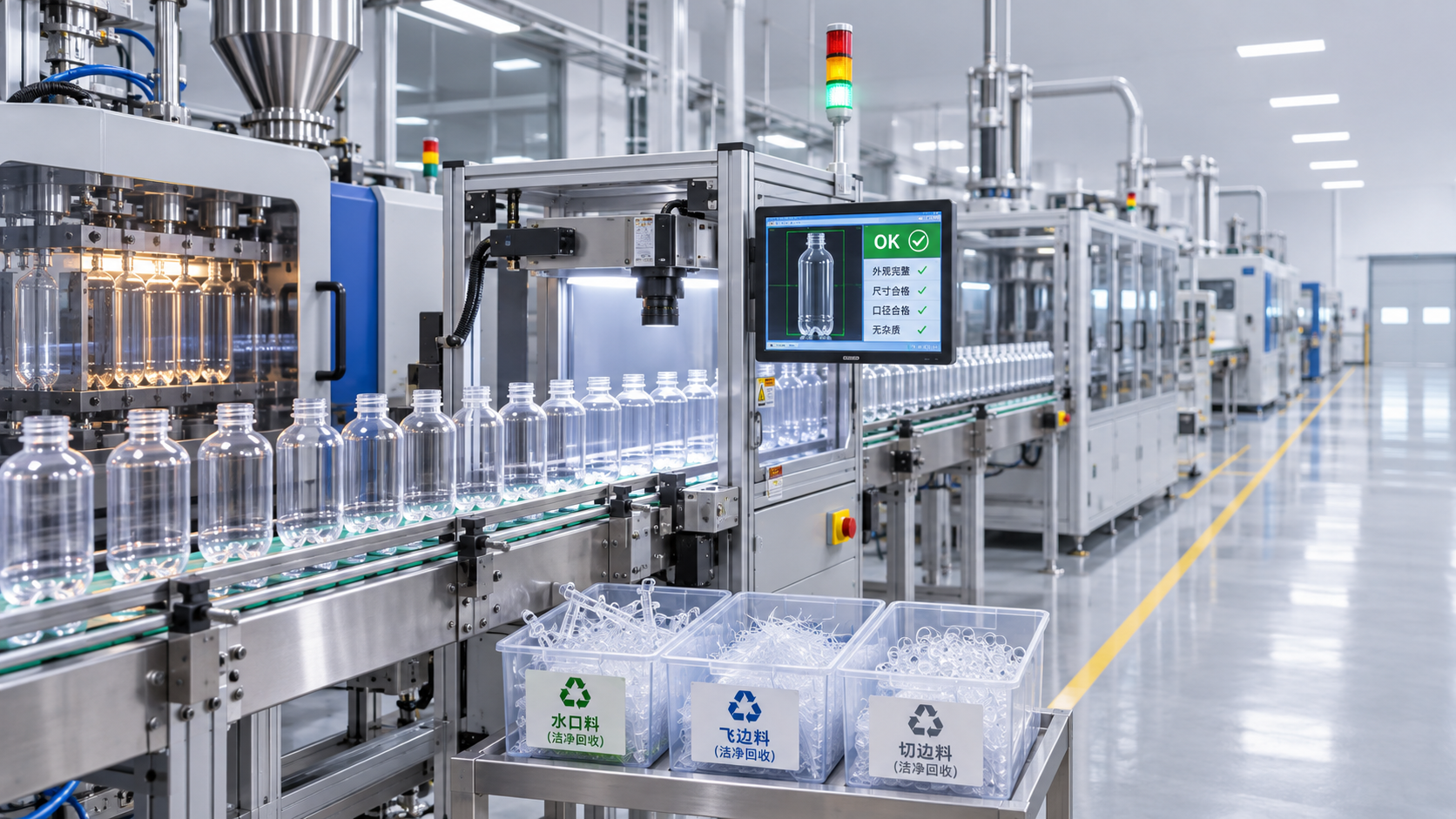
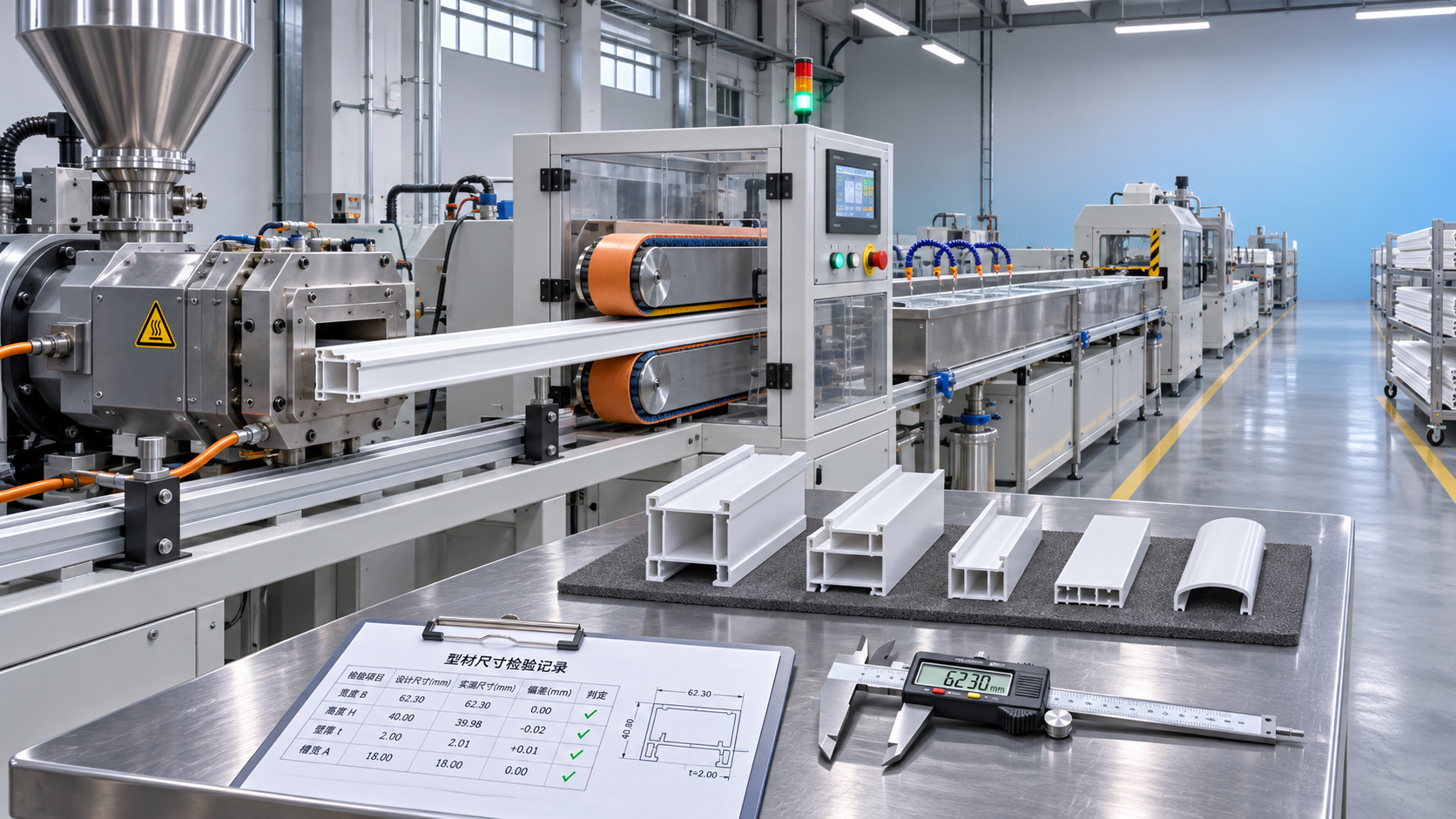
Define the output tests around the intended application. Depending on the material and customer specification, these may include moisture, visible contamination, bulk appearance, melt flow properties or other agreed measurements. For PET, intrinsic viscosity may be relevant where downstream processing depends on it. Agree on the test method, sampling point, number of samples and acceptance limits rather than relying on visual inspection alone.
A factory acceptance test should also distinguish equipment operation from process performance. Running motors and checking controls can confirm basic assembly, but a meaningful production test must establish throughput and output quality under specified feed and utility conditions. If representative material cannot be supplied to the factory, consider which checks can be completed before shipment and which must be verified during site acceptance.
The contract should state what happens if the line fails an agreed test: the correction period, responsibility for additional testing and the treatment of outstanding payment. Performance guarantees should also identify exclusions, including feedstock outside specification or utilities that do not meet the agreed requirements.
Verify who will actually manufacture and support the line
An exporter may be the equipment manufacturer, a trading company or an integrator combining machines from several suppliers. None of these arrangements is automatically unsuitable. The procurement risk lies in unclear responsibility, particularly when a fault falls between a washer, extruder, control cabinet and auxiliary system.
Ask for the legal identity of the contracting entity, the manufacturing locations of major equipment, and the party responsible for engineering integration. Request a supply list showing which items are made in-house and which are sourced externally. If subcontracting is involved, establish who controls design changes, inspection, warranty claims and spare-part orders.
Evidence of export capability should be specific to the proposed transaction. Ask for a sample document package, shipping references where disclosure is permitted, and confirmation that the supplier can prepare the agreed commercial invoice, packing list and other shipment documents. A list of destination countries is less useful than a clear explanation of how the supplier will pack, dispatch and support this particular line.
For a multi-supplier system, the contract should name the party accountable for overall line performance. Separate warranties on individual machines do not necessarily resolve an integration failure, such as incompatible controls or a feed rate that one stage cannot sustain.
Compare delivered and operating cost on the same basis
A low quoted equipment price can exclude the costs needed to make the line operational. Normalize bids by requesting the same scope and identifying exclusions explicitly. The comparison should include, where applicable:
- Sorting, size reduction, washing, drying, extrusion, filtration, pelletizing and conveying equipment.
- Electrical cabinets, cables within the supplier’s scope, controls, sensors and safety systems.
- Water treatment, piping, compressed air, ventilation and other utilities or interfaces.
- Packaging, inland transport, international freight, insurance, import charges and unloading, according to the agreed delivery terms.
- Installation supervision, commissioning, training, travel expenses and acceptance testing.
- Initial screens, knives, wear parts, recommended spares and software or control-system support.
Use the agreed Incoterms rule and named place in the contract; a trade term alone does not define every project cost or replace a detailed allocation of responsibilities. Confirm when risk transfers, who arranges insurance, and which party handles export and import formalities.
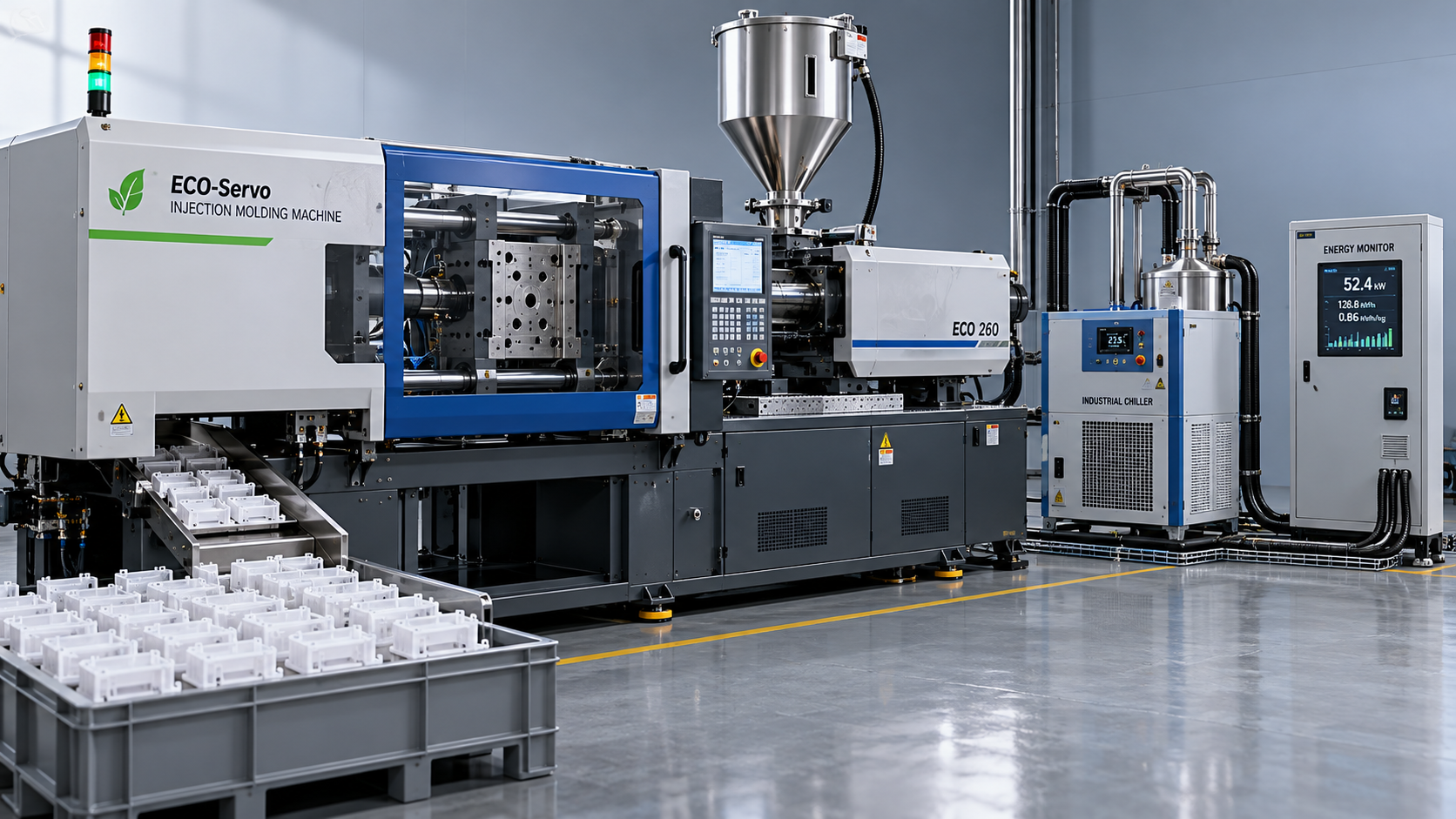
Operating cost should be evaluated per unit of acceptable output, not merely per hour of machine operation. Compare electricity and water consumption under a stated load, labor requirements, filter and knife consumption, maintenance, reject rates and planned downtime. A useful calculation divides the relevant operating costs for a period by the saleable kilograms produced in that period. Keep feedstock cost separate or include it consistently across all bids, and show the assumed yield: changes in reject rate can materially alter the result.
Supplier estimates are inputs to that calculation, not guarantees unless the contract makes them measurable obligations. Request the operating conditions behind each consumption figure and test the financial comparison against less favorable yield or utilization assumptions.
Put delivery and after-sales obligations into the contract
A delivery date without engineering milestones gives little visibility into delay. Agree when the lead time starts—such as after receipt of the deposit and approval of drawings—and identify milestones for design approval, component availability, inspection, factory testing and shipment. Tie payment stages to verifiable events rather than to calendar dates alone.
For imported machinery, document review should start before dispatch. Depending on the destination and installation, applicable requirements may cover electrical safety, machinery safety, guarding, technical documentation and conformity assessment. The exact obligations depend on the equipment and jurisdiction. Confirm who is responsible for determining them, who will provide the necessary evidence, and whether the proposed electrical supply and control configuration match the site.
After-sales support needs equally precise terms. Establish the warranty start and end points, exclusions for wear parts and misuse, response channels, remote diagnostic capability and the conditions for an onsite visit. Ask whether support is provided by the exporter, the manufacturer or a local service partner, and who pays travel and labor costs.
Before placing the order, obtain a spare-parts list with part numbers, prices, expected dispatch times and information on which components are interchangeable or locally obtainable. Critical parts with long replacement times may justify stocking at the site. Also confirm access to electrical drawings, operating manuals, control backups and troubleshooting information; possession of a machine does not automatically mean that replacement parts or software support will be easy to obtain.
The strongest offer is the one that connects a defined feedstock to measurable output, a complete supply scope and enforceable support commitments. If a supplier cannot explain the assumptions behind capacity, quality or delivery, the apparent saving in its quotation is an unpriced risk rather than a reliable cost advantage.
Have questions about this sector analysis, or seeking best practices specific to your niche? Drop us a line below and let the senior consultants at PFRS assist you.
We respect your privacy. Your information is strictly confidential.
Related News
- 00
0000-00
Selecting a Vacuum Flat Press for Rubber Hoses: Key Specifications - 00
0000-00
Innovations in Plastic Recycling: Mechanical vs Chemical Processing - 00
0000-00
Plastic Recycling Innovation: Sorting Advances for Mixed Packaging Waste - 00
0000-00
ESG Compliance for Plastics: Mapping Reporting Obligations by Market - 00
0000-00
Drying Temperature and Coating Defects in PU Synthetic Leather
Weekly Insights
Stay ahead with our curated technology reports delivered every Monday.
Related News
 Ms. Elena RodriguezESG Compliance for Plastics: Mapping Reporting Obligations by MarketExplore ESG compliance for plastics across the EU, UK, US and Canada. Learn how to map reporting obligations and build reliable records.Nov 24, 2026
 Ms. Elena RodriguezDrying Temperature and Coating Defects in PU Synthetic LeatherView used machinery details and learn how drying profiles affect PU synthetic leather defects, adhesion and solvent safety. Explore practical troubleshooting tips.Nov 23, 2026
 Ms. Elena RodriguezPolymer Supply Chain Analytics: How to Reduce Resin Supply DisruptionsDiscover how polymer supply chain analytics can reduce resin disruptions with better inventory planning, supplier risk insights, and qualified alternatives.Nov 21, 2026
 Ms. Elena RodriguezChoosing Polymer Processing Equipment in India: Capacity and Supplier CriteriaChoosing polymer processing equipment in India? Compare capacity, lifecycle costs, supplier reliability and local support to make a confident investment.Nov 18, 2026
 Ms. Elena RodriguezChoosing a Recycled Plastic Processing Exporter: Quality and Supply ChecksChoose a recycled plastic processing exporter with confidence. Compare equipment quality, proven output, delivery terms and after-sales support.Nov 17, 2026
 Ms. Elena RodriguezSustainable Packaging Manufacturing: Where to Cut Costs Without Adding WasteDiscover cost effective sustainable packaging manufacturing strategies to cut material and production costs, reduce waste, and protect package performance.Nov 16, 2026
 Ms. Elena RodriguezChoosing a Plastic Extrusion Supplier: Quality, Capacity and Lead TimesChoosing a plastic extrusion supplier? Learn how to assess quality, production capacity, lead times and total costs to make a confident sourcing decision.Nov 08, 2026
 Ms. Elena RodriguezAutomated Plastic Recycling Systems: When Do Labor Savings Justify the Cost?Do automated plastic recycling systems pay off? Learn how to calculate real labor savings, operating costs, and payback to make a smarter investment.Oct 29, 2026
 Ms. Elena RodriguezBuying Plastic Recycling Equipment in South Africa: Costs and Local SupportFind plastic recycling equipment South Africa businesses can rely on. Compare total costs, local support and supplier checks to invest with confidence.Oct 26, 2026
 Ms. Elena RodriguezVirgin Resin Suppliers: How to Verify Traceability and Batch ConsistencyEvaluate virgin resin suppliers with practical checks for traceability, CoA accuracy, and batch consistency. Learn how to reduce scrap, avoid sourcing risks, and buy with confidence.Oct 24, 2026
 Ms. Elena RodriguezEnergy-Saving Plastics Machinery: How to Calculate Payback Before BuyingEvaluate energy saving plastics machinery before buying. Learn to calculate payback using verified energy savings, installed costs, and production data to invest with confidence.Oct 23, 2026
 Ms. Elena RodriguezCircular Manufacturing Roadmap: From Waste Audits to Material RecoveryBuild a circular manufacturing roadmap from waste audits to material recovery. Explore practical steps to qualify recycled materials, select equipment, and validate ROI before investing.Oct 20, 2026
 Ms. Elena RodriguezInjection Molding System Costs: Machine, Molds, Automation, and InstallationCompare injection molding systems price proposals with confidence. Uncover machine, mold, automation, and installation costs to avoid hidden expenses and choose a production-ready cell.Oct 17, 2026
 Ms. Elena RodriguezHow Does Feedstock Moisture Affect Plastic Pelletizing Energy Use?How does feedstock moisture affect plastic pelletizing energy use? Discover how smarter drying and dewatering can cut kWh/kg, protect pellet quality, and boost output.Oct 22, 2026
 Ms. Elena RodriguezWaste Tyre Collection and Sorting: On-Site vs Outsourced Shredding CostsCompare waste tyre collection and sorting unit cost for on-site vs outsourced shredding. Uncover hidden expenses, assess break-even volumes and choose the most cost-effective route.Oct 26, 2026
 Ms. Elena RodriguezSmart Factory Costs for Plastics: Estimating ROI for Automation ProjectsSmart factory for plastics cost: learn how to estimate automation ROI, uncover hidden integration expenses, reduce scrap, and build a phased investment plan.Oct 10, 2026
 Ms. Elena RodriguezHow to Evaluate a Packaging Molding Equipment Supplier for High-Volume ProductionChoose a packaging molding equipment supplier with confidence. Learn how to assess throughput stability, tooling, recycled-material capability, lifecycle cost, and service support for high-volume production.Oct 09, 2026
 Ms. Elena RodriguezProcurement Records to Request Before Buying a Used Tyre ShredderUsed tyre shredder for sale? Request maintenance, operating, safety, and parts records to reduce risk, verify condition, and buy with confidence.Oct 16, 2026
 Ms. Elena RodriguezHow to Select Packaging Molding Equipment for High-Volume Production LinesPackaging molding equipment selection guide for high-volume lines: compare processes, throughput, materials, automation, and energy to achieve stable, cost-effective output.Oct 04, 2026
 Ms. Elena RodriguezHow to Evaluate Plastic Recycling Machinery for UAE Heat, Feedstock, and Output NeedsPlastic recycling machinery UAE buyers: evaluate heat resilience, feedstock handling, cooling, pellet quality, energy use, and lifecycle cost for reliable output.Sep 28, 2026