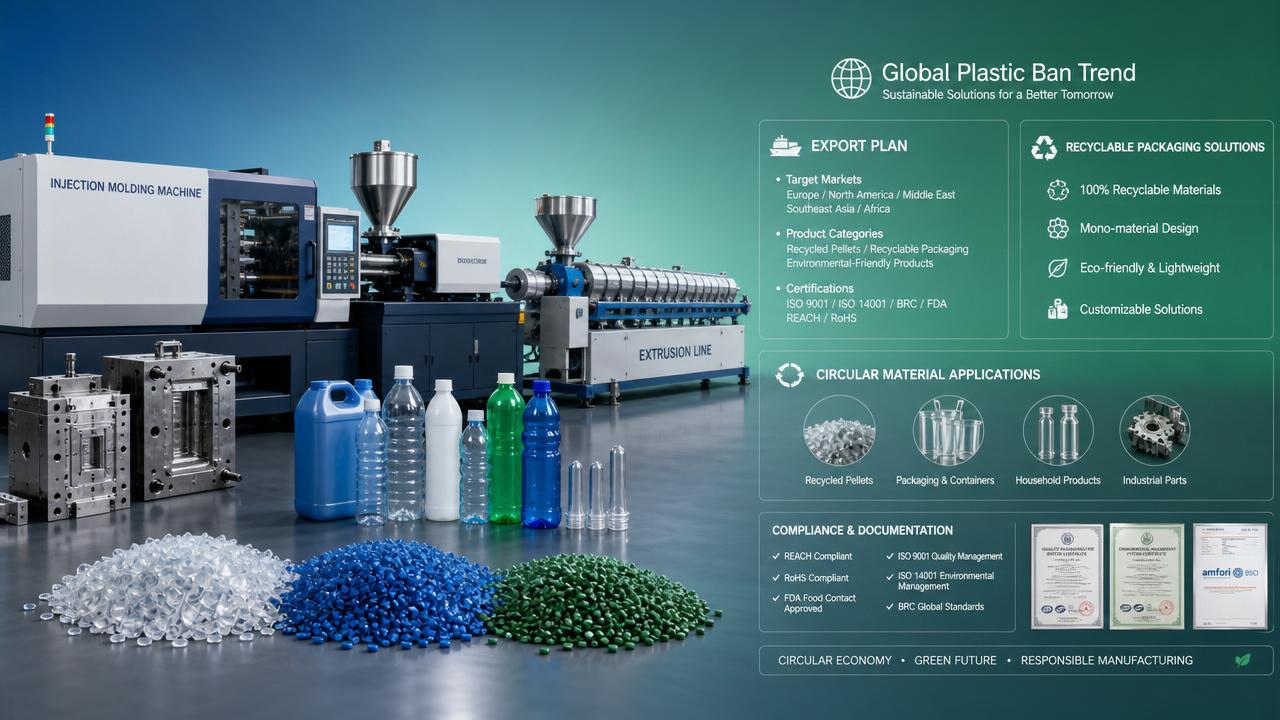
How ESG in plastic manufacturing affects export risk




For global trade-linked polymer equipment markets, ESG in plastic manufacturing now shapes real export outcomes. It influences customs scrutiny, buyer qualification, insurance confidence, and even payment security.
Carbon data, recycled content claims, packaging rules, and supplier traceability are moving from optional disclosures to deal conditions. When documentation fails, export risk rises through delays, claims, price pressure, or lost market access.
For intelligence platforms such as PFRS, this shift matters across injection molding, extrusion, blow molding, vulcanization, and recycling systems. The issue is not only compliance. It is commercial resilience across the whole polymer value chain.
What does ESG in plastic manufacturing actually mean for export risk?
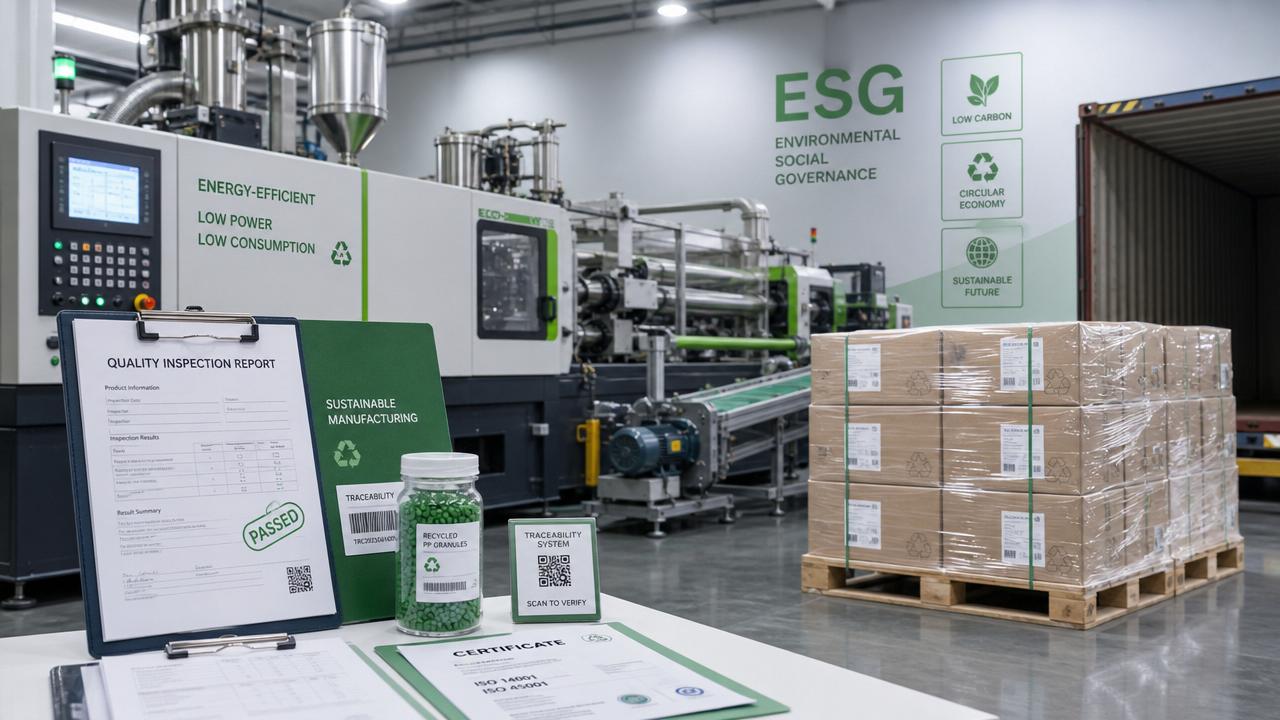
ESG in plastic manufacturing combines environmental, social, and governance performance with production credibility. In export markets, it becomes a filter for supplier approval and a trigger for commercial penalties.
The environmental side includes energy use, emissions, recycled inputs, resin efficiency, waste handling, and packaging compliance. These factors increasingly appear in tenders, contracts, and technical audits.
The social side covers labor standards, health and safety, conflict response, and responsible sourcing. Buyers may connect factory safety incidents with supply continuity and reputational risk.
Governance focuses on documentation accuracy, anti-corruption controls, material declarations, and audit readiness. Weak governance often creates the fastest export disruption because paperwork failures are visible immediately.
In practical terms, ESG in plastic manufacturing affects whether products cross borders smoothly, whether claims are accepted, and whether customers trust reported specifications.
Why are overseas buyers tightening ESG in plastic manufacturing requirements now?
Several forces are converging at once. Regulation is stricter, brand owners are under investor pressure, and plastic waste has become a visible political issue in many regions.
Packaging directives, extended producer responsibility schemes, and carbon disclosure frameworks are expanding. Buyers cannot wait until goods arrive to discover missing evidence.
The result is front-loaded screening. Importers increasingly ask about recycled resin percentages, machine energy profiles, traceability systems, and restricted substance controls before issuing orders.
For polymer equipment channels, this matters beyond finished goods. Machines are judged by how they support low-scrap molding, cleaner extrusion, lightweight packaging, and closed-loop recycling.
PFRS tracks this evolution closely because the strongest demand is shifting toward equipment that proves measurable efficiency, digital monitoring, and circular material capability.
Key drivers behind stricter checks
- Carbon reporting rules for products and supply chains
- Recycled content mandates in packaging applications
- Growing restrictions on additives and material claims
- Retailer pressure for documented sustainability performance
- Insurance and financing preference for lower-risk suppliers
Which export risks become more serious when ESG in plastic manufacturing is weak?
The first risk is customs or border delay. If declarations on materials, recycled content, or packaging compliance cannot be validated, goods may be held for review.
The second risk is commercial rejection. A buyer may refuse shipment release if ESG-linked contract clauses are unmet, even when product dimensions and performance are correct.
The third risk is margin erosion. Extra testing, re-labeling, document correction, and storage costs quickly reduce profitability, especially in high-volume plastic packaging flows.
The fourth risk is reputational spread. One failed batch can trigger broader supplier review across regions, product categories, or affiliated brands.
The fifth risk involves equipment mismatch. If machines cannot process recycled resin consistently or capture production data, future compliance becomes harder and costlier.
High-risk warning signs
- Unverified recycled content statements
- No energy consumption records by production batch
- Poor traceability between resin source and finished output
- Inconsistent packaging labeling across export destinations
- Outdated machinery causing unstable scrap rates
How can export-facing polymer businesses judge whether ESG in plastic manufacturing is credible?
Credibility starts with evidence, not slogans. A reliable ESG profile shows measurable data, stable process controls, and clear links between policy, equipment, and output.
Look for machine-level and batch-level records. In injection molding and extrusion, energy intensity, reject rate, and material yield should be tracked consistently.
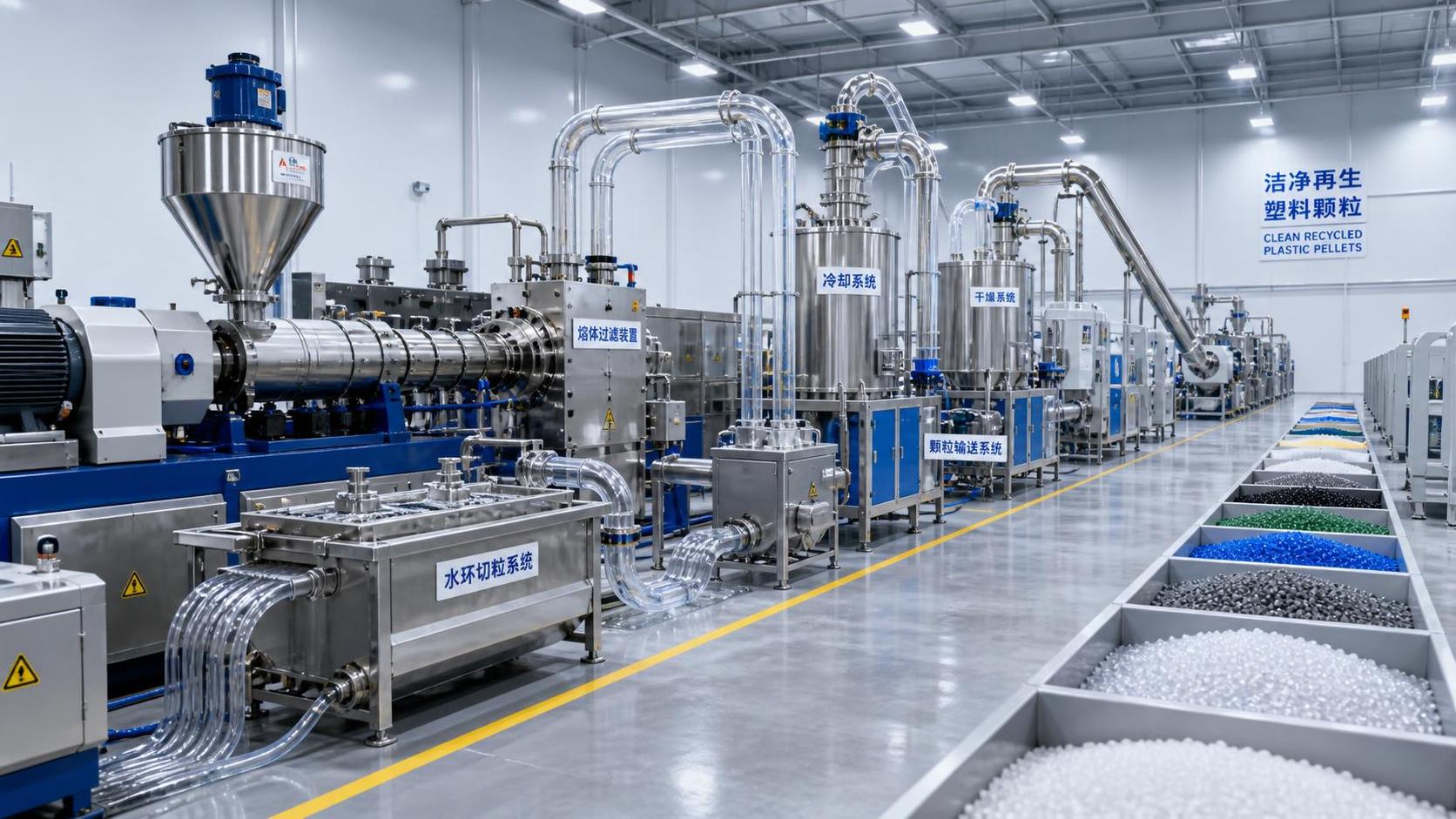
Check whether recycled material handling is engineered properly. Good systems address contamination, melt filtration, degassing, pellet stability, and repeatable quality performance.
Assess governance discipline as carefully as technical capability. A supplier with modern machines but weak declarations may still create serious export exposure.
How does ESG in plastic manufacturing differ across equipment and application scenarios?
Not every plastic process faces the same ESG pressure. The export risk profile changes by application, machine design, resin choice, and end-market regulation.
Injection molding often faces scrutiny on precision, scrap reduction, and electricity consumption. Medical and optical parts may require stronger traceability and contamination control.
Extrusion is closely linked to continuous energy efficiency, additive control, and material blending consistency. Pipe, film, and sheet exports may require robust composition evidence.
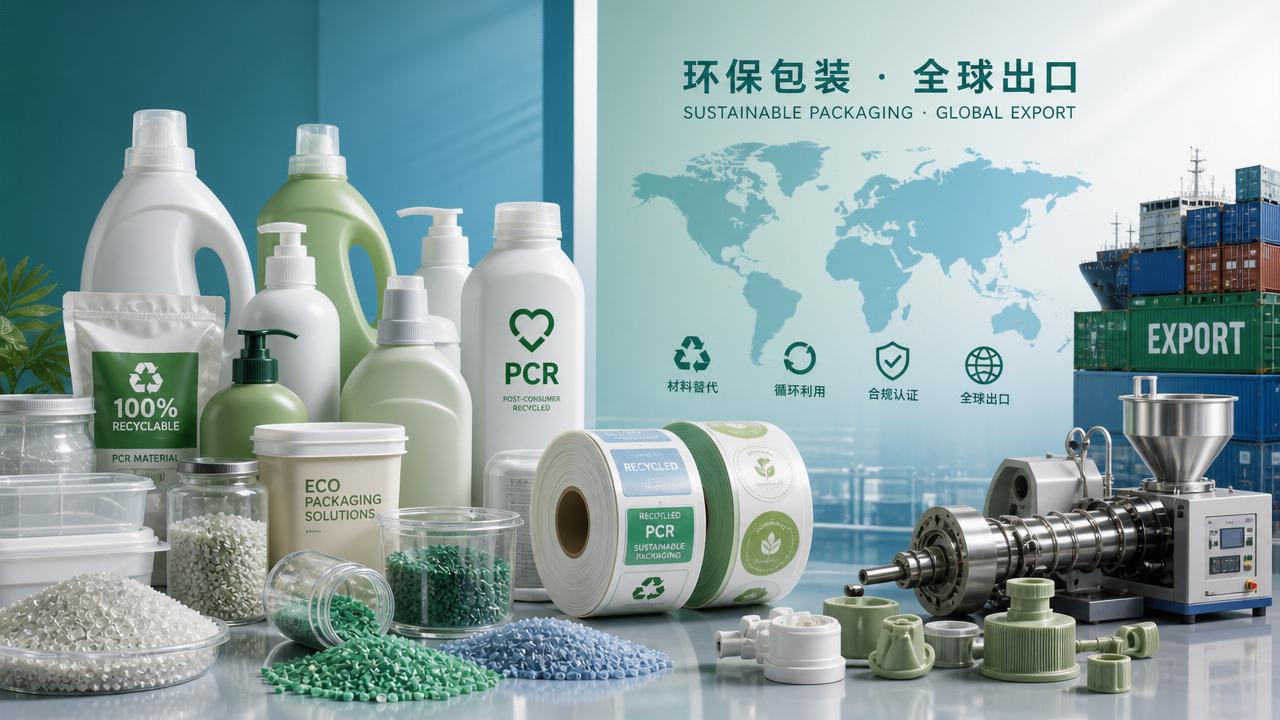
Blow molding faces pressure from beverage and personal care packaging rules. Recycled PET content, bottle weight reduction, and packaging declarations directly affect export acceptance.
Rubber vulcanization raises additional concerns around process emissions, workplace safety, and formulation governance. These may shape supplier screening even outside plastic packaging categories.
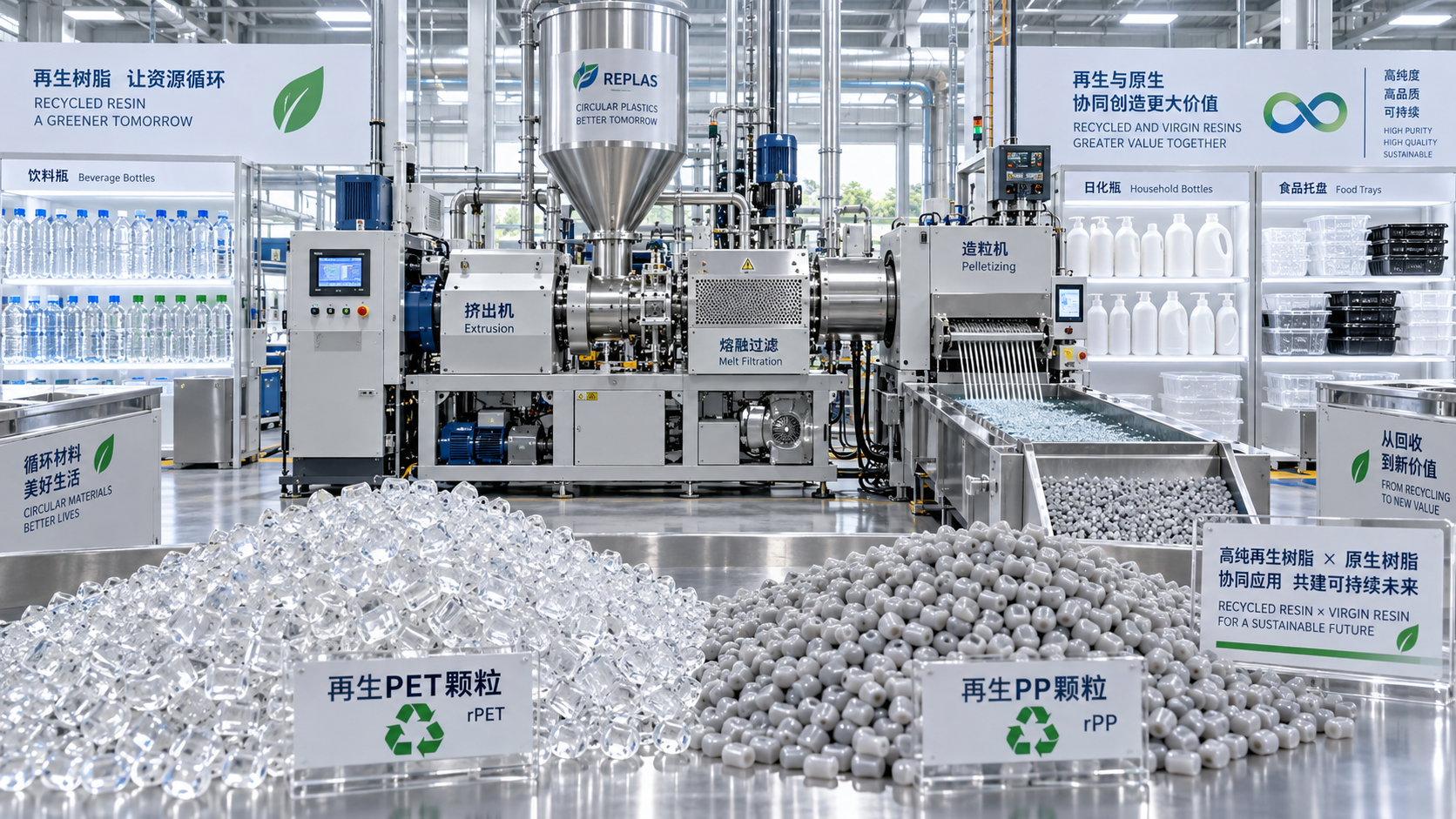
Waste plastic pelletizing sits at the center of circularity claims. Here, ESG in plastic manufacturing is judged by wash efficiency, odor control, filtration quality, and pellet consistency.
Scenario comparison
- Food-contact packaging needs stronger documentation and contamination management
- Automotive parts emphasize traceability, stability, and supplier governance
- Consumer packaging prioritizes recycled content and labeling accuracy
- Recycling lines are assessed on actual material recovery efficiency
What practical steps reduce export risk tied to ESG in plastic manufacturing?
Start with a compliance map by destination market. List carbon, packaging, recycled content, chemical, and labeling requirements for each sales region.
Then connect requirements to process reality. Confirm which machines can capture data, which lines run recycled material well, and where documentation breaks occur.
Prioritize upgrades that improve both compliance and economics. Servo-driven molding, efficient twin-screw compounding, advanced filtration, and in-house recycling often support both goals.
Build an evidence library. Keep updated declarations, test reports, process logs, supplier certifications, and packaging statements ready for rapid buyer or customs review.
Finally, review claims language carefully. Overstated sustainability messaging creates unnecessary legal and commercial exposure when evidence is incomplete.
Recommended action checklist
- Audit export documents against destination ESG rules
- Measure batch-level energy and material efficiency
- Validate recycled content and additive declarations
- Upgrade equipment where data visibility is poor
- Use technical intelligence to monitor policy and buyer shifts
FAQ summary: what should be watched first?
ESG in plastic manufacturing is now part of export strategy, not just corporate messaging. Strong process control, traceability, and machine intelligence reduce uncertainty across contracts and borders.
PFRS helps connect these policy shifts with real equipment choices, from precision molding to circular recycling systems. The next practical step is to compare market requirements with process evidence already available.
Where evidence is thin, risk is high. Where data, compliance, and equipment capability align, export resilience grows with it.
Related News
- 00
0000-00
How to Evaluate Plastic Pelletizing Machine Suppliers for Output, Support, and Risk - 00
0000-00
How to Select a Plastic Pipe Manufacturing System for Output, Resin, and Pipe Range - 00
0000-00
How to Specify Injection Molding Equipment for High-Volume Closure Production - 00
0000-00
How to Specify a Medical Molding Machine for Cleanroom Device Production - 00
0000-00
Plastic Extrusion Technology for Films: Process Controls That Improve Gauge Uniformity
Weekly Insights
Stay ahead with our curated technology reports delivered every Monday.
Related News
 Dr. Alistair VaughnHow Do PPWR Recycled-Content Targets Affect Packaging Resin Demand?How do PPWR recycled-content targets affect packaging resin demand? Explore shifts in recycled grades, virgin blends, food-contact supply, and processing strategy.Sep 26, 2026
 Dr. Alistair VaughnHow to Evaluate a Plastics Processing Equipment Manufacturer for Uptime and SupportPlastics processing equipment manufacturer evaluation guide: compare uptime, spare parts, service response, diagnostics, and lifecycle support before buying.Sep 17, 2026
 Dr. Alistair VaughnBudgeting a Plastic Pelletizing Machine: Cost Drivers for Recycling LinesPlastic pelletizing machines cost depends on feedstock, filtration, utilities, and installation. Explore key budget drivers to build a reliable recycling line investment plan.Sep 03, 2026
 Dr. Alistair VaughnCommon Waste and Downtime Causes in Rubber Processing and Cutting OperationsProcessamento e corte de borracha: discover the real causes of scrap and downtime in rubber lines, from material variation to machine wear, and learn how to cut waste and improve output.Aug 31, 2026
 Dr. Alistair VaughnWhat Is Automated Materials Processing and Where Does It Deliver the Most Value?Automated materials processing improves consistency, cuts waste, and boosts efficiency across molding, extrusion, and recycling. Discover where it delivers the most value.Aug 14, 2026
 Dr. Alistair VaughnHow Does a Polymer Recycling Plant Work? Process Steps and Key Equipment ExplainedPolymer recycling plant guide: explore sorting, washing, drying, extrusion, filtration, and pelletizing steps, plus key equipment that drives cleaner output and reliable recycled plastic quality.Jul 31, 2026
 Dr. Alistair VaughnHow Does Rubber Vulcanization Work and What Determines Final Rubber Performance?Rubber vulcanization explained: discover how curing, formulation, temperature, pressure, and machine control determine final rubber performance, durability, and product reliability.Jul 30, 2026
 Dr. Alistair VaughnHow Circular Plastics Economy EPR Rules Affect Packaging Costs and Compliance PlanningCircular plastics economy EPR is reshaping packaging costs, recyclability, and compliance planning. Learn how to reduce fee exposure, protect margins, and make smarter packaging decisions.Jul 13, 2026
 Dr. Alistair VaughnCircular Plastics Economy Trends: How EPR Policies and Recycled Content Rules Affect ManufacturersCircular plastics economy trends are reshaping manufacturing fast. See how EPR policies and recycled content rules impact costs, compliance, sourcing, and plant performance.Jun 30, 2026
![]() Dr. Alistair VaughnGlobal Plastic Ban Trends: Which Packaging Materials Face the Highest Compliance Risk?Global plastic ban trends are reshaping packaging compliance. Discover which materials face the highest risk and how to reduce cost, disruption, and redesign pressure.Jun 04, 2026
Dr. Alistair VaughnGlobal Plastic Ban Trends: Which Packaging Materials Face the Highest Compliance Risk?Global plastic ban trends are reshaping packaging compliance. Discover which materials face the highest risk and how to reduce cost, disruption, and redesign pressure.Jun 04, 2026 Dr. Alistair VaughnGlobal Plastic Ban Trends: Policy Shifts Affecting Packaging Materials and SupplyGlobal plastic ban trends are reshaping packaging supply. Discover policy shifts, material risks, and processing strategies to stay compliant and competitive.Jun 02, 2026
 Dr. Alistair VaughnHow is AI in injection molding cutting scrap?AI in injection molding cuts scrap by detecting process drift, optimizing pressure and cooling, and improving quality decisions—see how to reduce waste and boost ROI.May 29, 2026
 Dr. Alistair VaughnWhat global plastic ban trends mean for export planningGlobal plastic ban trends are reshaping export planning. Learn how to reduce compliance risk, choose smarter packaging, and align sourcing and equipment upgrades for market access.May 28, 2026
![]() Dr. Alistair VaughnWhy elastomer cross-linking fails and how to prevent defectsElastomer cross-linking failures can cause soft spots, cracks, and hidden reliability risks. Learn the key defect causes and proven prevention steps across molding, extrusion, and recycled blends.May 23, 2026
Dr. Alistair VaughnWhy elastomer cross-linking fails and how to prevent defectsElastomer cross-linking failures can cause soft spots, cracks, and hidden reliability risks. Learn the key defect causes and proven prevention steps across molding, extrusion, and recycled blends.May 23, 2026 Dr. Alistair VaughnHow fragile is the virgin resin supply chain in 2026Virgin resin supply chain risks are rising in 2026. Explore key disruption drivers, pricing impacts, and practical resilience strategies for smarter sourcing and planning.May 22, 2026
 Dr. Alistair VaughnWhy polymer molding scientists matter in process upgradesPolymer molding scientists help turn process upgrades into higher precision, lower waste, better energy efficiency, and faster ROI. See why their expertise reduces risk and improves modernization results.May 22, 2026
 Dr. Alistair VaughnWhat global plastic ban trends mean for new projectsGlobal plastic ban trends are reshaping new projects through design, compliance, recycled content, and equipment strategy. See how to plan smarter, reduce risk, and stay market-ready.May 21, 2026
 Dr. Alistair VaughnHow ESG in plastic manufacturing affects export riskESG in plastic manufacturing directly affects export risk, from customs delays to buyer approval. Learn how traceability, compliance, and smarter equipment protect market access.May 21, 2026
 Dr. Alistair VaughnWhat global plastic ban trends mean for export planningGlobal plastic ban trends are reshaping export planning, packaging choices, and compliance strategy. Learn how to reduce risk, adapt faster, and stay competitive across global markets.May 19, 2026
 Dr. Alistair VaughnHow polymer smart manufacturing improves batch consistencyPolymer smart manufacturing improves batch consistency with inline sensing, closed-loop control, and analytics. See how it reduces variation, scrap, and quality risk across polymer processing.May 18, 2026