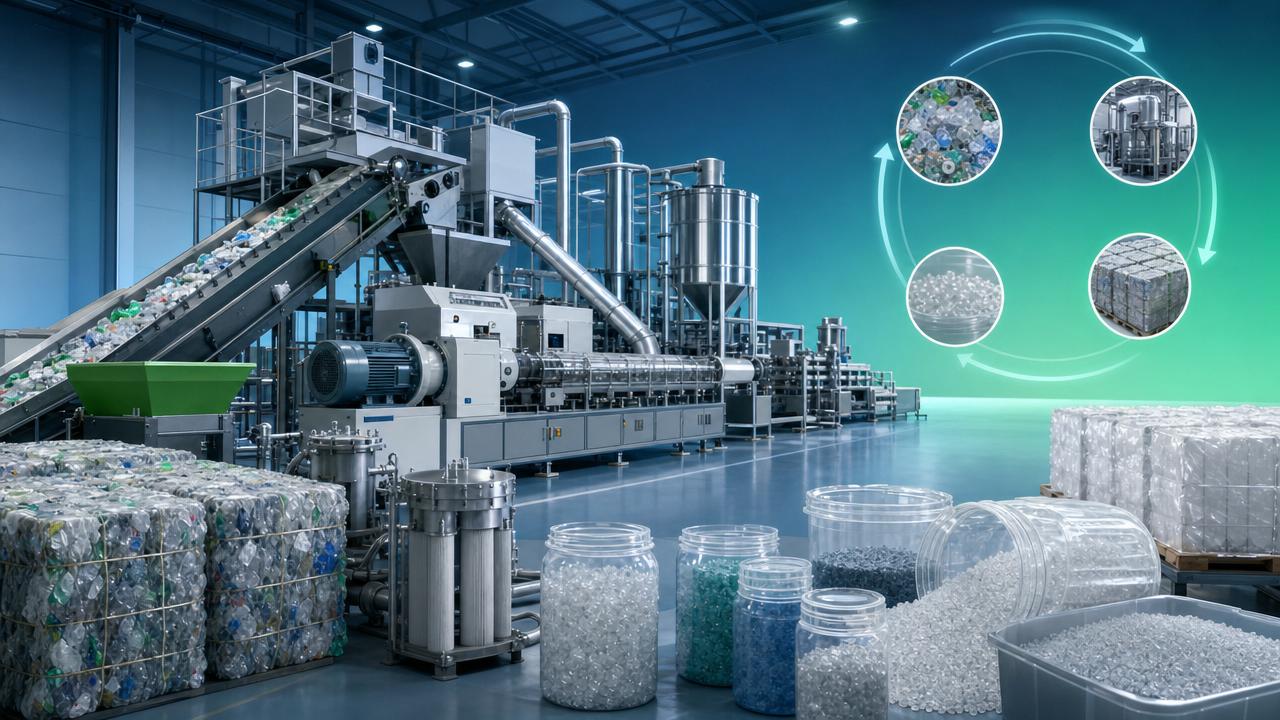
Circular Plastics Economy Compliance Explained: Key Requirements for Manufacturers




Why is circular plastics economy compliance now a board-level issue?

Circular plastics economy compliance has moved beyond environmental messaging. It now affects product access, contract eligibility, packaging approval, and long-term manufacturing economics.
In practical terms, the pressure comes from several directions at once. Regulations are tightening, brand owners want cleaner supply chains, and buyers increasingly expect verifiable recycled content.
That means compliance is no longer handled by one department. It touches design, sourcing, production, quality, maintenance, reporting, and capital planning.
For polymer processors, the issue is even more technical. Recycled resin behavior, melt filtration, additive dosing, dimensional stability, and energy use all influence whether circular plastics economy compliance is credible.
This is where PFRS offers useful context. Its focus on injection molding, extrusion, blow molding, vulcanization, and waste plastic pelletizing reflects the full material loop behind compliance decisions.
A company may meet a recycled content target on paper, yet still fail in practice if process control is weak, traceability breaks, or product performance drops below specification.
So the real question is not whether circular plastics economy compliance matters. The better question is how to build it into operating systems without creating quality, cost, or delivery risks.
What does circular plastics economy compliance usually include?
Many people assume it only means using recycled material. That is part of it, but the compliance picture is wider and more demanding.
A typical framework combines product rules, process evidence, and reporting obligations. Some requirements are legal. Others come from customers, certification schemes, or procurement standards.
The core elements often include:
- Minimum recycled content thresholds for specific packaging or product categories.
- Design for recyclability, including mono-material structures and easier label or closure separation.
- Restricted substances control, especially when recycled inputs come from mixed waste streams.
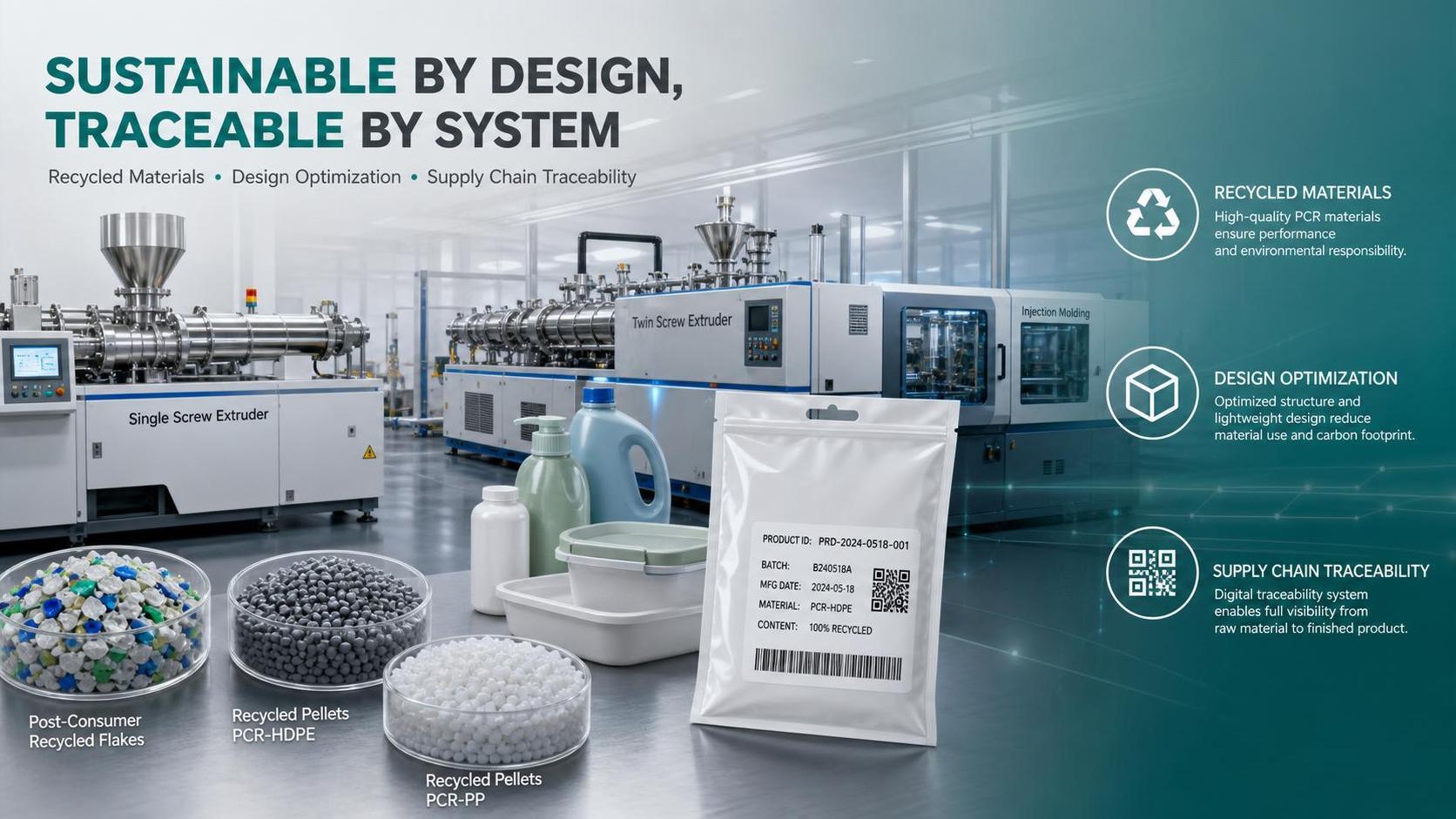
- Traceability of resin origin, batch movement, regrind ratios, and conversion records.
- Mass balance or chain-of-custody documentation for recycled or chemically recycled feedstock.
- Proof of process stability, energy efficiency, and waste reduction during manufacturing.
In real operations, compliance often depends on machine capability. An all-electric injection molding system may improve repeatability. A twin-screw extruder may deliver better additive dispersion. A pelletizing line may determine whether recovered material is clean enough for reuse.
That is why circular plastics economy compliance should be read as a system requirement, not a single material choice.
Which operations feel the impact first, and where do failures usually start?
The first impact usually appears in packaging, automotive components, consumer goods, medical disposables, and industrial film. These sectors combine high volume with rising material scrutiny.
Yet the earliest failures are often less visible. They start in data gaps, unstable processing windows, or poor assumptions about recycled resin behavior.
For example, a blow molding line may hit output targets but fail lightweighting or barrier requirements after resin substitution. An extrusion line may meet throughput goals but show inconsistent melt pressure when recycled content rises.
The same pattern appears in molding. Recycled polymers can shift shrinkage, odor, color consistency, or impact strength. If holding pressure, screw design, filtration, or drying are not adjusted, the compliance claim becomes fragile.
More advanced operators now watch the entire loop. They link material selection with rheology, process windows, energy intensity, scrap rates, and end-use recyclability.
That approach fits the PFRS view of polymer manufacturing. Compliance is strongest when material science, machine engineering, and environmental obligations are stitched together instead of managed separately.
A simple way to assess exposure is to ask whether a claim can be proven across incoming material, conversion, finished product, and post-use recovery. If one link is weak, the whole claim is at risk.
A quick judgment table for operational readiness
Before launching a compliance program, it helps to check where the pressure points sit. The table below summarizes common questions and what strong preparation looks like.
How should companies evaluate equipment and process choices?
Not every compliance problem is solved by buying a new machine. Still, equipment capability often determines whether circular plastics economy compliance can scale economically.
The better approach is to start from the intended claim. Are you targeting higher recycled content, better recyclability, lower energy intensity, or internal recovery of production waste?
Each target points to different technical priorities. For extrusion, screw geometry, devolatilization, filtration, and dosing accuracy may matter most. For injection molding, repeatability, drying control, servo response, and cavity balance can be decisive.
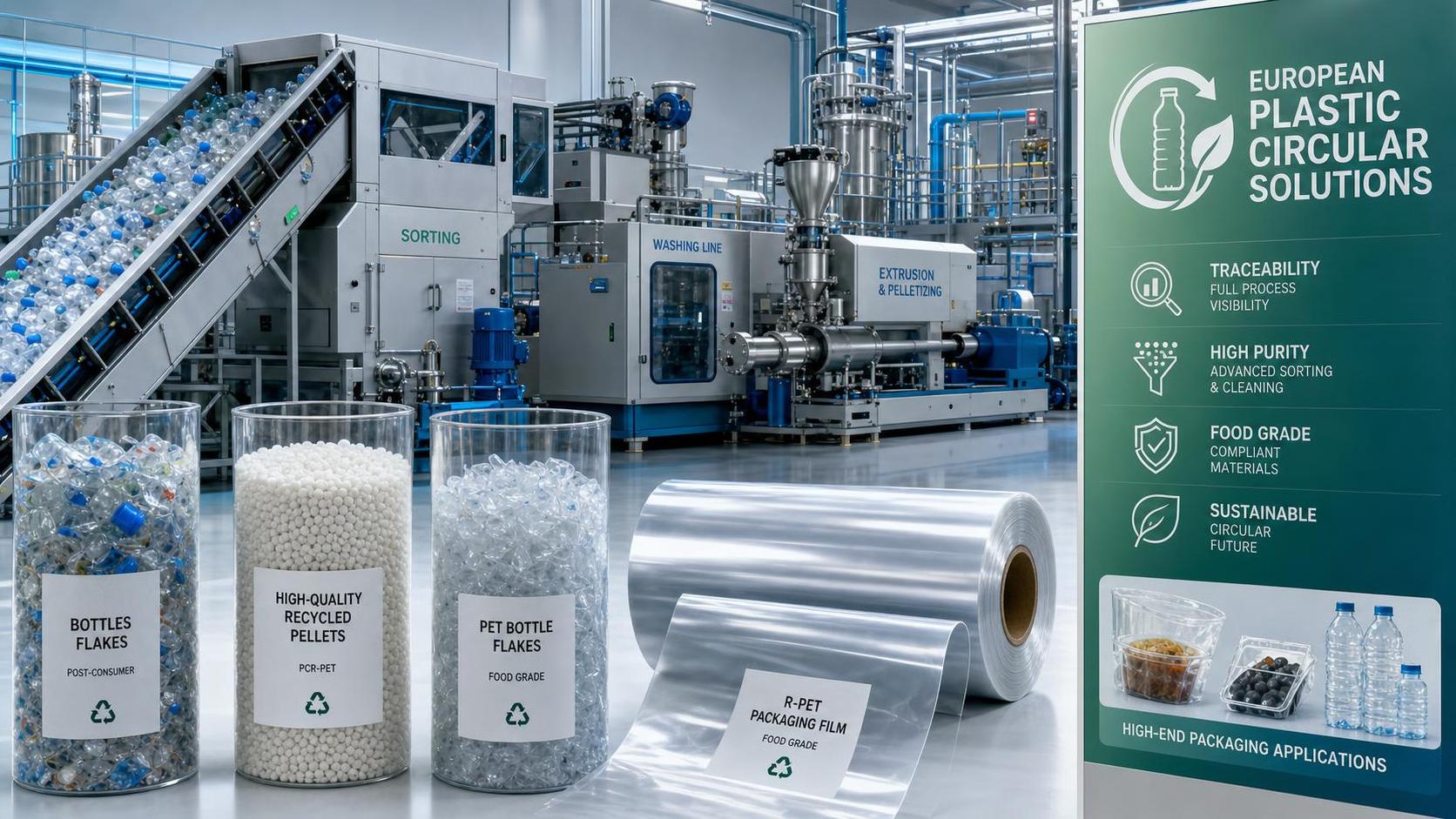
When in-house recycling is part of the strategy, pelletizing quality becomes central. Contamination control, washing efficiency, melt homogeneity, and pellet consistency affect both compliance evidence and downstream productivity.
PFRS regularly tracks these links between machinery and circular performance. That matters because decision quality improves when compliance teams understand how rheology, thermodynamics, and equipment efficiency interact.
A useful evaluation checklist includes:
- Material compatibility with virgin, recycled, and blended feedstock.
- Ability to maintain tolerances under varying melt characteristics.
- Energy consumption per unit of acceptable output.
- Digital traceability for batches, alarms, and process history.
- Scrap recapture potential without quality dilution.
In many cases, the winning decision is not the fastest line. It is the one that keeps quality stable while supporting auditable circular plastics economy compliance at commercial scale.
What are the most common mistakes when teams prepare for compliance?
One common mistake is treating compliance as a reporting exercise. Reports matter, but weak process control eventually shows up in audits, customer complaints, or rising waste rates.
Another mistake is assuming all recycled content behaves the same. In reality, source quality, contamination history, additive carryover, and thermal degradation can change performance significantly.
Some organizations also overfocus on packaging claims while ignoring machinery efficiency. Yet excessive purge loss, unstable temperature control, or poor filtration can undermine both economics and environmental performance.
There is also a timing issue. Waiting until a customer asks for proof often creates rushed trials, incomplete documentation, and avoidable specification conflicts.
A more reliable path is to build a staged program:
- Map products against likely regional packaging and recycling rules.
- Define acceptable resin windows and test protocols.
- Align machine settings with recycled feedstock variability.
- Create a single evidence trail for sourcing, production, and output.
- Review whether internal scrap can be recovered more effectively.
This reduces surprises and turns circular plastics economy compliance into an operational discipline rather than a late-stage correction.
How can compliance become a competitive advantage instead of a cost burden?
The strongest performers usually stop treating compliance as a defensive requirement. They use it to redesign materials, stabilize processes, and improve market credibility.
That shift creates several advantages. Better traceability supports faster customer approval. Cleaner process data improves troubleshooting. More efficient recycling loops can reduce dependence on volatile virgin resin supply.
It also influences capital allocation. Investments in electric molding, advanced extrusion control, or higher-grade pelletizing may deliver value not only through output, but through stronger circular plastics economy compliance performance.
In actual implementation, the most useful next step is rarely a broad sustainability slogan. It is a focused review of where your claims, equipment, and evidence trail meet or conflict.
Start by identifying one product family with material pressure or customer scrutiny. Check recyclability assumptions, recycled content feasibility, process stability, and audit readiness. Then expand from proven results.
Circular plastics economy compliance is becoming a practical language of market access. Those who connect material science, machinery performance, and traceable execution will be in a stronger position to grow within the next wave of circular manufacturing.
Related News
- 00
0000-00
Energy-Efficient Polymer Processing: Where Plants Can Cut kWh per Kilogram - 00
0000-00
German Extrusion Equipment Suppliers: Comparing Service, Lead Times, and Lifecycle Cost - 00
0000-00
What Causes Black Specks in Recycled Plastic Pellets? - 00
0000-00
How to Compare Pelletizing Lines by Energy Use per Ton - 00
0000-00
How Curing Press Control Shapes Uniformity and Tread Life in Truck Tire Manufacturing
Weekly Insights
Stay ahead with our curated technology reports delivered every Monday.
Related News
 Prof. Marcus ChenEnergy-Efficient Polymer Processing: Where Plants Can Cut kWh per KilogramEnergy-efficient polymer processing solutions help plants reduce kWh per kilogram, protect quality, cut scrap, and prioritize upgrades with data-driven insights.Sep 23, 2026
 Prof. Marcus ChenPlastic Pelletizing Trends: How Recycling Demand Is Reshaping Processing TechnologyPlastic pelletizing trends are redefining recycling quality. Explore filtration, extrusion, degassing, and automation innovations driving cleaner, more consistent recycled resin.Sep 07, 2026
 Prof. Marcus ChenHow Polymer Supply Chains Are Changing to Support High-Quality Recycling FeedstockPolymer supply chain for recycling is shifting toward traceable sourcing, cleaner sorting, and stable processing. See how high-quality feedstock improves performance, compliance, and cost control.Aug 22, 2026
 Prof. Marcus ChenHow Europe’s Circular Plastics Economy Is Reshaping Recycling InvestmentCircular plastics economy Europe is reshaping recycling investment through quality, traceability, and packaging demand. Explore where capital is moving and why it matters now.Aug 04, 2026
 Prof. Marcus ChenBlow Molding Trends Shaping Packaging, Sustainability, and Production EfficiencyBlow molding trends are redefining packaging with lightweighting, recycled content, automation, and energy efficiency. Discover how smarter production boosts sustainability and cuts costs.Jul 23, 2026
 Prof. Marcus ChenExtrusion Equipment Modular Design: When It Makes Sense for Line ExpansionExtrusion equipment modular design helps manufacturers expand lines in phases, cut disruption, and stay ready for recycled content, utility limits, and changing product demands.Jul 15, 2026
 Prof. Marcus ChenPolymer Lifecycle Solutions Explained: From Material Sourcing to End-of-Life RecoveryPolymer lifecycle solutions explained from sourcing and processing to recycling and recovery. Discover how to cut waste, improve quality, and build smarter material strategies.Jul 13, 2026
 Prof. Marcus ChenEnergy-Efficient Polymer Processing Systems: Which Metrics Matter Most?Energy-efficient polymer processing systems: discover the metrics that truly drive ROI—specific energy use, yield, uptime, stability, and compliance for smarter equipment decisions.Jul 11, 2026
 Prof. Marcus ChenPolymer Recycling Systems for Continuous Operation: What to Check Before SpecifyingPolymer recycling systems continuous operation starts with the right specification. Learn what to check for uptime, melt quality, energy efficiency, and reliable pellet output.Jul 09, 2026
 Prof. Marcus ChenCircular Plastics Economy in Japan: Policy Drivers, Recycling Targets, and Market ImpactCircular plastics economy Japan is accelerating as policy, recycling targets, and packaging reforms reshape material choices, processing strategy, and market advantage.Jul 05, 2026
 Prof. Marcus ChenPlastic Extrusion Technology Trends: What Process Changes Are Improving Energy Efficiency?Plastic extrusion technology trends are reshaping energy efficiency through smarter screws, thermal control, servo drives, and digital optimization. See which process changes deliver lower costs and more stable output.Jul 01, 2026
 Prof. Marcus ChenInjection Molding Technology Trends: Which Process Changes Matter Most for Medical and Packaging Parts?Injection molding technology trends shaping medical and packaging parts: discover the process changes that improve validation, precision, efficiency, and recycled-material readiness.Jun 30, 2026
 Prof. Marcus ChenCircular Plastics Economy Compliance Explained: Key Requirements for ManufacturersCircular plastics economy compliance explained for manufacturers: learn key requirements, audit risks, process controls, and how to turn compliance into a competitive advantage.Jun 25, 2026
 Prof. Marcus ChenAdvanced Materials Processing Trends: 5 Shifts Reshaping Capacity Planning and SourcingAdvanced materials processing trends are reshaping capacity planning, sourcing, recycling, and compliance. Explore 5 shifts helping manufacturers cut risk, improve precision, and build resilient growth.Jun 24, 2026
 Prof. Marcus ChenGlobal Plastic Ban Trends: Which Packaging Materials and Export Markets Face the Biggest Changes?Global plastic ban trends are reshaping packaging choices and export strategy. See which materials and markets face the biggest shifts, and how to reduce compliance risk.Jun 22, 2026
 Prof. Marcus ChenPolymer Rheology Trends That Matter in Extrusion: Melt Strength, Shear, and StabilityPolymer rheology trends are reshaping extrusion performance. Learn how melt strength, shear, and stability affect quality, efficiency, and recycled resin processing.Jun 18, 2026
 Prof. Marcus ChenPlastic Circularity Strategies for Manufacturers: Recycled Content, Design, and TraceabilityPlastic circularity strategies for manufacturers: learn how recycled content, smarter design, and traceability can reduce risk, improve compliance, and strengthen supply resilience.Jun 18, 2026
 Prof. Marcus ChenAdvanced Materials Processing Equipment in High-Performance Manufacturing: Where It Fits BestAdvanced materials processing equipment drives precision, speed, and sustainability in manufacturing. Explore where each system fits best to improve quality, efficiency, and ROI.Jun 16, 2026
 Prof. Marcus ChenWhat Is Driving the Circular Economy Plastics Market? Policy, Pricing, and Demand ShiftsCircular economy plastics market trends are being driven by tighter policy, resin price volatility, and stricter buyer demands. Discover what this means for sourcing, processing, and growth.Jun 13, 2026
 Prof. Marcus ChenDigital Polymer Processing Explained: Methods, Materials, and Best-Fit ApplicationsDigital polymer processing explained clearly: explore key methods, materials, and best-fit applications to improve quality, efficiency, and recycling performance.Jun 10, 2026