How is AI in injection molding cutting scrap?




Scrap reduction is no longer just a matter of operator experience or tighter inspection. For technical evaluators, AI in injection molding offers a measurable path to fewer short shots, flash defects, burn marks, and unstable part weights by connecting process data with real-time decision-making. From cavity pressure signals to predictive quality models, AI helps identify drift before it becomes waste, optimize holding pressure and cooling profiles, and improve material utilization across production runs.
For machinery buyers, process engineers, and plant technology teams, the central question is not whether artificial intelligence sounds advanced. It is whether AI can reduce scrap within a stable validation framework, fit existing molding cells, and support measurable return within 3 to 12 months.
Where Scrap Starts in Injection Molding Cells
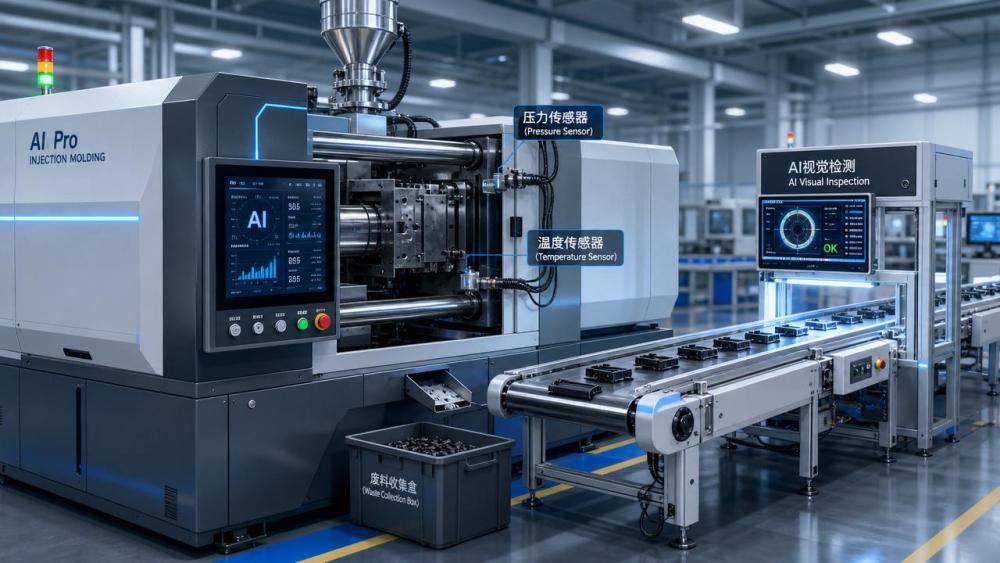
Scrap usually begins before a rejected part reaches inspection. Melt temperature variation, material moisture, screw recovery inconsistency, mold venting limits, and cooling imbalance can shift the process window within 10 to 30 cycles.
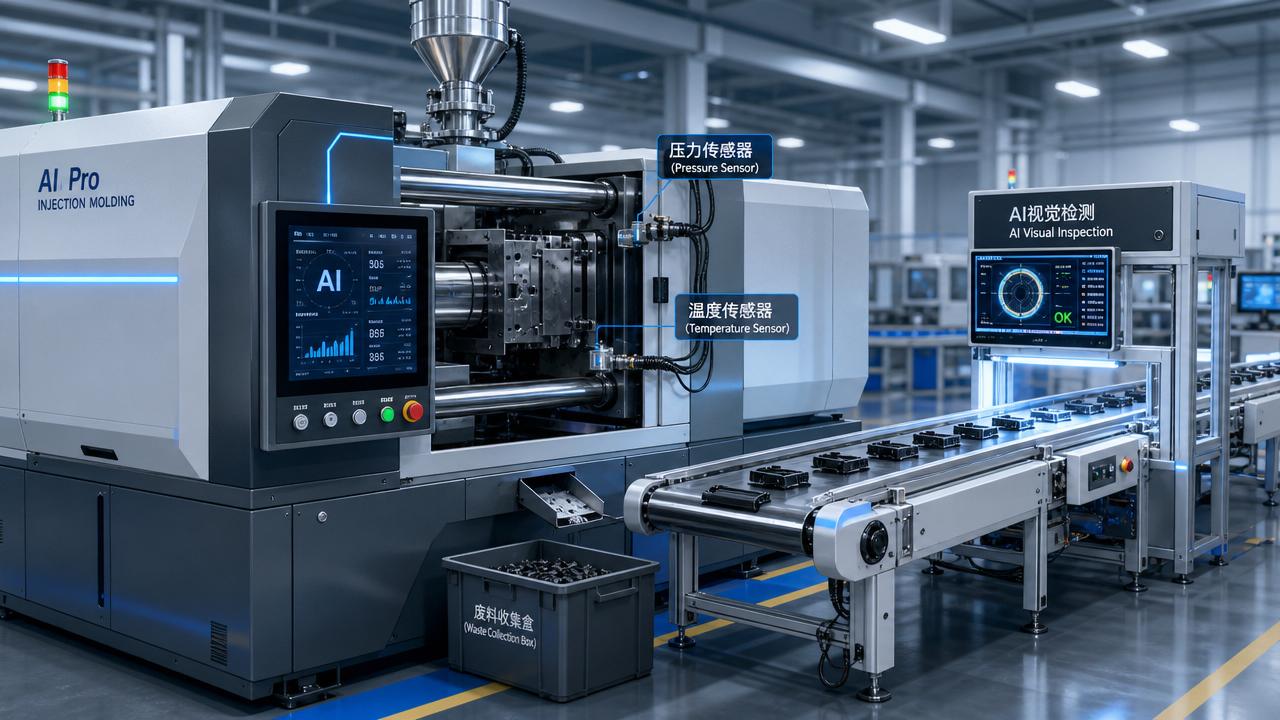
Traditional quality control often catches the result, not the cause. AI in injection molding changes the timing by interpreting signals while the machine is still producing parts, not after a full bin is rejected.
Common defect paths that create waste
Technical evaluators should map scrap to process mechanisms before selecting software or sensors. A flash problem may require clamp force analysis, while short shots often demand melt flow, velocity, and cavity pressure visibility.
- Short shots: often linked to low melt temperature, poor venting, low injection velocity, or material viscosity drift.
- Flash: frequently caused by excessive packing pressure, mold wear, clamp force limits, or parting line contamination.
- Burn marks: associated with trapped air, aggressive injection speed, inadequate venting, or material degradation.
- Weight variation: commonly tied to inconsistent cushion, transfer position, holding pressure, or cooling time.
Why manual adjustment reaches a limit
Experienced technicians can tune a mold after 5 to 20 trial shots, but they cannot watch hundreds of variables every second. A modern all-electric or servo-hydraulic press may generate high-frequency data from pressure, temperature, screw position, and energy channels.
AI in injection molding is valuable because it analyzes patterns across cycles. It can compare current behavior with a validated baseline and flag drift long before dimensional checks or visual inspection show a problem.
How AI in Injection Molding Reduces Scrap in Real Time
AI-driven scrap reduction depends on three linked capabilities: accurate sensing, reliable process models, and controlled recommendations. The strongest systems do not replace engineering discipline; they enhance it with cycle-by-cycle evidence.
In production environments, AI in injection molding normally supports 4 practical functions: anomaly detection, parameter optimization, predictive quality, and maintenance forecasting. Each function targets a different waste pathway.
From sensor signals to process decisions
The most useful inputs are not always the largest datasets. Cavity pressure, injection pressure, screw position, melt temperature, mold temperature, clamp force, cycle time, and part weight often provide enough resolution for strong quality prediction.
For precision parts, evaluators often look for sampling intervals below 100 milliseconds on critical channels. For less sensitive packaging or consumer parts, cycle-level summaries may still support meaningful scrap reduction.
The table below compares major AI functions used in molding plants and the types of scrap they help control. It also shows what evaluators should verify during pilot testing.
The key conclusion is that no single model eliminates scrap alone. The best results come when AI outputs are tied to validated process limits, documented corrective actions, and a feedback loop from inspection or weighing systems.
Optimizing holding pressure and cooling
Holding pressure and cooling time are high-impact targets because they influence shrinkage, sink marks, weight stability, and residual stress. Even a 0.1 to 0.3 second shift can matter for thin-wall packaging or micro-molded components.
AI in injection molding can compare pressure decay, gate freeze behavior, and temperature response. It may recommend a flatter packing profile, earlier transfer point, or reduced cooling time after confirming stable dimensions.
Closed-loop control versus advisory mode
Some systems only advise operators, while others adjust parameters automatically. For regulated medical parts or safety-related automotive components, advisory mode is often used first for 2 to 6 weeks before closed-loop control is approved.
Data Requirements and Integration Architecture
Technical evaluators should treat AI in injection molding as a manufacturing architecture, not a plug-in dashboard. The model is only as useful as the consistency, granularity, and context of the data feeding it.
A practical system usually connects the injection molding machine controller, mold sensors, auxiliary equipment, MES, quality database, and sometimes ERP material records. Integration depth can range from 1 press to 50 or more machines.
Minimum data set for meaningful scrap reduction
- Machine cycle data, including injection time, recovery time, cushion, transfer position, and alarm history.
- Process curves, especially injection pressure, cavity pressure, and screw position during fill and pack.
- Material information, including resin grade, recycled content, drying temperature, and lot changes.
- Quality labels, such as pass, reject, defect type, part weight, critical dimensions, or visual inspection result.
- Environmental and auxiliary data, including mold temperature controller status, chiller temperature, and humidity where relevant.
For a pilot project, 2 to 4 weeks of stable production data may be enough to identify patterns. Complex multi-cavity molds, recycled polymers, or high-cavitation packaging tools may require longer collection cycles.
Connectivity and protocol considerations
Evaluators should confirm controller access before procurement. Common connection paths include OPC UA, Euromap interfaces, machine vendor APIs, edge gateways, and direct sensor acquisition modules.
Data latency matters. For predictive dashboards, a 1 to 5 second delay may be acceptable. For closed-loop process control, the response requirement can be much tighter and must match machine capability.
Cybersecurity and traceability
Any AI deployment should include role-based access, change logs, recipe version control, and secure backups. In plants serving medical, electrical, or automotive customers, traceability must cover both process data and quality decisions.
Evaluation Criteria for Technical Buyers
A strong business case for AI in injection molding must connect defect reduction with operational economics. Scrap rate, resin cost, machine utilization, labor time, and validation burden should be reviewed together.
For many plants, a realistic target is not immediate perfection. A practical pilot may focus on reducing one recurring defect by 15% to 30%, stabilizing part weight, or shortening troubleshooting time by several hours per mold change.
What to compare before selecting a solution
The following evaluation matrix helps separate a useful manufacturing intelligence system from a generic analytics platform. It is designed for technical teams comparing vendors, machine upgrades, or internal development options.
The most important takeaway is that the evaluation should include both algorithm performance and shop-floor usability. If operators cannot understand the recommendation within one shift, the system will struggle to reduce scrap consistently.
Pilot scope and acceptance metrics
A focused pilot is usually stronger than a wide rollout. Select 1 to 3 molds with known scrap patterns, stable demand, and enough production volume to generate data quickly.
- Baseline scrap rate by defect type, measured for at least 5 normal production runs.
- Cycle stability indicators, including cushion variation, peak pressure, and part weight range.
- Alarm precision, including the percentage of alerts that lead to useful corrective action.
- Material savings, calculated using actual resin cost and rejected part weight.
Implementation Roadmap: From Baseline to Closed-Loop Improvement
AI in injection molding should be implemented in phases. Rushing directly to automatic correction can create validation concerns, especially when a plant runs high-precision parts, multiple resin lots, or strict customer specifications.
A typical roadmap includes 5 stages: audit, data connection, model training, controlled pilot, and scale-up. Each stage should have documented owners from production, maintenance, quality, and engineering.
Stage 1: Process and scrap audit
The audit should identify the top 3 scrap contributors, not every possible defect. Teams should examine mold history, setup sheets, drying records, machine alarms, maintenance logs, and inspection data.
Stage 2: Data connection and signal validation
Before training a model, verify signal quality. Missing timestamps, noisy pressure curves, sensor drift, or inconsistent quality labels can reduce model value more than the choice of algorithm.
Stage 3: Model training and process interpretation
Models should be trained with known good cycles and known rejected cycles. For complex molds, data should include startup, steady-state production, material changeover, and shutdown conditions.
Stage 4: Advisory pilot
During the pilot, the system recommends actions while engineers approve changes. This phase commonly lasts 2 to 6 weeks, depending on production frequency and customer validation requirements.
Stage 5: Scaling and continuous improvement
Once results are verified, the plant can expand to similar molds, materials, and machine tonnage ranges. Lessons from one 200-ton cell may not directly apply to a 1,500-ton automotive press without recalibration.
Risks, Misconceptions, and Practical Controls
AI in injection molding reduces scrap best when it is treated as a controlled engineering tool. It cannot compensate for damaged molds, wet resin, blocked cooling channels, or poorly maintained check rings indefinitely.
A frequent misconception is that more data automatically means better results. In practice, 8 reliable variables may outperform 80 poorly labeled channels if the model is linked to clear defect mechanisms.
Controls that protect quality and equipment
- Set hard parameter limits for injection speed, holding pressure, melt temperature, and clamp force.
- Require engineering approval for recipe changes outside validated process windows.
- Separate startup learning data from steady-state production data when training models.
- Review model performance at defined intervals, such as every 30, 60, or 90 days.
Material variation and recycled content
As manufacturers increase recycled resin usage, viscosity and contamination variation can widen the process window challenge. AI can help detect lot-to-lot behavior, but drying, filtration, and material qualification remain essential.
For plants aligned with circular economy goals, this is especially important. Better scrap control reduces virgin resin demand and supports downstream recovery, pelletizing, and closed-loop material strategies.
What Technical Evaluators Should Ask Vendors
Vendor discussions should go beyond dashboards and claims. The right questions reveal whether the supplier understands polymer rheology, injection molding dynamics, quality validation, and production support.
Before issuing a purchase recommendation, technical teams should request a structured demonstration using sample process data, not only generic screens. A 60 to 90 minute technical review can expose many integration risks.
Core questions for procurement and engineering
- Which machine controllers, sensors, and plant systems can be connected without custom development?
- How does the model distinguish material variation from machine drift or mold-related defects?
- Can recommendations be restricted to validated parameter windows and logged for audit review?
- What data volume is required before the first usable prediction or alarm is available?
- How are operators trained, and what support is available during night shifts or weekend production?
- Can the system support multiple part families, resin grades, and recycled-content variations?
When AI is a strong fit
AI in injection molding is especially suitable for high-volume parts, costly engineering resins, multi-cavity tools, tight weight specifications, and frequent material lot changes. It is also valuable where operators manage several presses at once.
It may be less urgent for very low-volume tools with limited repeat production. In those cases, disciplined setup sheets, preventive maintenance, and conventional process monitoring may deliver better short-term value.
Building a Lower-Scrap, Data-Driven Molding Strategy
Scrap reduction comes from combining process science, machine capability, material discipline, and actionable data. AI in injection molding strengthens this combination by making hidden drift visible and linking it to specific corrective actions.
For technical evaluators, the priority is to define the defect target, confirm data readiness, test the model under real production conditions, and scale only after measurable results are documented.
PFRS tracks how precision molding, extrusion, recycling, and polymer intelligence are converging across modern manufacturing. To compare AI-enabled molding strategies, assess equipment readiness, or explore material-saving process upgrades, contact us to get a customized solution or learn more about advanced polymer processing systems.
Related News
- 00
0000-00
Tire Manufacturing Equipment: Choosing Curing Presses by Tire Size and Output - 00
0000-00
What Drives Underwater Pelletizing System Cost in High-Throughput Compounding? - 00
0000-00
Medical Molding for Lab Consumables: Choosing Processes for Low-Particle Parts - 00
0000-00
Smart Factory Costs for Plastics: Estimating ROI for Automation Projects - 00
0000-00
How to Evaluate a Packaging Molding Equipment Supplier for High-Volume Production
Weekly Insights
Stay ahead with our curated technology reports delivered every Monday.
Related News
 Dr. Alistair VaughnHow Do PPWR Recycled-Content Targets Affect Packaging Resin Demand?How do PPWR recycled-content targets affect packaging resin demand? Explore shifts in recycled grades, virgin blends, food-contact supply, and processing strategy.Sep 26, 2026
 Dr. Alistair VaughnHow to Evaluate a Plastics Processing Equipment Manufacturer for Uptime and SupportPlastics processing equipment manufacturer evaluation guide: compare uptime, spare parts, service response, diagnostics, and lifecycle support before buying.Sep 17, 2026
 Dr. Alistair VaughnBudgeting a Plastic Pelletizing Machine: Cost Drivers for Recycling LinesPlastic pelletizing machines cost depends on feedstock, filtration, utilities, and installation. Explore key budget drivers to build a reliable recycling line investment plan.Sep 03, 2026
 Dr. Alistair VaughnCommon Waste and Downtime Causes in Rubber Processing and Cutting OperationsProcessamento e corte de borracha: discover the real causes of scrap and downtime in rubber lines, from material variation to machine wear, and learn how to cut waste and improve output.Aug 31, 2026
 Dr. Alistair VaughnWhat Is Automated Materials Processing and Where Does It Deliver the Most Value?Automated materials processing improves consistency, cuts waste, and boosts efficiency across molding, extrusion, and recycling. Discover where it delivers the most value.Aug 14, 2026
 Dr. Alistair VaughnHow Does a Polymer Recycling Plant Work? Process Steps and Key Equipment ExplainedPolymer recycling plant guide: explore sorting, washing, drying, extrusion, filtration, and pelletizing steps, plus key equipment that drives cleaner output and reliable recycled plastic quality.Jul 31, 2026
 Dr. Alistair VaughnHow Does Rubber Vulcanization Work and What Determines Final Rubber Performance?Rubber vulcanization explained: discover how curing, formulation, temperature, pressure, and machine control determine final rubber performance, durability, and product reliability.Jul 30, 2026
 Dr. Alistair VaughnHow Circular Plastics Economy EPR Rules Affect Packaging Costs and Compliance PlanningCircular plastics economy EPR is reshaping packaging costs, recyclability, and compliance planning. Learn how to reduce fee exposure, protect margins, and make smarter packaging decisions.Jul 13, 2026
 Dr. Alistair VaughnCircular Plastics Economy Trends: How EPR Policies and Recycled Content Rules Affect ManufacturersCircular plastics economy trends are reshaping manufacturing fast. See how EPR policies and recycled content rules impact costs, compliance, sourcing, and plant performance.Jun 30, 2026
![]() Dr. Alistair VaughnGlobal Plastic Ban Trends: Which Packaging Materials Face the Highest Compliance Risk?Global plastic ban trends are reshaping packaging compliance. Discover which materials face the highest risk and how to reduce cost, disruption, and redesign pressure.Jun 04, 2026
Dr. Alistair VaughnGlobal Plastic Ban Trends: Which Packaging Materials Face the Highest Compliance Risk?Global plastic ban trends are reshaping packaging compliance. Discover which materials face the highest risk and how to reduce cost, disruption, and redesign pressure.Jun 04, 2026 Dr. Alistair VaughnGlobal Plastic Ban Trends: Policy Shifts Affecting Packaging Materials and SupplyGlobal plastic ban trends are reshaping packaging supply. Discover policy shifts, material risks, and processing strategies to stay compliant and competitive.Jun 02, 2026
 Dr. Alistair VaughnHow is AI in injection molding cutting scrap?AI in injection molding cuts scrap by detecting process drift, optimizing pressure and cooling, and improving quality decisions—see how to reduce waste and boost ROI.May 29, 2026
 Dr. Alistair VaughnWhat global plastic ban trends mean for export planningGlobal plastic ban trends are reshaping export planning. Learn how to reduce compliance risk, choose smarter packaging, and align sourcing and equipment upgrades for market access.May 28, 2026
![]() Dr. Alistair VaughnWhy elastomer cross-linking fails and how to prevent defectsElastomer cross-linking failures can cause soft spots, cracks, and hidden reliability risks. Learn the key defect causes and proven prevention steps across molding, extrusion, and recycled blends.May 23, 2026
Dr. Alistair VaughnWhy elastomer cross-linking fails and how to prevent defectsElastomer cross-linking failures can cause soft spots, cracks, and hidden reliability risks. Learn the key defect causes and proven prevention steps across molding, extrusion, and recycled blends.May 23, 2026 Dr. Alistair VaughnHow fragile is the virgin resin supply chain in 2026Virgin resin supply chain risks are rising in 2026. Explore key disruption drivers, pricing impacts, and practical resilience strategies for smarter sourcing and planning.May 22, 2026
 Dr. Alistair VaughnWhy polymer molding scientists matter in process upgradesPolymer molding scientists help turn process upgrades into higher precision, lower waste, better energy efficiency, and faster ROI. See why their expertise reduces risk and improves modernization results.May 22, 2026
 Dr. Alistair VaughnWhat global plastic ban trends mean for new projectsGlobal plastic ban trends are reshaping new projects through design, compliance, recycled content, and equipment strategy. See how to plan smarter, reduce risk, and stay market-ready.May 21, 2026
 Dr. Alistair VaughnHow ESG in plastic manufacturing affects export riskESG in plastic manufacturing directly affects export risk, from customs delays to buyer approval. Learn how traceability, compliance, and smarter equipment protect market access.May 21, 2026
 Dr. Alistair VaughnWhat global plastic ban trends mean for export planningGlobal plastic ban trends are reshaping export planning, packaging choices, and compliance strategy. Learn how to reduce risk, adapt faster, and stay competitive across global markets.May 19, 2026
 Dr. Alistair VaughnHow polymer smart manufacturing improves batch consistencyPolymer smart manufacturing improves batch consistency with inline sensing, closed-loop control, and analytics. See how it reduces variation, scrap, and quality risk across polymer processing.May 18, 2026