What Circular Plastics Mean for Automotive Parts and Material Selection




What Circular Plastics Mean for Automotive Parts and Material Selection
Circular plastics for automotive are reshaping how technical teams evaluate materials, balancing weight reduction, durability, processability, and compliance in one decision. As automakers push for lower emissions and higher recycled content, material selection is shifting from purely performance-led choices to a lifecycle-driven strategy. For engineers and assessors, the challenge is no longer whether recycled polymers can be used, but how to integrate them reliably into demanding automotive parts without compromising safety, consistency, or manufacturing efficiency.
That sounds straightforward until the first real parts discussion starts. A bumper fascia, an underbody shield, a seat trim component, and a coolant reservoir all “use plastic,” but they live under very different stress profiles. One may tolerate a wider property window; another has almost no room for odor, warpage, or long-term creep. Circularity only works when the material strategy respects those differences.
The material question is no longer just “virgin or recycled”
In automotive programs, recycled content is often discussed as a target. In practice, it behaves more like a constraint stack. Resin source, contamination level, melt history, additive package, and part geometry all influence whether a circular plastic can pass engineering review. The same polymer family can behave very differently depending on whether it comes from closed-loop production scrap or post-consumer waste.
This is where technical teams need a sharper distinction. Post-industrial recycled material is usually easier to qualify because the feedstock is more controlled. Post-consumer recycled material can still work, but it often requires more screening, more stabilization, and more process discipline. For visible parts or tight-tolerance components, the discussion usually moves beyond cost and carbon accounting into color drift, odor control, dimensional stability, and surface appearance.

Where circular plastics fit best in vehicles
Not every automotive part is equally open to circular plastics. Internal trim, non-structural housings, wheel arch liners, air ducting, insulation-related parts, and certain under-the-hood brackets are often more practical starting points than load-bearing or highly safety-critical components. Even then, the decision depends on whether the part is exposed to heat, UV, chemicals, or fatigue cycling.
Engineers usually get better results when they map parts by function rather than by material name. For example, a polypropylene-based component may look simple, but if it sits near a heat source and must hold shape over years of vibration, recycled content can affect shrinkage behavior and stiffness retention. On the other hand, a less demanding interior carrier may absorb recycled material more easily if the compound is well controlled.
That is also why “same resin, different application” is one of the most common traps. A recycled PP compound that works for one trim family may fail on another due to wall thickness, rib design, or cosmetic requirements. In automotive material selection, geometry is part of the material spec whether teams like it or not.
What technical evaluators should inspect first
Before approving circular plastics for automotive parts, most teams should check a few fundamentals. The first is property consistency across batches. If tensile, impact, or flow behavior drifts too much, process windows start to widen and scrap risk rises. The second is thermal behavior, especially for parts that see repeated heat soak. The third is compatibility with existing molding or extrusion conditions. A recycled blend that needs major cycle adjustments may erase part of the sustainability gain through longer setup time or unstable output.
Odor, VOCs, and appearance are often underestimated because they sound like “finish” issues, not engineering issues. In a vehicle cabin, that distinction does not hold. Even when a recycled material meets mechanical targets, it may still be rejected if it creates unacceptable smell, haze, surface specking, or color inconsistency. Technical review should therefore include the full part environment, not just a material datasheet.
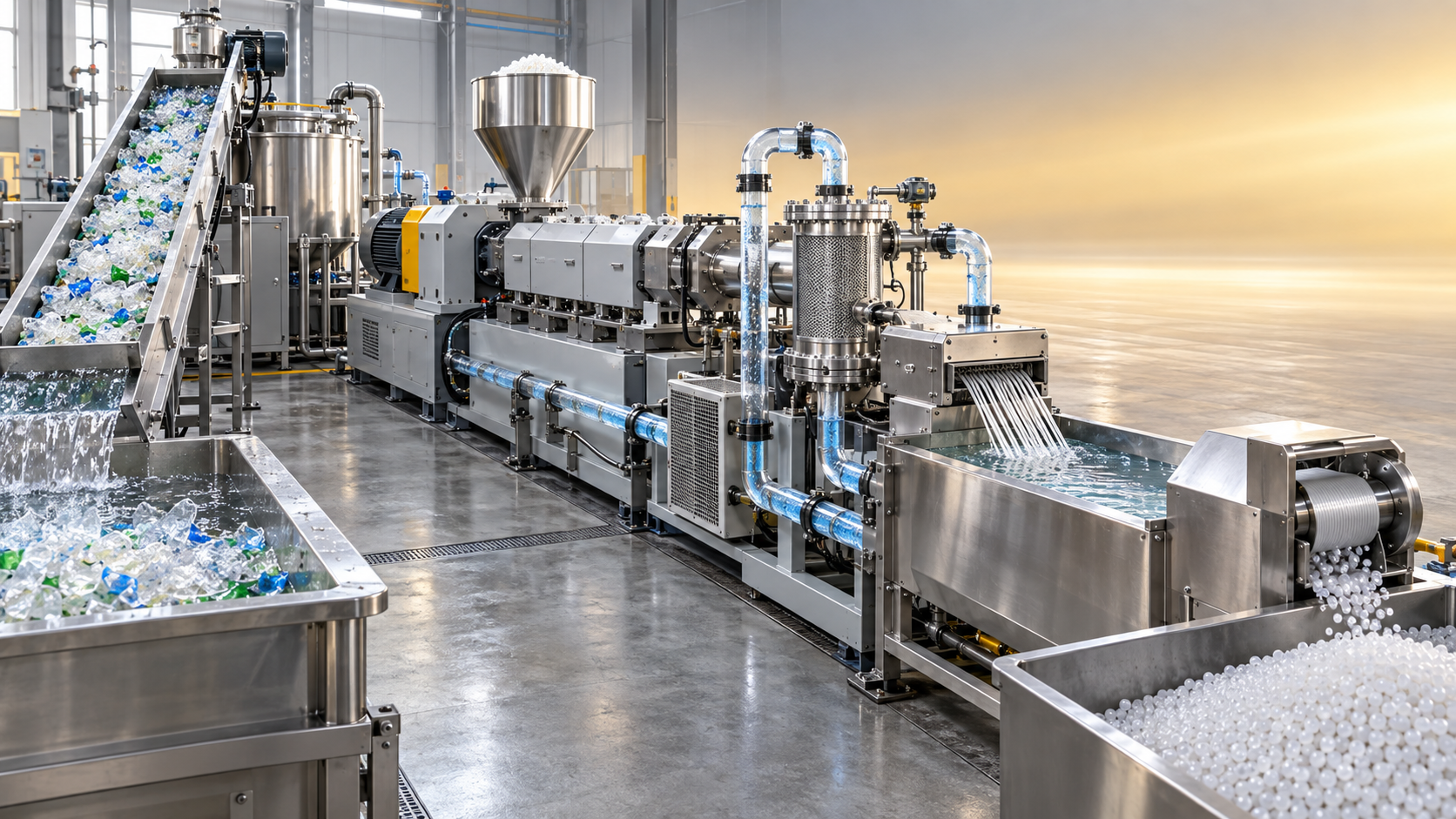
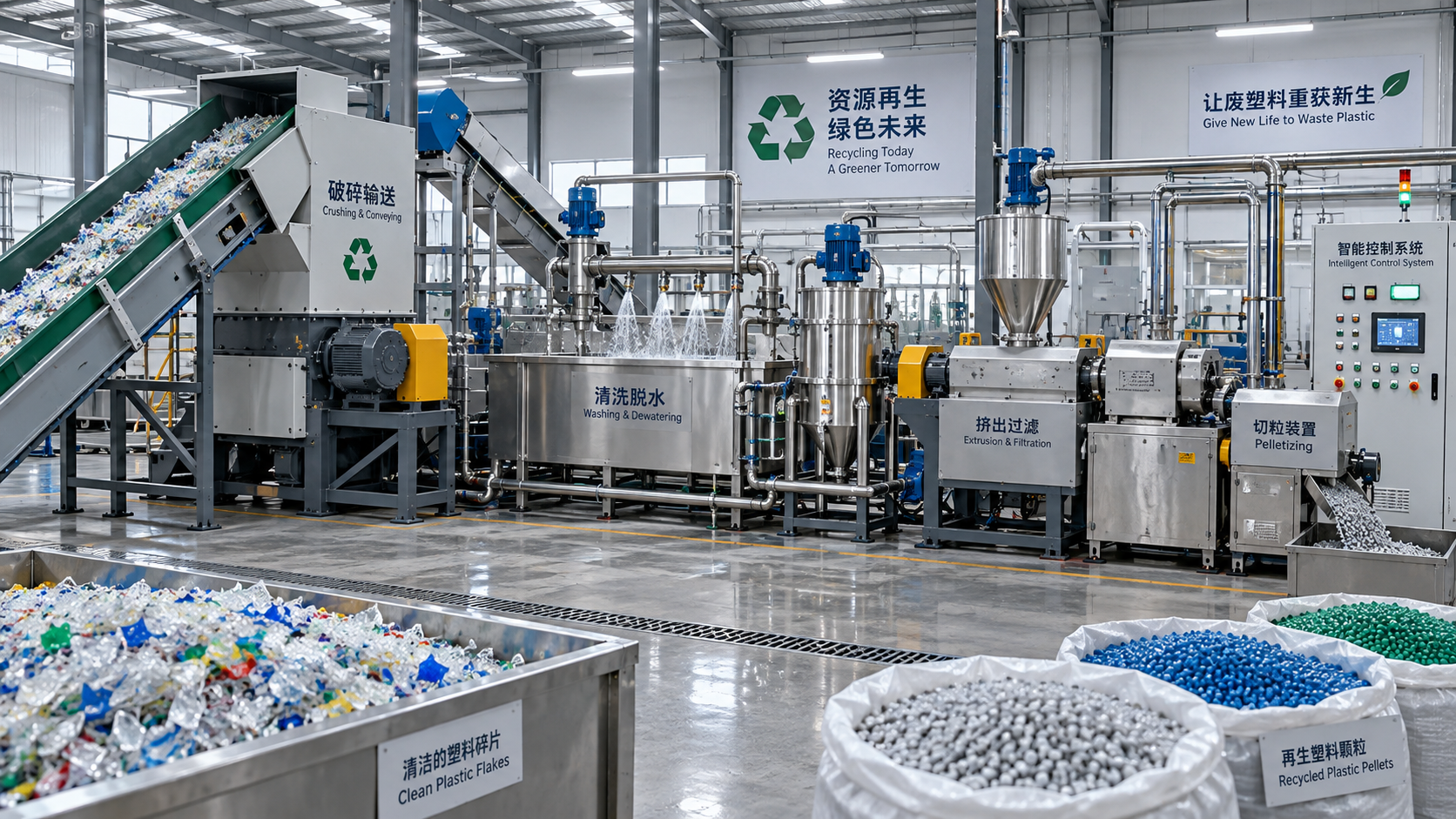
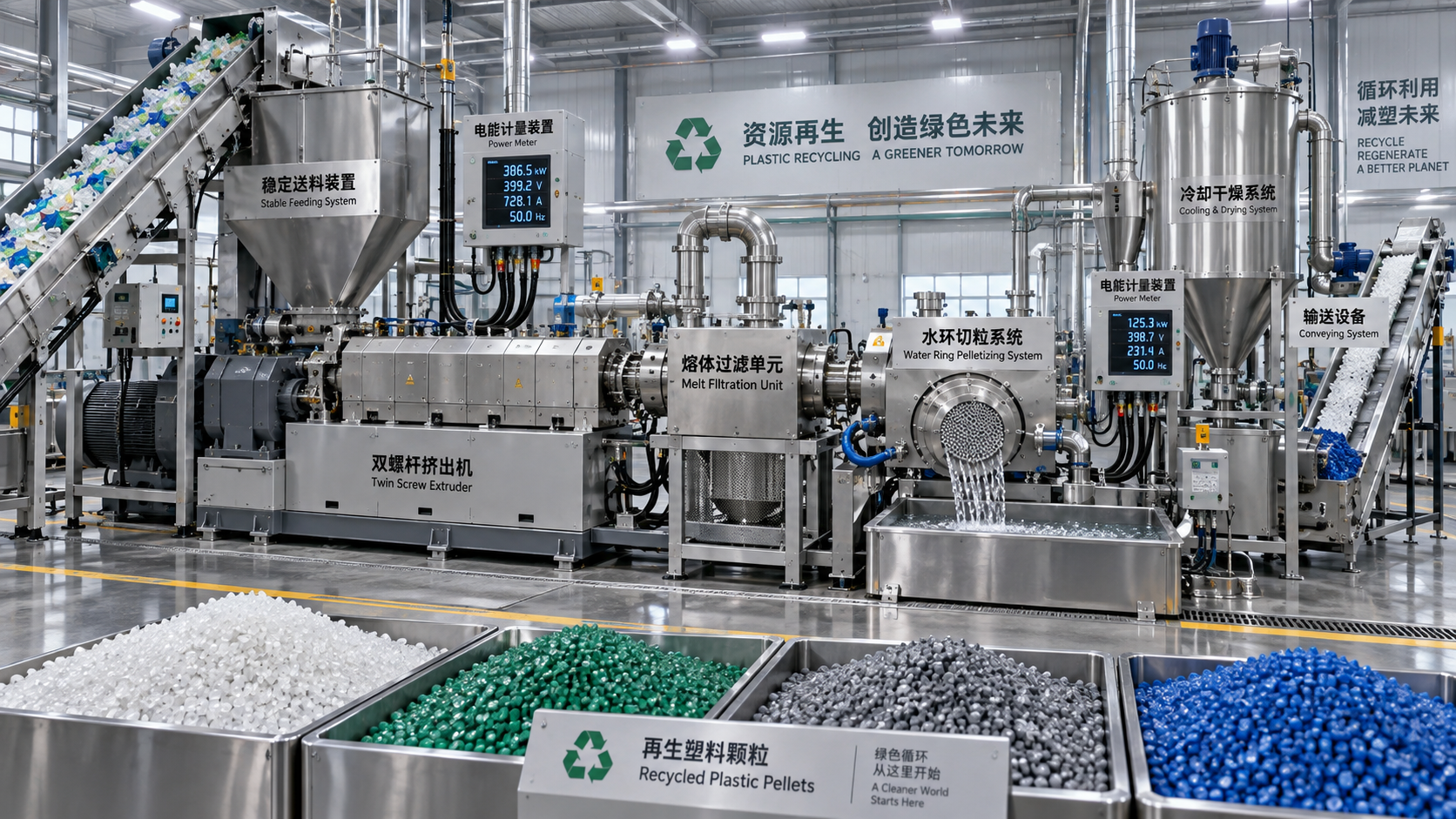
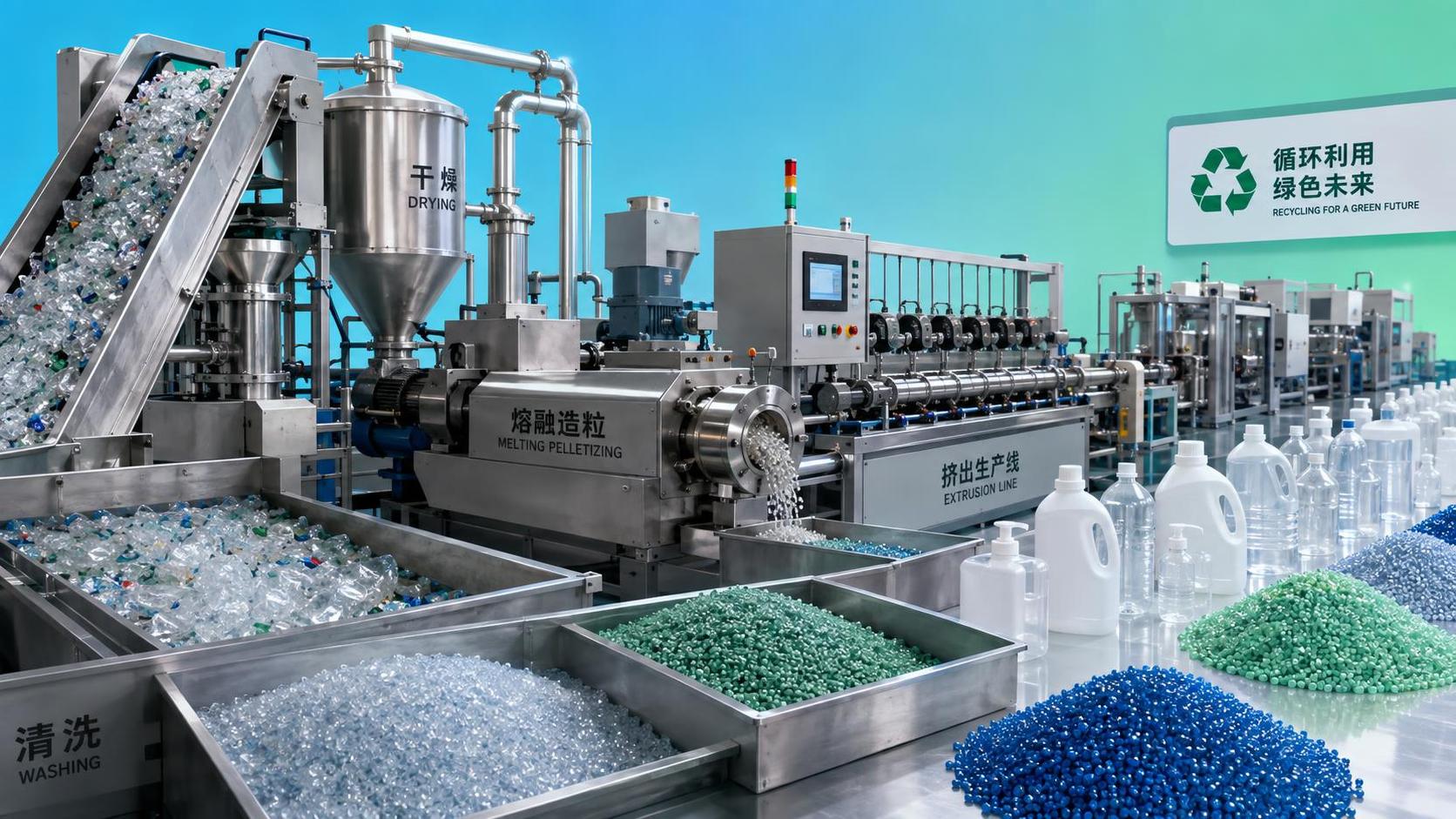
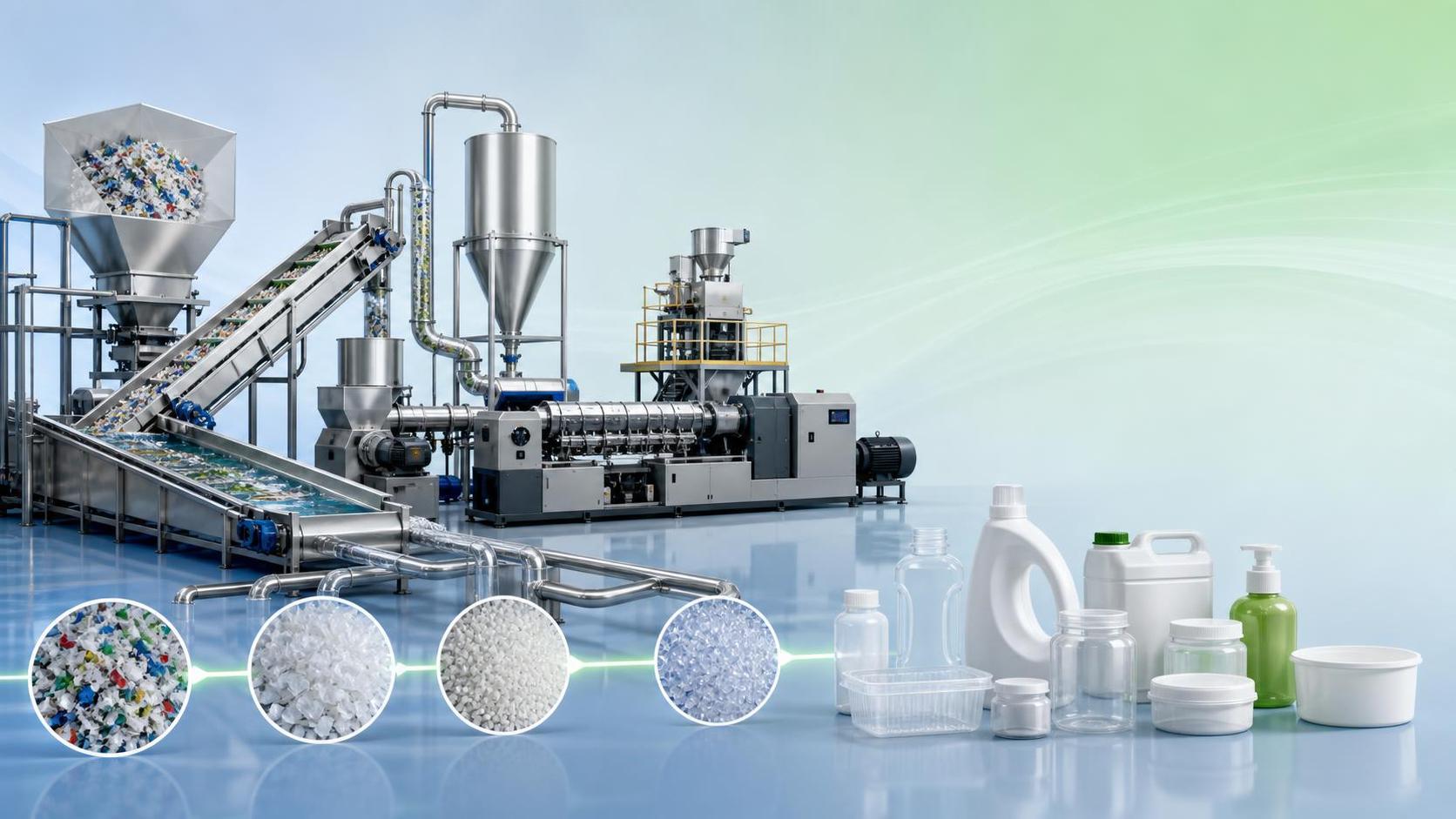
For teams working close to injection molding or extrusion suppliers, the conversion process matters just as much as the feedstock. Recycled resin that is poorly filtered, poorly dried, or insufficiently compounded can show up later as weld-line weakness, splay, unstable melt pressure, or die build-up. That is why recycled plastic pelletizing, filtration, and compounding quality are not separate conversations; they are part of the same qualification path.
The hidden trade-off: circularity can reduce risk in one place and add it in another
There is a tendency to describe circular plastics as a universal upgrade. In reality, they shift the risk profile. They may lower dependence on virgin resin and support recycled-content targets, but they can increase variability if the supply chain is not tightly managed. They may also require new test plans, additional incoming inspection, or tighter supplier documentation.
This trade-off shows up clearly in component engineering. A recycled plastic may have adequate strength on paper, yet show greater batch-to-batch variability in mold filling. Another may perform well mechanically but suffer from a narrower thermal processing window. The right answer is rarely “use more recycled content everywhere.” It is usually “use the highest circular content that the part function, supply chain, and process stability can support.” That sounds cautious because it is.
Technical teams also need to think about end-of-life separation. A component made from multiple incompatible polymers, decorative films, metal inserts, and adhesives may be difficult to recycle later, even if it contains recycled content today. Circular design in automotive works best when material selection and disassembly strategy are considered together. Otherwise, the program looks circular on paper but linear in practice.
Why processing capability matters as much as polymer choice
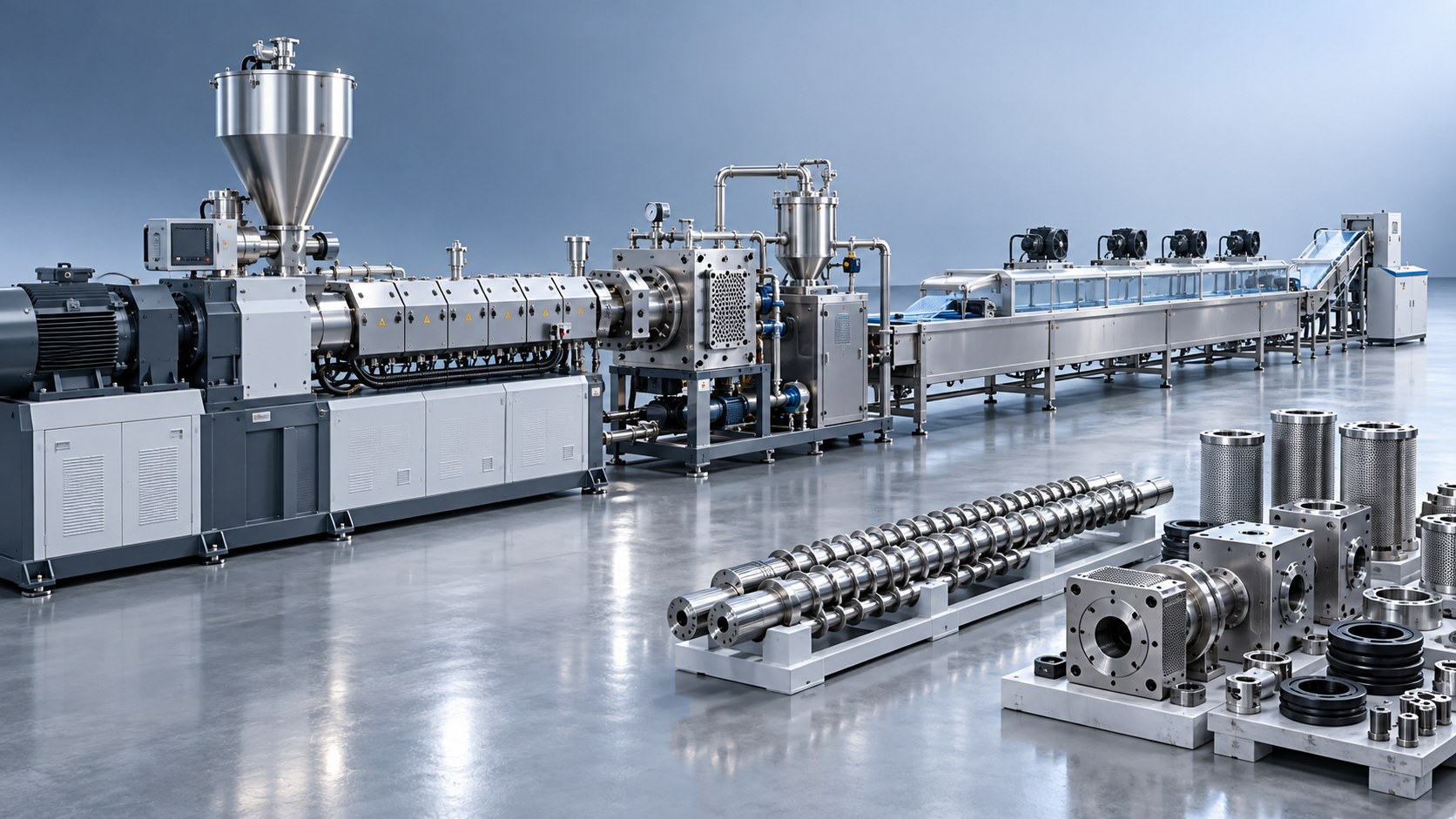
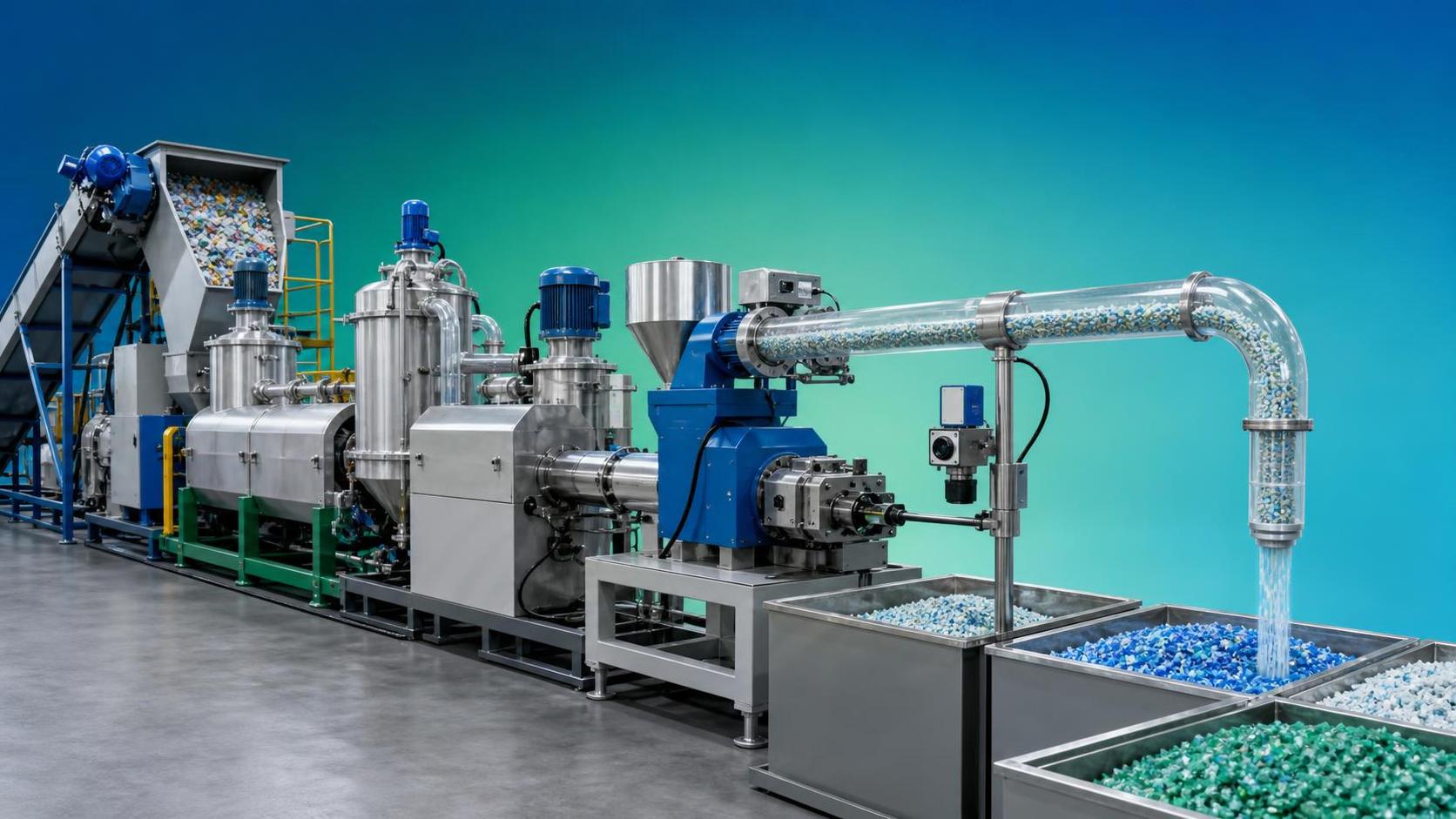
PFRS often looks at this topic through the equipment lens, and that perspective matters. Precision injection molding, extrusion, and pelletizing systems are not just production tools; they determine whether a circular polymer can be processed repeatably enough for automotive use. When melt filtration, degassing, screw design, drying control, and pressure stability are weak, even a promising recycled feedstock becomes difficult to trust.
For example, in-house recycling lines can improve traceability for production scrap, but they also demand disciplined sorting and quality control. If an OEM or Tier supplier wants stable recycled content in molded parts, the line must be treated as part of the qualification system, not as a side utility. The same logic applies to twin-screw compounding: dispersion quality, additive integration, and residence-time control decide whether a recycled blend is fit for automotive processing or only suitable for lower-spec applications.
A practical selection mindset for technical teams
A workable material review usually starts with part criticality. Ask what the part must survive, how visible it is, and what failure mode would be unacceptable. Then check whether recycled content affects stiffness, impact, heat resistance, odor, and surface finish in that specific geometry. If the answer is still unclear, the issue is probably not the concept of circular plastics. It is the need for more representative testing.
It also helps to separate “can be used” from “can be scaled.” A material may pass a pilot run and still struggle in mass production if supply consistency, drying sensitivity, or melt stability is weak. Automotive programs live or die by repeatability. One good batch is not enough.
This is why assessment teams often work best when materials engineers, process engineers, quality teams, and procurement sit in the same review early. Circularity decisions made too late usually become cost or schedule problems. Decisions made too early, without process input, can create qualification loops that are hard to unwind.
The bottom line for automotive part selection
Circular plastics for automotive are not a simple material swap. They are a system decision that ties polymer chemistry, conversion equipment, part design, and compliance expectations together. For technical evaluators, the real task is to identify where circular content is genuinely robust and where it only looks acceptable in a spec sheet.
If a recycled or circular polymer can hold its properties, process cleanly, and meet the part’s functional and aesthetic requirements, it deserves serious consideration. If it cannot, forcing it into a critical component usually creates more risk than value. That judgment call is where good automotive material selection still looks a lot like engineering: careful, specific, and not easily impressed by slogans.
Related News
- 00
0000-00
Plastic Extrusion Technology for Films: Process Controls That Improve Gauge Uniformity - 00
0000-00
How to Evaluate Plastic Recycling Machinery for UAE Heat, Feedstock, and Output Needs - 00
0000-00
How to Evaluate a PET Bottle Recycling System Supplier for Reliable rPET Output - 00
0000-00
How to Select Rubber Processing Equipment for High-Precision Automotive Seals - 00
0000-00
How to Qualify a Servo Injection Molding Exporter for Global Sourcing
Weekly Insights
Stay ahead with our curated technology reports delivered every Monday.
Related News
 Ms. Elena RodriguezHow to Evaluate Plastic Recycling Machinery for UAE Heat, Feedstock, and Output NeedsPlastic recycling machinery UAE buyers: evaluate heat resilience, feedstock handling, cooling, pellet quality, energy use, and lifecycle cost for reliable output.Sep 28, 2026
 Ms. Elena RodriguezGerman Extrusion Equipment Suppliers: Comparing Service, Lead Times, and Lifecycle CostExtrusion equipment Germany suppliers compared: evaluate service coverage, credible lead times, spare-parts access, and lifecycle cost to select a reliable, future-ready production partner.Sep 22, 2026
 Ms. Elena RodriguezWhat Should You Check Before Buying a Used Plastic Recycling Line?What should I check before buying a used plastic recycling line? Explore feedstock fit, wear, trials, utilities, controls, and restoration costs before you invest.Sep 26, 2026
 Ms. Elena RodriguezHow to Compare Pelletizing Lines by Energy Use per TonHow do I compare pelletizing lines by kWh per ton? Learn to measure total energy, verify saleable output, and select a cost-efficient line.Sep 23, 2026
 Ms. Elena RodriguezTyre Cutter Blade Wear: When Capacity Loss Needs Inspectionшинорез blade wear can quietly reduce tyre-cutting capacity. Learn the warning signs, inspection triggers, and maintenance actions that protect output and uptime.Sep 28, 2026
 Ms. Elena RodriguezIn-House Recycling for Factory Scrap: How to Reduce Material Waste and Disposal CostsIn house recycling for factory scrap helps manufacturers cut material waste, reduce disposal costs, and create controlled, quality-focused reuse loops.Sep 07, 2026
 Ms. Elena RodriguezHow Recyclable Packaging Manufacturing Balances Material Recovery and Production CostRecyclable packaging manufacturing: discover how smarter design, feedstock control, and process optimization reduce recovery costs while improving quality and yield.Sep 04, 2026
 Ms. Elena RodriguezHow to Evaluate a Plastic Recycling Systems Supplier for Your Processing NeedsChoose the right plastic recycling systems supplier with a practical guide to feedstock fit, output quality, total cost, testing, service, and compliance.Sep 01, 2026
 Ms. Elena RodriguezCE Marking for Plastic Processing Equipment: Documentation and Safety ChecksPlastic processing equipment CE compliance: learn the essential documentation, risk assessments, safety checks, and validation steps for reliable EU market access.Aug 30, 2026
 Ms. Elena RodriguezPlastic Packaging Compliance Standards: What Tests and Documents Matter Most?Plastic packaging compliance standards explained: learn which migration tests, mechanical checks, and audit-ready documents matter most to reduce risk and pass reviews with confidence.Aug 25, 2026
 Ms. Elena RodriguezHow to Evaluate a Plastic Waste Recycling System for Capacity, Contamination, and ROIPlastic waste recycling system evaluation made practical: compare true capacity, contamination control, and ROI to choose a line that delivers stable output and stronger returns.Aug 24, 2026
 Ms. Elena RodriguezPackaging Molding Equipment Price: What Drives Cost and How to Compare Quotes?Packaging molding equipment price varies by machine type, automation, tooling, energy use, and service scope. Learn what drives cost and how to compare quotes with confidence.Aug 21, 2026
 Ms. Elena RodriguezWhat Packaging Machinery for Plastic Containers Should You Choose for High-Volume Production?Packaging machinery for plastics containers can make or break high-volume production. Learn how to choose the right line for speed, consistency, compliance, and lower lifecycle costs.Aug 16, 2026
 Ms. Elena RodriguezWhat Circular Plastics Mean for Automotive Parts and Material SelectionCircular plastics for automotive are reshaping part selection with lower weight, better sustainability, and reliable performance. Discover how engineers balance recycled content, durability, and compliance.Aug 15, 2026
 Ms. Elena RodriguezBroiler Farming in Cage System: Selection Factors for Commercial FarmsBroiler farming in cage system selection for commercial farms: compare structure, ventilation, automation, and manure handling to improve efficiency and avoid costly mistakes.Aug 14, 2026
 Ms. Elena RodriguezHow to Implement Smart Polymer Manufacturing Without Disrupting Existing Production?Smart polymer manufacturing implementation made practical: learn how to upgrade existing production with phased digitalization, less downtime, better control, and measurable ROI.Aug 11, 2026
 Ms. Elena RodriguezHow to Evaluate a Rubber Compression Molding Supplier for Complex Part ProductionRubber compression molding supplier selection for complex parts starts with process, material, and tooling control. Learn how to compare vendors beyond price and reduce launch risk.Aug 10, 2026
 Ms. Elena RodriguezPackaging Compliance in Canada: Key Labeling and EPR Rules Importers Must KnowPackaging compliance Canada explained for importers: learn bilingual labeling, environmental claims, and provincial EPR rules to reduce risk, avoid costly errors, and stay market-ready.Aug 03, 2026
 Ms. Elena RodriguezWhy Circular Plastics Economy Traceability Matters for Recycled Content ComplianceCircular plastics economy traceability is essential for proving recycled content compliance across sourcing, processing, and reporting. Learn how strong evidence reduces audit risk.Aug 02, 2026
 Ms. Elena RodriguezRecycled Plastic Compliance: Key Standards, Testing Requirements, and DocumentationRecycled plastic compliance explained: key standards, testing requirements, supplier documents, and food-contact risks to help you avoid approval delays and costly compliance mistakes.Aug 01, 2026