Recycled Plastic Compliance: Key Standards, Testing Requirements, and Documentation




Where does recycled plastic compliance usually fail first?
For technical evaluators, recycled plastic compliance rarely breaks down on one dramatic issue. It usually fails in the gap between three things that should match but often do not: the intended end use, the test evidence, and the supplier documentation.
A recycled resin may look acceptable on a datasheet, process well in extrusion or molding trials, and still be non-compliant for the market you are targeting. That is why recycled plastic compliance needs to be reviewed as a use-specific decision, not a generic material claim. Food-contact packaging, transport packaging, durable goods, and cosmetic containers do not face the same regulatory path, contamination risk, or proof burden.
The practical starting point is simple: define the polymer, recycled content type, source stream, target geography, and application before you review any certificate. If those basics are still vague, the rest of the file review becomes guesswork.
Which standards and regulations matter most?
There is no single global rulebook for recycled plastics. The applicable framework depends on whether you are checking safety, recycled content claims, traceability, or packaging obligations.
In most technical reviews, these are the references that come up first:
The mistake to avoid is treating a recycling certification as proof of legal suitability for every application. A chain-of-custody certificate may support a recycled content claim, but it does not automatically prove food-contact compliance, chemical compliance, or fitness for a high-spec molded component.
What should you ask before approving a recycled resin?
Before reviewing lab data, pin down the variables that change the compliance answer:
- Is the material post-consumer, post-industrial, or a blend?
- What is the feedstock source: bottle-to-bottle PET, mixed household rigid packaging, industrial scrap, film waste?
- Will the finished article contact food, cosmetics, pharmaceuticals, or only secondary packaging?
- Which market is the product entering?
- Is the resin used directly, compounded with virgin material, or modified with additives, colorants, or barrier layers?
- What process is involved: injection molding, extrusion, blow molding, thermoforming?
These questions are not paperwork formalities. They determine which migration limits, contamination concerns, declarations, and test plans you actually need.

What testing is usually expected for recycled plastic compliance?
The right answer depends on the application, but most technical evaluations combine two layers of testing: material consistency and compliance risk screening.
Material consistency tests
These show whether the recycled stream is stable enough for production. Common checks include melt flow rate, density, moisture, intrinsic viscosity for PET where relevant, ash content, color variation, odor, black speck count, and contamination level. For molded or extruded products, tensile, impact, and elongation data may also be necessary if performance drift could affect part approval.
Compliance risk tests
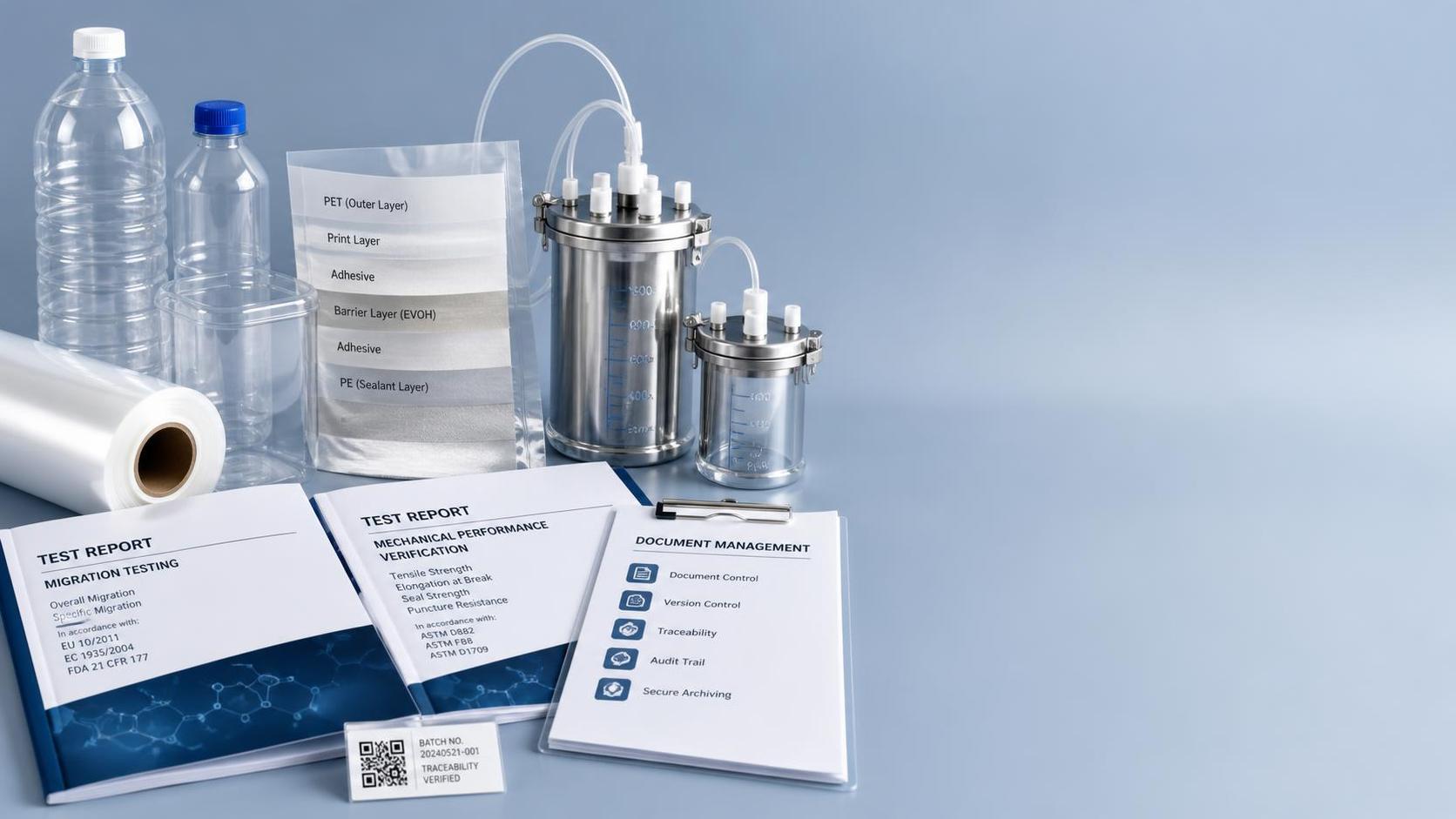
This is where recycled content creates extra scrutiny. Depending on use, evaluators may need restricted substance screening, heavy metal testing, NIAS review, overall and specific migration testing for food-contact articles, and evidence that the decontamination or sorting process controls contamination from prior use.
A common error is relying on one test report from a historical batch. Recycled streams change. If the supplier cannot show a batch-to-batch control plan, the test result tells you less than it seems.
Is a Certificate of Analysis enough?
Usually not. A CoA is useful, but it only proves what was measured for a specific lot and only for the listed items. It does not replace a compliance declaration, a statement of origin, a process description, or a regulatory assessment for the final application.
For most recycled plastic compliance reviews, the document package should include:
- Technical datasheet
- Lot-specific CoA
- Declaration of compliance or equivalent regulatory declaration where applicable
- Statement of recycled content and source type
- Chain-of-custody or mass-balance support documents if recycled content is being claimed
- Information on additives, masterbatch, and intentional substances
- Test reports tied to the intended end use, not just generic resin properties
If one of those pieces is missing, approval gets slower because you cannot connect the resin in front of you to the claim being made about it.
What makes food-contact recycled plastic a separate case?
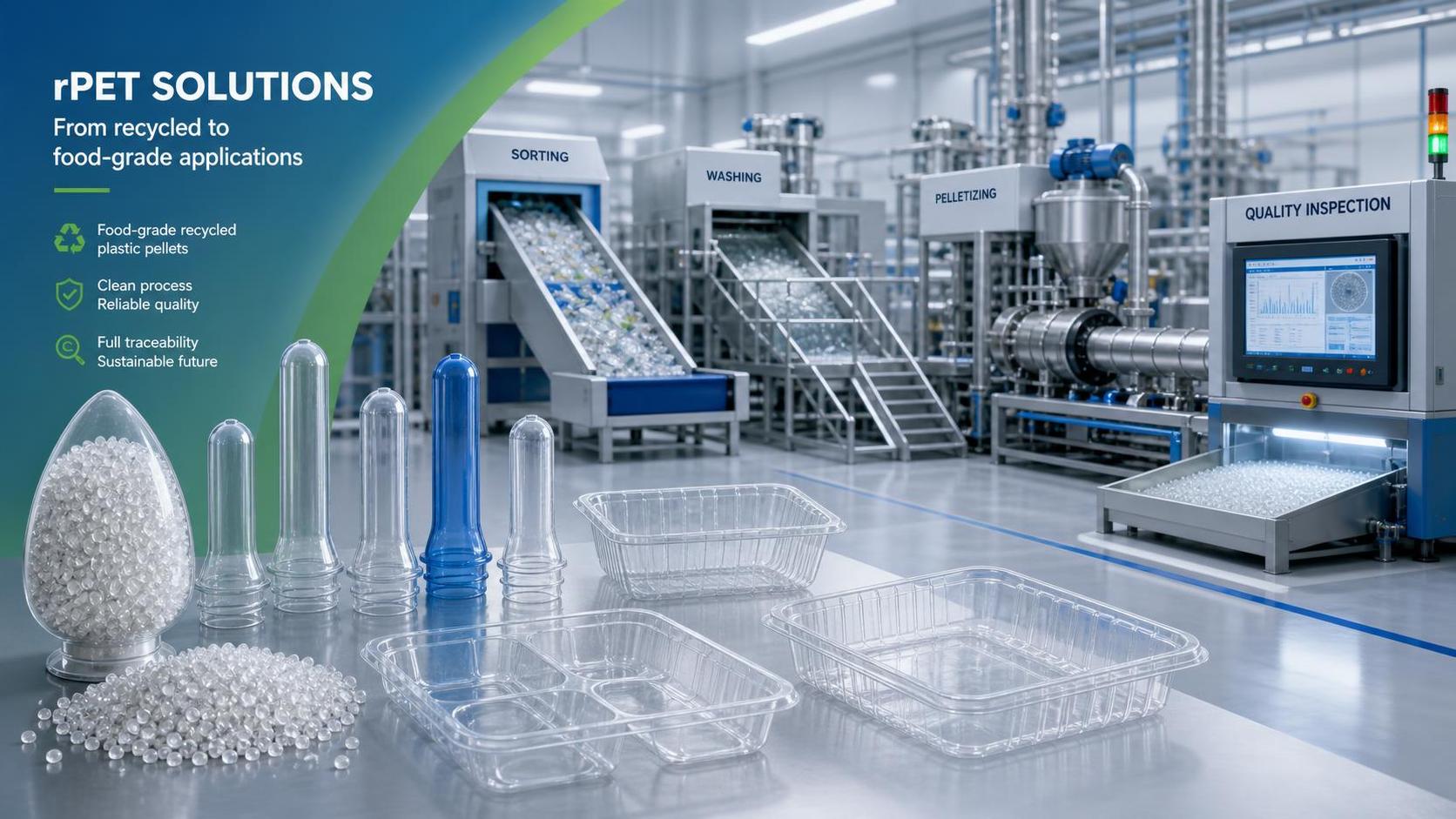
Food-contact recycled plastic is evaluated more strictly because the real question is not just polymer identity. It is whether the input stream, sorting, washing, decontamination, and downstream processing reduce contamination risk to an acceptable level for the intended food-contact conditions.
That means technical evaluators should look beyond a broad statement such as “food grade recycled PET.” Check whether the approval path relates to the recycling process, the input type, and the actual article use. Hot fill, room-temperature storage, repeated use, and fatty food contact do not carry the same exposure profile.
If the material is for food-contact packaging, the file should clearly connect the resin to the assessed recycling route and the intended conditions of use. Without that link, the phrase “food contact compliant” is too loose to approve.
How do you judge supplier traceability without turning it into a paper exercise?
Traceability matters because recycled content claims are often challenged at the supply-chain level, not at the pellet level. A supplier may provide acceptable physical test data while the recycled-content claim itself remains weak or unprovable.
A workable traceability review checks whether you can follow these links:
- Source category of the waste stream
- Recycling or compounding site identity
- Lot or production batch reference
- Recycled content percentage and claim method
- Commercial documents that match the declaration
When those links break, the issue is not academic. Marketing claims, customer specifications, and packaging disclosures can all become exposed.
Which mistakes create the most rework during technical approval?
The same patterns show up repeatedly:
- Approving a resin grade before the final market and end use are fixed
- Assuming post-industrial scrap and post-consumer recyclate carry the same risk profile
- Using old test reports that are not tied to the current formulation or lot range
- Ignoring additives, inks, tie layers, or colorants introduced after resin purchase
- Treating a general certificate as proof for a specific regulatory use
- Reviewing only the resin and not the converted article
That last point matters more than people expect. Compliance is often determined at the article level. Processing conditions, multilayer design, and auxiliary materials can change the answer even when the base recycled resin looked acceptable.
What does a practical approval workflow look like?
A useful workflow is short and disciplined:
- Define the application, market, and exposure conditions.
- Collect the supplier file, including technical, regulatory, and traceability records.
- Map the intended claim: food-contact use, recycled content claim, packaging compliance, or all three.
- Review whether existing test evidence matches the exact use case.
- Identify test gaps at resin level and article level.
- Approve with conditions only when the missing items are clearly bounded and scheduled.
This keeps recycled plastic compliance tied to evidence rather than assumption. It also makes supplier discussions much cleaner, because the missing proof is explicit.
When should you stop and escalate the review?
Escalation is warranted when the supplier cannot identify the recycled stream, cannot link the lot to supporting records, or uses broad compliance language without use-specific backing. The same applies when the resin is intended for sensitive applications and the file does not explain the decontamination route, additive package, or migration basis.
If you need one working rule, use this: do not approve recycled plastic on performance data alone. Approval should only move forward when the material identity, legal use case, testing scope, and documentation trail all point to the same conclusion.
Related News
- 00
0000-00
How Closed-Loop Recycling Turns Post-Consumer Plastic into Reliable Feedstock - 00
0000-00
How to Size a Tire Curing Press Machine for Capacity, Mold Type, and Cycle Time - 00
0000-00
Selecting Plastic Recycling Systems for Mixed Packaging Waste: Key Process Criteria - 00
0000-00
When Does Structural Foam Molding Make Sense for Large, Stiff Parts? - 00
0000-00
How to Evaluate a Vacuum Compression Molding Factory for High-Consistency Rubber Parts
Weekly Insights
Stay ahead with our curated technology reports delivered every Monday.
Related News
 Ms. Elena RodriguezIn-House Recycling for Factory Scrap: How to Reduce Material Waste and Disposal CostsIn house recycling for factory scrap helps manufacturers cut material waste, reduce disposal costs, and create controlled, quality-focused reuse loops.Sep 07, 2026
 Ms. Elena RodriguezHow Recyclable Packaging Manufacturing Balances Material Recovery and Production CostRecyclable packaging manufacturing: discover how smarter design, feedstock control, and process optimization reduce recovery costs while improving quality and yield.Sep 04, 2026
 Ms. Elena RodriguezHow to Evaluate a Plastic Recycling Systems Supplier for Your Processing NeedsChoose the right plastic recycling systems supplier with a practical guide to feedstock fit, output quality, total cost, testing, service, and compliance.Sep 01, 2026
 Ms. Elena RodriguezCE Marking for Plastic Processing Equipment: Documentation and Safety ChecksPlastic processing equipment CE compliance: learn the essential documentation, risk assessments, safety checks, and validation steps for reliable EU market access.Aug 30, 2026
 Ms. Elena RodriguezPlastic Packaging Compliance Standards: What Tests and Documents Matter Most?Plastic packaging compliance standards explained: learn which migration tests, mechanical checks, and audit-ready documents matter most to reduce risk and pass reviews with confidence.Aug 25, 2026
 Ms. Elena RodriguezHow to Evaluate a Plastic Waste Recycling System for Capacity, Contamination, and ROIPlastic waste recycling system evaluation made practical: compare true capacity, contamination control, and ROI to choose a line that delivers stable output and stronger returns.Aug 24, 2026
 Ms. Elena RodriguezPackaging Molding Equipment Price: What Drives Cost and How to Compare Quotes?Packaging molding equipment price varies by machine type, automation, tooling, energy use, and service scope. Learn what drives cost and how to compare quotes with confidence.Aug 21, 2026
 Ms. Elena RodriguezWhat Packaging Machinery for Plastic Containers Should You Choose for High-Volume Production?Packaging machinery for plastics containers can make or break high-volume production. Learn how to choose the right line for speed, consistency, compliance, and lower lifecycle costs.Aug 16, 2026
 Ms. Elena RodriguezWhat Circular Plastics Mean for Automotive Parts and Material SelectionCircular plastics for automotive are reshaping part selection with lower weight, better sustainability, and reliable performance. Discover how engineers balance recycled content, durability, and compliance.Aug 15, 2026
 Ms. Elena RodriguezBroiler Farming in Cage System: Selection Factors for Commercial FarmsBroiler farming in cage system selection for commercial farms: compare structure, ventilation, automation, and manure handling to improve efficiency and avoid costly mistakes.Aug 14, 2026
 Ms. Elena RodriguezHow to Implement Smart Polymer Manufacturing Without Disrupting Existing Production?Smart polymer manufacturing implementation made practical: learn how to upgrade existing production with phased digitalization, less downtime, better control, and measurable ROI.Aug 11, 2026
 Ms. Elena RodriguezHow to Evaluate a Rubber Compression Molding Supplier for Complex Part ProductionRubber compression molding supplier selection for complex parts starts with process, material, and tooling control. Learn how to compare vendors beyond price and reduce launch risk.Aug 10, 2026
 Ms. Elena RodriguezPackaging Compliance in Canada: Key Labeling and EPR Rules Importers Must KnowPackaging compliance Canada explained for importers: learn bilingual labeling, environmental claims, and provincial EPR rules to reduce risk, avoid costly errors, and stay market-ready.Aug 03, 2026
 Ms. Elena RodriguezWhy Circular Plastics Economy Traceability Matters for Recycled Content ComplianceCircular plastics economy traceability is essential for proving recycled content compliance across sourcing, processing, and reporting. Learn how strong evidence reduces audit risk.Aug 02, 2026
 Ms. Elena RodriguezRecycled Plastic Compliance: Key Standards, Testing Requirements, and DocumentationRecycled plastic compliance explained: key standards, testing requirements, supplier documents, and food-contact risks to help you avoid approval delays and costly compliance mistakes.Aug 01, 2026
 Ms. Elena RodriguezHow to Evaluate an Extrusion Machinery Manufacturer for Quality, Support, and ROIExtrusion machinery manufacturer selection affects quality, uptime, and ROI. Learn how to compare process fit, output claims, service, compliance, and long-term operating costs.Jul 29, 2026
 Ms. Elena RodriguezHow to Evaluate Food Grade Recycled Pellets for Safe Packaging ApplicationsFood grade recycled pellets for safe packaging demand more than a label. Learn how to assess feedstock, process validation, pellet quality, and compliance before approval.Jul 28, 2026
 Ms. Elena RodriguezHow to Evaluate a Rubber Vulcanization Supplier for Quality, Capacity, and Lead TimeRubber vulcanization supplier selection made easier: learn how to assess quality systems, true production capacity, and lead time reliability to reduce sourcing risk and improve supply performance.Jul 25, 2026
 Ms. Elena RodriguezPlastic Waste Recycling Price: What Drives Costs and How Buyers Should Compare QuotesPlastic waste recycling price explained: compare quotes by yield, energy use, pellet quality, and compliance costs to find the best long-term recycling value.Jul 20, 2026
 Ms. Elena RodriguezHow to Plan a Smart Factory for Plastics Packaging: Key Systems, Data, and ROISmart factory for plastics packaging planning starts with the right systems, data architecture, compliance, recycling, and ROI model. Learn the key steps to build a scalable, future-ready plant.Jul 19, 2026