How to compare green packaging materials without guesswork




Choosing green packaging materials should not rely on assumptions, supplier claims, or incomplete data. For procurement teams balancing cost, compliance, performance, and sustainability targets, a clear comparison framework is essential. This guide explains how to evaluate green packaging materials with confidence by aligning material properties, processing requirements, recyclability, and packaging regulations—helping buyers make faster, lower-risk decisions in a rapidly changing global market.
What procurement teams actually need when comparing green packaging materials
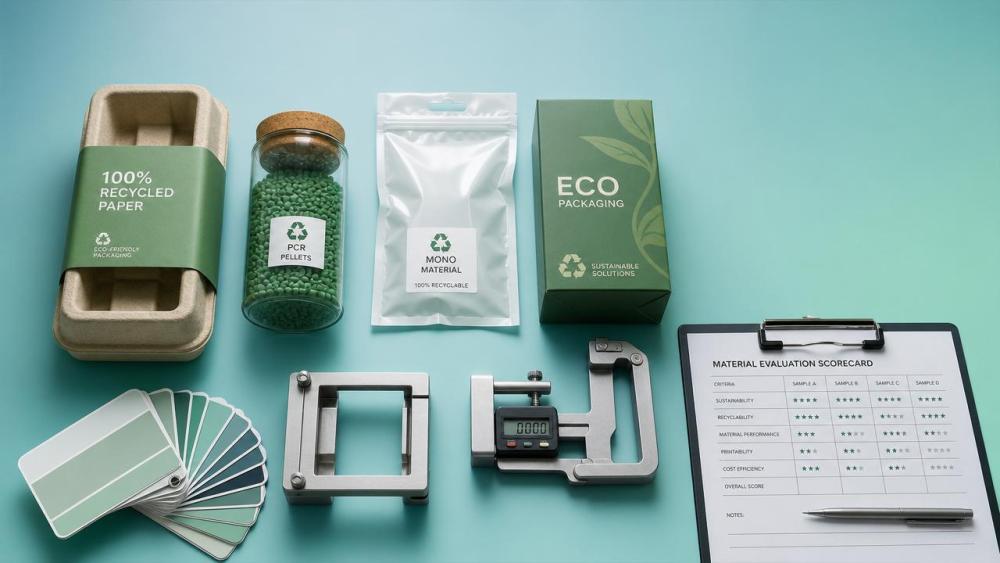
Most buyers are not looking for abstract sustainability definitions. They need a practical way to compare green packaging materials across cost, performance, compliance, supply risk, and end-of-life outcomes.
The core search intent behind this topic is decision support. Procurement professionals want to know which material is better for a specific packaging use case, not which option sounds greener in marketing.
That is why guesswork creates expensive mistakes. A material may look sustainable on paper but fail in barrier performance, sealing behavior, machine compatibility, recycled content rules, or transport durability.
The best approach is to compare materials through a structured scorecard. This turns broad sustainability claims into measurable purchasing criteria that can be discussed with suppliers, converters, operations teams, and compliance managers.
For most organizations, the right answer is rarely a universally green material. It is the material that best fits product protection needs, local recycling systems, total cost targets, and applicable packaging regulations.
Start with the packaging job, not the material label
Before comparing resin families or paper-based alternatives, define what the package must actually do. Procurement teams often save time by clarifying the performance requirement before reviewing supplier sustainability claims.
Ask simple but critical questions. Does the package need moisture resistance, oxygen barrier, transparency, impact strength, heat resistance, resealability, or shelf appeal? Each requirement can eliminate unsuitable materials early.
A coffee pouch, detergent bottle, medical tray, and e-commerce mailer all require different material properties. Comparing them only by recycled content or biodegradability ignores the true business and technical requirements.
If the package fails in real use, waste increases. Product spoilage, leakage, breakage, or short shelf life can create a bigger environmental burden than choosing a heavier but more functional packaging format.
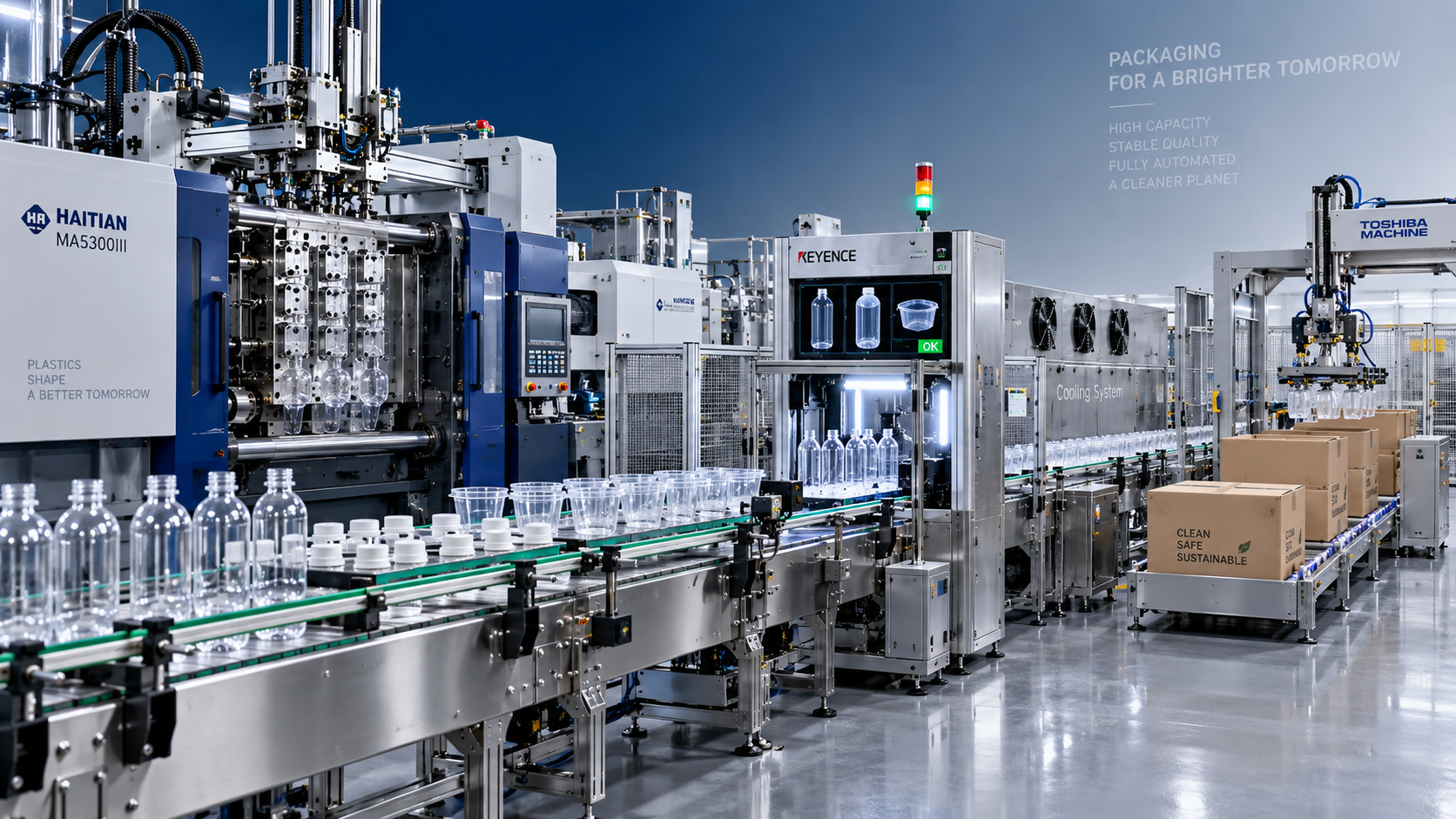
This is especially important for buyers working with injection molded, extruded, or blow molded packaging components. Processing stability and final package performance must be assessed together, not as separate decisions.
The five factors that matter most in a no-guesswork comparison
A reliable green packaging materials evaluation usually depends on five factors: functional performance, regulatory compliance, recyclability or recovery, process compatibility, and total commercial impact.
Functional performance comes first because packaging exists to protect products. Review tensile strength, puncture resistance, barrier performance, seal integrity, drop resistance, and dimensional stability under real storage conditions.
Regulatory compliance is next. Packaging buyers must consider food contact approval, recycled content mandates, labeling rules, chemical restrictions, and extended producer responsibility requirements in target markets.
Recyclability and recovery should be judged locally, not theoretically. A package that is technically recyclable but not accepted by regional collection and sorting systems may deliver weak practical sustainability value.
Process compatibility matters because a material may look attractive environmentally yet run poorly on existing extrusion, thermoforming, injection molding, or blow molding lines. Downtime and scrap can erase sustainability gains.
Total commercial impact includes purchase price, yield, shipping efficiency, storage behavior, rejection rate, and likely future compliance costs. Procurement decisions improve when these factors are evaluated as one business case.
How to compare common green packaging material options more realistically
Many sourcing teams compare paper, recycled plastics, bioplastics, mono-material plastics, and compostable structures. The problem is that these categories are often discussed too generally to support real purchasing decisions.
Recycled PET and recycled PE are often strong options where mechanical performance and established recycling streams matter. They can support circularity goals, but quality consistency and food-grade availability must be checked carefully.
Mono-material plastic structures are increasingly attractive because they simplify recycling design. In flexible packaging, moving from multi-layer complexity to recyclable mono-material formats may improve recovery without changing core conversion systems too drastically.
Paper-based packaging can perform well in secondary packaging or dry goods applications. However, coatings, wet strength treatments, and barrier laminations may complicate recycling and change the true environmental profile.
PLA, PHA, and other biobased or compostable materials may fit niche applications, especially where organic waste capture systems exist. Yet many markets still lack industrial composting infrastructure, making end-of-life claims less reliable in practice.
Glass and metal can appear greener because of high recyclability perception. Still, their transport weight, energy intensity, and cost profile may make them less suitable than optimized polymer packaging in some applications.
Look beyond sustainability claims and ask for comparable evidence
Suppliers often use terms like eco-friendly, recyclable, compostable, low carbon, or responsible. These phrases are not enough for procurement decisions unless they are supported by consistent, comparable documentation.
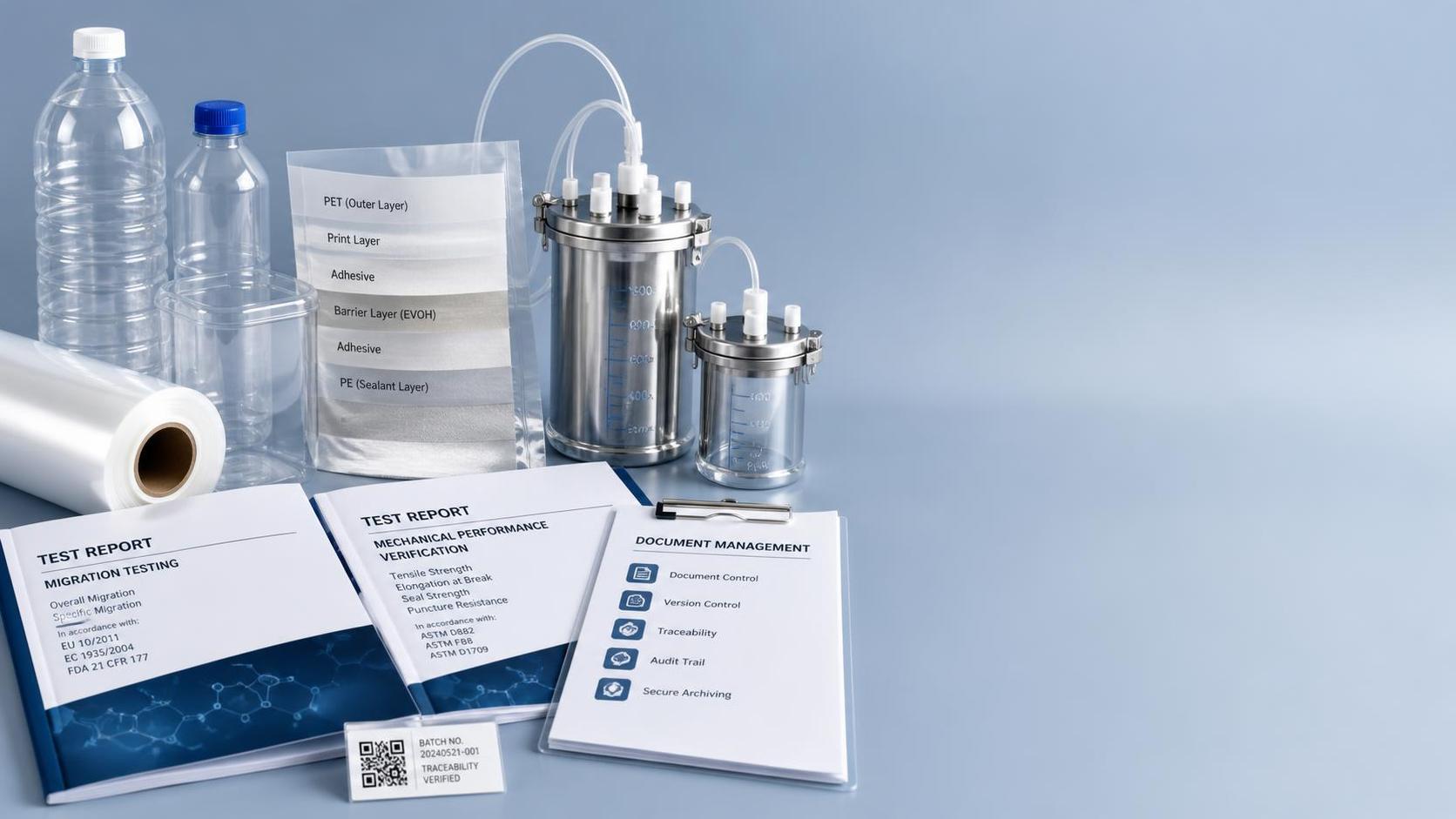
Ask suppliers for technical data sheets, declarations of recycled content, migration compliance statements, and lifecycle data where available. Procurement teams should request the same evidence set from every shortlisted supplier.
It also helps to ask whether claims are based on laboratory assumptions, regional infrastructure data, or third-party certification. A material can be certified compostable and still be a poor fit in your destination market.
Where possible, request information on processing windows, melt flow behavior, sealing temperature range, and scrap rates. These details are especially important for companies using high-output extrusion or blow molding operations.
For recycled resin content, verify source quality, contamination control, odor performance, and batch consistency. These factors directly affect conversion stability, appearance, and customer acceptance in finished packaging products.
Use a weighted scorecard instead of debating one metric at a time
A weighted scorecard is one of the most effective tools for comparing green packaging materials without guesswork. It helps procurement teams move from opinion-based discussions to transparent trade-off decisions.
Start by listing the decision criteria. A common model includes package performance, machine compatibility, sustainability outcome, unit economics, supplier reliability, and regulatory readiness. Assign percentage weights based on business priorities.
For example, a food packaging buyer may place heavier weight on barrier performance and food contact compliance. A household goods brand may prioritize recycled content, cost control, and shelf-ready appearance.
Each material option can then be scored against the same criteria using internal test data, supplier documents, and pilot production feedback. This creates a clear basis for recommendation and reduces internal disagreement.
The scorecard also creates an audit trail. When regulations change or resin prices shift, buyers can revisit assumptions and update only the affected criteria instead of restarting the sourcing process from zero.
Do not ignore machinery fit and conversion efficiency
One major blind spot in sustainable packaging sourcing is the assumption that a greener resin will run smoothly on current equipment. In practice, machine-material fit often determines whether a packaging transition succeeds.
Extrusion lines may react differently to melt strength, moisture sensitivity, and thermal stability. Injection molding systems may require different pressure profiles, cooling times, or mold design adjustments for new materials.
Blow molding performance can change with parison control, stretch behavior, and bottle top load requirements. Even minor variations can affect cycle time, wall thickness distribution, and reject rates at scale.
That means procurement should work closely with engineering and production teams before final selection. A lower-carbon material that increases scrap, slows output, or raises energy demand may not deliver the expected benefit.
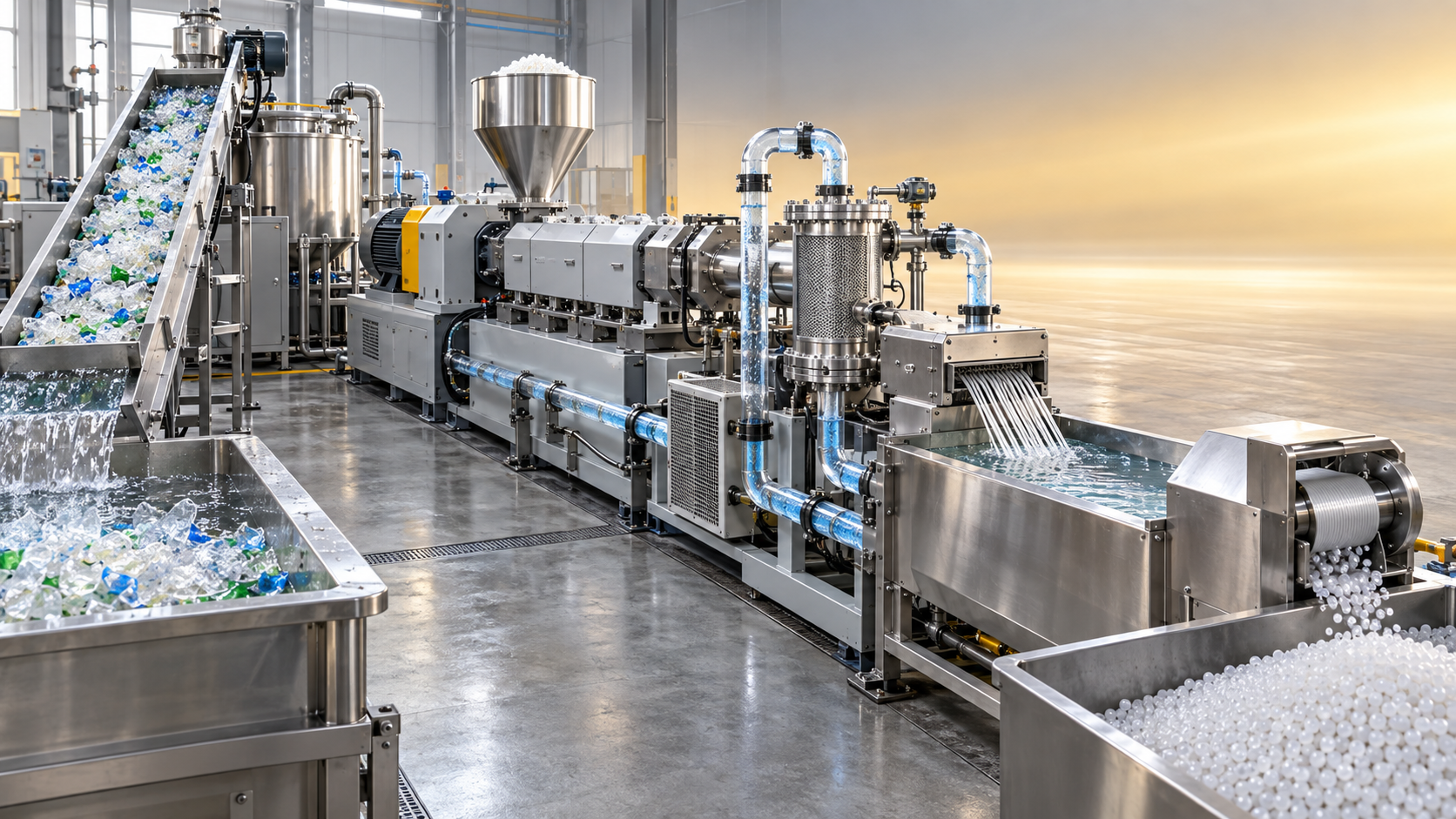
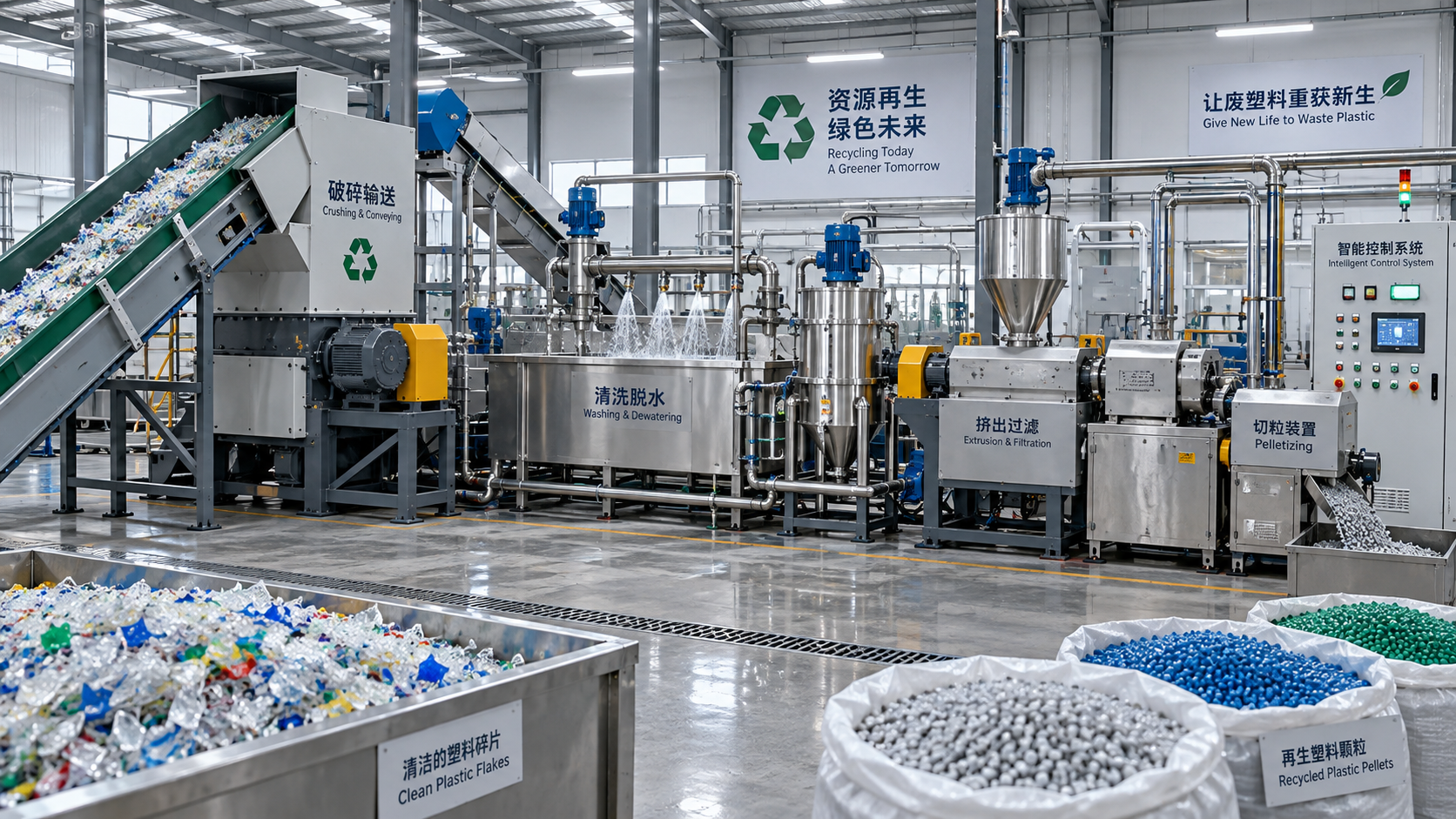
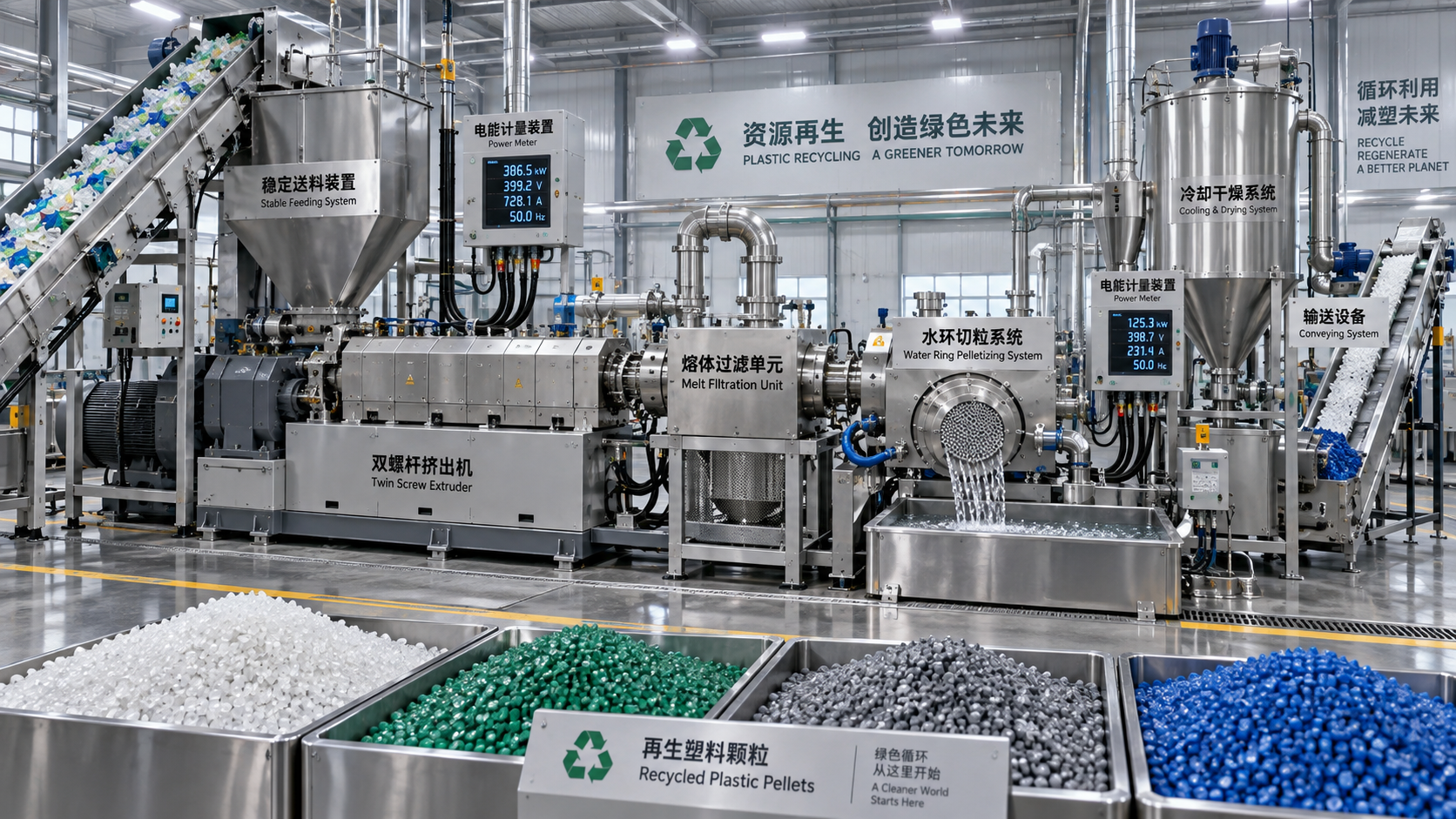
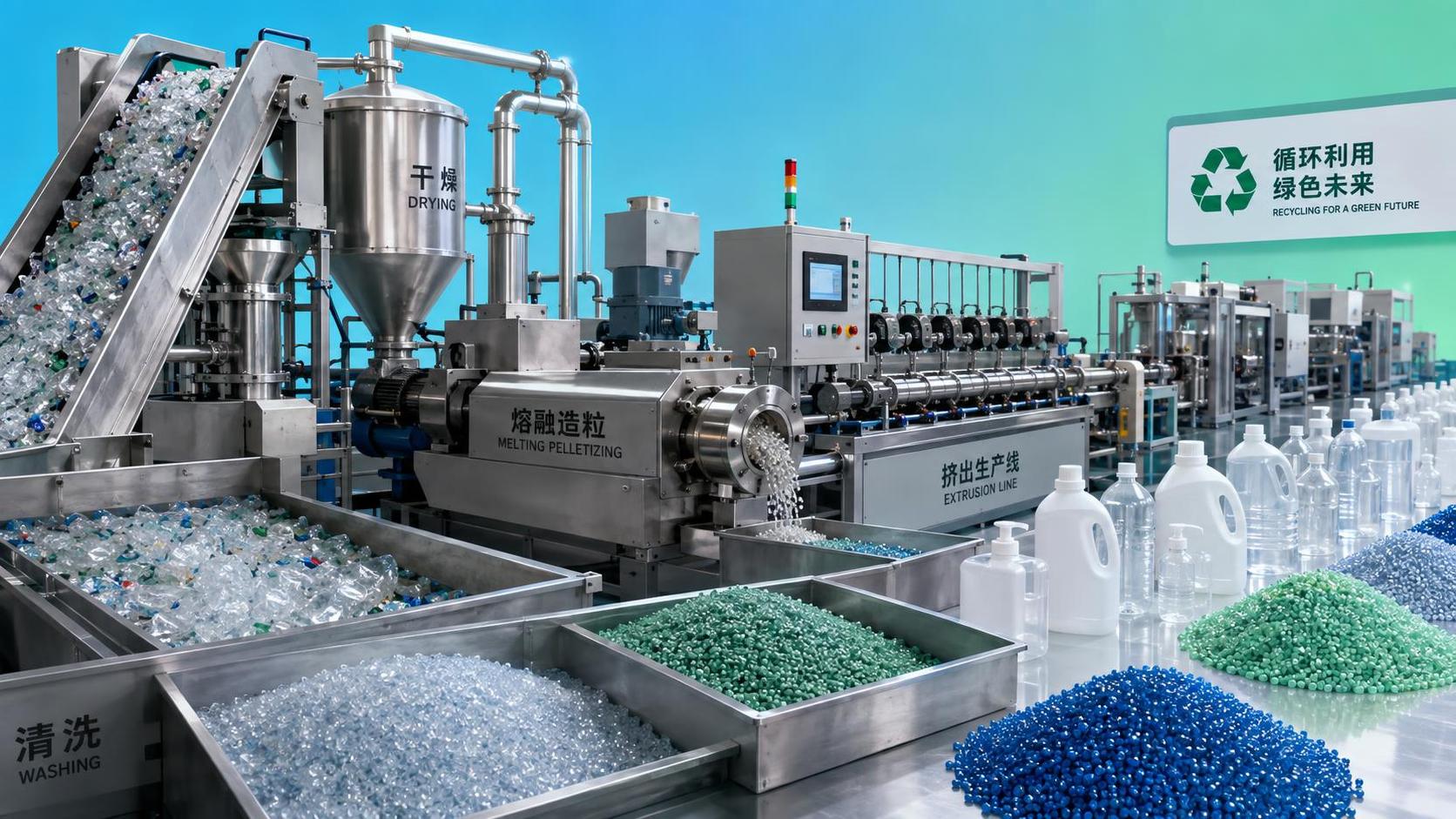
For companies involved in recycled plastics recovery and pelletizing, upstream resin quality also matters. Poor filtration, variable viscosity, or contamination can disrupt downstream packaging performance despite strong sustainability claims.
Evaluate end-of-life based on local infrastructure, not ideal scenarios
End-of-life performance is often where green packaging materials are misjudged. Buyers should ask what actually happens to the package in the countries or regions where it will be sold and disposed of.
If a flexible package is technically recyclable but not sortable in common municipal systems, practical recovery may remain low. If a compostable pack enters regular recycling, it can also create contamination concerns.
Likewise, recycled content value depends on whether collection, washing, and reprocessing systems are strong enough to keep materials circulating at acceptable quality levels. Circularity is an infrastructure question, not just a design claim.
This is why procurement teams should involve regional compliance and sustainability specialists early. Material choices that work in one market may create labeling, collection, or recovery problems in another.
A realistic end-of-life review protects buyers from overpaying for claims that customers, recyclers, or regulators cannot actually support in the target geography.
How to reduce risk during supplier selection and trials
After shortlisting materials, buyers should move into controlled trials rather than direct full-scale conversion. This is where technical assumptions are tested against actual packaging line performance and supply conditions.
Request production-scale samples, not only lab sheets or small demonstration runs. Test seal quality, drop resistance, printability, storage behavior, pallet stability, and appearance after transportation simulation.
Review supplier quality systems, backup capacity, lead times, and resin sourcing strategy. A material with strong sustainability credentials is still a risky choice if supply continuity is weak or specification control is poor.
It is also smart to confirm whether future regulation could affect the selected format. A packaging choice that looks compliant today may become expensive tomorrow if reporting rules, recycled content thresholds, or EPR fees tighten.
Procurement teams that build trial gates, approval criteria, and fallback options typically make better decisions than teams that choose primarily on price or sustainability branding.
A practical comparison template for buyers
If you need a simple internal framework, compare each candidate material under these headings: application fit, product protection, processability, end-of-life realism, compliance, supplier strength, and total cost.
Under application fit, define whether the material matches package format, filling conditions, expected shelf life, and logistics environment. Under product protection, review measurable functional properties and failure risks.
Under processability, assess machine compatibility, output rate, scrap level, and maintenance implications. Under end-of-life realism, check actual recycling or composting pathways in the markets that matter most.
Under compliance, verify food contact status, chemical restrictions, labeling obligations, and recycled content documentation. Under supplier strength, assess quality consistency, technical support, and long-term supply resilience.
Finally, compare total cost, not only resin price. Include conversion efficiency, transport impact, waste, regulatory exposure, and likely customer acceptance. This is where many supposedly cheaper options stop being cheaper.
Conclusion: the best green packaging material is the one that performs, complies, and fits the system
To compare green packaging materials without guesswork, procurement teams need a repeatable method, not broad environmental promises. The strongest decisions come from matching package function with evidence-based material evaluation.
In most cases, no single material wins on every metric. The right choice is the one that delivers product protection, manufacturing efficiency, regulatory confidence, and credible end-of-life value in your actual market conditions.
For buyers in packaging-intensive industries, especially those connected to polymer processing and recycling systems, material comparison should link resin behavior, machine performance, and circularity potential from the start.
When you use a structured scorecard, verify supplier evidence, and test real conversion performance, green packaging materials become far easier to compare. That is how procurement moves from uncertainty to confident sourcing decisions.
Related News
- 00
0000-00
What Drives Underwater Pelletizing System Cost in High-Throughput Compounding? - 00
0000-00
Medical Molding for Lab Consumables: Choosing Processes for Low-Particle Parts - 00
0000-00
Smart Factory Costs for Plastics: Estimating ROI for Automation Projects - 00
0000-00
How to Evaluate a Packaging Molding Equipment Supplier for High-Volume Production - 00
0000-00
Where Recycled Plastic Innovation Delivers the Biggest Value in Packaging
Weekly Insights
Stay ahead with our curated technology reports delivered every Monday.
Related News
 Ms. Elena RodriguezSmart Factory Costs for Plastics: Estimating ROI for Automation ProjectsSmart factory for plastics cost: learn how to estimate automation ROI, uncover hidden integration expenses, reduce scrap, and build a phased investment plan.Oct 10, 2026
 Ms. Elena RodriguezHow to Evaluate a Packaging Molding Equipment Supplier for High-Volume ProductionChoose a packaging molding equipment supplier with confidence. Learn how to assess throughput stability, tooling, recycled-material capability, lifecycle cost, and service support for high-volume production.Oct 09, 2026
 Ms. Elena RodriguezHow to Select Packaging Molding Equipment for High-Volume Production LinesPackaging molding equipment selection guide for high-volume lines: compare processes, throughput, materials, automation, and energy to achieve stable, cost-effective output.Oct 04, 2026
 Ms. Elena RodriguezHow to Evaluate Plastic Recycling Machinery for UAE Heat, Feedstock, and Output NeedsPlastic recycling machinery UAE buyers: evaluate heat resilience, feedstock handling, cooling, pellet quality, energy use, and lifecycle cost for reliable output.Sep 28, 2026
 Ms. Elena RodriguezGerman Extrusion Equipment Suppliers: Comparing Service, Lead Times, and Lifecycle CostExtrusion equipment Germany suppliers compared: evaluate service coverage, credible lead times, spare-parts access, and lifecycle cost to select a reliable, future-ready production partner.Sep 22, 2026
 Ms. Elena RodriguezWhat Should You Check Before Buying a Used Plastic Recycling Line?What should I check before buying a used plastic recycling line? Explore feedstock fit, wear, trials, utilities, controls, and restoration costs before you invest.Sep 26, 2026
 Ms. Elena RodriguezHow to Compare Pelletizing Lines by Energy Use per TonHow do I compare pelletizing lines by kWh per ton? Learn to measure total energy, verify saleable output, and select a cost-efficient line.Sep 23, 2026
 Ms. Elena RodriguezTyre Cutter Blade Wear: When Capacity Loss Needs Inspectionшинорез blade wear can quietly reduce tyre-cutting capacity. Learn the warning signs, inspection triggers, and maintenance actions that protect output and uptime.Sep 28, 2026
 Ms. Elena RodriguezIn-House Recycling for Factory Scrap: How to Reduce Material Waste and Disposal CostsIn house recycling for factory scrap helps manufacturers cut material waste, reduce disposal costs, and create controlled, quality-focused reuse loops.Sep 07, 2026
 Ms. Elena RodriguezHow Recyclable Packaging Manufacturing Balances Material Recovery and Production CostRecyclable packaging manufacturing: discover how smarter design, feedstock control, and process optimization reduce recovery costs while improving quality and yield.Sep 04, 2026
 Ms. Elena RodriguezHow to Evaluate a Plastic Recycling Systems Supplier for Your Processing NeedsChoose the right plastic recycling systems supplier with a practical guide to feedstock fit, output quality, total cost, testing, service, and compliance.Sep 01, 2026
 Ms. Elena RodriguezCE Marking for Plastic Processing Equipment: Documentation and Safety ChecksPlastic processing equipment CE compliance: learn the essential documentation, risk assessments, safety checks, and validation steps for reliable EU market access.Aug 30, 2026
 Ms. Elena RodriguezPlastic Packaging Compliance Standards: What Tests and Documents Matter Most?Plastic packaging compliance standards explained: learn which migration tests, mechanical checks, and audit-ready documents matter most to reduce risk and pass reviews with confidence.Aug 25, 2026
 Ms. Elena RodriguezHow to Evaluate a Plastic Waste Recycling System for Capacity, Contamination, and ROIPlastic waste recycling system evaluation made practical: compare true capacity, contamination control, and ROI to choose a line that delivers stable output and stronger returns.Aug 24, 2026
 Ms. Elena RodriguezPackaging Molding Equipment Price: What Drives Cost and How to Compare Quotes?Packaging molding equipment price varies by machine type, automation, tooling, energy use, and service scope. Learn what drives cost and how to compare quotes with confidence.Aug 21, 2026
 Ms. Elena RodriguezWhat Packaging Machinery for Plastic Containers Should You Choose for High-Volume Production?Packaging machinery for plastics containers can make or break high-volume production. Learn how to choose the right line for speed, consistency, compliance, and lower lifecycle costs.Aug 16, 2026
 Ms. Elena RodriguezWhat Circular Plastics Mean for Automotive Parts and Material SelectionCircular plastics for automotive are reshaping part selection with lower weight, better sustainability, and reliable performance. Discover how engineers balance recycled content, durability, and compliance.Aug 15, 2026
 Ms. Elena RodriguezBroiler Farming in Cage System: Selection Factors for Commercial FarmsBroiler farming in cage system selection for commercial farms: compare structure, ventilation, automation, and manure handling to improve efficiency and avoid costly mistakes.Aug 14, 2026
 Ms. Elena RodriguezHow to Implement Smart Polymer Manufacturing Without Disrupting Existing Production?Smart polymer manufacturing implementation made practical: learn how to upgrade existing production with phased digitalization, less downtime, better control, and measurable ROI.Aug 11, 2026
 Ms. Elena RodriguezHow to Evaluate a Rubber Compression Molding Supplier for Complex Part ProductionRubber compression molding supplier selection for complex parts starts with process, material, and tooling control. Learn how to compare vendors beyond price and reduce launch risk.Aug 10, 2026