Injection Molding Price Breakdown: What Drives Tooling, Material, and Unit Costs?




Why does injection molding price vary so much from one quote to another?
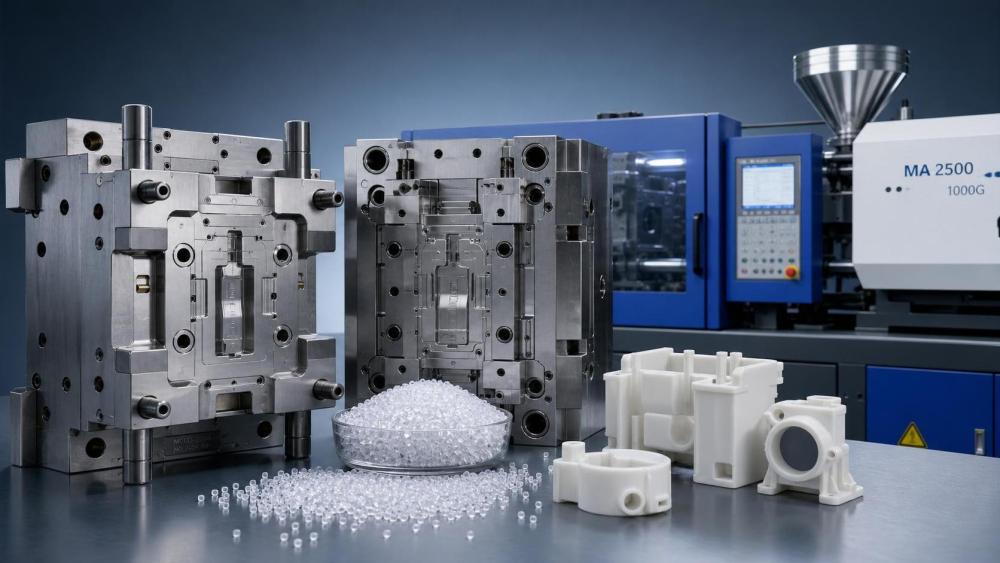
Injection molding price rarely changes for one reason alone. It moves because tooling, resin, machine time, labor, quality control, and compliance all interact.
A low unit quote may hide expensive tooling. A competitive mold price may be paired with slower cycles, more scrap, or unstable repeatability.
That is why cost review should start with total project economics, not piece price alone. In practice, the real question is what each quote includes.
For molded parts used in packaging, automotive, medical, consumer goods, or industrial assemblies, the same geometry can produce very different commercial outcomes.
PFRS follows these shifts closely because injection molding sits beside extrusion, blow molding, vulcanization, and recycling within one connected polymer value chain.
That broader view matters. Resin volatility, recycled content targets, energy efficiency, and environmental packaging rules now influence injection molding price more than many buyers expect.
Is tooling really the biggest cost driver at the start?
Usually, yes. Tooling is often the largest upfront cost, especially for custom parts, tight tolerances, multi-cavity production, or cosmetic surfaces.
A simple prototype mold may be affordable. A hardened steel production mold with hot runners, slides, lifters, and automated ejection is another cost category entirely.
The key point is not only mold size. Complexity inside the mold drives design hours, machining steps, validation effort, and future maintenance.
More cavities can reduce unit cost later, but they raise tooling investment first. This trade-off matters when forecast volume is still uncertain.
Cooling layout also matters more than many sourcing teams assume. Better cooling supports shorter cycles, lower warpage risk, and more stable part dimensions.
When suppliers use advanced simulation, servo control, or AI-assisted process tuning, the initial quote may rise, but process stability often improves over time.
A practical way to review tooling is to ask whether the mold is built for sampling, bridge production, or long-life output. Those are not priced the same.
What should be confirmed inside the tooling quote?
- Mold steel grade and expected tool life
- Cavity count and balance approach
- Hot runner or cold runner design
- Surface finish, texturing, and polishing scope
- Sampling rounds, mold trials, and revision limits
- Spare parts, maintenance terms, and ownership rights
How much of injection molding price comes from material choice?
Material can shape both direct and hidden cost. Resin price per kilogram is only the visible part of the decision.
Commodity resins such as PP or PE usually support lower injection molding price. Engineering plastics, flame-retardant grades, or medical materials can change the economics fast.
The part weight matters, but so does material behavior. Shrinkage, moisture sensitivity, melt flow, and thermal window affect scrap levels and process stability.
For example, a cheaper resin that warps easily may create more rejects. In that case, the apparent savings disappear during production.
Recycled content is another growing factor. As circular economy targets expand, blends with rPP, rPE, or other recycled streams may lower raw material exposure in some programs.
However, recycled material is not automatically cheaper in final use. Filtration quality, contamination risk, color control, and mechanical consistency must be verified.
This is where PFRS often adds useful context. Recycled pellet quality, extrusion compounding performance, and packaging compliance are increasingly linked to injection molding price decisions.
A useful comparison is to calculate material cost per accepted part, not per kilogram alone. That gives a more realistic view of injection molding price.
Why can unit cost stay high even when tooling is already paid?
Once tooling is amortized, buyers often expect a very low part price. Sometimes that happens. Sometimes it does not.
Cycle time is one of the biggest reasons. If a part needs longer cooling, careful packing, or manual handling, the machine produces fewer good parts per hour.
Tolerance requirements also matter. A cosmetic exterior panel and a precision medical component do not absorb process variation in the same way.
Small design details can increase per-unit cost more than expected. Thick sections, undercuts, insert molding, overmolding, and secondary operations all extend handling time.
Energy consumption is another rising factor. All-electric and high-response servo machines often support lower operating cost, especially in stable, high-volume runs.
In regions facing stricter carbon reporting, energy-efficient molding can also support broader compliance and sustainability targets beyond factory overhead.
That is one reason PFRS tracks machine efficiency, process digitalization, and intelligent control. Better molding systems often reduce hidden cost, not just visible labor.
Common reasons unit price remains elevated
- Long cycle time caused by cooling limits
- High rejection rate from warpage or flash
- Manual trimming, assembly, or inspection
- Low annual volume spread across many part variants
- Frequent material changeovers or color changes
- Strict documentation for regulated markets
When does order volume actually reduce injection molding price?
Higher volume helps, but not in a straight line. The first major savings usually come from spreading tooling and setup cost across more parts.
After that, savings depend on production planning. Long, stable runs reduce changeovers, material purges, machine downtime, and labor interruptions.
Yet very high volume may require new tooling, automation, or extra validation. That means injection molding price can drop per part while total program investment rises.
More common savings appear when annual demand is predictable, release schedules are stable, and design changes are limited.
If forecasts move sharply every quarter, suppliers may keep contingency inside the quote. Unstable planning often weakens the benefit of larger nominal volume.
A better sourcing discussion focuses on committed volume, release pattern, safety stock logic, and whether the part family can share a process window.
A quick volume judgment guide
What hidden costs are easy to miss during quote comparison?
This is where many sourcing decisions become expensive later. A quote can look efficient while excluding costs that appear only after launch.
Tool modifications are a common example. If design for manufacturability review is weak, rework may arrive after T1 or T2 sampling.
Freight, resin indexing, packaging, cavity maintenance, and quality documentation are also frequent blind spots. They may sit outside the base piece price.
Another overlooked area is compliance. Packaging rules, recycled content claims, traceability, or restricted substance reporting can add testing and administrative cost.
If the part is linked to consumer packaging or circular economy targets, recycled feedstock quality and auditability should be checked early, not after production issues appear.
That broader risk view is increasingly important. PFRS intelligence often connects molding economics with resin turbulence, recycling system capability, and evolving global packaging requirements.
The goal is simple: compare quotes on equal scope, then compare process capability. Doing only the first step is rarely enough.
Questions worth asking before approving a quote
- Does the quoted injection molding price include sampling and corrections?
- Which quality records are standard, and which are extra?
- How is resin price adjusted if the market shifts?
- What scrap assumptions support the current unit quote?
- Who owns the mold, data, and maintenance history?
- Are recycled content or compliance claims independently supported?
So how should injection molding price be evaluated before making a final decision?
Start with a clean cost structure. Separate tooling, material, processing, secondary work, quality, logistics, and future adjustment triggers.
Then test the assumptions behind the numbers. A realistic quote should show why that injection molding price is sustainable for the expected volume and quality level.
It also helps to compare suppliers on process maturity, not only commercial terms. Mold design discipline, machine efficiency, and data visibility often protect long-term cost.
Where recycled content, ESG reporting, or packaging compliance matter, cost review should include traceability and material consistency, not just resin discounts.
A sound next step is to build one comparison sheet covering tooling life, resin assumptions, cycle time, scrap rate, tolerances, and revision risk.
That approach turns injection molding price from a vague quote line into a decision framework. It is usually the fastest way to avoid hidden cost later.
If more clarity is needed, reviewing market intelligence across molding, extrusion, and recycling systems can reveal whether today’s quote reflects a supplier issue or a wider polymer market shift.
Related News
- 00
0000-00
How Curing Press Control Shapes Uniformity and Tread Life in Truck Tire Manufacturing - 00
0000-00
How to Evaluate German Extrusion Equipment for Stable, High-Output Production - 00
0000-00
How Closed-Loop Bottle-to-Bottle Recycling Maintains Food-Grade PET Quality - 00
0000-00
How to Specify a Food-Grade PET Bottle Recycling System for Safe rPET Production - 00
0000-00
How to Evaluate a Plastics Processing Equipment Manufacturer for Uptime and Support
Weekly Insights
Stay ahead with our curated technology reports delivered every Monday.
Related News
 Ms. Elena RodriguezIn-House Recycling for Factory Scrap: How to Reduce Material Waste and Disposal CostsIn house recycling for factory scrap helps manufacturers cut material waste, reduce disposal costs, and create controlled, quality-focused reuse loops.Sep 07, 2026
 Ms. Elena RodriguezHow Recyclable Packaging Manufacturing Balances Material Recovery and Production CostRecyclable packaging manufacturing: discover how smarter design, feedstock control, and process optimization reduce recovery costs while improving quality and yield.Sep 04, 2026
 Ms. Elena RodriguezHow to Evaluate a Plastic Recycling Systems Supplier for Your Processing NeedsChoose the right plastic recycling systems supplier with a practical guide to feedstock fit, output quality, total cost, testing, service, and compliance.Sep 01, 2026
 Ms. Elena RodriguezCE Marking for Plastic Processing Equipment: Documentation and Safety ChecksPlastic processing equipment CE compliance: learn the essential documentation, risk assessments, safety checks, and validation steps for reliable EU market access.Aug 30, 2026
 Ms. Elena RodriguezPlastic Packaging Compliance Standards: What Tests and Documents Matter Most?Plastic packaging compliance standards explained: learn which migration tests, mechanical checks, and audit-ready documents matter most to reduce risk and pass reviews with confidence.Aug 25, 2026
 Ms. Elena RodriguezHow to Evaluate a Plastic Waste Recycling System for Capacity, Contamination, and ROIPlastic waste recycling system evaluation made practical: compare true capacity, contamination control, and ROI to choose a line that delivers stable output and stronger returns.Aug 24, 2026
 Ms. Elena RodriguezPackaging Molding Equipment Price: What Drives Cost and How to Compare Quotes?Packaging molding equipment price varies by machine type, automation, tooling, energy use, and service scope. Learn what drives cost and how to compare quotes with confidence.Aug 21, 2026
 Ms. Elena RodriguezWhat Packaging Machinery for Plastic Containers Should You Choose for High-Volume Production?Packaging machinery for plastics containers can make or break high-volume production. Learn how to choose the right line for speed, consistency, compliance, and lower lifecycle costs.Aug 16, 2026
 Ms. Elena RodriguezWhat Circular Plastics Mean for Automotive Parts and Material SelectionCircular plastics for automotive are reshaping part selection with lower weight, better sustainability, and reliable performance. Discover how engineers balance recycled content, durability, and compliance.Aug 15, 2026
 Ms. Elena RodriguezBroiler Farming in Cage System: Selection Factors for Commercial FarmsBroiler farming in cage system selection for commercial farms: compare structure, ventilation, automation, and manure handling to improve efficiency and avoid costly mistakes.Aug 14, 2026
 Ms. Elena RodriguezHow to Implement Smart Polymer Manufacturing Without Disrupting Existing Production?Smart polymer manufacturing implementation made practical: learn how to upgrade existing production with phased digitalization, less downtime, better control, and measurable ROI.Aug 11, 2026
 Ms. Elena RodriguezHow to Evaluate a Rubber Compression Molding Supplier for Complex Part ProductionRubber compression molding supplier selection for complex parts starts with process, material, and tooling control. Learn how to compare vendors beyond price and reduce launch risk.Aug 10, 2026
 Ms. Elena RodriguezPackaging Compliance in Canada: Key Labeling and EPR Rules Importers Must KnowPackaging compliance Canada explained for importers: learn bilingual labeling, environmental claims, and provincial EPR rules to reduce risk, avoid costly errors, and stay market-ready.Aug 03, 2026
 Ms. Elena RodriguezWhy Circular Plastics Economy Traceability Matters for Recycled Content ComplianceCircular plastics economy traceability is essential for proving recycled content compliance across sourcing, processing, and reporting. Learn how strong evidence reduces audit risk.Aug 02, 2026
 Ms. Elena RodriguezRecycled Plastic Compliance: Key Standards, Testing Requirements, and DocumentationRecycled plastic compliance explained: key standards, testing requirements, supplier documents, and food-contact risks to help you avoid approval delays and costly compliance mistakes.Aug 01, 2026
 Ms. Elena RodriguezHow to Evaluate an Extrusion Machinery Manufacturer for Quality, Support, and ROIExtrusion machinery manufacturer selection affects quality, uptime, and ROI. Learn how to compare process fit, output claims, service, compliance, and long-term operating costs.Jul 29, 2026
 Ms. Elena RodriguezHow to Evaluate Food Grade Recycled Pellets for Safe Packaging ApplicationsFood grade recycled pellets for safe packaging demand more than a label. Learn how to assess feedstock, process validation, pellet quality, and compliance before approval.Jul 28, 2026
 Ms. Elena RodriguezHow to Evaluate a Rubber Vulcanization Supplier for Quality, Capacity, and Lead TimeRubber vulcanization supplier selection made easier: learn how to assess quality systems, true production capacity, and lead time reliability to reduce sourcing risk and improve supply performance.Jul 25, 2026
 Ms. Elena RodriguezPlastic Waste Recycling Price: What Drives Costs and How Buyers Should Compare QuotesPlastic waste recycling price explained: compare quotes by yield, energy use, pellet quality, and compliance costs to find the best long-term recycling value.Jul 20, 2026
 Ms. Elena RodriguezHow to Plan a Smart Factory for Plastics Packaging: Key Systems, Data, and ROISmart factory for plastics packaging planning starts with the right systems, data architecture, compliance, recycling, and ROI model. Learn the key steps to build a scalable, future-ready plant.Jul 19, 2026