How polymer material lifecycle data lowers waste




For project managers overseeing polymer processing, every material decision affects cost, compliance, and sustainability outcomes. Understanding polymer material lifecycle data helps teams identify where resin is lost, energy is wasted, and recycling value is overlooked—from injection molding and extrusion to blow molding, vulcanization, and pelletizing. By connecting production metrics, equipment performance, and end-of-life recovery insights, manufacturers can reduce scrap, improve resource planning, and build cleaner circular workflows without compromising output quality.
Where polymer material lifecycle data creates project value
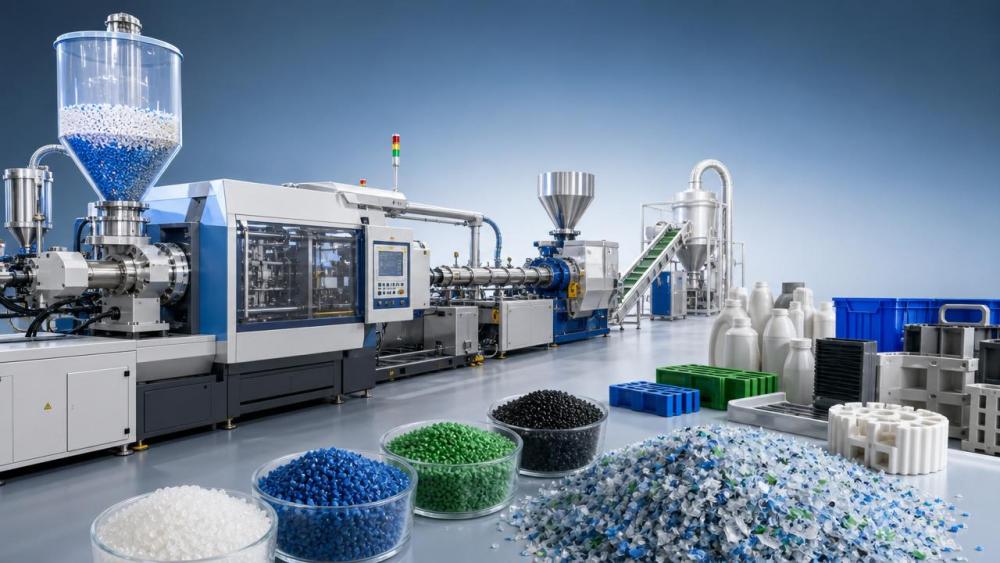
Project managers rarely lose money in one dramatic event. Waste usually appears as small deviations: overdried resin, unstable melt temperature, trimming loss, rejected bottles, contaminated regrind, or poor pellet quality.
Polymer material lifecycle data connects these deviations across procurement, processing, quality control, logistics, use, and recovery. It turns material flow into a measurable project variable rather than an afterthought.
Why conventional production reports are not enough
A daily output report may show tonnage, machine utilization, and defect rate. It often fails to show why virgin resin consumption exceeded plan or why recycled feedstock caused instability.
For injection molding, the missing link may be pressure curve variation. For extrusion, it may be screw wear, moisture, or additive dispersion. For pelletizing, it may be filtration load.
- Material identity data helps teams trace resin grade, recycled content, additives, batch origin, and contamination risk.
- Process data shows melt temperature, pressure, screw speed, cycle time, cooling behavior, and energy consumption.
- Quality data links dimensional stability, tensile properties, color deviation, odor, haze, or gel count to real production conditions.
- Recovery data records regrind ratio, washing yield, pellet uniformity, filtration residue, and downstream application suitability.
PFRS views polymer material lifecycle data as an intelligence layer across modern material shaping and circular economy operations. It supports more confident scheduling, procurement, and technical trade-offs.
Which process stages should project teams measure first?
Not every project needs a complex digital twin on day one. The practical starting point is to measure the process stages where material loss, downtime, or compliance exposure is highest.
The following table maps polymer material lifecycle data to typical forming and recycling equipment decisions. It helps project managers prioritize data collection before expanding automation budgets.
The table shows why lifecycle visibility must extend beyond a single machine. Waste reduction depends on how material behavior, equipment settings, and recovery routes interact across the full operation.
How lifecycle data lowers waste in real project scenarios
For engineering project leaders, the business case must be specific. Polymer material lifecycle data lowers waste by turning unstable variables into controlled operating windows.
Scenario 1: Reducing resin loss in injection molding
A molding project producing medical components, optical parts, or automotive housings may face tight dimensional tolerances. Scrap often comes from inconsistent filling, poor drying, or excessive safety margins.
By tracking shot profile, mold temperature, holding pressure, and resin batch history, teams can separate machine issues from material issues before approving expensive tooling changes.
Scenario 2: Stabilizing extrusion output
In pipe, sheet, film, and compounding projects, small feed variations can become large quality problems. Lifecycle records help compare raw material changes against torque, pressure, and thickness trends.
PFRS analysis often focuses on non-Newtonian flow behavior, twin-screw configuration, and additive dispersion. These details help managers avoid blaming operators for design-level process instability.
Scenario 3: Increasing recycling value
Recycling waste is not only about collecting scrap. The value depends on how well the team preserves polymer properties through sorting, washing, melt filtration, degassing, and pelletizing.
Polymer material lifecycle data helps decide whether in-house recycling, external toll recycling, or direct regrind use will meet quality, cost, and compliance expectations.
- Clean production scrap can often re-enter controlled applications faster than mixed post-consumer material.
- High-moisture flakes may require stronger drying and degassing before pelletizing.
- Contaminated recycled streams need filtration and application limits, not optimistic blending assumptions.
What should procurement compare before selecting equipment?
Project procurement is often pressured by delivery time and budget. Yet the cheapest equipment quote may create higher lifetime waste if data capture, process control, or material adaptability is weak.
Use polymer material lifecycle data requirements as part of the purchasing specification. The table below highlights practical comparison criteria for forming and recycling systems.
This purchasing view helps managers defend investment in sensors, controls, filtration, and digital reporting. It also prevents narrow comparisons based only on rated output.
Procurement checklist for data-ready polymer projects
- Define the waste categories before tendering: start-up scrap, purge, trim, defective products, downgraded pellets, and rejected shipments.
- Specify the process variables that must be captured for each product family, not just each equipment type.
- Request evidence of material trials when recycled feedstock, lightweight packaging, or high-precision molding is part of the project scope.
- Compare lifecycle cost using energy, yield, downtime, maintenance, and quality loss, not equipment price alone.
How to convert lifecycle data into a waste reduction workflow
Data collection alone does not reduce waste. Project managers need an operating workflow that connects engineering judgment, production discipline, and financial review.
Step-by-step implementation model
A phased approach keeps the project manageable. It also allows teams to prove value before expanding to more lines, materials, or recycling operations.
- Baseline the current material balance by comparing purchased resin, produced goods, scrap, rework, purge, and recovered material.
- Identify the three highest loss points and assign each to a machine, material, method, or measurement cause.
- Build standard operating windows for temperature, pressure, moisture, residence time, cycle time, and filtration pressure.
- Link quality inspection with process records so deviations trigger corrective action instead of end-of-line sorting only.
- Review polymer material lifecycle data monthly with engineering, procurement, production, and sustainability stakeholders.
PFRS supports this workflow through sector intelligence on injection molding, extrusion, blow molding, vulcanization, and pelletizing. The aim is practical decision support, not isolated data dashboards.
Cost, compliance, and circular economy benefits
Waste reduction has a stronger business case when it includes resin savings, energy control, packaging compliance, and recycled-content readiness. These factors increasingly affect contract awards.
The following table summarizes how polymer material lifecycle data connects operational action with commercial impact for project managers handling budget and stakeholder approval.
Compliance references may include ISO 14001 environmental management, ISO 9001 quality management, food-contact rules, packaging waste regulations, or customer-specific recycled-content documentation.
The correct requirement depends on market, application, and material type. Project teams should confirm obligations before finalizing equipment specification or recycled resin sourcing.
Common misconceptions that increase polymer waste
Many waste issues persist because teams accept simple explanations too quickly. Polymer processing is sensitive to rheology, temperature history, moisture, additives, and equipment wear.
Misconception 1: Recycled material is always the main defect source
Recycled resin can introduce variation, but virgin resin also fails when drying, molding, extrusion, or storage is poorly controlled. Lifecycle comparison prevents unfair supplier blame.
Misconception 2: Higher output automatically lowers unit cost
A faster line that produces more off-spec material may increase total cost. Output must be evaluated together with yield, energy per kilogram, and downstream acceptance.
Misconception 3: End-of-life recovery is separate from production engineering
Product design, pigment selection, multilayer structure, adhesive choice, and filler content affect recyclability. End-of-life outcomes should influence early project decisions.
FAQ for project managers using polymer material lifecycle data
The questions below reflect common search and procurement concerns when teams begin using lifecycle visibility to reduce polymer processing waste.
How much data is needed before making equipment decisions?
Start with material balance, rejection reasons, energy consumption, and key process parameters. For many projects, three to six months of consistent records can reveal reliable loss patterns.
Is polymer material lifecycle data only useful for large plants?
No. Smaller processors can begin with simple batch traceability, scrap classification, and machine parameter logs. The priority is decision quality, not system complexity.
What should be checked before adopting more recycled content?
Check melt flow behavior, moisture, contamination, odor, color stability, mechanical properties, and regulatory suitability. Pilot trials should reflect actual production temperatures and cycle times.
Can lifecycle data support customer audits?
Yes, when records are organized by batch, product, process condition, and material source. It can support traceability, corrective action, and recycled-content communication.
Why choose PFRS for lifecycle intelligence and project decisions
PFRS connects polymer rheology, processing equipment, recycling systems, and environmental packaging pressure into actionable intelligence for project teams. The focus is engineering relevance and commercial clarity.
For injection molding projects, PFRS helps evaluate servo response, holding pressure optimization, tooling implications, and micron-level tolerance risks. For extrusion, it supports screw, feeding, and compounding decisions.
For blow molding, rubber vulcanization, and pelletizing, PFRS highlights the data points that affect output stability, material recovery, energy use, and compliance readiness.
Consult us when your project needs clearer technical direction
- Confirm critical parameters for injection molding machines, extruders, blow molding systems, vulcanizing presses, or pelletizing lines.
- Compare equipment options based on lifecycle cost, material compatibility, energy mapping, and digital traceability.
- Discuss delivery cycles, trial planning, recycled resin suitability, filtration requirements, and application-specific risk points.
- Prepare procurement questions related to certification expectations, customer audits, packaging compliance, and circular workflow design.
If your team is planning a polymer processing or recycling project, use polymer material lifecycle data as a decision framework. PFRS can help translate process information into lower waste, stronger specifications, and more resilient circular operations.
Related News
- 00
0000-00
Tire Manufacturing Equipment: Choosing Curing Presses by Tire Size and Output - 00
0000-00
What Drives Underwater Pelletizing System Cost in High-Throughput Compounding? - 00
0000-00
Medical Molding for Lab Consumables: Choosing Processes for Low-Particle Parts - 00
0000-00
Smart Factory Costs for Plastics: Estimating ROI for Automation Projects - 00
0000-00
How to Evaluate a Packaging Molding Equipment Supplier for High-Volume Production
Weekly Insights
Stay ahead with our curated technology reports delivered every Monday.
Related News
 Ms. Elena RodriguezSmart Factory Costs for Plastics: Estimating ROI for Automation ProjectsSmart factory for plastics cost: learn how to estimate automation ROI, uncover hidden integration expenses, reduce scrap, and build a phased investment plan.Oct 10, 2026
 Ms. Elena RodriguezHow to Evaluate a Packaging Molding Equipment Supplier for High-Volume ProductionChoose a packaging molding equipment supplier with confidence. Learn how to assess throughput stability, tooling, recycled-material capability, lifecycle cost, and service support for high-volume production.Oct 09, 2026
 Ms. Elena RodriguezHow to Select Packaging Molding Equipment for High-Volume Production LinesPackaging molding equipment selection guide for high-volume lines: compare processes, throughput, materials, automation, and energy to achieve stable, cost-effective output.Oct 04, 2026
 Ms. Elena RodriguezHow to Evaluate Plastic Recycling Machinery for UAE Heat, Feedstock, and Output NeedsPlastic recycling machinery UAE buyers: evaluate heat resilience, feedstock handling, cooling, pellet quality, energy use, and lifecycle cost for reliable output.Sep 28, 2026
 Ms. Elena RodriguezGerman Extrusion Equipment Suppliers: Comparing Service, Lead Times, and Lifecycle CostExtrusion equipment Germany suppliers compared: evaluate service coverage, credible lead times, spare-parts access, and lifecycle cost to select a reliable, future-ready production partner.Sep 22, 2026
 Ms. Elena RodriguezWhat Should You Check Before Buying a Used Plastic Recycling Line?What should I check before buying a used plastic recycling line? Explore feedstock fit, wear, trials, utilities, controls, and restoration costs before you invest.Sep 26, 2026
 Ms. Elena RodriguezHow to Compare Pelletizing Lines by Energy Use per TonHow do I compare pelletizing lines by kWh per ton? Learn to measure total energy, verify saleable output, and select a cost-efficient line.Sep 23, 2026
 Ms. Elena RodriguezTyre Cutter Blade Wear: When Capacity Loss Needs Inspectionшинорез blade wear can quietly reduce tyre-cutting capacity. Learn the warning signs, inspection triggers, and maintenance actions that protect output and uptime.Sep 28, 2026
 Ms. Elena RodriguezIn-House Recycling for Factory Scrap: How to Reduce Material Waste and Disposal CostsIn house recycling for factory scrap helps manufacturers cut material waste, reduce disposal costs, and create controlled, quality-focused reuse loops.Sep 07, 2026
 Ms. Elena RodriguezHow Recyclable Packaging Manufacturing Balances Material Recovery and Production CostRecyclable packaging manufacturing: discover how smarter design, feedstock control, and process optimization reduce recovery costs while improving quality and yield.Sep 04, 2026
 Ms. Elena RodriguezHow to Evaluate a Plastic Recycling Systems Supplier for Your Processing NeedsChoose the right plastic recycling systems supplier with a practical guide to feedstock fit, output quality, total cost, testing, service, and compliance.Sep 01, 2026
 Ms. Elena RodriguezCE Marking for Plastic Processing Equipment: Documentation and Safety ChecksPlastic processing equipment CE compliance: learn the essential documentation, risk assessments, safety checks, and validation steps for reliable EU market access.Aug 30, 2026
 Ms. Elena RodriguezPlastic Packaging Compliance Standards: What Tests and Documents Matter Most?Plastic packaging compliance standards explained: learn which migration tests, mechanical checks, and audit-ready documents matter most to reduce risk and pass reviews with confidence.Aug 25, 2026
 Ms. Elena RodriguezHow to Evaluate a Plastic Waste Recycling System for Capacity, Contamination, and ROIPlastic waste recycling system evaluation made practical: compare true capacity, contamination control, and ROI to choose a line that delivers stable output and stronger returns.Aug 24, 2026
 Ms. Elena RodriguezPackaging Molding Equipment Price: What Drives Cost and How to Compare Quotes?Packaging molding equipment price varies by machine type, automation, tooling, energy use, and service scope. Learn what drives cost and how to compare quotes with confidence.Aug 21, 2026
 Ms. Elena RodriguezWhat Packaging Machinery for Plastic Containers Should You Choose for High-Volume Production?Packaging machinery for plastics containers can make or break high-volume production. Learn how to choose the right line for speed, consistency, compliance, and lower lifecycle costs.Aug 16, 2026
 Ms. Elena RodriguezWhat Circular Plastics Mean for Automotive Parts and Material SelectionCircular plastics for automotive are reshaping part selection with lower weight, better sustainability, and reliable performance. Discover how engineers balance recycled content, durability, and compliance.Aug 15, 2026
 Ms. Elena RodriguezBroiler Farming in Cage System: Selection Factors for Commercial FarmsBroiler farming in cage system selection for commercial farms: compare structure, ventilation, automation, and manure handling to improve efficiency and avoid costly mistakes.Aug 14, 2026
 Ms. Elena RodriguezHow to Implement Smart Polymer Manufacturing Without Disrupting Existing Production?Smart polymer manufacturing implementation made practical: learn how to upgrade existing production with phased digitalization, less downtime, better control, and measurable ROI.Aug 11, 2026
 Ms. Elena RodriguezHow to Evaluate a Rubber Compression Molding Supplier for Complex Part ProductionRubber compression molding supplier selection for complex parts starts with process, material, and tooling control. Learn how to compare vendors beyond price and reduce launch risk.Aug 10, 2026