Green Circular Economy Strategies for Manufacturers Facing Resin Price Volatility




Resin price volatility is forcing manufacturers to rethink procurement, production efficiency, and waste recovery as one connected strategy.
A green circular economy approach reduces exposure to virgin resin swings, improves material utilization, and strengthens compliance with packaging and sustainability rules.
By integrating precision molding, efficient extrusion, in-house recycling, and data-driven control, cost pressure becomes a pathway to resilience.
Green Circular Economy Strategies for Manufacturers Facing Resin Price Volatility

Resin markets are shaped by oil prices, logistics disruptions, capacity shifts, additives, currency changes, and regional environmental policies.
A green circular economy strategy connects material sourcing, processing stability, scrap recovery, and end-of-life value into one operating model.
For polymer-intensive sectors, this model protects margins while supporting lower carbon targets and measurable resource efficiency.
What does a green circular economy mean for resin-intensive production?
A green circular economy is not only recycling after production. It begins with design, material selection, machine performance, and process control.
The core idea is to keep polymer value circulating longer, with less dependence on virgin resin and fewer uncontrolled losses.
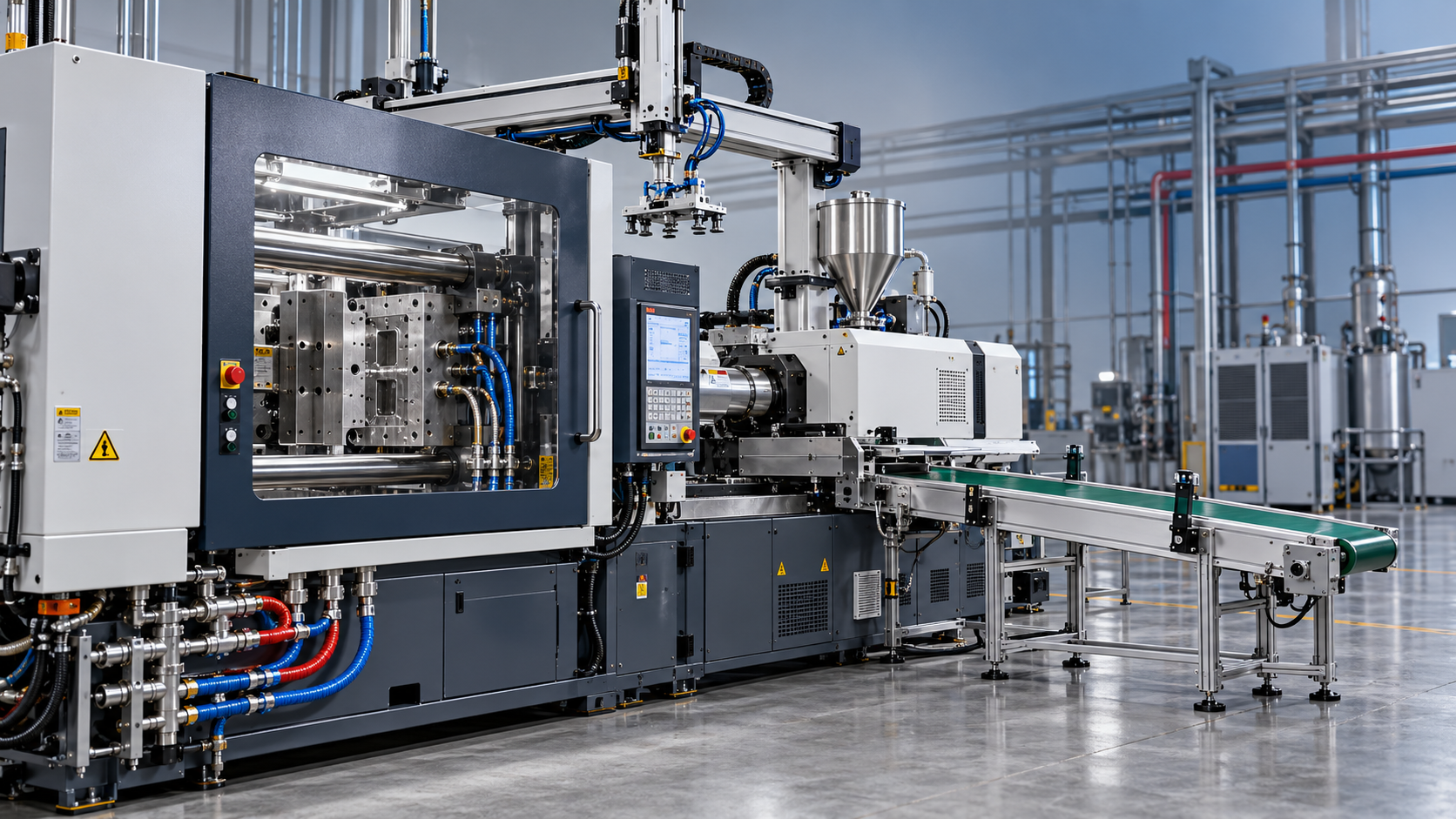
In injection molding, this may mean optimized shot weight, stable holding pressure, and minimized runners or sprues.
In extrusion, it means stable melt temperature, precise screw configuration, efficient compounding, and reduced start-up waste.
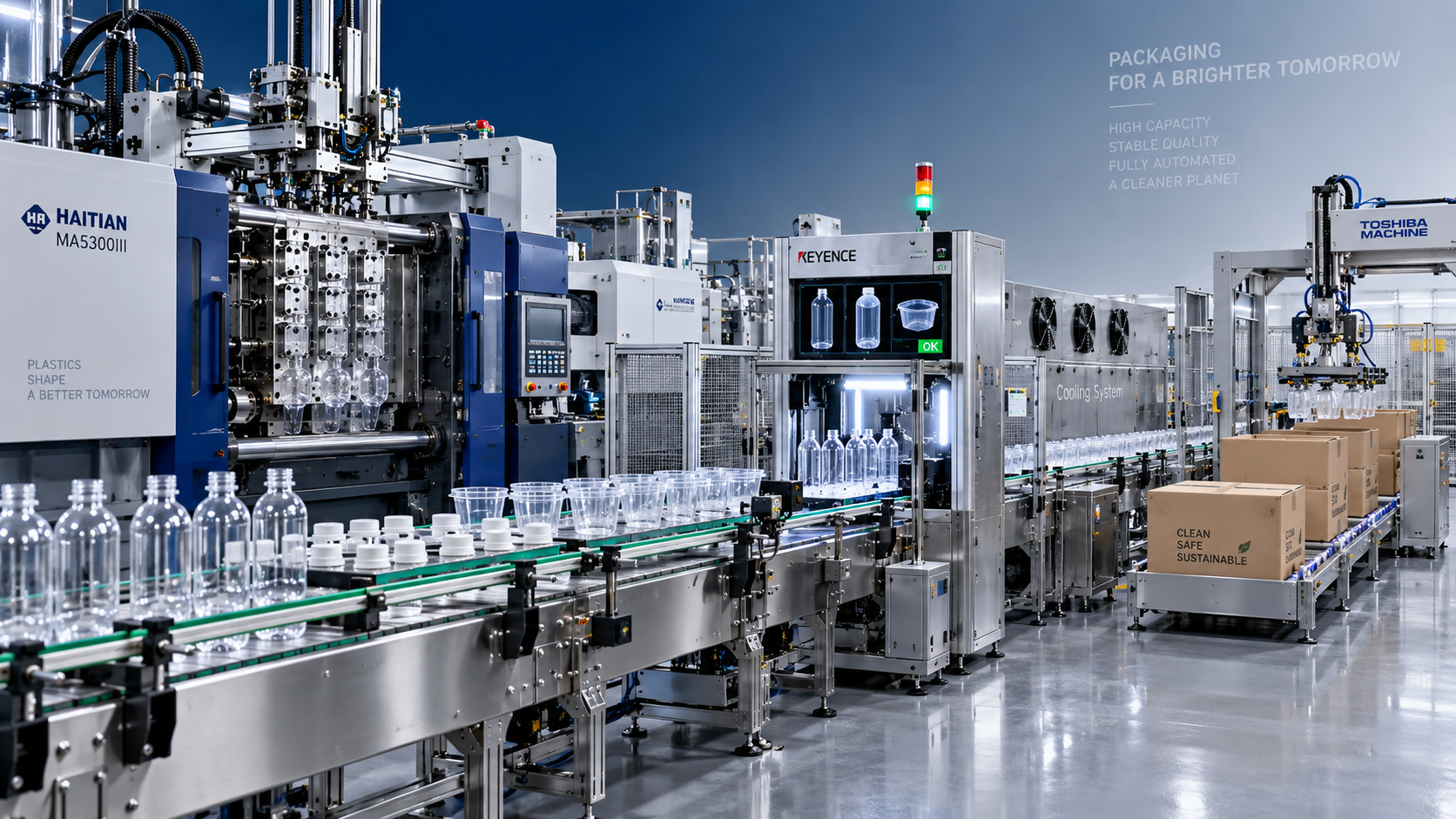
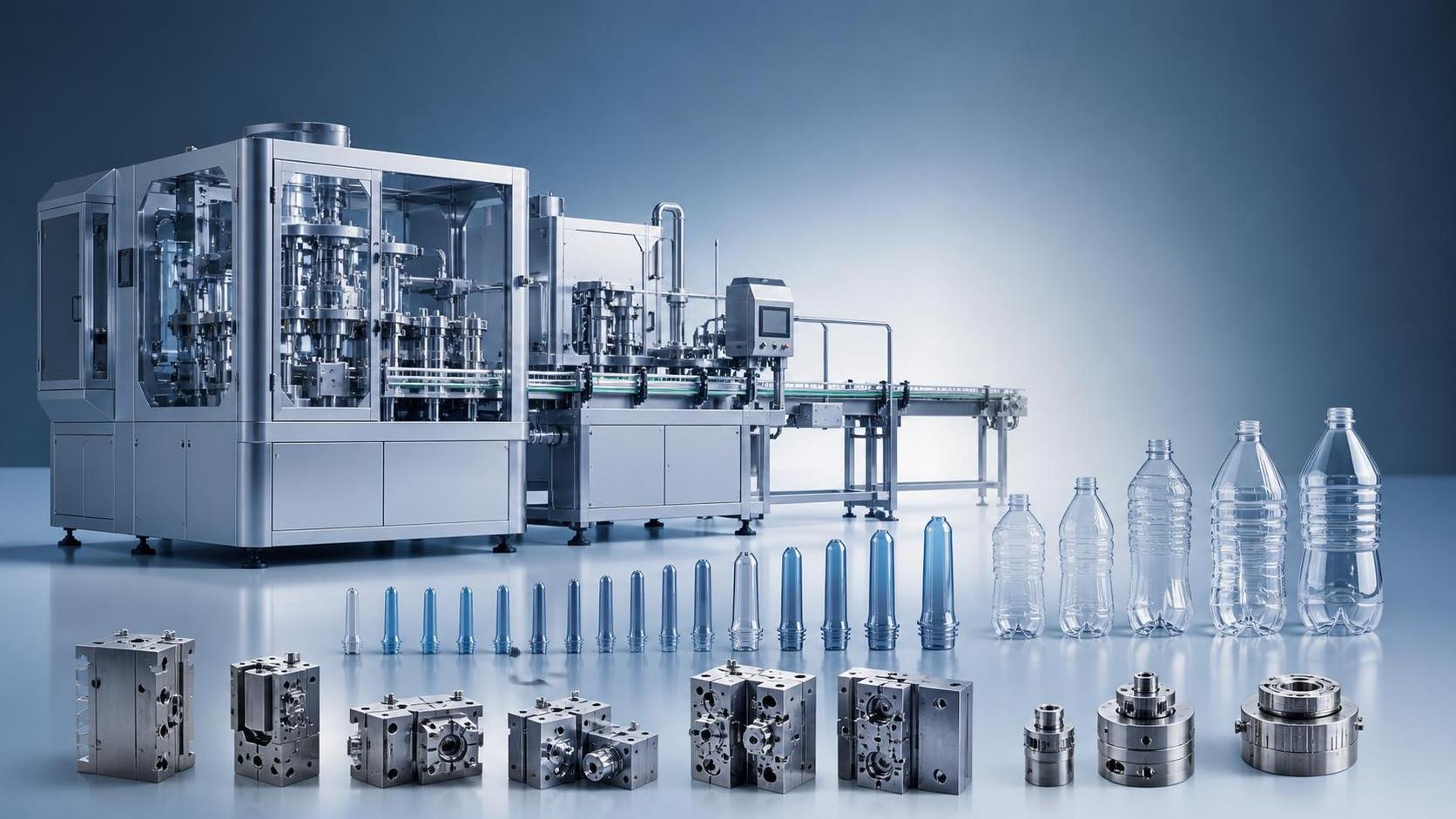
In blow molding, it includes lightweighting, preform consistency, and strict control of wall thickness distribution.
In rubber vulcanization, better thermal control reduces rejects caused by under-curing, over-curing, or dimensional instability.
The green circular economy also depends on accurate material traceability, especially when recycled resin enters regulated packaging or technical parts.
A useful definition combines three priorities: material efficiency, recovery capability, and compliance-ready documentation.
Practical meaning on the factory floor
- Reduce virgin resin use without reducing product reliability.
- Convert clean internal scrap into controlled production input.
- Improve energy efficiency across molding, extrusion, and pelletizing.
- Document recycled content, process parameters, and quality results.
Why does resin price volatility make circularity more urgent?
Virgin resin price volatility directly affects cost forecasts, production planning, inventory value, and sales commitments.
When prices rise suddenly, unmanaged scrap becomes more expensive. When prices fall, excess inventory may lose financial value.
A green circular economy reduces this exposure by creating controlled secondary material streams inside the production system.
Clean production scrap, purge material, edge trim, and rejected parts can become measurable resources instead of disposal costs.
However, circularity only works when recycled material is consistent enough for processing, testing, and customer requirements.
That is why pelletizing, filtration, drying, and melt homogenization matter as much as procurement negotiations.
The green circular economy also improves negotiation power because less production output depends on spot-market virgin resin.
This does not remove market risk completely, but it creates a buffer against extreme material cost swings.
Main volatility pressures
- Feedstock price changes linked to crude oil or natural gas.
- Port congestion, shipping cost changes, and regional shortages.
- Policy shifts affecting recycled content and packaging formats.
- Unexpected shutdowns at resin plants or additive suppliers.
Which production areas create the fastest circular economy gains?
The fastest gains usually come from areas where scrap is clean, separated, and generated in predictable volumes.
Injection molding operations often provide early opportunities through runner recovery, rejected part grinding, and process window stabilization.
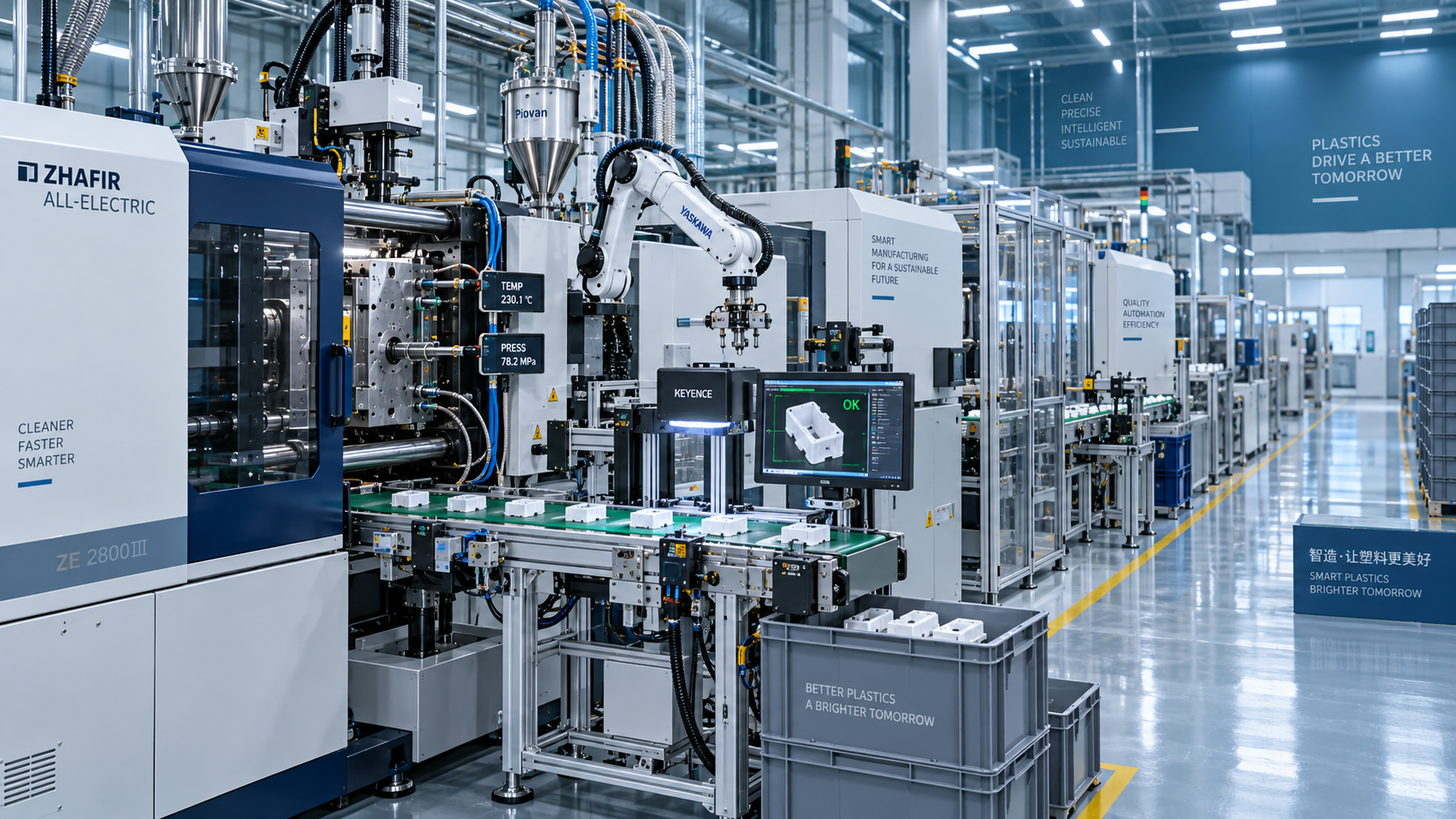
All-electric machines and servo systems can support the green circular economy by improving repeatability and reducing energy waste.
Extrusion lines create value when edge trim and start-up waste are captured before contamination occurs.
Twin-screw compounding can restore performance by blending recycled polymers with additives, fillers, modifiers, or virgin balancing resin.
Blow molding benefits from lightweighting, closed-loop preform recovery, and improved infrared heating control.
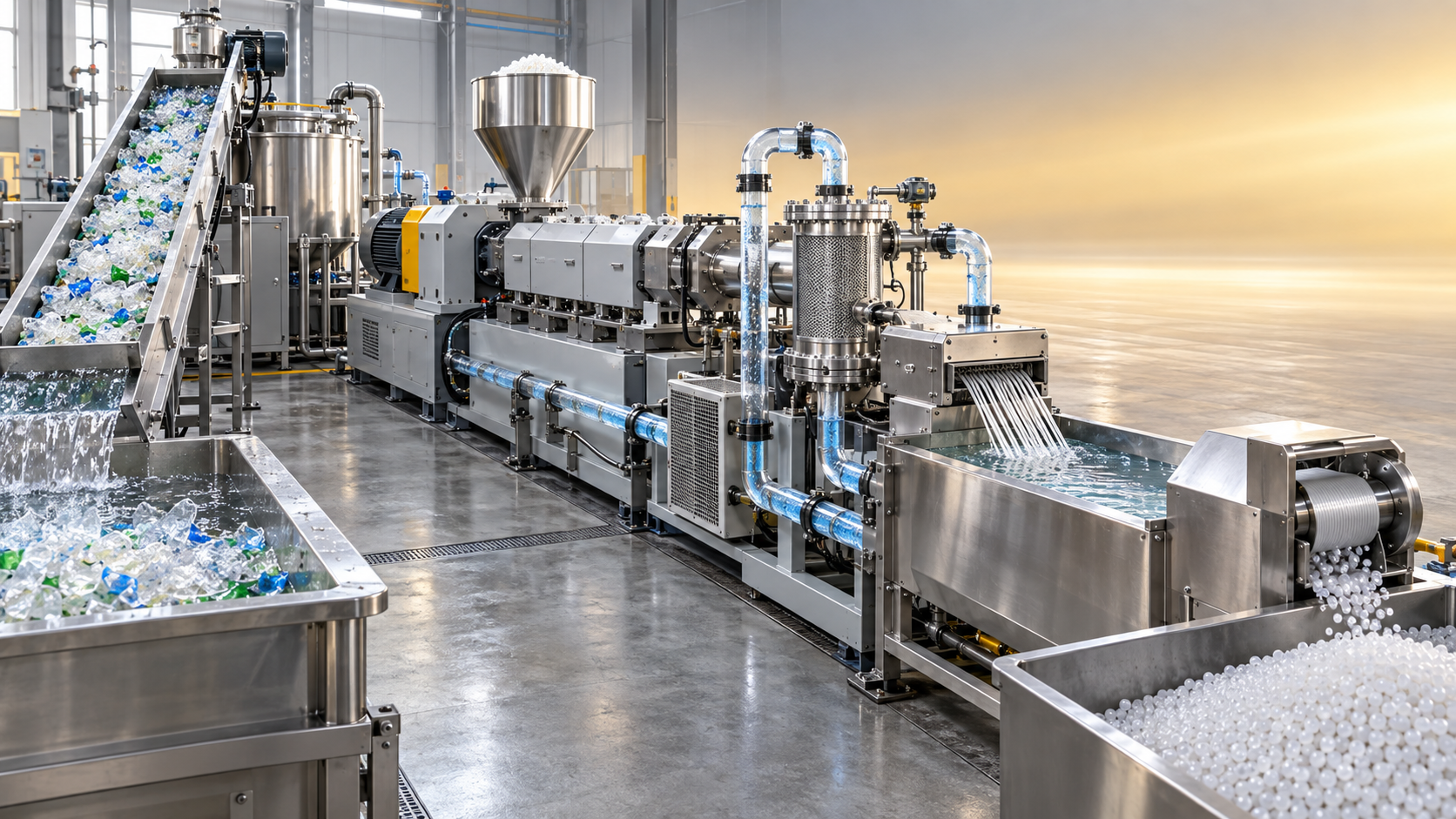
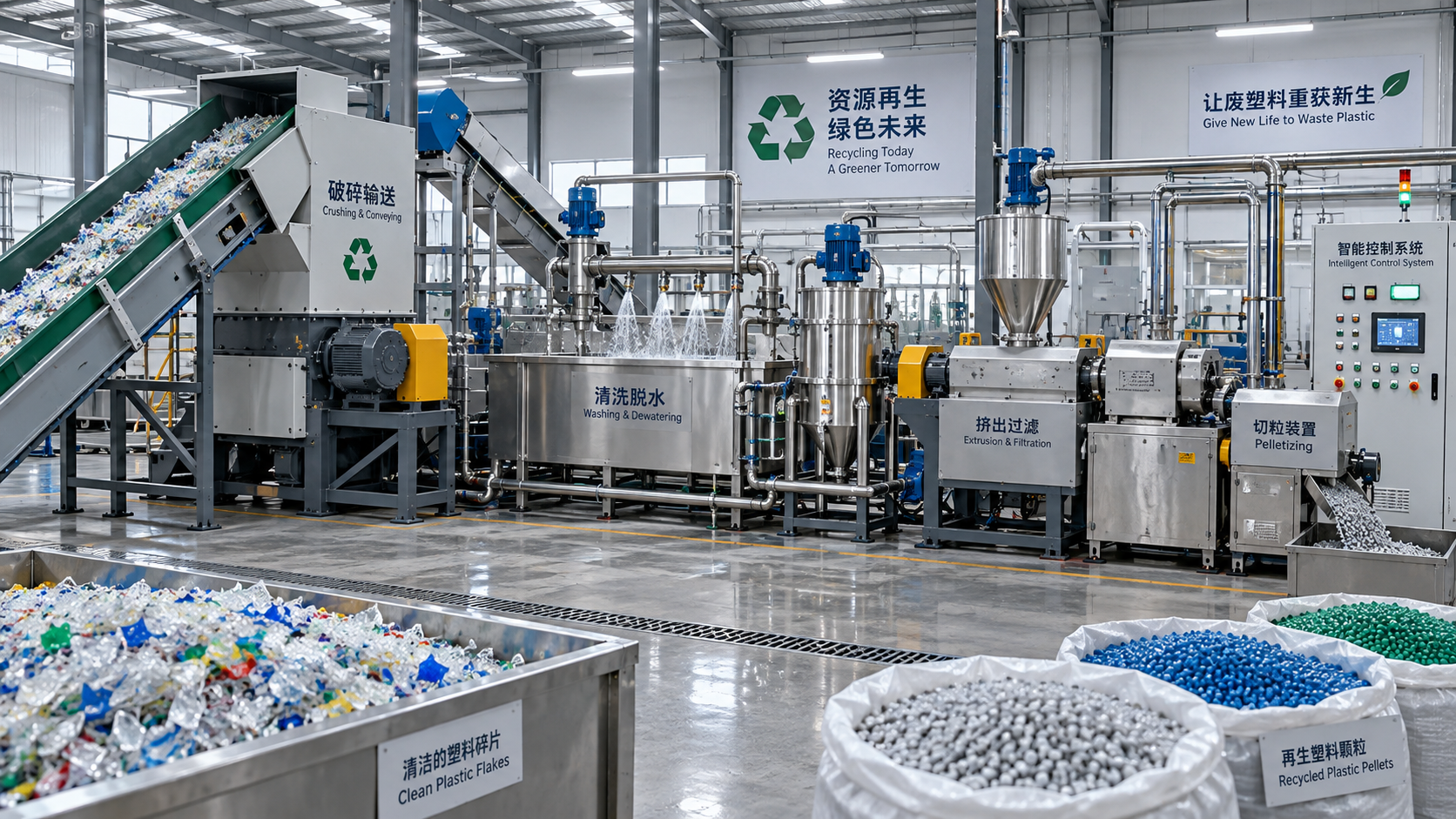
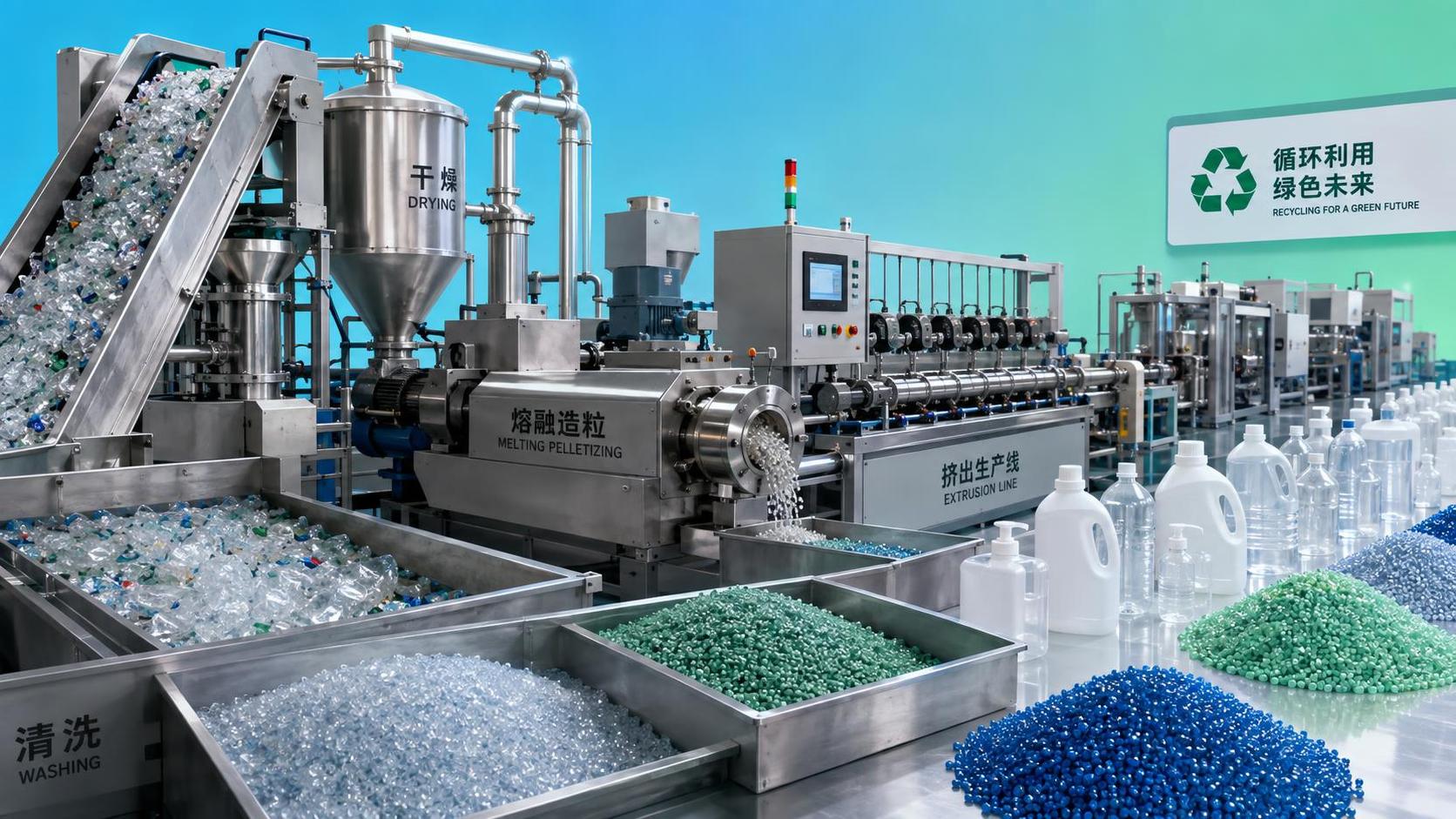
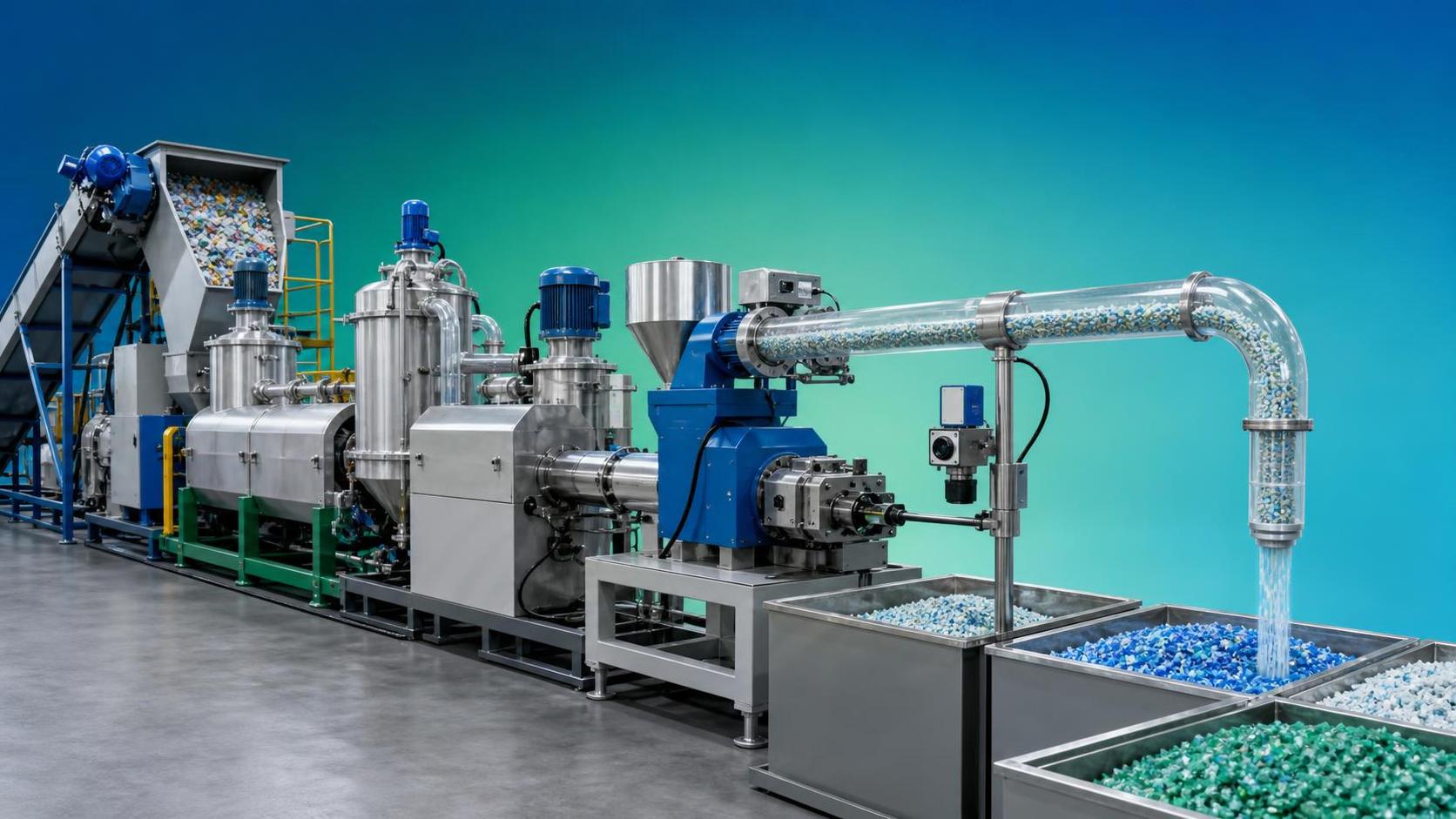
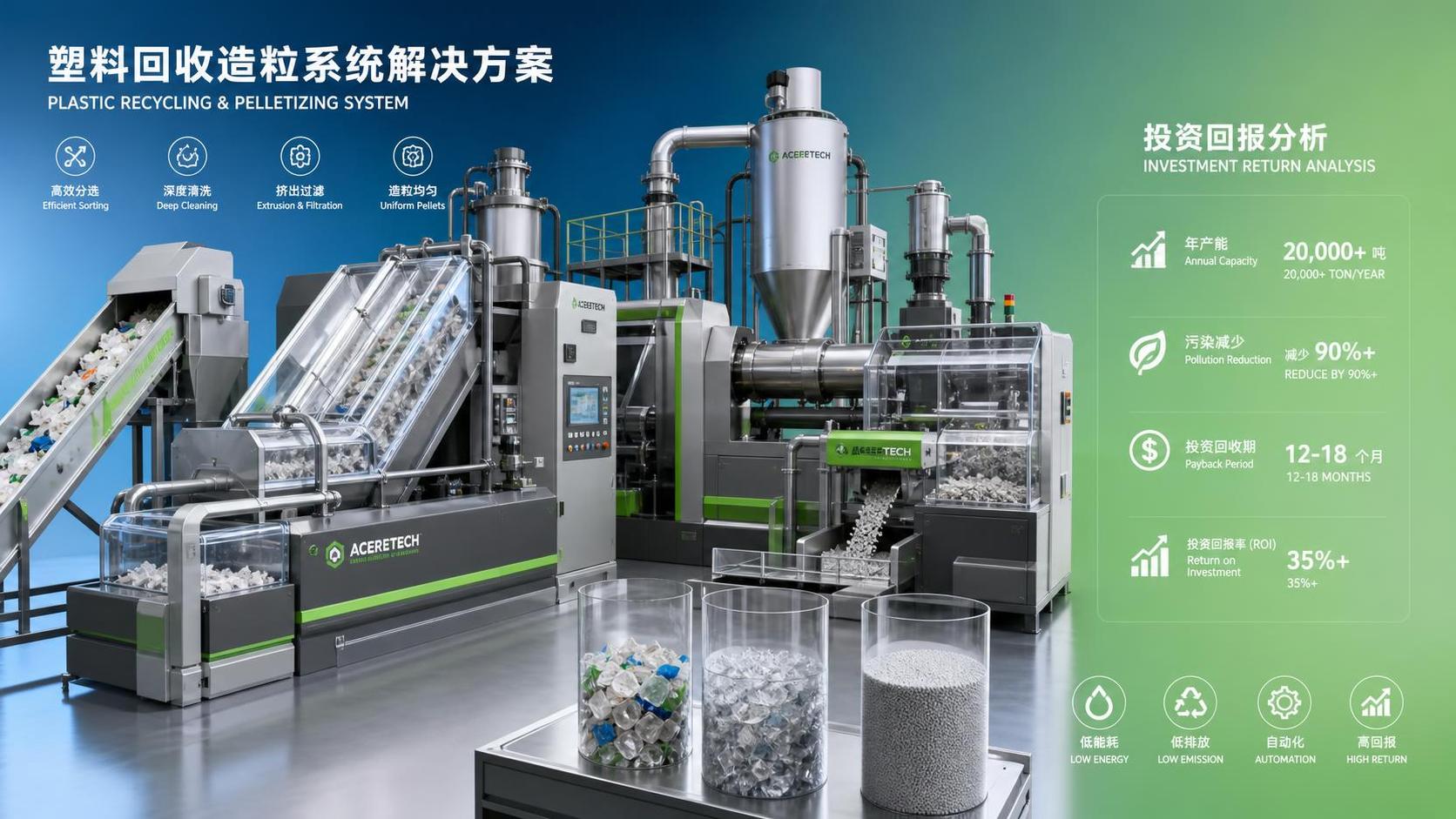
Waste plastic pelletizing machines are central when internal scrap volumes justify washing, melting, filtration, and underwater pelletizing.
The green circular economy becomes stronger when each process reports yield, energy use, contamination rate, and recycled input ratio.
High-impact improvement zones
- Reduce start-up scrap through recipe management and machine warm-up discipline.
- Install melt filtration where gels, paper, metal, or dust affect recycled quality.
- Separate materials by polymer family, color, additive package, and application risk.
- Use data dashboards to compare resin usage against planned bill-of-material values.
How should recycled resin be evaluated before wider adoption?
Recycled resin should never be treated as a single material category. Performance varies by source, processing history, and contamination level.
A green circular economy requires quality gates that confirm whether recycled content fits each product risk level.
Basic checks include melt flow index, moisture, ash content, color, odor, density, and mechanical properties.
For packaging, additional migration, food-contact, or regional compliance requirements may apply.
For automotive, medical, electrical, or sealing applications, qualification cycles can be longer and more technical.
In-house recycling is attractive because material origin is easier to control than mixed external waste streams.
Still, internal recycled resin can degrade if overheating, moisture, or repeated shear damages molecular structure.
The green circular economy must balance recycled content targets with stable processing and final product performance.
Evaluation checklist
What equipment choices support a green circular economy strategy?
Equipment decisions strongly influence whether circularity remains a slogan or becomes measurable operating performance.
Precision injection molding machines reduce unnecessary material use through repeatable clamping, dosing, injection, and holding control.
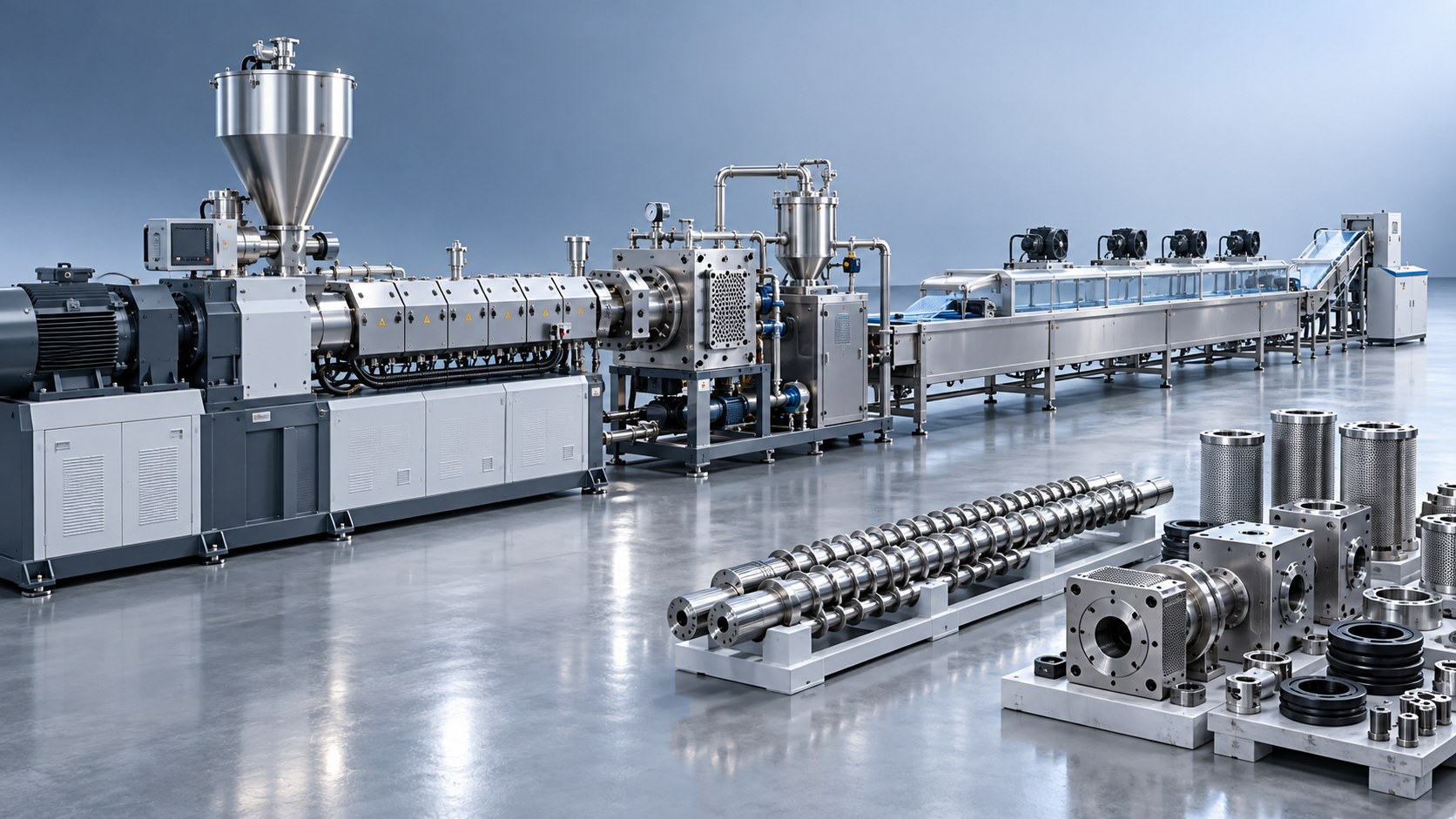
High-efficiency extruders improve blending, devolatilization, and melt stability when recycled and virgin materials are combined.
Advanced blow molding systems support packaging lightweighting while maintaining strength, clarity, and dimensional reliability.
Rubber vulcanizing machines with stable pressure and thermal uniformity lower rejects in demanding elastomer applications.
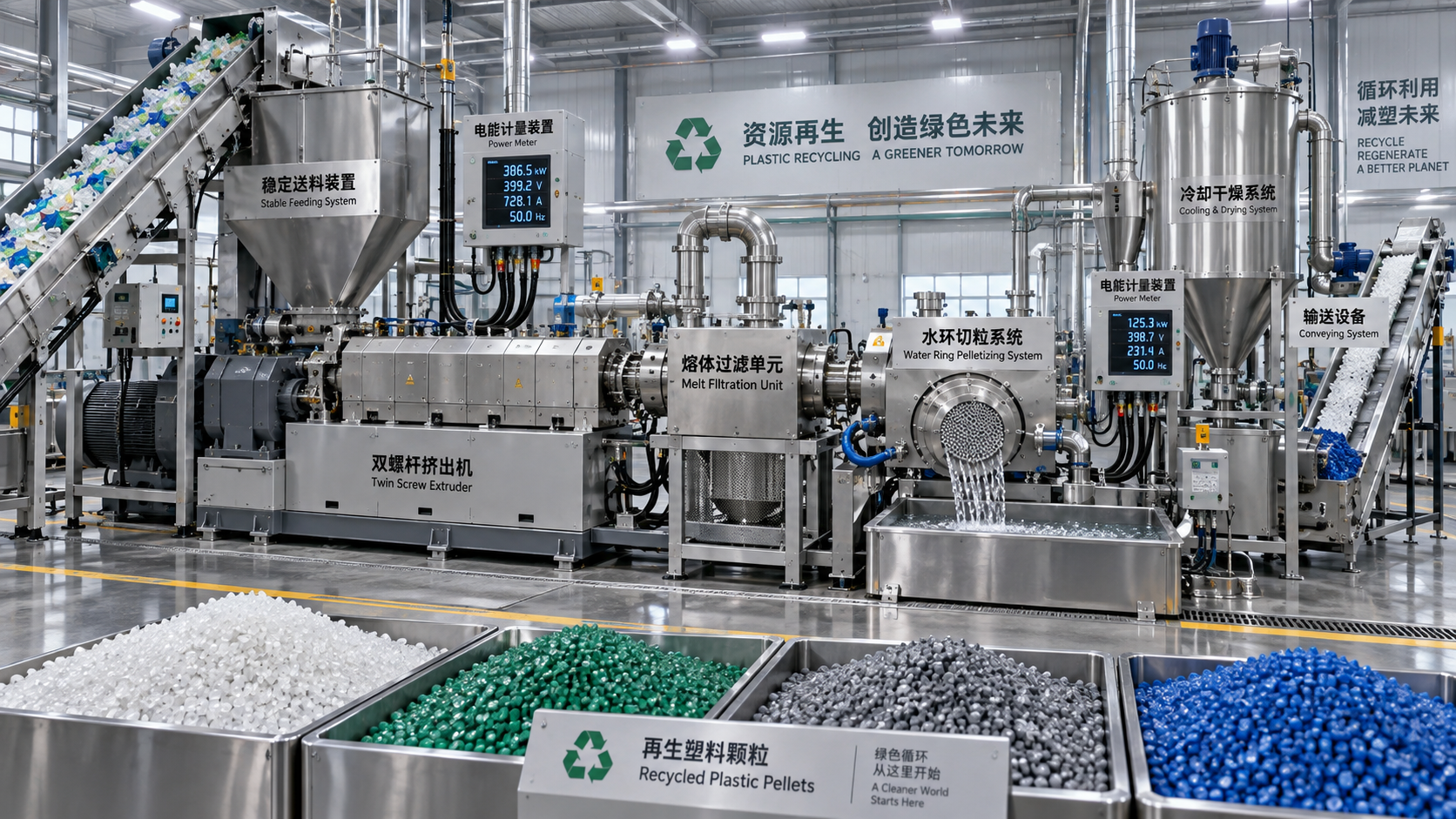
Waste plastic pelletizing machines close the loop by converting clean scrap into reusable pellets with controlled geometry.
A green circular economy also requires sensors, recipe storage, energy metering, and material tracking across each production stage.
The best equipment plan aligns machinery, process expertise, testing capability, and compliance documentation from the beginning.
Decision factors for equipment planning
- Energy consumption per kilogram of qualified output.
- Tolerance for recycled resin variation during processing.
- Filtration capacity, screen change stability, and maintenance access.
- Digital connectivity for quality, energy, and material traceability.
- Scalability from pilot recycling to full in-house circular operation.
What risks and mistakes can weaken circular economy programs?
The most common mistake is chasing recycled content percentages before understanding material behavior and product risk.
A green circular economy must be engineered, tested, documented, and continuously improved.
Another risk is mixing incompatible materials, such as PET with PVC, or polyolefins with engineering polymers.
Small contamination levels can cause major quality failures, especially in films, bottles, seals, and precision molded parts.
Insufficient drying is also dangerous. Moisture can damage polymer chains and create visible or hidden defects.
Overheating during reprocessing may reduce impact strength, elongation, clarity, or long-term durability.
Poor data management creates another problem. Without records, recycled material becomes difficult to certify or improve.
The green circular economy works best when every batch has a history, a specification, and a defined application boundary.
Risk control table
How can implementation be phased without disrupting production?
A phased plan lowers technical risk and makes benefits visible before large capital investment.
The first step is mapping resin flow, scrap sources, defect causes, energy use, and disposal cost.
The second step is selecting one product family with stable demand and manageable qualification requirements.
The third step is testing recycled content ratios under controlled processing conditions.
The fourth step is building financial models for resin savings, yield improvement, energy reduction, and waste disposal avoidance.
The green circular economy becomes scalable when technical results and financial results point in the same direction.
Pilot results should define equipment upgrades, quality gates, staff training, and supplier requirements.
At full scale, circularity should become part of standard production planning, not a separate sustainability project.
Suggested implementation sequence
- Audit material flow and identify high-value scrap streams.
- Define quality limits for each recycled resin application.
- Run pilot trials with documented process parameters.
- Compare cost, yield, energy, and defect performance.
- Scale equipment, training, and reporting systems gradually.
Summary: turning resin volatility into circular advantage
Resin price volatility will remain a structural challenge across polymer processing, packaging, automotive, construction, healthcare, and consumer goods.
A green circular economy strategy offers a practical response by linking material efficiency, recycling, equipment performance, and compliance readiness.
The strongest results come from clean scrap separation, stable processing, qualified recycled resin, and reliable digital traceability.
Precision molding, efficient extrusion, controlled vulcanization, and waste plastic pelletizing all support the same circular objective.
The next step is to audit resin flow, quantify losses, and identify one pilot project with measurable commercial and environmental value.
With disciplined execution, a green circular economy becomes more than sustainability language. It becomes a durable manufacturing advantage.
Related News
- 00
0000-00
Injection Molding System Costs: Machine, Molds, Automation, and Installation - 00
0000-00
Truck Tire Manufacturing Equipment: Sizing Curing Presses for Target Output - 00
0000-00
How Single-Use Plastic Bans Shift Demand for Packaging Materials - 00
0000-00
PET Pelletizing Equipment: Strand vs. Underwater Systems for Recycled PET - 00
0000-00
Tire Manufacturing Equipment: Choosing Curing Presses by Tire Size and Output
Weekly Insights
Stay ahead with our curated technology reports delivered every Monday.
Related News
 Ms. Elena RodriguezInjection Molding System Costs: Machine, Molds, Automation, and InstallationCompare injection molding systems price proposals with confidence. Uncover machine, mold, automation, and installation costs to avoid hidden expenses and choose a production-ready cell.Oct 17, 2026
 Ms. Elena RodriguezSmart Factory Costs for Plastics: Estimating ROI for Automation ProjectsSmart factory for plastics cost: learn how to estimate automation ROI, uncover hidden integration expenses, reduce scrap, and build a phased investment plan.Oct 10, 2026
 Ms. Elena RodriguezHow to Evaluate a Packaging Molding Equipment Supplier for High-Volume ProductionChoose a packaging molding equipment supplier with confidence. Learn how to assess throughput stability, tooling, recycled-material capability, lifecycle cost, and service support for high-volume production.Oct 09, 2026
 Ms. Elena RodriguezProcurement Records to Request Before Buying a Used Tyre ShredderUsed tyre shredder for sale? Request maintenance, operating, safety, and parts records to reduce risk, verify condition, and buy with confidence.Oct 16, 2026
 Ms. Elena RodriguezHow to Select Packaging Molding Equipment for High-Volume Production LinesPackaging molding equipment selection guide for high-volume lines: compare processes, throughput, materials, automation, and energy to achieve stable, cost-effective output.Oct 04, 2026
 Ms. Elena RodriguezHow to Evaluate Plastic Recycling Machinery for UAE Heat, Feedstock, and Output NeedsPlastic recycling machinery UAE buyers: evaluate heat resilience, feedstock handling, cooling, pellet quality, energy use, and lifecycle cost for reliable output.Sep 28, 2026
 Ms. Elena RodriguezGerman Extrusion Equipment Suppliers: Comparing Service, Lead Times, and Lifecycle CostExtrusion equipment Germany suppliers compared: evaluate service coverage, credible lead times, spare-parts access, and lifecycle cost to select a reliable, future-ready production partner.Sep 22, 2026
 Ms. Elena RodriguezWhat Should You Check Before Buying a Used Plastic Recycling Line?What should I check before buying a used plastic recycling line? Explore feedstock fit, wear, trials, utilities, controls, and restoration costs before you invest.Sep 26, 2026
 Ms. Elena RodriguezHow to Compare Pelletizing Lines by Energy Use per TonHow do I compare pelletizing lines by kWh per ton? Learn to measure total energy, verify saleable output, and select a cost-efficient line.Sep 23, 2026
 Ms. Elena RodriguezTyre Cutter Blade Wear: When Capacity Loss Needs Inspectionшинорез blade wear can quietly reduce tyre-cutting capacity. Learn the warning signs, inspection triggers, and maintenance actions that protect output and uptime.Sep 28, 2026
 Ms. Elena RodriguezIn-House Recycling for Factory Scrap: How to Reduce Material Waste and Disposal CostsIn house recycling for factory scrap helps manufacturers cut material waste, reduce disposal costs, and create controlled, quality-focused reuse loops.Sep 07, 2026
 Ms. Elena RodriguezHow Recyclable Packaging Manufacturing Balances Material Recovery and Production CostRecyclable packaging manufacturing: discover how smarter design, feedstock control, and process optimization reduce recovery costs while improving quality and yield.Sep 04, 2026
 Ms. Elena RodriguezHow to Evaluate a Plastic Recycling Systems Supplier for Your Processing NeedsChoose the right plastic recycling systems supplier with a practical guide to feedstock fit, output quality, total cost, testing, service, and compliance.Sep 01, 2026
 Ms. Elena RodriguezCE Marking for Plastic Processing Equipment: Documentation and Safety ChecksPlastic processing equipment CE compliance: learn the essential documentation, risk assessments, safety checks, and validation steps for reliable EU market access.Aug 30, 2026
 Ms. Elena RodriguezPlastic Packaging Compliance Standards: What Tests and Documents Matter Most?Plastic packaging compliance standards explained: learn which migration tests, mechanical checks, and audit-ready documents matter most to reduce risk and pass reviews with confidence.Aug 25, 2026
 Ms. Elena RodriguezHow to Evaluate a Plastic Waste Recycling System for Capacity, Contamination, and ROIPlastic waste recycling system evaluation made practical: compare true capacity, contamination control, and ROI to choose a line that delivers stable output and stronger returns.Aug 24, 2026
 Ms. Elena RodriguezPackaging Molding Equipment Price: What Drives Cost and How to Compare Quotes?Packaging molding equipment price varies by machine type, automation, tooling, energy use, and service scope. Learn what drives cost and how to compare quotes with confidence.Aug 21, 2026
 Ms. Elena RodriguezWhat Packaging Machinery for Plastic Containers Should You Choose for High-Volume Production?Packaging machinery for plastics containers can make or break high-volume production. Learn how to choose the right line for speed, consistency, compliance, and lower lifecycle costs.Aug 16, 2026
 Ms. Elena RodriguezWhat Circular Plastics Mean for Automotive Parts and Material SelectionCircular plastics for automotive are reshaping part selection with lower weight, better sustainability, and reliable performance. Discover how engineers balance recycled content, durability, and compliance.Aug 15, 2026
 Ms. Elena RodriguezBroiler Farming in Cage System: Selection Factors for Commercial FarmsBroiler farming in cage system selection for commercial farms: compare structure, ventilation, automation, and manure handling to improve efficiency and avoid costly mistakes.Aug 14, 2026