Virgin Resin Supply Chain Risks Behind Unstable Production Costs




For business evaluators, the virgin resin supply chain is no longer a background variable but a direct driver of unstable production costs, supplier risk, and margin pressure. From feedstock volatility and logistics disruption to compliance shifts and regional capacity imbalances, understanding these hidden cost triggers is essential for smarter sourcing, equipment planning, and long-term manufacturing resilience.
In polymer processing, resin pricing is rarely an isolated procurement issue. It directly influences injection molding cycle economics, extrusion throughput planning, blow molding output commitments, and the viability of in-house recycling investments. For companies evaluating machinery, converters, or material strategies, the virgin resin supply chain has become a strategic lens for judging cost stability over 6-month, 12-month, and even 24-month planning horizons.
PFRS tracks this issue from both equipment and market perspectives. When resin availability tightens, the effects cascade across screw design selection, melt filtration requirements, warehouse safety stock, order lead times, and compliance documentation. Business evaluators therefore need a framework that connects upstream resin turbulence with downstream manufacturing decisions, not just spot-price observations.
Why the Virgin Resin Supply Chain Has Become a Production Cost Shock Amplifier
The virgin resin supply chain spans feedstock extraction, cracking, polymerization, compounding, regional storage, ocean or inland freight, and converter delivery. At each stage, small disruptions can magnify total cost. A 5% rise in naphtha or ethane input cost may not remain 5% by the time pellets reach a molding plant; after energy surcharges, freight adjustments, and inventory financing, the effective cost increase can move into the 8%–14% range.
This matters because resin often represents 45%–70% of the variable production cost in plastic part manufacturing, depending on the application. In thin-wall packaging or commodity film, the share can be even higher. When the virgin resin supply chain becomes unstable, margin erosion happens faster than many equipment or labor optimization programs can compensate for.
Feedstock dependency and energy pass-through
Polyethylene, polypropylene, PET, and engineering resins do not react equally to upstream energy markets. Some are more exposed to crude-linked feedstocks, while others are more sensitive to natural gas, power tariffs, or regional refinery utilization. For evaluators comparing suppliers, this means a resin quote should be read together with its upstream dependency map rather than treated as a flat unit price.
A processor operating three extrusion lines, for example, may tolerate a resin increase of USD 30–50 per ton if throughput remains stable. But if that same increase coincides with more variable melt flow index, higher moisture sensitivity, or a 2%–3% scrap increase, the actual cost impact becomes far more severe. The virgin resin supply chain therefore affects both purchase price and process stability.
Logistics volatility is now a technical issue, not just a freight issue
Shipping delays of 7–21 days can trigger line stoppages, substitute-material approvals, and urgent lot changes. In precision injection molding, especially for medical, electrical, or optical applications, changing from one virgin resin source to another may require mold trials, parameter resets, and quality validation. What looks like a logistics disruption can easily become an engineering cost event.
The same applies in extrusion and blow molding. If an incoming lot shows broader viscosity variation, processors may need to slow screw speed, adjust barrel temperature by 5°C–15°C, or increase melt filtration frequency. That leads to lower output per hour and more downtime, even if the nominal resin specification still appears acceptable.
Four hidden cost channels evaluators often underestimate
- Lot-to-lot processing variation that reduces OEE by 3%–8%.
- Emergency freight or local spot buying at premiums of 10%–25%.
- Additional quality checks, compliance paperwork, and trial production hours.
- Inventory carrying cost when safety stock rises from 2 weeks to 5–8 weeks.
The table below summarizes how different disruptions inside the virgin resin supply chain typically translate into operational cost pressure for processors and machinery planners.
The key takeaway is that unstable production costs are rarely caused by price alone. The virgin resin supply chain affects timing, process capability, quality consistency, and capital allocation. Evaluators who measure only the quoted resin price are likely to understate total risk.
The Main Risk Drivers Business Evaluators Should Score Before Procurement Decisions
A practical evaluation model should score risk across at least 4 dimensions: source concentration, logistics resilience, compliance exposure, and process compatibility. These four dimensions can be used whether a company is assessing long-term resin contracts, new molding equipment, or an in-house recycling upgrade intended to reduce virgin dependency.
1. Source concentration and regional dependency
If more than 60% of virgin resin volume comes from one region, one cracker network, or one producer group, the business is vulnerable to allocation events. Even when a supplier has strong reputation, regional weather events, maintenance shutdowns, and policy shifts can sharply reduce available output. A dual-source strategy is often a minimum requirement for medium to large-volume processors.
2. Lead-time reliability versus quoted lead time
A stated lead time of 3 weeks is not enough for evaluation. Buyers should ask for historical lead-time stability over the last 6–12 months, including variance. A supplier delivering in 21 days plus or minus 2 days is operationally stronger than one promising 14 days but varying between 10 and 35 days. Production planners need predictability more than optimistic promises.
3. Compliance shifts and packaging regulation pressure
The virgin resin supply chain is increasingly shaped by packaging taxes, recycled-content mandates, and restrictions on certain resin applications. For packaging, medical, and consumer goods manufacturers, the issue is not only whether virgin resin is available, but whether its use profile remains commercially acceptable in the target market over the next 12–36 months.
This is especially relevant to PFRS audiences following blow molding, extrusion, and waste plastic pelletizing systems. If a buyer expects future recycled-content integration, equipment should be evaluated now for filtration capability, screw versatility, degassing efficiency, and blending tolerance. A machine chosen only for virgin resin may become less cost-efficient within a short investment cycle.
4. Resin consistency and machine compatibility
The same nominal polymer family can behave differently across producers. Melt flow range, additive package, moisture behavior, and contamination sensitivity affect processing windows. Business evaluators should verify whether the selected injection molding machine, twin-screw extruder, or pelletizing system can absorb reasonable resin variability without excessive setup loss.
The following matrix can help evaluators compare suppliers and procurement options using measurable criteria instead of general impressions.
Using a scorecard like this turns procurement discussions into investment-quality analysis. It also helps align purchasing teams with operations, quality, and engineering, which is essential when virgin resin supply chain instability begins affecting machine utilization and customer service levels.
How Resin Supply Risk Changes Equipment Planning Across Polymer Processing
Equipment decisions increasingly need to account for resin flexibility. A processor buying a new all-electric injection molding machine, high-output extruder, or recycling pelletizing line should ask not only, “What is the rated output?” but also, “How well does this system handle raw material variability over the next 3–5 years?” That question is central when the virgin resin supply chain is unstable.
Injection molding: precision under material fluctuation
In injection molding, resin inconsistency can alter fill balance, holding pressure response, and part shrinkage. For precision parts, even small deviations may force parameter changes across 5–8 key settings, including barrel profile, injection speed, and holding time. Machines with stronger servo response, process monitoring, and recipe management reduce the cost of switching between approved resin lots.
Extrusion: throughput and energy efficiency under pressure
Twin-screw and single-screw extruders are heavily exposed to feedstock inconsistency because continuous production magnifies every fluctuation. If a line producing pipe, film, or sheet loses 6% throughput over a 20-hour production window, the cost penalty can exceed the resin price difference that triggered the change in the first place. Screw geometry, venting design, and melt pressure stability therefore matter in procurement reviews.
Blow molding and packaging: compliance plus volume risk
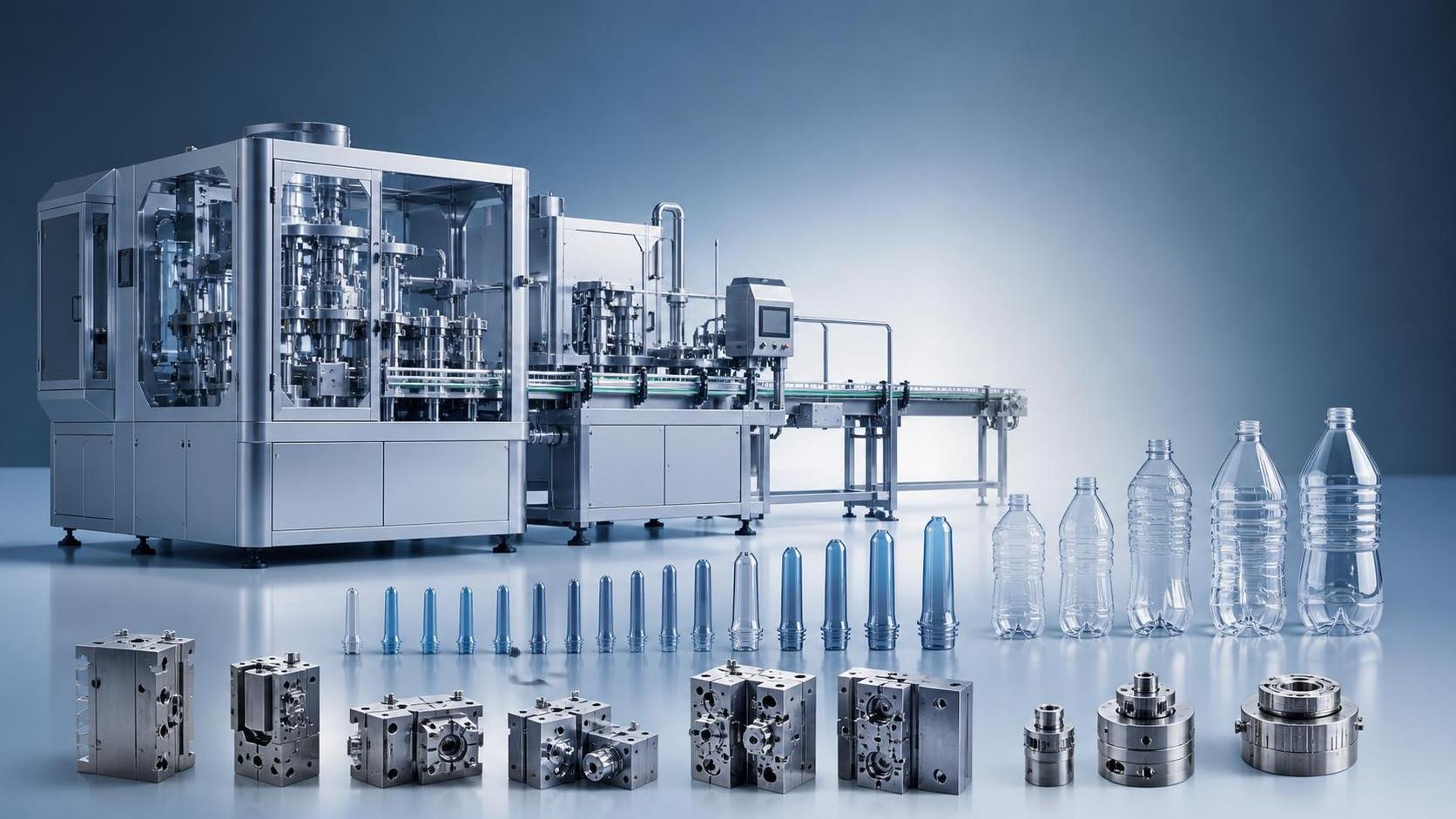
High-speed bottle production depends on consistent preform or parison behavior. A change in resin source can affect clarity, top-load performance, and wall distribution. For plants running tens of thousands of bottles per hour, a short period of instability can consume margin quickly. Evaluators should examine not just output speed, but also tolerance for resin grade transition and recycled-content blending potential.
Pelletizing and in-house recycling: reducing virgin exposure
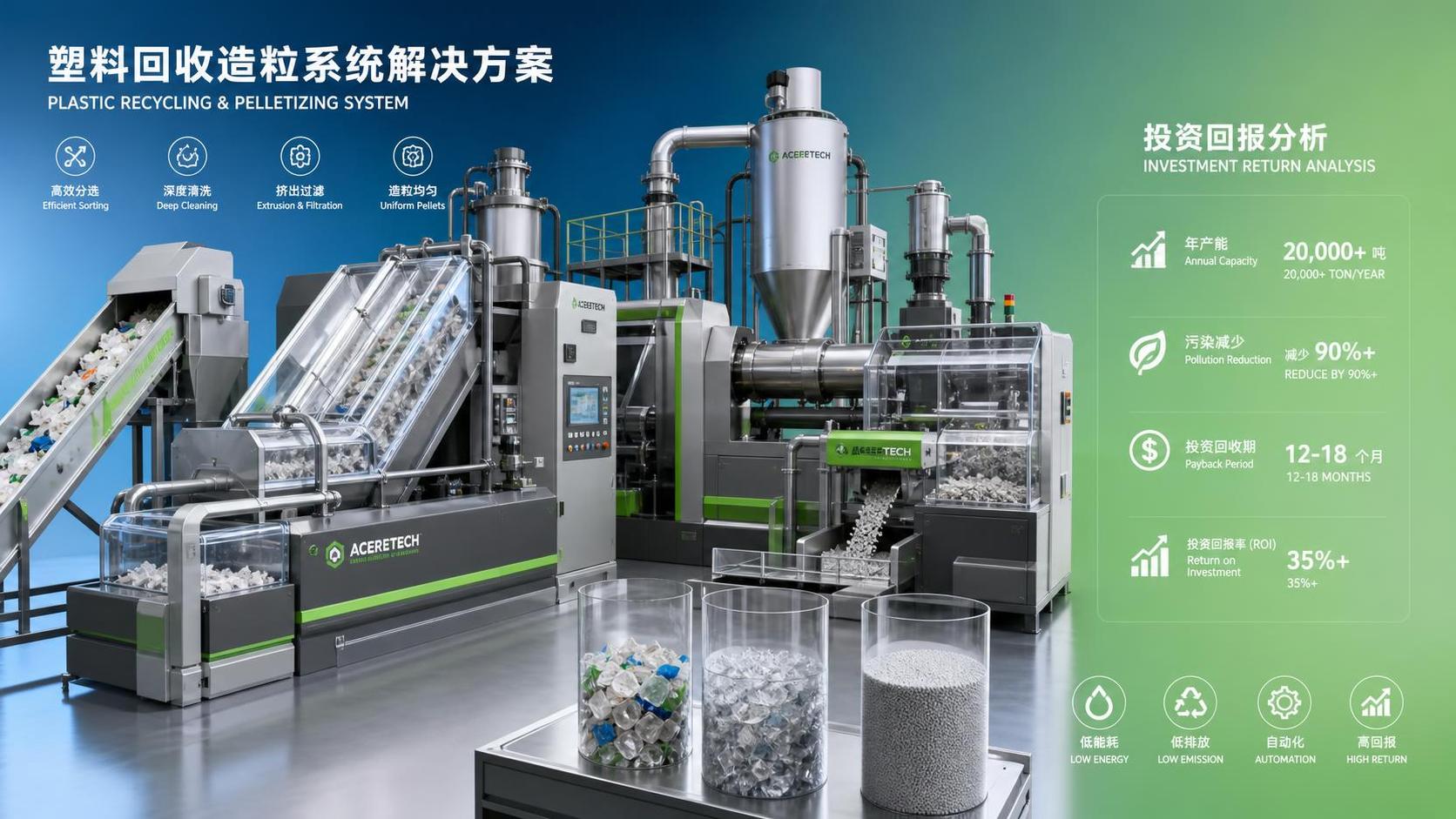
One of the most practical responses to virgin resin supply chain risk is to expand internal reprocessing capability. Waste plastic pelletizing systems cannot replace all virgin resin demand, especially in high-purity or highly regulated applications, but they can reduce exposure in selected products by 10%–40% depending on scrap quality, filtration needs, and end-use tolerance.
For business evaluators, the financial question is not whether recycling is fashionable. It is whether the recovered material stream can stabilize blend economics, shorten payback periods, and improve negotiation leverage with virgin resin suppliers. In many cases, even partial substitution creates a buffer against spot-market shocks.
Five equipment questions worth asking before approval
- What resin variability range can the machine handle without major output loss?
- How long does grade changeover typically take: 30 minutes, 2 hours, or longer?
- Can the line process virgin and recycled blends without major hardware change?
- What monitoring data is available for pressure, temperature, and energy per kilogram?
- What scrap or off-spec rate is considered normal during resin source transitions?
A Practical Risk-Control Playbook for Evaluators, Buyers, and Operations Teams
The most resilient companies do not try to predict every movement in the virgin resin supply chain. Instead, they build a layered response system. That usually combines commercial controls, technical flexibility, and better information flow between procurement and production. A 90-day plan can already improve cost visibility, while a 12-month roadmap can reduce dependency risk significantly.
Build a 3-layer sourcing model
Layer 1 is the core contracted supplier base. Layer 2 is a qualified alternate source for the same or similar grade. Layer 3 is a contingency pathway that may include approved substitute grades, customer-agreed specification flexibility, or internal recycled blend use. This model is more practical than relying on a single “preferred” vendor in a volatile market.
Tie material sourcing to machine and process data
Procurement should not operate separately from process engineering. Evaluators should require a closed loop between resin lot data and machine performance data, including scrap rate, energy use, and output stability. Tracking only 4–6 variables per lot can reveal whether a cheaper purchase actually raises cost per good part or cost per kilogram produced.
Use scenario analysis rather than single-point budgeting
Budgeting resin at one assumed price level is increasingly risky. A better method is to plan at three levels: base case, stressed case, and disruption case. For example, evaluate margin performance at resin cost changes of +5%, +12%, and +20%, while also testing lead-time extensions of 1 week, 3 weeks, and 6 weeks. This gives decision-makers a more realistic picture of exposure.
Create a trigger list for action
Teams should predefine action thresholds instead of reacting ad hoc. A useful trigger list may include lead-time variance above 15%, two consecutive off-spec lots, inventory coverage below 14 days, or supplier allocation notice for the next month. Once triggered, escalation can move quickly to alternate sourcing, inventory protection, or production resequencing.
For companies active in injection molding, extrusion, blow molding, vulcanization support industries, or plastic recycling, the virgin resin supply chain now influences far more than raw material purchasing. It shapes machine selection, cost forecasting, compliance readiness, and strategic resilience. PFRS helps connect these moving parts so business evaluators can make decisions based on integrated manufacturing intelligence rather than fragmented signals.
If your team is reviewing resin sourcing exposure, equipment adaptability, or the role of in-house recycling in cost stabilization, this is the right time to build a sharper evaluation framework. Contact us to discuss your application, request a tailored assessment approach, or explore more solutions for resilient polymer processing and circular material strategy.
Related News
- 00
0000-00
Polymer Processing for Extrusion: How Melt Rheology Affects Line Stability - 00
0000-00
Energy-Efficient Polymer Processing: Where Plants Can Cut kWh per Kilogram - 00
0000-00
German Extrusion Equipment Suppliers: Comparing Service, Lead Times, and Lifecycle Cost - 00
0000-00
Is an Underwater Pelletizer Worth the Added Cost for Recycled Plastics? - 00
0000-00
How Often Should Melt Filter Screens Be Changed?
Weekly Insights
Stay ahead with our curated technology reports delivered every Monday.
Related News
 Ms. Elena RodriguezGerman Extrusion Equipment Suppliers: Comparing Service, Lead Times, and Lifecycle CostExtrusion equipment Germany suppliers compared: evaluate service coverage, credible lead times, spare-parts access, and lifecycle cost to select a reliable, future-ready production partner.Sep 22, 2026
 Ms. Elena RodriguezHow to Compare Pelletizing Lines by Energy Use per TonHow do I compare pelletizing lines by kWh per ton? Learn to measure total energy, verify saleable output, and select a cost-efficient line.Sep 23, 2026
 Ms. Elena RodriguezIn-House Recycling for Factory Scrap: How to Reduce Material Waste and Disposal CostsIn house recycling for factory scrap helps manufacturers cut material waste, reduce disposal costs, and create controlled, quality-focused reuse loops.Sep 07, 2026
 Ms. Elena RodriguezHow Recyclable Packaging Manufacturing Balances Material Recovery and Production CostRecyclable packaging manufacturing: discover how smarter design, feedstock control, and process optimization reduce recovery costs while improving quality and yield.Sep 04, 2026
 Ms. Elena RodriguezHow to Evaluate a Plastic Recycling Systems Supplier for Your Processing NeedsChoose the right plastic recycling systems supplier with a practical guide to feedstock fit, output quality, total cost, testing, service, and compliance.Sep 01, 2026
 Ms. Elena RodriguezCE Marking for Plastic Processing Equipment: Documentation and Safety ChecksPlastic processing equipment CE compliance: learn the essential documentation, risk assessments, safety checks, and validation steps for reliable EU market access.Aug 30, 2026
 Ms. Elena RodriguezPlastic Packaging Compliance Standards: What Tests and Documents Matter Most?Plastic packaging compliance standards explained: learn which migration tests, mechanical checks, and audit-ready documents matter most to reduce risk and pass reviews with confidence.Aug 25, 2026
 Ms. Elena RodriguezHow to Evaluate a Plastic Waste Recycling System for Capacity, Contamination, and ROIPlastic waste recycling system evaluation made practical: compare true capacity, contamination control, and ROI to choose a line that delivers stable output and stronger returns.Aug 24, 2026
 Ms. Elena RodriguezPackaging Molding Equipment Price: What Drives Cost and How to Compare Quotes?Packaging molding equipment price varies by machine type, automation, tooling, energy use, and service scope. Learn what drives cost and how to compare quotes with confidence.Aug 21, 2026
 Ms. Elena RodriguezWhat Packaging Machinery for Plastic Containers Should You Choose for High-Volume Production?Packaging machinery for plastics containers can make or break high-volume production. Learn how to choose the right line for speed, consistency, compliance, and lower lifecycle costs.Aug 16, 2026
 Ms. Elena RodriguezWhat Circular Plastics Mean for Automotive Parts and Material SelectionCircular plastics for automotive are reshaping part selection with lower weight, better sustainability, and reliable performance. Discover how engineers balance recycled content, durability, and compliance.Aug 15, 2026
 Ms. Elena RodriguezBroiler Farming in Cage System: Selection Factors for Commercial FarmsBroiler farming in cage system selection for commercial farms: compare structure, ventilation, automation, and manure handling to improve efficiency and avoid costly mistakes.Aug 14, 2026
 Ms. Elena RodriguezHow to Implement Smart Polymer Manufacturing Without Disrupting Existing Production?Smart polymer manufacturing implementation made practical: learn how to upgrade existing production with phased digitalization, less downtime, better control, and measurable ROI.Aug 11, 2026
 Ms. Elena RodriguezHow to Evaluate a Rubber Compression Molding Supplier for Complex Part ProductionRubber compression molding supplier selection for complex parts starts with process, material, and tooling control. Learn how to compare vendors beyond price and reduce launch risk.Aug 10, 2026
 Ms. Elena RodriguezPackaging Compliance in Canada: Key Labeling and EPR Rules Importers Must KnowPackaging compliance Canada explained for importers: learn bilingual labeling, environmental claims, and provincial EPR rules to reduce risk, avoid costly errors, and stay market-ready.Aug 03, 2026
 Ms. Elena RodriguezWhy Circular Plastics Economy Traceability Matters for Recycled Content ComplianceCircular plastics economy traceability is essential for proving recycled content compliance across sourcing, processing, and reporting. Learn how strong evidence reduces audit risk.Aug 02, 2026
 Ms. Elena RodriguezRecycled Plastic Compliance: Key Standards, Testing Requirements, and DocumentationRecycled plastic compliance explained: key standards, testing requirements, supplier documents, and food-contact risks to help you avoid approval delays and costly compliance mistakes.Aug 01, 2026
 Ms. Elena RodriguezHow to Evaluate an Extrusion Machinery Manufacturer for Quality, Support, and ROIExtrusion machinery manufacturer selection affects quality, uptime, and ROI. Learn how to compare process fit, output claims, service, compliance, and long-term operating costs.Jul 29, 2026
 Ms. Elena RodriguezHow to Evaluate Food Grade Recycled Pellets for Safe Packaging ApplicationsFood grade recycled pellets for safe packaging demand more than a label. Learn how to assess feedstock, process validation, pellet quality, and compliance before approval.Jul 28, 2026
 Ms. Elena RodriguezHow to Evaluate a Rubber Vulcanization Supplier for Quality, Capacity, and Lead TimeRubber vulcanization supplier selection made easier: learn how to assess quality systems, true production capacity, and lead time reliability to reduce sourcing risk and improve supply performance.Jul 25, 2026