Thermodynamic Reactions in Polymers and Scrap Risk




For quality control and safety teams, understanding thermodynamic reactions in polymers is essential to preventing scrap, stabilizing processing windows, and reducing hidden production risks. From injection molding and extrusion to vulcanization and recycling, even small thermal deviations can trigger degradation, inconsistency, or compliance issues. This article explores how heat-driven polymer behavior influences scrap generation and what manufacturers can do to improve control, safety, and material efficiency.
In modern polymer plants, scrap is rarely caused by one factor alone. It often emerges from a chain of thermal, mechanical, and chemical events that begin inside the barrel, mold, die, reactor zone, or recycling line. For teams responsible for quality release, shopfloor safety, and compliance, thermodynamic reactions in polymers are not just a laboratory concept; they are a daily production variable tied to yield, odor, color drift, gel formation, pressure instability, and fire risk.
Across injection molding, extrusion, blow molding, rubber vulcanization, and waste plastic pelletizing, the same rule applies: once heat history moves outside the acceptable window, the process can produce off-spec parts in minutes and damage equipment over a longer cycle of 2–8 weeks. That is why disciplined thermal control, material traceability, and practical reaction awareness are central to profitable and safe polymer processing.
Why thermodynamic reactions in polymers directly affect scrap risk
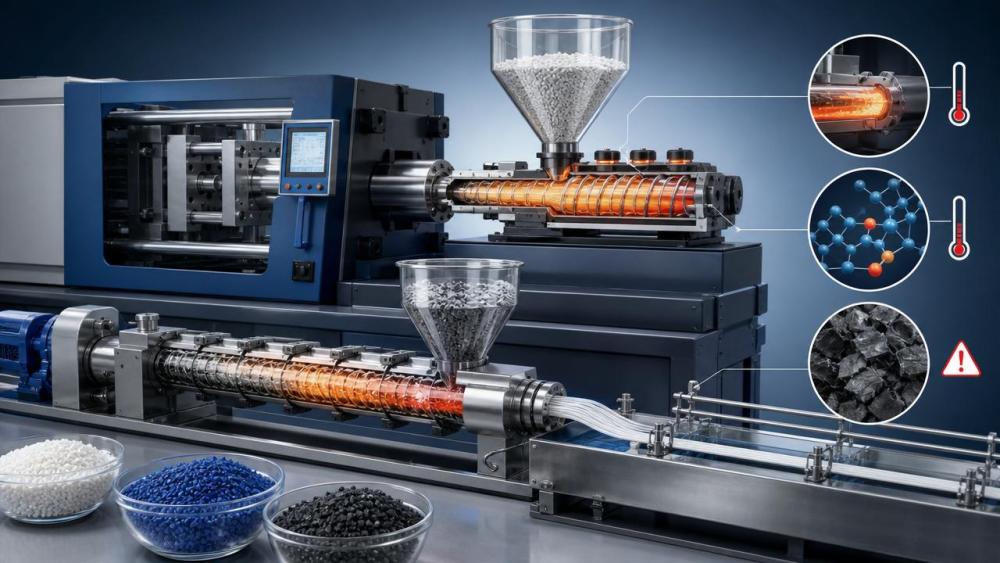
Thermodynamic reactions in polymers describe how polymer chains respond to heat, pressure, shear, oxygen, moisture, and residence time. In production, these reactions include melting, crystallization, glass transition, cross-linking, chain scission, oxidation, hydrolysis, and volatile release. Some reactions are reversible within a narrow processing band, while others permanently alter molecular weight, viscosity, and part performance.
For quality teams, the key issue is not only whether a polymer melts correctly, but whether it remains chemically stable during the full thermal cycle. A resin may tolerate a melt temperature of 220°C–260°C on paper, yet still degrade if moisture exceeds 0.02%, if screw residence time exceeds 6–8 minutes, or if dead spots allow local overheating by 15°C–25°C above the setpoint.
The main reaction pathways behind scrap
In practical manufacturing, scrap tends to come from four recurring pathways. First, thermal degradation lowers molecular weight and weakens impact strength. Second, oxidation causes yellowing, brittleness, and odor. Third, hydrolysis attacks condensation polymers such as PET, PA, and PC when drying is inadequate. Fourth, uncontrolled cross-linking or scorch raises viscosity and causes black specks, gels, or die build-up.
- Chain scission: common in overheated recycled streams, leading to lower melt strength and dimensional variation.
- Oxidation: often accelerated by air entrainment, hot runners, and long shutdown exposure above 180°C–240°C.
- Hydrolysis: especially critical for hygroscopic polymers processed with poor drying discipline.
- Premature cross-linking: a major concern in rubber compounds and reactive systems with tight cure windows.
The table below shows how common thermodynamic reactions in polymers appear on the production floor and what quality and safety teams should monitor first.
The main conclusion is simple: thermodynamic reactions in polymers do not stay hidden for long. They show up as measurable process drift, changing torque, pressure rise, melt flow variation, or visible defects. Plants that monitor only final part appearance often react too late, after scrap bins have already filled.
Why the risk is increasing in current manufacturing
Three trends are tightening the thermal window. First, higher recycled content increases contamination and viscosity variation. Second, thinner-wall packaging and precision molded parts reduce tolerance for melt instability. Third, energy-saving pressure leads some plants to run closer to minimum drying, lower purge frequency, or longer campaign cycles, all of which can amplify hidden thermal damage.
For safety managers, another concern is decomposition by-products. Overheated polymers can release fumes, condensates, acidic species, or combustible volatiles. Even when concentrations remain below emergency thresholds, repeated low-level exposure can trigger odor complaints, more housekeeping work, and unplanned interventions during a 12-hour or 24-hour production schedule.
Where thermal deviations create scrap in molding, extrusion, vulcanization, and recycling
Different processes expose polymers to different thermal histories. Quality and safety teams should therefore map risk by equipment stage instead of using one generic standard. A molded medical component, a multilayer bottle, a tire compound, and an rPET pellet all react differently to heat load, shear rate, oxygen presence, and cooling profile.
Injection molding and hot-runner systems
In injection molding, thermodynamic reactions in polymers are strongly influenced by barrel zoning, screw recovery speed, back pressure, nozzle temperature, hot-runner balance, and cooling time. A temperature imbalance of only 5°C–10°C between cavity zones can change shrinkage behavior, gloss, and dimensional repeatability, especially in engineering plastics and transparent resins.
High-risk points
- Dead spots in nozzles or manifolds that hold material longer than one cycle.
- Excessive screw recovery heat caused by high RPM and unnecessary back pressure.
- Moisture-sensitive resins dried outside their specified time and dew-point range.
Twin-screw and single-screw extrusion
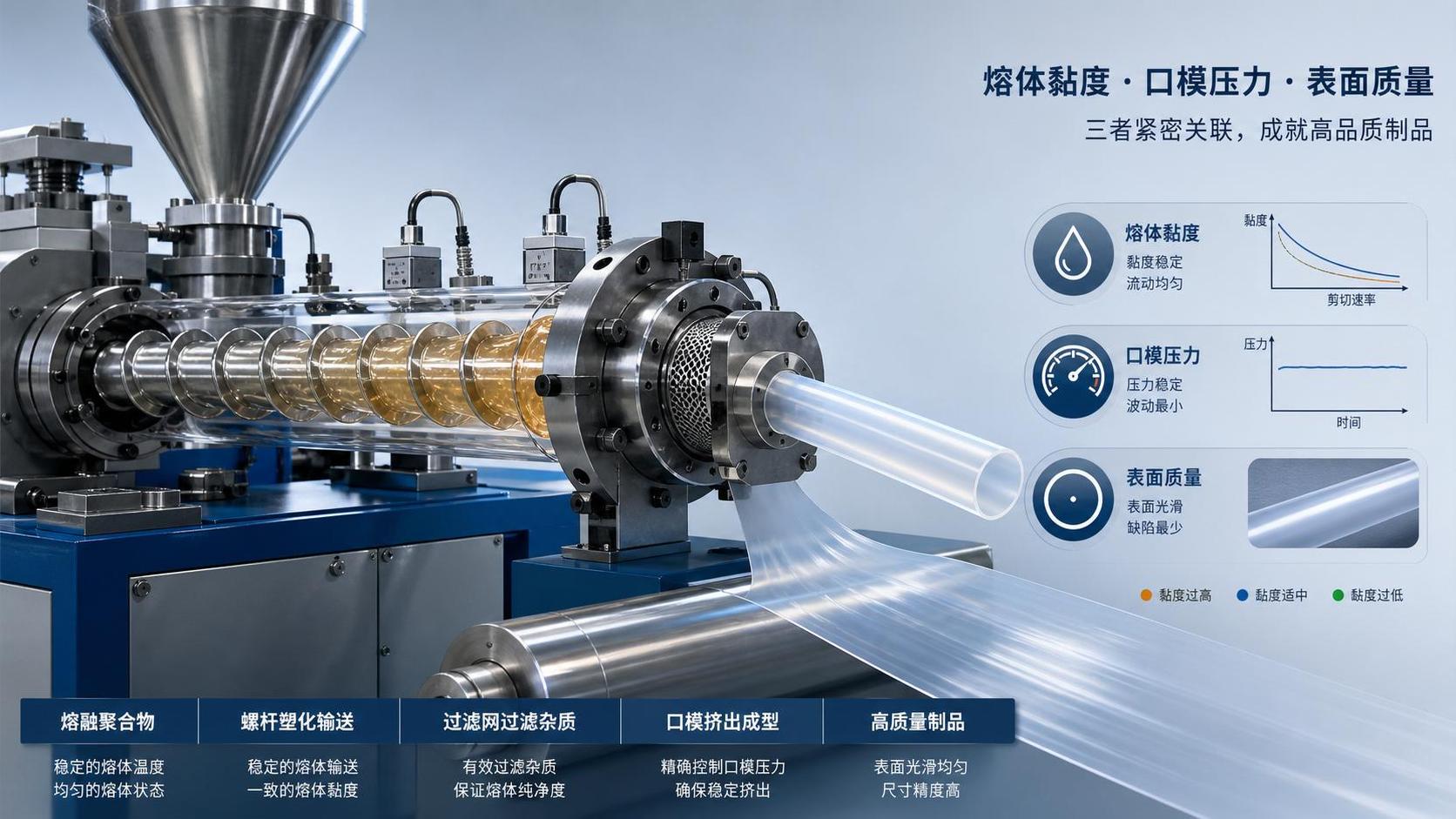
In extrusion, the risk often comes from the combined effect of shear and residence time. A line may show stable barrel temperatures while the actual melt temperature climbs 10°C–20°C higher due to screw design, feed inconsistency, or screen-pack restriction. This is common in compounding lines handling fillers, flame retardants, or mixed recycled feedstock.
Extrusion scrap can appear as gels, surging, fisheyes, inconsistent gauge, and weak weld strength. For safety teams, a blocked vent or neglected filter change can also increase pressure events. Monitoring should therefore include melt pressure trend, motor load, die-face condition, and vent emissions rather than relying on heater readings alone.
Rubber vulcanization and cross-link control
Vulcanization is intentionally reaction-driven, so the scrap risk is tied to cure timing. If temperature rises too early, scorch may occur before mold filling is complete. If temperature remains too low, under-cure reduces hardness, compression set, and fatigue life. In many rubber systems, a cure deviation of even 1–3 minutes can affect product acceptance.
Waste plastic pelletizing and recycled resin stability
Recycling lines face the broadest variability. Feedstock may contain residual labels, moisture, incompatible polymers, ink, aluminum traces, or food contamination. Under these conditions, thermodynamic reactions in polymers become less predictable. A recycled stream that appears visually clean may still show accelerated oxidation or chain scission after a second or third thermal history.
The table below compares common risk zones by process and gives practical control points for plant teams.
The cross-process lesson is that identical heater settings do not guarantee identical reaction behavior. Equipment geometry, screw design, feed variation, and prior thermal history can shift the actual risk profile significantly within a single shift.
How quality and safety teams can control thermodynamic reactions in polymers
Reducing scrap requires a control plan built around measurable variables, not assumptions. The most effective plants use a layered method: material control, machine validation, in-process monitoring, and post-run review. This structure works well for both virgin and recycled polymers and can often reduce recurring thermal scrap within 30–90 days.
1. Build a material-specific thermal window
Start with a practical processing map for each resin family or compound. The map should include recommended drying time, allowable moisture level, melt temperature range, safe residence time, shutdown protocol, and regrind ratio. For example, a polyolefin stream and a hygroscopic polyester cannot share the same alarm logic or hold-time rule.
Minimum items to define
- Drying conditions, including temperature, time, and dew-point target.
- Melt temperature range, preferably based on measured melt, not only setpoint.
- Maximum residence time before purge, shutdown, or restart verification.
- Allowed percentage of regrind or recycled content by application criticality.
2. Separate sensor readings from real thermal history
A common mistake is to trust barrel zone numbers without checking actual melt conditions. In many lines, melt temperature can differ from the displayed setting by 8°C–20°C. Quality teams should verify temperatures at stable production speed, while safety teams should review heater overshoot, thermocouple drift, and alarm response during startup and material changeover.
3. Use leading indicators before defects appear
Thermodynamic reactions in polymers usually announce themselves before scrap becomes obvious. Good leading indicators include melt pressure variation, torque rise, amperage changes, color shift, purge appearance, volatile smell, and lab trends such as melt flow index or intrinsic viscosity. A 5%–10% drift in these indicators can justify intervention before a full quality deviation occurs.
4. Standardize changeover and stoppage management
Many severe degradation events happen during short stops, not during full-rate production. Material left idle in hot barrels for 15–30 minutes can oxidize or cross-link, especially in flame-retarded, filled, or recycled compounds. Plants should define stop categories such as under 10 minutes, 10–30 minutes, and over 30 minutes, each with a different purge or cool-down action.
5. Align quality, maintenance, and EHS review cycles
If defects are reviewed weekly but heater drift is checked quarterly, thermal failures will repeat. A stronger practice is to run a cross-functional review every 2–4 weeks covering top scrap codes, odor complaints, filter blockage frequency, sensor calibration status, and any emergency stoppages linked to overheating or fume release.
Common mistakes, audit checkpoints, and purchasing implications
For many factories, scrap linked to thermodynamic reactions in polymers is not purely an operator issue. It is often rooted in equipment selection, utility stability, or under-specified monitoring tools. Procurement, engineering, QC, and EHS should therefore evaluate new lines or retrofits using a shared checklist instead of focusing only on output capacity.
Frequent mistakes that increase hidden risk
- Using generic drying settings for all hygroscopic resins.
- Measuring only barrel setpoint instead of true melt temperature.
- Ignoring color or odor drift until customer complaints appear.
- Running excessive regrind without validating repeated heat history.
- Replacing screens, seals, or thermocouples only after a breakdown event.
Audit checkpoints for plant teams
An effective audit can be completed in 5 steps. Step 1: review material handling and moisture records. Step 2: compare machine setpoints with measured melt values. Step 3: inspect dead zones, vents, and filtration points. Step 4: correlate defect codes with stoppages and changeovers over the past 30 days. Step 5: confirm that safety controls for fumes, hot surfaces, and decomposition events are current and practical.
What to ask when selecting equipment or process upgrades
When evaluating molding, extrusion, vulcanization, or pelletizing systems, buyers should ask specific thermal-control questions. Can the machine maintain stable zones within a narrow band? How is residence time minimized in low-output operation? What venting or filtration options are available for recycled streams? How quickly can the control system detect abnormal pressure or temperature rise?
For strategic sourcing, it is also useful to compare suppliers on four dimensions: thermal uniformity, process visibility, maintenance accessibility, and compatibility with recycled or high-performance materials. Those dimensions often determine long-term scrap cost more accurately than the initial machine price alone.
Practical next steps for lower scrap and safer polymer processing
Thermodynamic reactions in polymers shape product quality long before a defect reaches final inspection. When plants understand how heat, shear, oxygen, moisture, and time interact, they can prevent scrap at the source rather than sorting it afterward. That approach is especially valuable for operations balancing tight tolerances, recycled content, high output, and compliance-sensitive packaging or industrial components.
For quality control personnel, the priority is to turn thermal behavior into measurable acceptance rules. For safety managers, the priority is to identify where decomposition, pressure instability, or fume generation can escalate. For both groups, better reaction awareness supports lower waste, steadier production, and stronger decision-making when upgrading machines, dryers, hot runners, screws, filtration systems, or in-house recycling lines.
PFRS focuses on the equipment intelligence and process insight needed to connect polymer rheology, thermal behavior, and practical manufacturing control across injection molding, extrusion, vulcanization, blow molding, and recycling. If your team is reviewing recurring scrap, unstable thermal windows, or recycled material performance, contact us to discuss your application, get a tailored evaluation framework, and explore more solutions for safer, more efficient polymer processing.
Related News
- 00
0000-00
Polymer Processing for Extrusion: How Melt Rheology Affects Line Stability - 00
0000-00
Energy-Efficient Polymer Processing: Where Plants Can Cut kWh per Kilogram - 00
0000-00
German Extrusion Equipment Suppliers: Comparing Service, Lead Times, and Lifecycle Cost - 00
0000-00
Is an Underwater Pelletizer Worth the Added Cost for Recycled Plastics? - 00
0000-00
How Often Should Melt Filter Screens Be Changed?
Weekly Insights
Stay ahead with our curated technology reports delivered every Monday.
Related News
 Extrusion Process ArchitectWhich Contaminants Shorten Screw and Barrel Life in Recycling Extruders?Which contaminants damage screw and barrel life in recycling extruders? Discover how grit, glass, metals, PVC, and fillers accelerate wear—and how to protect your line.Sep 24, 2026
 Extrusion Process ArchitectHow to Evaluate a Plastic Compounding Equipment Supplier for Output, Quality, and SupportEvaluate a plastic compounding equipment supplier for reliable output, consistent quality, lifecycle value, and responsive technical support. Explore key RFQ questions now.Aug 28, 2026
 Extrusion Process ArchitectHow to Evaluate a Polymer Compounding Supplier for Custom Material NeedsPolymer compounding supplier selection impacts cost, quality, compliance, and supply stability. Learn how to evaluate the right partner for custom material needs and reduce sourcing risk.Aug 23, 2026
 Extrusion Process ArchitectHow to Evaluate Twin Screw Compounding Extruders in Japan for Material and Output NeedsTwin screw compounding extruders Japan guide: learn how to compare torque, screw design, venting, feeding, and output stability to choose the right system for your material and production goals.Jul 26, 2026
 Extrusion Process ArchitectPolymer Compounding Machine Selection: Screw Design, Throughput, and Material CompatibilityPolymer compounding machine selection starts with screw design, real throughput, and material compatibility. Learn how to reduce scrap, improve pellet quality, and choose a line that performs reliably.Jul 14, 2026
![]() Extrusion Process ArchitectTwin-Screw Extrusion CE Requirements Explained: What Machine Buyers Should VerifyTwin-screw extrusion CE requirements explained: learn what buyers must verify, from risk assessment and guarding to documents and line integration, before approving a machine.Jul 07, 2026
Extrusion Process ArchitectTwin-Screw Extrusion CE Requirements Explained: What Machine Buyers Should VerifyTwin-screw extrusion CE requirements explained: learn what buyers must verify, from risk assessment and guarding to documents and line integration, before approving a machine.Jul 07, 2026 Extrusion Process ArchitectHow to Choose Polymer Compounding Equipment for High-Filler CompoundsPolymer compounding equipment for filler compounds: learn how to compare twin-screw lines, feeding, wear resistance, and throughput stability to choose the right system with confidence.Jul 02, 2026
 Extrusion Process ArchitectEnergy-Efficient Polymer Processing for Compounding: Which Parameters Matter Most?Energy-efficient polymer processing for compounding starts with the right balance of screw design, melt temperature, throughput, torque, and residence time. Learn how to cut energy costs while protecting quality.Jul 02, 2026
 Extrusion Process ArchitectHow to Evaluate High-Torque Twin-Screw Compounders for Demanding Polymer CompoundingPolymer compounding high torque explained: learn how to evaluate twin-screw compounders for filler-heavy, recycled, and demanding formulations with better melt quality, stability, and ROI.Jul 02, 2026
 Extrusion Process ArchitectPolymer Compounding Extruder vs Single-Screw Systems: Which Fits Filled Materials Better?Polymer compounding extruder vs single-screw systems: discover which handles filled materials better, improves dispersion, controls wear, and delivers more stable output.Jul 01, 2026
 Extrusion Process ArchitectHow to Size a Side Feeder for Twin-Screw Compounding Without Causing Feed InstabilitySide feeder twin-screw compounding sizing guide: learn how to match feeder capacity, bulk density, screw fill, and venting to prevent feed instability and improve dosing accuracy.Jul 01, 2026
 Extrusion Process ArchitectPolymer Compounding Technology Explained: Process Steps, Material Inputs, and LimitsPolymer compounding technology explained clearly: explore process steps, material inputs, and operating limits to improve quality, control costs, and support smarter, sustainable manufacturing.Jun 29, 2026
 Extrusion Process ArchitectHigh Output Plastic Compounding Equipment: Which Throughput and Torque Matter Most?High output plastic compounding equipment: learn whether throughput or torque matters more for quality, flexibility, and ROI when processing recycled, filled, or high-volume compounds.Jun 28, 2026
 Extrusion Process ArchitectPolymer Compounding Supplier Checklist: How to Compare Material and Process CapabilityPolymer compounding supplier checklist: compare material expertise, process capability, quality control, and scale-up reliability to choose a partner that delivers consistent results.Jun 28, 2026
 Extrusion Process ArchitectPolymer Rheology in Extrusion: How Melt Viscosity Affects Die Pressure and Surface FinishPolymer rheology shapes extrusion performance by controlling melt viscosity, die pressure, and surface finish. Learn how to reduce defects, stabilize output, and improve process efficiency.Jun 27, 2026
 Extrusion Process ArchitectTwin-Screw Compounding Price Breakdown: What Drives Cost per Line and per kg Output?Twin-screw compounding price explained: compare cost per line and per kg output, uncover hidden capex and operating cost drivers, and make a smarter ROI-focused buying decision.Jun 24, 2026
 Extrusion Process ArchitectPlastic Compounding Cost Explained: How Throughput, Fillers, and Energy Change Total CostPlastic compounding cost explained: learn how throughput, fillers, energy use, scrap, and maintenance shape true cost per sellable kilogram—and make smarter sourcing decisions.Jun 23, 2026
 Extrusion Process ArchitectHow to Choose a Plastic Compounding Machine: Key Screw, Throughput, and Material FactorsPlastic compounding machine selection starts with screw design, stable throughput, and material behavior. Learn how to compare options for better quality, lower waste, and stronger ROI.Jun 22, 2026
 Extrusion Process ArchitectWhat Drives Polymer Compounding Cost? A Practical Breakdown of Materials, Energy, and ThroughputPolymer compounding cost explained in practical terms: see how materials, energy, scrap, and throughput shape real margins—and where to cut cost without hurting quality.Jun 21, 2026
 Extrusion Process ArchitectPlastic Compounding Equipment Types Explained: Twin-Screw, Feeders, Pelletizing, and MorePlastic compounding equipment explained clearly: compare twin-screw and single-screw systems, feeders, pelletizing methods, and key selection tips to improve quality, efficiency, and recycling results.Jun 20, 2026