PP Sheet Extrusion Line Price Factors for Used Equipment Buyers




Byline: Editorial Desk, PFRS Industrial Equipment Review
Review Note: Prepared for equipment buyers comparing used PP sheet extrusion lines and related second-hand plastic processing machinery.
Price is usually the first question when a buyer searches for a PP sheet extrusion line, but it should not be the only question. A used line can be inexpensive on the quotation sheet and still cost more after inspection, repair, electrical changes, shipment and commissioning. Another line may look more expensive at first, yet become the lower-risk choice because it includes a better die, healthier screw and barrel, newer controls, tested motors and clearer documentation.
This article explains the main price factors for used PP sheet extrusion equipment. It is written for buyers comparing second-hand or rebuilt plastic sheet extrusion lines for PP, PE, ABS, PS or similar sheet products. The goal is not to publish fake market prices or promise a fixed cost. Real pricing depends on machine condition, configuration, width, output, location, repair scope and contract terms. The practical goal is to help buyers understand why two similar-looking offers can differ so much.
When reviewing a wholesale price pp sheet extrusion line, buyers should ask what the wholesale figure includes. Does it include a trial run, die cleaning, screw measurement, inverter testing, packing, spare heaters, loading and technical documents? If those items are excluded, the final project budget may be much higher than the first price suggests.
Why Used PP Sheet Extrusion Line Prices Vary
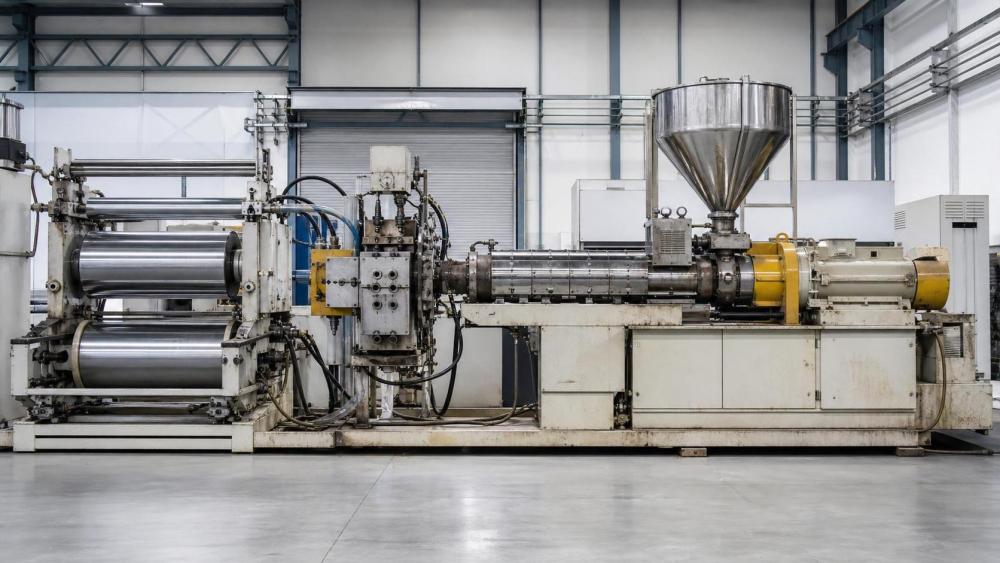
Used equipment pricing is affected by both visible and hidden factors. Visible factors include extruder size, die width, line length, cooling-roll size, motor power and included downstream equipment. Hidden factors include screw wear, barrel clearance, die damage, control-system age, missing spare parts, dismantling quality and whether the seller can prove the line was running recently. Buyers should separate these two groups before comparing offers.
PP sheet production places steady demands on melt stability, temperature control and downstream cooling. If the line was previously used for a similar PP sheet product and has been maintained well, it may require less adjustment. If it was used for mixed materials, filled compounds or a different sheet thickness, the buyer may need more process testing. This history affects value because the machine's next life depends on what it has already done.
Location can also influence price. A line already dismantled and stored in a warehouse may be cheaper, but the buyer loses the chance to observe it running. A line still assembled in a factory may cost more because the seller can demonstrate it, but the buyer gains stronger evidence. The difference between those two situations is not only price; it is evidence quality.
Major Price Factors to Review
Machine Configuration and Product Range
The same phrase, PP sheet extrusion line, can describe many different systems. Some lines are built for thin sheet. Others are intended for thicker board, thermoforming sheet, packaging sheet or multi-material production. The wider the product range, the more important it becomes to review screw design, die width, cooling capacity and downstream control.
A buyer should not assume that a used PP sheet line can automatically run PE, ABS or PS at the same output. Material behavior differs. PE may require more torque depending on grade and thickness. ABS can reveal surface and melt-quality issues. PS may need careful cooling to reduce brittleness or handling problems. A line that has a good price for one material can be a poor fit for another.
Product width and thickness also affect price. A wider die and stronger cooling section generally increase equipment value. However, if the buyer does not need the extra width, paying for a larger line may not be efficient. Conversely, buying a narrow or underpowered line because it is cheap can limit production from the first day. The buyer should match configuration to actual orders, not to a vague future plan.
Condition Is More Important Than Paint
Used equipment is sometimes repainted before sale. Paint can make a machine look cleaner, but it does not prove mechanical health. Buyers should focus on working parts. Screw and barrel condition, die lip quality, roll surface, gearbox noise, motor current, heater function, sensor readings and electrical cabinet condition all matter more than appearance.
Ask whether the screw and barrel have been measured. Ask whether the die has been opened and cleaned. Ask whether the gearbox oil was checked. Ask whether the control cabinet contains original components or replacement parts. These questions help separate cosmetic preparation from real readiness.
It is also useful to ask for photos before repainting or before dismantling. If a seller can show the line in its previous working location, the buyer gains more context. If only polished sales photos are available, the buyer should ask for additional close-ups of wear points before treating the price as final.
Control System and Instrumentation Costs
Electrical and control-system work can become a major cost after purchase. Old inverters, damaged wiring, missing thermocouples, unstable heater control, obsolete PLC units and weak safety circuits can all delay commissioning. A buyer should ask whether the electrical cabinet has been tested under load and whether spare parts can be sourced locally.
Pressure and temperature signals should not be ignored. Melt pressure helps operators understand filter condition, die restriction and process stability. Temperature sensors affect melt quality and sheet consistency. If pressure sensors, temperature controllers or heater zones are unreliable, the buyer may face startup defects even when the mechanical frame is acceptable.
Electrical modernization can be a good investment, but it should be budgeted early. If the seller offers a low machine price and no control-system support, the buyer should estimate local rewiring and component replacement before accepting the offer. If the seller includes tested controls and clear electrical documentation, the higher initial price may be easier to justify.
What Should Be Included in a Serious Offer?
A serious used equipment offer should clearly describe what is included. It should list major components, known missing parts, repair scope, testing status, packing responsibility and available documents. Vague phrases such as complete line, good condition or ready to run are not enough. Buyers need details they can verify.
Ask for the included equipment list: feeder, extruder, screen changer, melt pump if any, die, calender or cooling rolls, haul-off, trimming, cutter, stacker, winder, control cabinet and spare parts. Ask which of these parts are original, replaced, repaired or not tested. The price becomes much easier to judge when the included scope is clear.
The offer should also define the condition at delivery. Is the machine sold as-is after inspection? Is it rebuilt before shipment? Is a trial run included? Will the seller mark cables and provide layout photos? Will packing protect the die and roll surfaces? These practical details may not look dramatic, but they can save time and money during installation.
Buyer Checklist for Price Evaluation
- Confirm sheet material, width, thickness and target output before comparing prices.
- Ask whether the quoted price includes the full line or only major equipment.
- Request screw and barrel condition evidence, not just model information.
- Check die width, die lip condition and suitability for the target product.
- Review cooling rolls, haul-off, cutter and stacking equipment.
- Ask for electrical cabinet photos and control component brands.
- Confirm whether sensors, heaters and inverters have been tested.
- Separate included repairs from optional paid repairs.
- Budget for packing, shipping, installation, trial material and local utilities.
- Compare offers by total cost to stable production, not machine price alone.
How to Negotiate Without Guessing
Negotiation works better when the buyer has a technical basis. Instead of simply asking for a lower price, identify the specific risk that justifies adjustment. If the die has not been inspected, ask for inspection or a price allowance. If the screw and barrel condition is unknown, ask for measurement or budget room. If the control cabinet is old, ask whether modernization is included.
This approach is fairer for both sides. A seller with a well-prepared line can defend the price with evidence. A seller with an uncertain line can still sell, but the price should reflect the buyer's risk. The buyer should avoid turning every unknown into an argument, but major unknowns should not be ignored.
Documentation is part of negotiation. Photos, videos, test records, repair lists, packing plans and spare-part lists all reduce uncertainty. If the seller provides strong documentation, the buyer may accept a firmer price. If documentation is weak, the buyer should negotiate for inspection rights, repair scope or a safer payment structure.
FAQ
Is the cheapest PP sheet extrusion line usually the best option?
No. The lowest listed price may exclude repairs, controls, missing parts, packing or installation support. Buyers should compare total cost to stable production.
What repair cost is most often underestimated?
Screw and barrel wear, die repair and electrical modernization are often underestimated. These items can change the project budget quickly.
Can a used PP sheet line also make PE, ABS or PS sheet?
It may be possible, but the buyer should verify screw design, temperature control, die suitability and cooling capacity for each material.
Should buyers request a trial run?
Yes, if the line is assembled and power is available. A trial run with material close to the buyer's product is much more useful than a no-load video.
What should be checked before paying a deposit?
Confirm the included equipment list, repair scope, testing status, packing method, missing parts, documents and support responsibility.
Final Advice
A used PP sheet extrusion line can be a practical purchase when the buyer understands the real cost drivers. The machine price is only the starting point. Screw and barrel condition, die suitability, downstream stability, electrical reliability, packing quality and commissioning support all affect the final value of the line.
For used equipment buyers, the best offer is usually the one with the clearest evidence. A transparent seller, a well-defined product requirement and a component-level inspection process can turn a used line into a sensible production asset. Without those pieces, even a low wholesale price can become an expensive surprise.
Related News
- 00
0000-00
How to Evaluate Plastic Pelletizing Machine Suppliers for Output, Support, and Risk - 00
0000-00
How to Select a Plastic Pipe Manufacturing System for Output, Resin, and Pipe Range - 00
0000-00
How to Specify Injection Molding Equipment for High-Volume Closure Production - 00
0000-00
How to Specify a Medical Molding Machine for Cleanroom Device Production - 00
0000-00
Plastic Extrusion Technology for Films: Process Controls That Improve Gauge Uniformity
Tags
Weekly Insights
Stay ahead with our curated technology reports delivered every Monday.
Related News
 Extrusion Process ArchitectHow to Select a Plastic Pipe Manufacturing System for Output, Resin, and Pipe RangePlastic pipe manufacturing systems: learn how to match output, resin, tooling, cooling, and automation for reliable, scalable pipe production. Read the guide.Oct 02, 2026
 Extrusion Process ArchitectPolymer Processing for Extrusion: How Melt Rheology Affects Line StabilityPolymer processing for extrusion: discover how melt rheology influences pressure, output, die swell, and line stability for more consistent production.Sep 24, 2026
 Extrusion Process ArchitectHow to Evaluate German Extrusion Equipment for Stable, High-Output ProductionExtrusion equipment Germany: evaluate stable, high-output lines through melt control, feeding, tooling, energy use, maintenance, and acceptance trials.Sep 20, 2026
 Extrusion Process ArchitectHow to Size an HDPE Pipe Extrusion Line for Output, Diameter Range, and Pipe QualityHDPE pipe extrusion lines: learn how to size output, diameter range, cooling, and downstream equipment for stable, high-quality pipe production.Aug 29, 2026
 Extrusion Process ArchitectWhat Affects Output Quality in Polymer Processing Equipment Extrusion?Polymer processing equipment extrusion quality depends on material control, screw design, temperature, pressure, and die stability. Learn practical fixes to boost output, reduce defects, and improve consistency.Jul 14, 2026
 Extrusion Process ArchitectWindow Profile Extrusion Lines: Key Parameters for Output, Surface Finish, and StabilityWindow profile extrusion lines compared beyond nameplate output—learn how throughput, surface finish, and long-term stability affect scrap, quality, and production risk.Jul 13, 2026
 Extrusion Process ArchitectRecycled Polymer Applications in Pipe Extrusion: Material Limits, Performance, and Use CasesRecycled polymer applications pipe extrusion explained: discover material limits, real performance trade-offs, and the best use cases for reliable, cost-smart pipe production.Jul 12, 2026
 Extrusion Process ArchitectHow to Choose Extrusion Equipment for HDPE Pipe and Profile ProductionExtrusion equipment for HDPE selection starts with product goals. Learn how to compare extruders, dies, cooling, and controls to improve quality, cut scrap, and choose the right pipe or profile line.Jul 11, 2026
 Extrusion Process ArchitectExtrusion Systems for Pipe Selection Guide: Output, Screw Design, Cooling, and Wall ControlExtrusion systems for pipe selection made practical: compare output, screw design, cooling, and wall control to improve stability, cut scrap, and choose the right line with confidence.Jul 10, 2026
 Extrusion Process ArchitectExtrusion Equipment PLC Control: Which Functions Matter Most for Stable Line Operation?Extrusion equipment PLC control directly shapes line stability. Learn which functions matter most for steady output, fewer alarms, better quality, and smarter extrusion performance.Jul 05, 2026
 Extrusion Process ArchitectPP Sheet Extrusion Line Price Factors for Used Equipment BuyersLearn the main price factors for used PP sheet extrusion lines, from screw and die condition to controls, output, packing and commissioning risk.Jul 05, 2026
 Extrusion Process ArchitectUsed PP PE ABS PS Sheet Extruder Line Buying GuideA practical buyer guide for used PP, PE, ABS and PS sheet extruder lines, including inspection points, output checks and purchasing questions.Jul 01, 2026
 Extrusion Process ArchitectPVC Plastic Pipe Manufacturing Process Explained: Key Stages, Quality Checks, and Common DefectsPVC plastic pipe manufacturing explained clearly: explore key stages, quality checks, common defects, and practical insights to improve consistency, compliance, and pipe performance.Jun 30, 2026
 Extrusion Process ArchitectSmart Plastic Extrusion Technology: Which Sensors and Controls Improve Output Stability?Smart plastic extrusion technology starts with better sensing and control. Learn which sensors and closed-loop systems improve output stability, cut scrap, and boost ROI.Jun 27, 2026
 Extrusion Process ArchitectExtrusion Systems for Pipes: How to Choose the Right Line for Your Product RangeExtrusion systems for pipes: learn how to choose the right line for your product range, materials, output goals, compliance needs, and long-term ROI.Jun 26, 2026
 Extrusion Process ArchitectPipe and Profile Extrusion for Water Supply: Key Design Points for Stable OutputPipe and profile extrusion for water supply demands stable output, precise die design, and smart cooling control to reduce waste and boost reliability.Jun 26, 2026
 Extrusion Process ArchitectPipe Plastic Extrusion Machinery Selection Guide: Output, Diameter Range, and Cooling DesignPipe plastic extrusion machinery selection starts with output, diameter range, and cooling design. Learn how to compare line stability, flexibility, and ROI for better pipe production.Jun 16, 2026
 Extrusion Process ArchitectPlastic Extrusion Machinery Price Comparison: Which Specs Have the Biggest Budget Impact?Plastic extrusion machinery price depends most on screw design, output, energy systems, and automation. Compare specs smarter to cut hidden costs and improve ROI.Jun 15, 2026
 Extrusion Process ArchitectPolymer Rheology Basics: Which Viscosity and Shear Data Matter in Process Setup?Polymer rheology basics explained: learn which viscosity and shear data truly matter for process setup, faster startup, stable flow, better quality, and smarter machine adjustments.Jun 12, 2026
 Extrusion Process ArchitectPlastic Extrusion Technology vs Injection Molding: Which Offers Better Cost Control at Scale?Plastic extrusion technology vs injection molding: discover which process delivers better cost control at scale, with practical insights on tooling, scrap, energy, and ROI.Jun 10, 2026