Plastic Recycling Systems Cost Breakdown: Equipment, Energy, Labor, and Maintenance




Plastic Recycling Systems Cost Breakdown: Equipment, Energy, Labor, and Maintenance
Understanding plastic recycling systems cost is essential when capital approval depends on measurable returns, stable operating margins, and long-term compliance readiness.
A recycling line may look like one purchase. In reality, it is a layered cost structure with different risk profiles.
Equipment price is only the visible part. Energy, labor, wear parts, downtime, and material yield often decide the real business case.
That is why a practical plastic recycling systems cost review should connect upfront spend with throughput, scrap recovery, and payback speed.
From recent market shifts, the clearer signal is this: buyers are no longer comparing machines alone. They are comparing total operating economics.
This matters even more where ESG targets, packaging regulations, and virgin resin volatility are already affecting budget planning.
In practical terms, a good approval decision starts with one question. Which cost items create durable value, and which simply add hidden burden?
1. Equipment Cost: The Largest Line Item, but Not the Whole Story
The first layer of plastic recycling systems cost is equipment acquisition. This usually takes the biggest share of the initial investment.
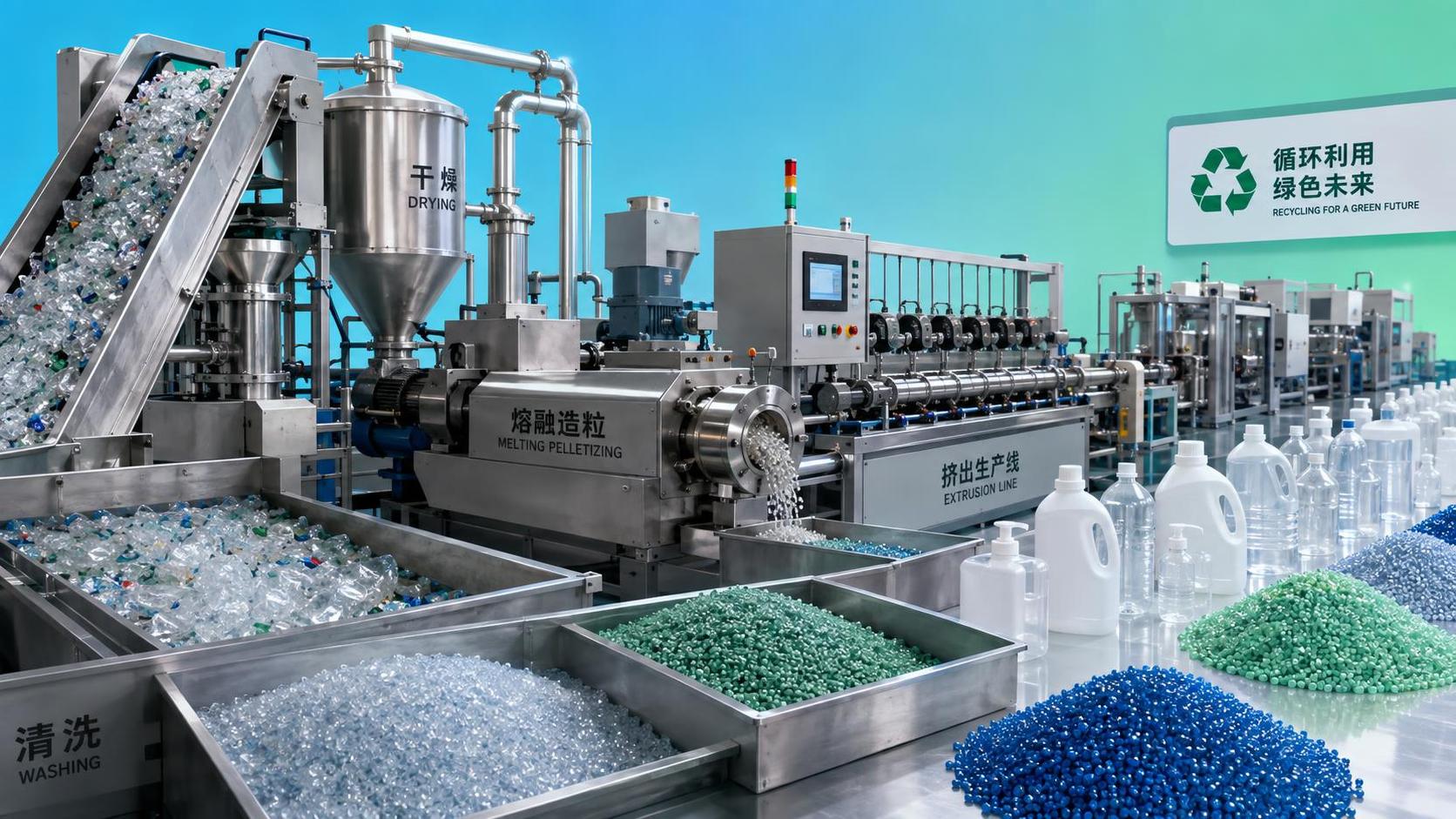
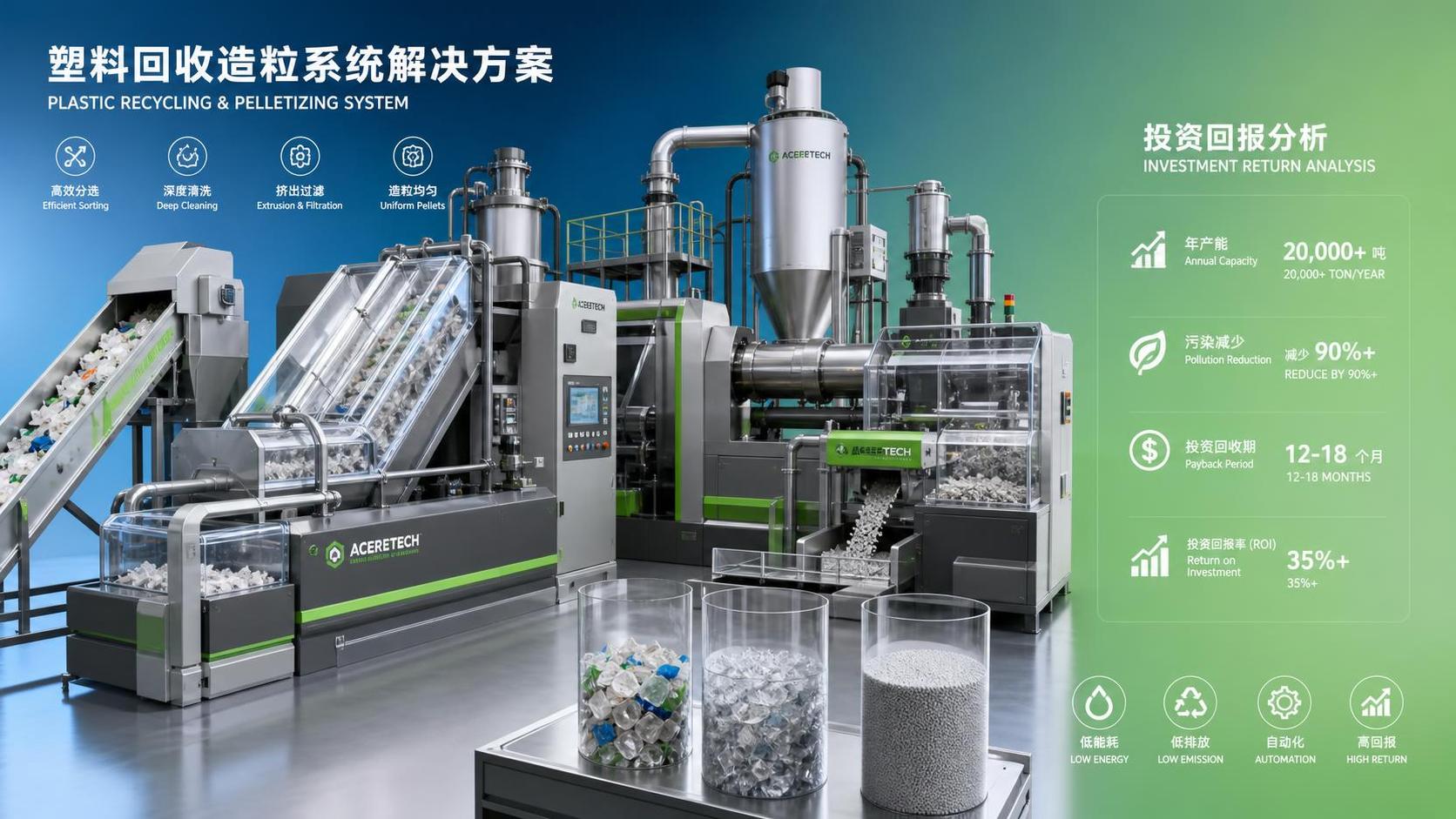
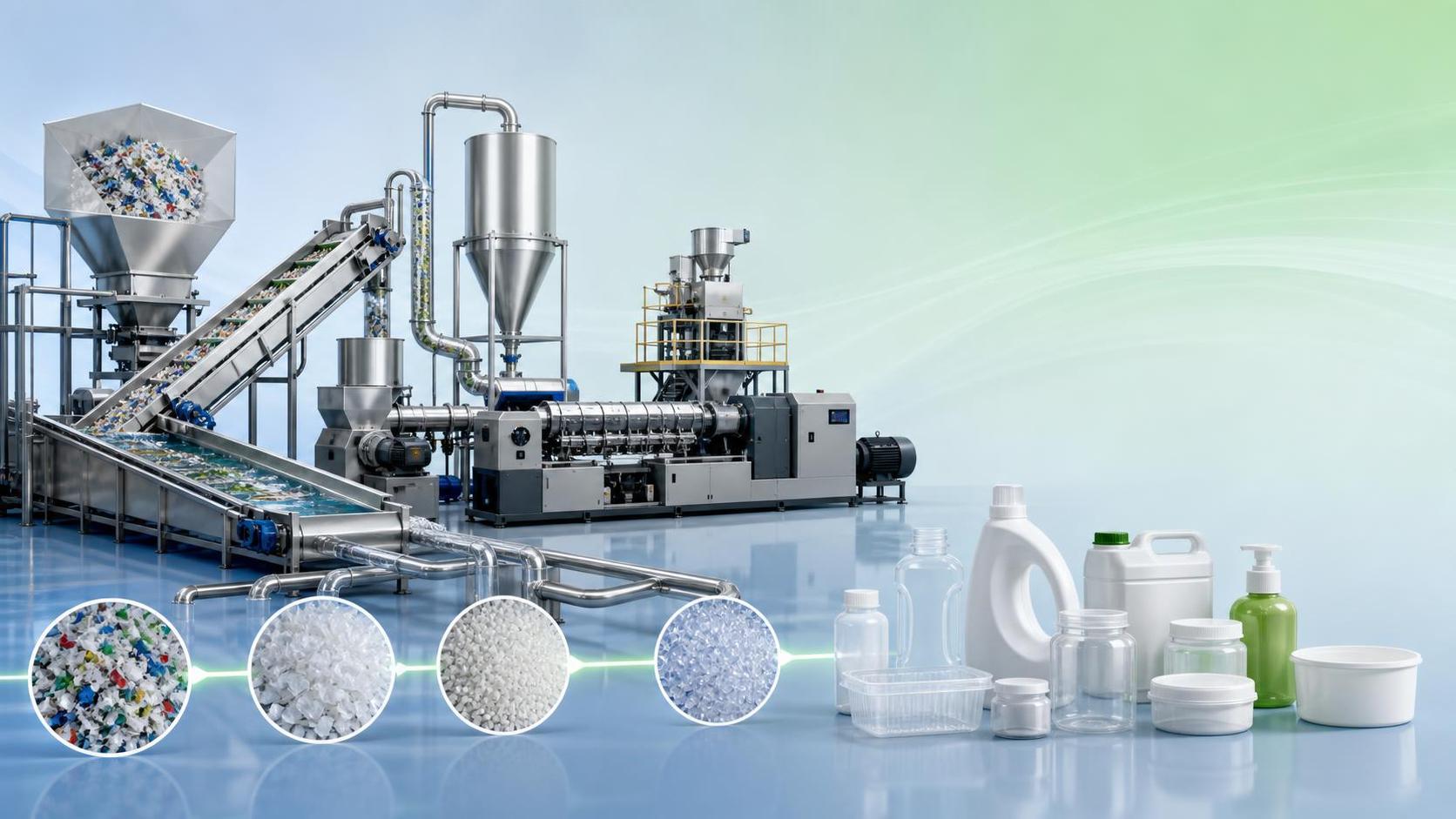
Typical systems may include shredders, crushers, washing units, friction washers, dewatering machines, dryers, extruders, filters, pelletizers, and control systems.
For simple in-house scrap recovery, the setup can stay relatively compact. For post-consumer waste, complexity rises quickly.
Contaminated film, mixed rigid plastics, labels, moisture, and odor control all push capital cost upward.
What usually drives equipment pricing
- Target output capacity per hour
- Input material cleanliness and consistency
- Automation level and sensor package
- Filtration precision and melt quality requirements
- Pelletizing method, such as strand or underwater
- Local installation, electrical works, and commissioning scope
A lower quote can look attractive at first. Still, the cheapest line may require more manual sorting, more reprocessing, and more unplanned stoppages.
This is where plastic recycling systems cost analysis needs to move beyond sticker price and into usable output cost.
If one system produces cleaner pellets with less loss, its higher capex may actually improve gross margin faster.
2. Energy Cost: The Quiet Expense That Grows Every Month
Energy is often underestimated during approval. Yet over several years, it can materially reshape plastic recycling systems cost.
Power use comes from shredding, washing, drying, extrusion, pelletizing, chilled water circulation, and auxiliary conveying equipment.
Drying stages deserve special attention. Wet feedstock usually means more thermal load and higher utility bills.
In many plants, energy cost rises not because of the machine rating alone, but because feedstock quality is unstable.
How to review energy-related cost risk
- Ask for kWh per ton under real material conditions
- Check peak load, not only average consumption
- Review motor efficiency, inverter use, and heat recovery options
- Confirm whether the quoted output assumes ideal feedstock
- Calculate utility cost sensitivity against local tariffs
A more efficient line does not only reduce power bills. It also improves emissions reporting and supports sustainability claims with real data.
That creates a second layer of value, especially for packaging groups facing customer audits and recycled-content commitments.
3. Labor Cost: Headcount, Skill Level, and Process Stability
Labor is not only about operator wages. It includes supervision, maintenance support, quality inspection, shift coverage, and training.
In actual operations, labor cost rises sharply when a line depends on frequent manual intervention.
Examples include manual screen changes, unstable feeding, poor contamination control, and repeated parameter adjustments.
So when reviewing plastic recycling systems cost, it helps to ask how many people are needed per shift for stable throughput.
Labor questions worth asking suppliers
- How many operators are needed during normal production?
- What skill level is required for startup and changeover?
- How often does the line need manual cleaning or adjustment?
- Is remote diagnostics available for faster troubleshooting?
- What training is included after commissioning?
A more automated system may cost more upfront. But if it reduces shift labor and operator dependency, total plastic recycling systems cost can improve meaningfully.
This is especially relevant where labor turnover is high or technical staffing is difficult.
4. Maintenance Cost: Where Hidden Financial Risk Often Lives
Maintenance is one of the most overlooked parts of plastic recycling systems cost, yet it often decides long-term reliability.
Wear is inevitable in shredding blades, screws, barrels, heaters, bearings, screens, pumps, seals, and pelletizer knives.
Dirty or abrasive feedstock accelerates replacement cycles. That is why maintenance cost can vary widely between two seemingly similar projects.
What to include in maintenance evaluation
- Annual spare parts budget
- Lead times for critical components
- Expected screen, blade, and screw life
- Preventive maintenance schedule and downtime hours
- Availability of local service support
Downtime has a double cost. You pay for repairs, and you lose production at the same time.
That means maintenance should be reviewed as a continuity issue, not only a spare parts issue.
A supplier with stronger service response may protect output better than a lower-priced vendor with slow parts support.
5. The Real Calculation: Total Cost per Ton
The most useful way to compare options is total cost per ton of qualified recycled output.
This turns plastic recycling systems cost from a procurement number into an operating performance measure.
Once these four blocks are quantified, payback modeling becomes much more realistic.
It also becomes easier to test scenarios such as lower feedstock quality, higher utility tariffs, or reduced labor availability.
6. Common Approval Mistakes and Smarter Buying Signals
One common mistake is evaluating plastic recycling systems cost as a one-time capex event.
Another is accepting nameplate output without checking material assumptions, moisture levels, contamination rate, and acceptable pellet specifications.
A smarter review looks for evidence, not only claims.
- Request reference projects using similar waste streams
- Review actual maintenance records if available
- Ask for guaranteed performance ranges, not ideal-point numbers
- Model cost per ton under normal and stressed conditions
- Check whether the line supports future capacity expansion
More importantly, compare suppliers on process stability. Stable lines are usually cheaper to own, even when they cost more to buy.
7. A Practical Decision Framework
For a sound approval process, plastic recycling systems cost should be reviewed through three lenses: initial investment, operating burden, and strategic value.
Initial investment answers what must be spent now. Operating burden shows what must be supported every month.
Strategic value captures what the system enables, including recycled-content supply, ESG positioning, and lower exposure to virgin resin price swings.
In business practice, the strongest projects are not always the lowest-cost projects. They are the ones with the clearest control over cost per ton and downtime risk.
So before approval, build a side-by-side model covering equipment, energy, labor, maintenance, output quality, and service response.
That approach makes plastic recycling systems cost easier to defend internally and easier to link with long-term financial outcomes.
If the goal is a resilient recycling investment, the best next step is simple: approve the line that delivers predictable output, controllable operating cost, and sustainable value over time.
Related News
- 00
0000-00
How Closed-Loop Recycling Turns Post-Consumer Plastic into Reliable Feedstock - 00
0000-00
How to Size a Tire Curing Press Machine for Capacity, Mold Type, and Cycle Time - 00
0000-00
Selecting Plastic Recycling Systems for Mixed Packaging Waste: Key Process Criteria - 00
0000-00
When Does Structural Foam Molding Make Sense for Large, Stiff Parts? - 00
0000-00
How to Evaluate a Vacuum Compression Molding Factory for High-Consistency Rubber Parts
Weekly Insights
Stay ahead with our curated technology reports delivered every Monday.
Related News
 Ms. Elena RodriguezIn-House Recycling for Factory Scrap: How to Reduce Material Waste and Disposal CostsIn house recycling for factory scrap helps manufacturers cut material waste, reduce disposal costs, and create controlled, quality-focused reuse loops.Sep 07, 2026
 Ms. Elena RodriguezHow Recyclable Packaging Manufacturing Balances Material Recovery and Production CostRecyclable packaging manufacturing: discover how smarter design, feedstock control, and process optimization reduce recovery costs while improving quality and yield.Sep 04, 2026
 Ms. Elena RodriguezHow to Evaluate a Plastic Recycling Systems Supplier for Your Processing NeedsChoose the right plastic recycling systems supplier with a practical guide to feedstock fit, output quality, total cost, testing, service, and compliance.Sep 01, 2026
 Ms. Elena RodriguezCE Marking for Plastic Processing Equipment: Documentation and Safety ChecksPlastic processing equipment CE compliance: learn the essential documentation, risk assessments, safety checks, and validation steps for reliable EU market access.Aug 30, 2026
 Ms. Elena RodriguezPlastic Packaging Compliance Standards: What Tests and Documents Matter Most?Plastic packaging compliance standards explained: learn which migration tests, mechanical checks, and audit-ready documents matter most to reduce risk and pass reviews with confidence.Aug 25, 2026
 Ms. Elena RodriguezHow to Evaluate a Plastic Waste Recycling System for Capacity, Contamination, and ROIPlastic waste recycling system evaluation made practical: compare true capacity, contamination control, and ROI to choose a line that delivers stable output and stronger returns.Aug 24, 2026
 Ms. Elena RodriguezPackaging Molding Equipment Price: What Drives Cost and How to Compare Quotes?Packaging molding equipment price varies by machine type, automation, tooling, energy use, and service scope. Learn what drives cost and how to compare quotes with confidence.Aug 21, 2026
 Ms. Elena RodriguezWhat Packaging Machinery for Plastic Containers Should You Choose for High-Volume Production?Packaging machinery for plastics containers can make or break high-volume production. Learn how to choose the right line for speed, consistency, compliance, and lower lifecycle costs.Aug 16, 2026
 Ms. Elena RodriguezWhat Circular Plastics Mean for Automotive Parts and Material SelectionCircular plastics for automotive are reshaping part selection with lower weight, better sustainability, and reliable performance. Discover how engineers balance recycled content, durability, and compliance.Aug 15, 2026
 Ms. Elena RodriguezBroiler Farming in Cage System: Selection Factors for Commercial FarmsBroiler farming in cage system selection for commercial farms: compare structure, ventilation, automation, and manure handling to improve efficiency and avoid costly mistakes.Aug 14, 2026
 Ms. Elena RodriguezHow to Implement Smart Polymer Manufacturing Without Disrupting Existing Production?Smart polymer manufacturing implementation made practical: learn how to upgrade existing production with phased digitalization, less downtime, better control, and measurable ROI.Aug 11, 2026
 Ms. Elena RodriguezHow to Evaluate a Rubber Compression Molding Supplier for Complex Part ProductionRubber compression molding supplier selection for complex parts starts with process, material, and tooling control. Learn how to compare vendors beyond price and reduce launch risk.Aug 10, 2026
 Ms. Elena RodriguezPackaging Compliance in Canada: Key Labeling and EPR Rules Importers Must KnowPackaging compliance Canada explained for importers: learn bilingual labeling, environmental claims, and provincial EPR rules to reduce risk, avoid costly errors, and stay market-ready.Aug 03, 2026
 Ms. Elena RodriguezWhy Circular Plastics Economy Traceability Matters for Recycled Content ComplianceCircular plastics economy traceability is essential for proving recycled content compliance across sourcing, processing, and reporting. Learn how strong evidence reduces audit risk.Aug 02, 2026
 Ms. Elena RodriguezRecycled Plastic Compliance: Key Standards, Testing Requirements, and DocumentationRecycled plastic compliance explained: key standards, testing requirements, supplier documents, and food-contact risks to help you avoid approval delays and costly compliance mistakes.Aug 01, 2026
 Ms. Elena RodriguezHow to Evaluate an Extrusion Machinery Manufacturer for Quality, Support, and ROIExtrusion machinery manufacturer selection affects quality, uptime, and ROI. Learn how to compare process fit, output claims, service, compliance, and long-term operating costs.Jul 29, 2026
 Ms. Elena RodriguezHow to Evaluate Food Grade Recycled Pellets for Safe Packaging ApplicationsFood grade recycled pellets for safe packaging demand more than a label. Learn how to assess feedstock, process validation, pellet quality, and compliance before approval.Jul 28, 2026
 Ms. Elena RodriguezHow to Evaluate a Rubber Vulcanization Supplier for Quality, Capacity, and Lead TimeRubber vulcanization supplier selection made easier: learn how to assess quality systems, true production capacity, and lead time reliability to reduce sourcing risk and improve supply performance.Jul 25, 2026
 Ms. Elena RodriguezPlastic Waste Recycling Price: What Drives Costs and How Buyers Should Compare QuotesPlastic waste recycling price explained: compare quotes by yield, energy use, pellet quality, and compliance costs to find the best long-term recycling value.Jul 20, 2026
 Ms. Elena RodriguezHow to Plan a Smart Factory for Plastics Packaging: Key Systems, Data, and ROISmart factory for plastics packaging planning starts with the right systems, data architecture, compliance, recycling, and ROI model. Learn the key steps to build a scalable, future-ready plant.Jul 19, 2026